Imagine a world with no matches
Period covered : pre-1826
Today it is difficult to imagine a world where matches did not exist, where they hadn’t been invented yet. Most of us have a box or two of matches in the kitchen drawer but if you wanted to light the fire or a candle or the barbeque it would be quite inconvenient without them. Maybe using a cheap plastic lighter, or maybe a taper from the gas cooker, but think just how awkward life would be if we couldn’t put our hand on a simple box of matches.
There was a time 200 years ago when the simple common or garden match as we know it today just did not exist.
Three historic examples of where a simple match would have made life so much easier, if only it had existed
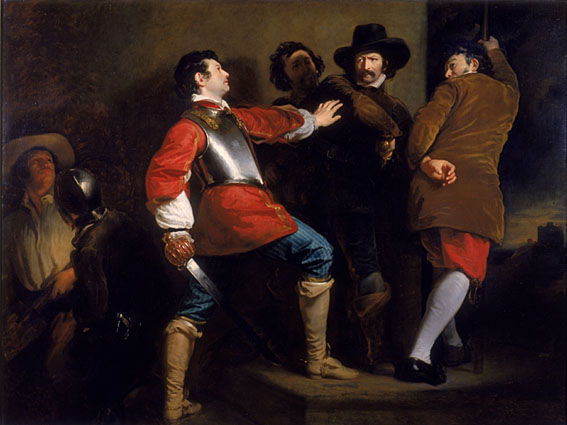
Going back to the 5th of November 1605, a group of English Roman Catholics led by Robert Catesby intended to blow up the House of Lords during the State Opening of Parliament, in an attempt to change the laws about religious practices.
We know that Guy Fawkes was caught with 36 barrels of gunpowder, but how did he intend to light them? We’re not sure, but we do know that he wasn’t carrying a box of matches in his pocket. In that damp cellar it would have been a challenge to light some tinder and perhaps the Gunpowder Plot might have been very different if Guy Fawkes had had a box of matches.
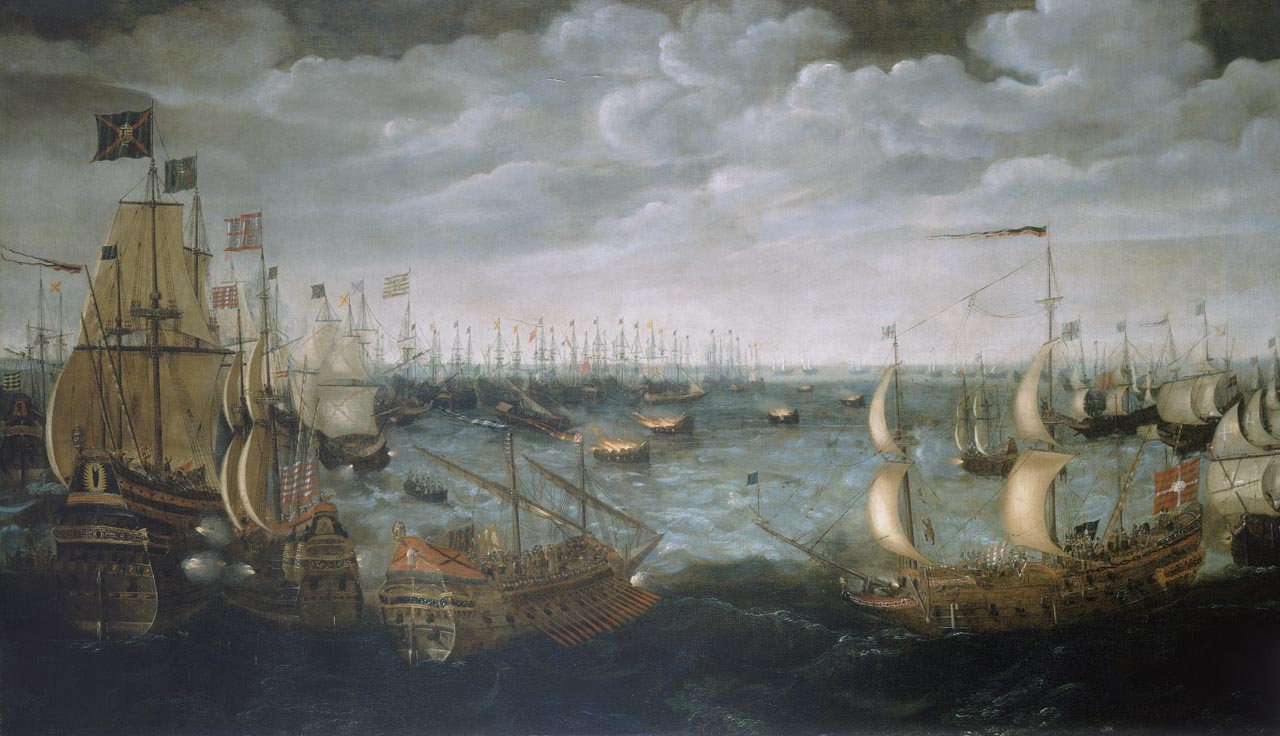
Even further back in time, on 29th July 1588 the Spanish naval fleet was sighted off the Lizard in Cornwall. It was essential to convey this news to London quickly, which was achieved by lighting a set of beacons which had been constructed along the south coast. Thankfully the beacons were lit, news reached London and the Spanish Armada was repelled, but there must have been some anxious moments trying to light the beacons without the benefit of a box of matches.
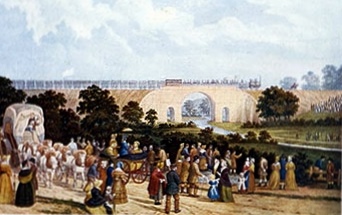
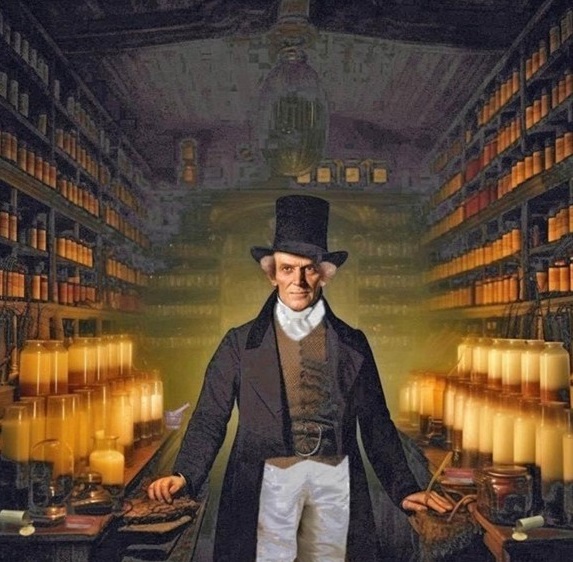
More recently, on 27th September 1825 the recently formed Stockton and Darlington Railway Company had sold around 300 tickets for the world’s very first passenger train ride, an exciting and historic occasion. The engine pulling the train was “Locomotion No. 1”, a 6.6 tonne locomotive incorporating a centre-flue high-pressure (50 psi) boiler which generated steam to turn the wheels and propel the train forward. The boiler clearly needed to be heated to create the steam, and records show that it was lit with the aid of a ‘navvy’s burning (magnifying) glass’, which must have been time consuming and a challenge if there was no sun. This was just one year before John Walker invented the Friction Match and changed the course of history.
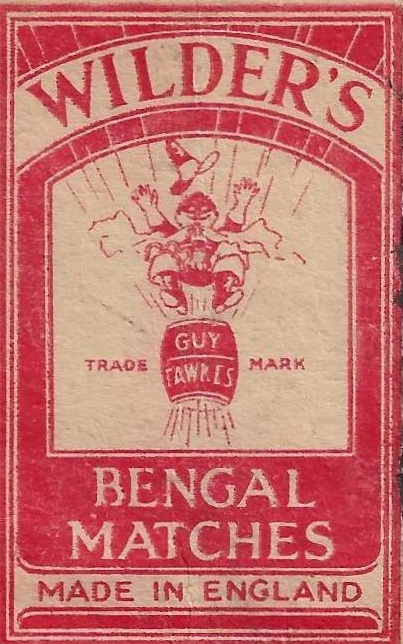
Footnote – Guy Fawkes
Sixty six years to the day after John Walker sold his first box of Friction Matches the firm of G Greiner and Company registered the Guy Fawkes brand of Bengal Matches with Application Number 164,069 on 7 April 1892. The label illustrated is a cut-panel from a customer own brand skillet.
Also, in 1903 Miller Christy wrote about “Tinder Boxes” in the Burlington Magazine, and included a few words regarding Guy Fawkes :
- “Stow says, in his “Annales” (1615), that, when Guy Fawkes was arrested, “there was…found in his pocket a peece of touchwood, a tinder boxe to light the touchwood, and a watch.” Christy goes on to say “Touch-paper” – a coarse absorbent paper, steeped in a solution of saltpetre and dried – was also frequently used as tinder. Travellers ignited it sometimes by placing it in the lock of a flint-lock gun and pulling the trigger, causing sparks to fly from the flint.” (note: the words “peece” and “boxe” are as printed in the Burlington Magazine.)
Click here to return to the Exhibition Catalogue.