

French match industry

Exhibitor : Stéphane Pinaud
In 1831 Charles Sauria invented phosphorus friction matches by replacing antimony sulphide with white phosphorus in John Walker’s formula. White phosphorus would remain a primary component of matches until 1906 when it was outlawed by the Berne Convention.
The beginnings of the French match industry can be traced to 1832 where records of two manufacturers can be found :
- Allumettes Pyrogenes, by Merckel Etienne Georges (Paris), used a small gummed label
- Joseph & Cie, in Paris
The same as in many other countries, the next forty years saw the emergence of small manufacturers and then larger factories across the country. Of particular note are:
- 1841 Roche & Cie opened a factory at Marseille. Roche was one of the main manufacturers in France before the monopoly. Baptise Roche worked before for Merckel, and died in 1848 in a fire at his factory
- 1847 Caussemille Jne & Cie started producing matches at Marseille
- 1856 Coignet Frères & Cie (Paris and Lyon) bought Lundström’s patent for safety matches
- 1859 H Amphoux started a factory in Marseille producing household boxes, nudes, mythology, animals etc.
Labels from these and other early manufacturers can be seen here.
Match tax and state monopoly
On 4th September 1871 the French government decided to impose a tax on the match industries.
Then on 2nd April 1872 they created a State Monopoly to collect match tax and to control the manufacture of matches. This was the Compagnie Générale des Allumettes Chimiques (CGAC), hundreds of firms were absorbed into CGAC and by 1875 only 11 factories remained.
The original shapes of French matchboxes, from before the 1872 monopoly, have always fascinated and surprised me.
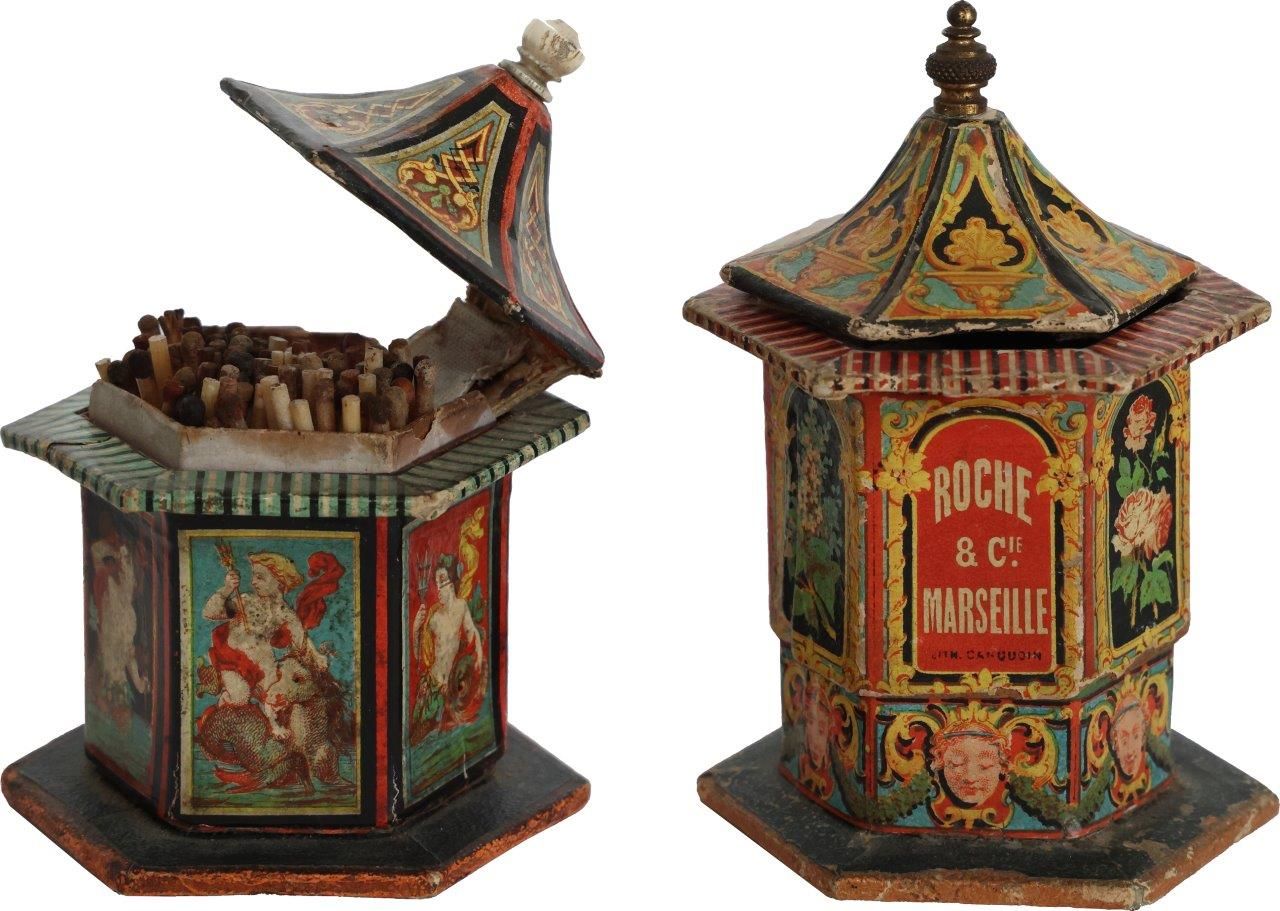 Roche & Cie, Marseille. Novelty “Kiosk” box (patented in 1867). Closed height: 95mm
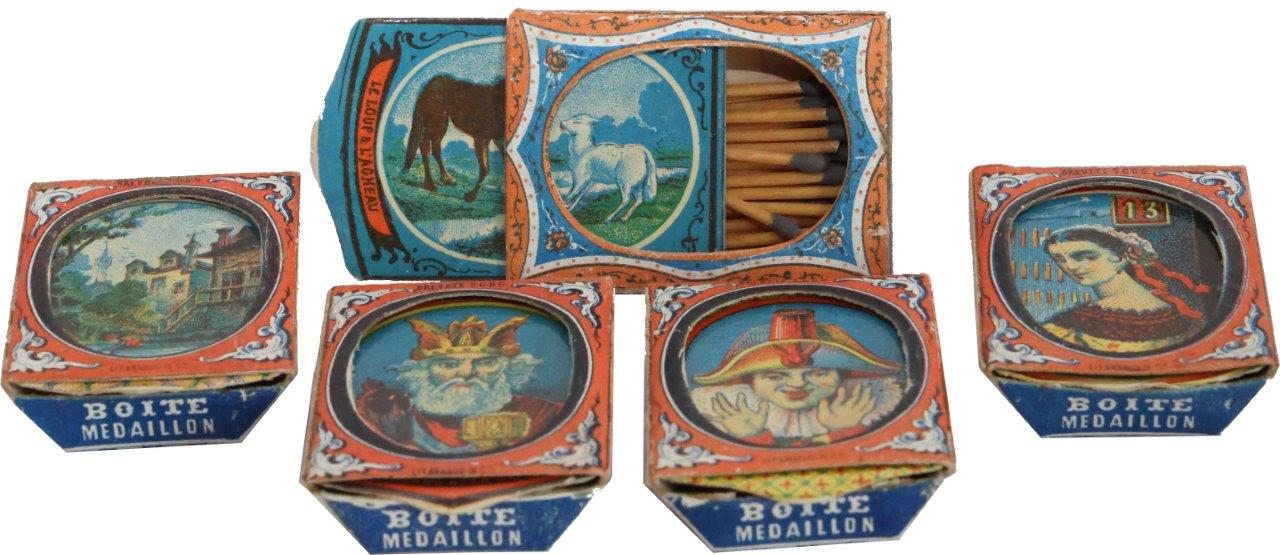 Caussemille Jne & Cie, Marseille. Medallion boxes (patented in 1865) 53 x 38 mm
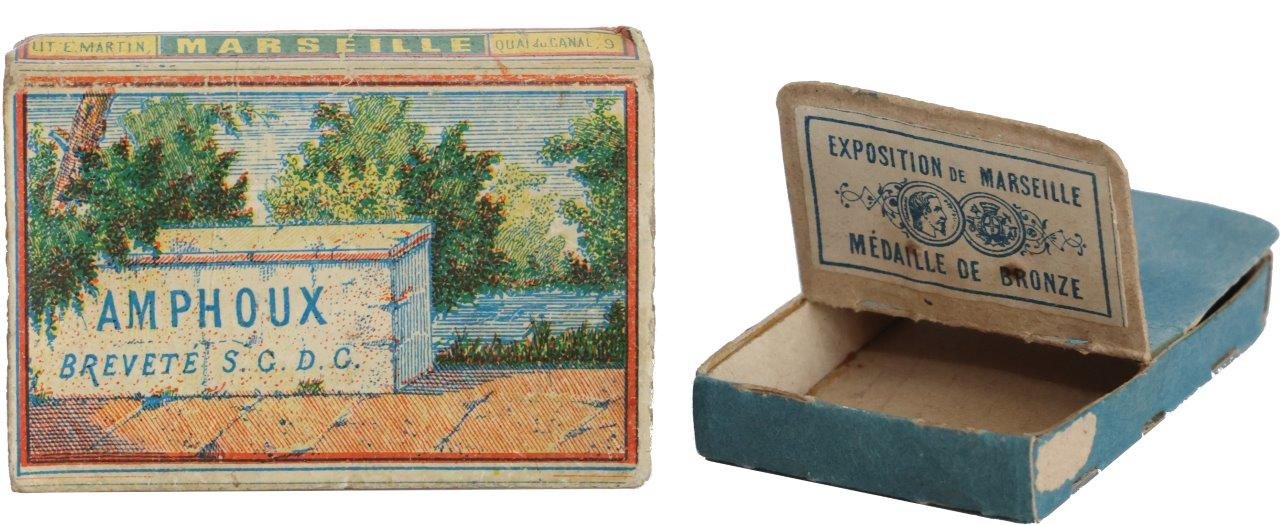 3-panel sliding box, with 1861 bronze medal from Marseille exhibition
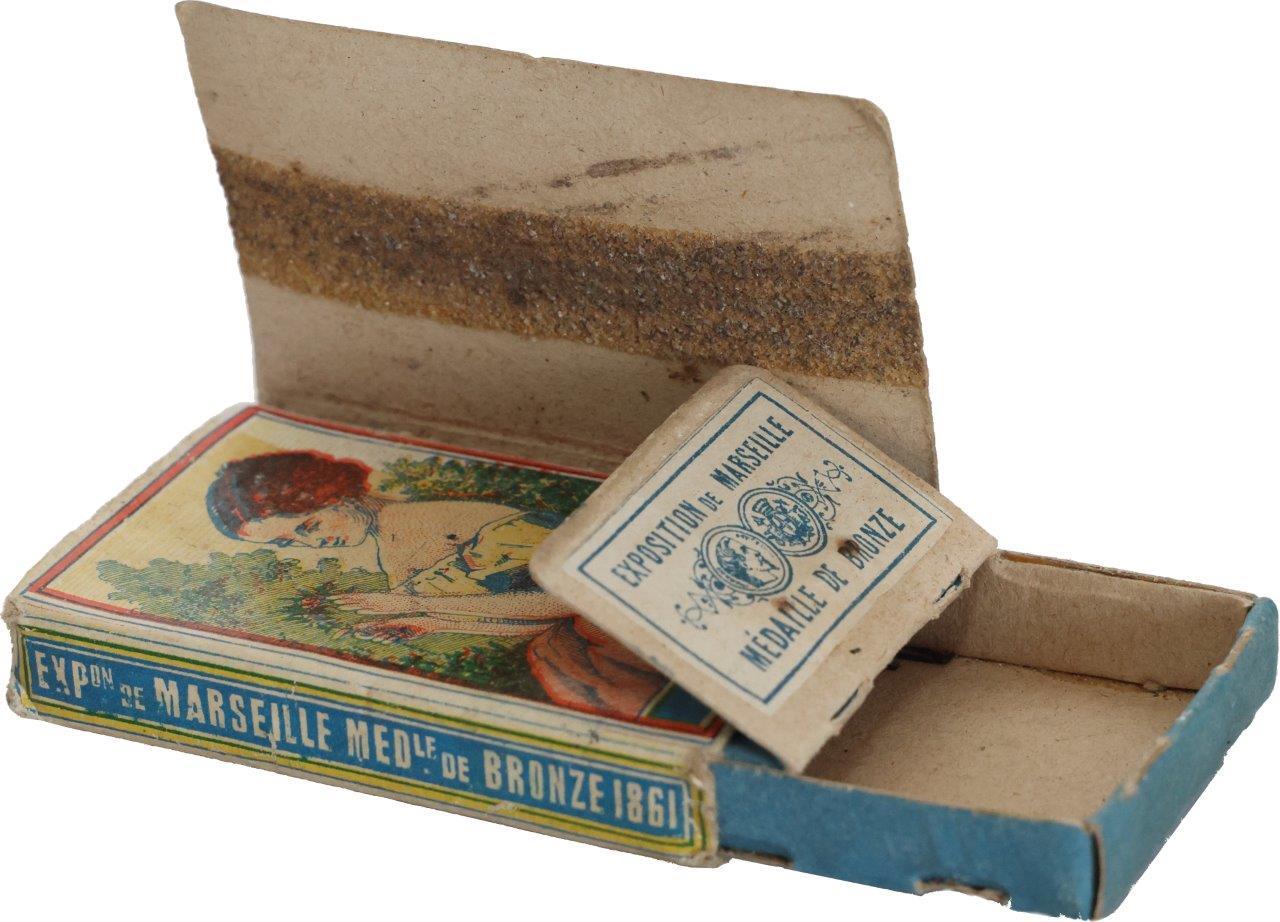 3-panel sliding box, side view 62 x 41 mm
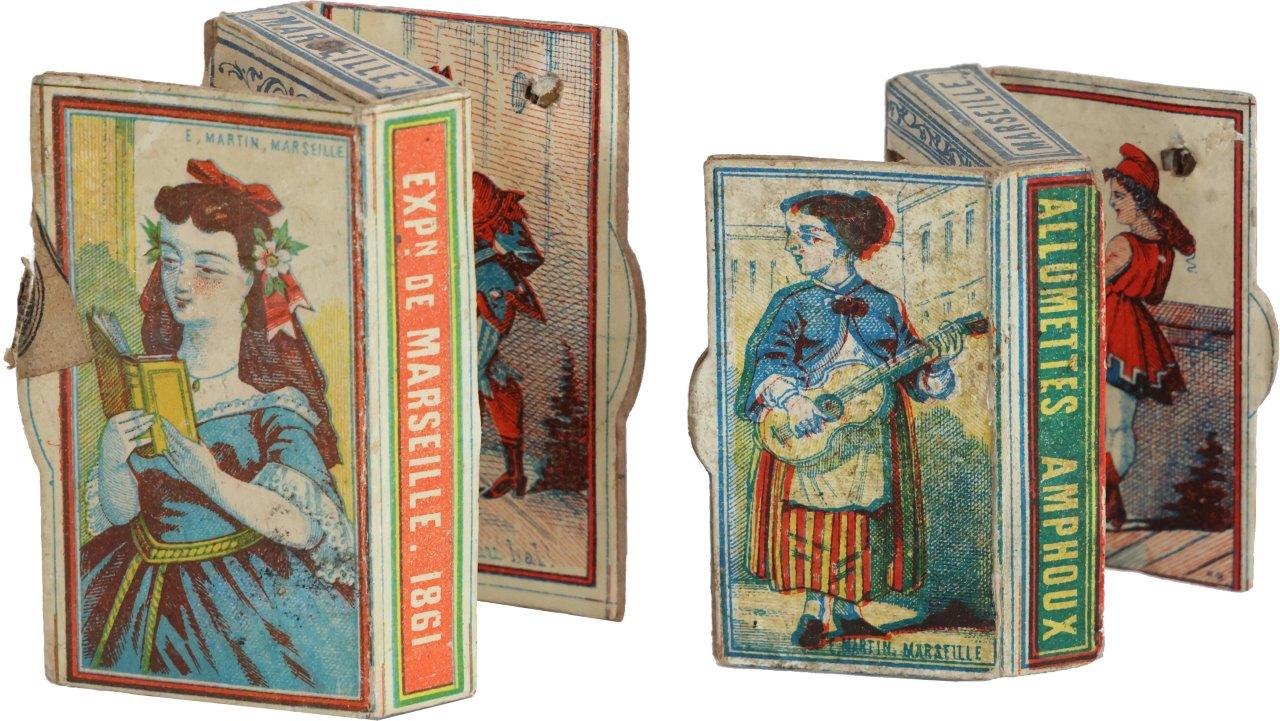 Four-panel boxes with double openings, 1860s 60 x 33 mm
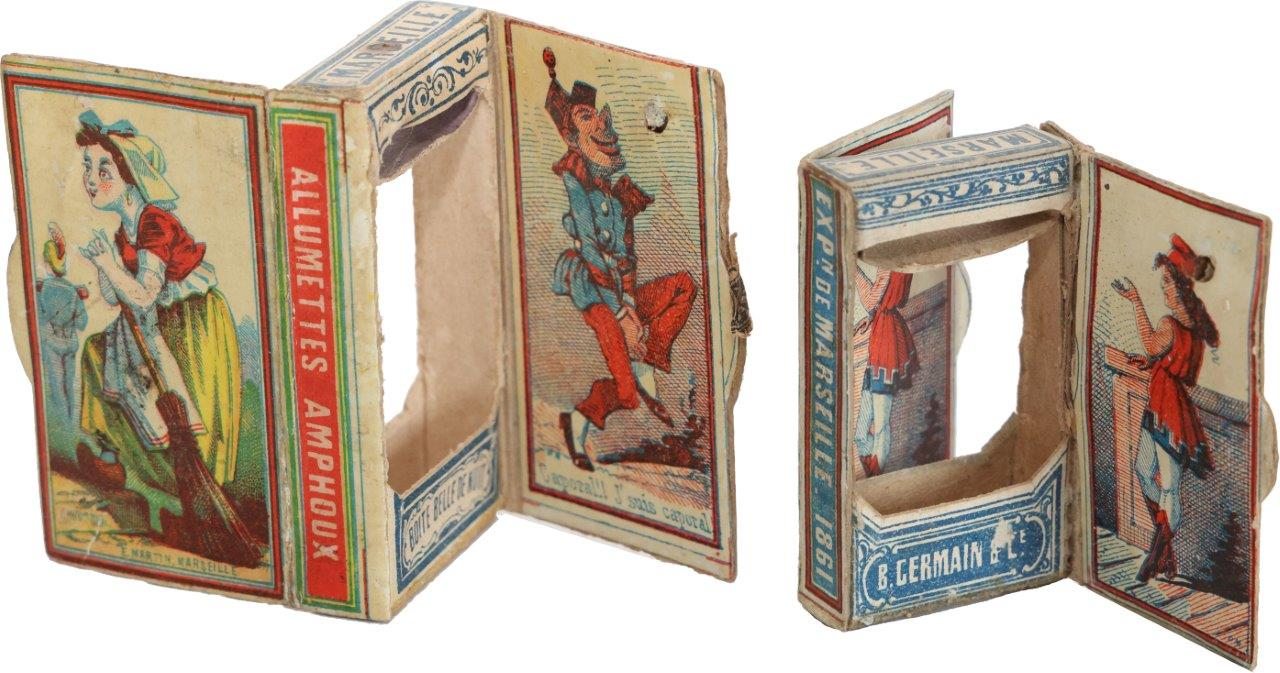 Four-panel boxes with double openings, 1860s 50 x 30 mm
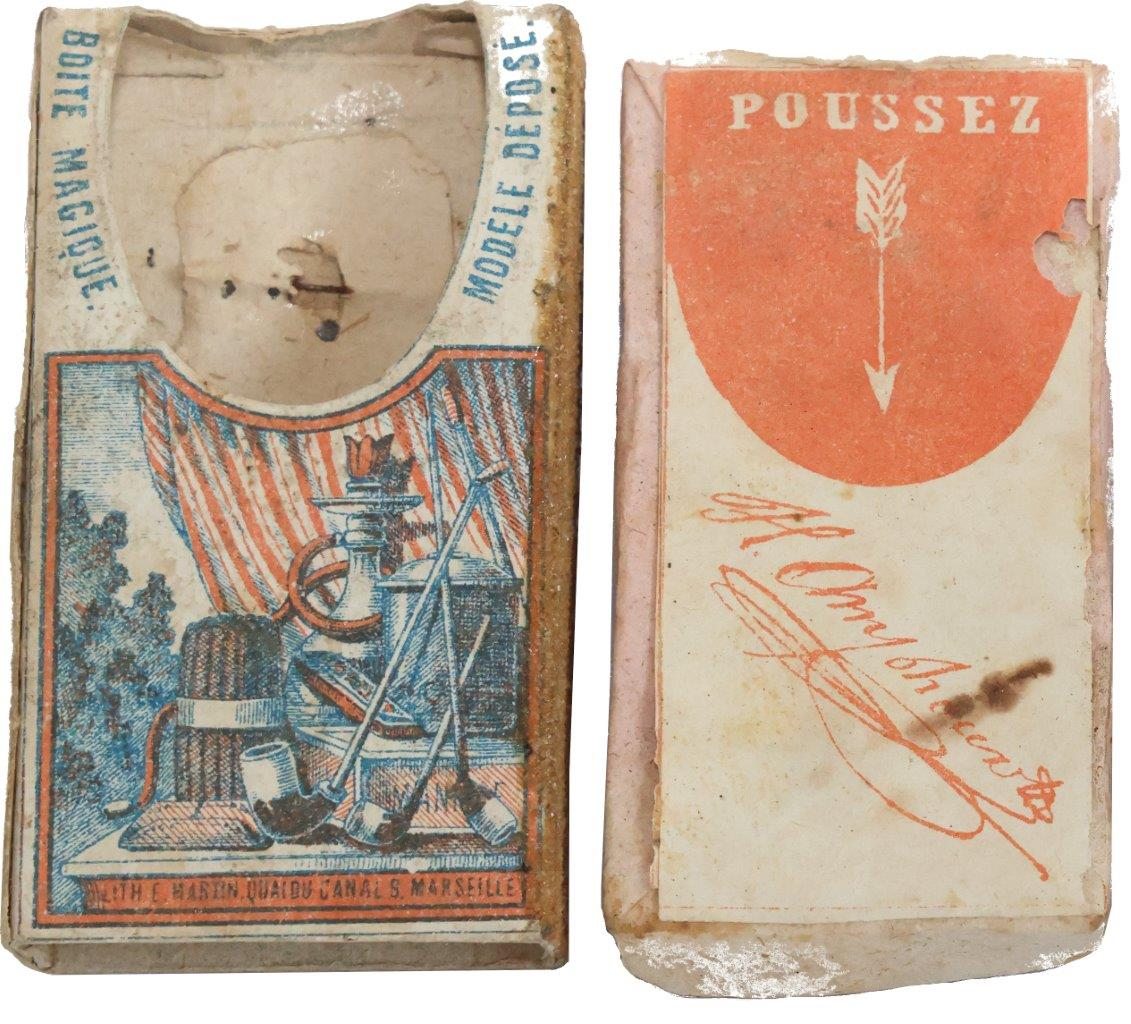 "Magic" box, 58 x 32 mm
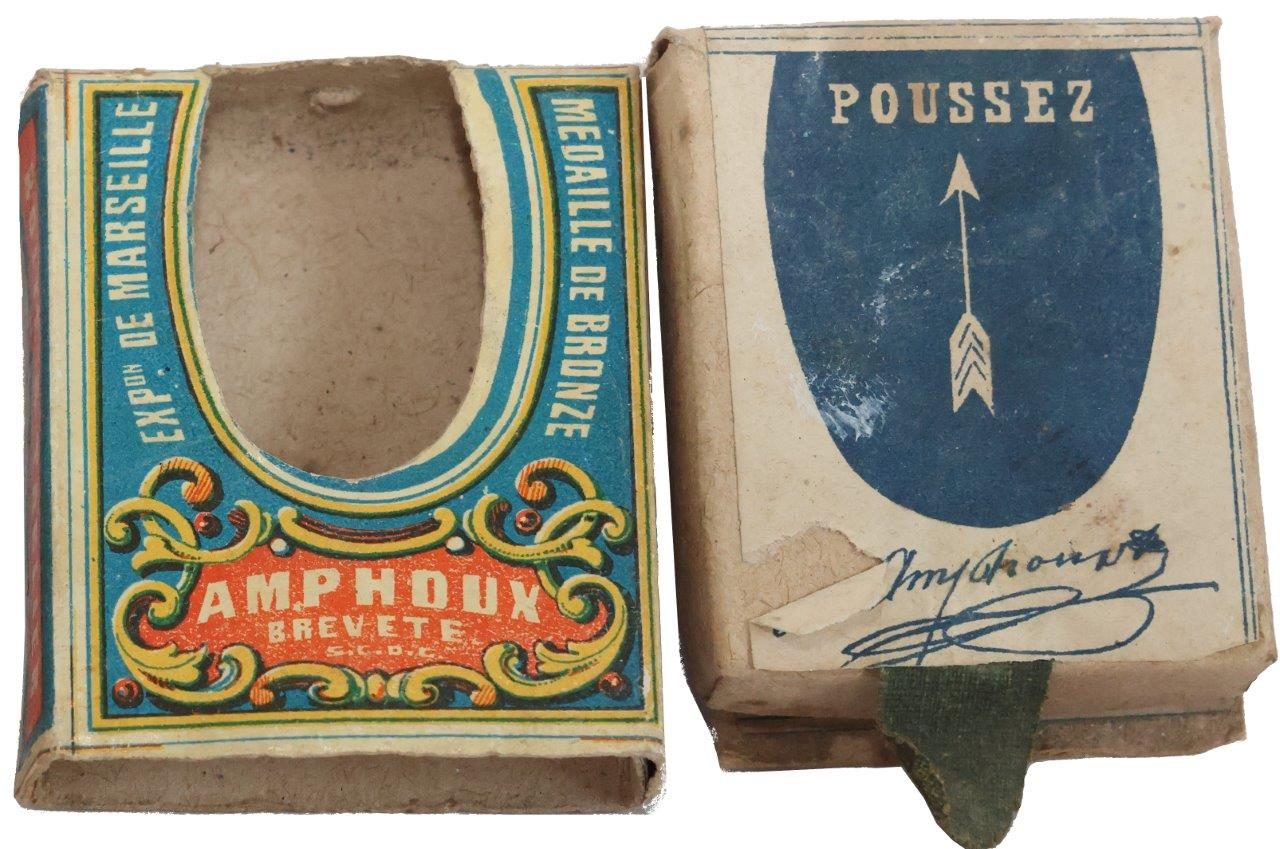 "Magic" box, 50 x 41 mm
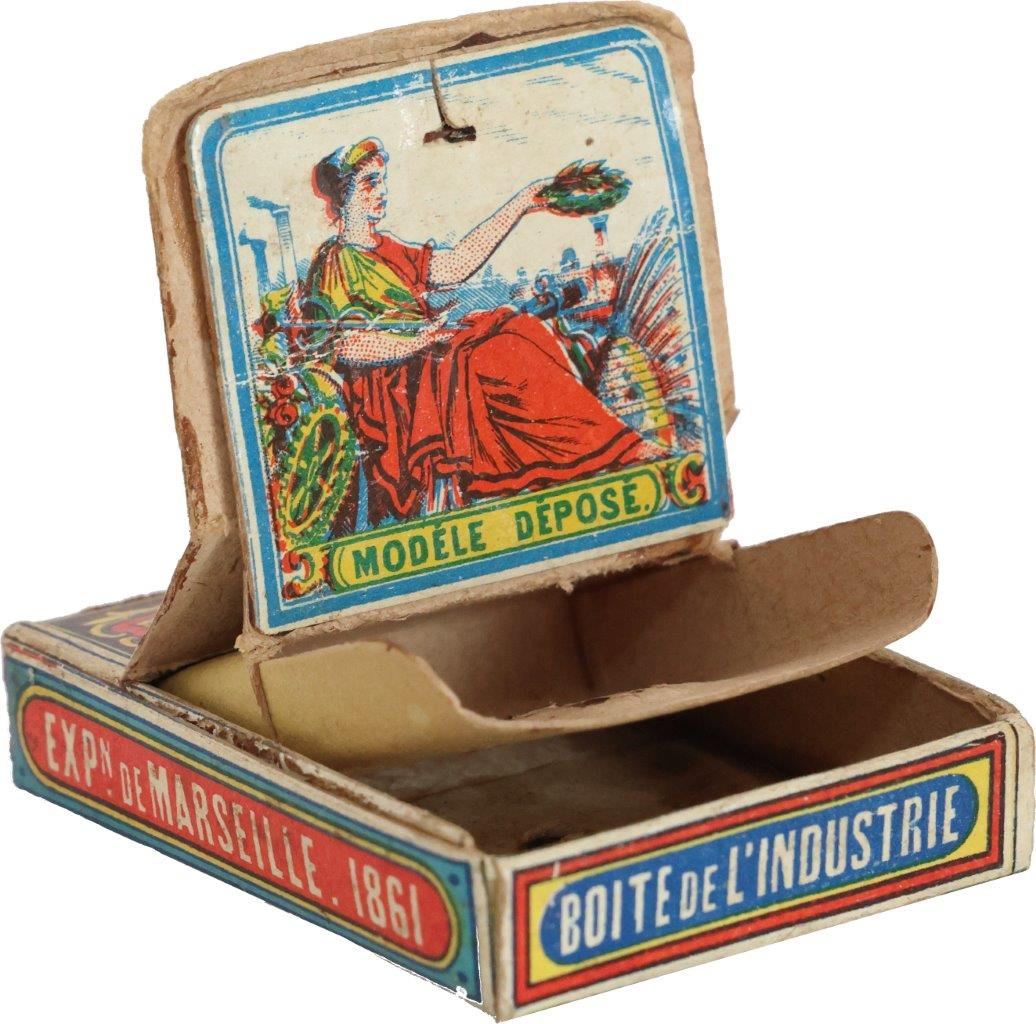 Industry box (ca. 1864), 55 x 42 mm
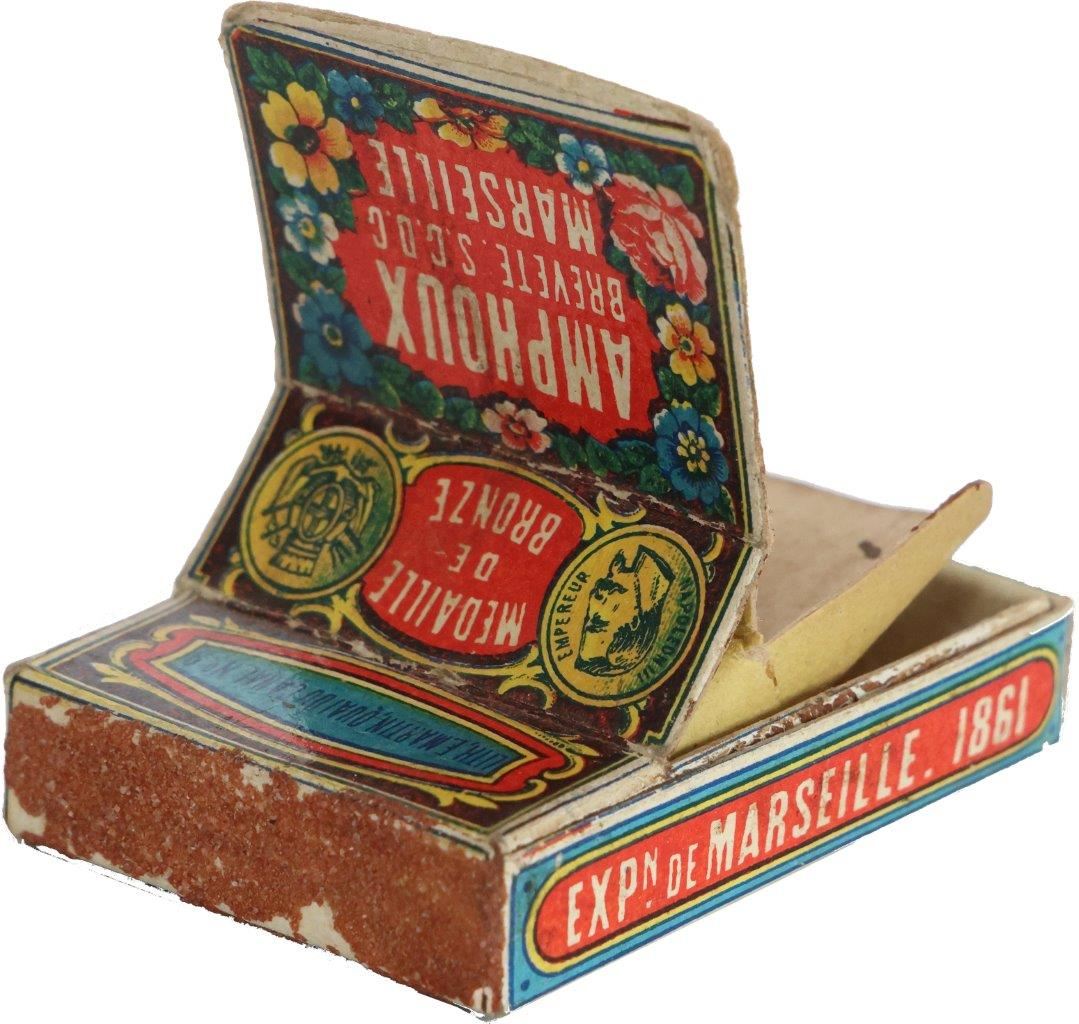 Industry box (ca. 1864), 55 x 42 mm
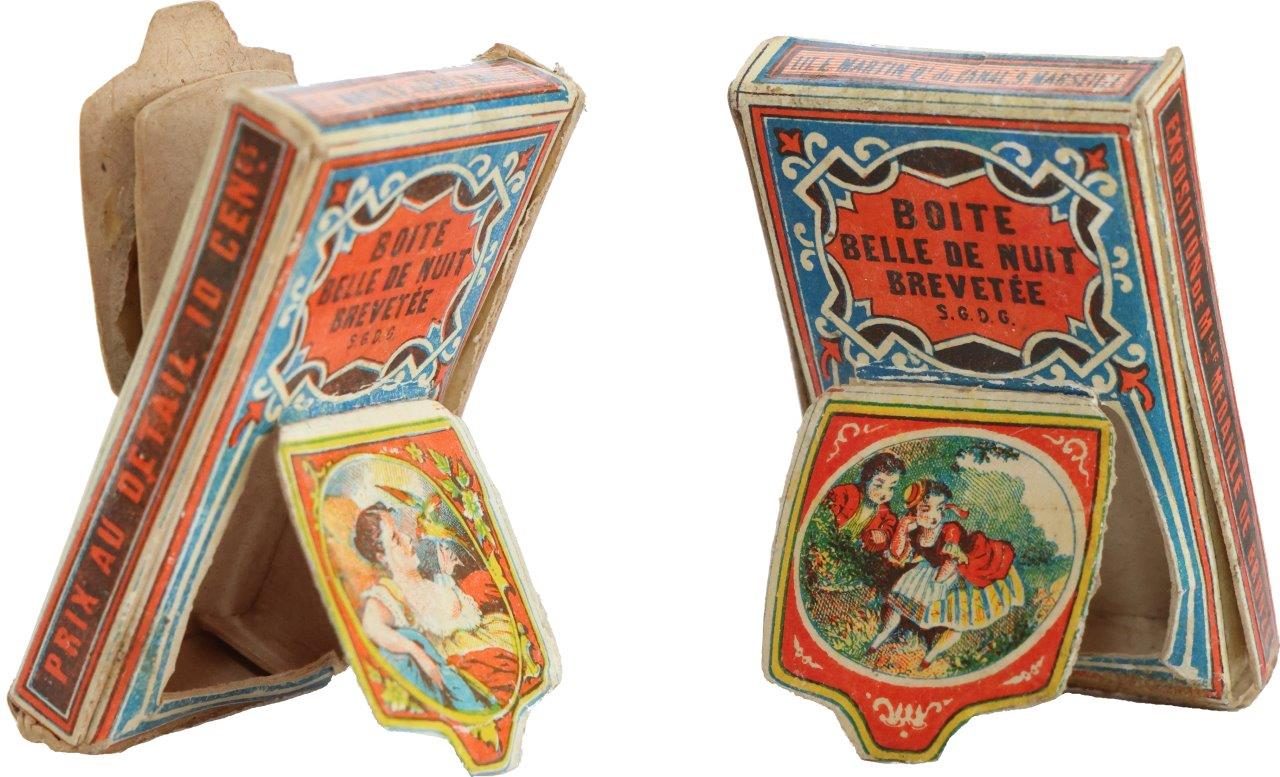 Amphoux, Marseille, "Belle de Nuit" boxes, 80 x 37 mm
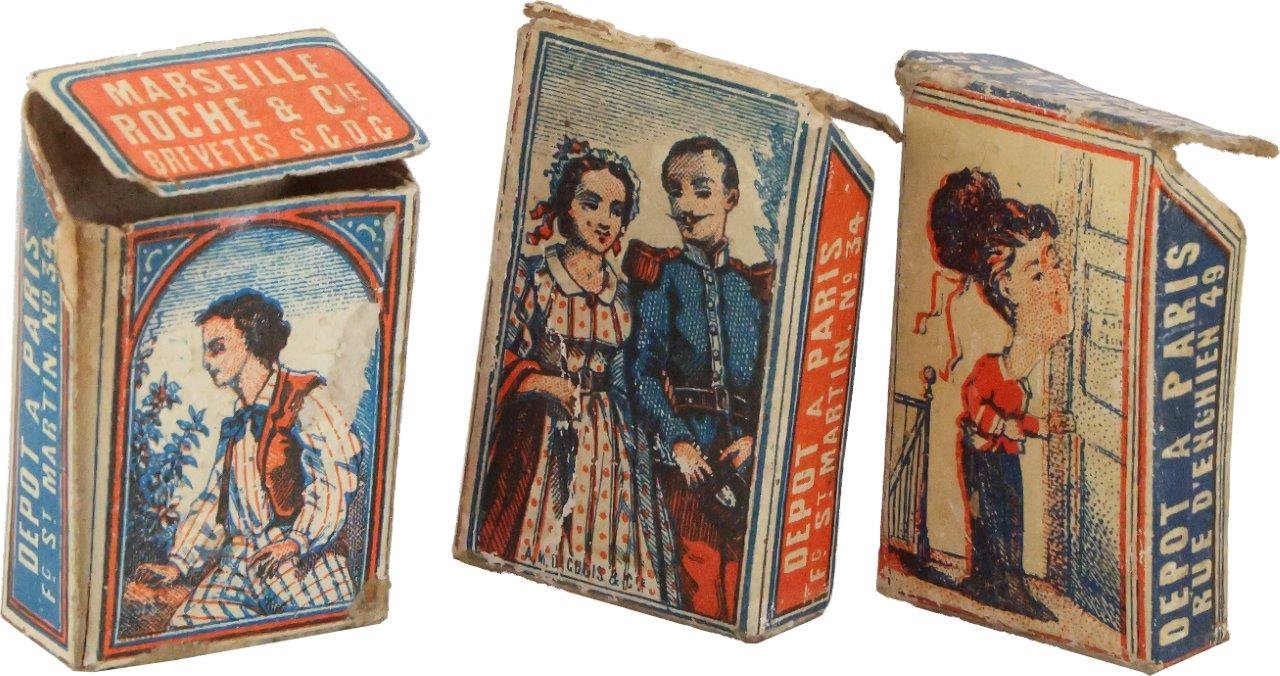 Roche & Cie, Marseille. Mini “prie-dieu” box ca. 1870, 40 x 25 mm
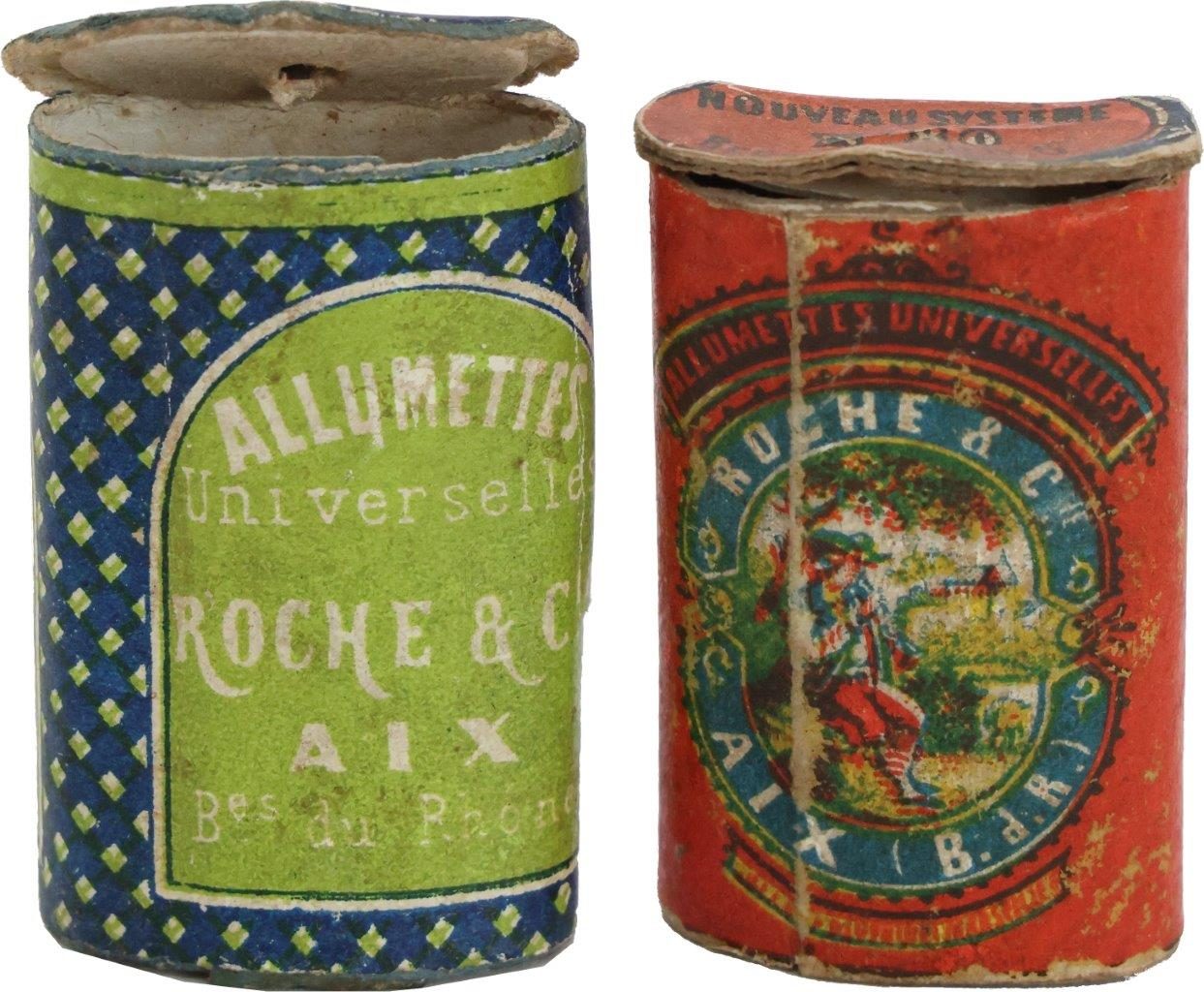 Roche & Cie, Aix-en-Provence. Ovoid box ca. 1860, 50 x 32 mm
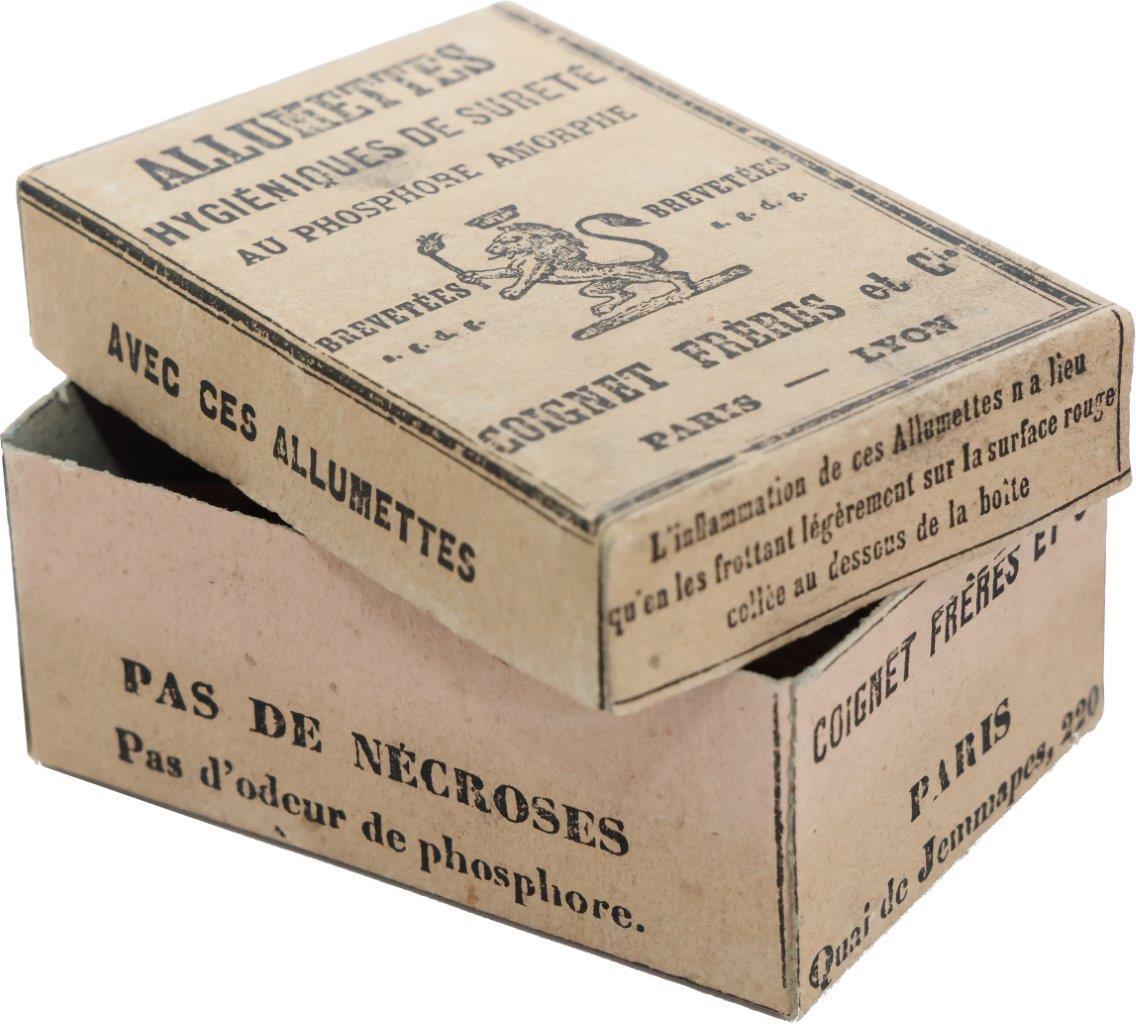 Coignet Frères et Cie, 1860, 100 x 68 x 40 mm, striker on bottom of box
In 1885 CGAC became Compagnie Générale des Allumettes Chimiques pour la France et L’Etranger (CGACFE).
On 30th December 1889 the French state decided to take over the monopoly under the direction of the Manufactures de l’Etat.
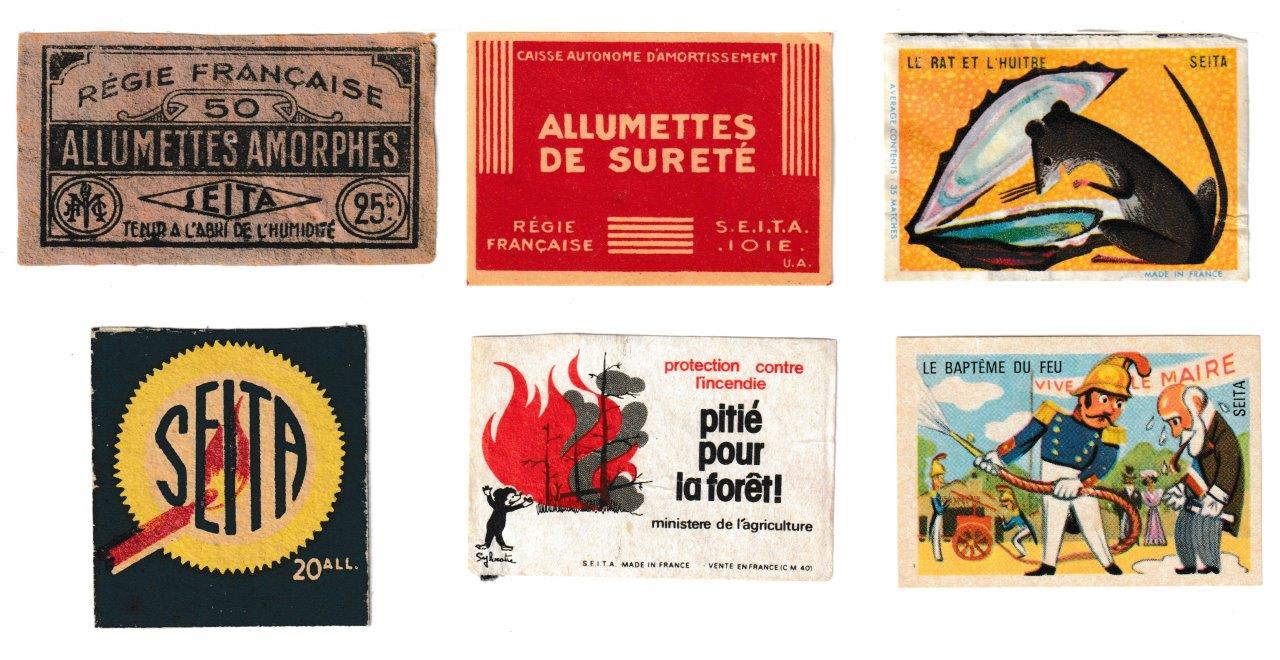
State Monopoly SEITA, 1935
In 1935 the tobacco and match monopolies were consolidated into SEITA (Service d’Exploitation Industrielle des Tabacs et des Allumettes).
Between 1872 and 1952 demand for matches decreased dramatically leaving only eight factories which were positioned across the country to facilitate easy distribution of the boxes. These factories can be identified by an index code on the label:
- A Aubervilliers factory
- B Bègles factory
- M Marseille factory
- N Macon factory
- S Saintines factory
- T Trelaze factory
- X Aix-en-Provenance factory
- Z Metz factory
By 1977 only the Macon, Trelaze and Saintines factories remained. All labels, skillets and bookmatches were produced at Macon.
Saintines was the last SEITA factory and closed in 1999.

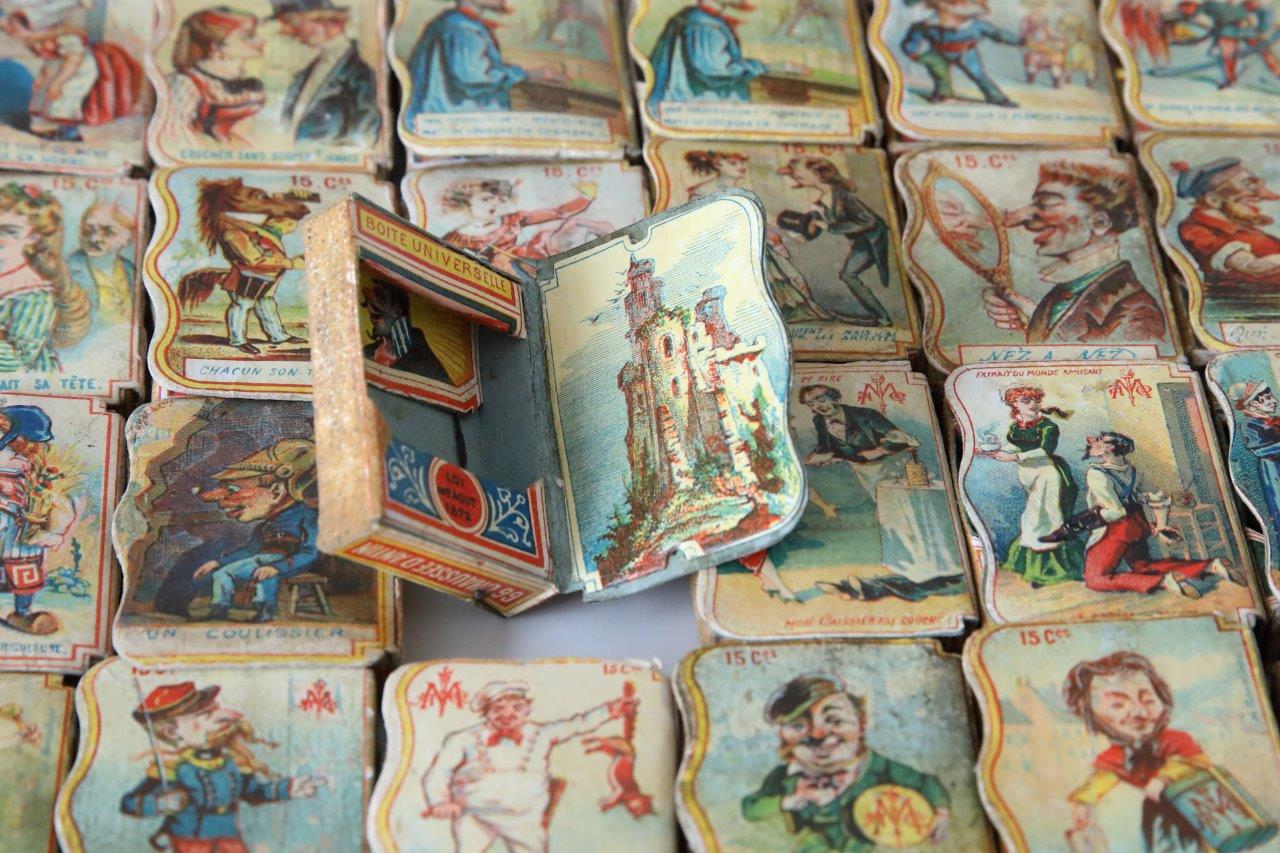
Bonus exhibit : Early French Matchboxes
My exhibit displays French matchboxes from the 19th Century and early 20th Century, including some very beautiful and intricate boxes that have survived intact to this day. The French match industry was one of the earliest in the world, starting around 1832. The well-known match factories of Caussemille Jne & Cie and Roche & Cie were among the world’s largest and well developed, employing exceptional graphic designers and operating extensive printing facilities. My exhibit focusses on some of the lesser known manufacturers and rarer boxes.
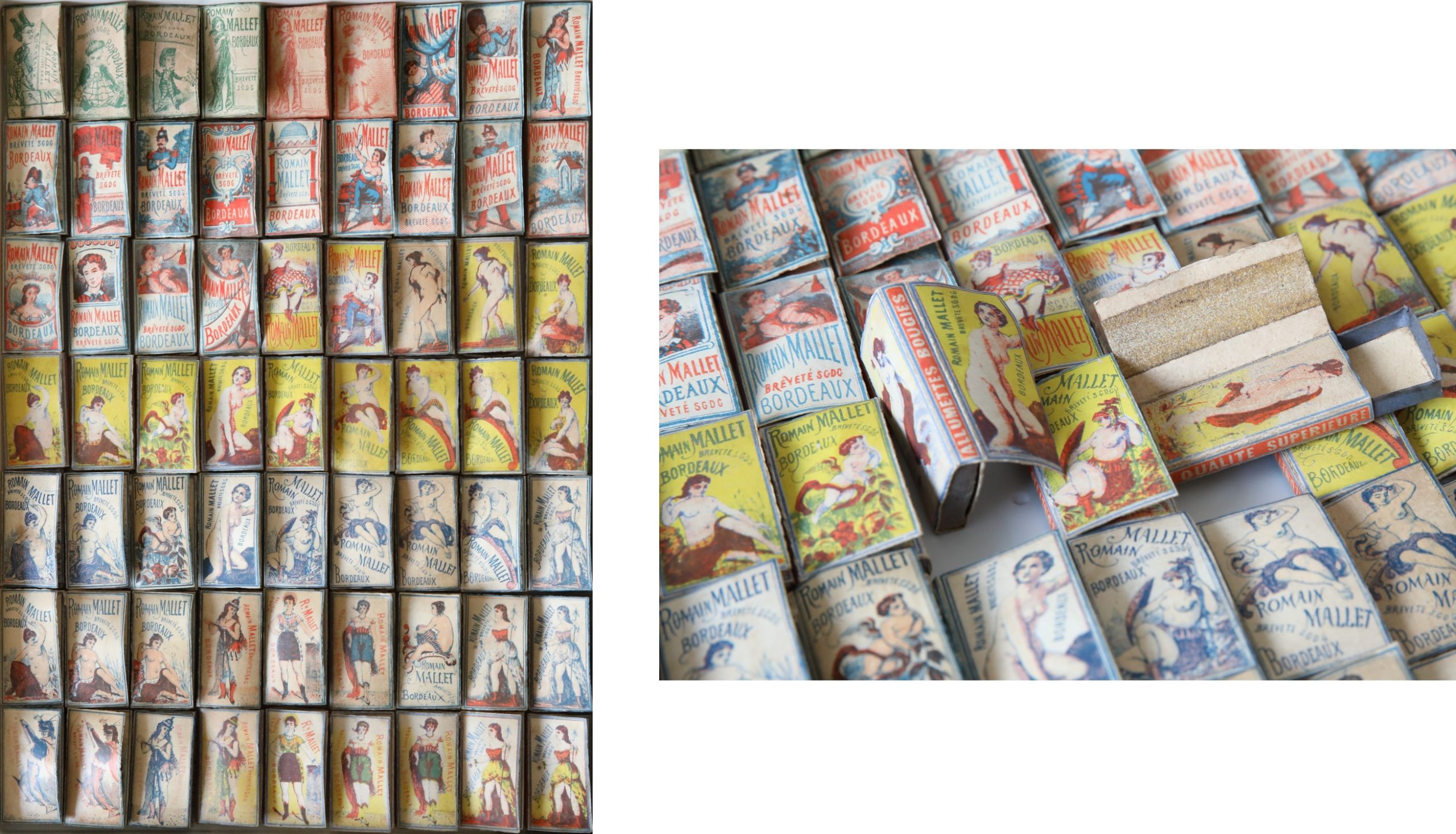
These small boxes are from the factory of Romain Mallet in Bordeaux. They date from around 1870 and measure 49 x 28 x 8 mm. Mallet produced many of these small boxes containing candle matches and mainly illustrated with female nudes.
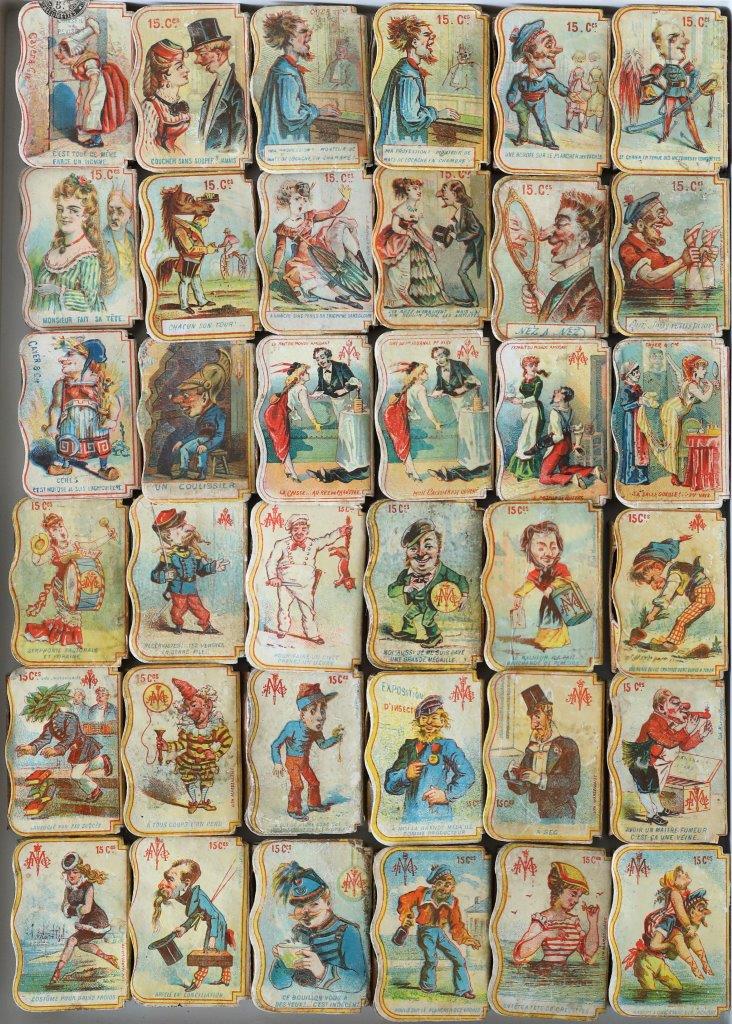
After the establishment of the monopoly in France in 1872 and the creation of the “Compagnie Générale des allumettes Chimiques“, the first boxes were based on Caussemille designs. This is the case for type 11D boxes, shown on the right, which date from around 1875. Boxes in the first two rows use patterns from Caussemille. On the top of the first box we can see the tax stamp with value 5c. The company operated from 1873 to 1885.
Type 11D boxes were sold until the early 1940s, by which time the matches had become too expensive. The beauty of the boxes had continuously decreased, and the last illustrations were in black and white.
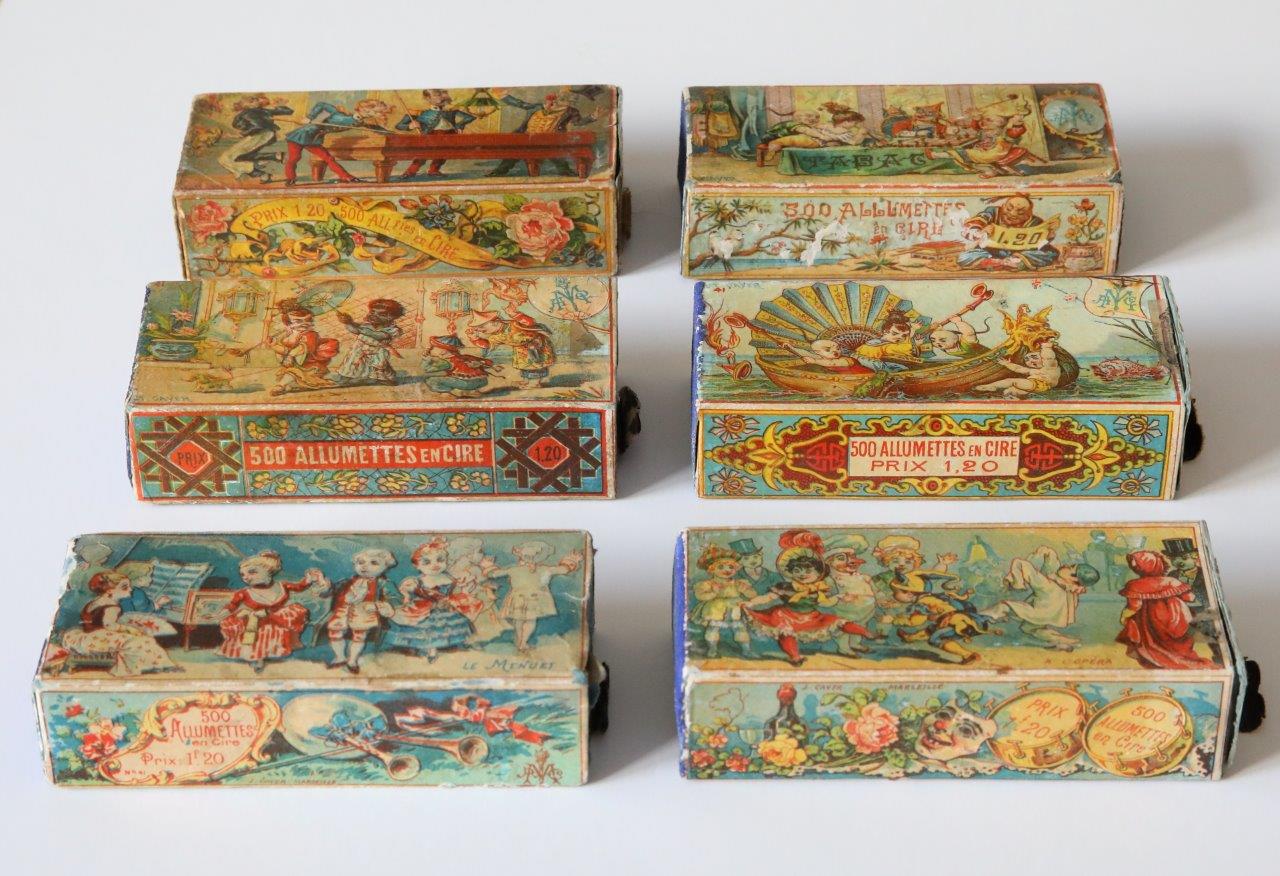
Large boxes of 500 wax matches were produced by Compagnie Générale des Allumettes Chimiques, which changed its name to Compagnie Générale des Allumettes Chimiques pour la France et l’étranger in 1885 and closed in 1889. We can easily imagine that the sales volume of these boxes was low.
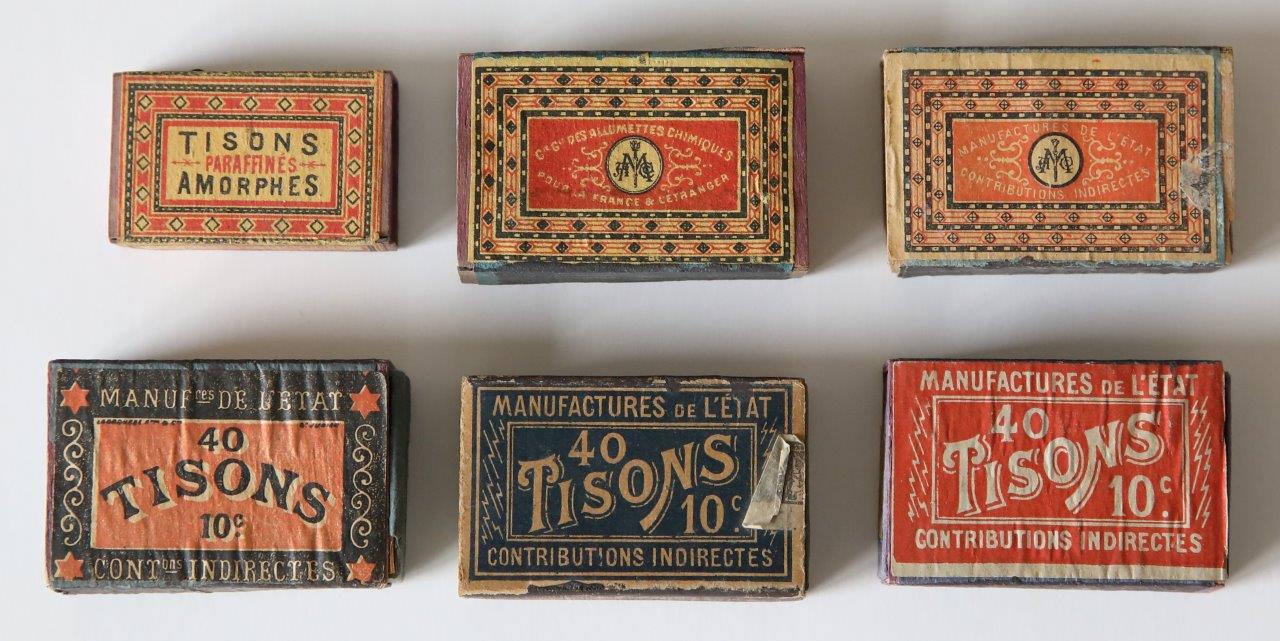
Tisons matches were found in several countries including Sweden and Great Britain. The first Tisons were imported from Sweden in the mid-1880s before being manufactured in France from 1887 to around 1940. The size of the matches, the contents of the boxes and the selling prices evolved over time and allow the boxes to be dated. More Tisons boxes are shown in the gallery below, click on an image to enlarge it.
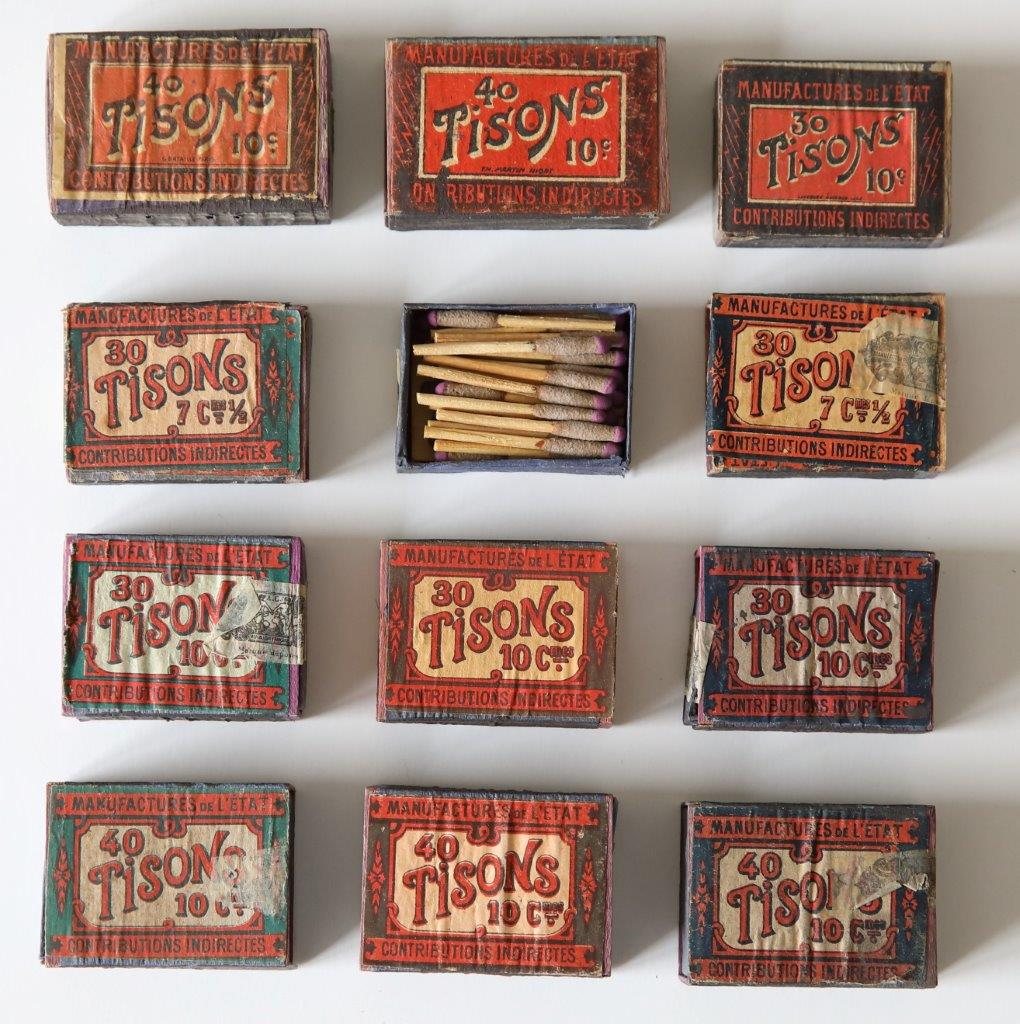 Tisons, pre-1910
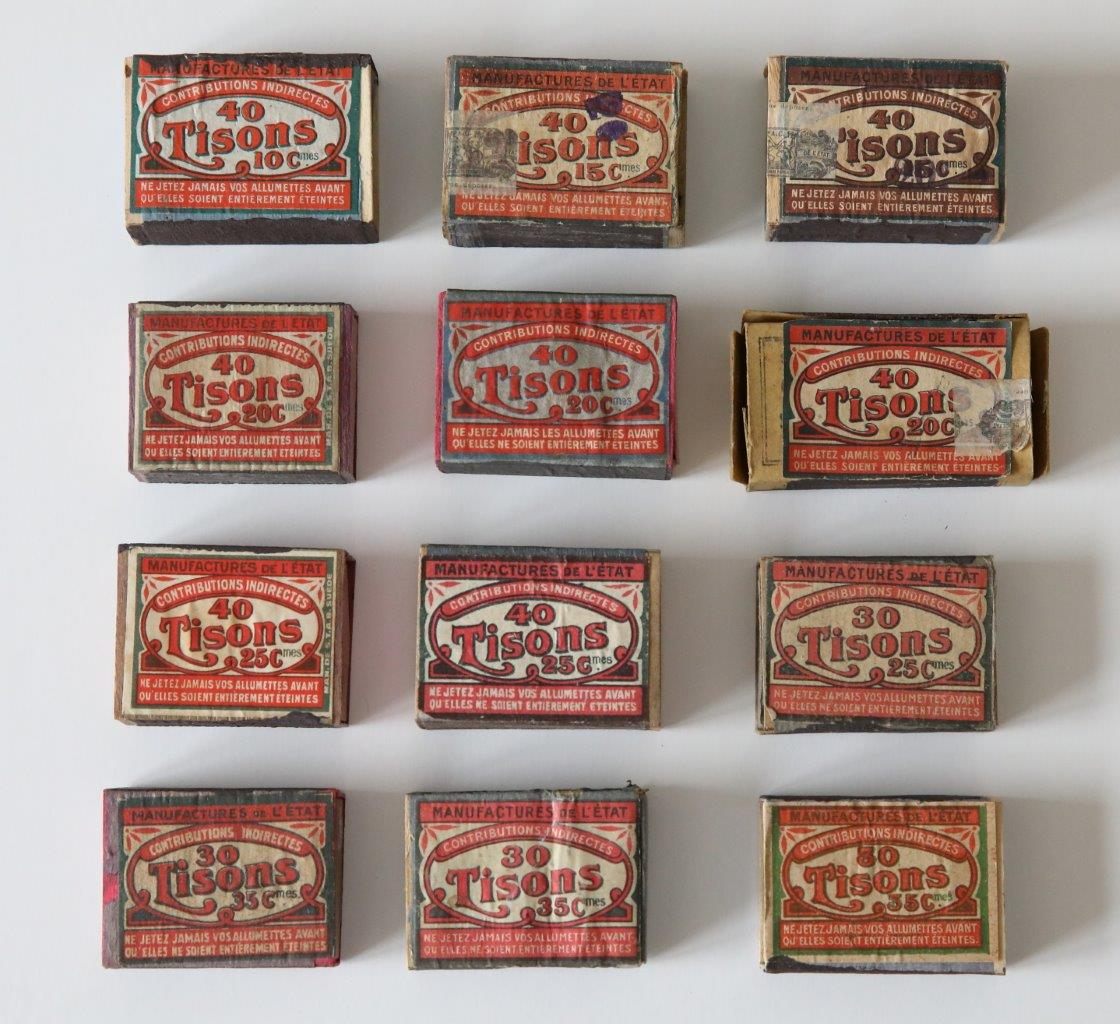 Tisons, 1910s - 1932
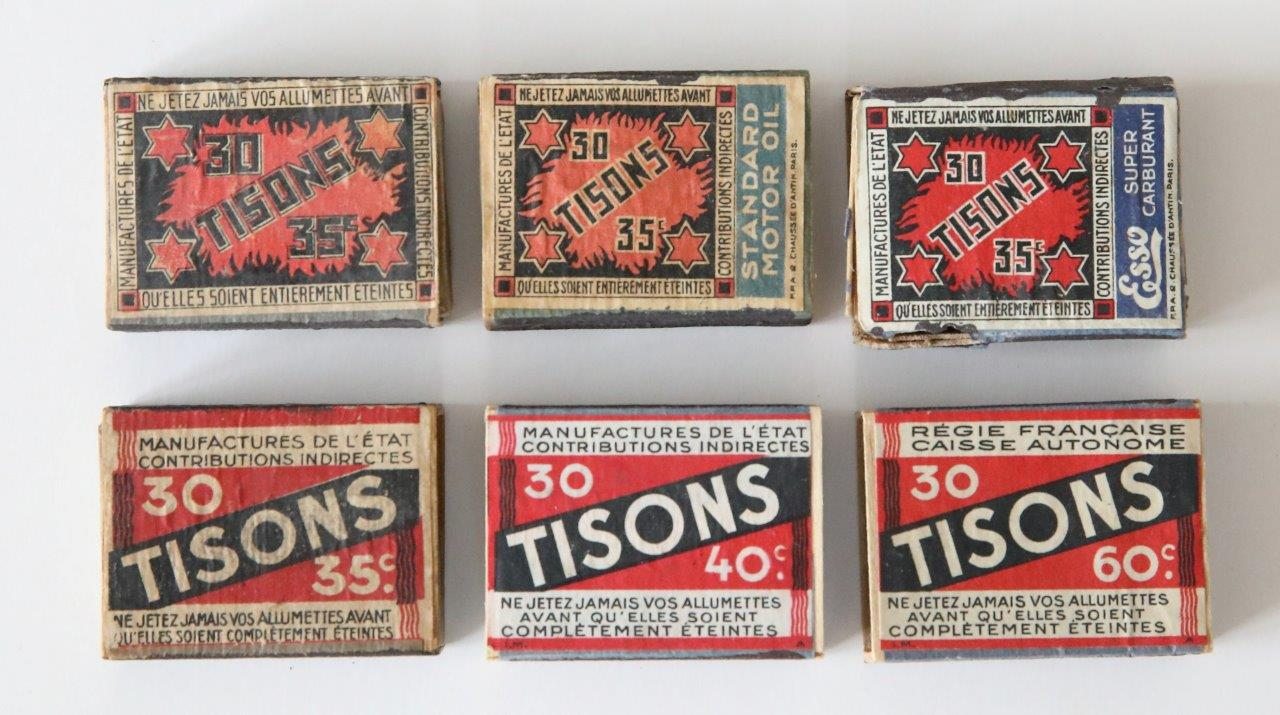 Tisons, 1926 - ca. 1940
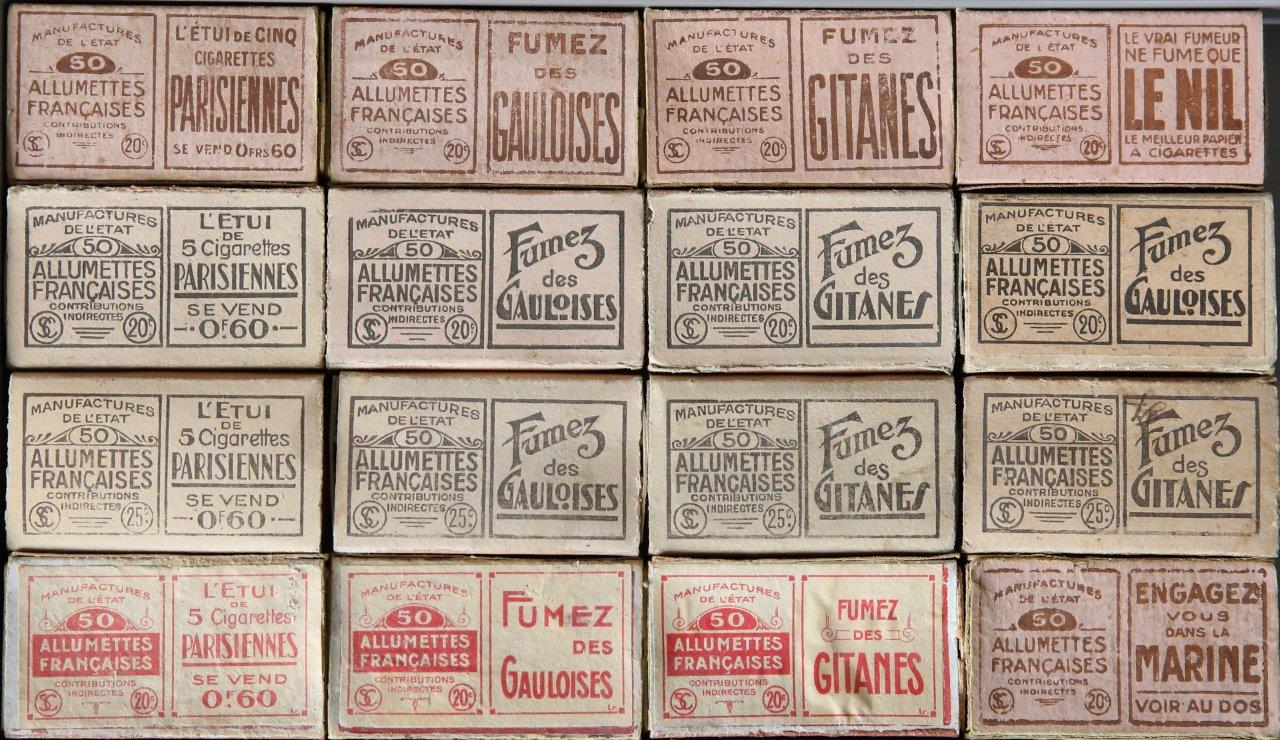
In the early 20th Century it became common to use matchbox labels for advertising. Match advertising in France began in 1924. These are some rare advertising boxes from the late 1920s, all for Cigarette brands except the very rare box “Engagez vous dans la marine”. The gallery below includes some larger advertising boxes (100 matches) from the 1940s which are also rare, click on an image to enlarge it.
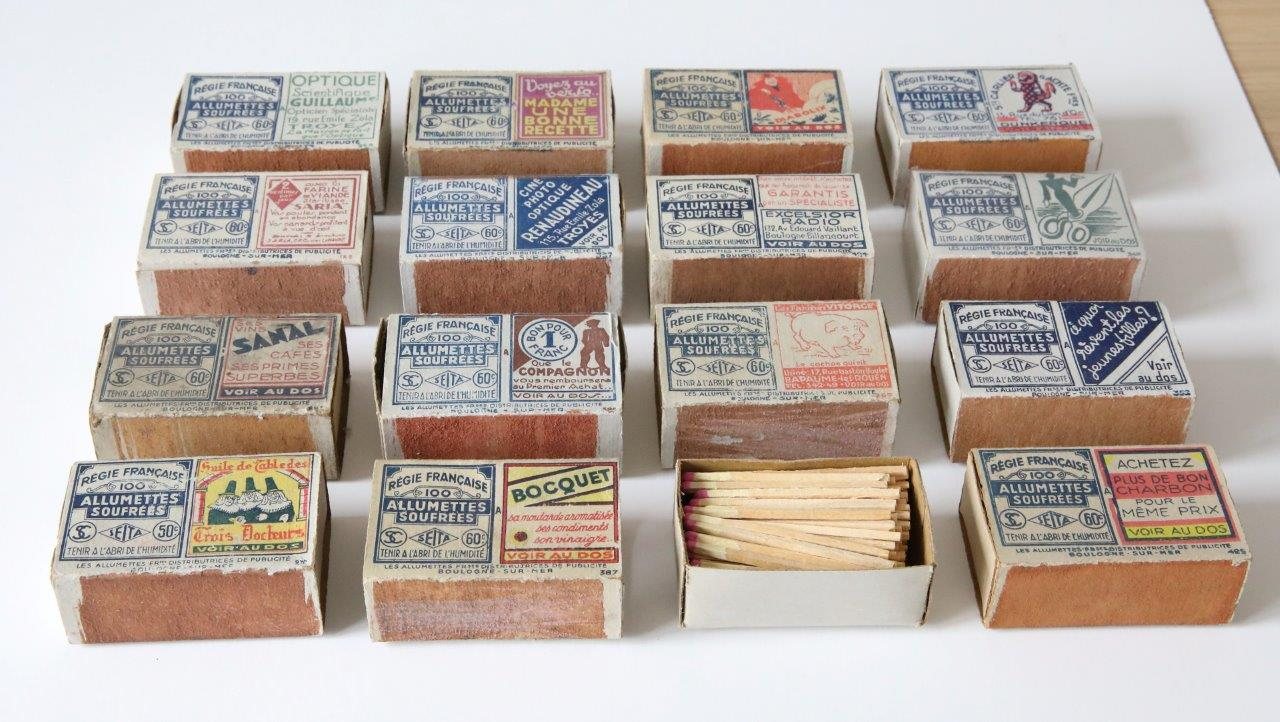 Advertising boxes, 1930s, front, 73 x 46 x 29 mm
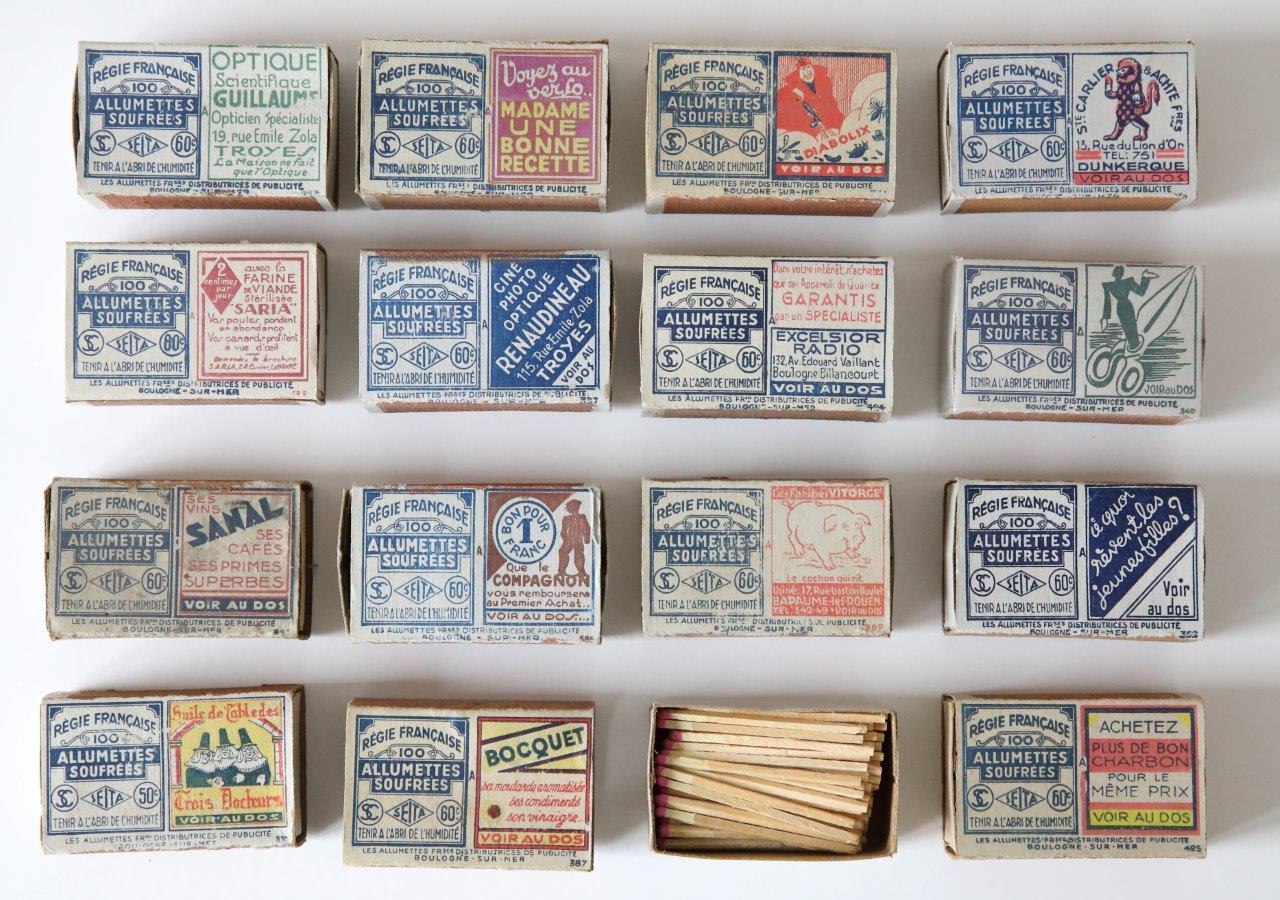 Advertising boxes, 1930s, front, 73 x 46 x 29 mm
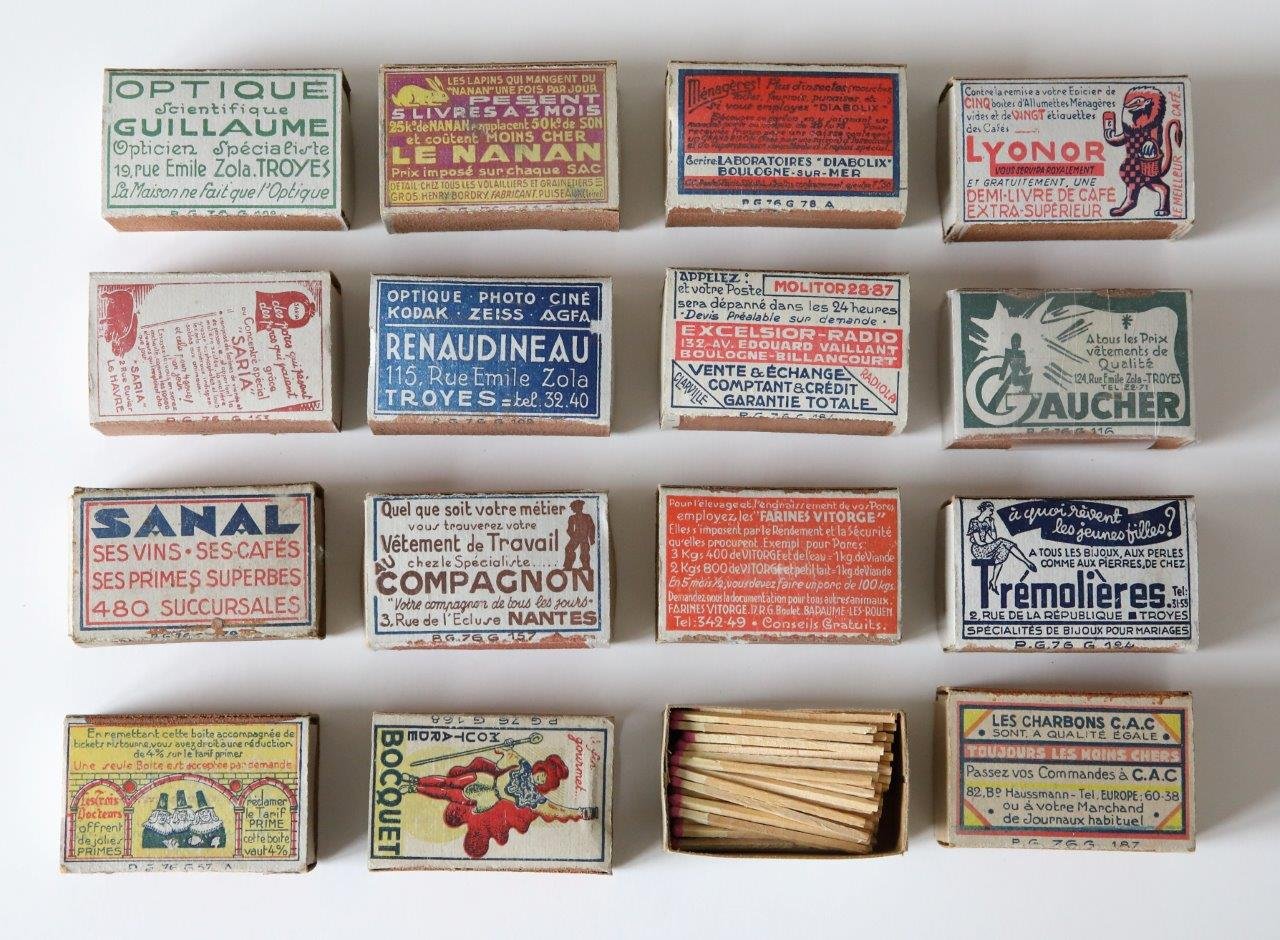 Advertising boxes, 1930s, back, 73 x 46 x 29 mm