Netherlands match industry

Exhibitors : Ad Jansen and Hans Everink
The match industry in The Netherlands began in 1844 when the Belgian Guillaume van Mechter founded a match factory in Rotterdam. In the 19th century the Netherlands was a land of farmers and the industrial revolution started rather late.
Holland was always a small player in terms of overall production, but the labels it issued are highly sought after by collectors. In 1920 the industry was taken over by Swedish Match which reduced the export production to virtually zero.
Below we present an introductory history of the Netherlands Match Industry, but if you would like a comprehensive, detailed history of the industry click on the Learn More button.
The beginning, 1844 – 1880
In 1844 Guillaume van Mechter opened a match factory called “De Nijverheid” in Rotterdam, after moving there from Belgium. The factory closed in 1848 after Guillaume’s death, and unfortunately no labels have survived.
In 1857 a factory was founded in The Hague by Jan Rudolf Frederik Nievergeld, but burned down in 1859
In 1870, H.J. Köster & Co. established a factory at the Drostenborg in Uiterburen near Zuidbroek with 54 employees, including workers from Germany. Köster’s partners withdrew in February 1872. After Köster won a lawsuit against them, he left for Germany on January 15, 1874, after which the factory burned down the same day. The operations were continued in Hannover. The matches were marketed either without a brand or with a Swedish label.
In 1870, the factory Mennen & Keunen was established in Eindhoven.
In 1870 Henry Sprengers started a factory in Teteringen/Breda. After a fire it was taken over by Van Hoogendijk & v/d Capellen, sold to Charles Johannes Loyens in 1885 and then to Eras & Paulson in 1907.
In 1873, Hoogendijk established a match factory on the estate De Rotterdamsche Kopermolen in Wenum, which was moved in 1877 to Wormen near Ugchelen. This factory was closed in 1892.
The factory of Dijkerman & Co was founded in Teteringen in 1873.
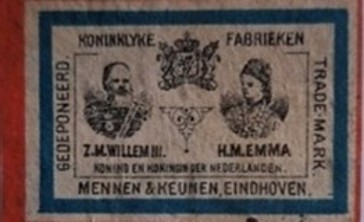 Mennen & Keunen label, after 1880
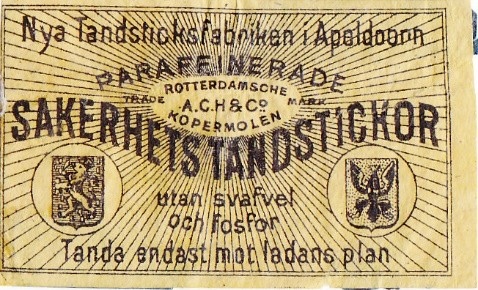 Kopermolen factory label
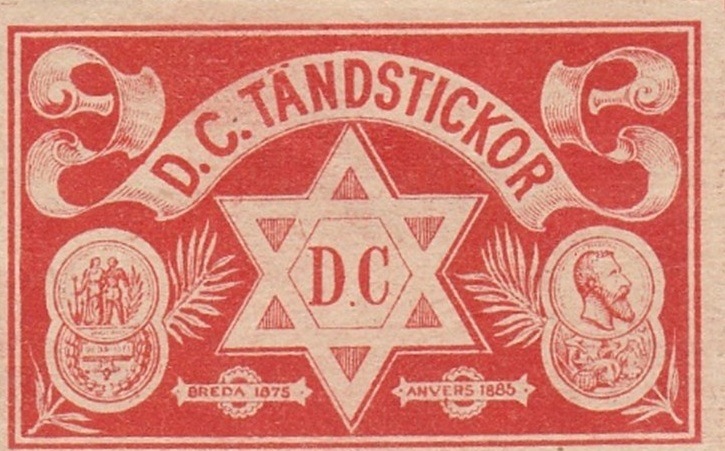 Dijkerman & Co label 1888
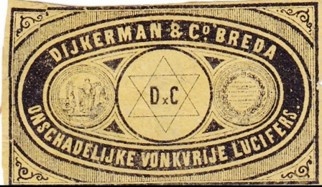 Dijkerman & Co label, 1876
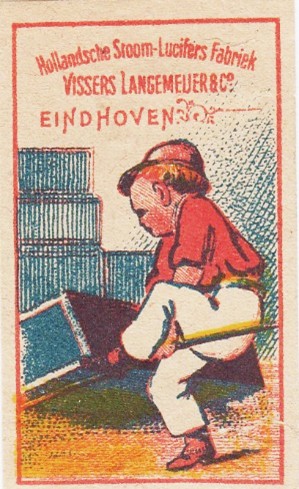
1880 to 1900
In 1880, Vissers & Langemeijer was established in Eindhoven. This factory was taken over by Mennen & Keunen in 1884.
In 1881, a facility for the production of safety matches was started in Roermond by Gabriëls, Geelen & Co., a manufacturer of potato starch, grape sugar, and shoe polish. Production continued here until 1885.
In 1882, Frederik de Leeuw established the Sallands Tändsticksfabriks “De Ooievaar” in Deventer, which was taken over by the brothers Rudolf and Hendrik van Otterbeek Bastiaans. The factory was closed in 1889.
In 1883, the factory De Eem of the firm Beuker & Van der Valk in Amersfoort began operations. It was closed in 1887.
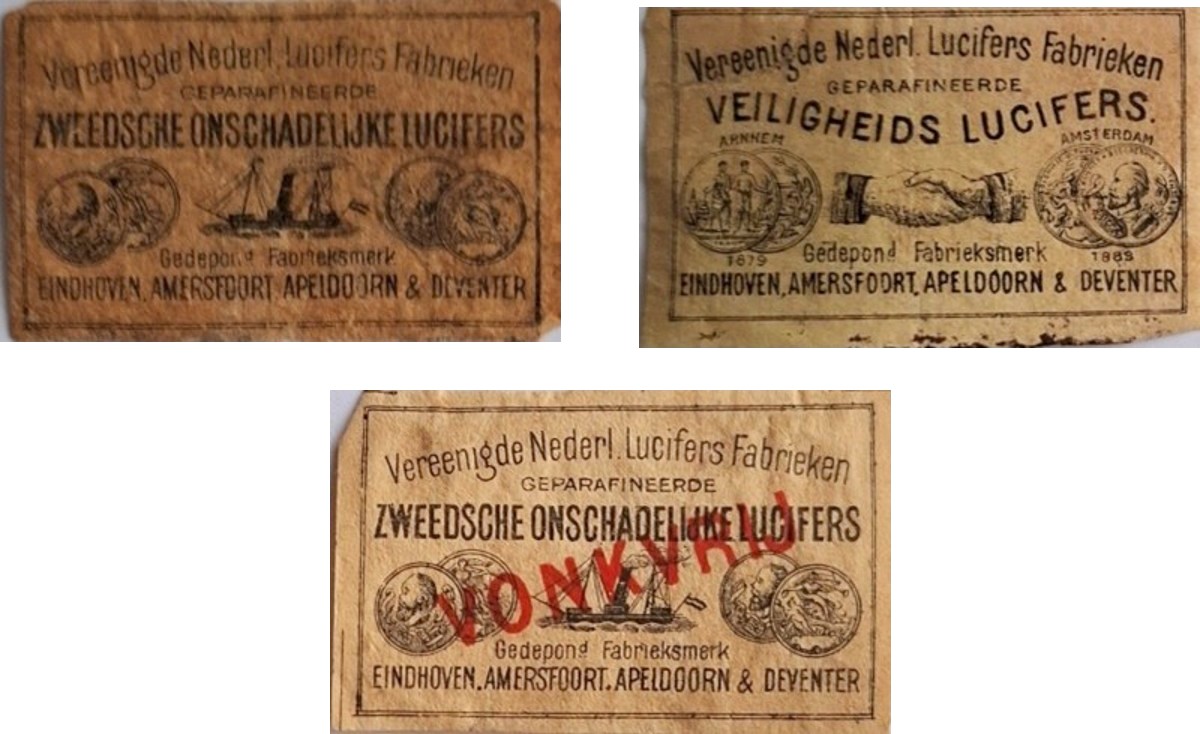
In 1887, overcapacity arose. The United Dutch Match Factories (VNLF) was established, consisting of factories in Eindhoven, Deventer, Amersfoort, and Apeldoorn. The latter factories were gradually closed.
In 1895, Hermann Johann Köster founded the Lumen Match Factory in Schiedam, which burned down in 1896. The factory was then continued in Amsterdam from 1897 to 1899.
The 20th Century
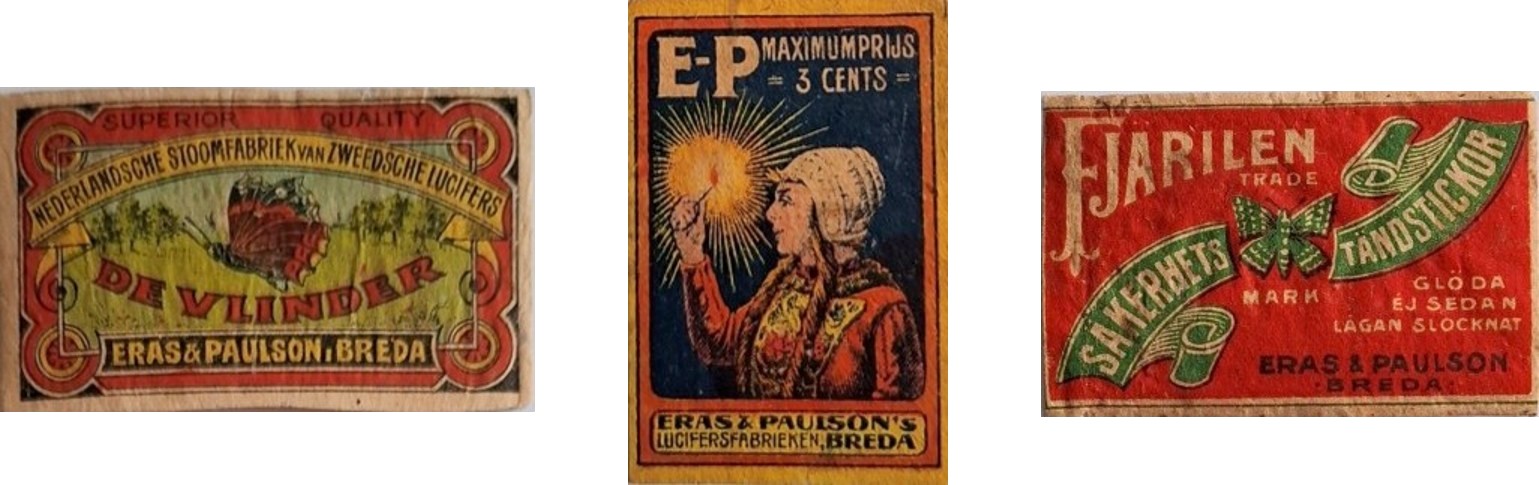
In 1907, Charles Loyens’ Breda factory was sold to Eras & Paulson. Anders Paulson had invented a filling machine (Paulson had four patents: for inner and outer box machine, box filling and completing machine). The factory was closed in 1967.
In 1908, a match factory was established in Venlo, named Neuss & Co.
In 1916, Charles André Loyens started a new factory in Roosendaal. Charles André was a son of a brother of Charles Johannes in Teteringen/Breda
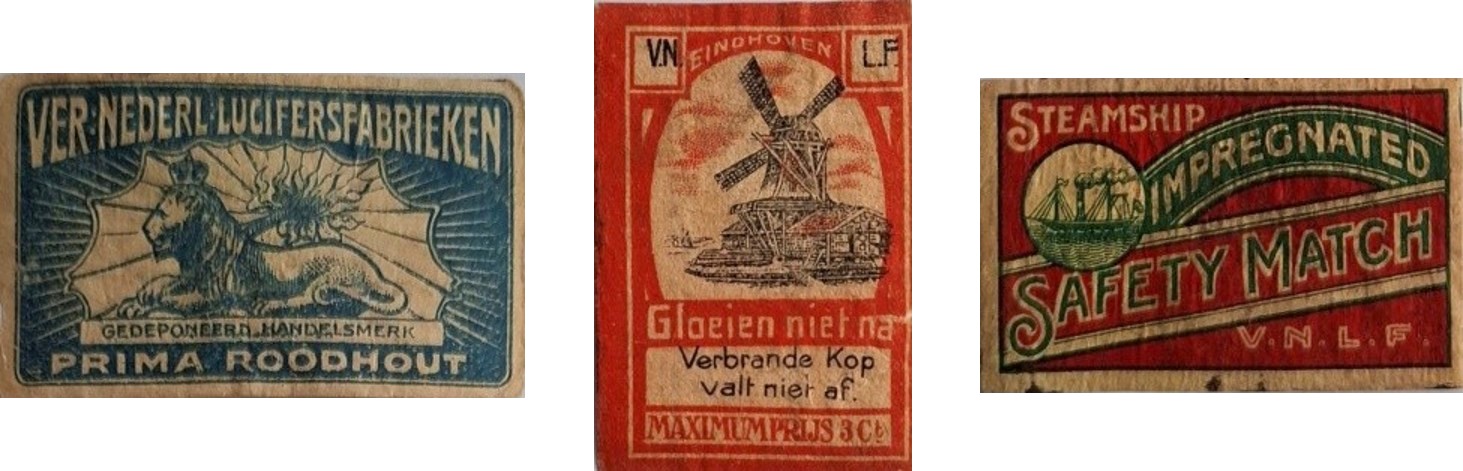
In 1920, the Swede Ivar Kreuger bought up all the remaining Dutch match factories in order to establish a monopoly. These included factories in Breda, Teteringen, Roosendaal, and Eindhoven. He merged them into the Vereenigde Hollandsche Luciferfabrieken (VHLF). The factories in Roosendaal and Teteringen were closed, and the remaining factories were incorporated into Swedish Match.
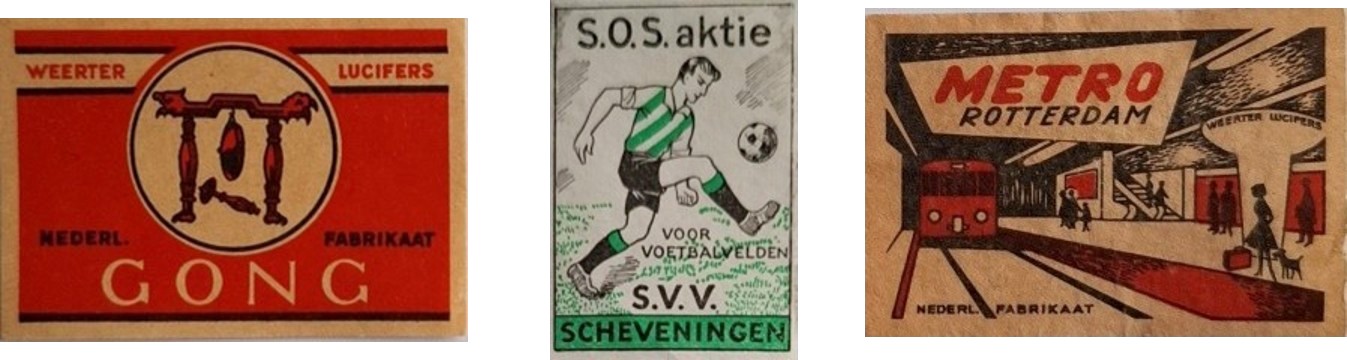
In 1936, Frans Otten built a factory in Weert, which produced Vlinder Matches (with butterfly images on the label) and Weerter Matches. This factory was closed in 1967.
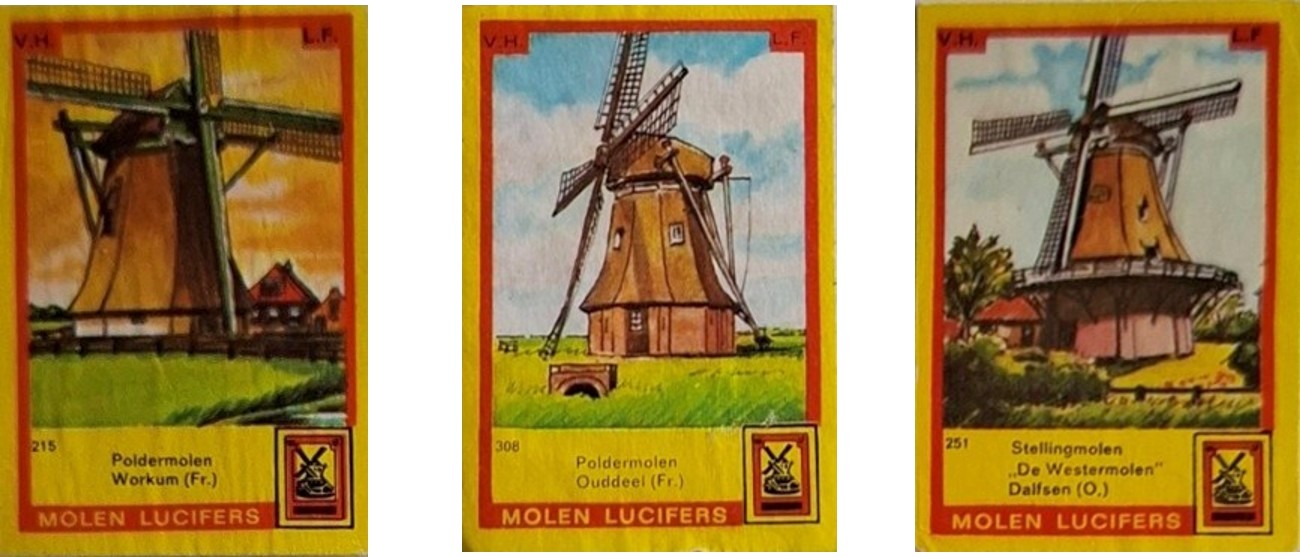
In 1967, VHLF built a modern factory in Eindhoven. Breda and Weert were closed. This is where Molen Matches (with windmills on the label) were produced.
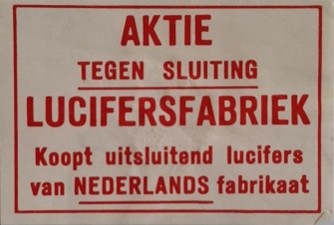
In 1979, production in Eindhoven was discontinued, and with it, the match industry disappeared from the Netherlands.

Bonus exhibit : Same label, different words
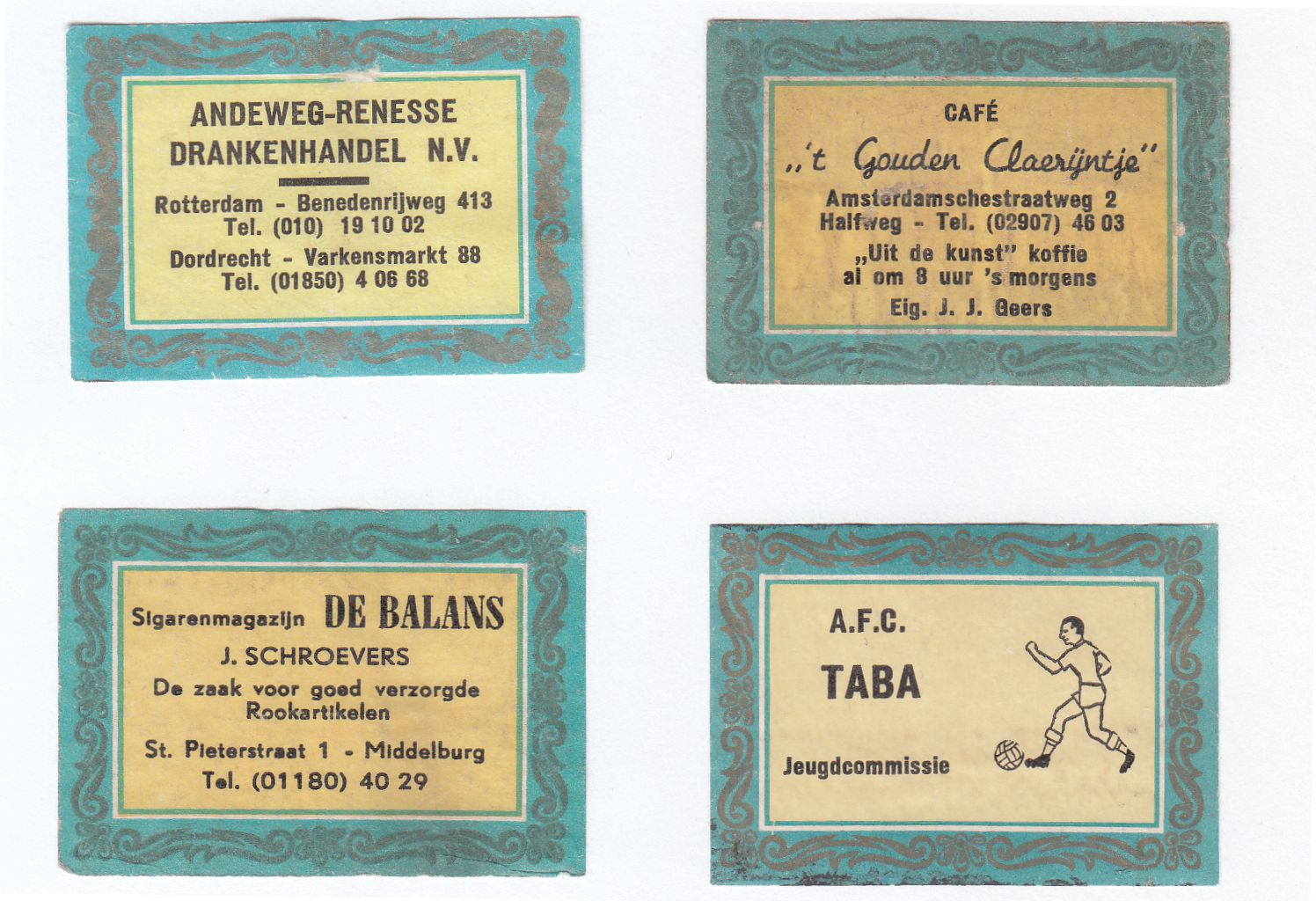
In The Netherlands a lot of labels were issued from the end of the 1950’s until the mid 1970’s with a same design layout. But all these labels have different names on them.
In this Exhibit I will show you the most common labels that were available, as a sample of everything that was issued at the time. Although similar label designs can be found from Denmark, Sweden, Switzerland and Finland, the labels I am exhibiting here are not commonly known outside The Netherlands.
It is very difficult to get all these labels in your collection, as we are still discovering new labels which have not been documented.
Click on an image in the gallery below to enlarge it.
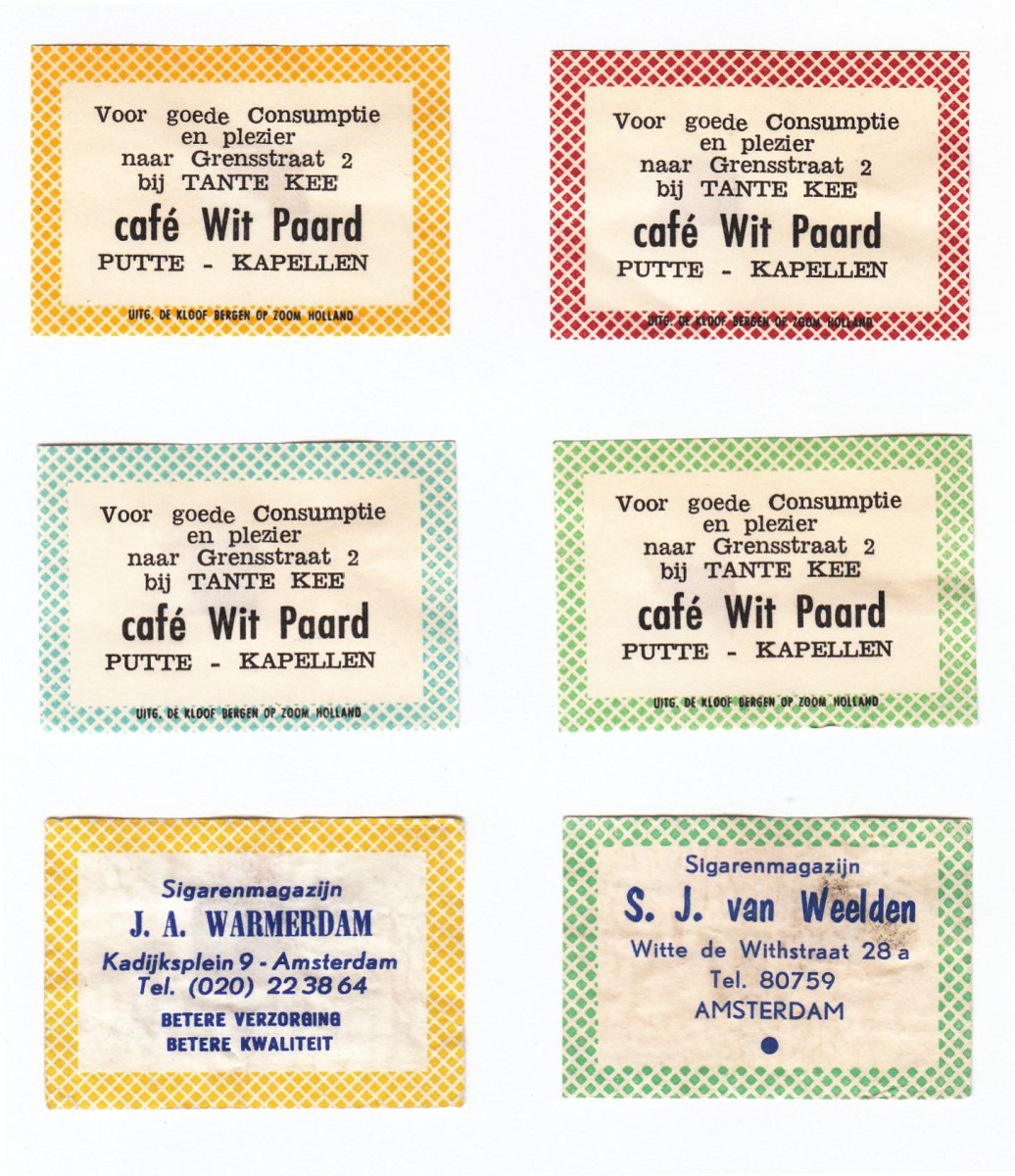 Square pattern border in 4 colours, about 4900 different names known
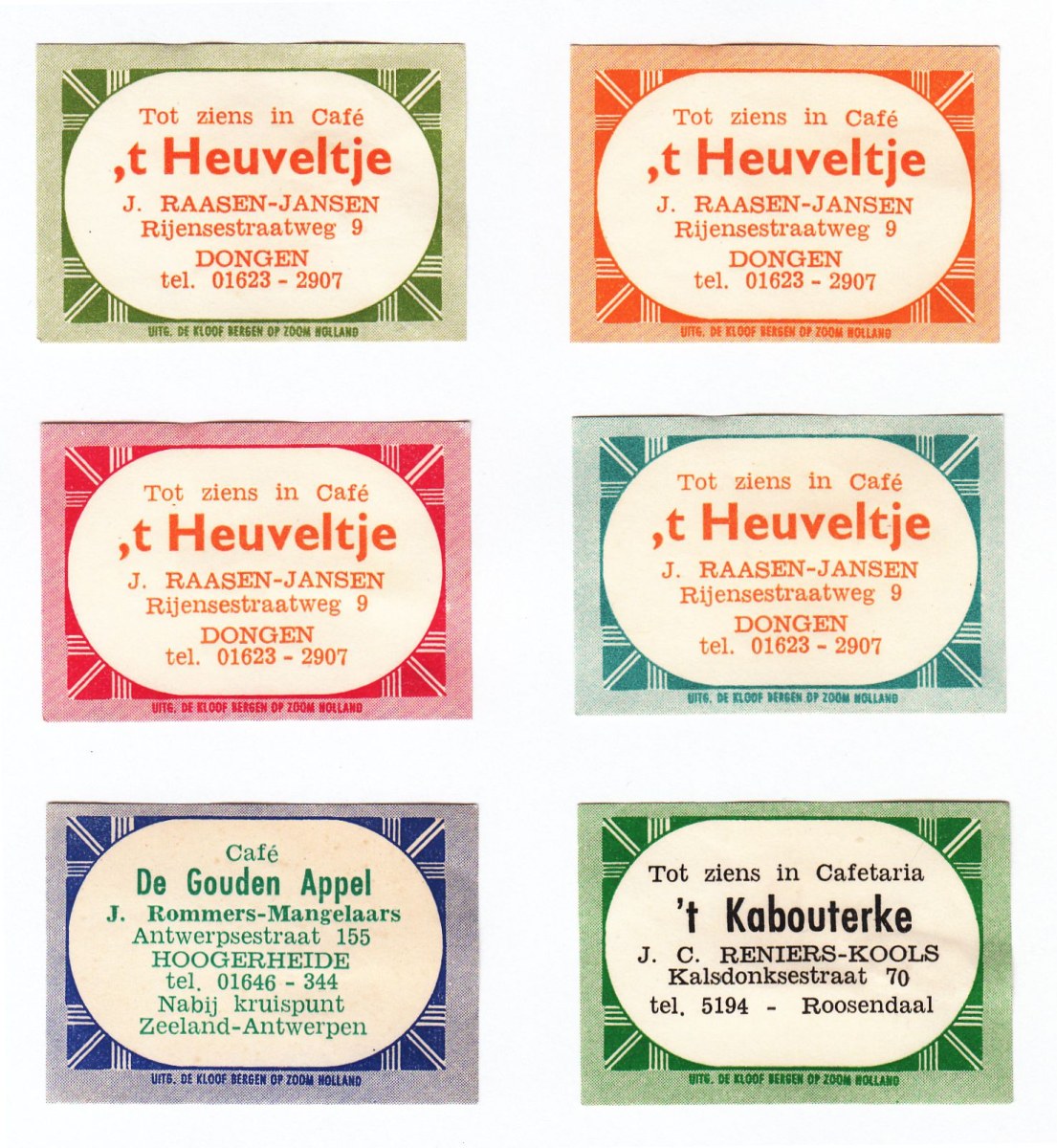 Oval labels in 4 colours, about 2100 different names known
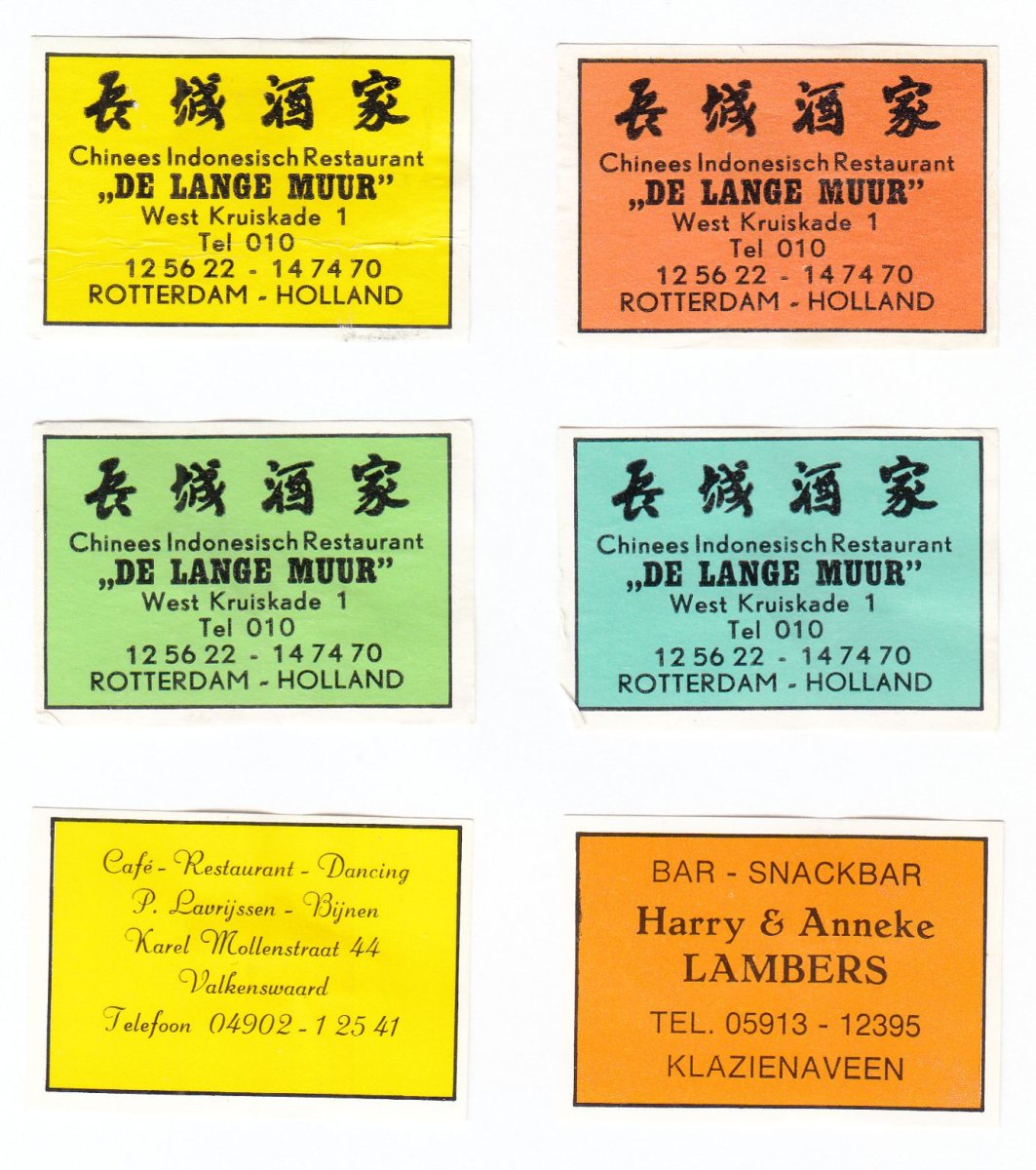 4 different colour labels, about 2700 different names known
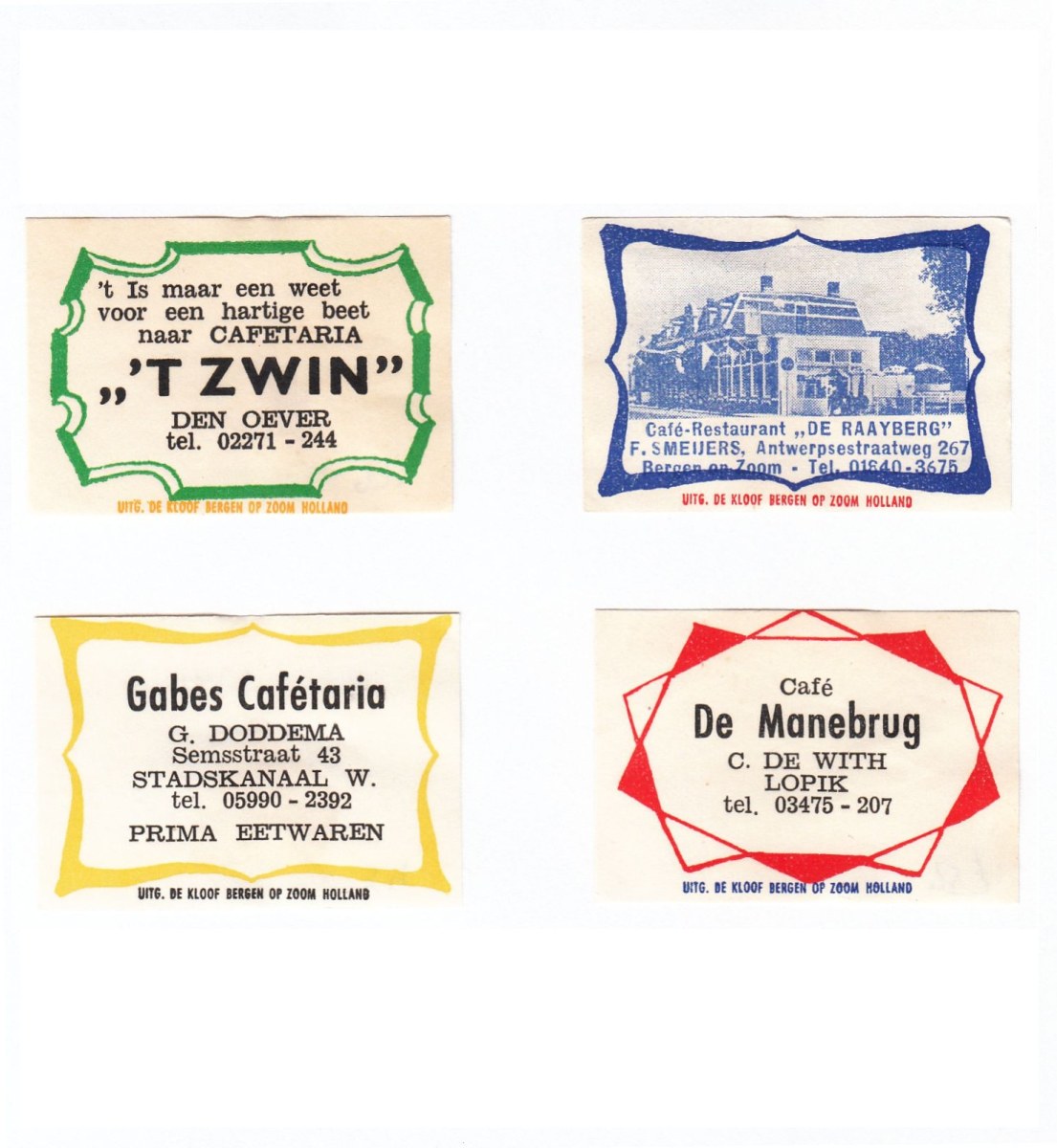 4 different borders, each in 4 colours, about 1050 different names known
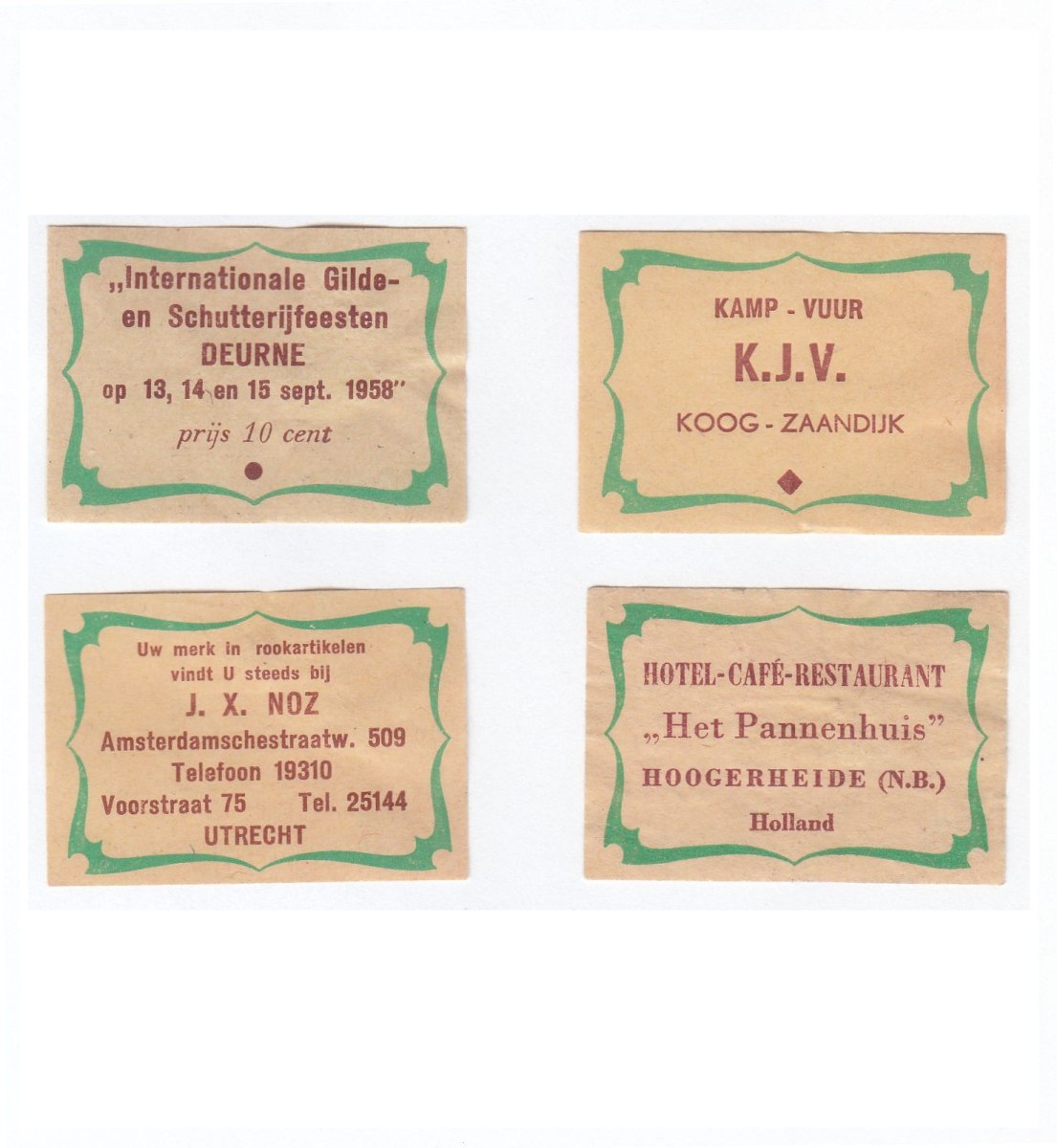 Green border labels, about 350 different names known
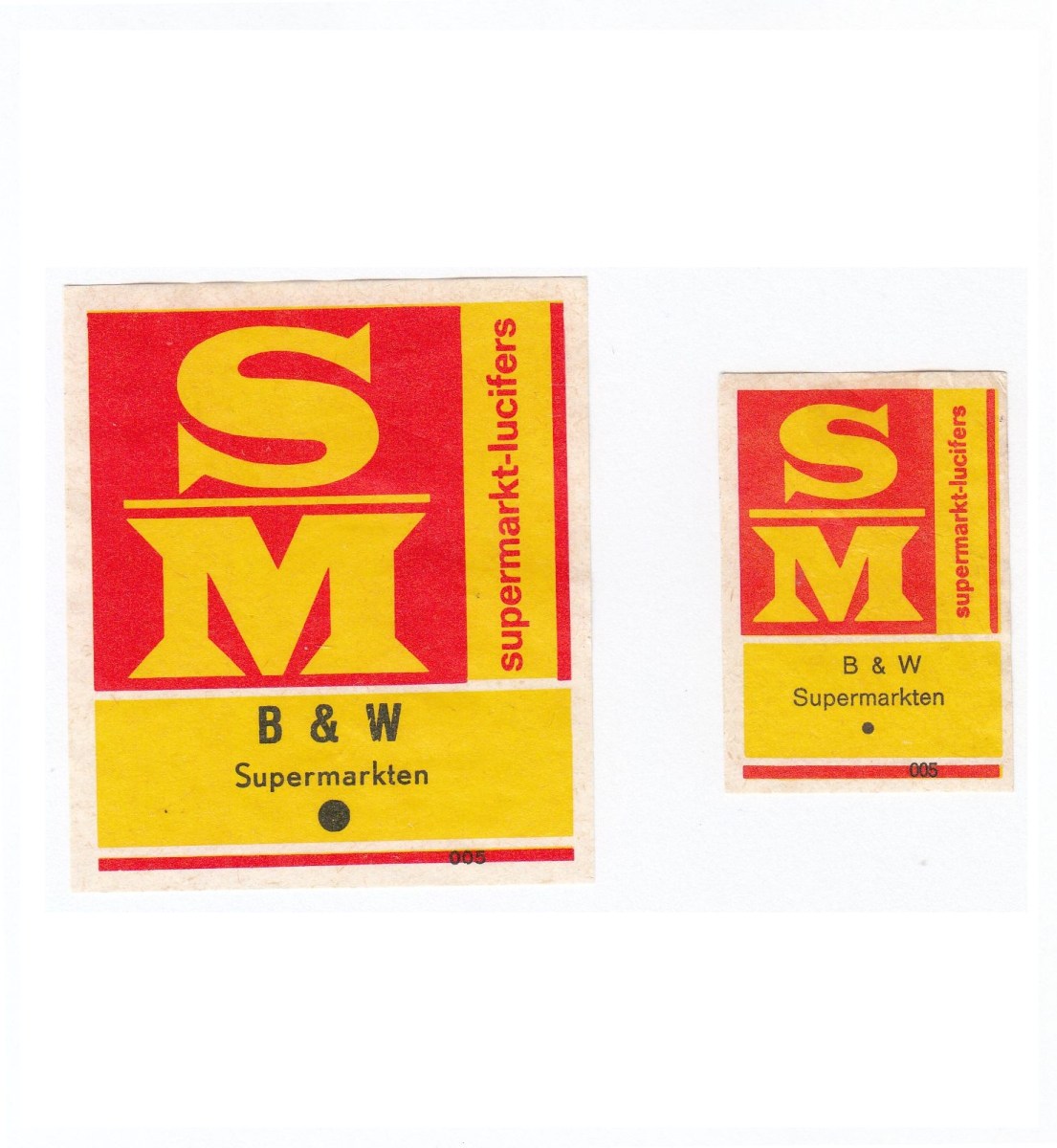 More than 90 labels known. These were numbered to 61, but different issues with same number
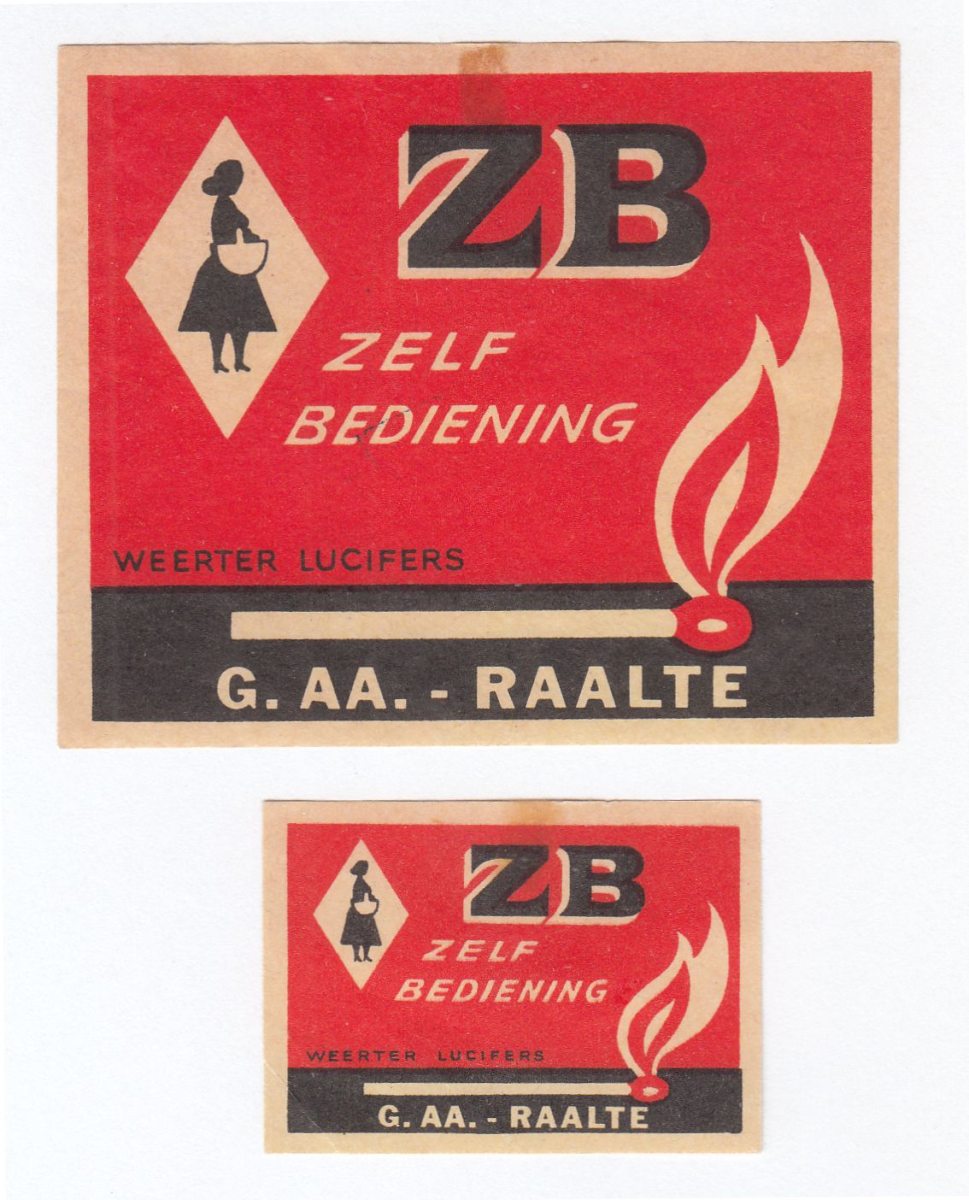 About 152 different labels known including Packet labels
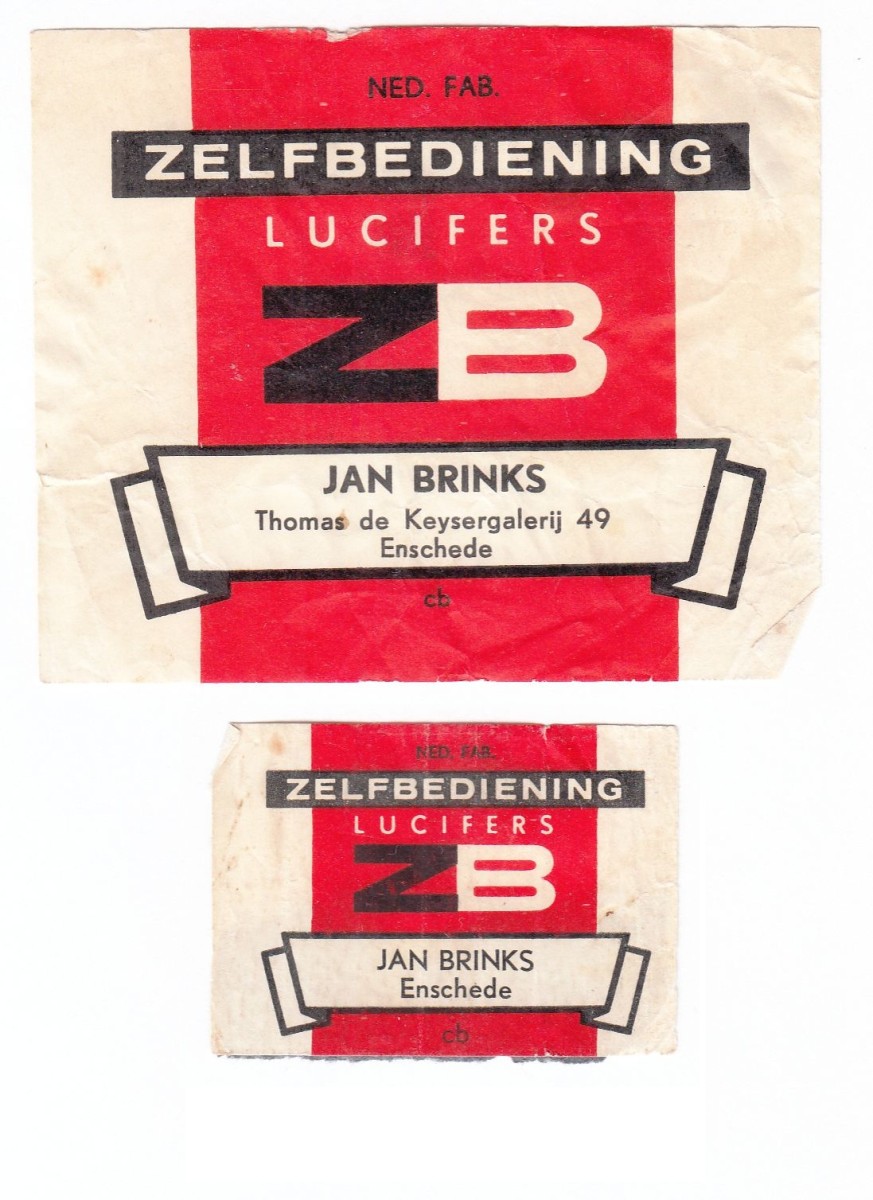 About 110 different labels known including Packet labels
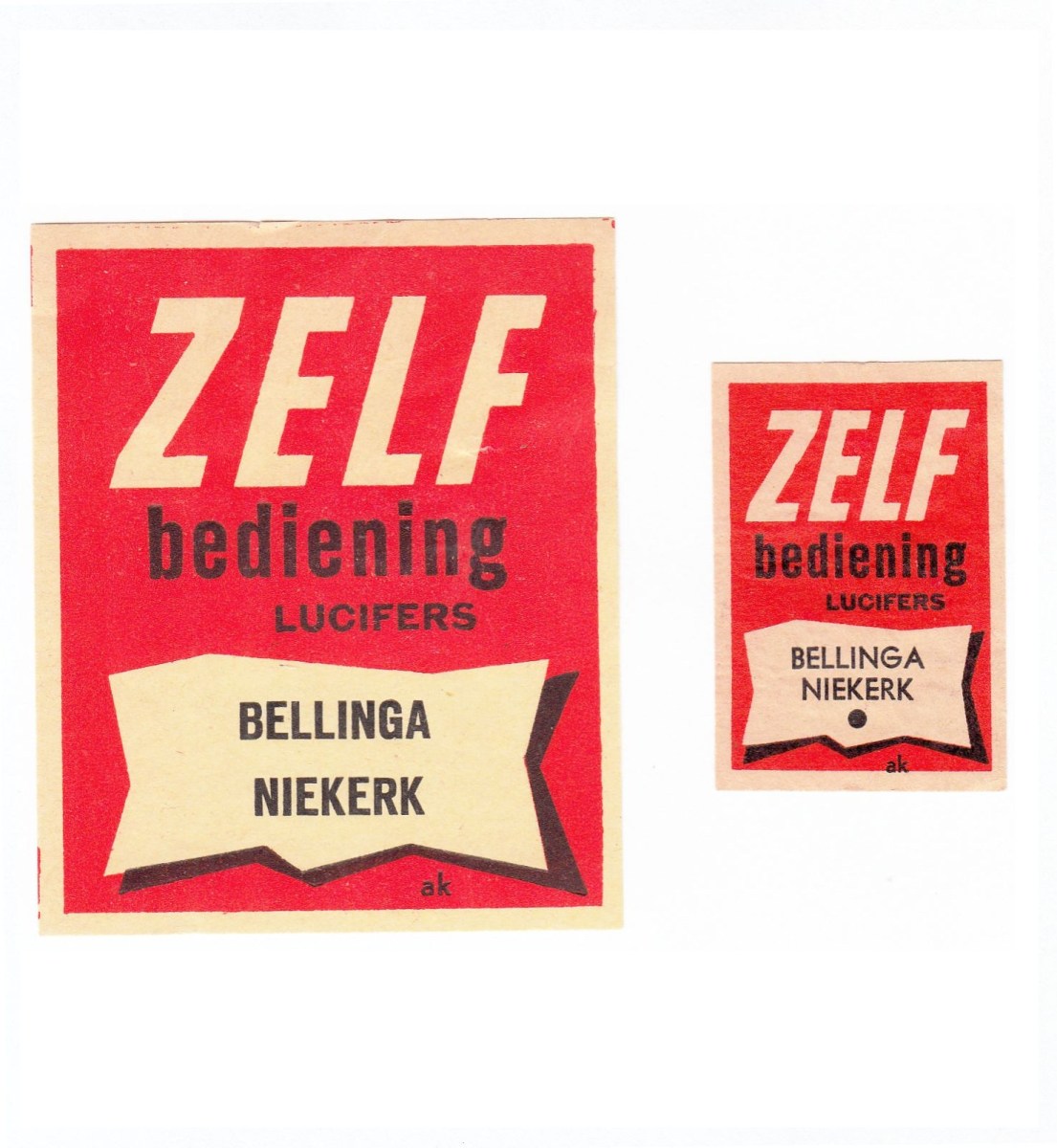 More than 500 different labels known including Packet labels