The Salvation Army match factory
Exhibitor : James Oxley-Brennan
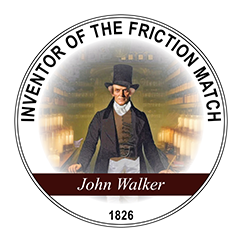
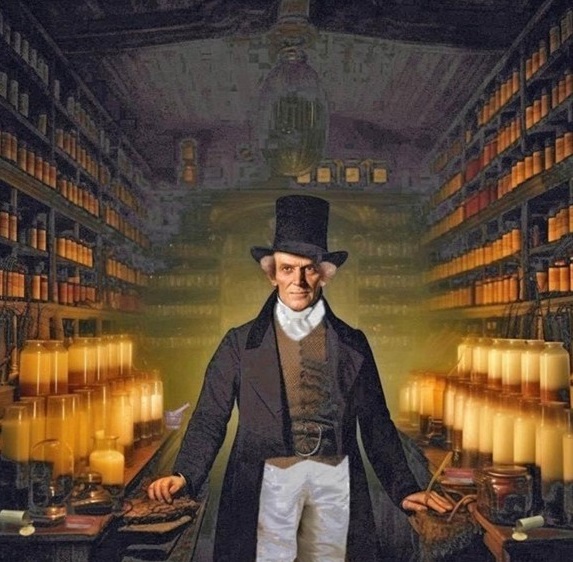
For about thirty years after John Walker’s invention of the Friction Match in 1826, the only type of matches in circulation were the Strike Anywhere variety which could be struck on any rough surface.
In 1833 phosphorus friction matches were introduced, and were known as ‘Iucifers’ or sometimes ‘congreves’. It made the match easier to strike, but white phosphorus was a very dangerous ingredient and its use led to a severe form of necrosis, which entered the body though decayed teeth, and rotted the jawbone. It was to be a scourge of the match industry until the early 20th century, and was popularly known as phossy jaw.
In 1888 women and girls at Bryant & May’s factory went on strike as a protest against bad working conditions, exploitation and poor pay.
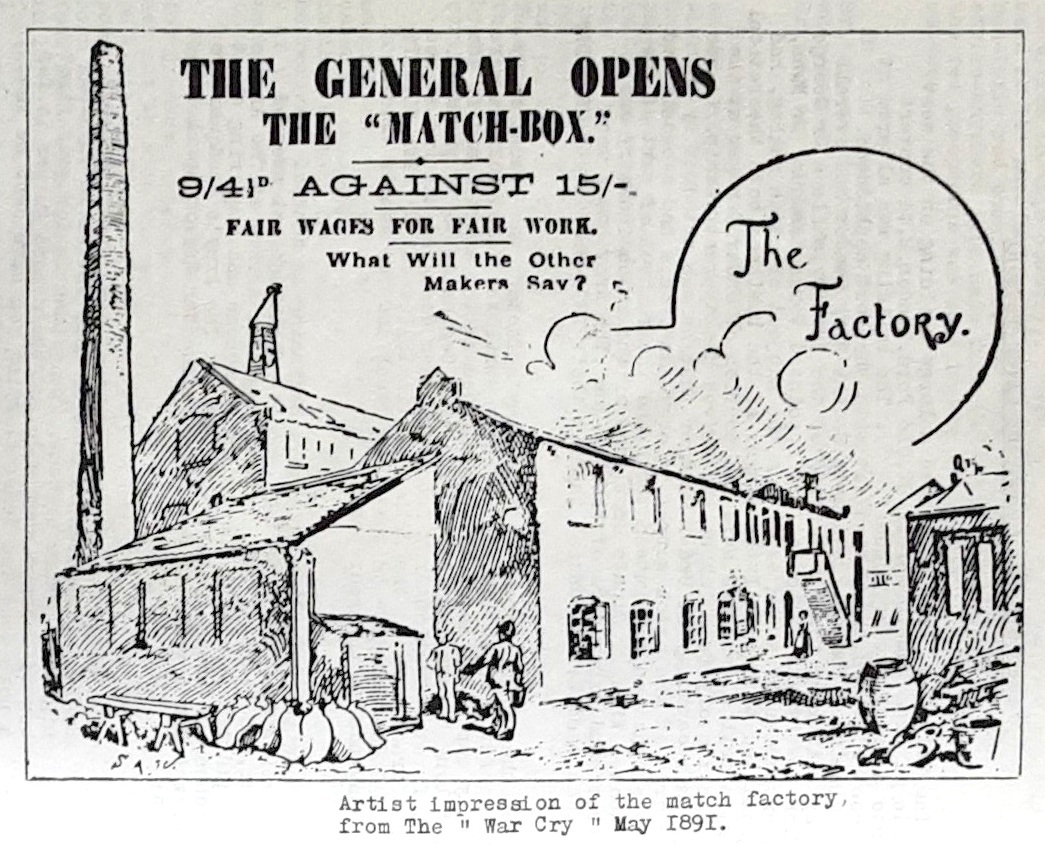
Three years later the Salvation Army opened its own match factory in Lamprell Street, Old Ford, London.
There were two other match makers in the area : Palmer at their Palace works and Bryant & May in Fairfield Road, Bow.
The Safety Match
So called because the chemicals needed for ignition are divided between the match head and the striking surface on the box. Strictly speaking, this term is a trade description.
After various developments in the 1840s Johan Lundström, a Swede, devised a formula in which chlorate of potash was included in the match head composition while amorphous phosphorus was added to the striking surface of the box. Lundström did not patent his invention until 1855 and sold the British rights to Bryant & May for £100. The first British patent for Safety Matches (No. 1854) was registered by Francis May on 15 August 1855.
The Salvation Army takes a stand
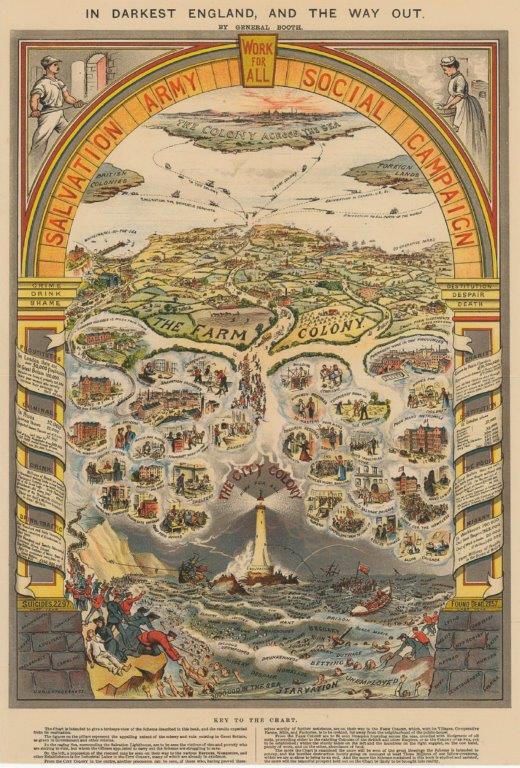
After the upheaval at Bryant & May’s factory in 1888 General William Booth, the founder of the Salvation Army, decided to make his own investigations into the state of the British match industry. As he travelled around the East End of London he came face to face with girls from the various match factories who were oppressed by sweated labour and “phossy jaw” (caused by the use of poisonous white phosphorus in the making of Strike Anywhere matches).
It was this that made Booth decide to set up his own factory to produce only Safety Matches. Other match makers knew of the danger of white phosphorous but took little or no action to alleviate this, fearing a cut in their profits and the threat of foreign competition.
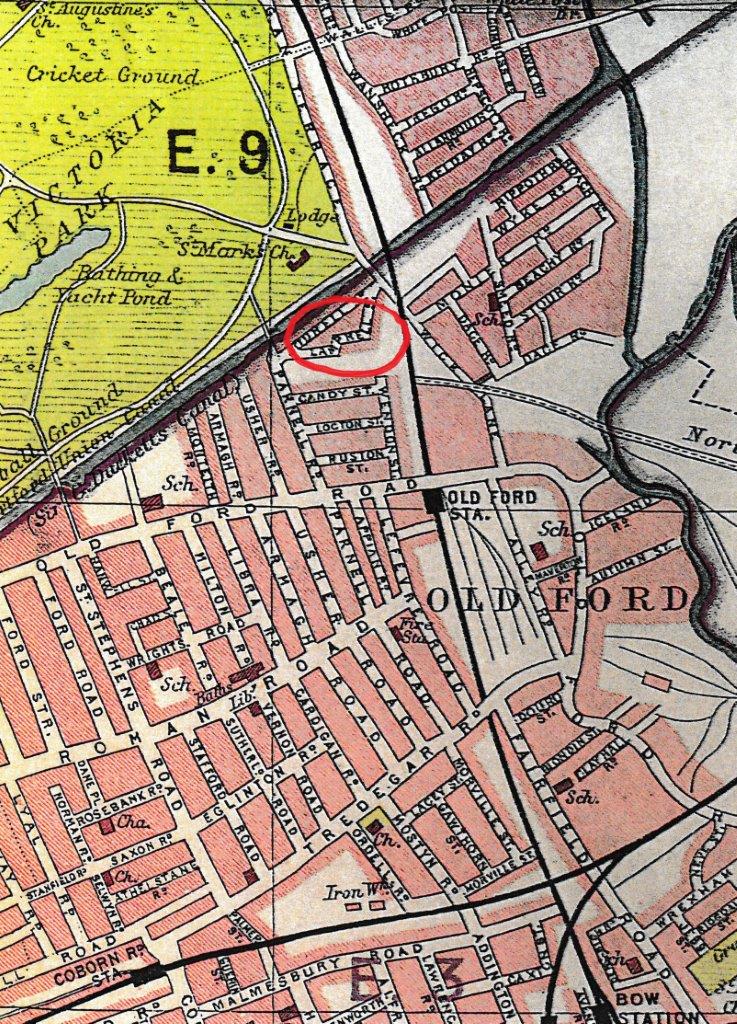
The Salvation Army purchased a building in Lamprell Street, Old Ford. After being altered and fitted out, by the end of March 1891 the factory was almost ready to go into production, and by early April about seventy workers had begun making matches.
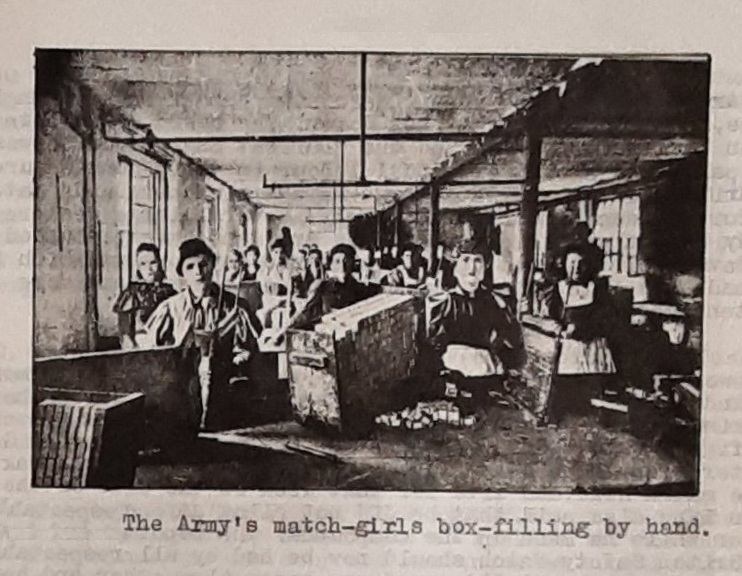
The working hours of the factory were from 8 am to 6 pm, six days a week, with breaks for tea at 11 and 4 o’clock, with an hour for lunch.
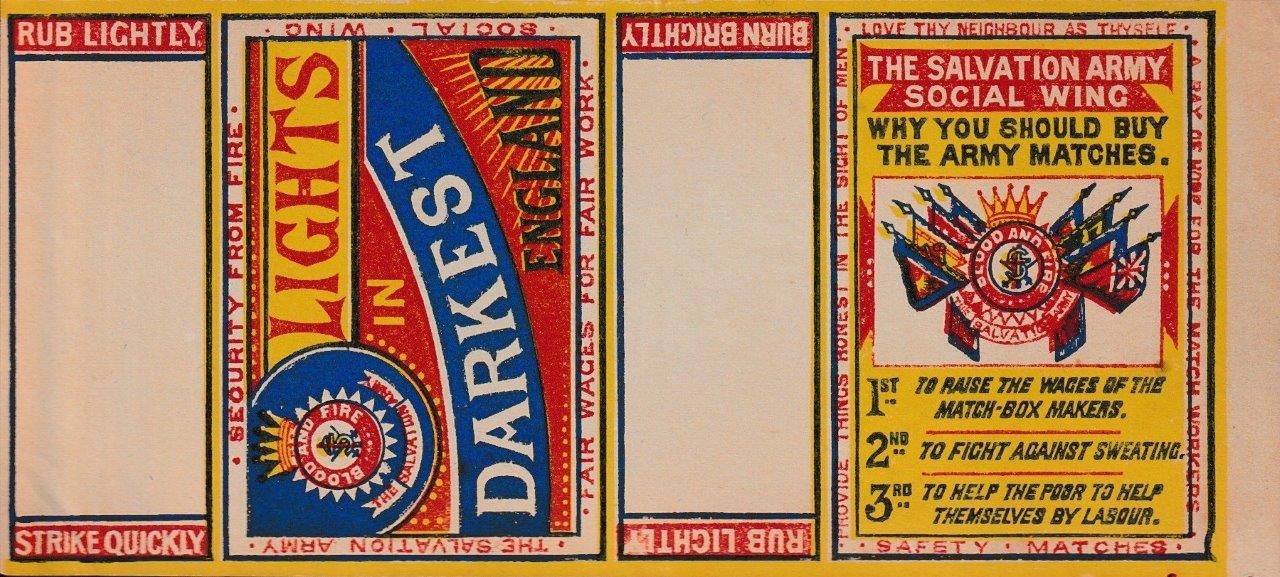
The first Salvation Army label was registered as a trade mark on 29th April 1891. This label clearly shows the colour and style of lettering, as well as the messages of their crusade.
A vigorous sales campaign was launched, urging shopkeepers to stock their matches and the public to buy them. The War Cry, and the Darkest England Gazette, published by the Army and shown below, give an idea of how this was done.
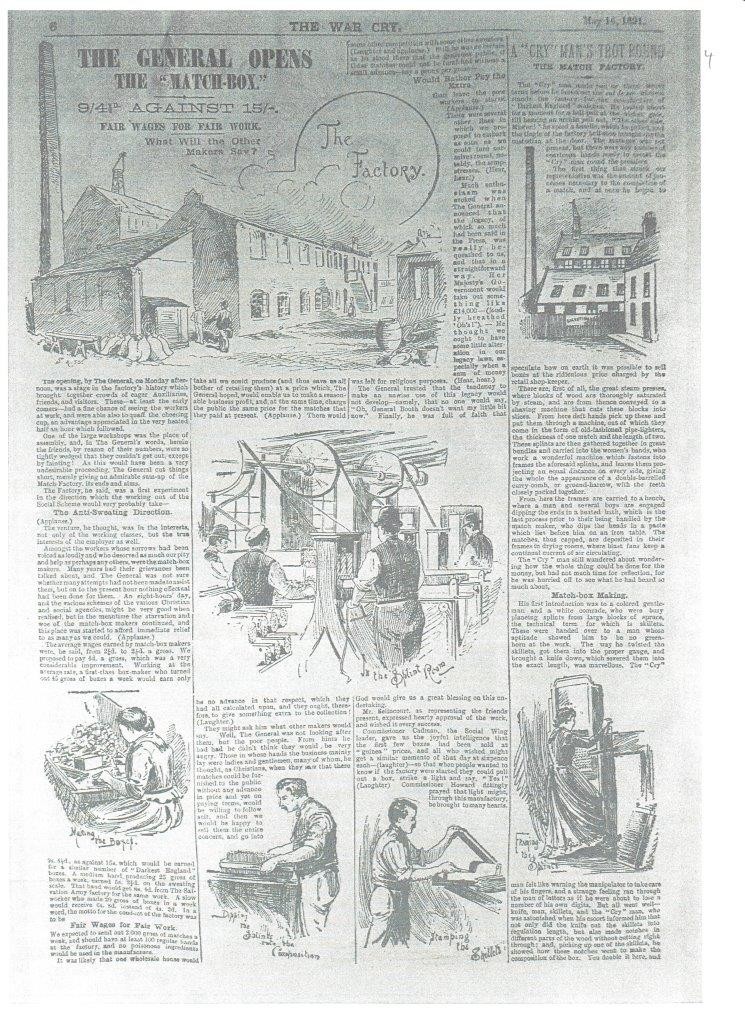 The War Cry, May 16th 1891
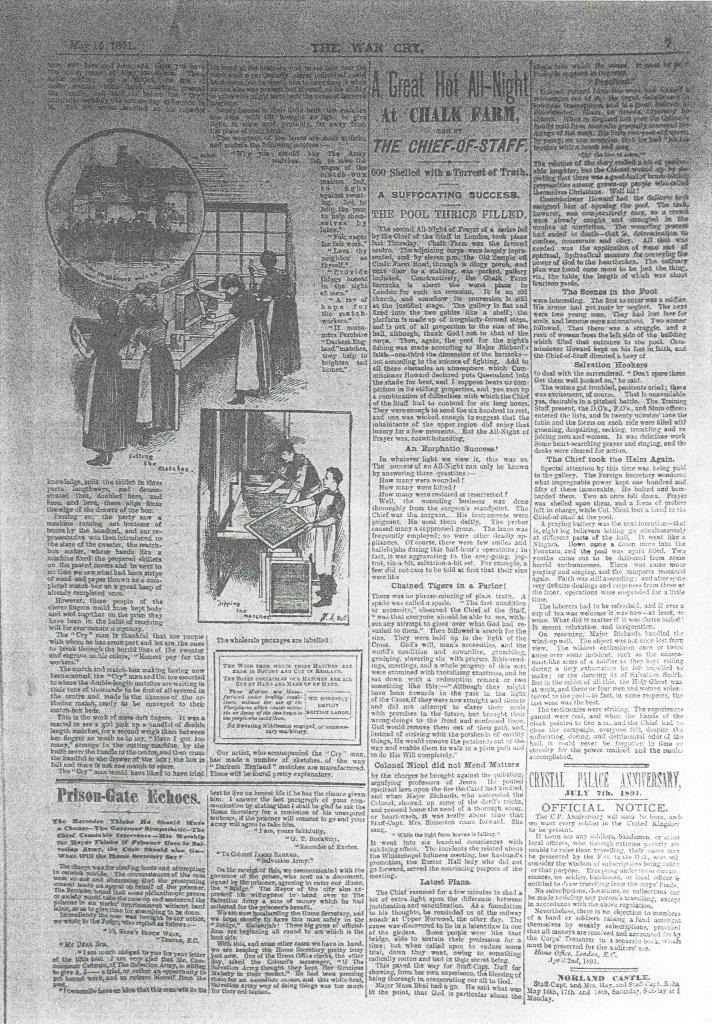 The War Cry, May 16th 1891
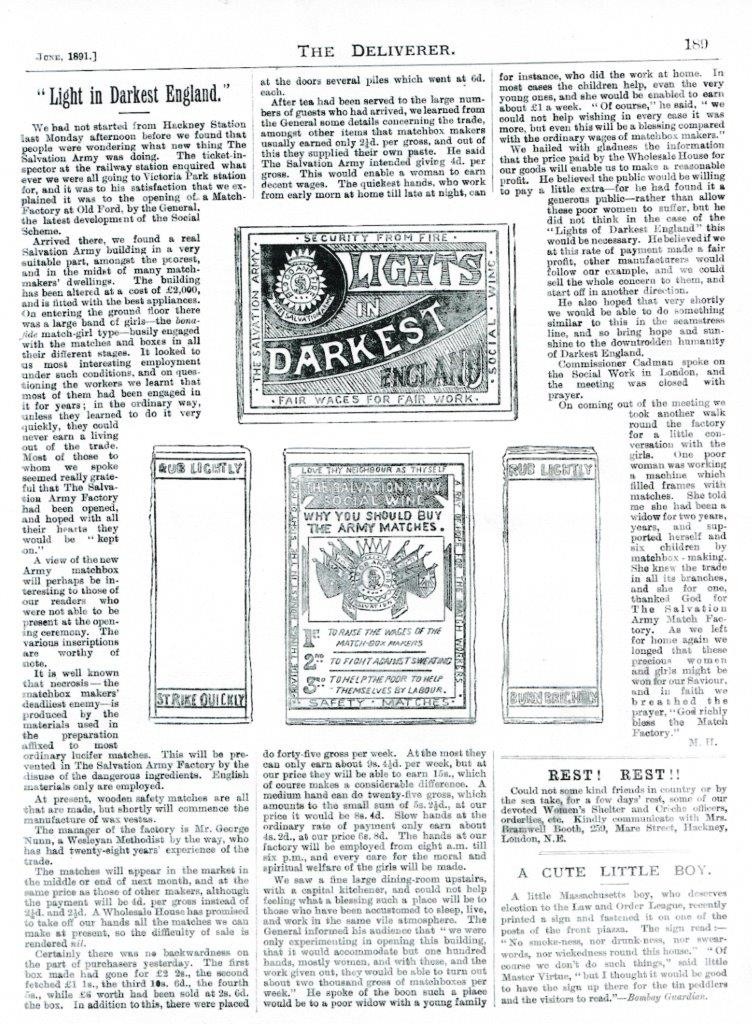 The Deliverer, June 1891
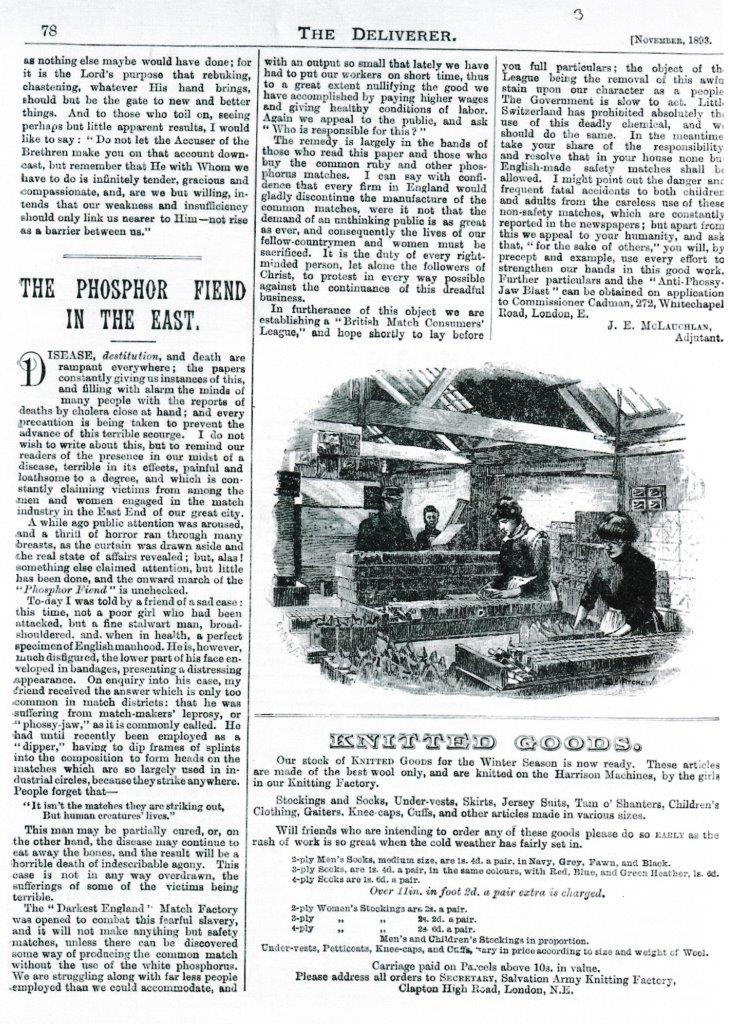 The Deliverer, November 1893
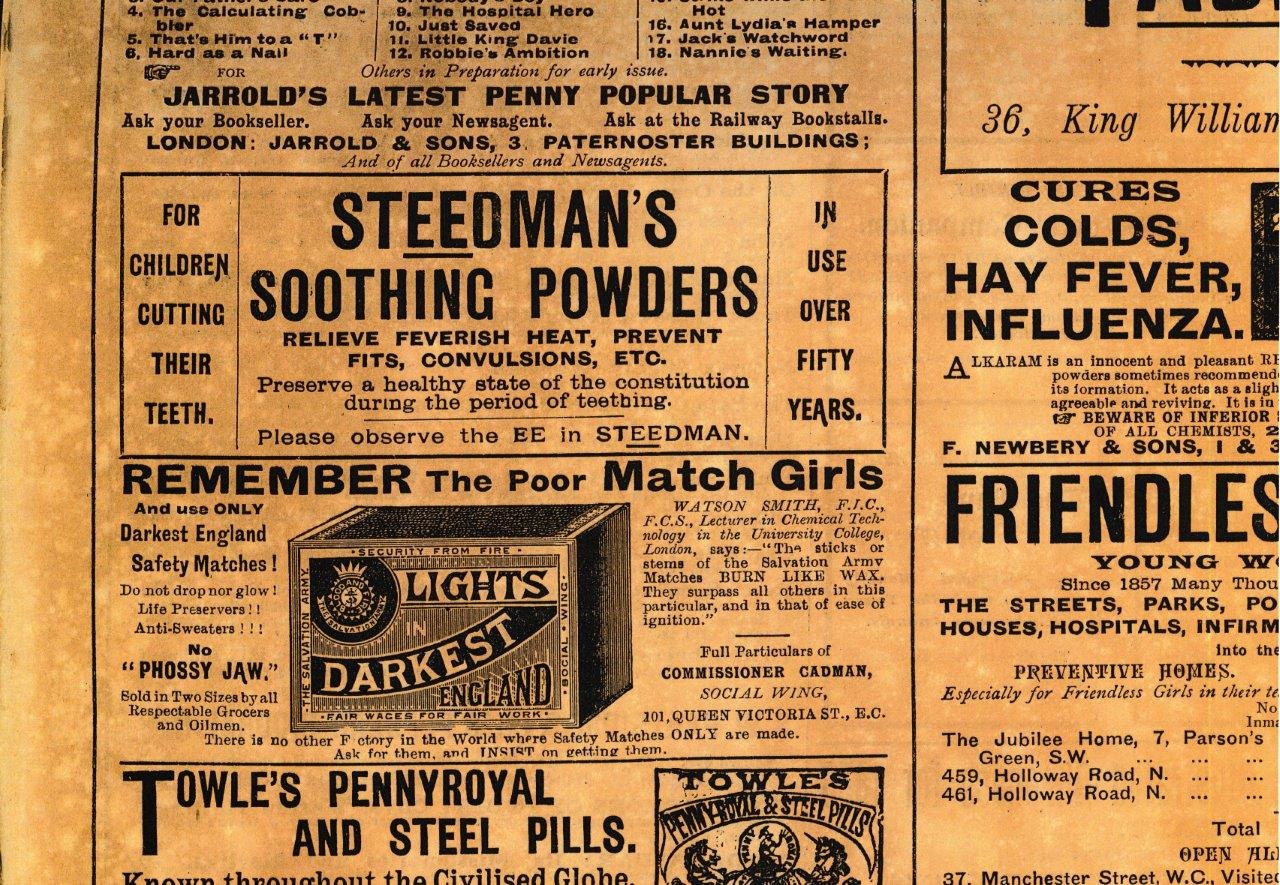 The British Workman, 1892
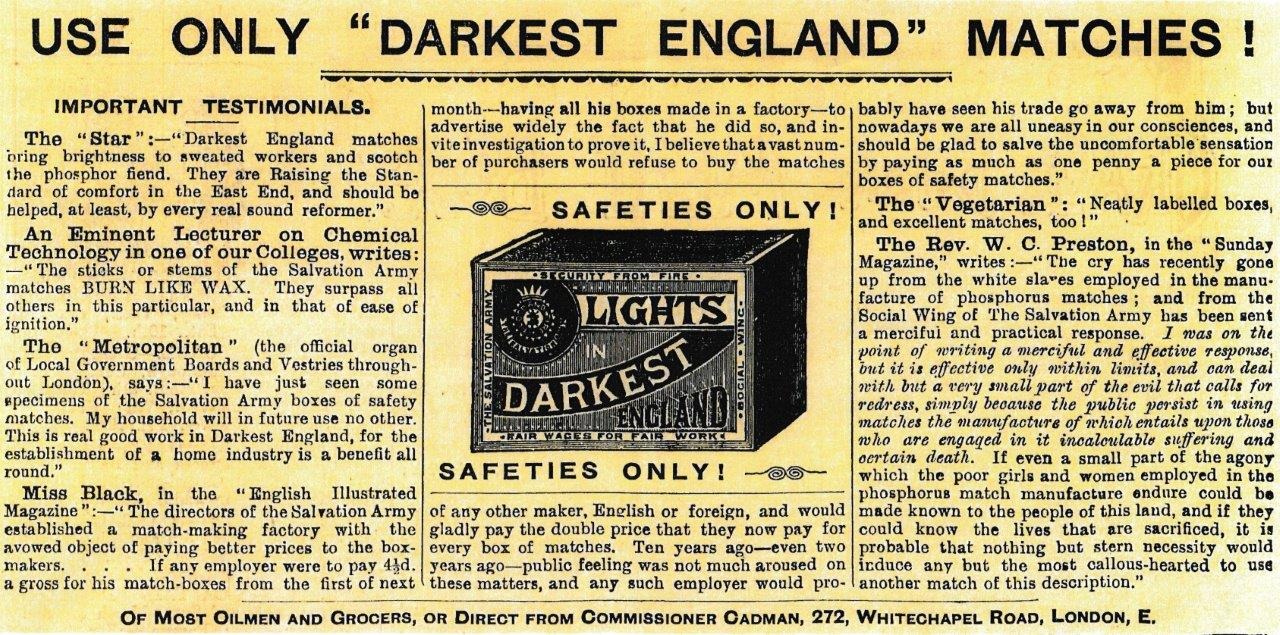 Testimonials, publication unknown
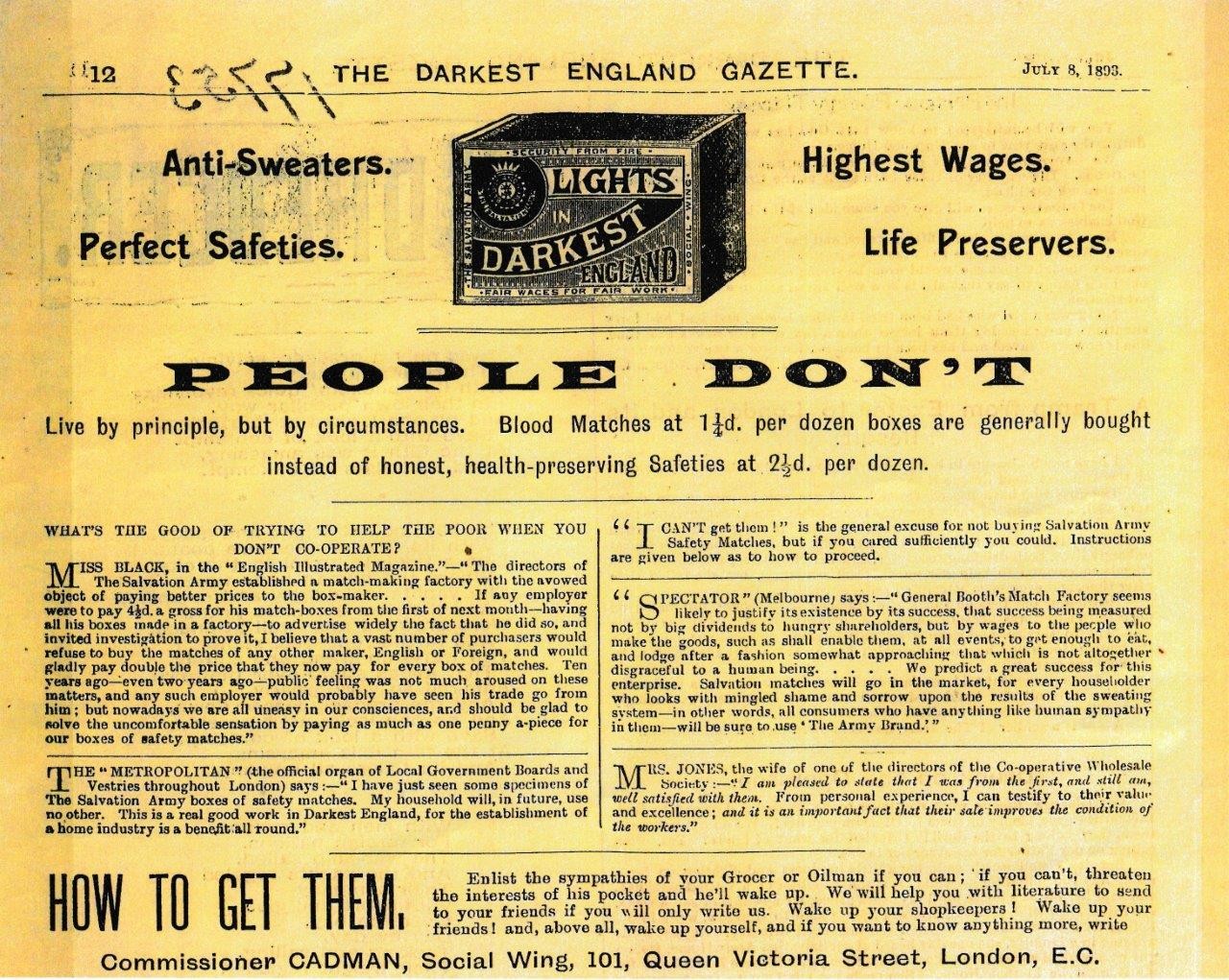 Darkest England Gazette, July 8th 1893
- “Lights in Darkest England” (safeties) delivered in London direct, 6 shillings (30p) per gross
- 20-gross cases, carriage paid 50 miles from London 6s 3d (31p) per gross
- 20-gross cases, carriage paid any distance, 6s 6d (32.5p) per gross
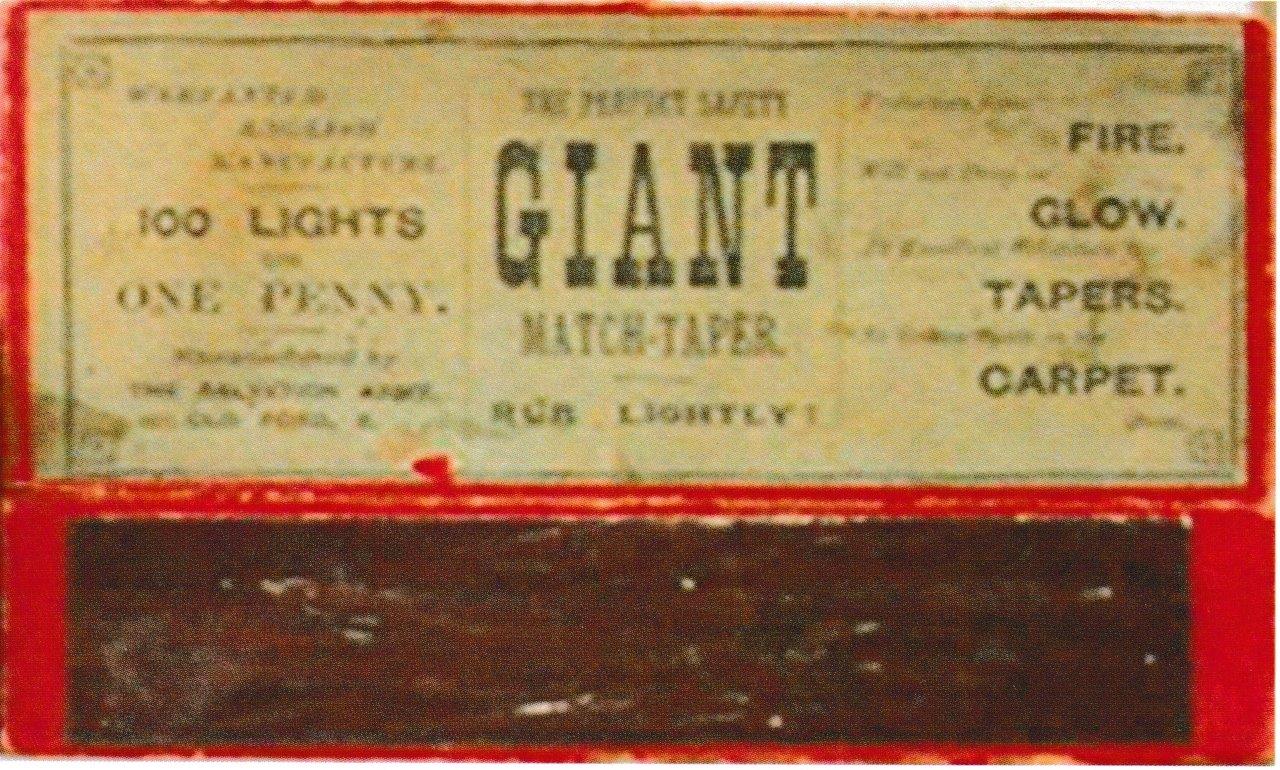
In June 1894 Adjutant McLauchlan, who was in charge of the factory, embarked on a new sales drive with a bright new attractive sample box containing a box of Giant Tapers, Boudoirs, large Lights in Darkest England and small size safety matches.
By September 1897 the retail prices had increased to :
- The “Darkest England” match in large boxes, 7d (3p) per dozen
- The “Medium” at 1/2d, (less than 1p per box), or 5d (2p) per dozen
- The “Briton” at 2d (1p) per dozen
The Salvation Army labels
In his 1973 book David Mitchell wrote that “It is believed that the Salvation Army matchbox labels were printed at the Army’s printing works situated in a shop in Fieldgate Street (off Whitechapel Road), London E.1. This printing works had been in use since 1879 when the Army first went into print. The Army’s printing works were moved to St. Albans, Hertfordshire in 1901”.
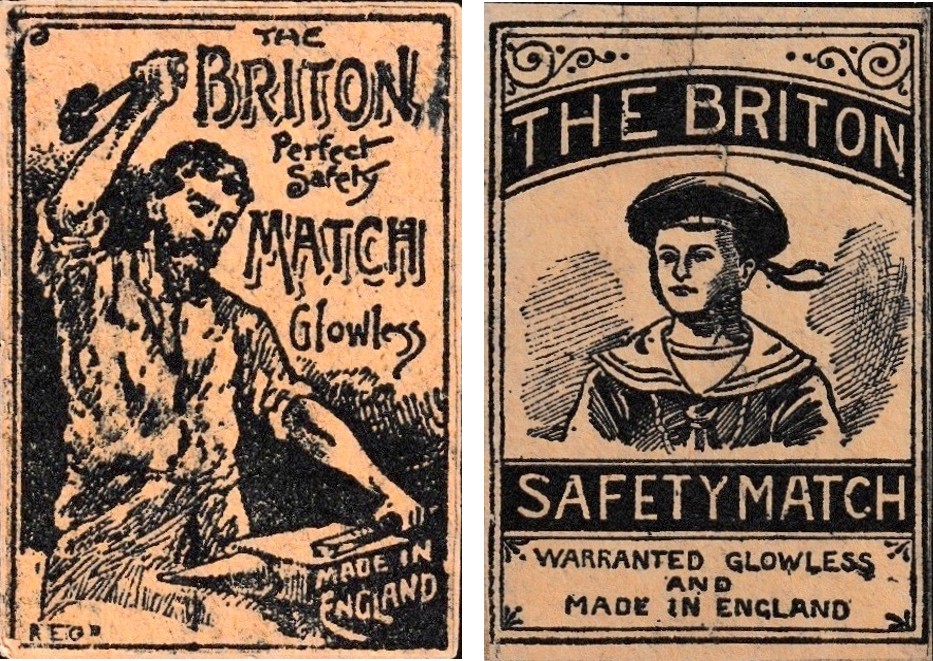
“The Briton” match was the Salvation Army’s second and final trademark, on 7th February 1894.
In 1899 only 65 workers were employed at the factory, but there was room for 300 if demand permitted. There was a last advertising campaign for Darkest England Matches “in every issue of the Sacred Gazette and advertised often in The War Cry”.
In 1900 Bryant & May adopted the new safety match composition into the production of their matches. It is believed that the Army gradually phased out match production in the early part of this year and sold off their remaining assets.
The images below show eight different box-size labels (front and back) and three Gross labels, all from the David Figg collection.
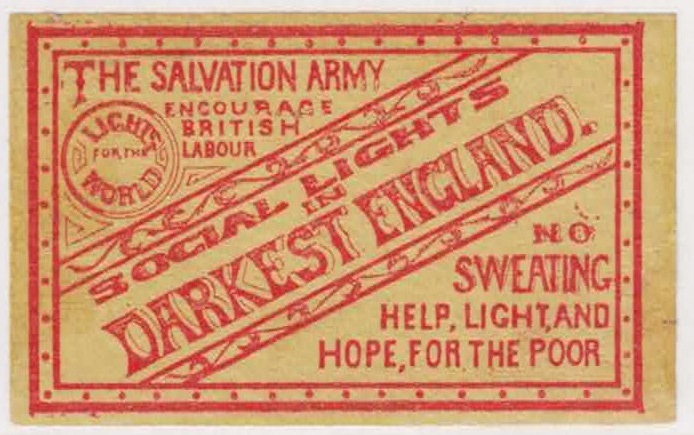 1891 box-size cut panel (front)
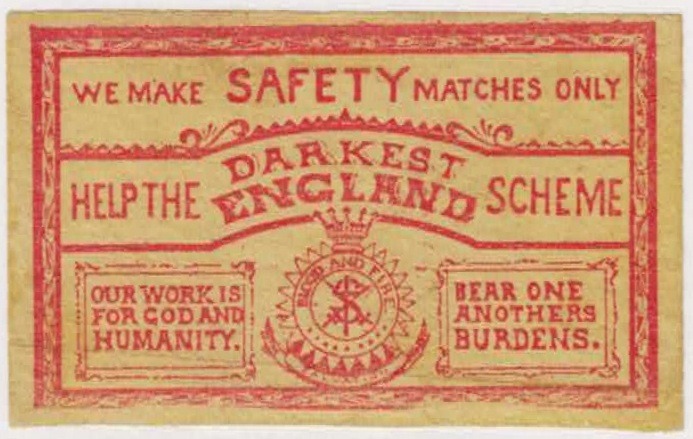 1891 box-size cut panel (back)
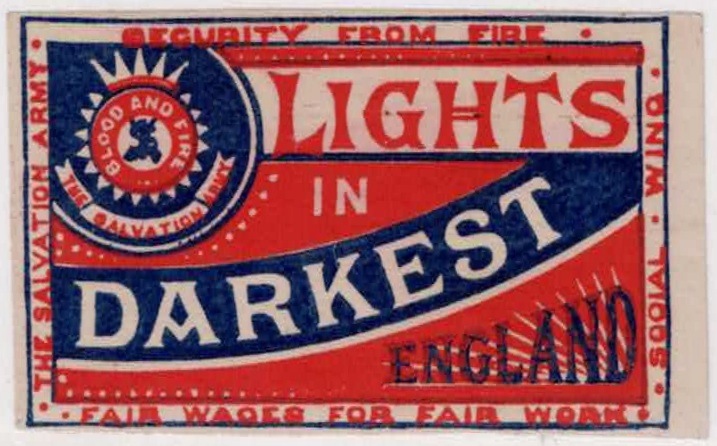 Box-size cut panel (front)
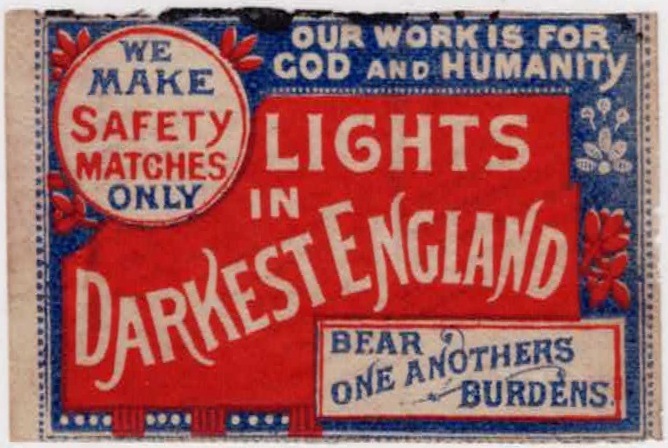 Box-size cut panel (back)
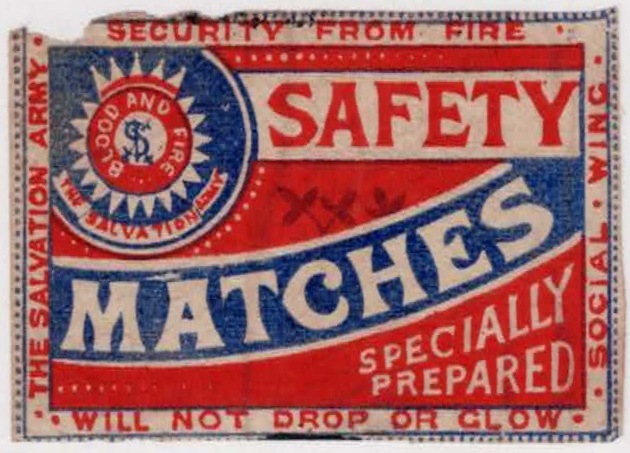 Box-size cut panel (front)
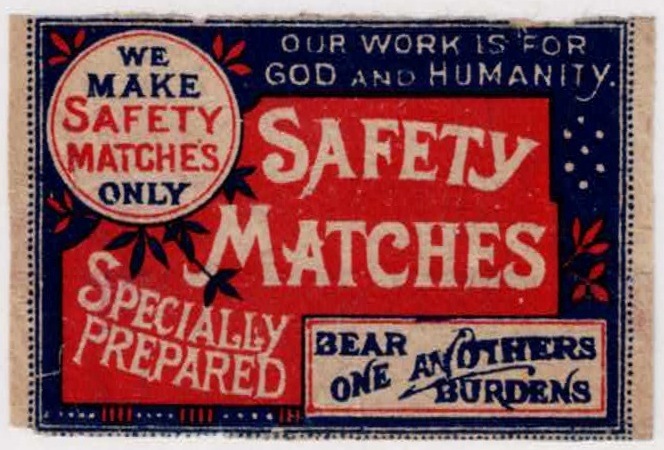 Box-size cut panel (back)
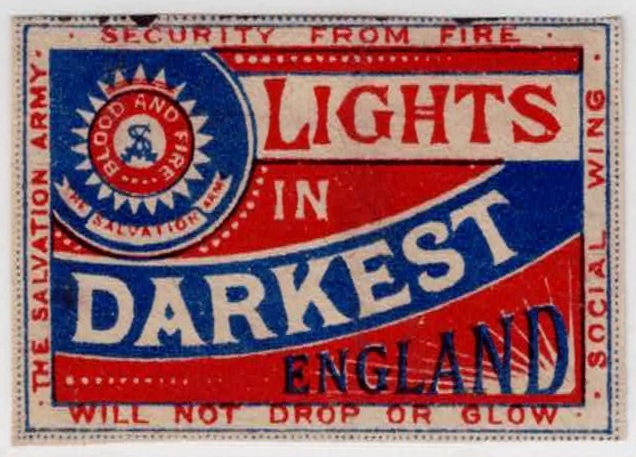 Box-size cut panel (front)
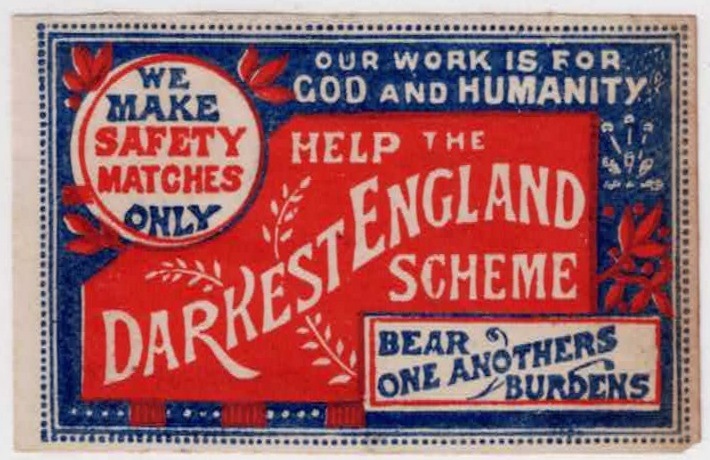 Box-size cut panel (back)
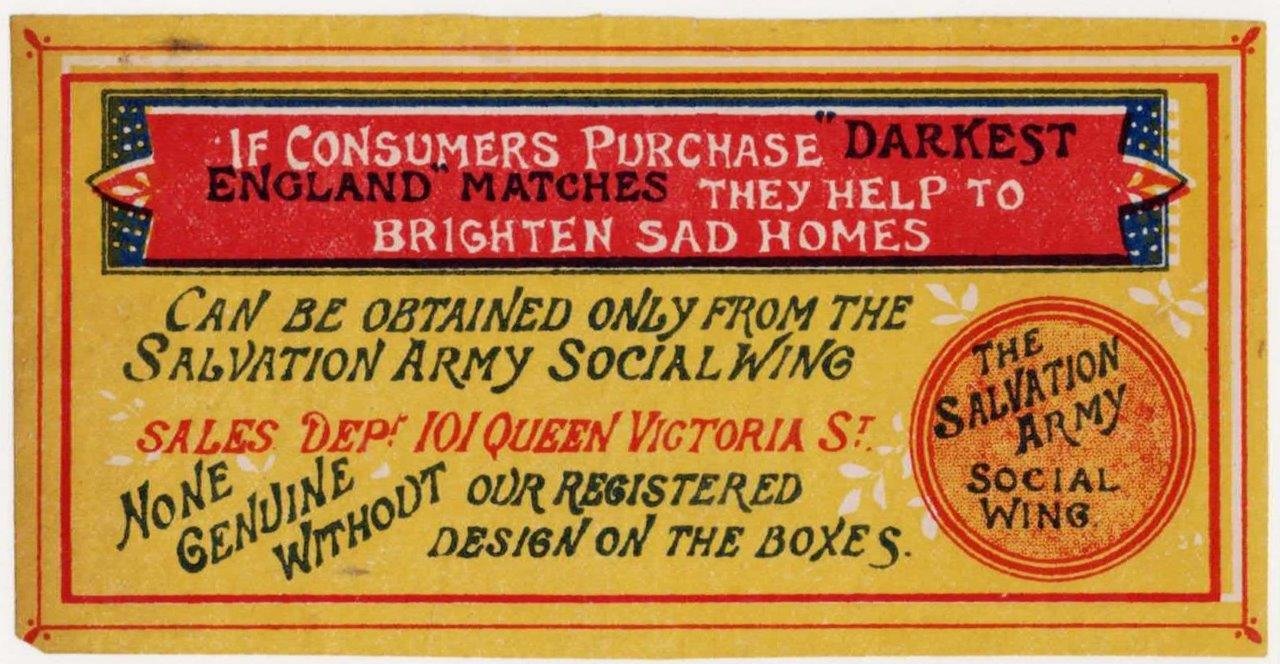 Gross label
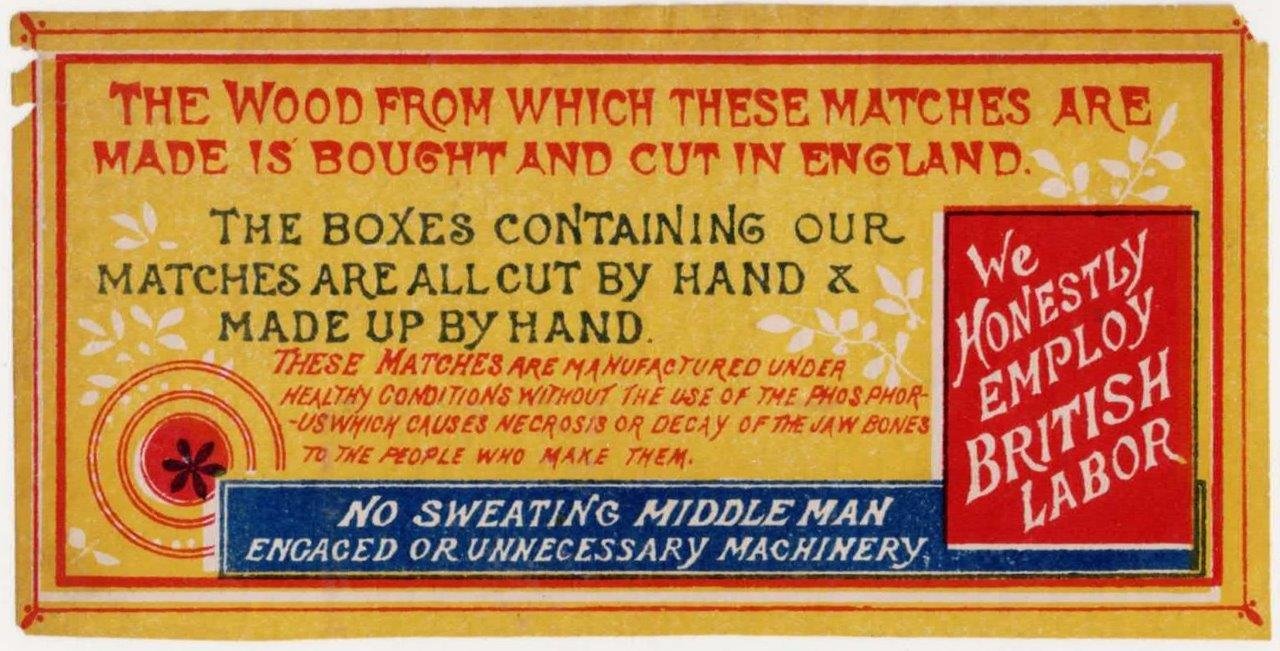 Gross label
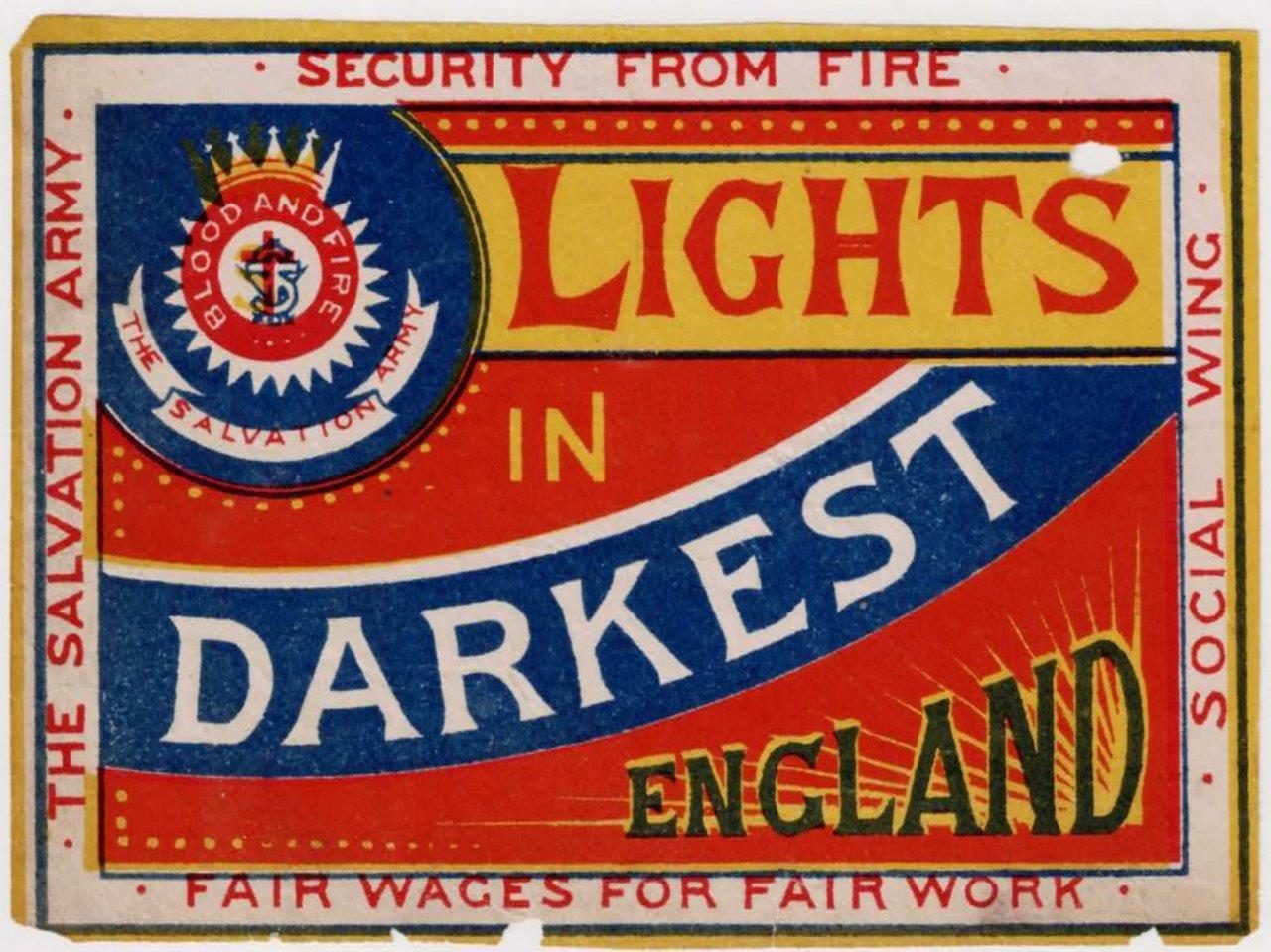 Gross label
1901, closure of the factory
The final end came on 26th November when The British Match Company, under the managing directorship of John Glenister a local engineer who had an interest in all the East London match manufacturers and was on the board of several of them, took over the works at Lamprell Street, which was used as their registered office until 1903. (Note : manufacturer George Judd was in occupation of the factory in October 1907).
The Salvation Army had drawn attention to the evils of phossy jaw and sweated labour in the match industry and in operating their own factory had enabled workers to enjoy better conditions and wages. Although it was sometimes unprofitable it was always the Army’s aim to raise standards and make the trade and public aware of how improvements could come about. This must be counted as a success.
The Times of Monday 4th January 1909, page 6 column 5 carried the following “WHITE PHOSPHORUS MATCHES PROHIBITION ACT 1908”
- We have received the following from the Home Office : The attention of grocers, tobacconists and other retail dealers in matches is called to the provision in this Act under which it will be illegal after December 31st 1910, for any retail dealer to sell, as to offer or expose for sale, or to have in his possession for the purpose of sale, any match made with white phosphorous. Any such matches in the possession of a retail dealer after that date for the purposes of sale will be liable to be forfeited.
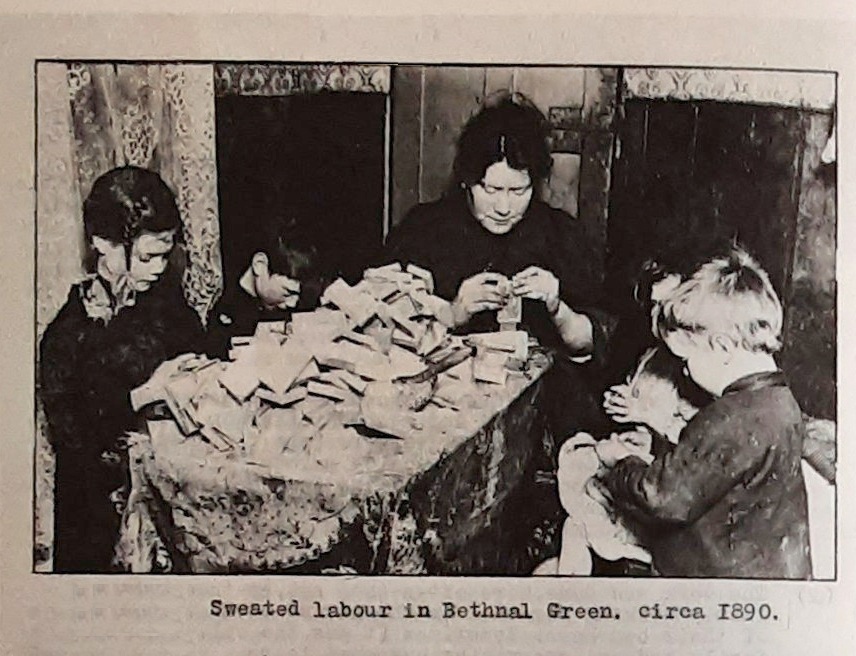
The Sweating System
This description of the oppressive sweating system is borrowed from The Darkest England Match Industry by David C. Mitchell, 1973
- In this system a middleman, known as “a sweater” whose business was to obtain unfinished work from a factory, farm it out to individual workers (who finished the job), pay them, and in his turn receive payment from the manufacturer to whom he returned the finished work. Thus the sweater made his profit out of the worker, and not the manufacturer
- The work was done, more often than not, by the whole family working together in the living room or bedroom of their own home. Sometimes it was the only room the family had, and everything happened there
- Competition for work was severe and wages were further debased by the influx of foreign workers, especially by Jewish refugees from Eastern Europe, These people, accustomed to a much lower standard of living than the British worker so reduced wages that starvation levels soon prevailed in a dozen different trades and industries
- The indifference of employers to the welfare of their work-people resulted in the continuance of their deplorable conditions of work and rates of pay (Donald Hunter 1969)
Acknowledgements
First, I must thank Ruth MacDonald, Archivist and Deputy Director of the Salvation Army International Heritage Centre, William Booth College, Champion Park, London SE5 8BQ for providing photocopies of Salvation Army journals labels and advertisements.
Other sources used in the preparation of this Exhibit :
- Bryant & May Museum of Firemaking Appliances Catalogue, 1926
- A J Cruse, Matchbox Labels of the World, 1946
- Joan Rendell, Collecting Matchbox Labels, 1963
- Joan Rendell, The Match, the Box and the Label, 1983
- David C Mitchell, The Darkest England Match Industry, 1973
- Louise Raw, Striking a Light! The Bryant & May Matchmakers, their place in history, 2009
- Peter Campion, report and photographs on page 20 of The Matchbox: The Magazine of the West & Midlands Phillumenist Vol. 7 No. 7, October December 2012
Click here to return to the Exhibition Catalogue.