
Chinese match industry

Exhibitor : Simon Blackman
Friction matches were first used in China around 1850. They were given the name yánghuǒ (洋火) meaning “foreign fire”.
Official records state that matches were imported from India and Japan into China after 1860 and were commonly on sale in port cities such as Shanghai and Tianjin from 1865.
The first Chinese match factory was the Qiao Ming (How Ming) (巧明) established in Guangdong (Canton) in 1879 by Wei Youxuan (卫有轩). Production was carried out almost entirely by hand.
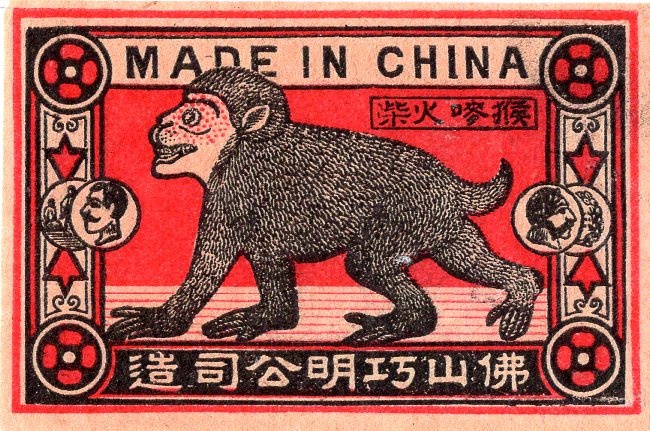 Label from Qiao Ming (巧明) Match Factory
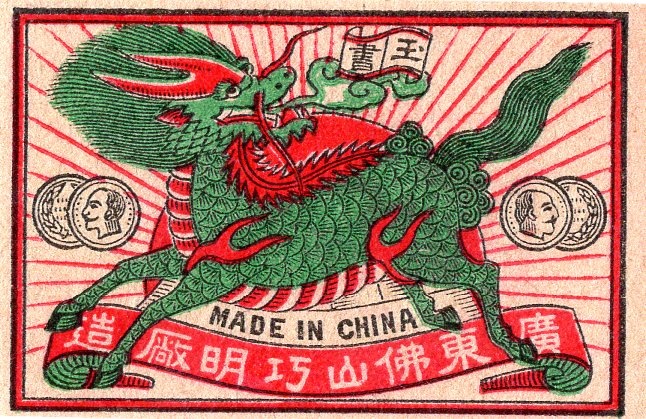 Label from Qiao Ming (巧明) Match Factory
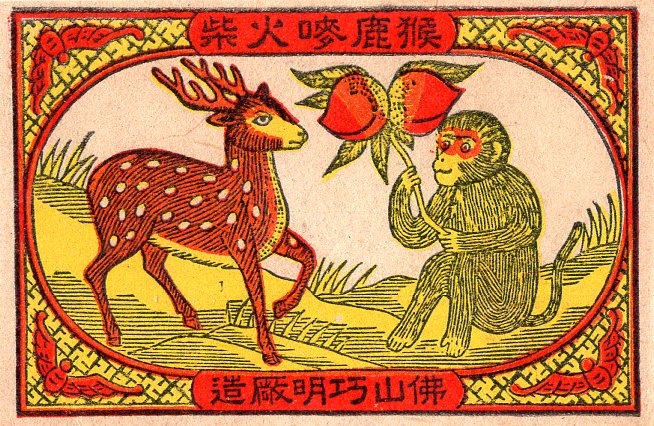 Label from Qiao Ming (巧明) Match Factory
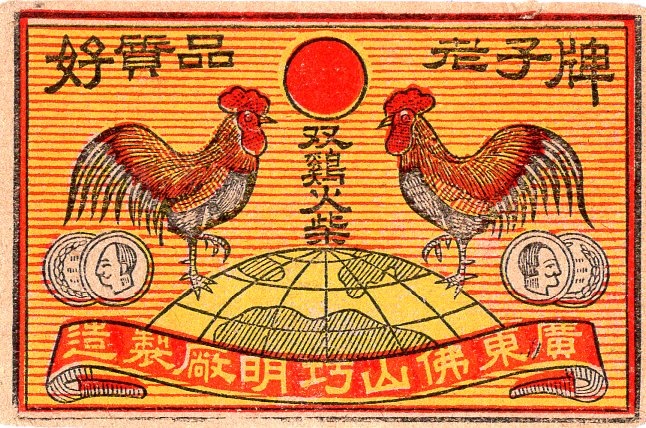 Label from Qiao Ming (巧明) Match Factory
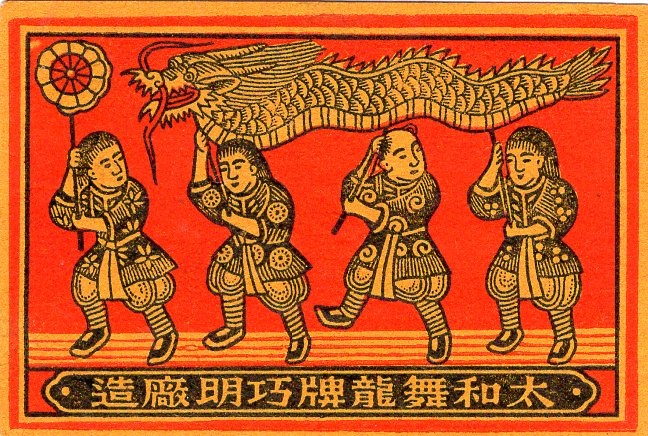 Label from Qiao Ming (巧明) Match Factory
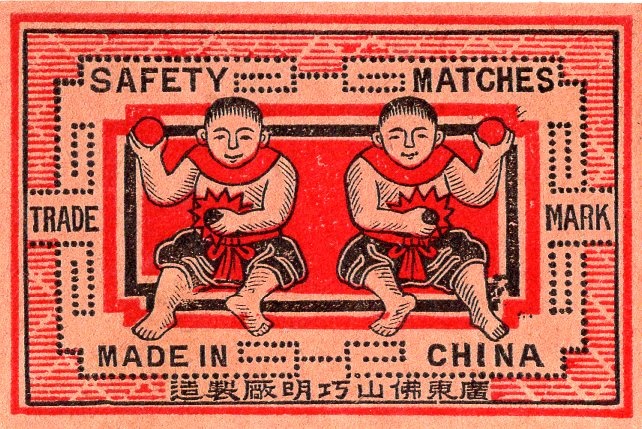 Label from Qiao Ming (巧明) Match Factory
In 1920 Hongsheng Liu – who would later become known as the Chinese “Match King” – founded the Hong Sung Match Factory (鴻生), in Suzhou. Later he merged it with the Yingchang (熒昌) and Zhonghua (中華) Match Factories to form the Great China Match Co (大中華). It would eventually come to dominate Chinese match manufacturing.
In 1936 the Nationalist Government acquiesced to Liu’s plan to create a match monopoly.
War against Japan came in 1937 and match manufacture, especially in Shanghai, became difficult. It would lead to Liu fleeing to Hong Kong. However, feted by the establishment, and Chiang Kai-shek in particular, he was asked, and returned in 1940 to Chongqing, the seat of the nationalist government.
During the 71 years from 1879 to 1949, the number of factories increased to 376.
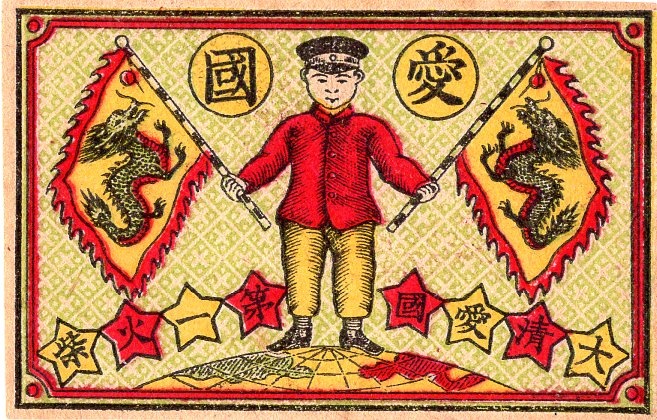 Chinese Republican Flag, 1914-49
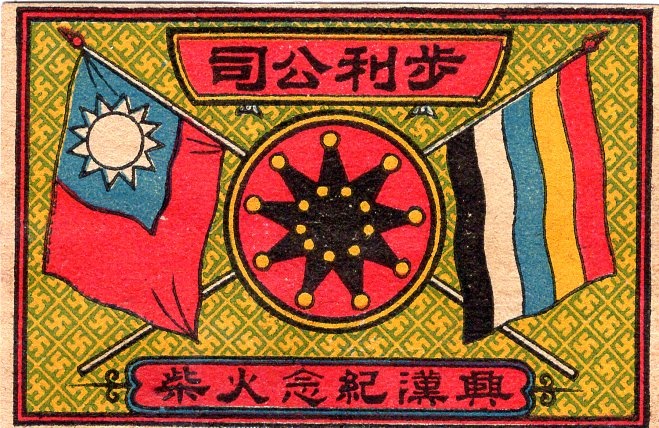 Iron Blood 18 Star Flag (b 1907)
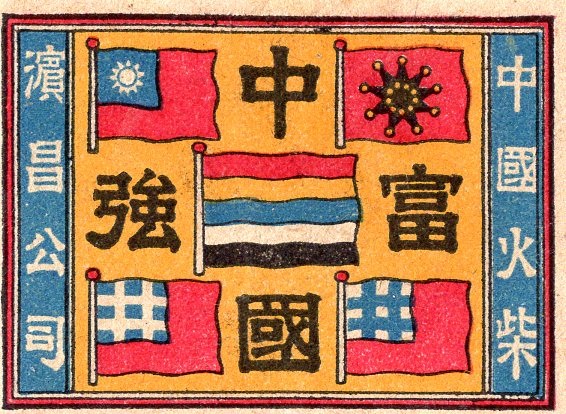 Rainbow (5 colour) Flag (b 1912)
As a result of the Revolution technologies improved and manufacturing was mechanized. Output grew though labour intensity decreased. But similar to everywhere else in the world demand for matches has declined and the number of match factories existing has declined.
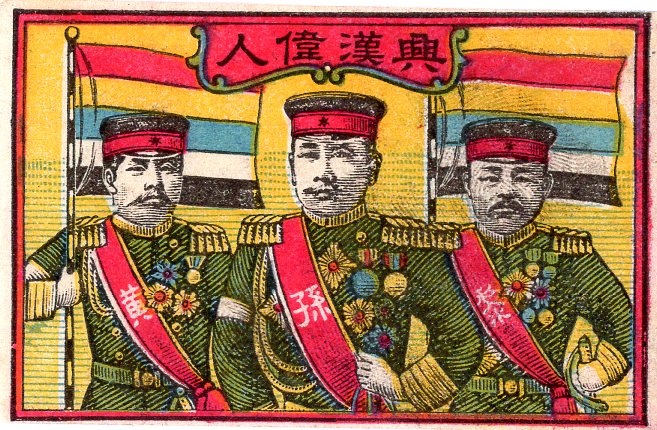 Revolutionaries: Li (黎), Sun (孫) & Huang (黄)
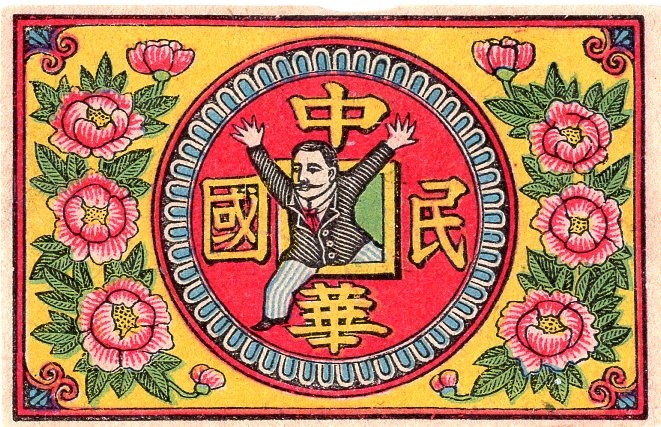 Sun Yat Sen (中山)
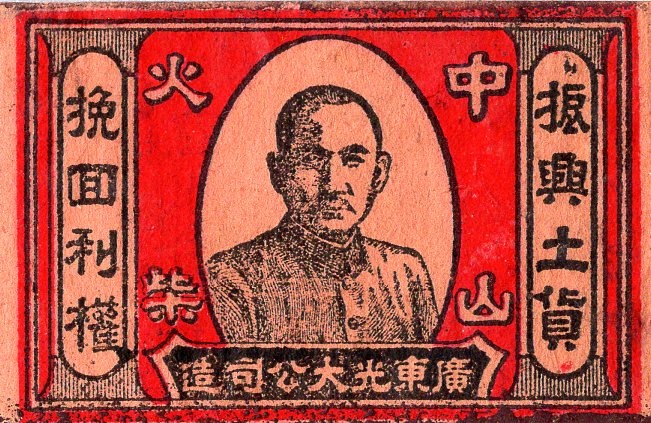 Sun Yat Sen (中山)

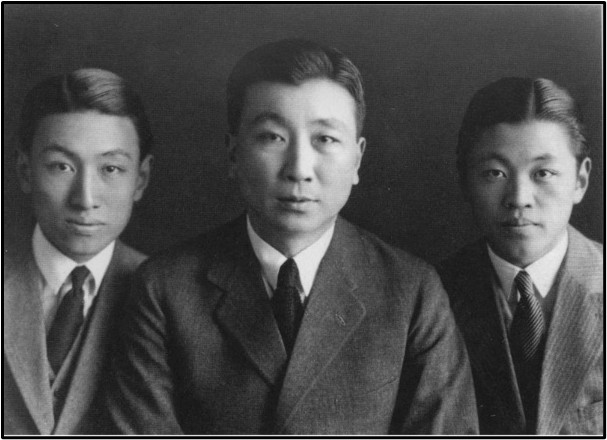
Bonus exhibit : Liu Hongsheng, the Chinese “Match King”
Liu Hongsheng (劉鴻生) (1888-1956) also known as “O.S. Lieu”, was one of Shanghai’s leading industrialists in Republican China during the first half of the 20th Century. He was born in Shanghai in 1888 to parents from Ningbo, a town 90 miles southwest of Shanghai and known for its merchants and financiers. Liu’s father worked at China’s largest Chinese owned shipping firm – China Merchants Steam and Navigation Company – and died in 1894 at the age of 35 when Liu was only 6 years old. Liu was educated at St. John’s Middle School and St. John’s University in Shanghai – an educational institution founded by the American Episcopal Mission. At the time it was one of China’s most prestigious colleges. Liu learnt English, studied business, and established a network of classmates that would come in handy years later. It is unclear whether he dropped out of university or had his grant to study removed but this did not hold him back.
Liu’s business career started in 1909 when he took a job as a comprador for the British controlled Kaiping Mines. Liu impressed his employers and swiftly moved up the coal mining company’s corporate hierarchy as he was able to capture for it the coal market in the lower Yangtze area around his birthplace and hometown, Shanghai. In the 1920’s he used the capital he had amassed to establish enterprises spanning many industries – coal distribution, wharf operations, and the manufacture of wool textiles, cement and matches. Some of this success was gained with the help of his brother, Liu Jisheng (劉吉生), (1889-1962) also known as “K.S. Lieu”.
Early Involvement in Match Manufacture
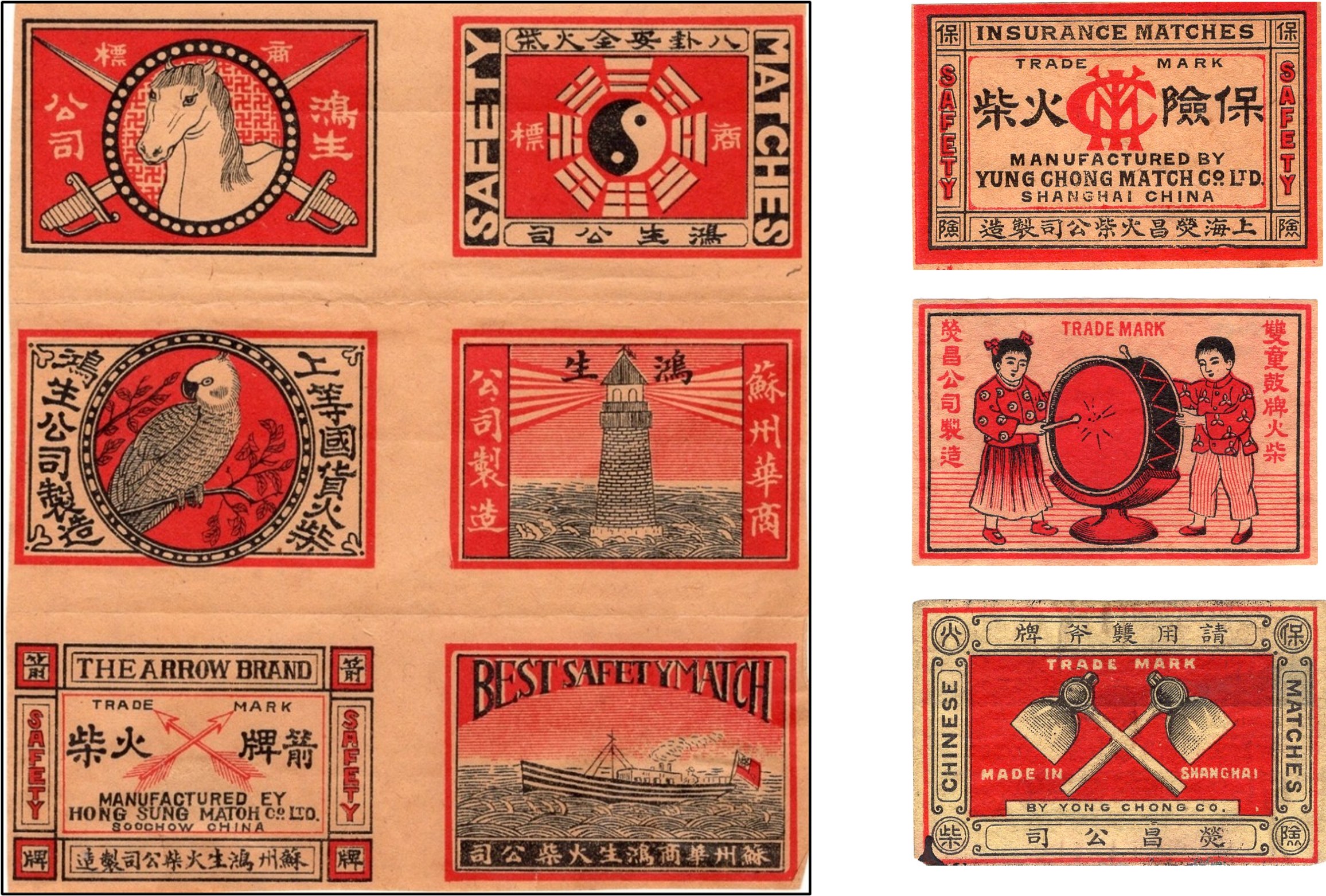
Liu entered the match industry in 1920 with his first match factory – the Hong Sung Match Factory (鴻生), in Suzhou. At the time, the Chinese match industry was extremely competitive with many small local players and strong foreign competition first from the Japanese and later from the Swedes (led by Ivar Kreuger’s Swedish Match). As a result, the Hong Sung lost money in its first few years of operation.
By investing in technology and smart consolidation, he turned the situation around and when he merged Hong Sung (鴻生) with the Yingchang (熒昌) and Zhonghua (中華) Match Factories to form the Great China Match Co (大中華) in 1930 – same English name as the one later established in Hong Kong but with different Chinese name – the firm had an annual production of 122,037 crates, representing 22% of China’s annual match output. At its peak, Great China Match had seven plants in the Yangtze River Delta. In 1936 Liu formed a syndicate in the attempt to establish a national match cartel in China.
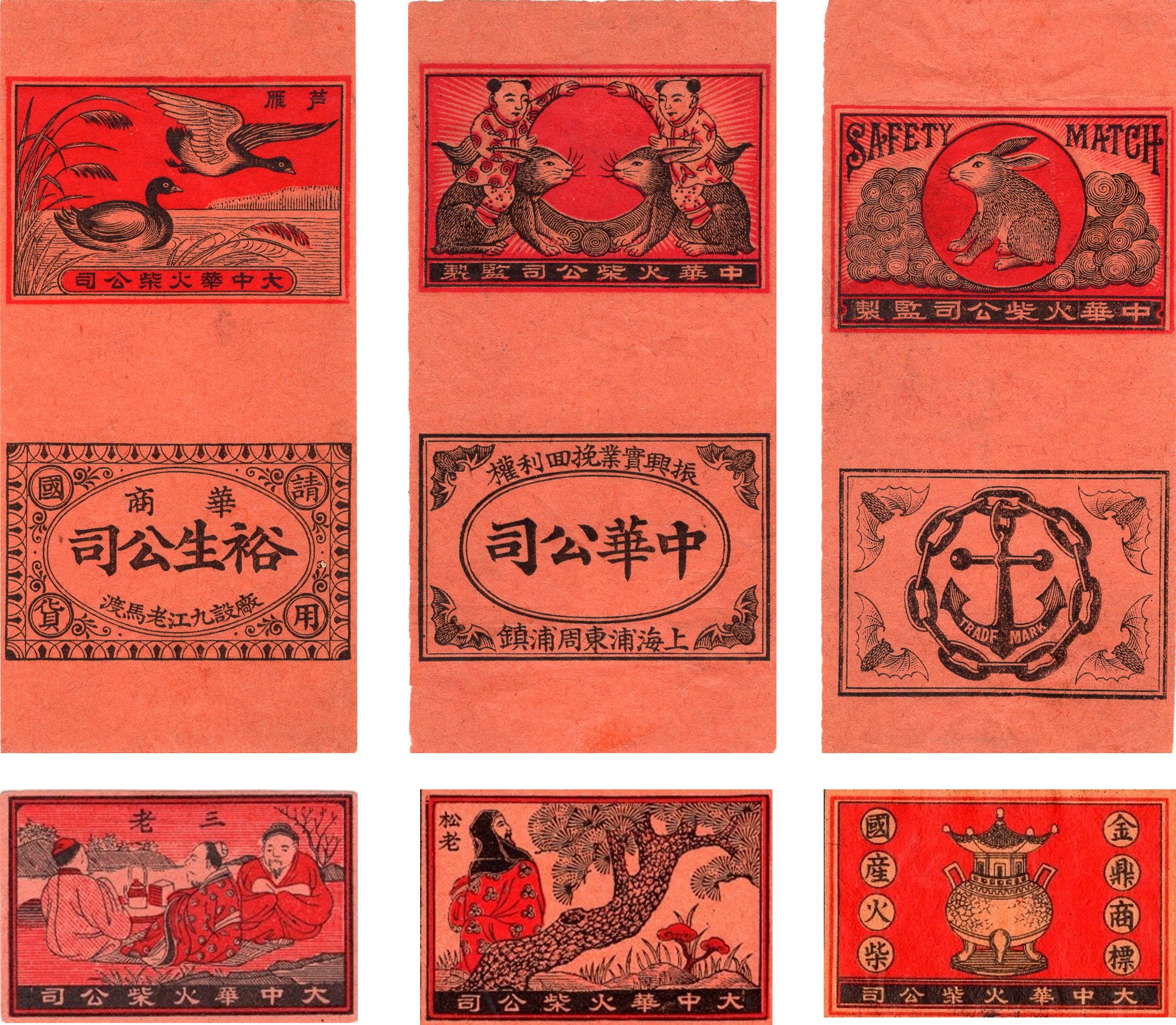
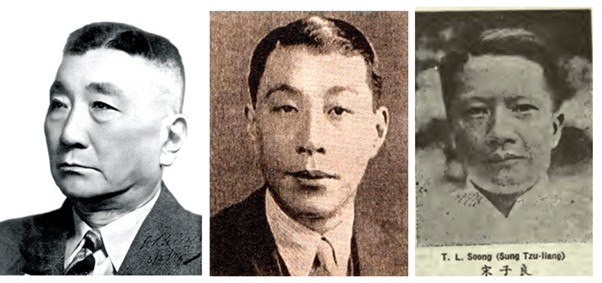
With the outbreak of the Sino-Japanese War in 1937 and Shanghai occupied by the Japanese he moved to Hong Kong in June 1938, leaving his younger brother K.S. Lieu, his eldest son Franklin (劉念仁) and second son Julius (劉念義) in charge of operations in Shanghai. Once landed in the British colony, he set about building a new match plant and immediately went scouting for a location. He settled on Peng Chau whose residents welcomed his plans as a major lime kiln on the island had just gone out of business. To finance the new venture, he went to the quasi-sovereign bank which his brother K.S. Lieu was involved with -the Manufacturers Bank of China (中國國貨銀行). The bank was led by family friend T.L. Soong (宋子良) (1899-1987), to whom his eldest daughter Ming-Tsu (劉明珠) had once been engaged.
Birth of the Great China Match Company
In June 1939, Great China Match Co Ltd was incorporated in Hong Kong with HK$300,000 in capital and according to the memoir of his fourth son Johnson (劉念智), there were over 40 founding shareholders of Great China Match in Hong Kong including members of the Liu family, Manufacturers Bank of China and its executives, local match merchants in Hong Kong and shareholders of Great China in Shanghai. The founding management team included K.S. Lieu as chairman, O.S. Lieu as managing director, W.Y. Weng (翁文漪) (1907-1978) as chief engineer and T.L. Loh (陸兆麟) as factory manager – the last two seconded from the Shanghai factory. The factory commenced operations in April 1940 with 250 male and 300 female workers (the majority of which came from Peng Chau) and 30 office employees (the majority of which came from Shanghai). Initially the Hong Kong plant relied on equipment and materials (including matchboxes) from Shanghai and had a daily production of 30-40 crates. Capital was expanded to HK$500,000 in August 1940 allowing the firm to produce its own brands such as “Great China”. Demand from Hong Kong, Macau and Southeast Asia lifted profits and by 1940-1941 the firm had earned between HK$500,000 and HK$600,000.
In December 1940, Liu followed Chiang Kai-Shek (and the Nationalists) to Chongqing where he presided over the government’s cigarette and match monopoly. He left the management of Great China in Hong Kong to his third son Hannibal (劉念禮), who had joined him in Hong Kong a year earlier.
Japanese Invasion and Rebirth
In December 1941, Hong Kong fell to the Japanese and six months later in June 1942, representatives of the Japanese trading house Mitsui approached N.L. Lieu in HK asking him to consider returning to Shanghai to revive the family’s enterprises there. In November 1942, the Japanese seized the Peng Chau plant but after 10 months of negotiations with help from his brothers who had by then formed a joint venture with the Japanese in Shanghai, N.L. was allowed to re-open the Peng Chau plant in August 1943, although production for the remainder of the War was limited due to shortage of raw materials and fuel with only 11 workers working part time.
In 1946, the firm resumed operation at its pre-war office at 409, Bank of East Asia Building, Des Voeux Road, Central Hong Kong. with expanded capital of HK$1 million. Later, in July, the Lieu family appointed Li Siu-po (李少甫), a Ningbo native who had joined Great China in Shanghai in 1934 and worked for the family enterprises in Hangzhou and Szechuan, as the new factory manager of the Peng Chau plant. When the Peng Chau Residents Association was formed in early 1947, Li as the manager of the largest employer on the island was elected its first chairman despite not being a Peng Chau native and being a relative newcomer to HK. By 1949 however, J. T. L. Chan (Chen Tsung-lien) was listed as acting manager and later as manager of the firm until the 1960s.
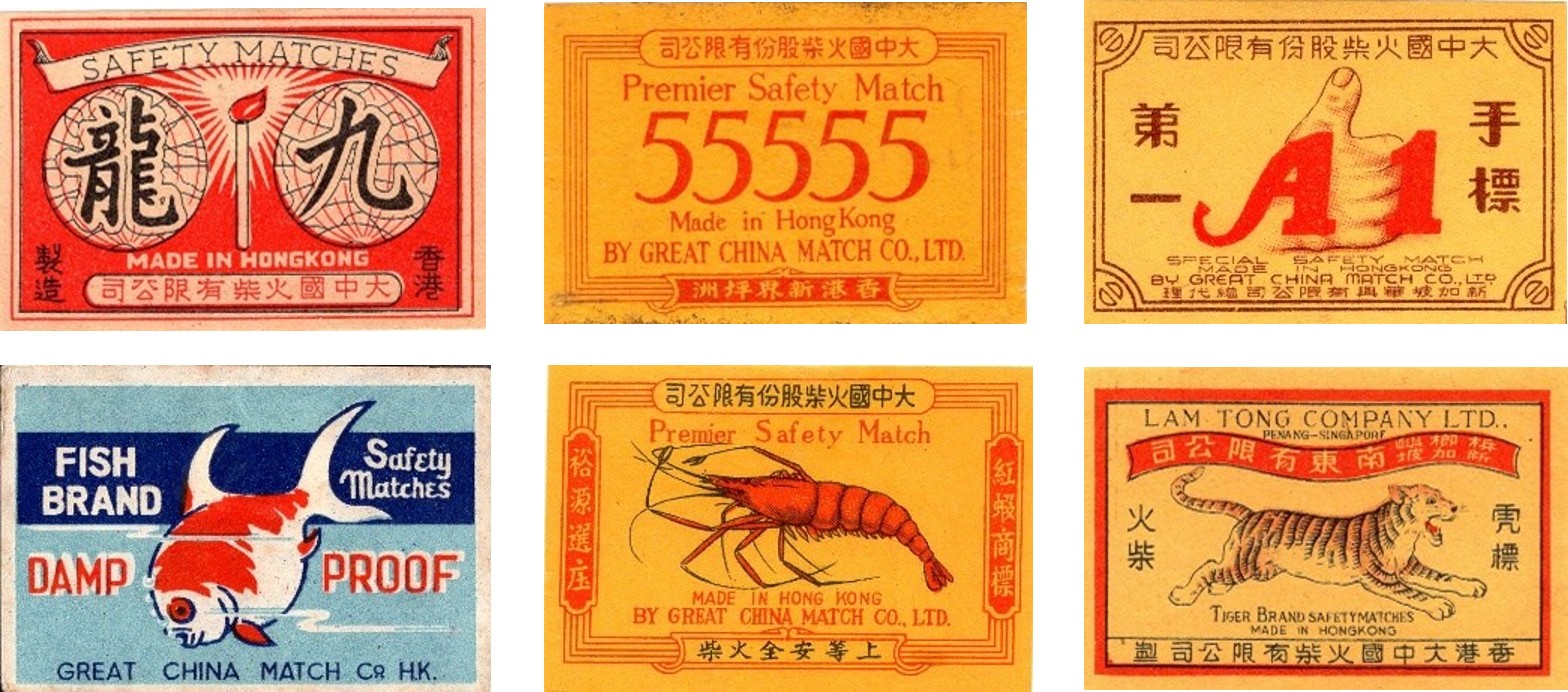
The early post-war years were prosperous for Great China as its brands such as “Kowloon” (九龍), “55555” and “A1” were well received in export markets including Pakistan, Indonesia, Singapore, and Thailand. At its peak in 1949-50, over 1000 workers worked in the plant and according to the recollections of former workers, even illegal child labour (each paid HK$2.50 per day, working from 6am to 6pm) was employed to meet the production demand although it may have been due to free schooling that was also provided.
Post War Regime Change
In 1949, the year of regime change in mainland China, the board of directors of Great China Match Co Ltd in Hong Kong included T.L. Soong, T.Y. Chang, S.C. Chang, Y.L. Yang, T.C. Kaung and 4 Liu family members with Julius as managing director (who was also in charge of the match business on the mainland). It is unclear if the Soongs held on to their shares or had much involvement in the Great China Match after 1949.
The Liu family was split on the new Communist regime that came to power on the mainland in 1949. O.S. was one of China’s top “nationalist capitalists”. Regarded as a true patriot he was encouraged to stay. However, this was not a view held by many of his family. K.S. and Franklin left Shanghai and moved to Hong Kong for good while O.S. and the rest of the family moved back to Shanghai after their extended stay in Hong Kong.
Economic Downturn
In 1951, business turned south for Great China Match in Hong Kong and the factory was only opened for 3 days per week, later extended to 4 days based on labour demands. In August 1952, the Pakistani government restricted the import of matches, costing Great China a significant market. The firm’s production was cut in half from 2000 crates to 1000 crates per day and when that was not enough to stem the losses, the factory closed its operations and laid off over 640 workers in November, with each given severance pay of HK$40. Two months later in January 1953 however, new orders from Southeast Asia (especially Indonesia) arrived and the factory resumed operations hiring back about 221 workers. In 1958, a fire in the plant caused HK$8000 worth of damage. Meanwhile in Shanghai, O.S. died in 1956 of heart failure. By this time, he had become disillusioned as all his enterprises had been transferred to joint state-private ownership and his sons purged in political struggles.
In October 1962, K.S. Lieu died in Hong Kong at the age of 74. That same year, Hannibal with the help of then ex-wife Liane, was finally allowed to leave Shanghai for Hong Kong where he became manager of Great China Match and lived off its dividends. By the 1970s, cigarette lighters had reduced the importance of matches and in 1976, the Great China Match factory in Peng Chau was closed. The firm was finally dissolved in 2006.
The site of the factory has been used as a workshop since this time, but the original buildings are mostly gone, the site overgrown, and its huts full of junk as you can see here. For many, all that remains are photographs of the Liu family and the Peng Chau factory; and its matchbox labels.
Click here to return to the Exhibition Catalogue.