Match types
Exhibitor : Alan Downer
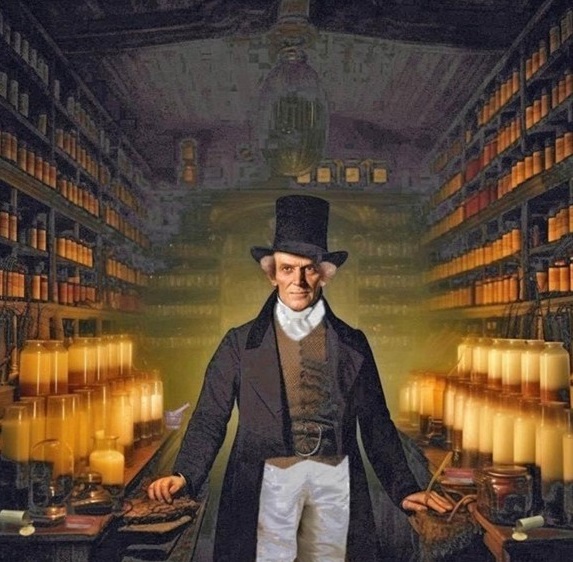
The road from John Walker’s wooden Friction Matches of 1826 to the modern Safety Match, Strike Anywhere and Bookmatch is long and varied, with many different types of match created along the way such as Prometheans, Lucifers, Congreves, Fusees, Vesuvians and Wax Vestas.
This exhibit is an introduction to these and many other types of matches that have been made since 1826, some of which are still being made today like Strike Anywhere, Safety and Bookmatches. More details on all these match types can be found in the many reference books and in our Society magazine where some of this information was first printed in June 2013.
Promethean Matches
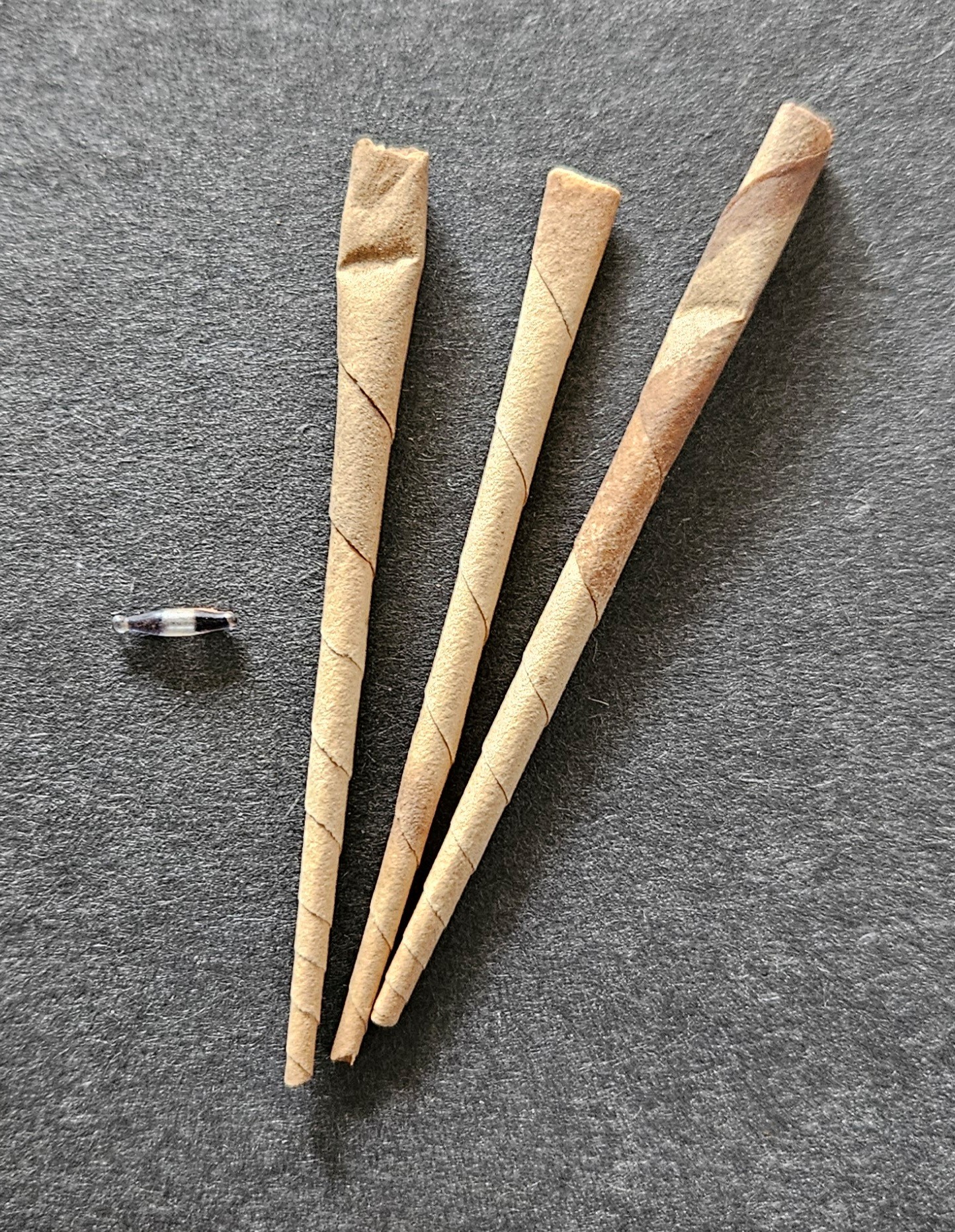
The “Promethean Match” was invented by Samuel Jones of London in 1828. Unlike John Walker, Samuel Jones patented his invention. The “match” was a tiny vesicle of glass, more like a glass pill, but drawn off to a point on top. The total length was rather less than 1/4″ and the contents of each vesicle was sulphuric acid.
The vesicle was usually placed inside a spill or taper and coated with chlorate of potash. A small pair of pliers or pincers was sold with each box. To “strike,” one had to nip off the point of the vesicle; this allowed the contents to make contact with the outer solution and so immediately burst into flame.
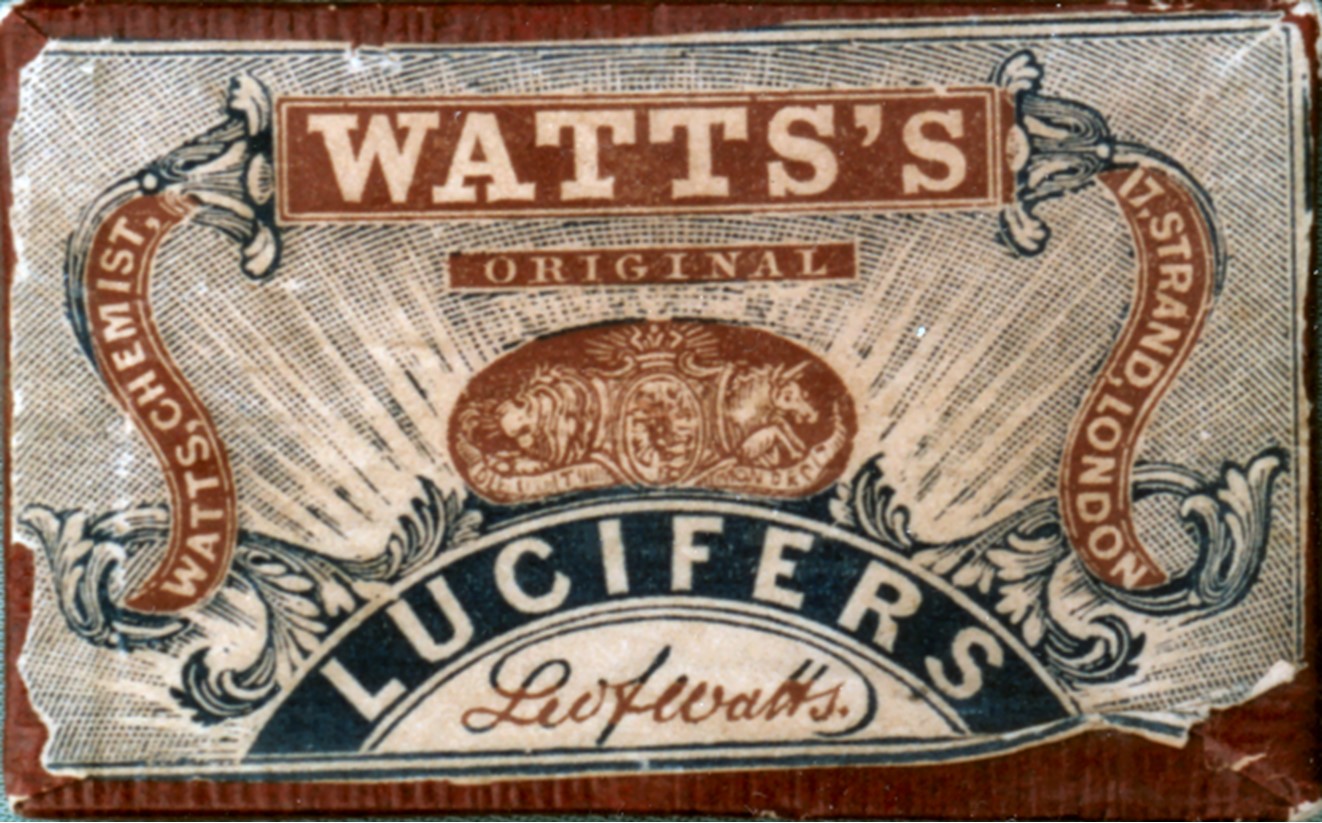
Lucifer Matches
In 1830 there was a further innovation. Samuel Jones brought out the “Lucifer Match.” These were lighted by the same process as Walker’s “Friction Lights” but users were warned not to inhale the gas which was thrown off upon ignition. In fact, people with weak lungs were cautioned not to use the matches at all.
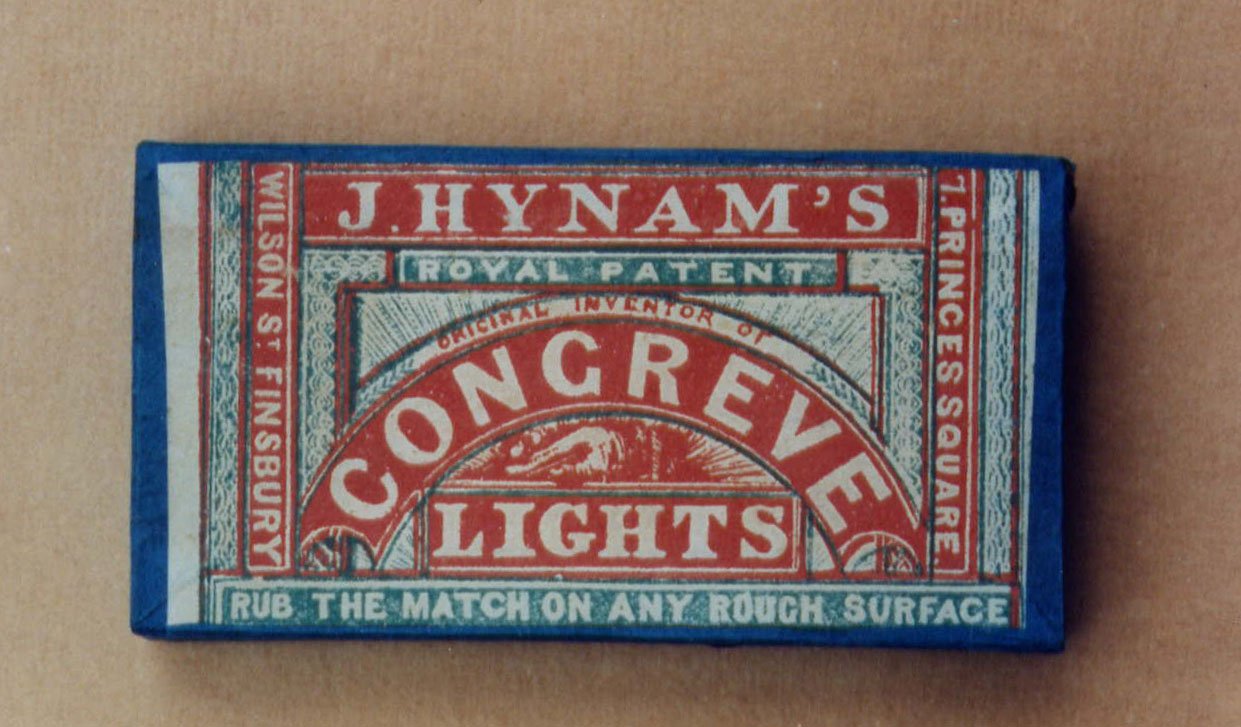
Congreve Matches
Prometheans and Lucifers did not use phosphorus, the first recorded use of this was in a “Congreve” match which was invented in 1830 by Charles Sauria, a French chemist. Most Congreves were slender sticks. They became extremely popular; so much so, that Continental firms commenced production and in 1832 the German “I.N.I. Congreve” came on the market, which are reputed to be the first matches to be exported. It was particularly slender and the tip was only just discoloured by a tiny black head. About 1/4″ of the wood was whitened below the head. The name is attributed to Sir William Congreve (1772-1828) who invented an artillery rocket for the British Army in 1808.
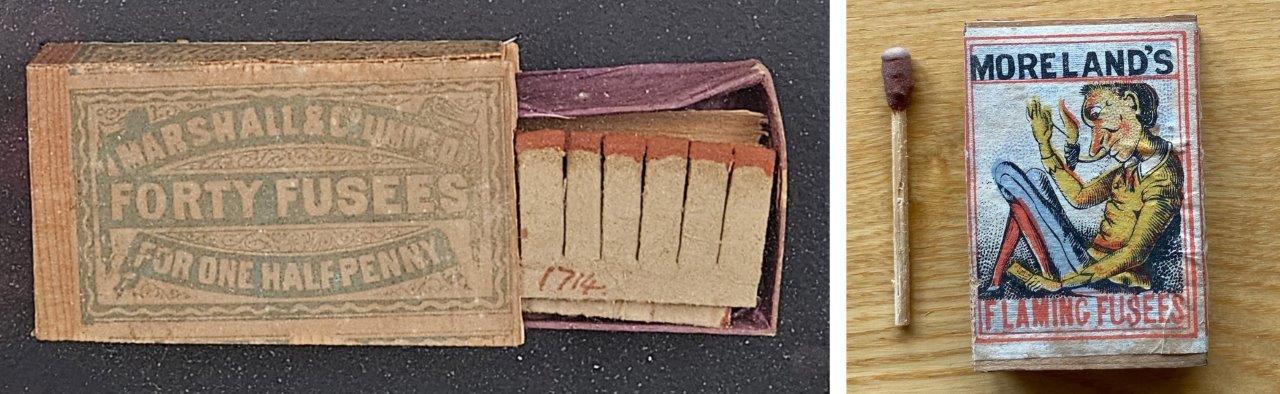
Fusee Matches
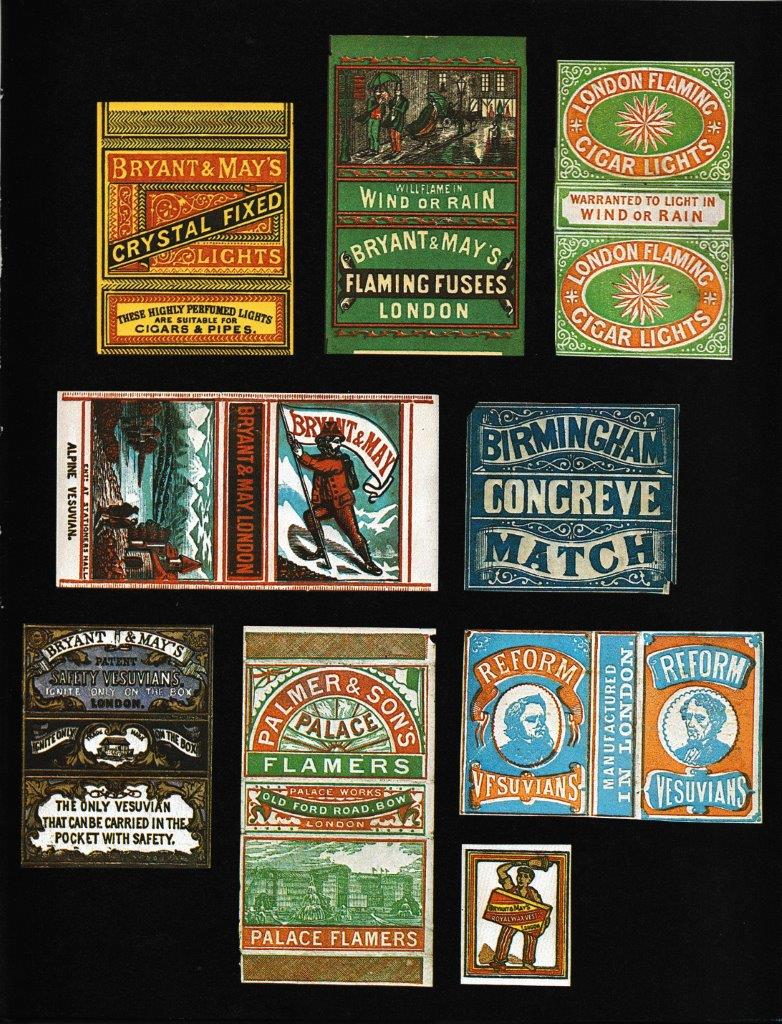
It was in 1832 that Samuel Jones was again first in the field. This time with the “Fusee,” a match specially invented for slow burning and mainly for the purpose of lighting pipes and cigars, These early Fusees were composed of strips of amadou, a fibrous material more like cardboard, and cardboard itself was also used in some instances. The flat strips were about 6″ x 1/4″ and were serrated to allow for the matches to be torn off as required, similar to the pattern of our present-day bookmatches. The dipping was of course carried out after the serration operation had been completed. Later Fusee matches where made of other materials, usually with wood splints, their matchboxes displayed such names as “Flaming Fusee”, “Flamers”, “Braided Fusee”, or just “Fusee”.
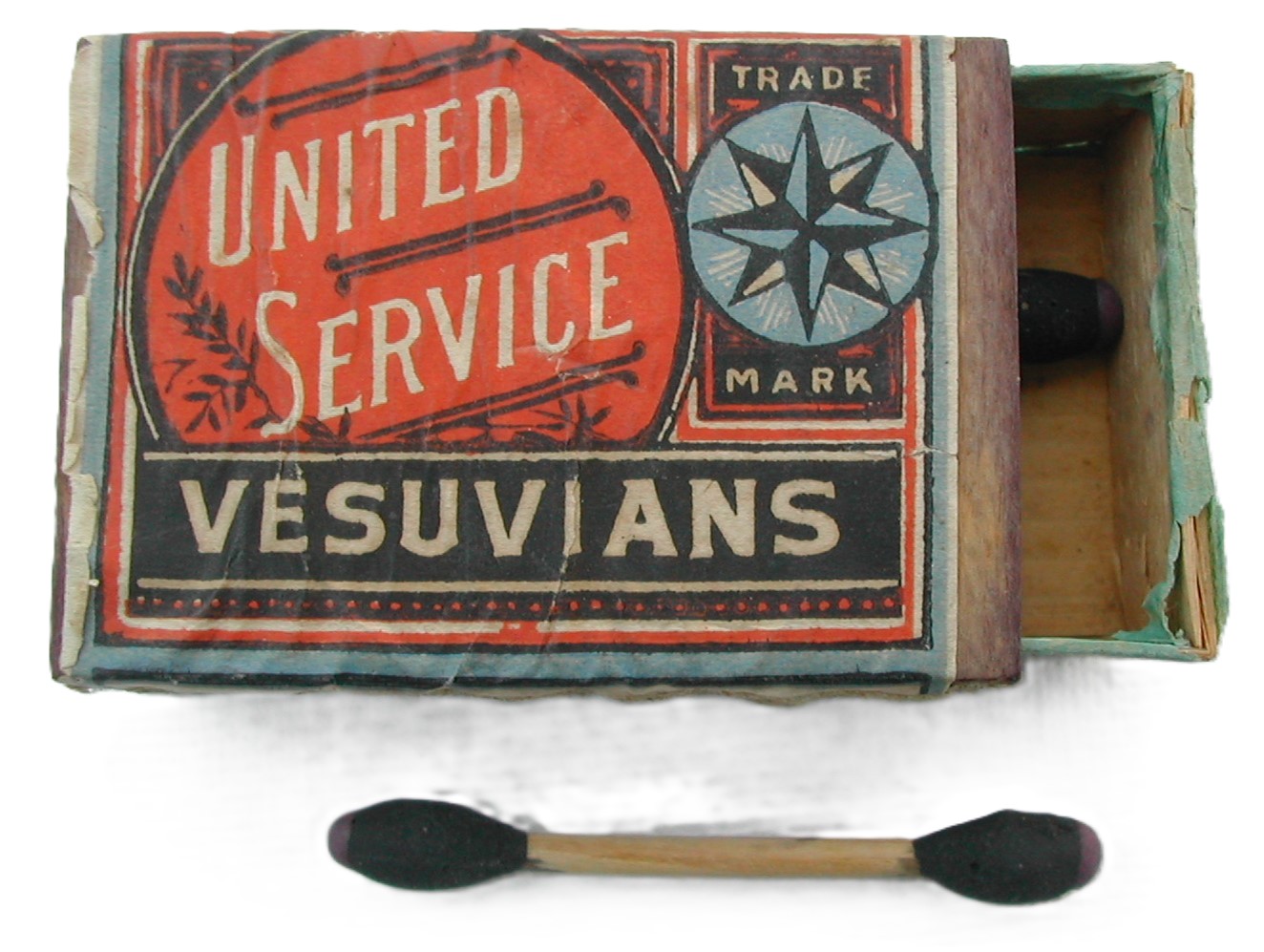
Vesuvians
The “Vesuvian” first came on the market about 1848-9. It was a match which was invented to meet the demands of the outdoor smoker. It had a massive head which was often in two colours, the colour on the tip being the ignition substance, and was usually of a much brighter colour than the rest. The head was composed of a mixture of charcoal, sawdust, nitre, cascarilla bark, and gum.
The stems were in great variety, some were made of glass, bone or porcelain, although the “Braided Stem” was the most popular. The latter was patented by Palmer in 1854.
Many makers used their own particular method of fixing the head – a matter which was most important, due to the weight and size of the head. Special attention was paid to the fixing to prevent the burning head from falling off. In some cases wire was used for this purpose as was evident in R. Bell & Co’s. “Wired Fixed Stars.” Quite a number of the Vesuvians were double-headed, i.e. a head at each end.
Wax Vesta Matches
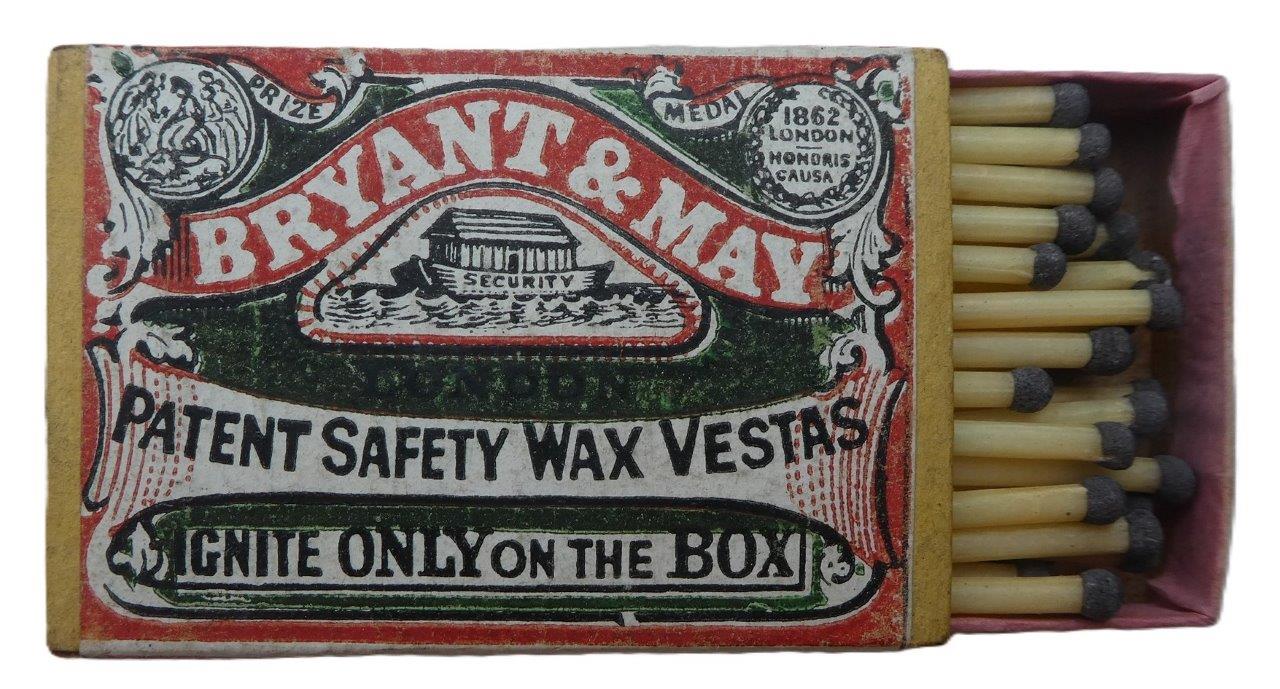
There was a rival invention patented in 1832. It was the “Wax Match.” It is reported, by the way, that the actual word Vesta was included a little later by Richard Bell & Co. These matches had very slender stems and were made of waxed taper measuring 2 1/2″ in length. Many improvements followed throughout the years, and they vary in quality, length and diameter. Wax Vestas proved successful and popular, although not so common today they are still being made.
Cigar Tips
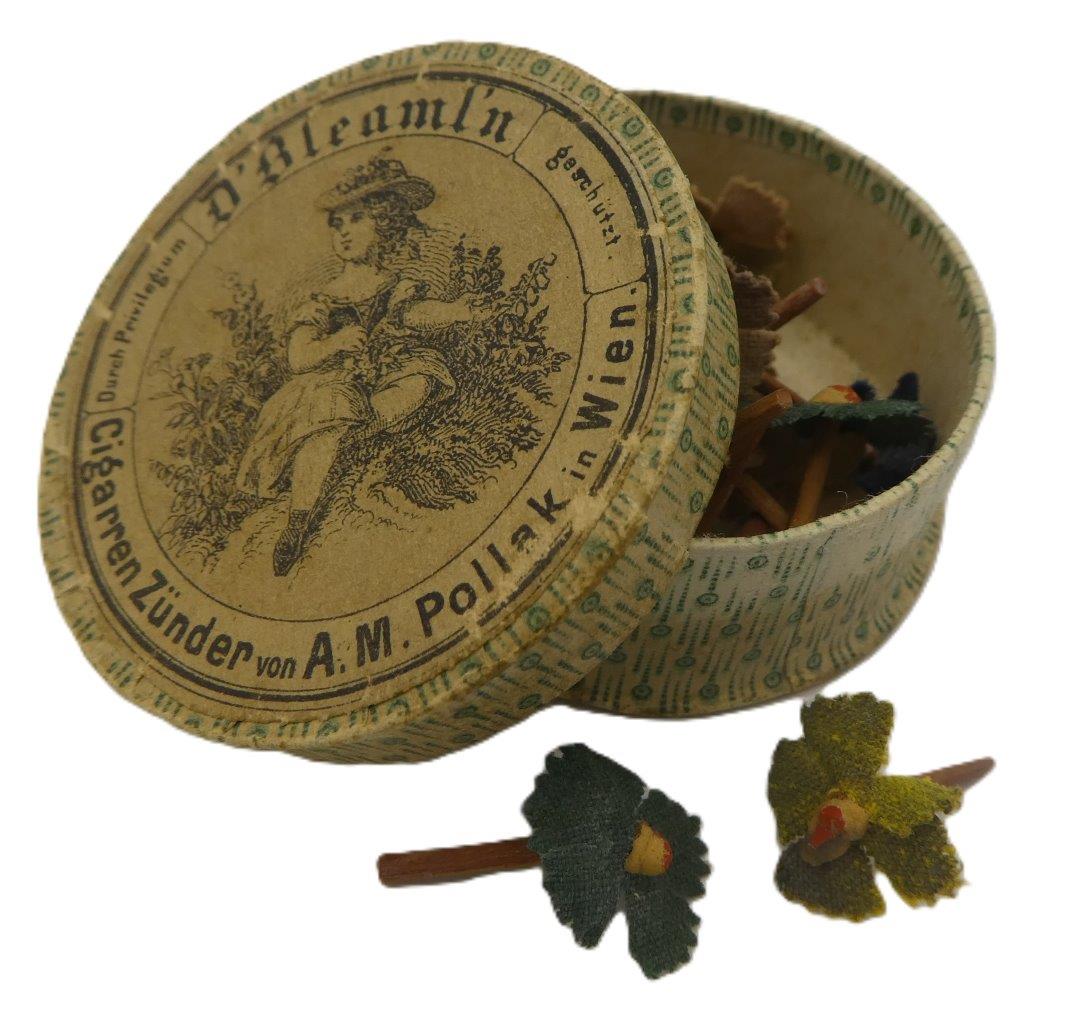
A much more elaborate method of lighting came to light in 1840 when Cigar Tips emanated from Austria. The Cigar Tip was a small cone of paper with an inflammable tip, the whole article fitting over the end of the cigar. There were many artistic designs of this means of ignition.
A very interesting specimen was the floral pattern. This consisted of an extremely fine stem 3/4″ long; the top was a five-petal green flower with the actual match head pierced through the centre. The head itself was grey with a tiny red tip.
Before ignition the stem of the match was pressed into the tip of the cigar and left there to afterwards burn away. The one here described was “D’Bleaml’n (The Little Flower) von A M Pollak, in Wein, durch Privilegium geschutzt.”
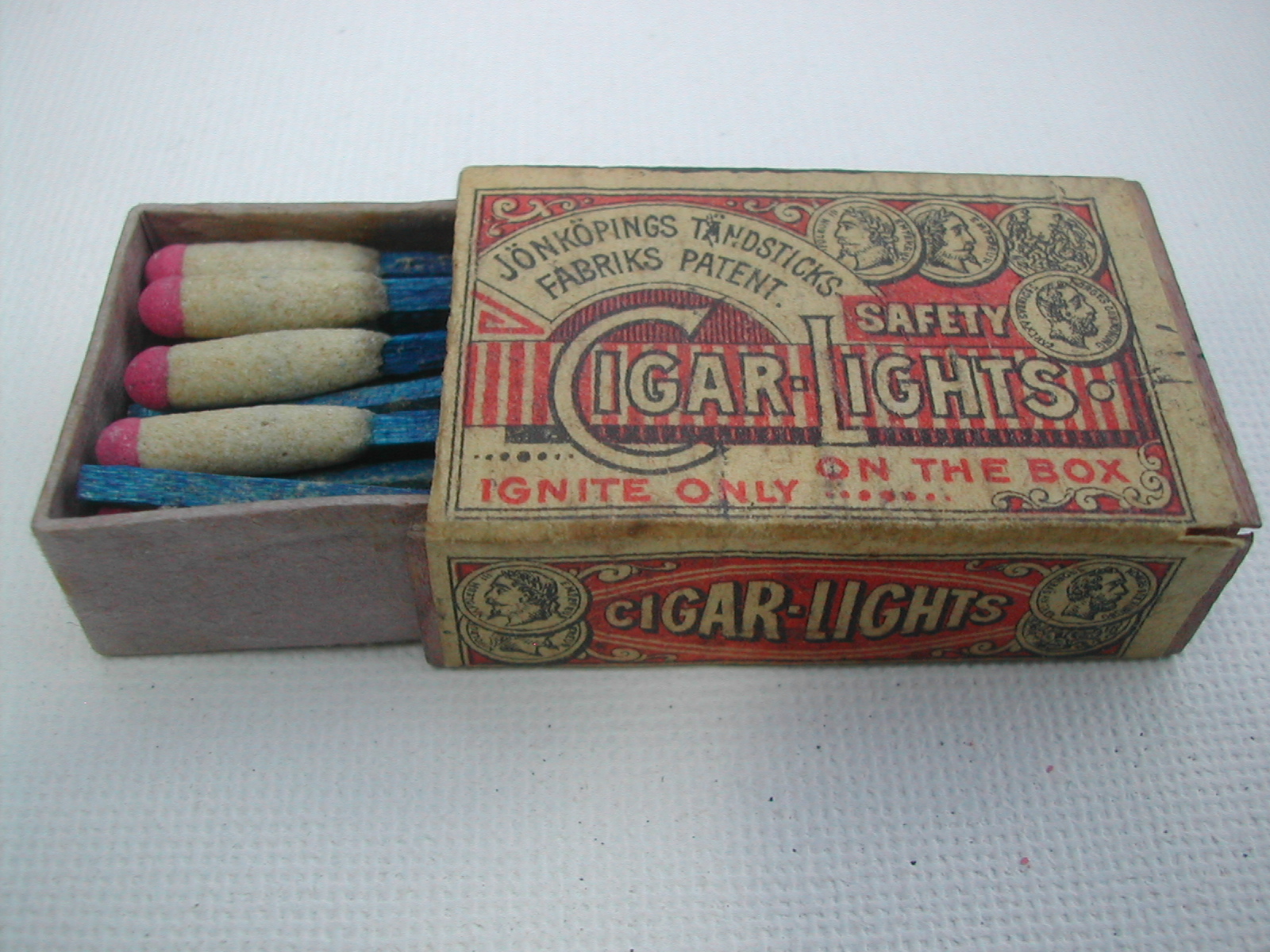
A further interesting specimen was the Le Verrier’s “newly invented Planet Cigarlights. Instructions for use: Stick one end of the light into the centre of the end of the Cigar, rub it gently against the rough part of the box, and begin to smoke as soon as it is lit. It will burn like a coal for five minutes and not cause any unpleasant smell or taste.” This little object was 1/2″ long with about two thirds of its length dipped with a dark brown head and a small red tip. The bottom of the stem was pointed to allow for easy penetration into the cigar.
Pullmatches
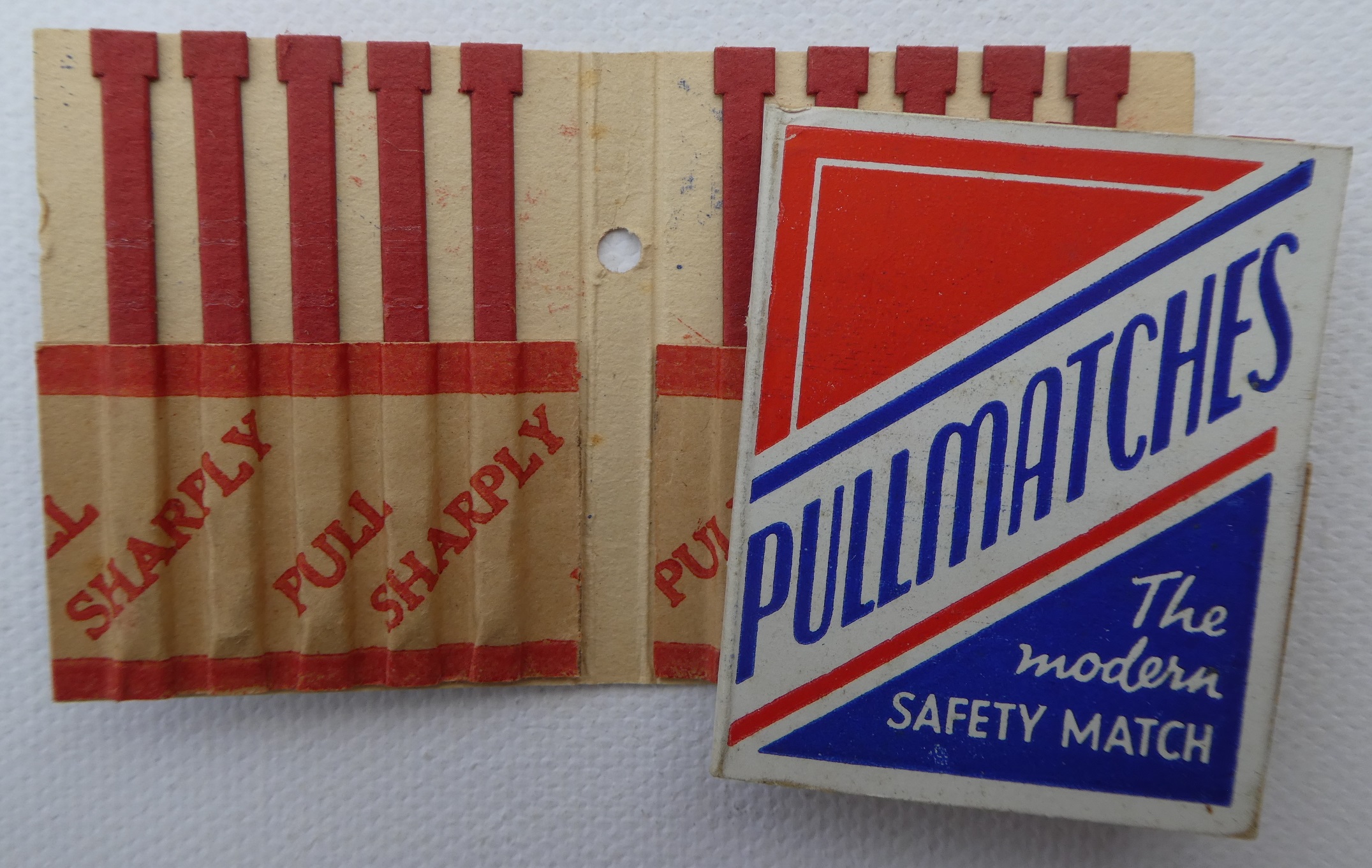
Then followed a series of many patented ideas for instantaneous lighting. From all over the world there were inventions appearing. The most outstanding seemed to be the method of ignition by means of extraction. Pullmatches of today are based on this principle. One Austrian specimen measured 55 x 10mm and was tipped in red compound. The tip was placed firmly into the coils of rolled brown paper and ignited upon being sharply extracted. This particular match is dated 1845.
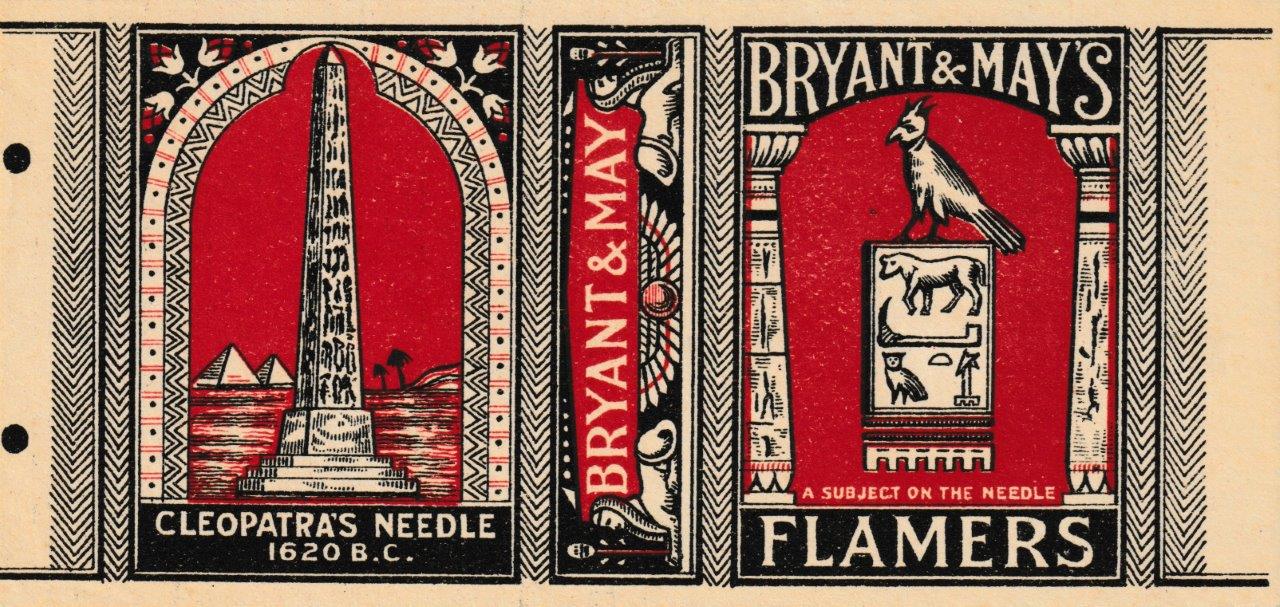
Flamers
“Flamers” were another form of Fusees, which can be found in a few varieties : Bryant & May’s “Flaming Fusees” with the slogan “Will flame in wind or rain” had a round stem and brown head; “Flamers” (Cleopatra’s Needle) about 2 1/2″ long and a red top; “Motor Match” – “For Motor Car, Cycle, and Launch Lamps.” Length 4 3/4″ with rather more than a third of its length being taken up with the dip or head, and the head was light brown with a dark brown tip.
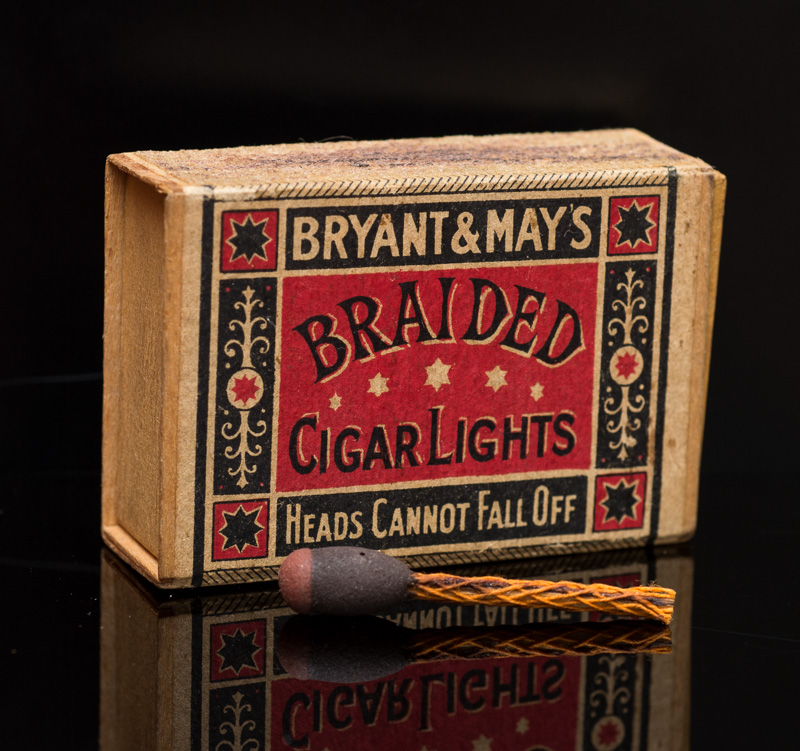
Braided Cigar Lights
There were also Vesuvians with round porcelain stems and double headed. The heads were black and red. “Braided Cigar Lights” were braided wooden splints, as the name implied, with black heads. “Palmer’s Patent Braided Fixed Stars”, with braided stems and very thick heads in black and red.
The whole match was about 1 1/2″ long. R. Bell & Co. produced “Lights of London” 4 3/4″ long with 3″ red heads.
This last match gave a red flame upon ignition.
Sulphur Matches
We can split Sulphur Matches into two types: ones that were in use before Friction Matches, and those that were produced afterwards.
The first were not friction matches, but usually thin rough wood sticks, hand-cut, often with one or both ends variously shaped into a point or blunt ended ‘V’ shape and dip coated with sulphur (Brimstone – ancient obsolete term for sulphur).
These are often referred to as “sulphur matches” and sometimes as “matches”, and were in common use long before and for a time after the invention of friction matches. It is important to understand that these could only “transfer” fire and could not be ignited by friction. Another common name used to describe these sulphur matches was “spunks”. Because friction matches ousted the use of the tinder box, their use declined rapidly.
After friction matches came to the market, sulphur in various quantities was often still used in the match making process. Those that remained came to be called Sulphur Matches, and we see “Sulphur Match” written on the matchbox label, usually had a wooden splint that was heavily coated with sulphur, and then tipped with phosphorus. They gave off unpleasant sulphureous fumes when the match was struck, and do not appear to have been so popular in England. They were made in large quantities in other countries such as in Sweden, Norway, and Japan. Because they were made during the time that matches used the harmful white (also known as yellow phosphorus) their manufacture was eventually banned and its use ceased in the first quarter of the 20th century.
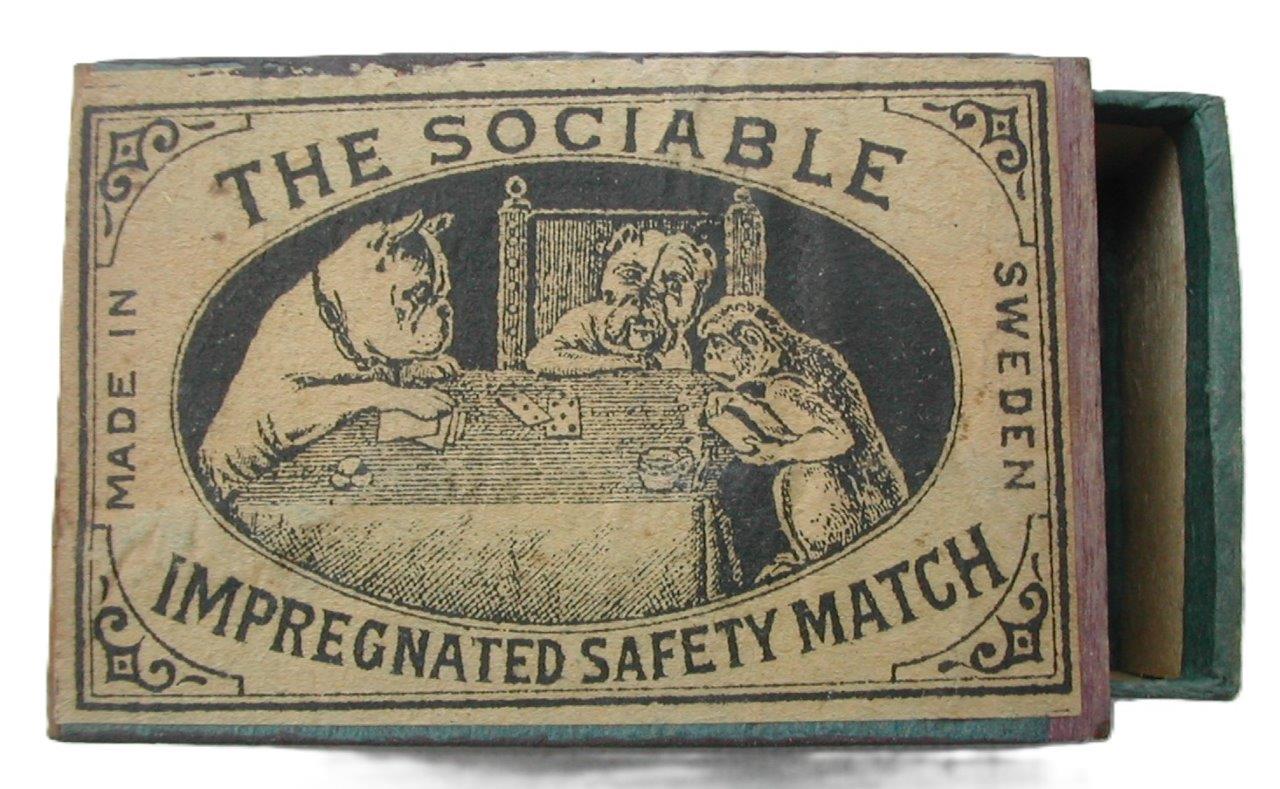
Impregnated Match
The year 1850 saw the introduction of the “Impregnated Match.” Impregnation was a process by which the match was dipped in a stearine solution. This killed the objectionable fumes, thus making it a complete reverse of the sulphur or “stinker”, the name by which they were more commonly known. It is worth recording at this point that the Scented Match was introduced about this time. Well known among these latter brands was the “Perfumed Match” from Sweden, very ordinary in appearance and about 2 1/2″ long.
Also in 1850 there were many novel inventions. From France there was a match made of thin soft paper, rolled and twisted into a spill. Inside was a small quantity of amadou and the tip of the spill was dipped in black. There was also a similar product which was dipped at each end. There was the “Pellet Match,” like a small grey pill. It was just a round ball about 1/4″ in diameter. It was contained in a small box fitted with a plunger at the side. The plunger was depressed to extract the pellet which was then lighted by friction on a striking-surface. There were too, Calcium Phosphate Pellets which were placed on the end of a cigar and when wetted they ignited immediately.
Sweden produced what became known as “Spill-sticks,” flat wooden stems 3 1/2″ long and dipped to about 1/4″ at the top. They were labelled “For use in stairs or dark rooms.”
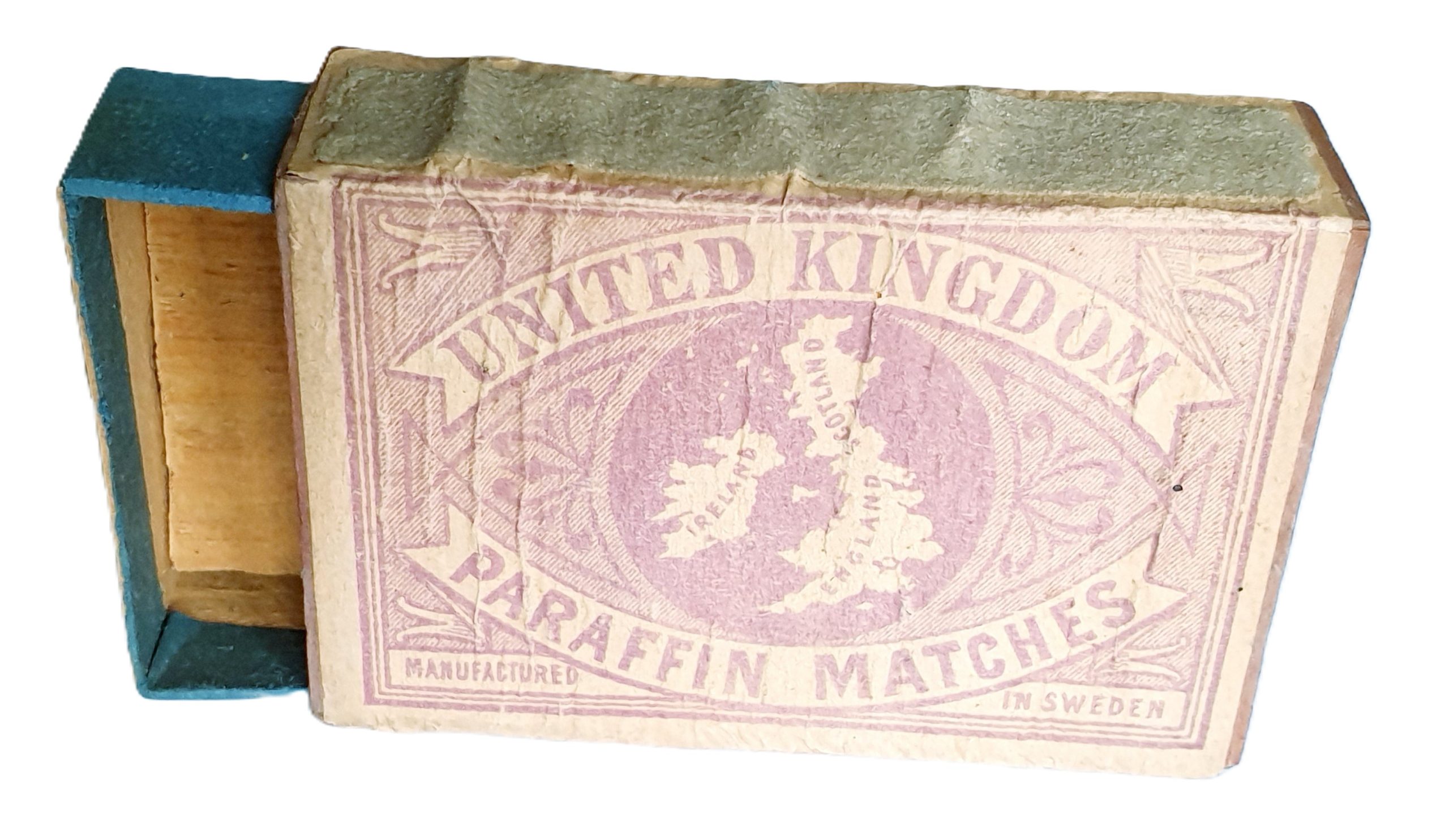
Paraffin Matches
Paraffin matches are a type of friction match with a matchstick that has been dipped in molten paraffin wax to facilitate the transfer of fire from the burning match head to the matchstick. This practice became almost universal in match manufacture. The term is mostly seen on historical match labels to distinguish paraffin treated matches from those with untreated sticks and from those treated with sulphur.
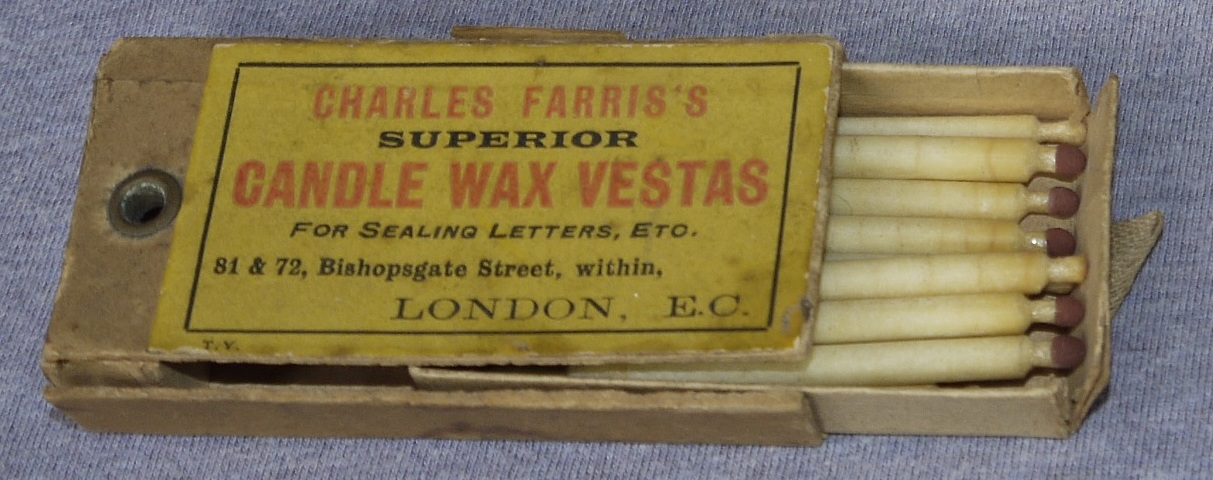
Candle Matches
Worthy of special mention here were the “Candle Matches,” so called because of their ability to serve the purpose of a miniature candle and candlestick. They were made in this country by Bryant & May in 1890 and were in two sizes 2″ and 2 1/4″. They were round and made to stand in a hole at the end of the box. Similar items about 2 1/2″ long came from France, Belgium, and Italy, but these varieties were held in a hole at the top of the box.
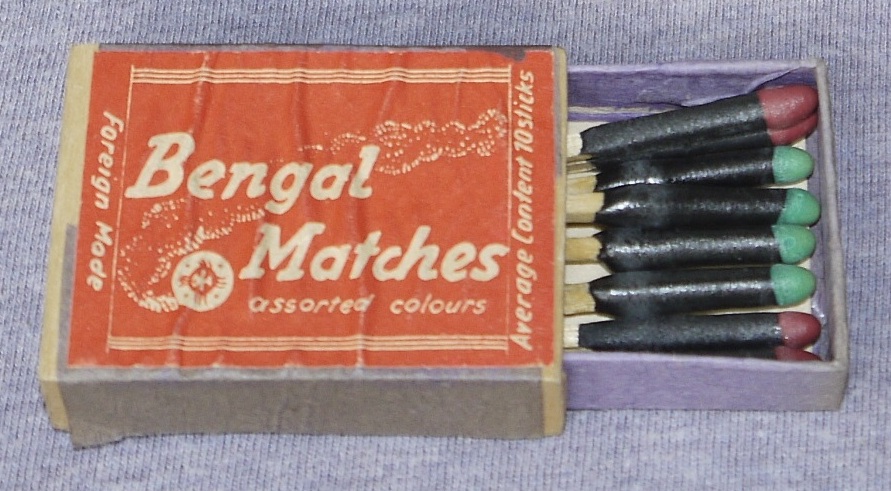
Bengal Matches
“Bengals” also then came into the picture, which were actually another form of the Flamer. Bengal Matches are a special type of pyrotechnic match that generally burn for a longer time than ordinary matches and give off a brightly coloured flame when burning. They have a wooden splint and two composition parts : one at the tip to initiate combustion, and the other adjoining the head down a long length of the splint.
The dip was much more pronounced and in comparison with today’s products they would appear to have about three times the quantity of head as those in use today. There were all sizes and shapes, some with half-round stems, some were completely round, and some were grooved sticks. The match was made safe by the omission of phosphorus from the dip. The phosphorus was put on the side panel of the box and formed a striking-surface. Hence it needed the match and the striking-surface to be rubbed together before a light could be obtained.
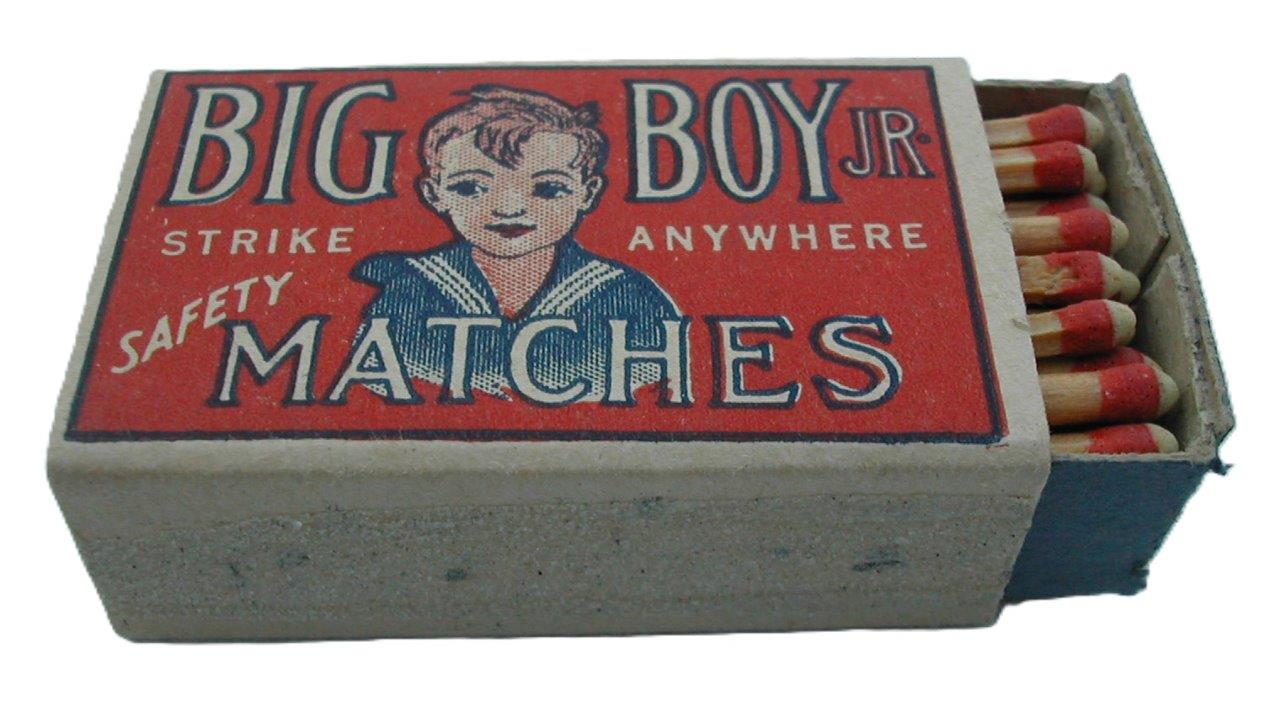
Strike Anywhere Matches
Then followed a period when matches which would strike on any rough surface were in use. During this period many of the previously mentioned matches were being further developed and improved upon. In the “Strike anywhere” category there was one from Dixon Sons & Evans, a square match 2 1/4″ long and with a red head; Martindales of Liverpool gave us a square wooden splint 2 3/8″ x 1/10″ x 1/10″ with a black head; Bryant & May produced their famous “Ruby” with a mauve head; “British Match” had a purple head, etc. Of this particular type of match some were made with yellow phosphorus, sesqui sulphide of phosphorus, and amorphous phosphorus. Somewhat of a novel nature from America was one which became known as the “Drunkard’s Match” a square wooden splint with a purple head and the lower half of the stem dyed red with a non-inflammable composition.
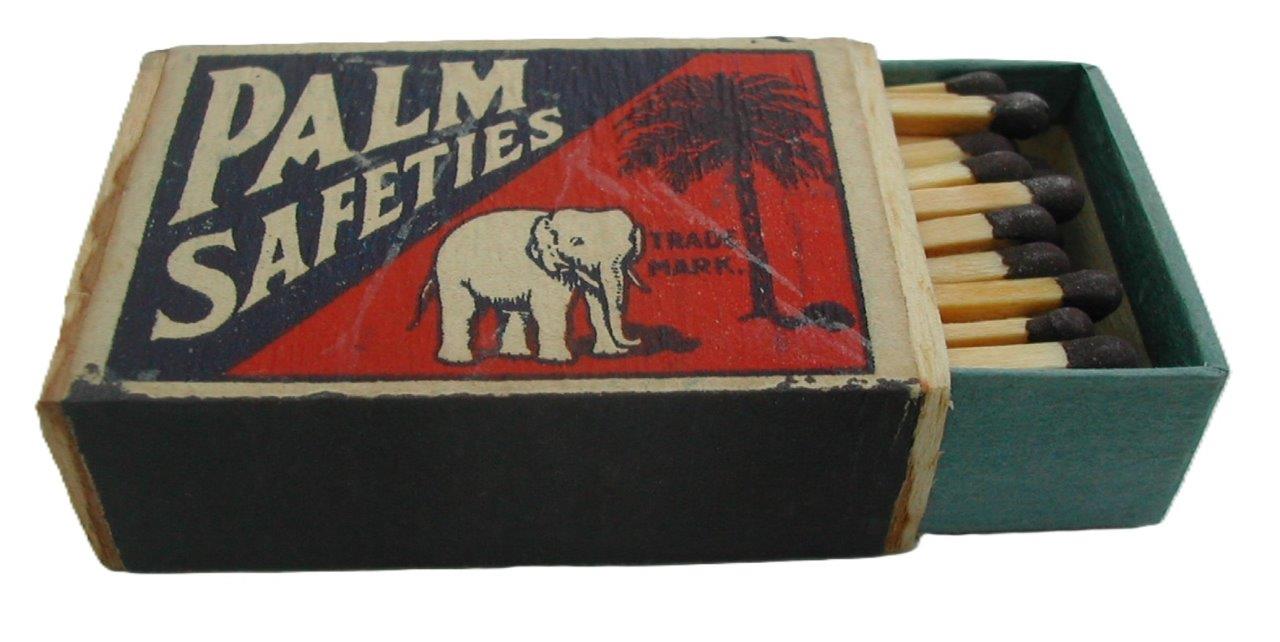
Safety Matches
Non-poisonous red amorphous phosphorus was prepared by Anton Schrotter of Austria in 1844. The first chemist to devise a way of eliminating the drawbacks of friction matches containing yellow phosphorus, namely its too ready ignition and its terrible toxicity, was Gustaf Pasch, a Swede who in the same year was granted a patent for the use of the harmless red phosphorus. Additionally, to prevent self-ignition of the matches he separated the explosive ingredients by including the phosphorus in a special surface on the outside of the matchbox. Subsequently Johan Lundstrom of Sweden made an improved safety match and in 1855 began its commercial exploitation. In 1855, also, Bryant & May acquired the sole rights for the production of safety matches in Britain.
Throughout the years that followed there was a tremendous variety of safety matches produced. They were made in all lengths and all colours: black splints with yellow heads, red heads, white heads; splints also in green, yellow, blue, red, brown, etc. and as many different dips, but it would be some kind of a novelty to find one with a two-coloured splint.
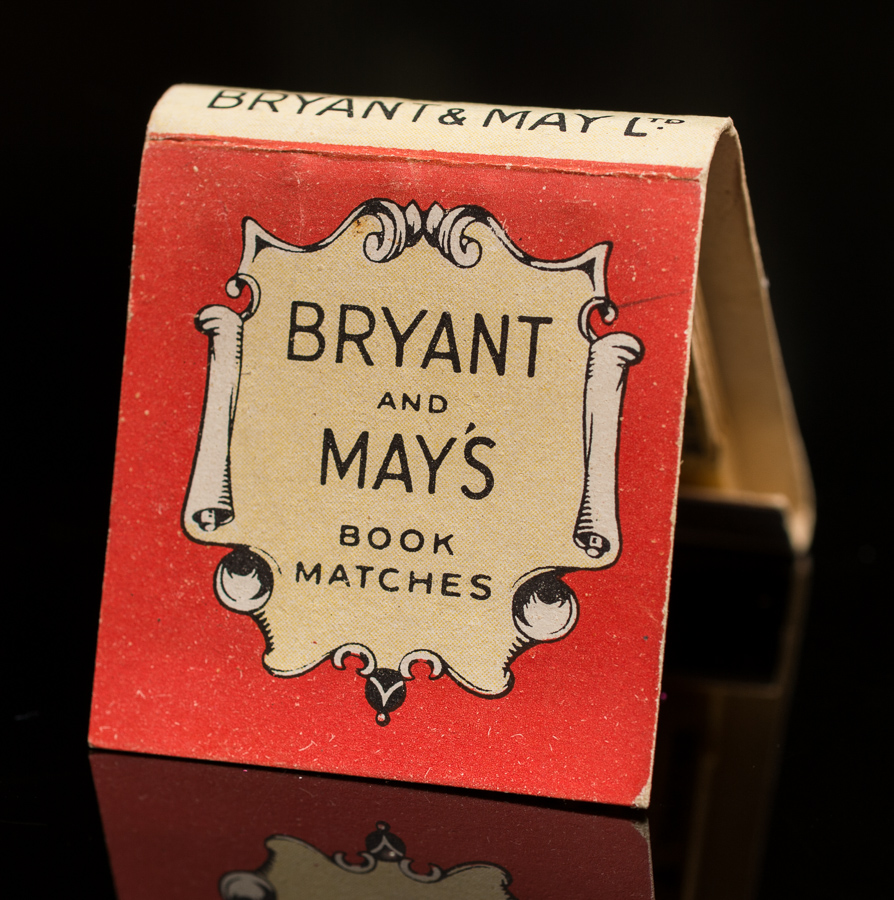
Bookmatches
The first real opposition to the safety match was the invention of the “booklet match” in the USA in 1899. It must be understood that the booklet varieties are not all Safeties, some are Strike Anywhere.
Bookmatches are being made today, although like matchboxes their use has dramatically declined in the 21st Century.
Click here to return to the Exhibition Catalogue