

Italian match industry

Exhibitor : Alan Downer
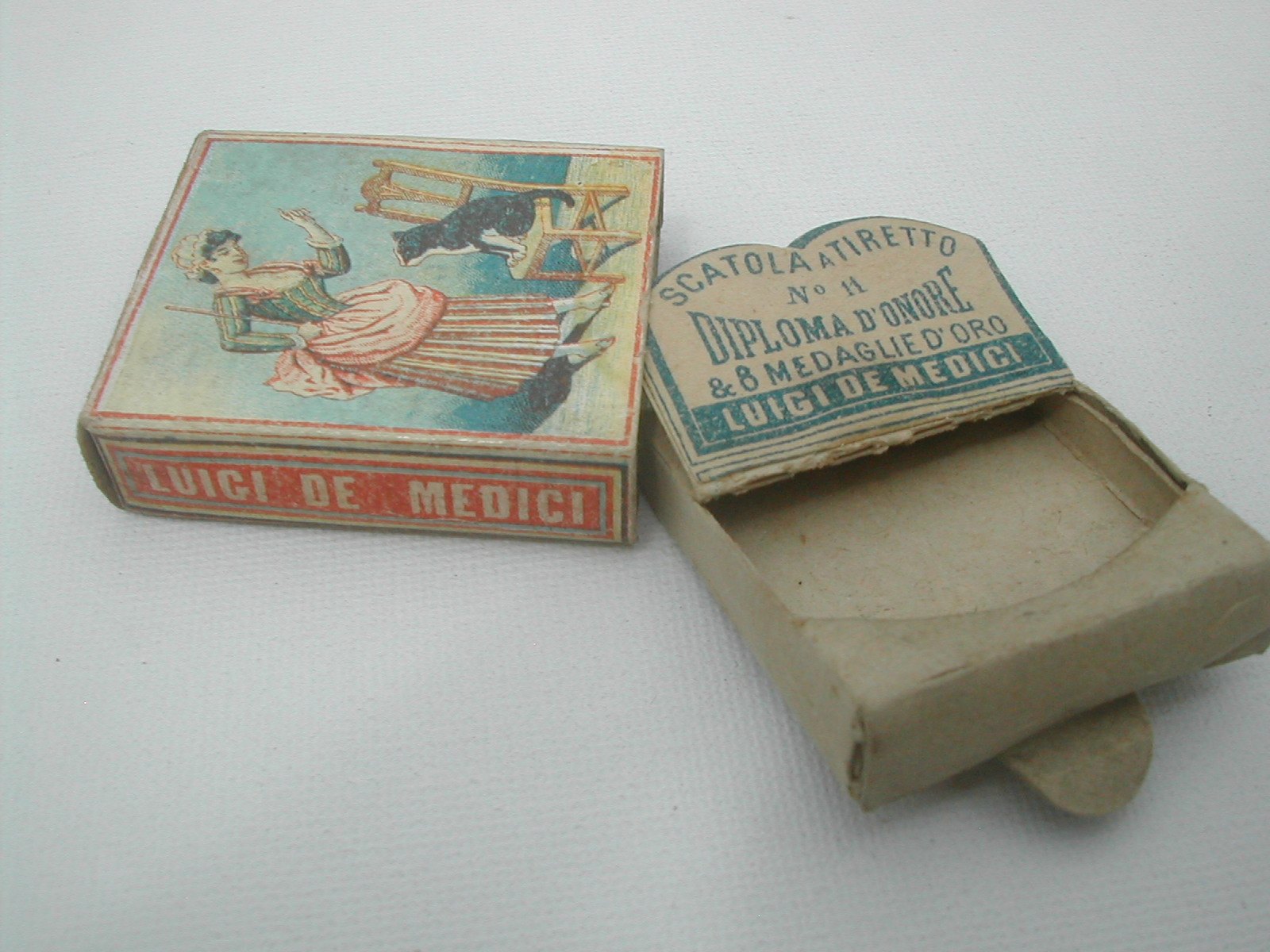
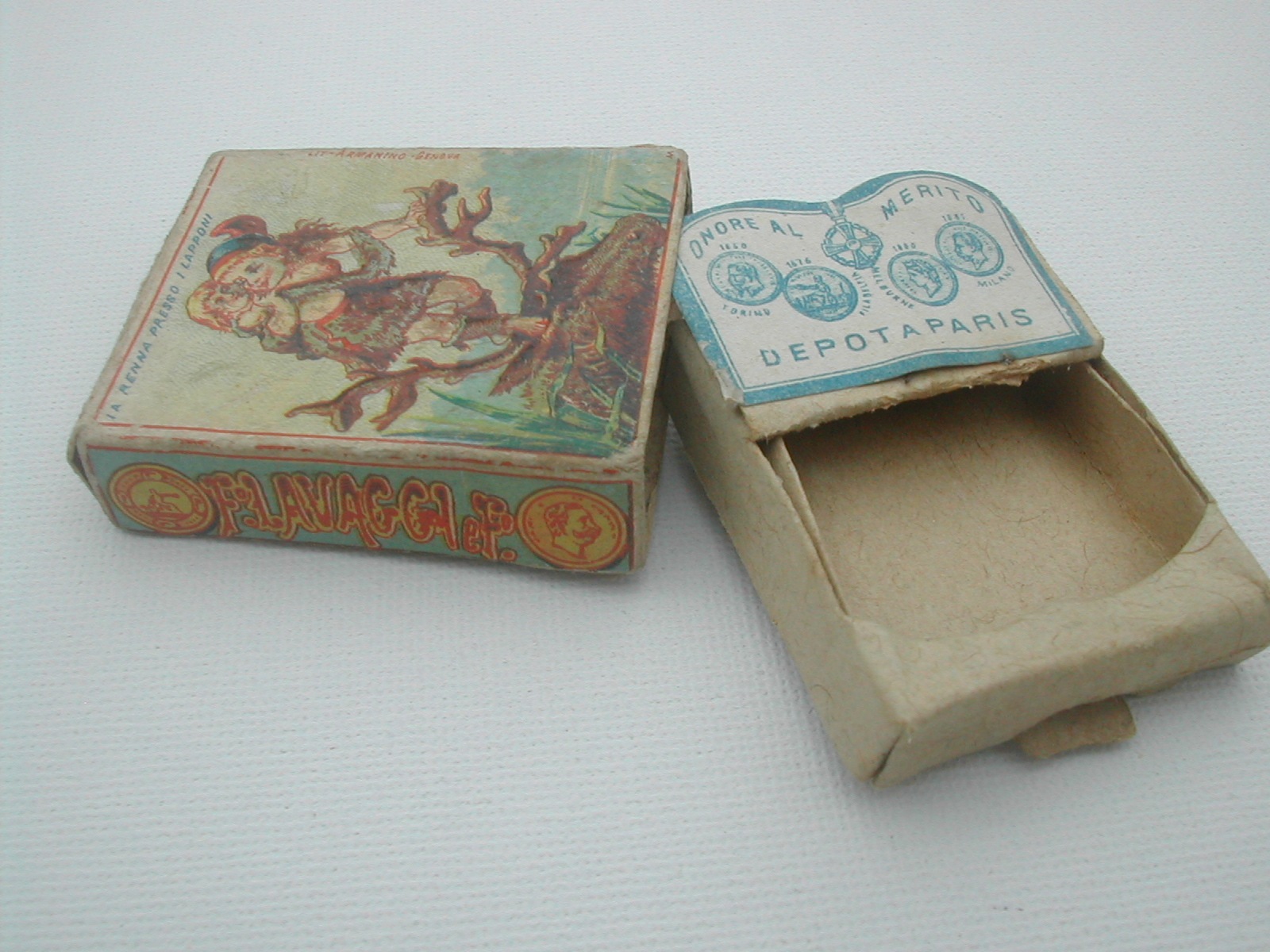
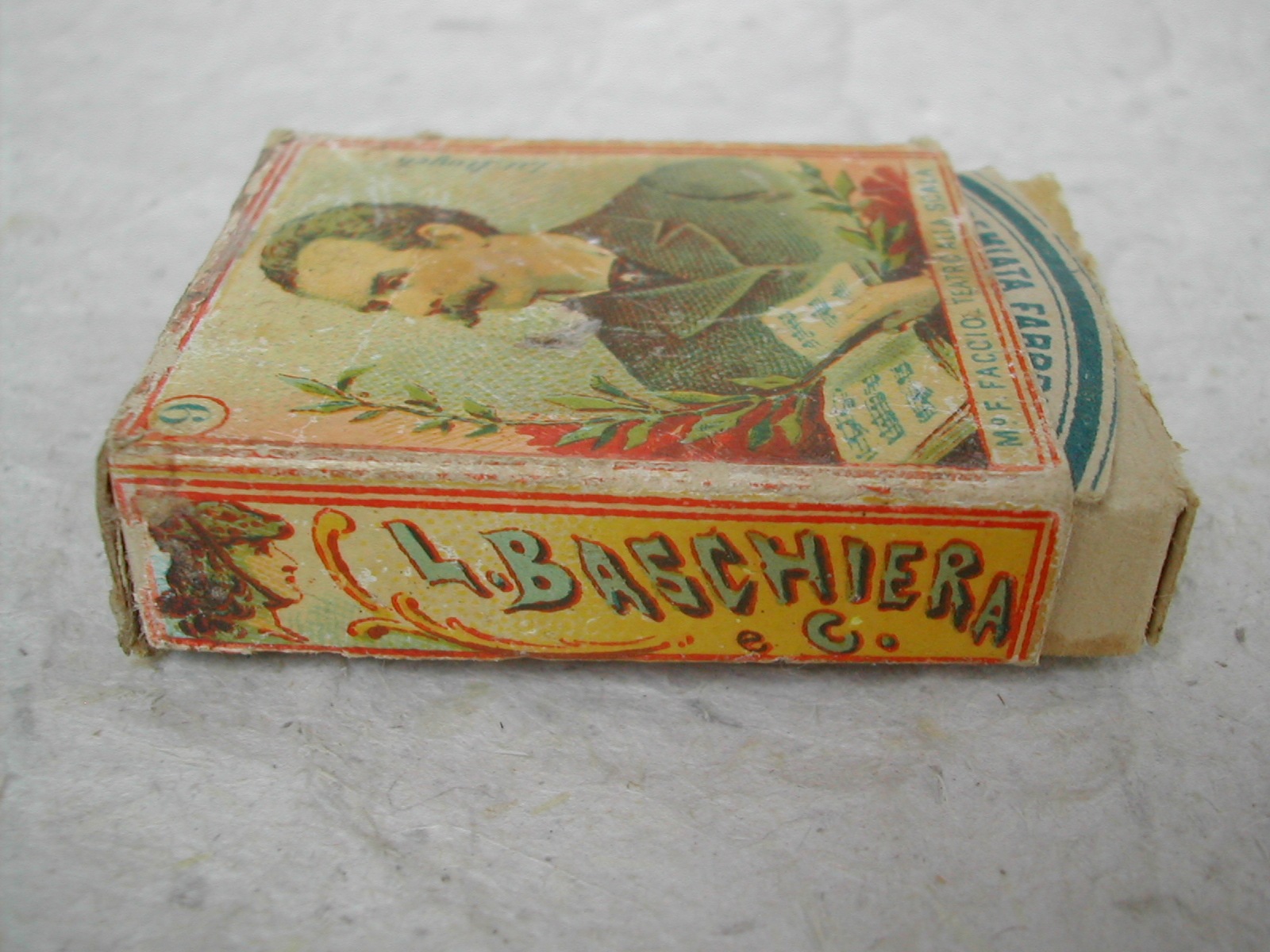
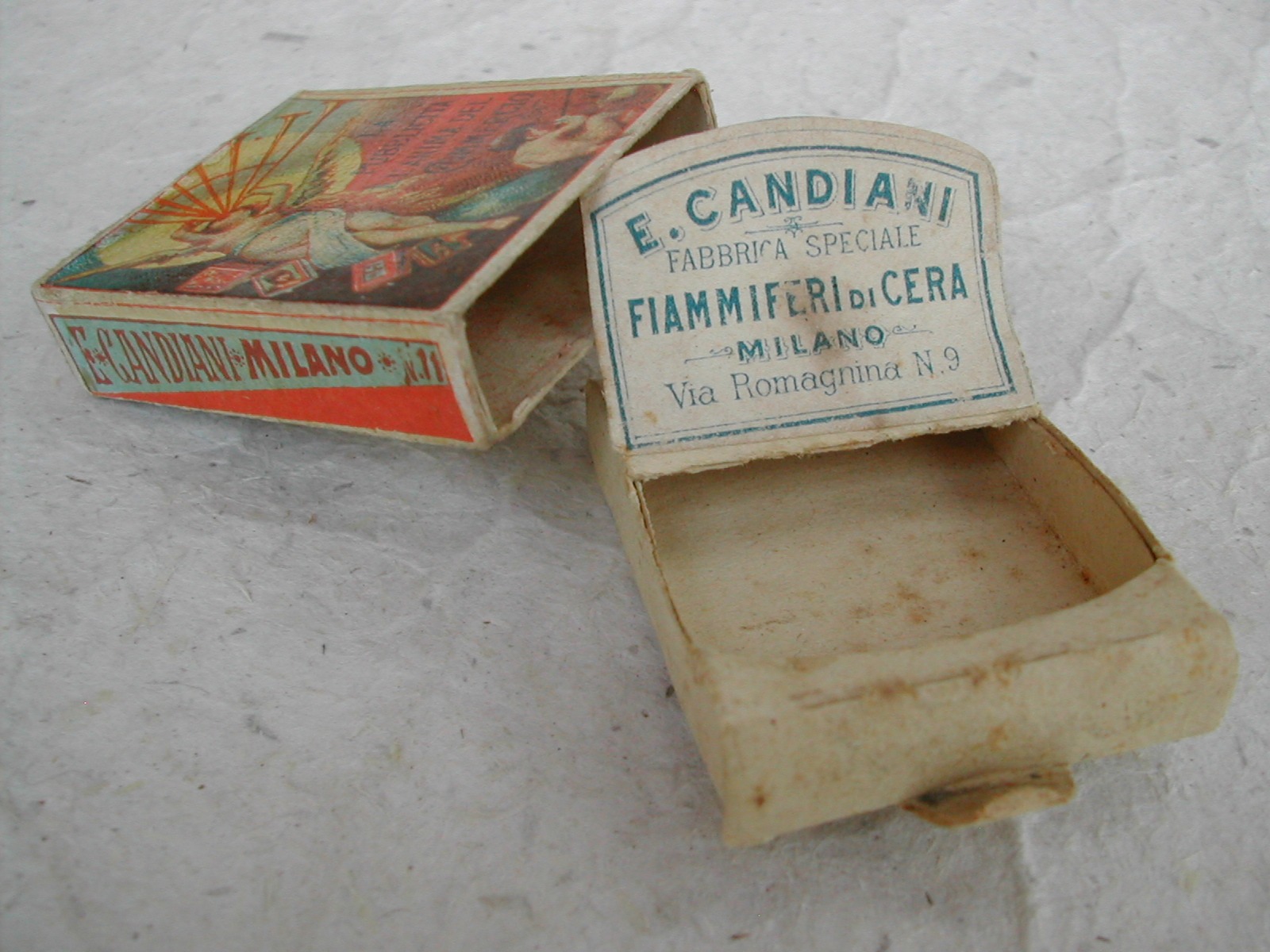
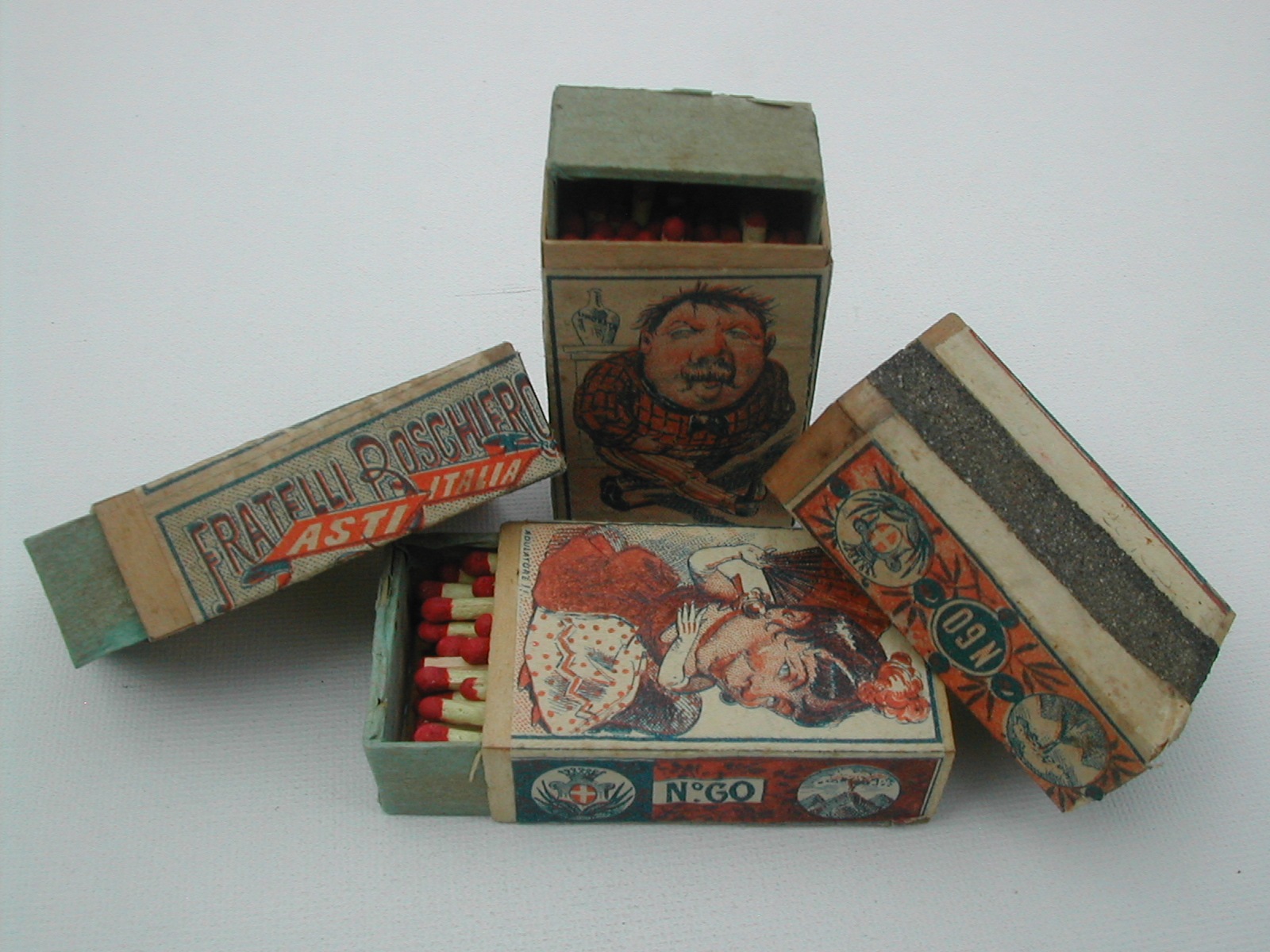
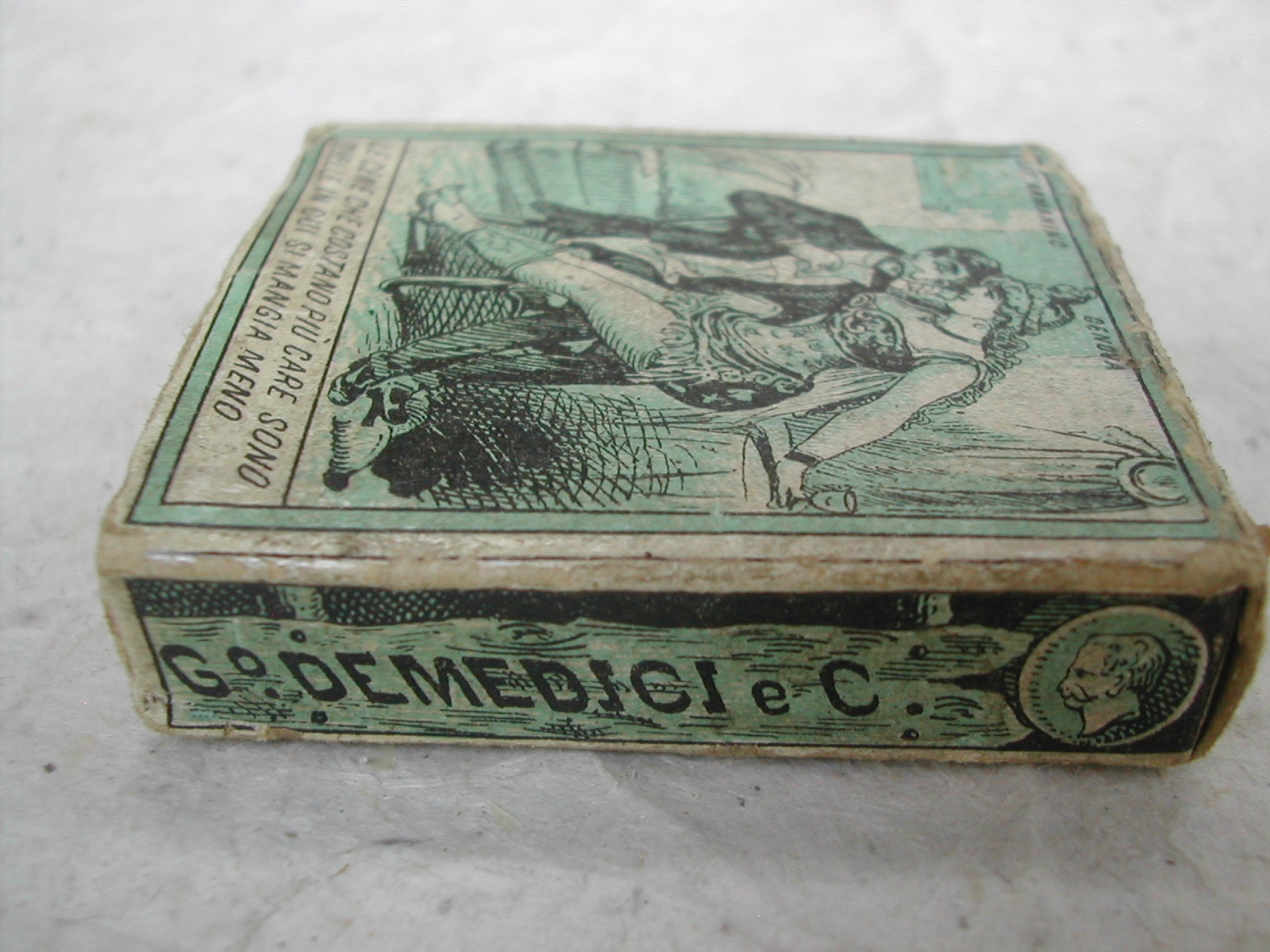
The companies working in Italy during the 19th century have produced some amazing art work to adorn their matchboxes. Makers names, are many, such as “Baschiera”, “Benvenuti & Salsiccioni”, “Candiani”, “Lavaggi” “Dellacha”, “Demedici”, and “Abbona e Romaga” are just some that were operating.
Matchboxes produced in Italy have amongst their number some of the best designs ever made. The people of Italy rejoice in their art, which is famously known for its beauty and detail. Like some other continental Europe match producing nations, such as France, and Austro-Hungary, and a few other countries, such as Mexico, the early matchbox designs enjoyed this love of art in their designs.
In order to achieve such a high level of quality, these designs, produced by extremely talented artists, would have been printed on sheets of high quality paper that would then have been faced to a card backing. These laminated sheets would then have been creased, cut out and folded to form the matchbox outer. This technique was commonly used by manufactures in continental Europe. This is in stark contrast to the majority of British made boxes being made at that time. They were printed labels wrapped around and pasted to the card matchbox outer after the box had been formed.
In addition to the smaller sized matchboxes that held “strike-anywhere wax matches”, many of these companies also competed with other companies in Europe (such as “Roche & Cie”) in the manufacture or distribution of “candle matches”. These were matches of special type that were also made of wax. They were larger and burnt for longer, a product that was mid-way between a “wax match” and a small “candle”.
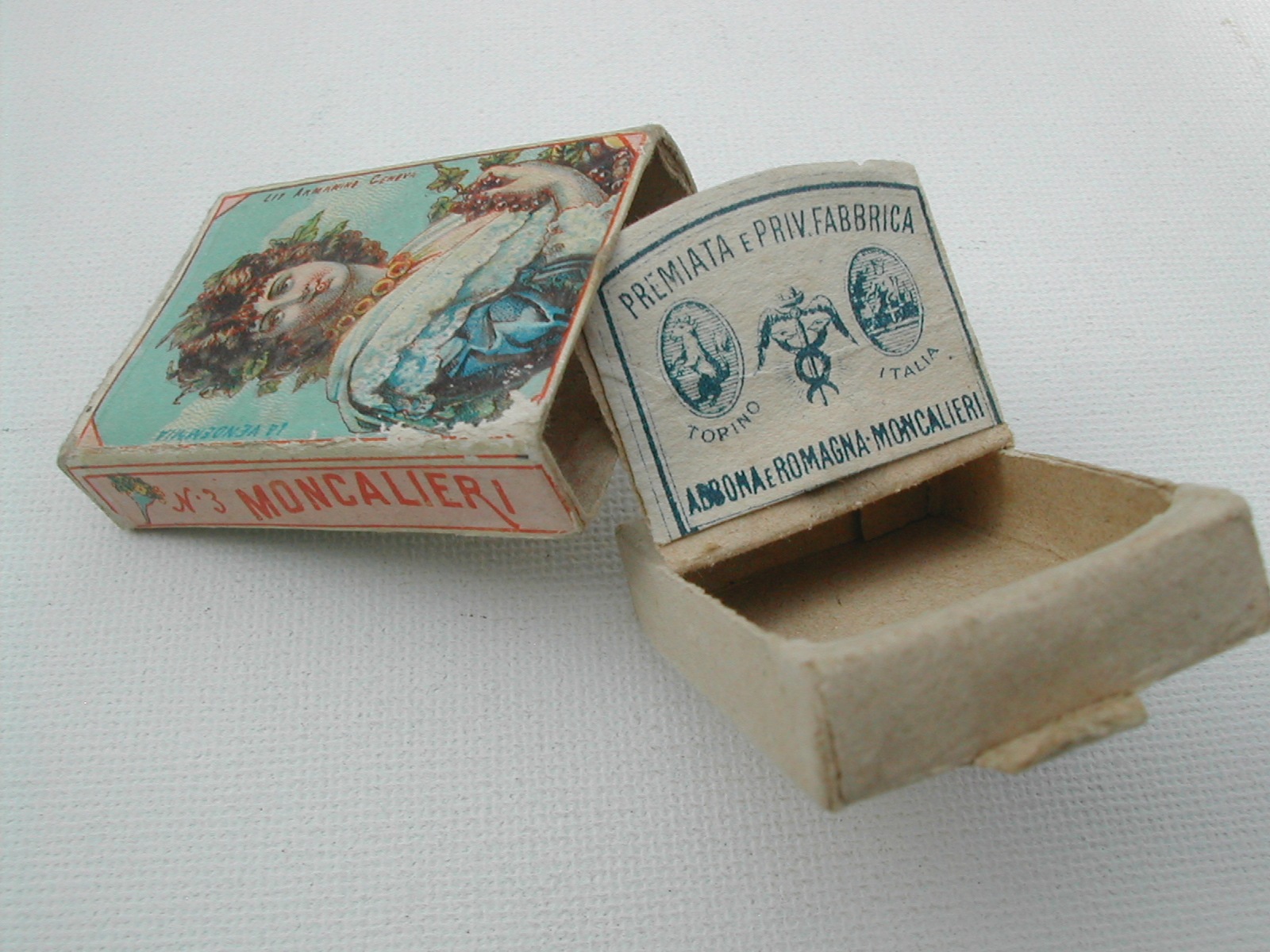
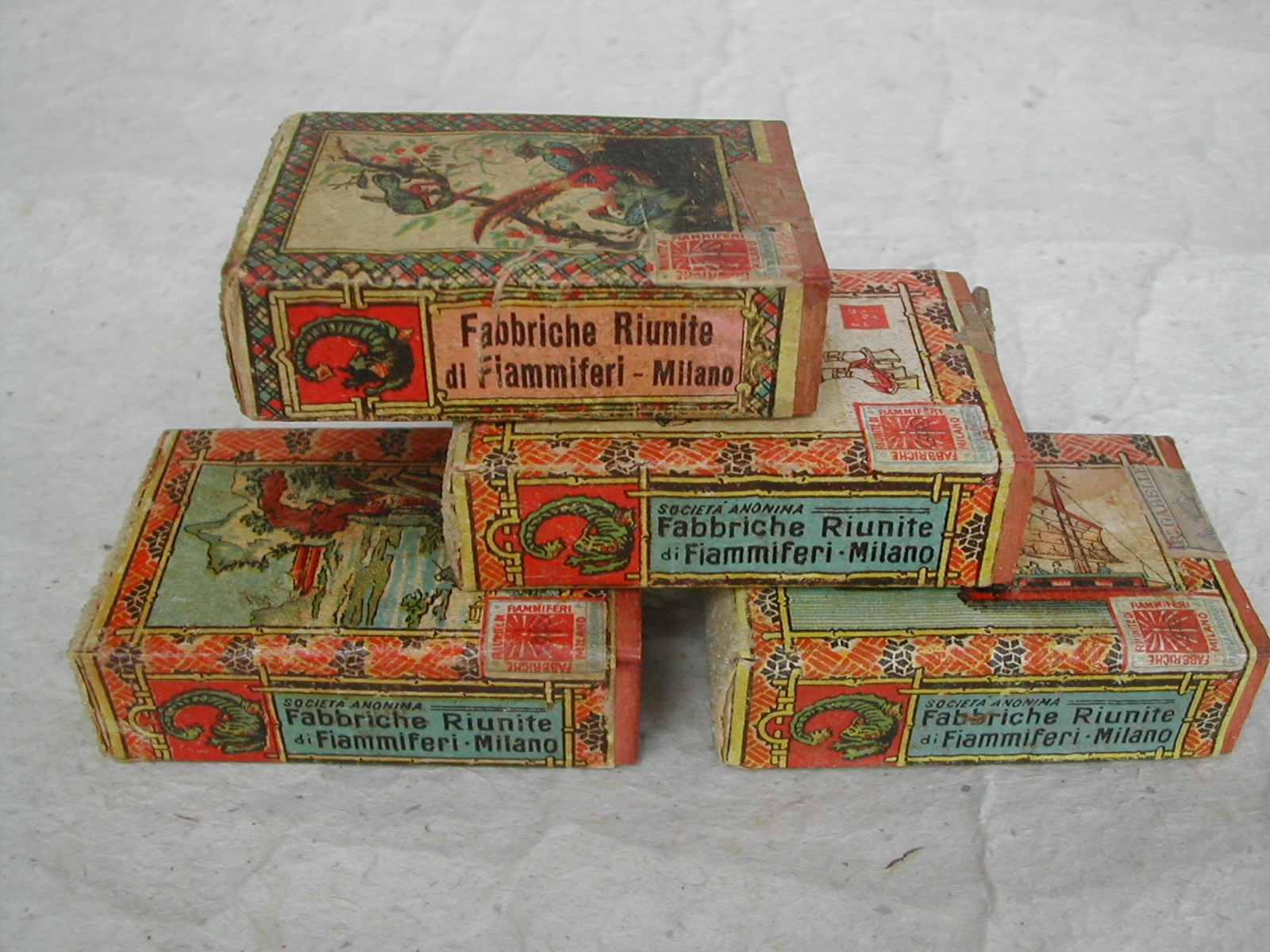
When FABBRICHE RIUNITE di FIAMMIFERI (United Match Factories) was founded (I believe in 1892) most of the Italian match factories lost independence which meant you do not find the name of the matchmaker on boxes and bookmatches but you find the hint “Marca…..with the name of match maker”. “Marca Abbona e Romagna” means Abbona & Romagna in Moncalieri. A factory which did not belong to FRdF is LAVAGGI in Torino. LAVAGGI continued. But I think they stopped producing matches at the end of the 20th century, to only deal in matches, as most of the other previous Italian match factories do today. There were other match factories in Torino which also did not join the FRdF with headquarters in Milano.
Displayed below are examples of matchboxes from various makers, those of: Luigi de Medici, F. Lavaggi, Abbona e Romagna, L. Baschiera, Candiani, Giacomo Demedici and Fratelli Boschiero. Note: the boxes marked FRdF and FRdF S.A. are marked Marca Giacomo Demedici on the other side.
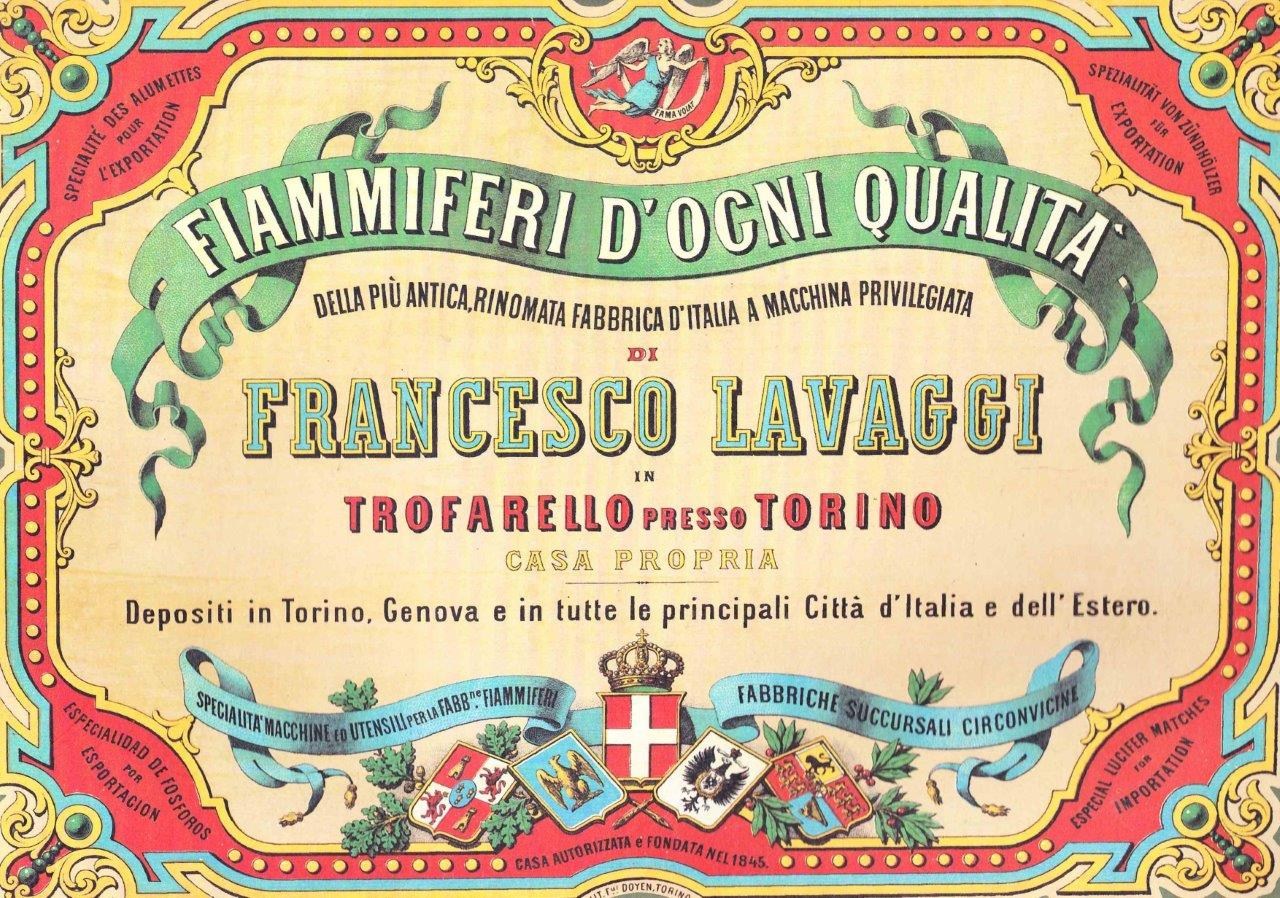 Book of 19th Century Italian labels
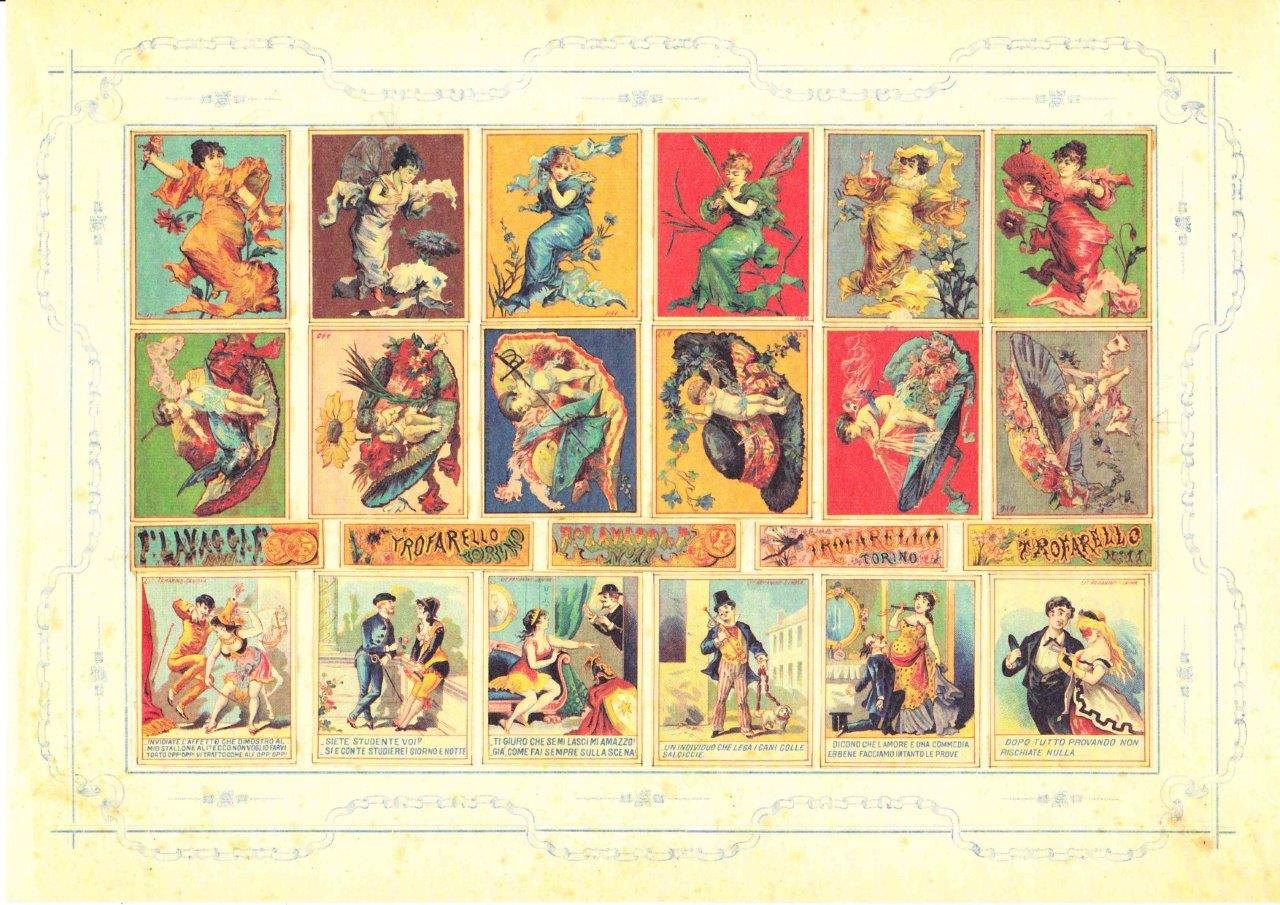 Page of 19th Century Italian labels
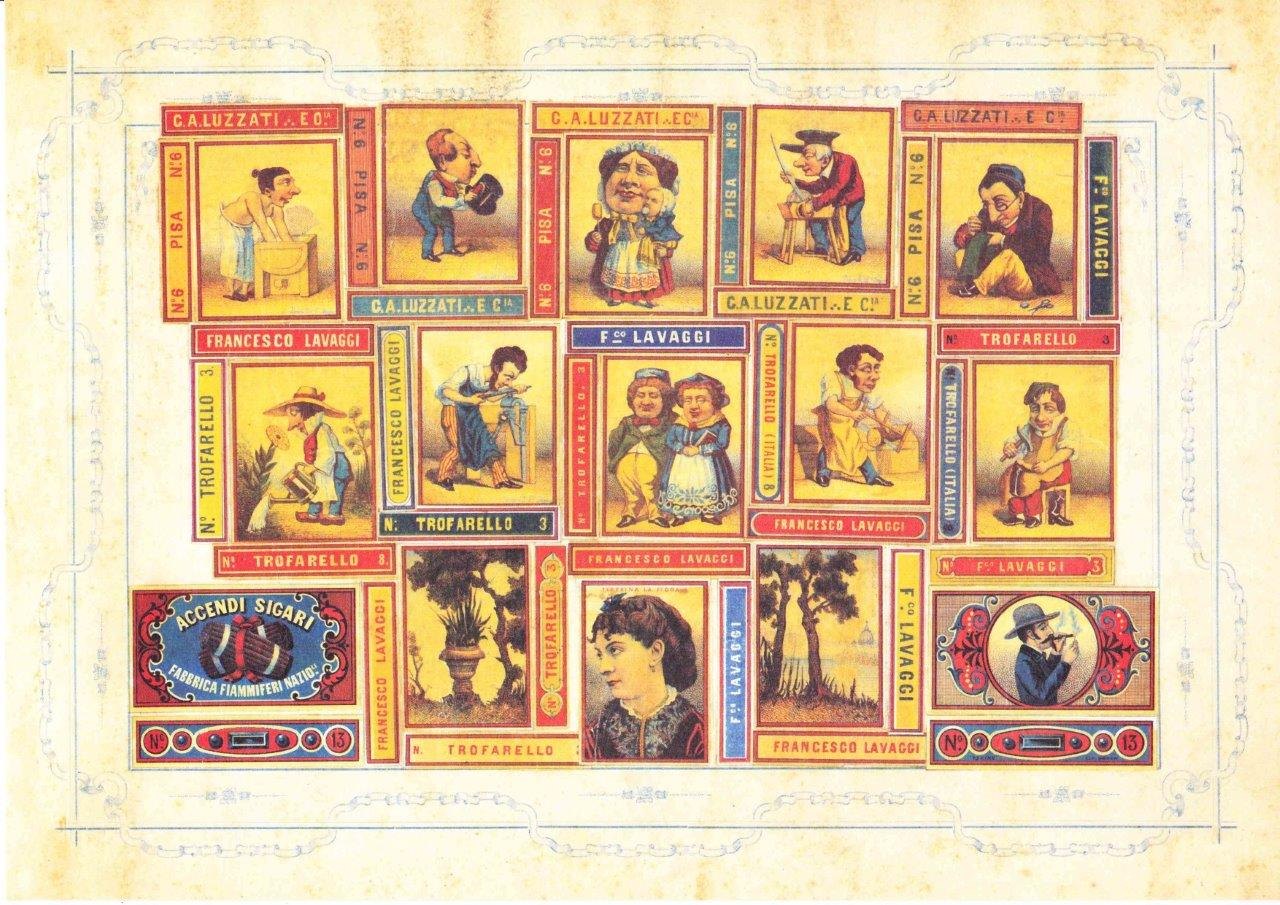 Page of 19th Century Italian labels
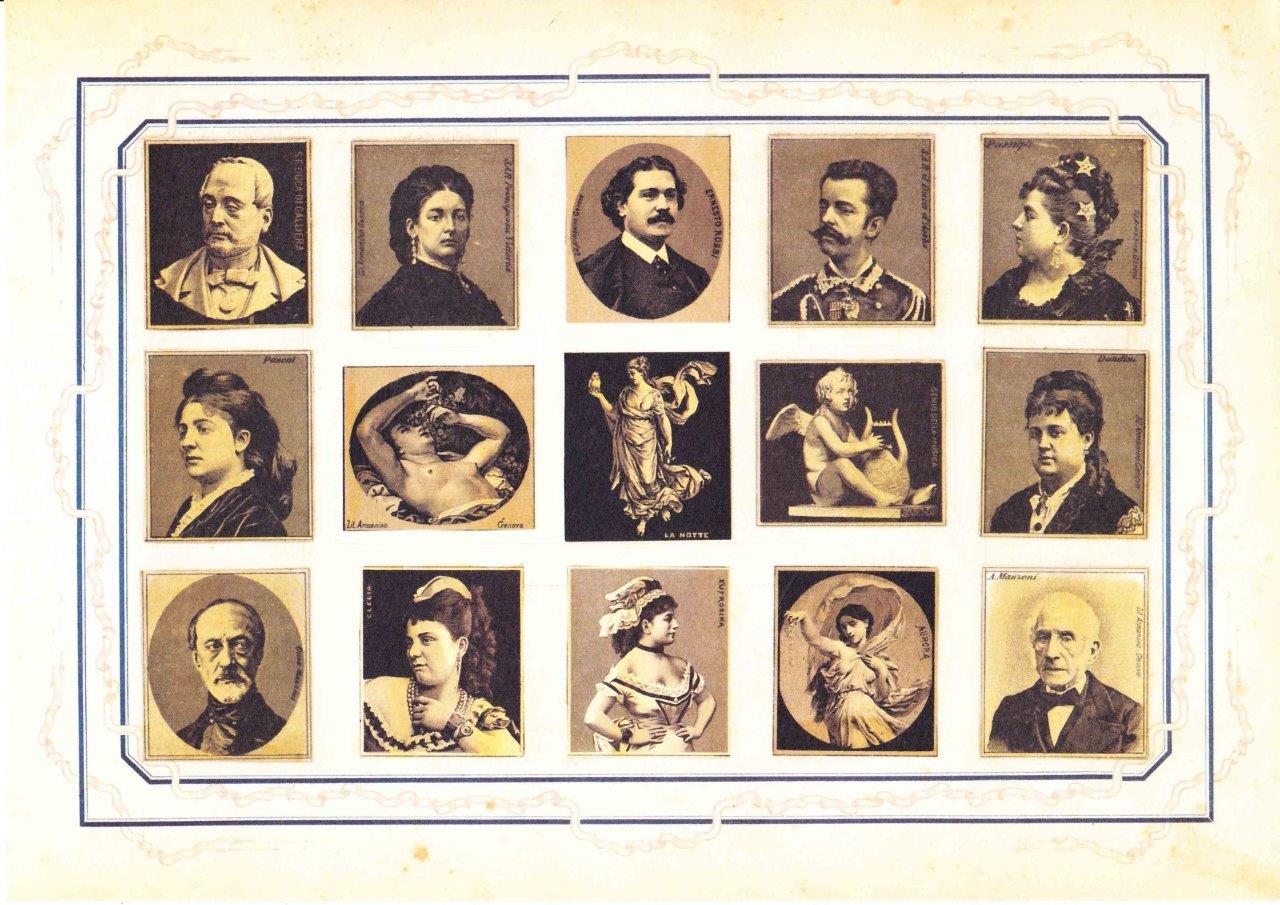 Page of 19th Century Italian labels
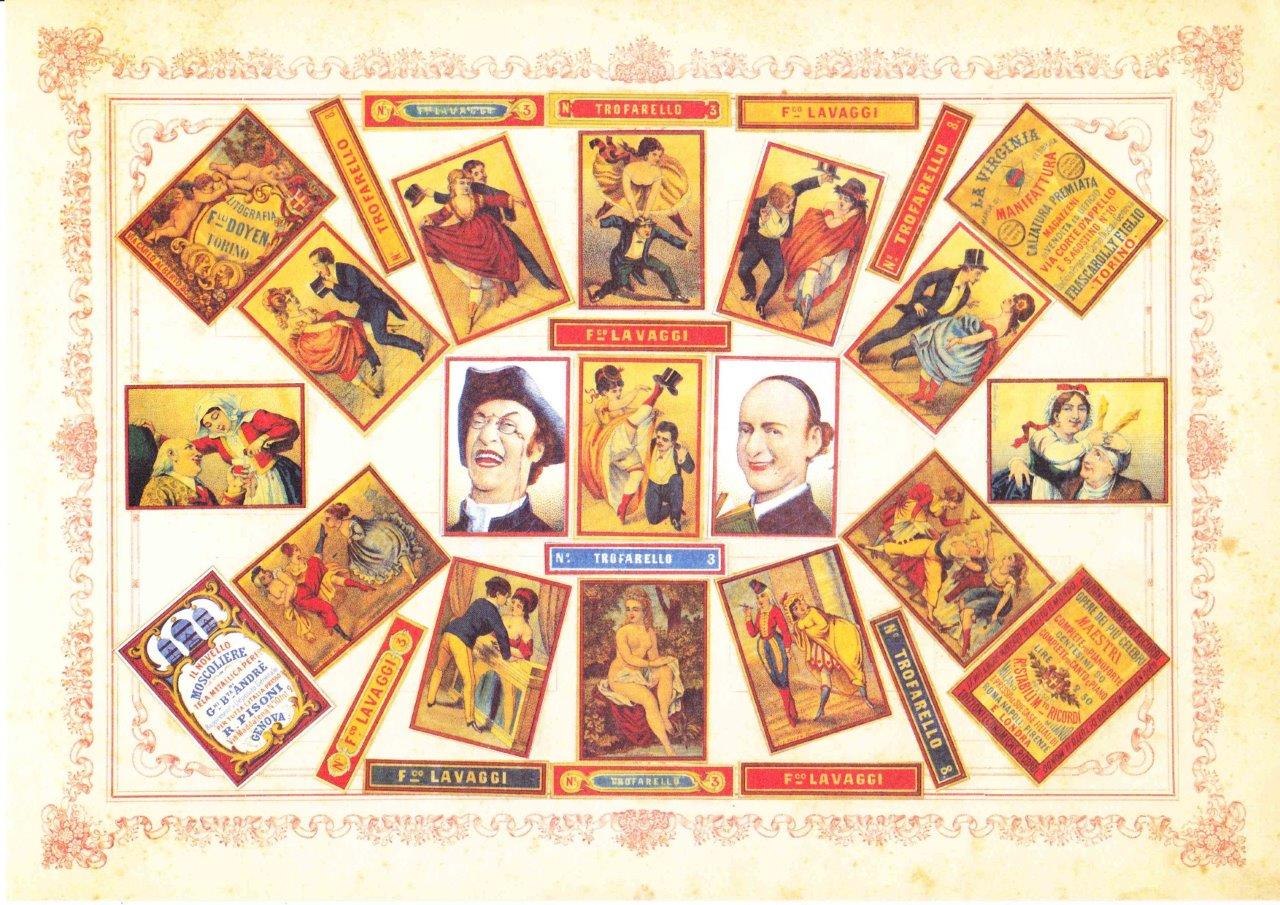 Page of 19th Century Italian labels
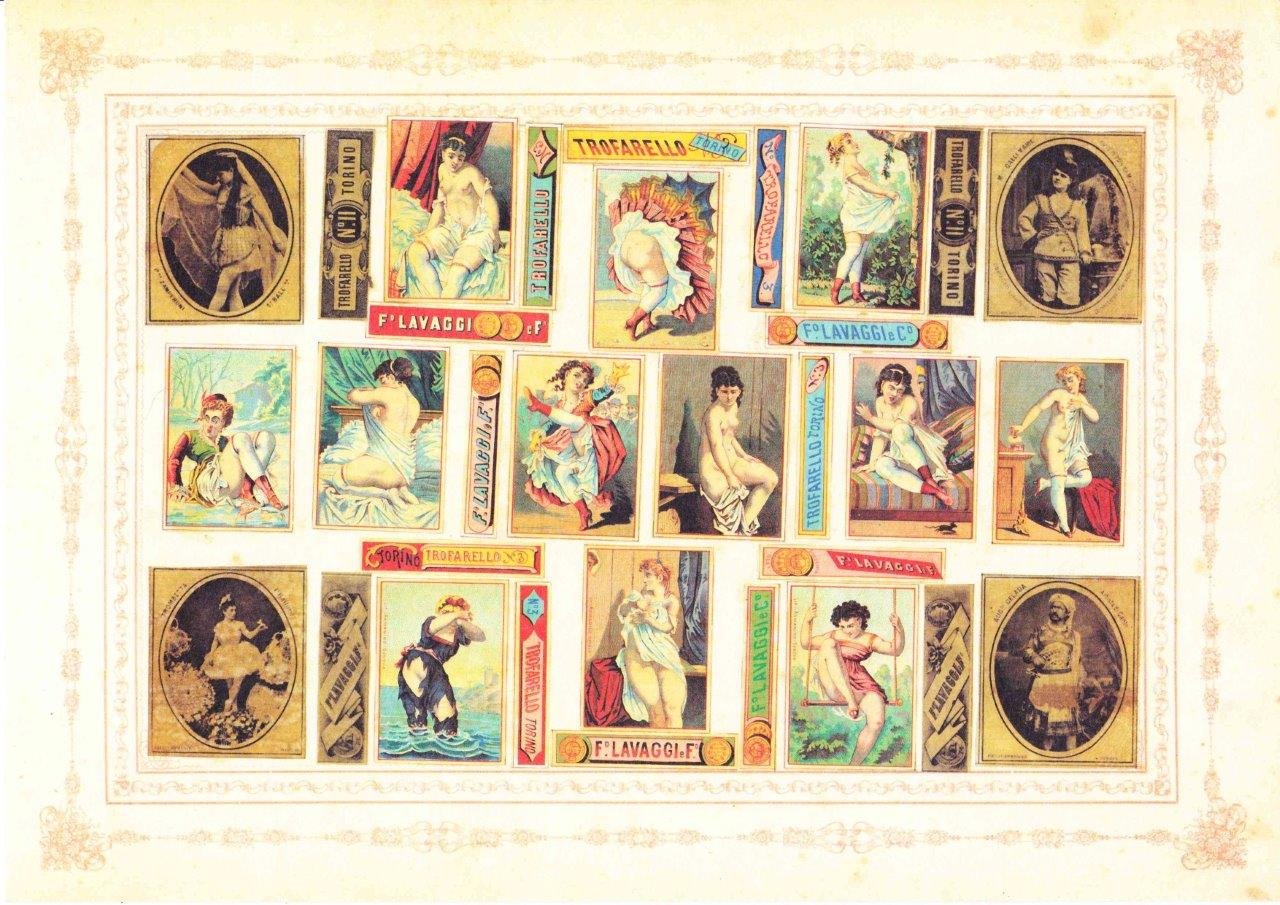 Page of 19th Century Italian labels
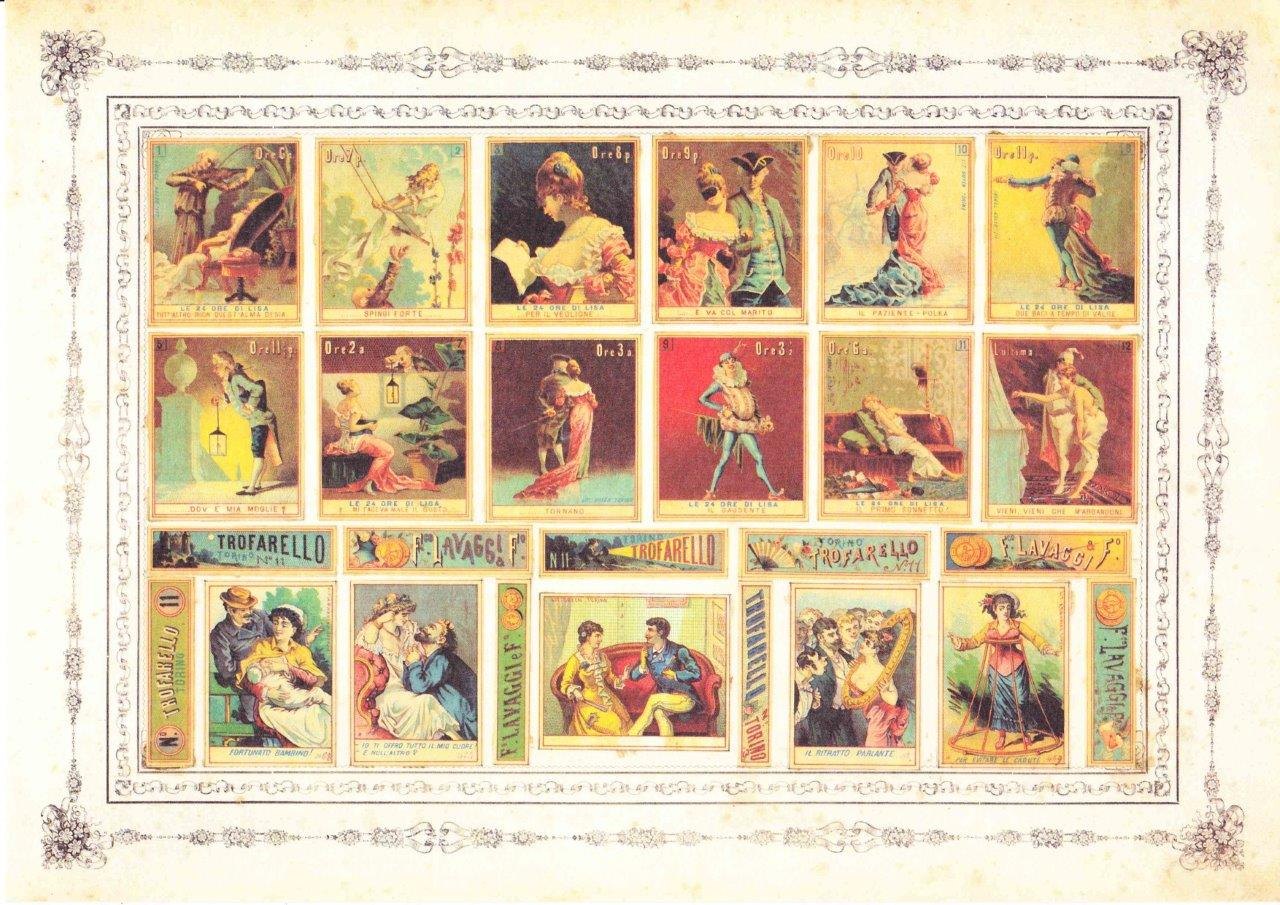 Page of 19th Century Italian labels
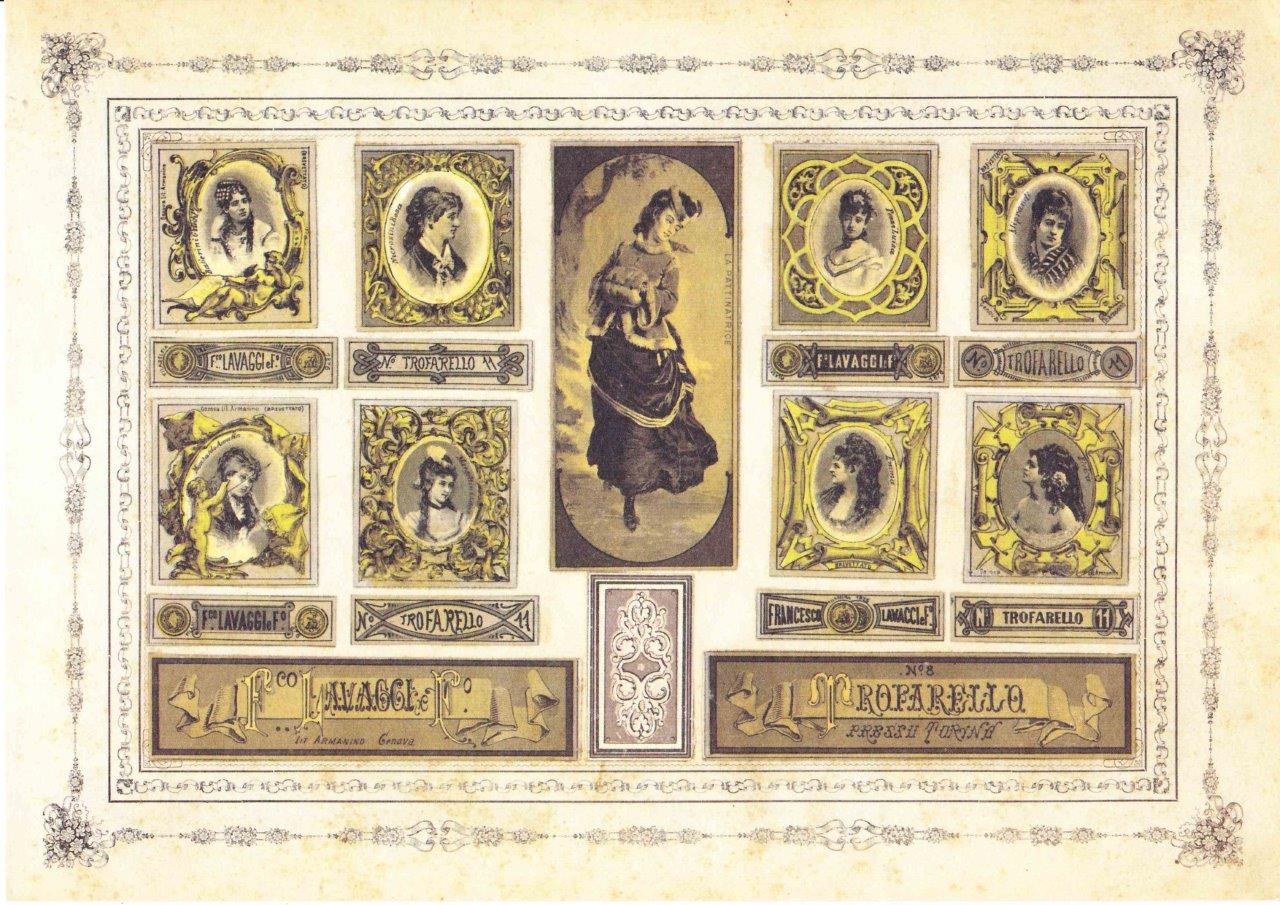 Page of 19th Century Italian labels
Another interesting match factory is ISFA in Catania (Sicily Island). Again I do not know if the match factories in Moncalieri, Napoli (Naples) and Perugia which produced for SAFFA are still operating.
The Società Azionaria Fabbriche Fiammiferi ed Affini (S.A.F.F.A.) was founded in 1929 and changed its name to Società Anonima Fabbriche Fiammiferi ed Affini (S.A.F.F.A.) in 1937.
After WWII most of the boxes were made in all four match factories on the Italian continent (Magenta, Moncalieri, Napoli, Perugia) and it was always very difficult to find one box x4 different side printings. At least the sets were made by all four match factories.
Abbona e Romagna were one of the companies to join the formation of “Societa Anonima Fabbriche Fiammiferi ed Affini” (SAFFA) in 1937.
The Italian Government imposed a match manufacturing tax in 1896, which had a big impact to the manufactures profits and which resulted in a lowering of the standard of the matchbox designs to cut costs. This tax lasted until 1916. In 1923, the monopoly was abolished and the match tax restored. However, the damage to the artistry had been done and the designs never returned to their former glory.
What makes it more difficult to piece together the history of the match industry through matchboxes, is the disastrous effects of the earlier collectors to rampage though their acquisitions with scissors. Considered a crime in the hobby these days. This leaves a much bigger percentage of the labels that have survived as “cut-panels”, vastly reducing the number of complete examples to be obtained for study.
Most matchbox labels that collectors have in their collections would have been printed after this interesting period, both of their label design and the construction of their matchbox.

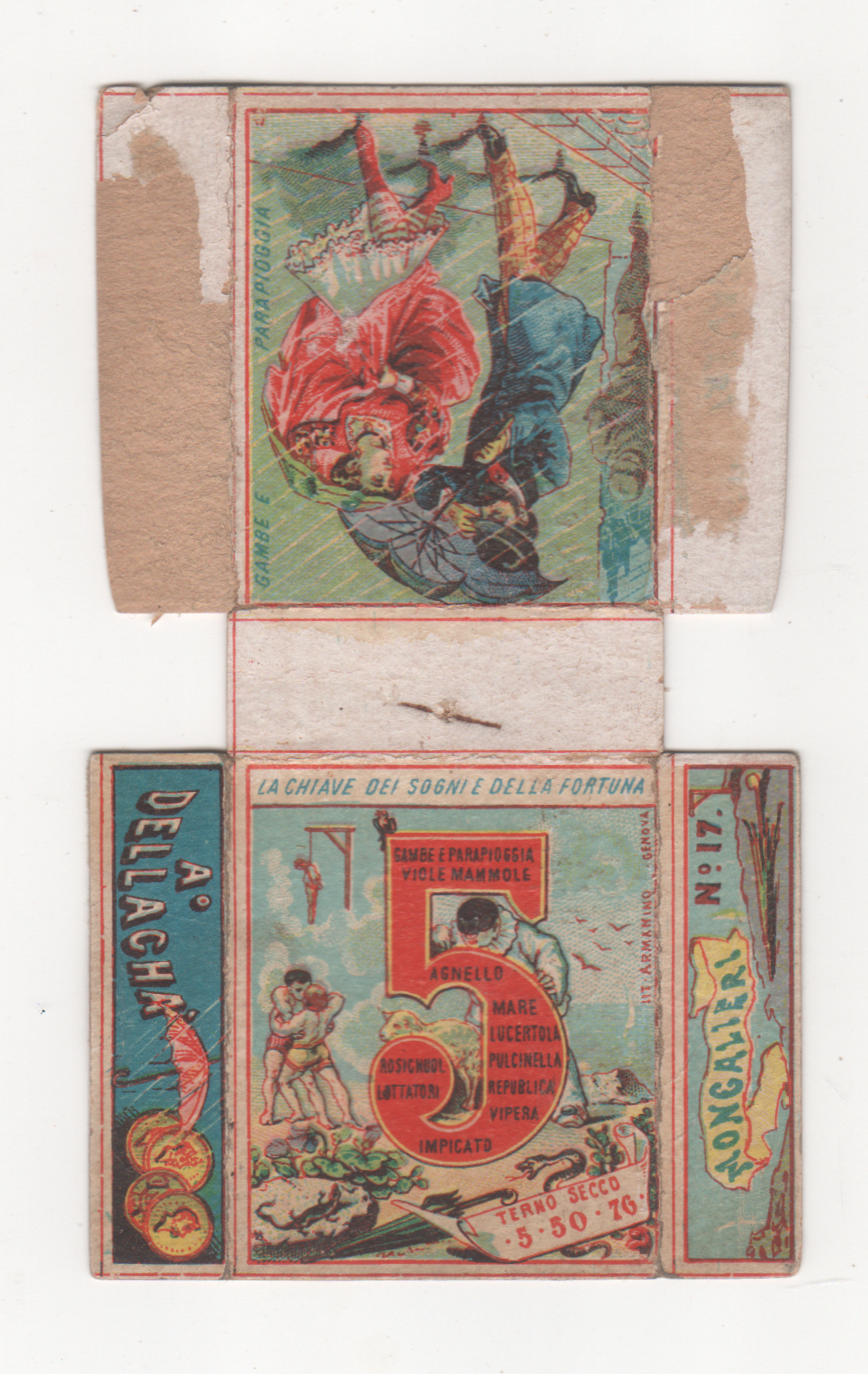
Bonus exhibit : A. Dellachá Matchboxes
I have a collection of older Italian matchboxes and matchbox labels, which includes those of Ambrogio Dellachá (1824-1916). The company was founded in 1860, and produced many fine lithographically produced matchbox designs. The process of lithography uses limestone blocks. The matchboxes usually display the name A. Dellachá.
The company set up by Dellachá operated against a great deal of competition from the other match makers both in Italy and in other countries, such as those established in France. The company prospered and won medals at exhibitions. The majority of the matchboxes in Italy at this time were what collectors refer to as “springflap” matchboxes. These were made in card, in different sizes, they often displayed a “model” number, which is a reference to the grade of both the matches and the size and quality of the matchbox.
Most springflap matchboxes have a natural rubber band that assists in the opening of the matchbox, thus allowing easier access to the matches within the box. The boxes were filled with wax stem matches of the strike-anywhere type, that could be ignited by striking on the sandpaper part of the matchbox, or indeed any rough surface, or wax stem safety matches, which could only be ignited on a special striking surface on the matchbox.
The company also made matches called “Bougie de poche“, which were a little wax stem “candle”, with a match head. These candle matchboxes had a metal socket to hold a single match in the top of the box. The company also made larger sized matchboxes with the name “Camera”. Many of the designs of “Bougie de poche” matchboxes, that held the candle matches, can also be found with a different design of match tray, and without the metal socket. These matchboxes would then hold the wax stem matches; “vestas” as they are often called.
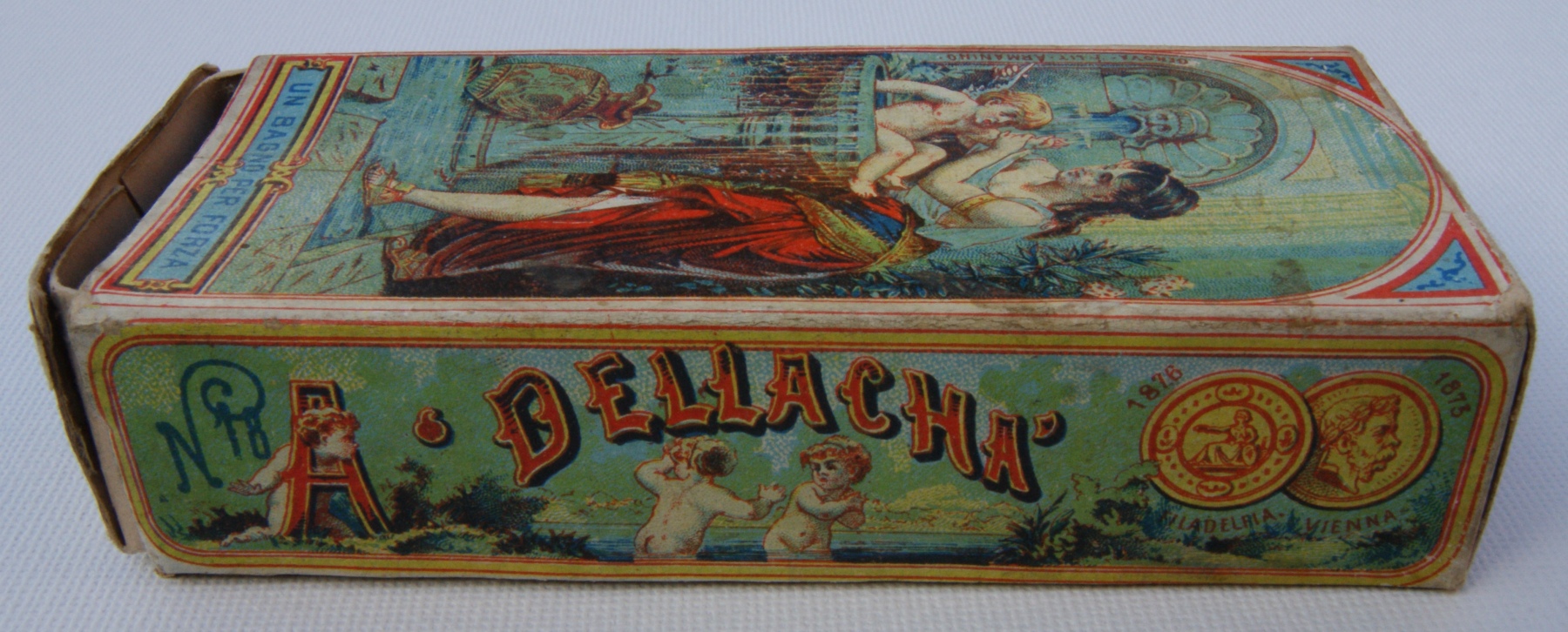 Camera Model No. 18 (view 1)
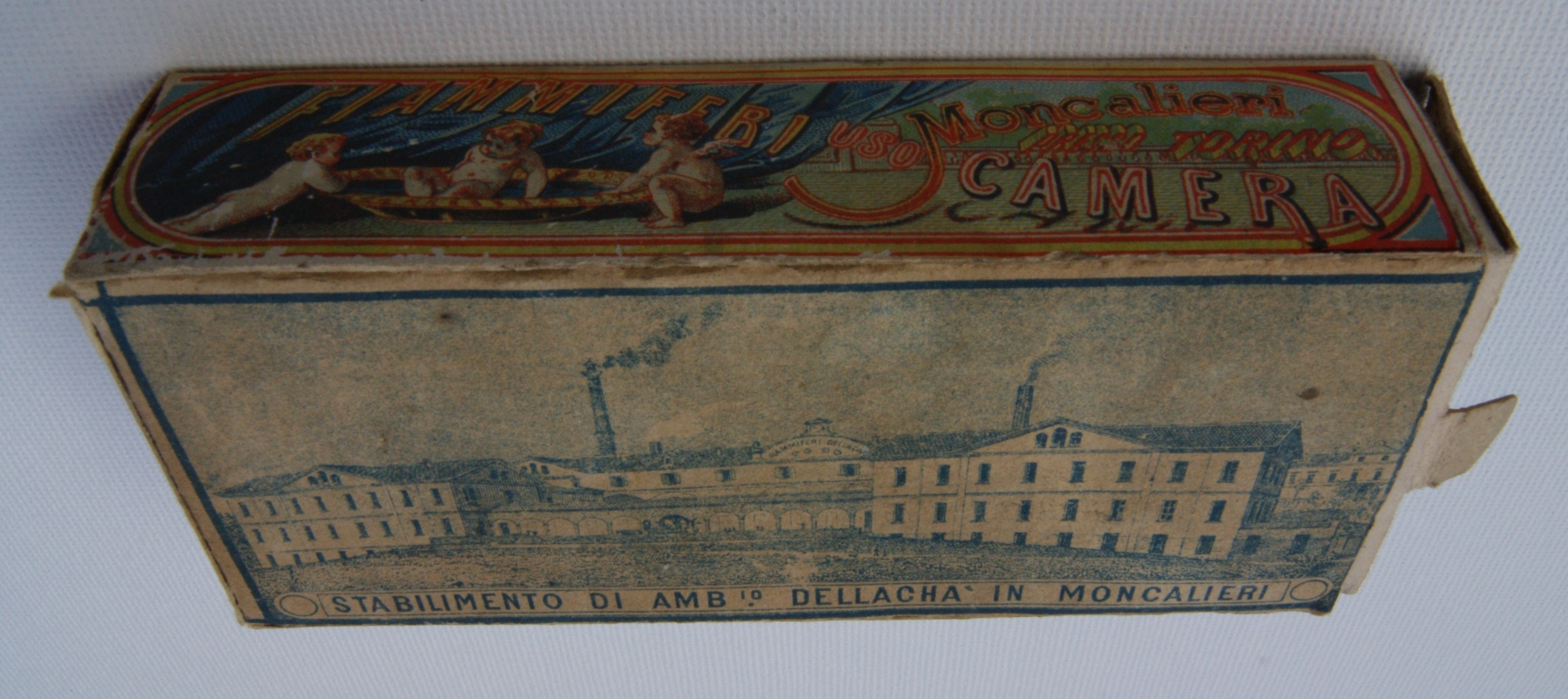 Camera Model No. 18 (view 2)
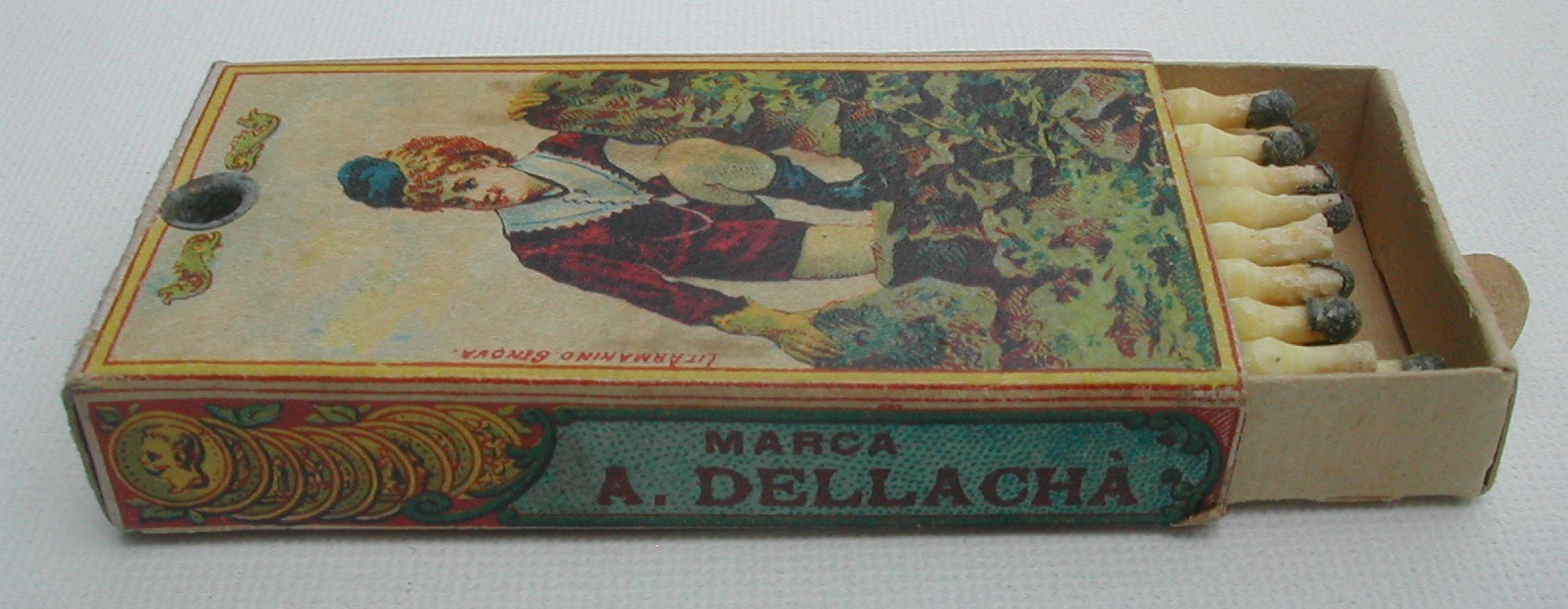 Candle matchbox Model No. 1 (ref: 1)
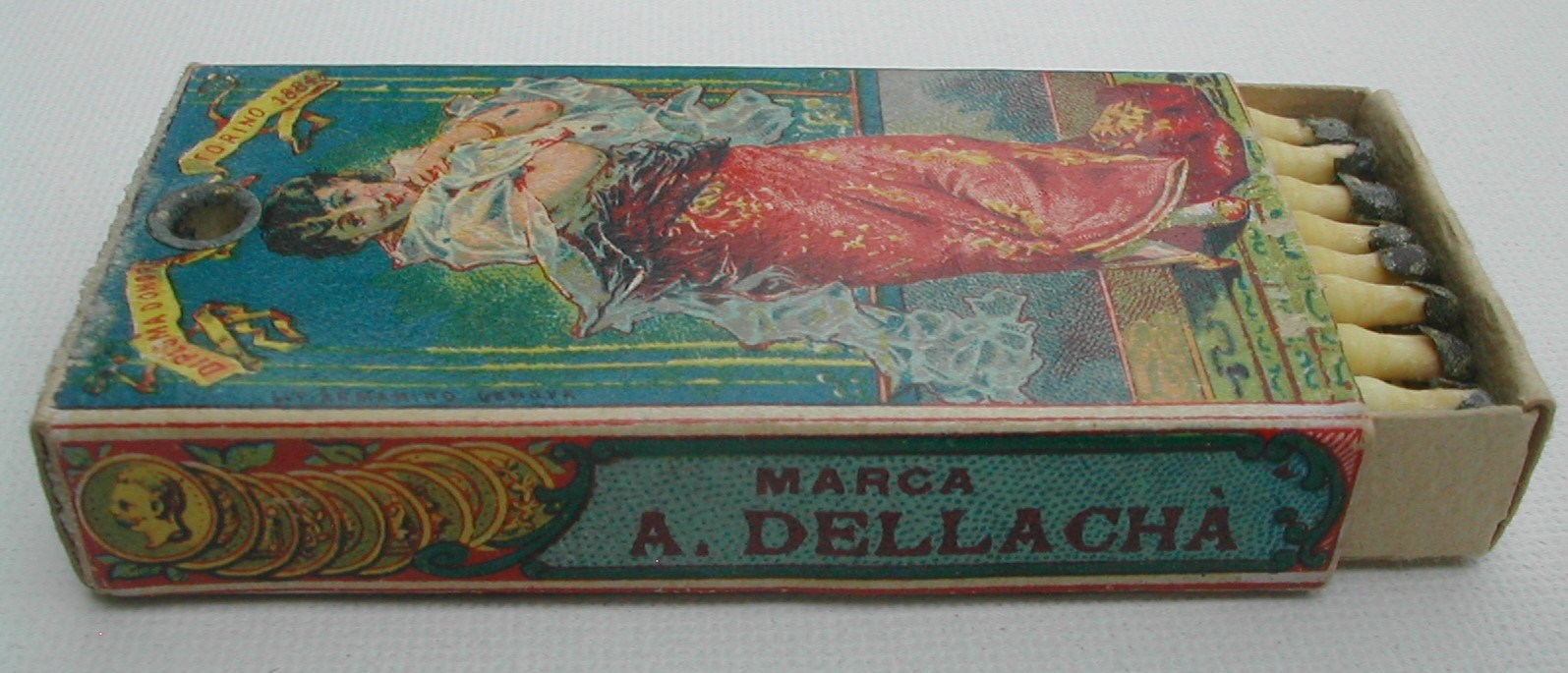 Candle matchbox Model No. 1 (ref: 2)
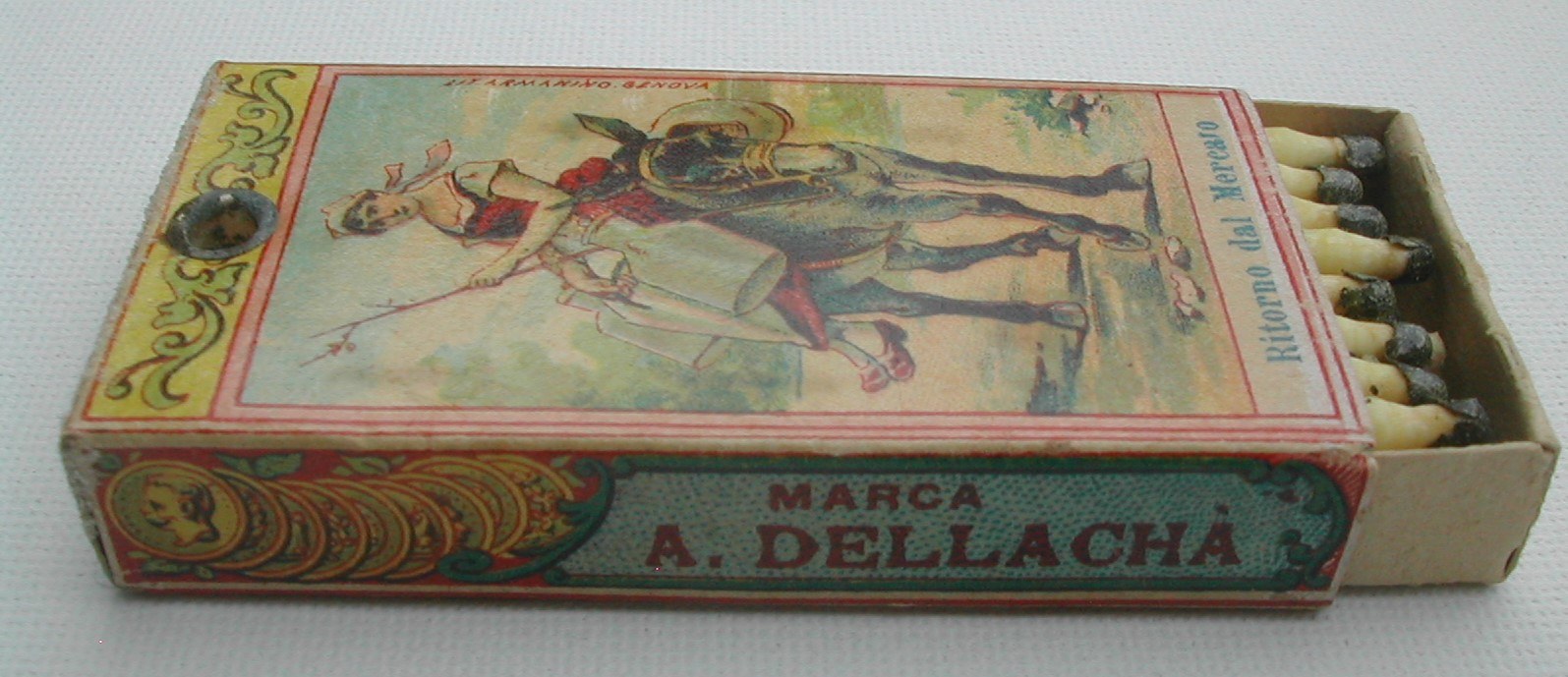 Candle matchbox Model No. 1 (ref: 3)
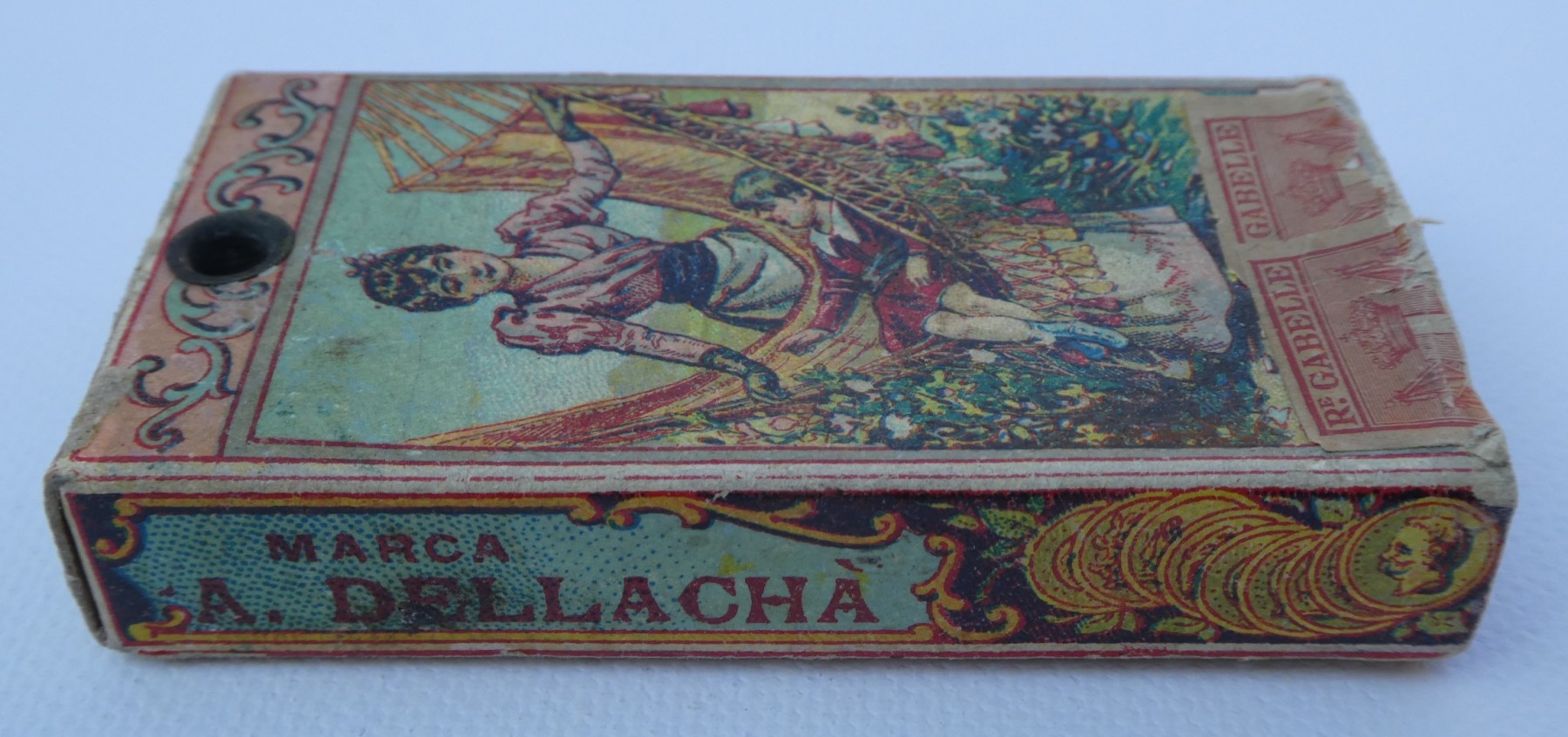 Candle matchbox Model No. 1 Milano (ref: 4a)
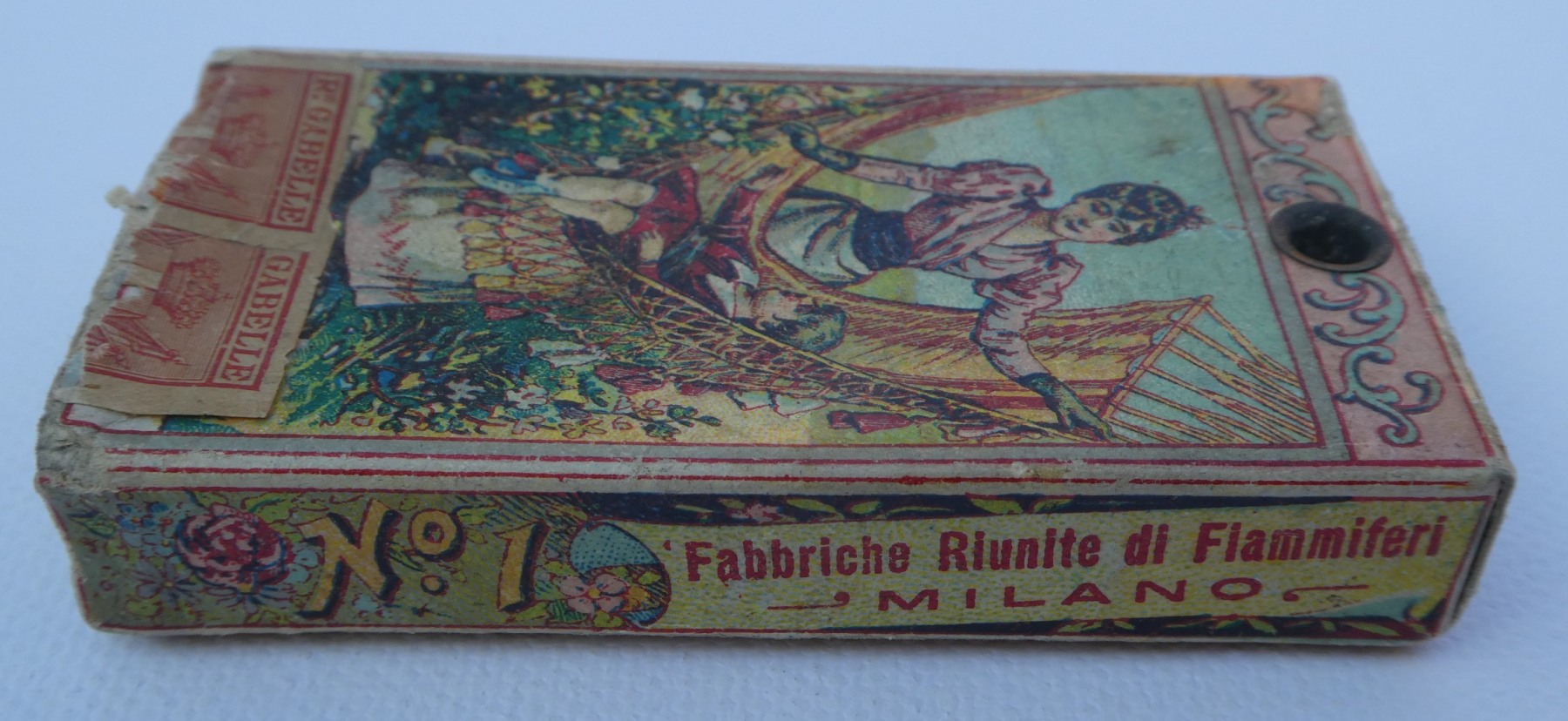 Candle matchbox Model No. 1 Milano (ref: 4b)
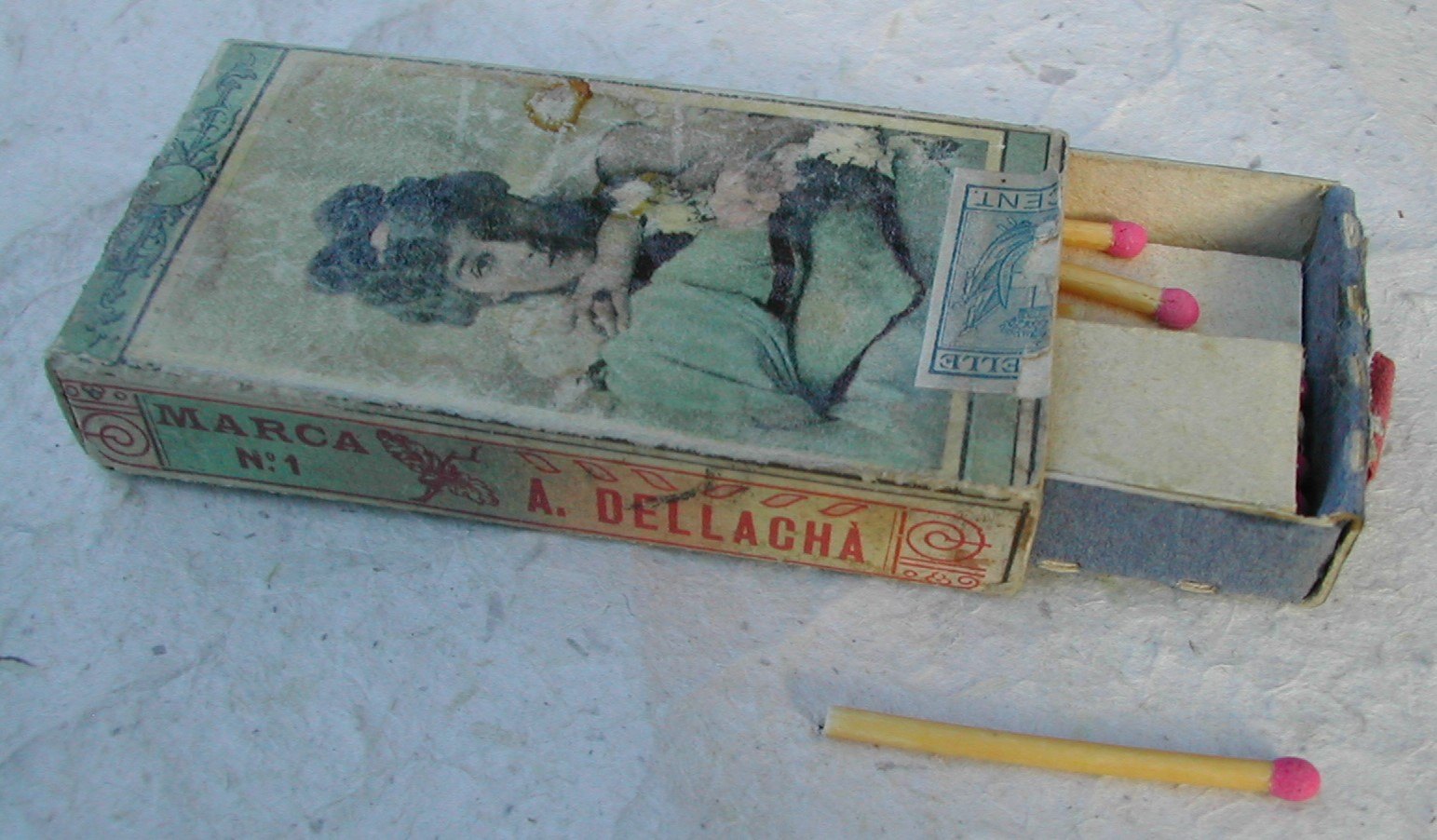 Model No. 1 with wax match tray (ref: 5)
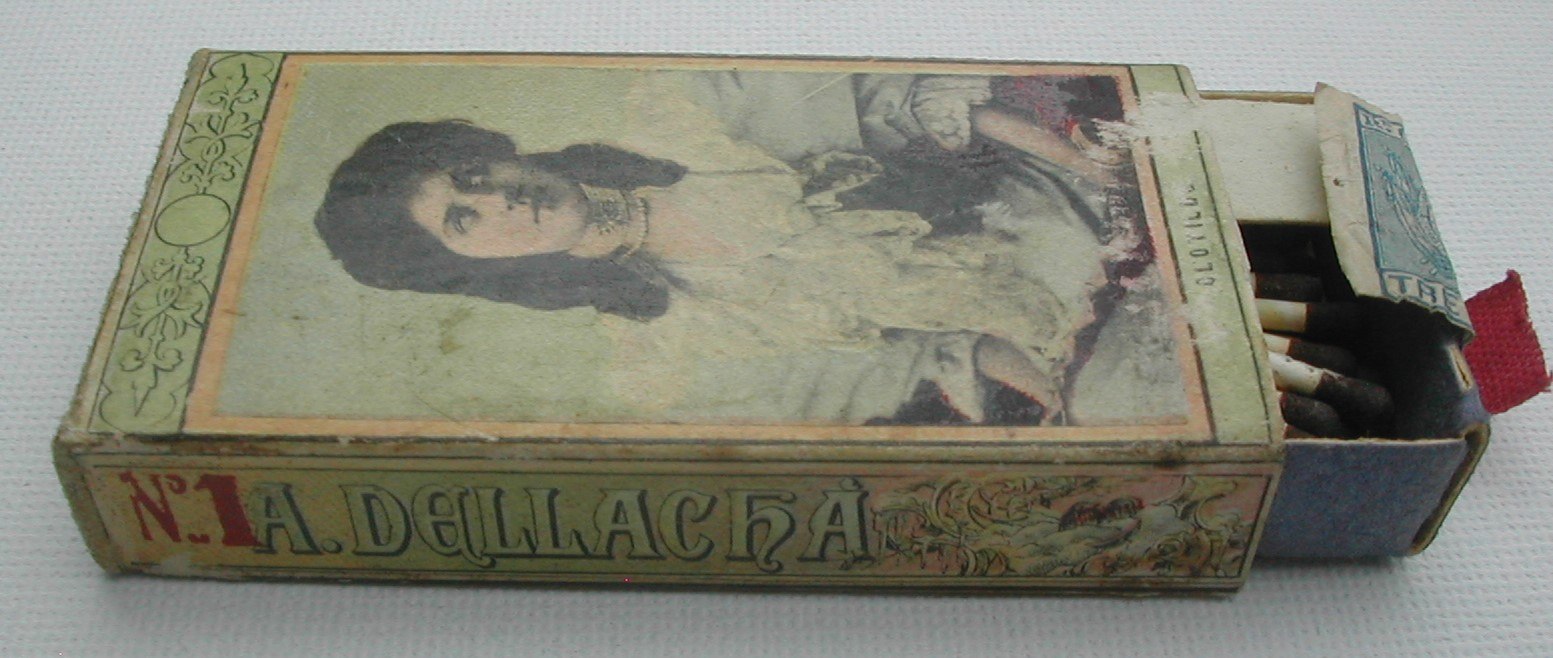 Model No. 1 with wax match tray (ref: 6)
In Italy in 1916 the government of Italy also imposed large taxes on the matches and the problem was so great that the matchboxes had to be made much cheaper. The quality of the matchbox graphics and materials used suffered considerably. Dellachá also exported to Portugal, Spain and America.
Displayed here are some of the Dellachá springflap boxes that form part of my collection.
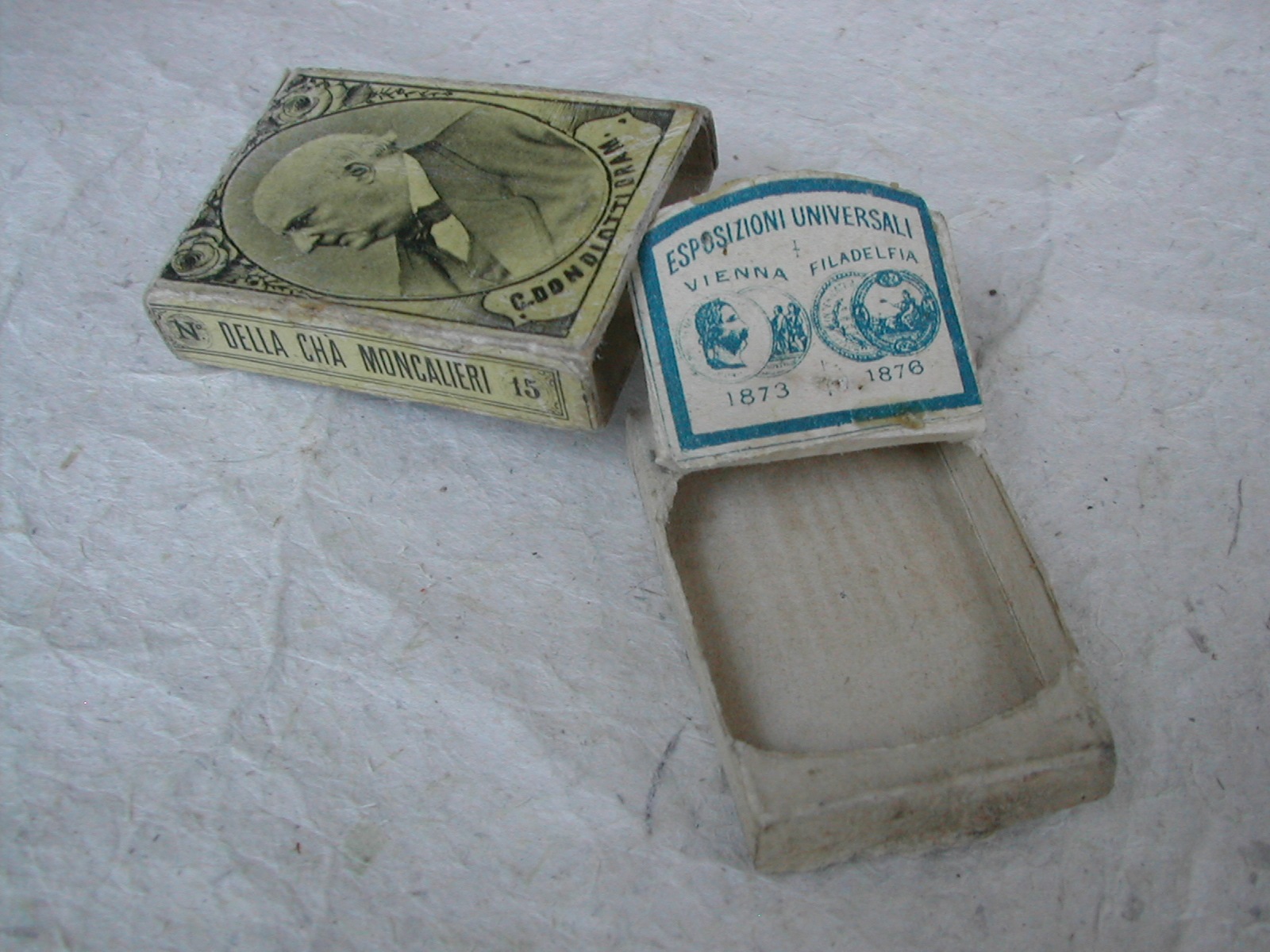 Wax matches matchbox Model No. 15 (ref: 7)
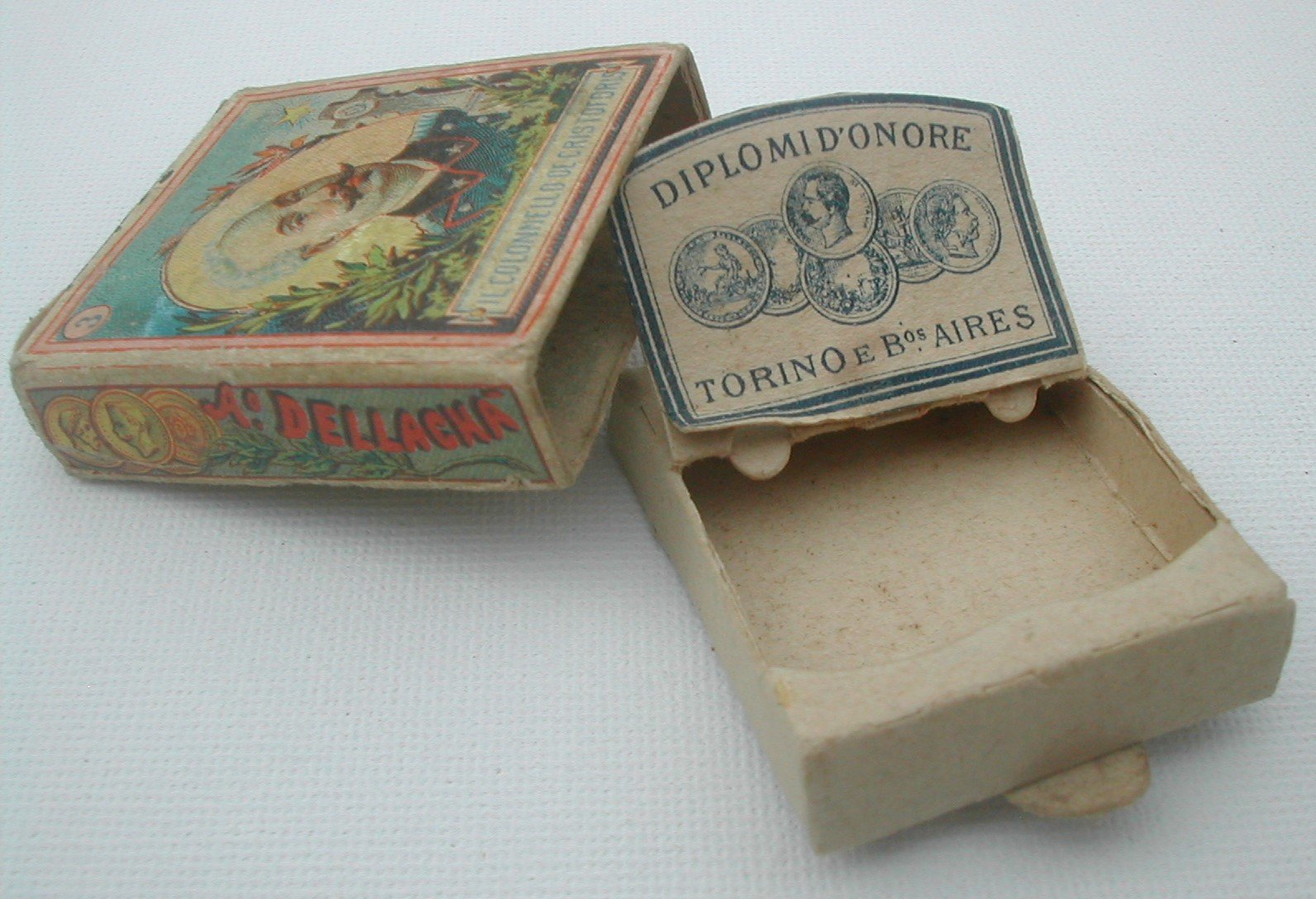 Wax matches matchbox Model No.15 (ref: 8)
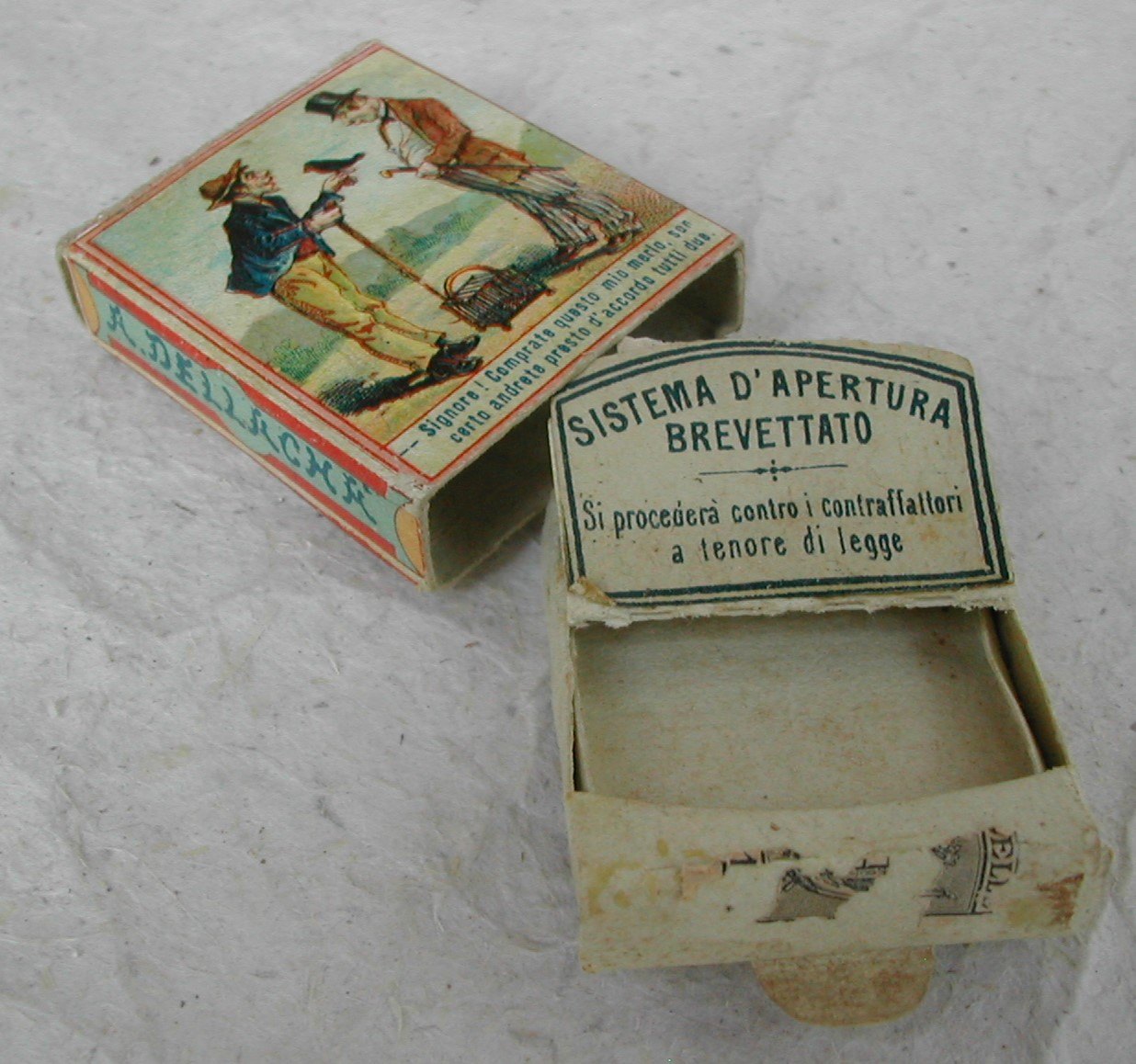 Wax vestas matchbox Patent Aperture (ref: 9)
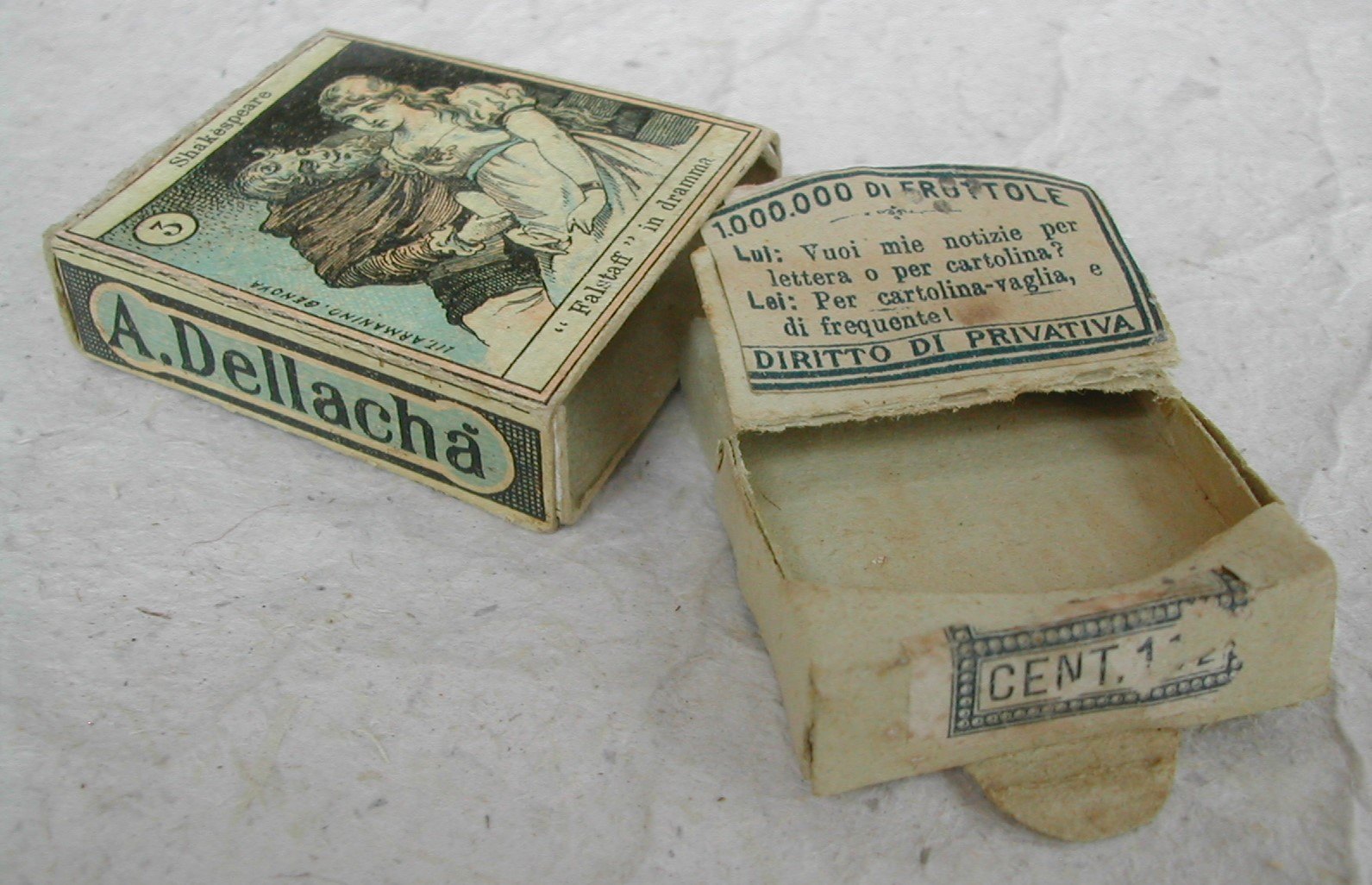 Wax vestas matchbox Numbered set (ref: 10)
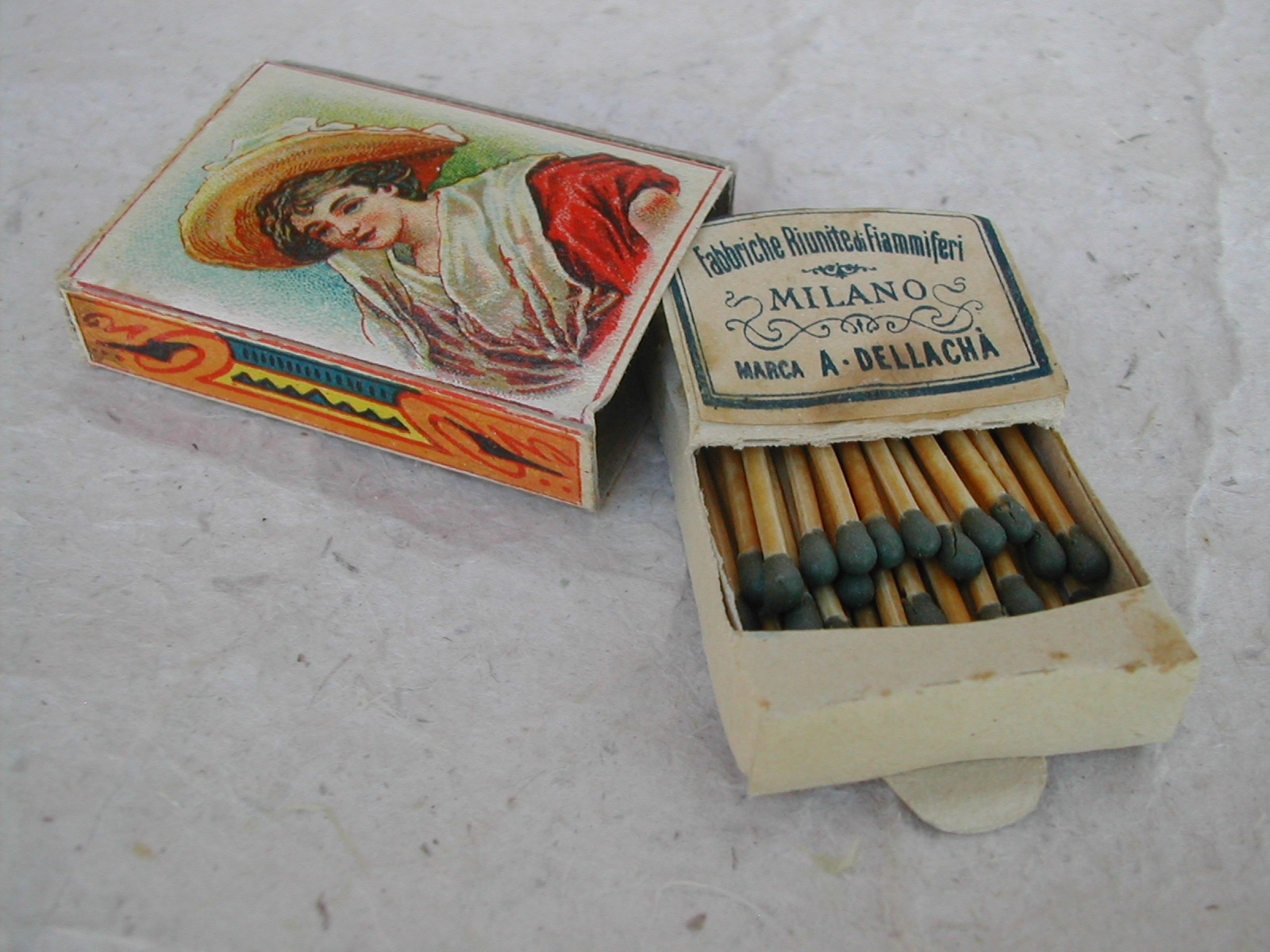 Wax vestas matchbox export to America (ref: 11)
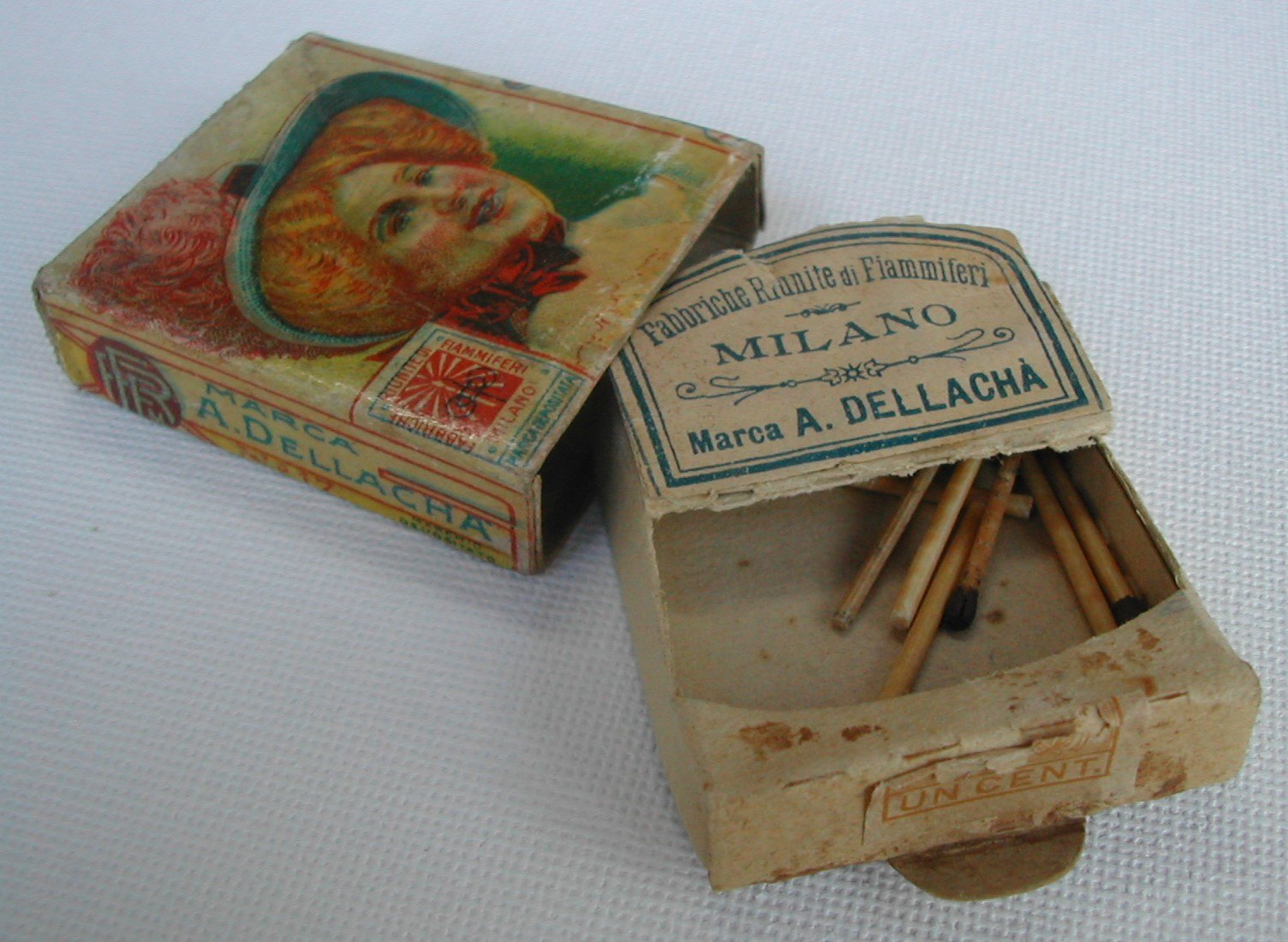 Wax vestas matchbox Milan (ref: 12)
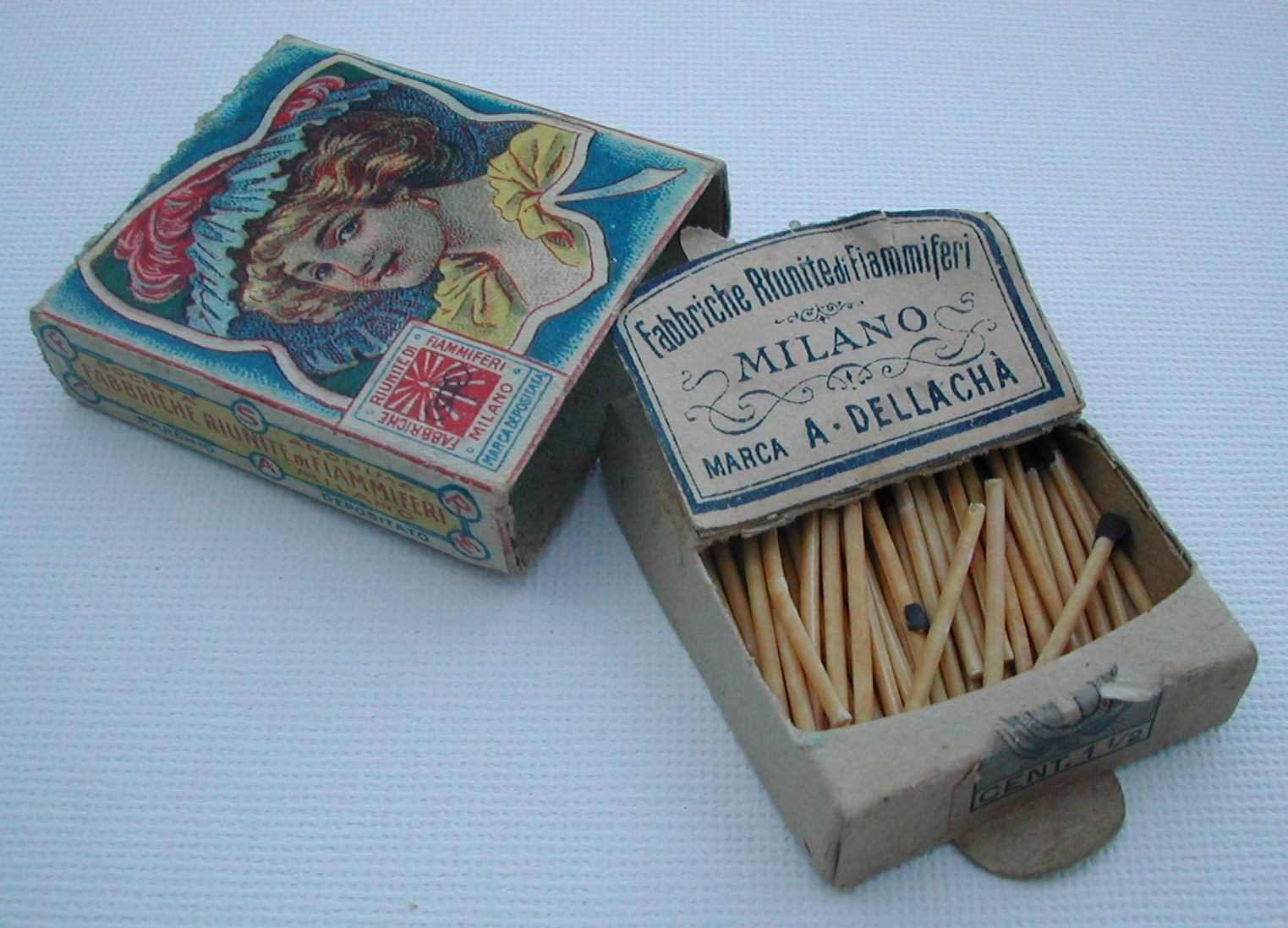 Wax vestas matchbox Milan (ref: 13)
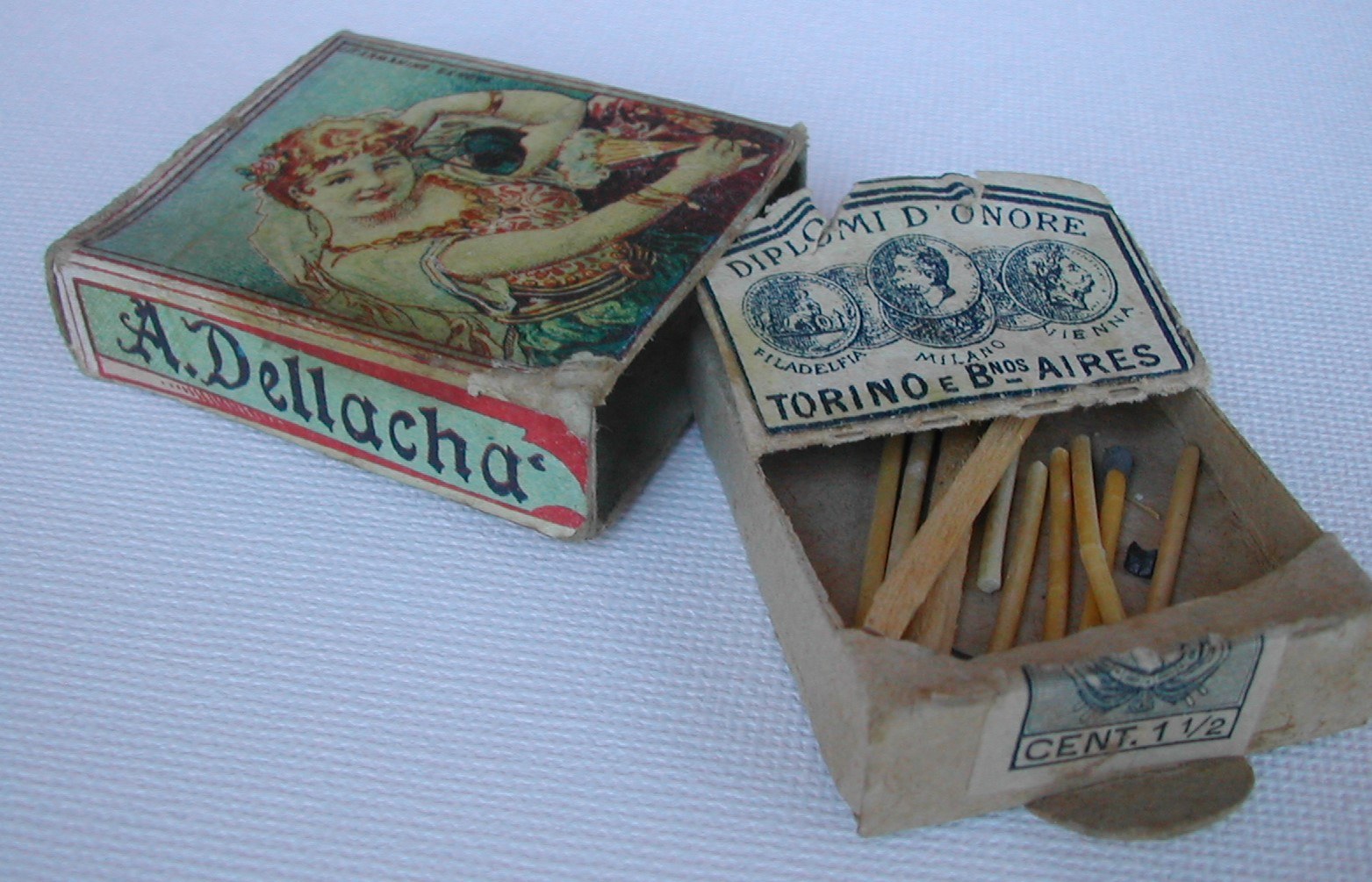 Wax vestas matchbox Turin and Buenos Aires (ref: 14)
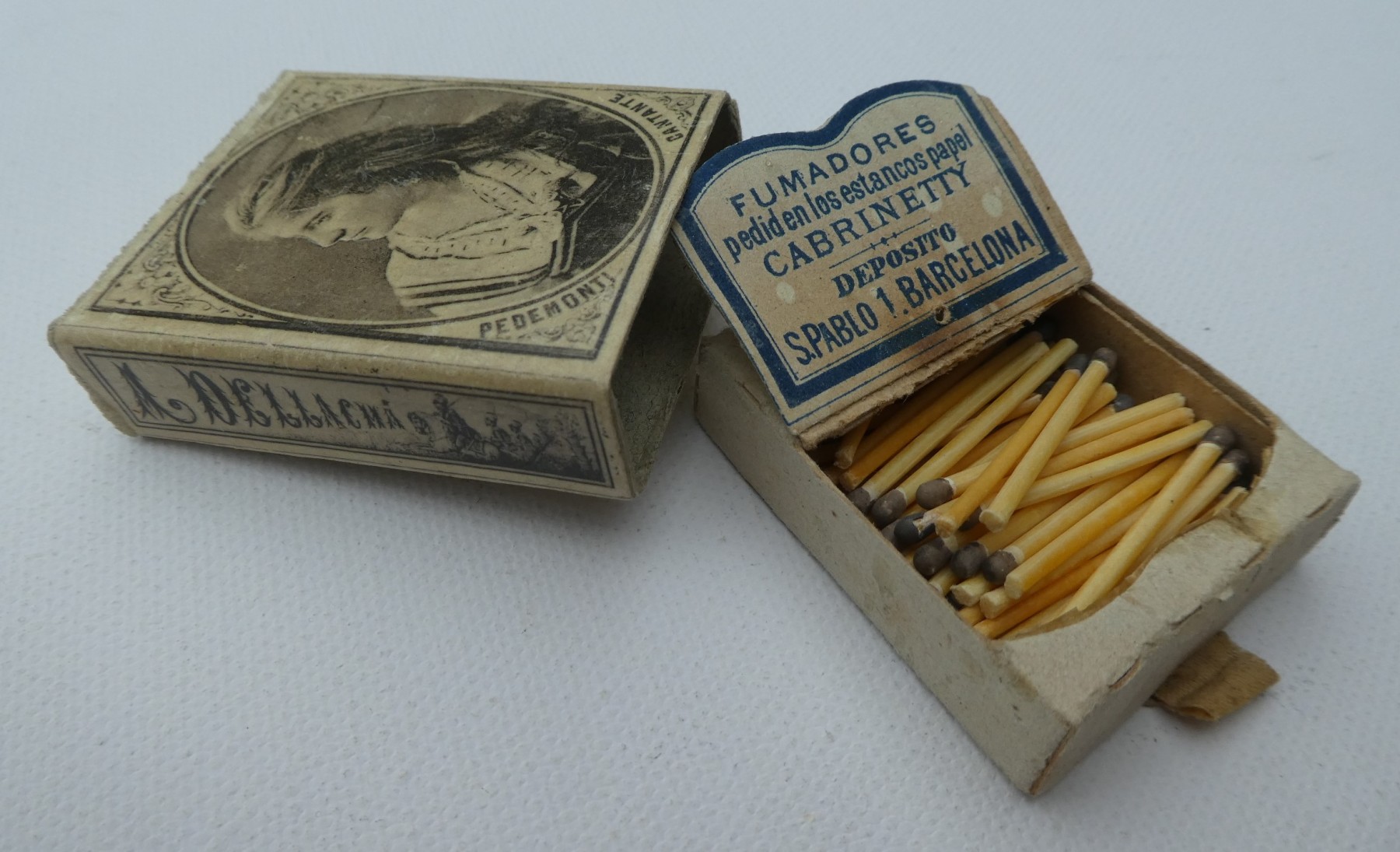 A Dellacha matchbox Moncalleri Export to Spain (ref: 15)
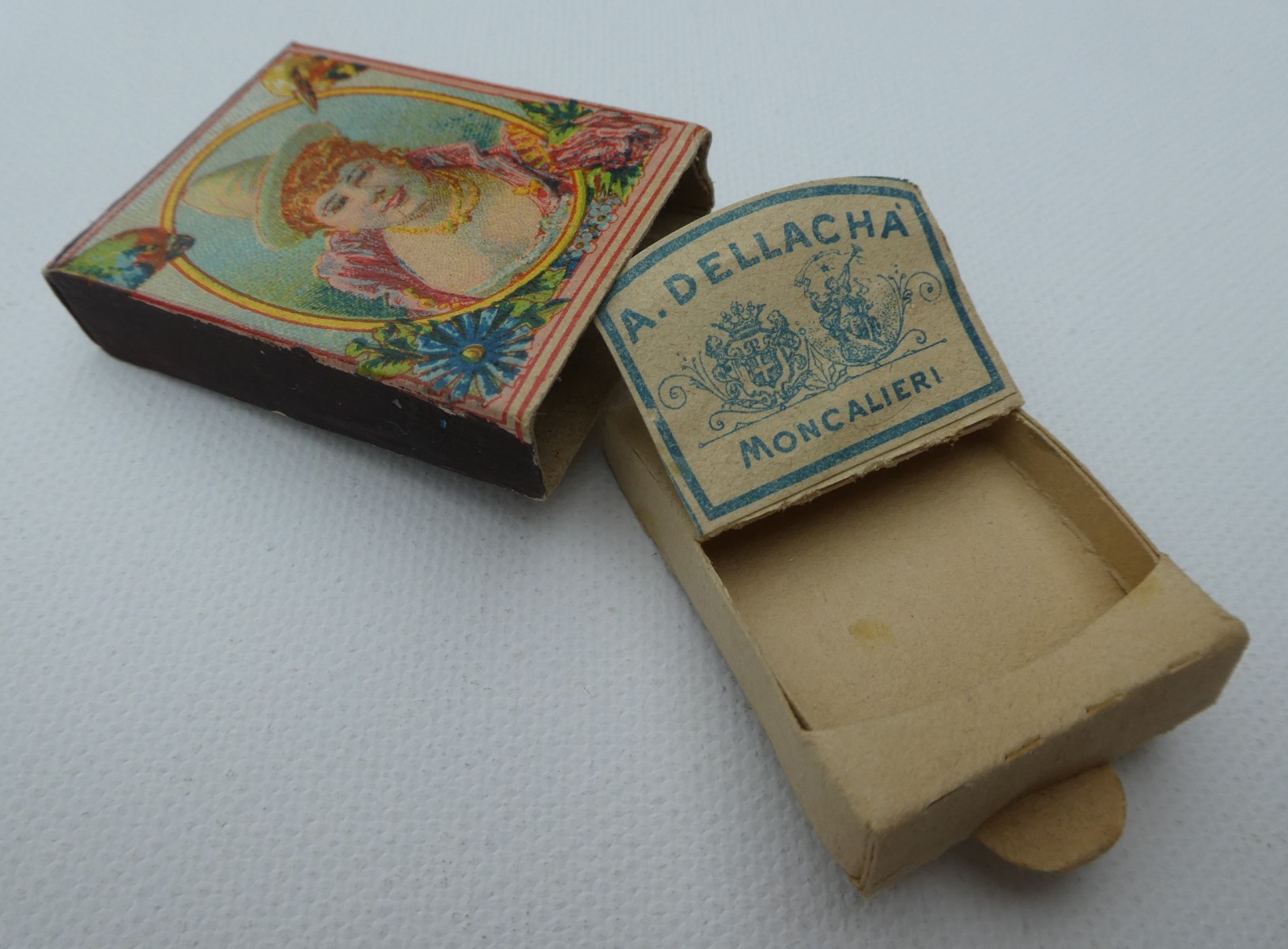 Safety Match striker Moncalleri FRdF (ref: 16)
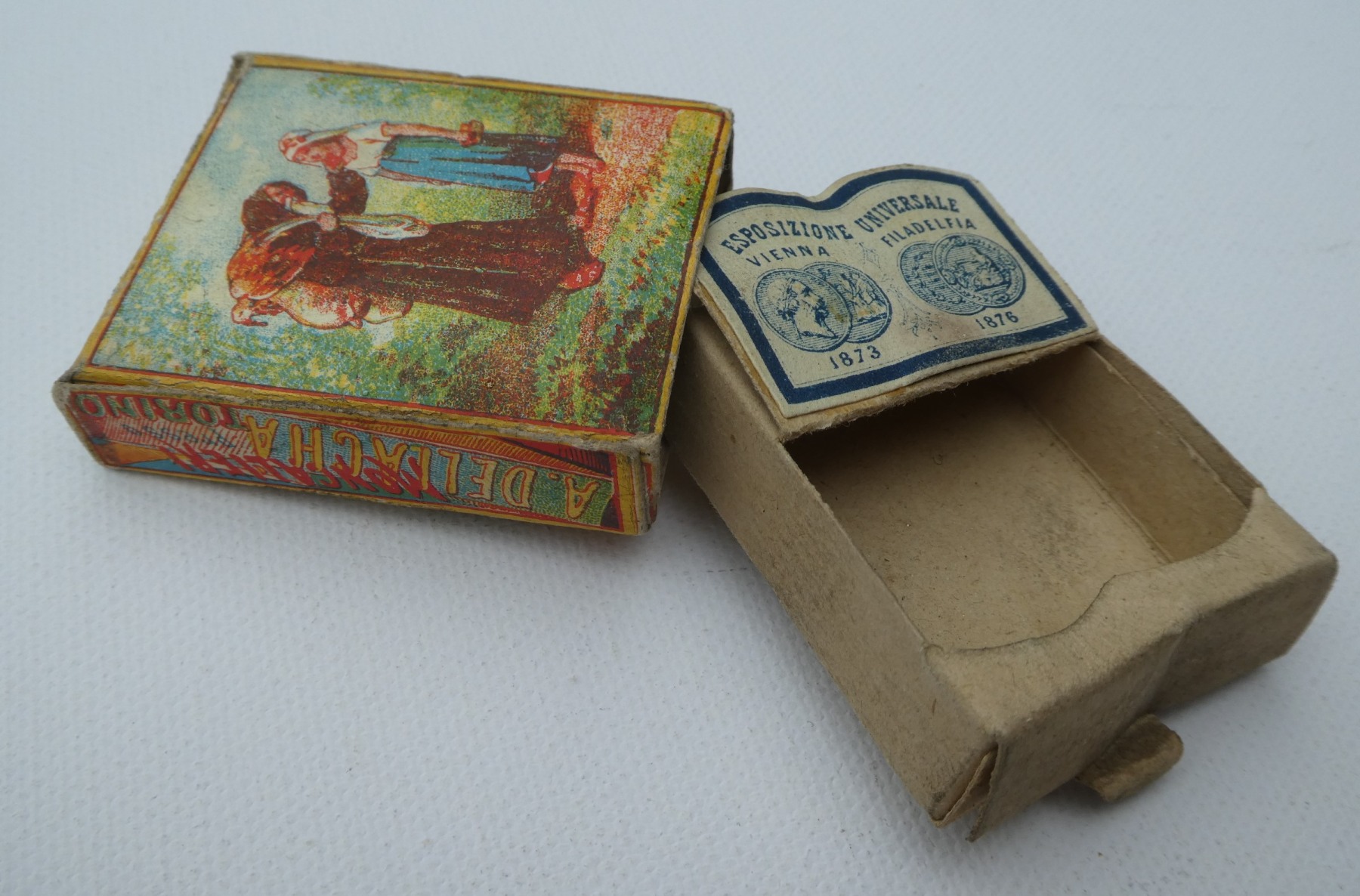 Model No. 17 Moncalleri medals 1873 + 1876 (ref: 17)
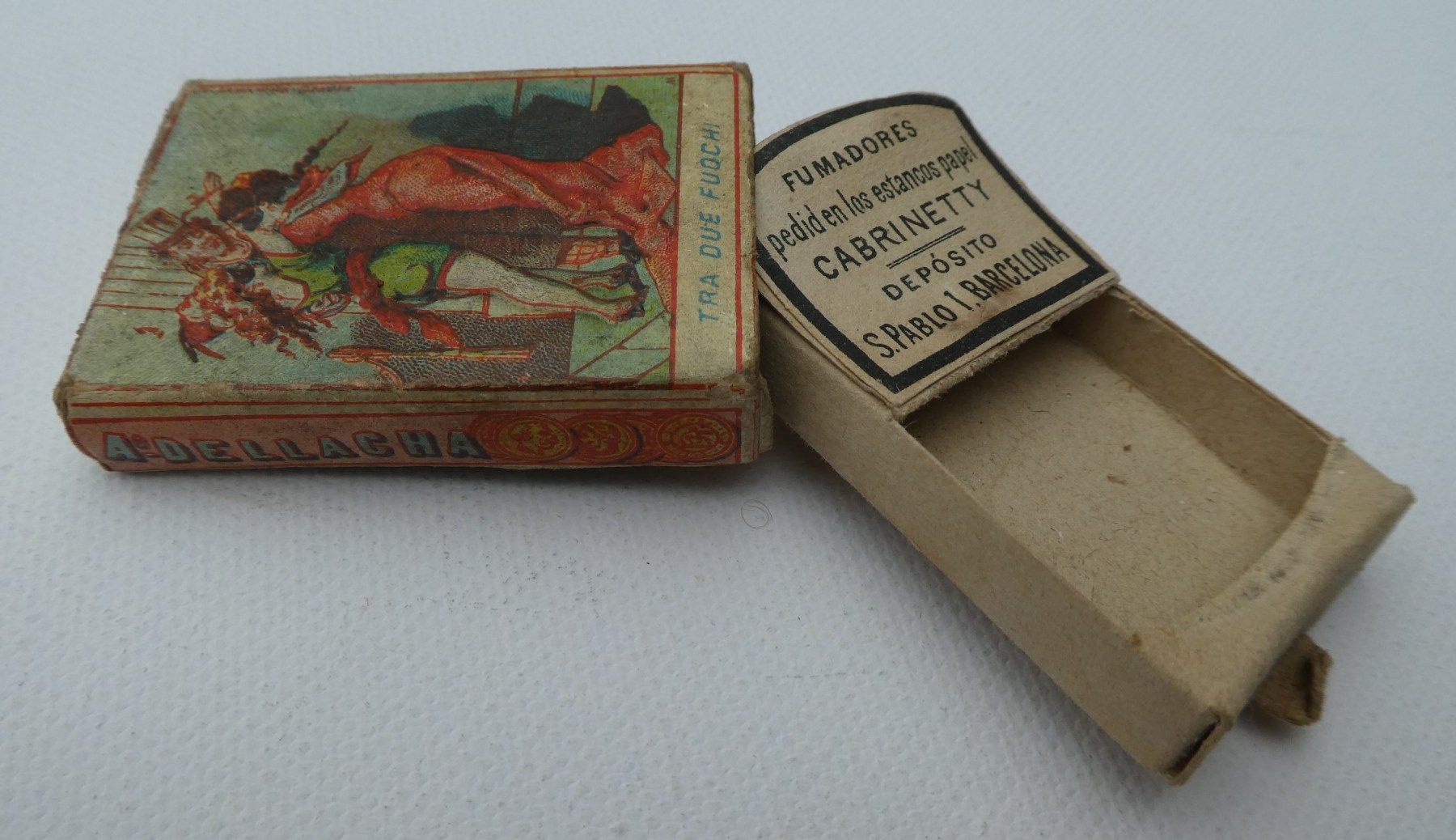 Export for Spain Model No. 13 Moncalleri (ref: 18)
Click here to return to the Exhibition Catalogue.