

An introduction to Hardware
Exhibitor : David Figg
The term “hardware” is used to describe items like vesta cases, porcelain match holders, metal matchbox grips, ashtrays, tin advertising signs, match dispensers and any other physical things which are not matchboxes or bookmatches but which would not exist if the matchbox or match itself did not exist.
This exhibit illustrates some of the most popular pieces of hardware that can be found in many collections, but this list is really endless.
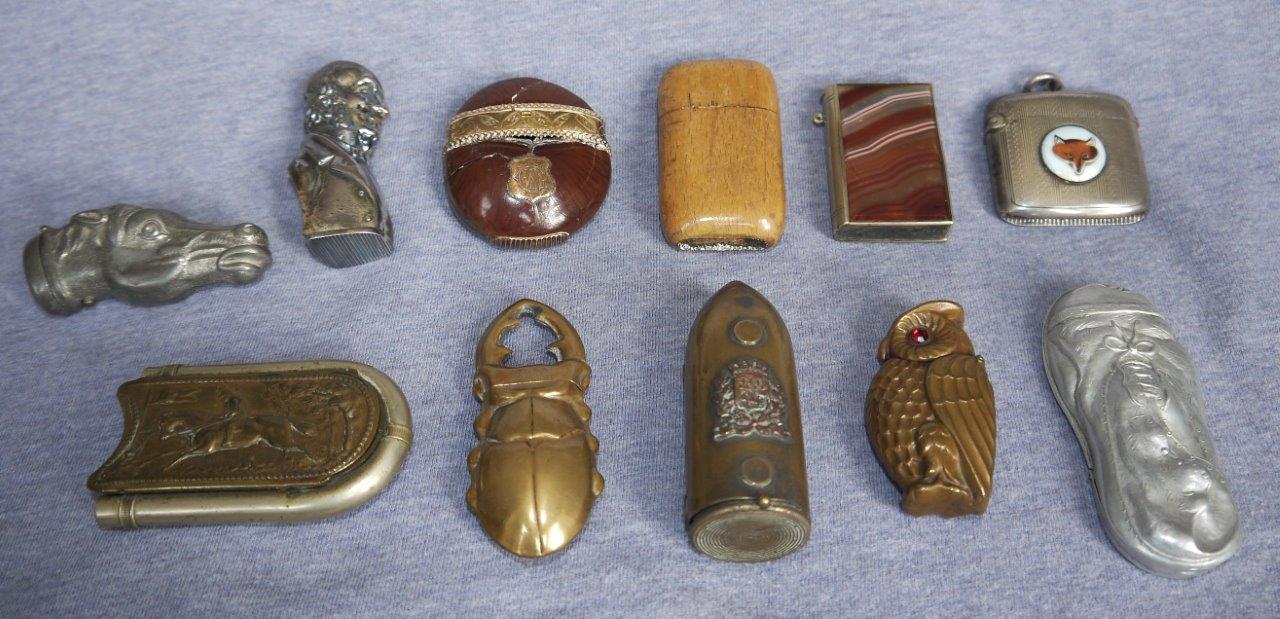
Vesta Cases (also referred to as Matchsafes)
Metal cases to hold the fragile Wax Vesta matches became popular in the late 1800s, and can be found with a range of designs, from the simple to the elaborate. The Vesta Case has a striker plate incorporated into its design (usually on the bottom) to ignite the match.
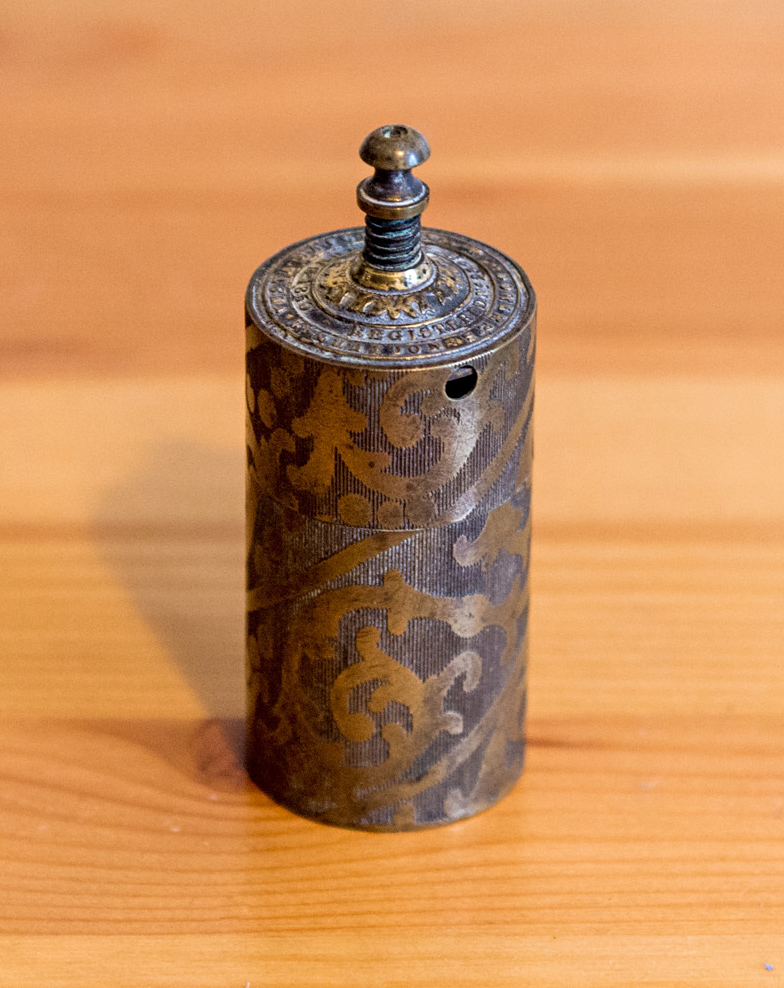
Match holders and Vesta Tins
A variety of (usually) metal containers can be found to hold matches, like this brass go-to-bed item. Many match manufacturers produced or had made for them match containers commonly referred to as vesta tins (see Bonus Exhibit) in many different shapes and sizes. There were also privately produced match holders or containers also usually made of metal, some sporting text to the effect they were patented or under royal warrant.
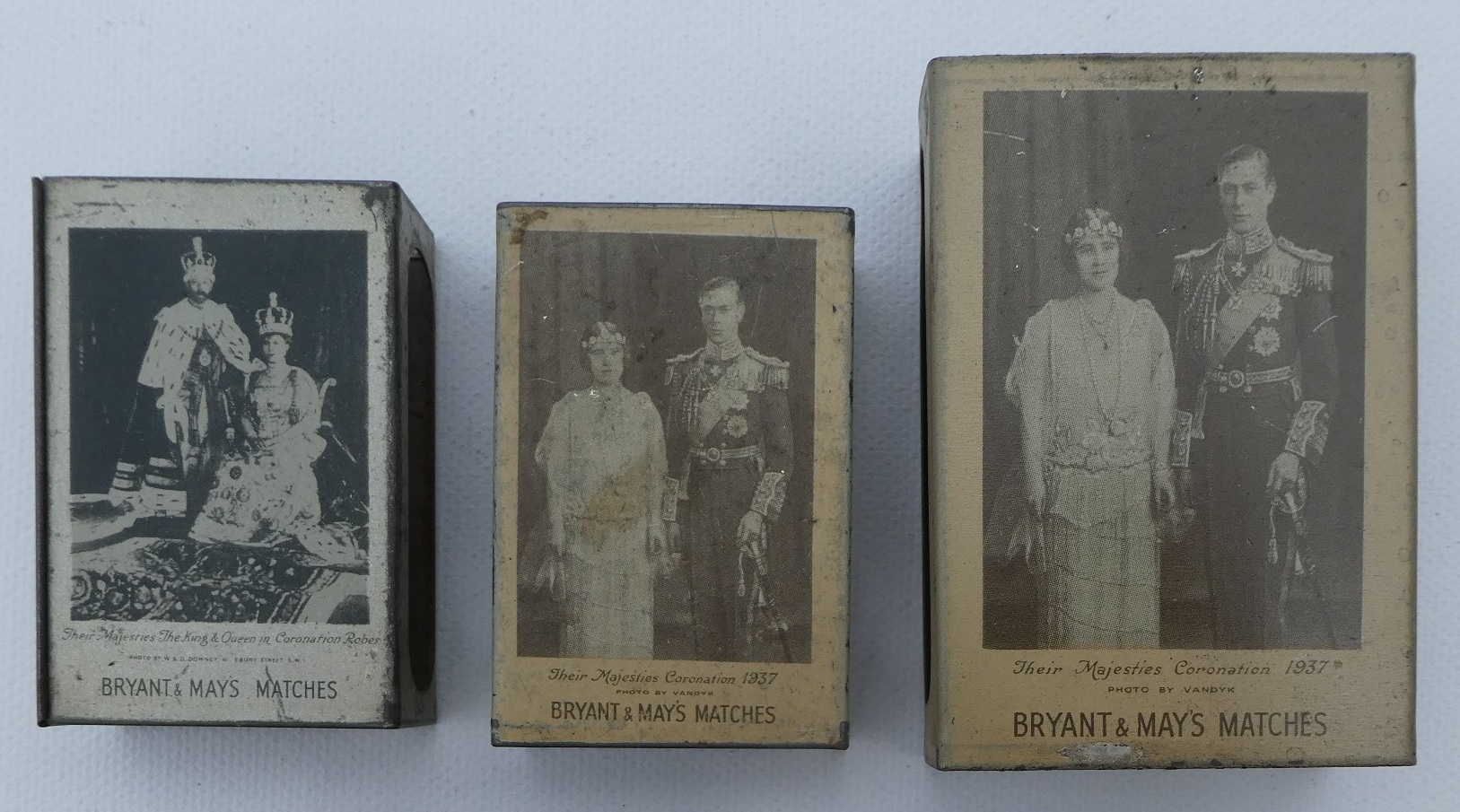
Matchbox grips and matchbox slides
Matchbox holders (grips) were three-sided (see Chapter “Matches between the World Wars” for examples) whereas the Matchbox slides were four-sided, with each designed to prevent the often-fragile wooden matchbox from being crushed.
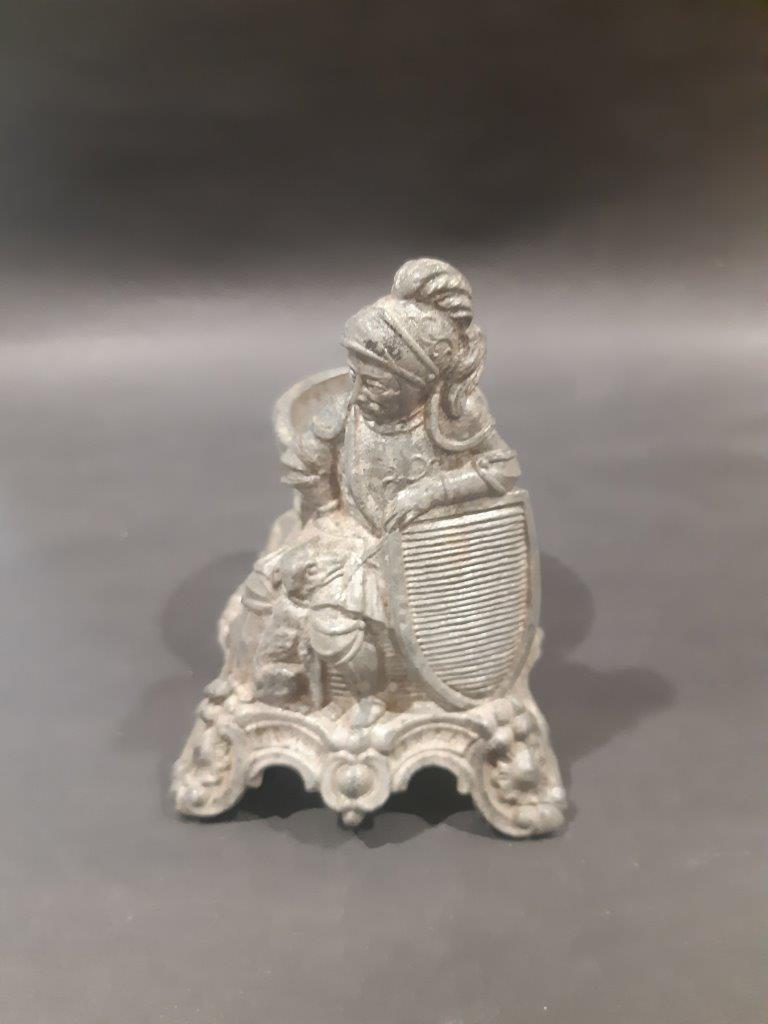
Spelterware / Pewterware
Spelter is a zinc–lead alloy that ages to resemble bronze but is softer and has a lower melting point. An inexpensive alloy that is easily cast and worked, spelter was used from the 1860s in the manufacture of candlestick holders, match-holders, clock cases and light fixtures. Spelter is relatively soft and brittle. It can be distinguished from bronze by scratching its patina: untarnished spelter is white, while bronze is yellow. The word pewter is possibly a variation of “spelter”, a term for zinc alloys (originally a colloquial name for zinc).
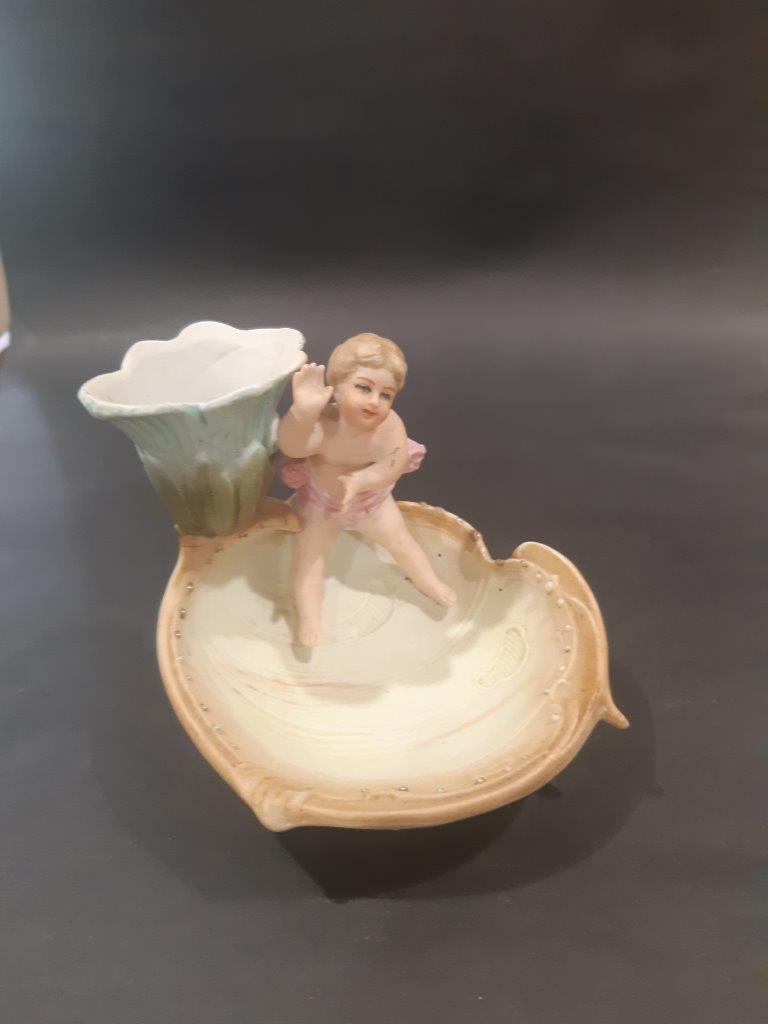
German Bisque Figurines
German bisque refers to a type of unglazed porcelain primarily used to produce figurines and dolls, known for its lifelike appearance and intricate craftsmanship. They became prominent in the latter half of the 19th century particularly in the Thuringia region of Germany. Many beautiful match-holders can be found with a receptacle for the matches and a striking plate.
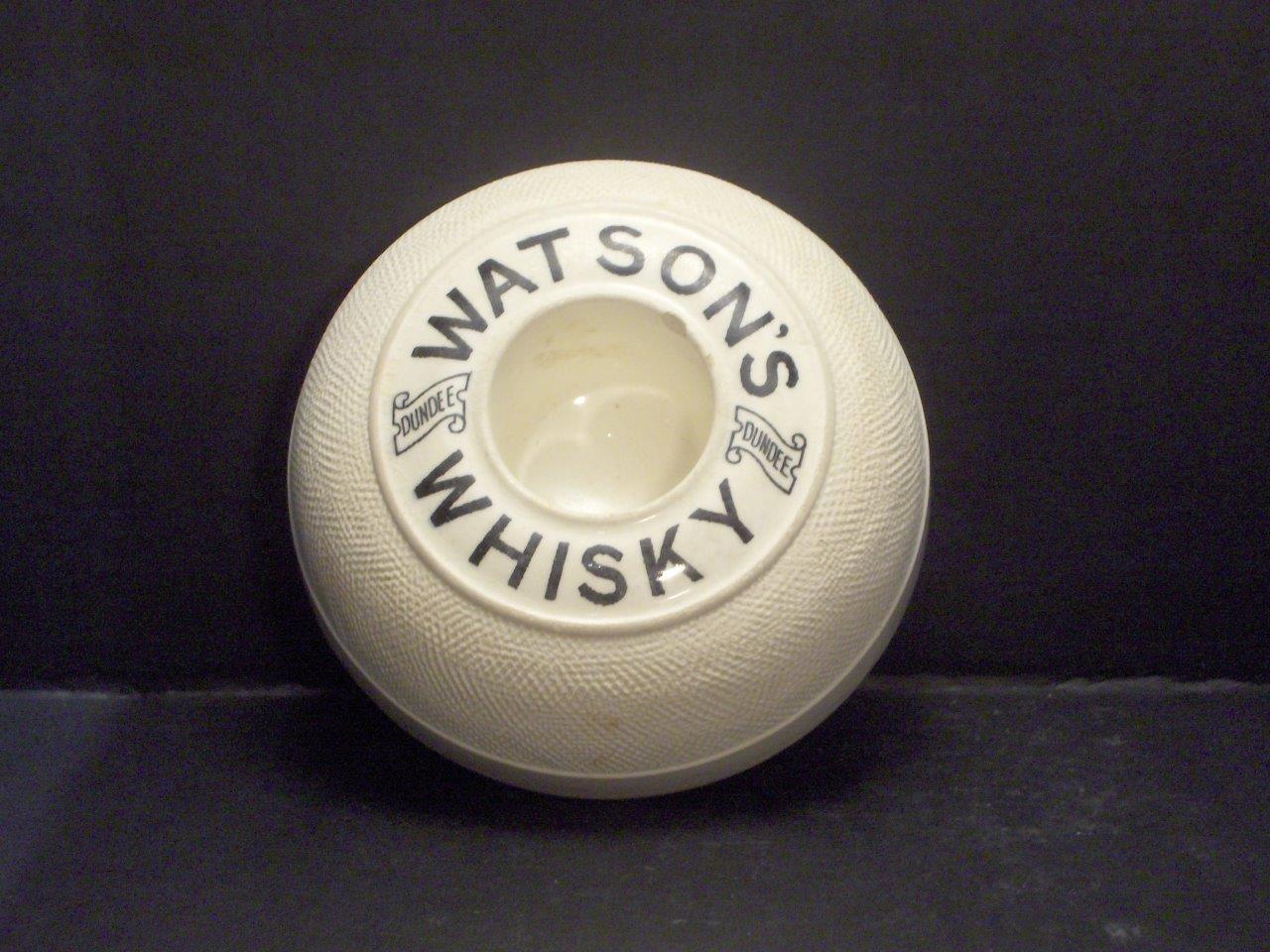
Bar Strikers and Ball Stands
If you visited a Pub or Hotel in the late nineteenth or early twentieth century you would invariably find a heavy ceramic object containing matches on the bar as a service to patrons. Commonly known as bar strikers they came in many shapes and sizes with some advertising whisky, brandy, gin or similar.
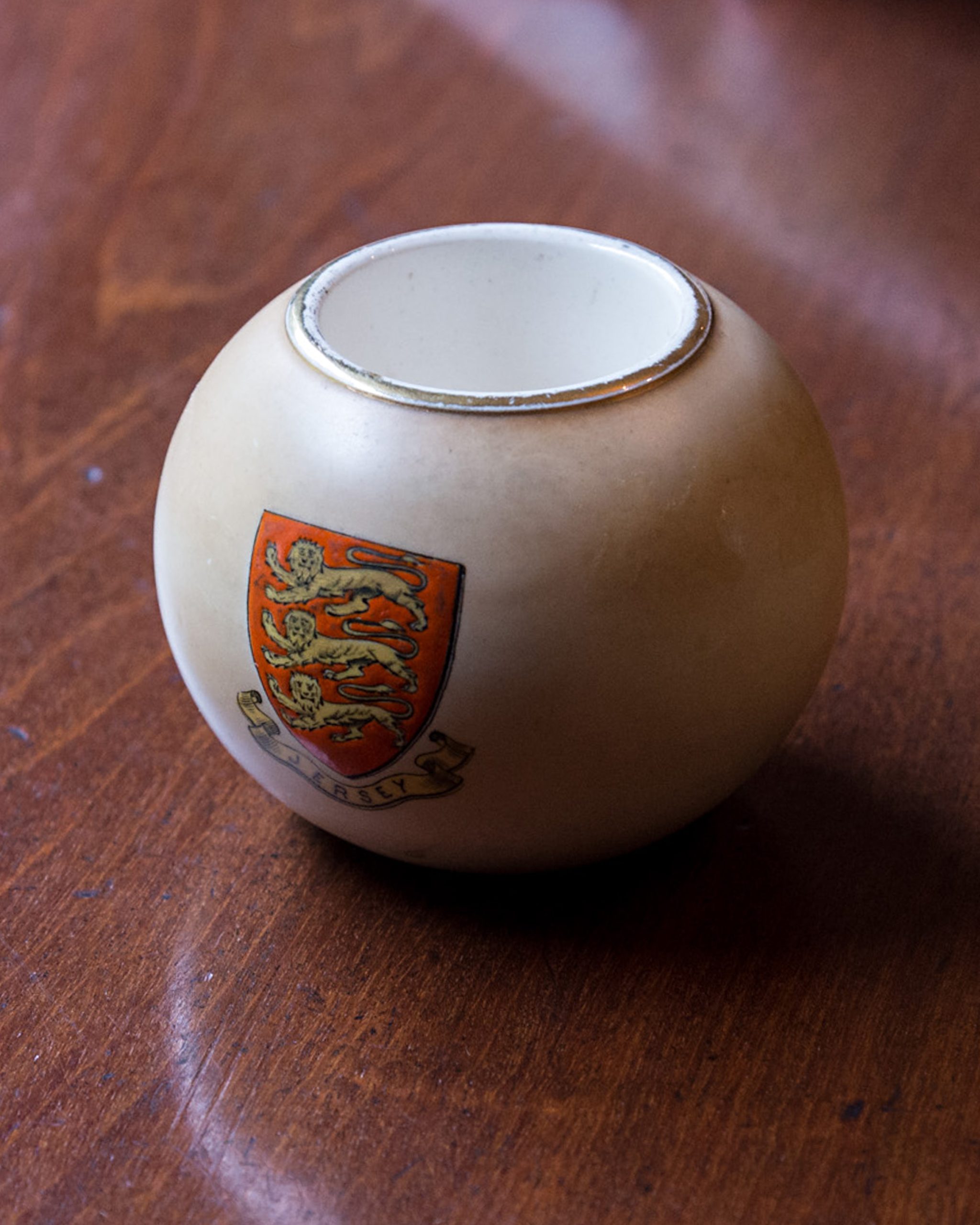
Carlton Ware
Similar to top hats, these round ceramic “golf-ball” style pots were used in the home to hold wooden strike-anywhere matches. These became popular as tourist items, acquired on people’s travels.
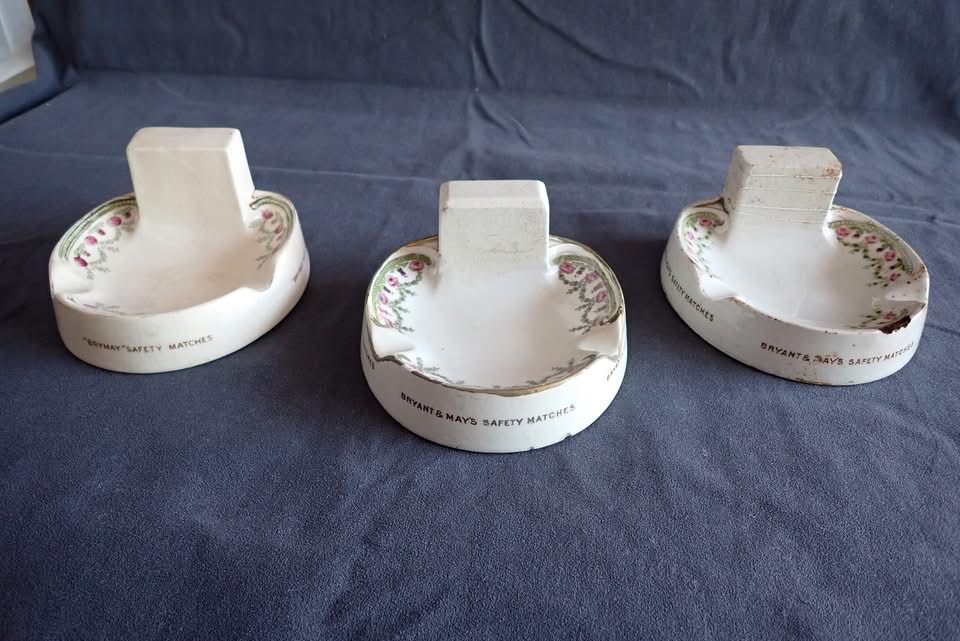
Ashtrays
Smoking had experienced a boom time in the late 1800s and early 1900s, which had a direct impact on demand for matches to light cigarettes, cigars and pipe.
Manufacturers spotted an opportunity to promote their brands on Ashtrays.
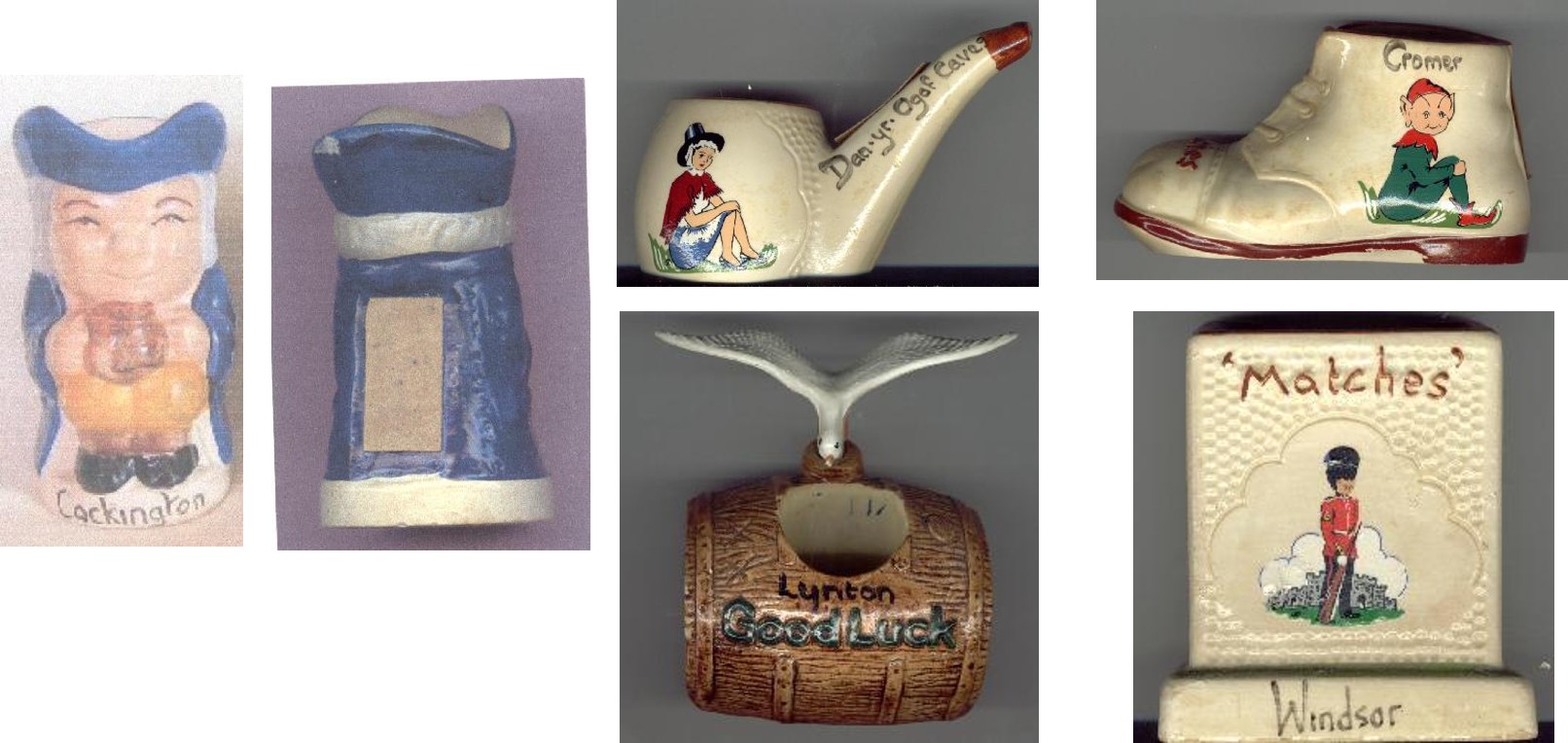
Manor Ware
Manor Ware pottery was first produced from an idea by three men in 1948, Derek Truscott, Anthony Brian Gibbs and John Stanley Cooper, in a small building in Bath. The firm produced small plaster cast models and grew into one of the largest manufacturers of this type of souvenir in the country.
The small company moved to Newton Abbot in 1949, and over the next four decades became one of the largest manufacturers of souvenir items in the world, exporting their products to Ireland, Canada and Australia.
By 1960 production rose to over 1,000,000 pieces a year. However, by the late 1970s cheap imported souvenirs were flooding the market and by 1987, after several ineffective cutbacks, the factory was forced to close.
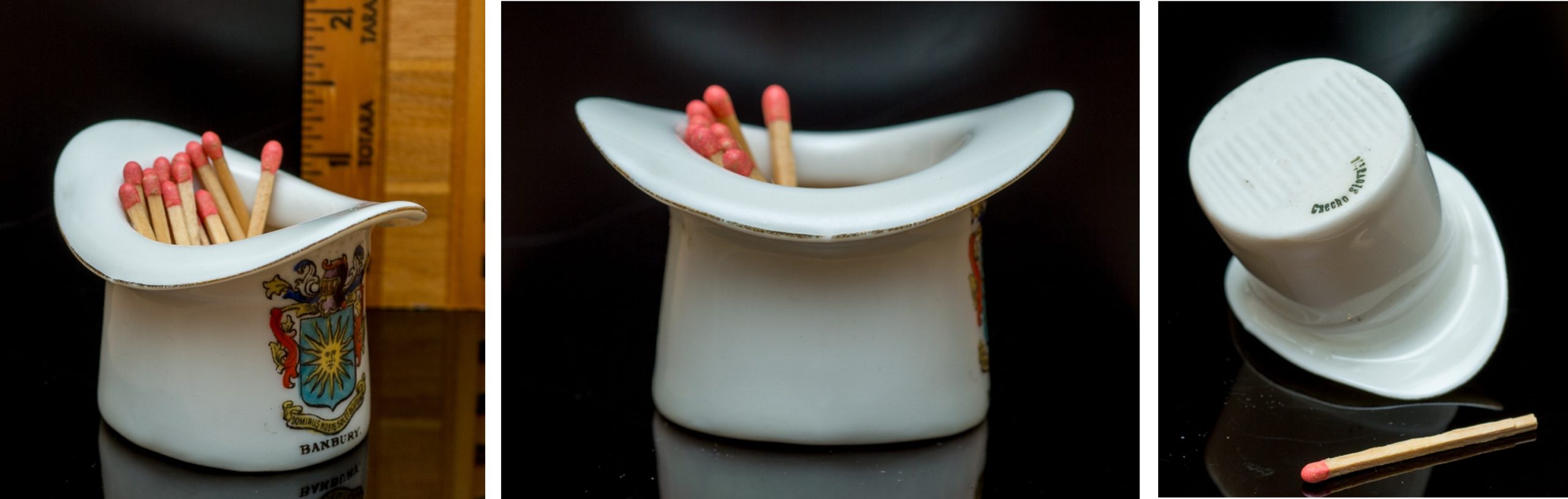
Top Hats
Ceramic containers for holding wooden strike-anywhere matches, used mostly in the home. These have a striker on the base to ignite the match.
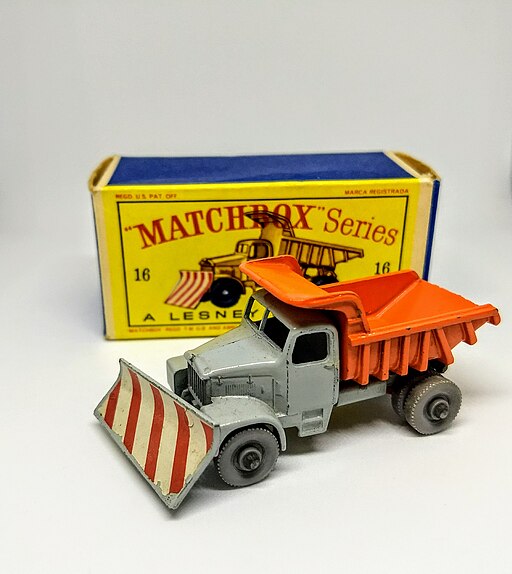
Toys
It was surely no coincidence that in 1953 Lesney in the UK introduced die-cast toys called “Matchbox” which were sold in card boxes the size of matchboxes.
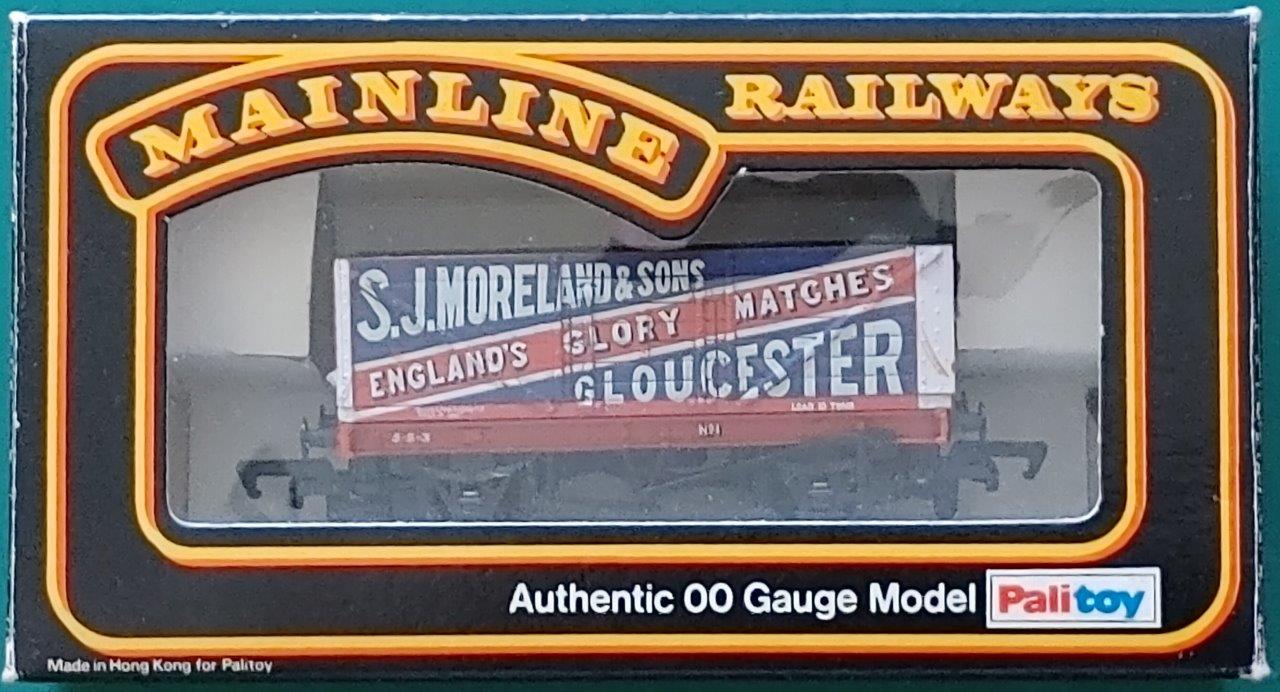
A few examples of metal toys can be found with vehicles branded with Bryant & May, Moreland and other manufacturer’s names.
Literature
Numerous books have been written about matchbox-related hardware, five of these are illustrated below.
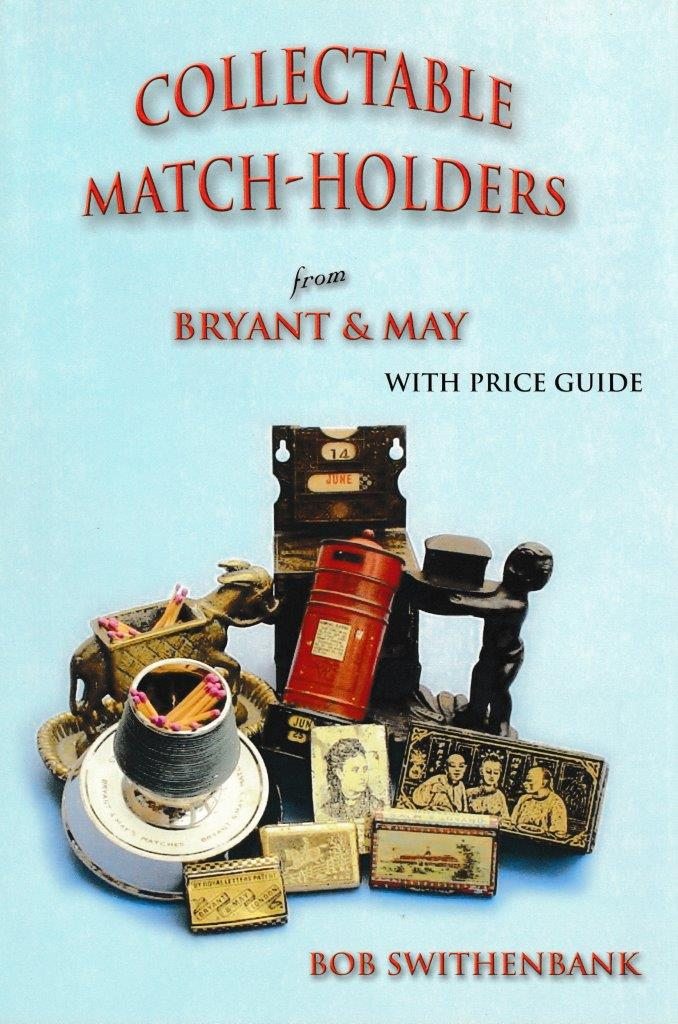 Collectable Match-Holders from Bryant & May, Bob Swithenbank 2004 Delmar Press ISBN 0-905111-12-5
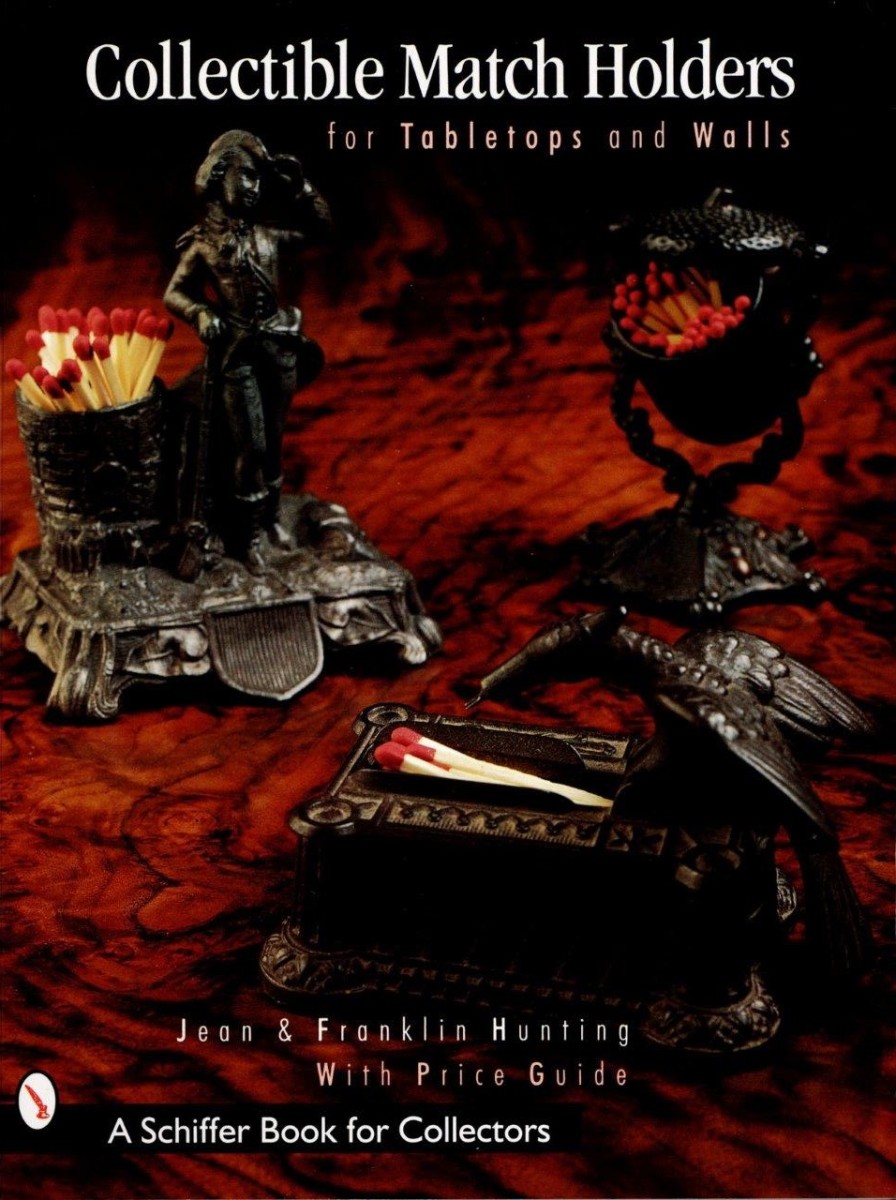 Collectible Match Holders for Tabletops and Walls, Jean & Franklin Hunting 1998 Printed in China ISBN 0-7643-0691-X
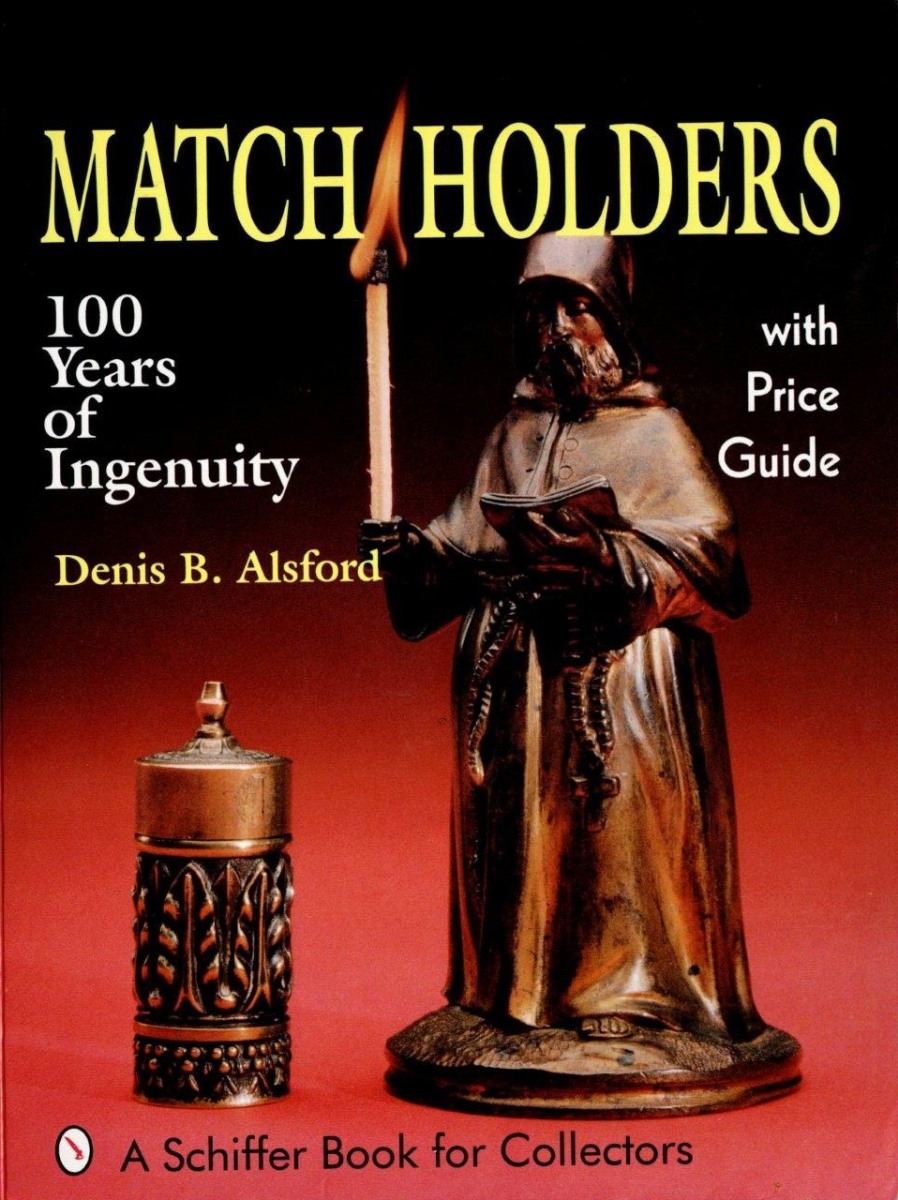 Match Holders - 100 Years of Ingenuity, Denis B. Alsford 1994 Printed in China ISBN 0-88740-633-5
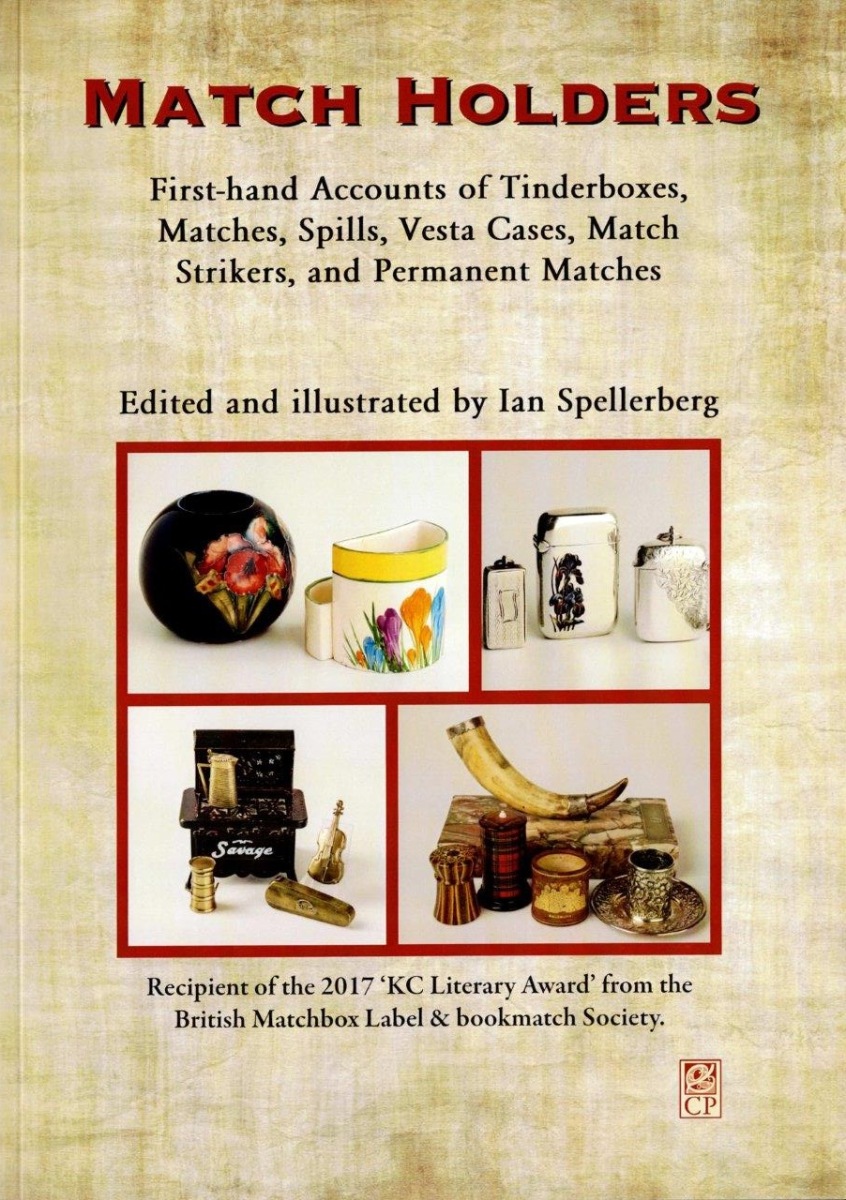 Match Holders – First-hand accounts, Ian Spellerberg 2016 Cadsonbury Publications ISBN 978-1-927203-58-3
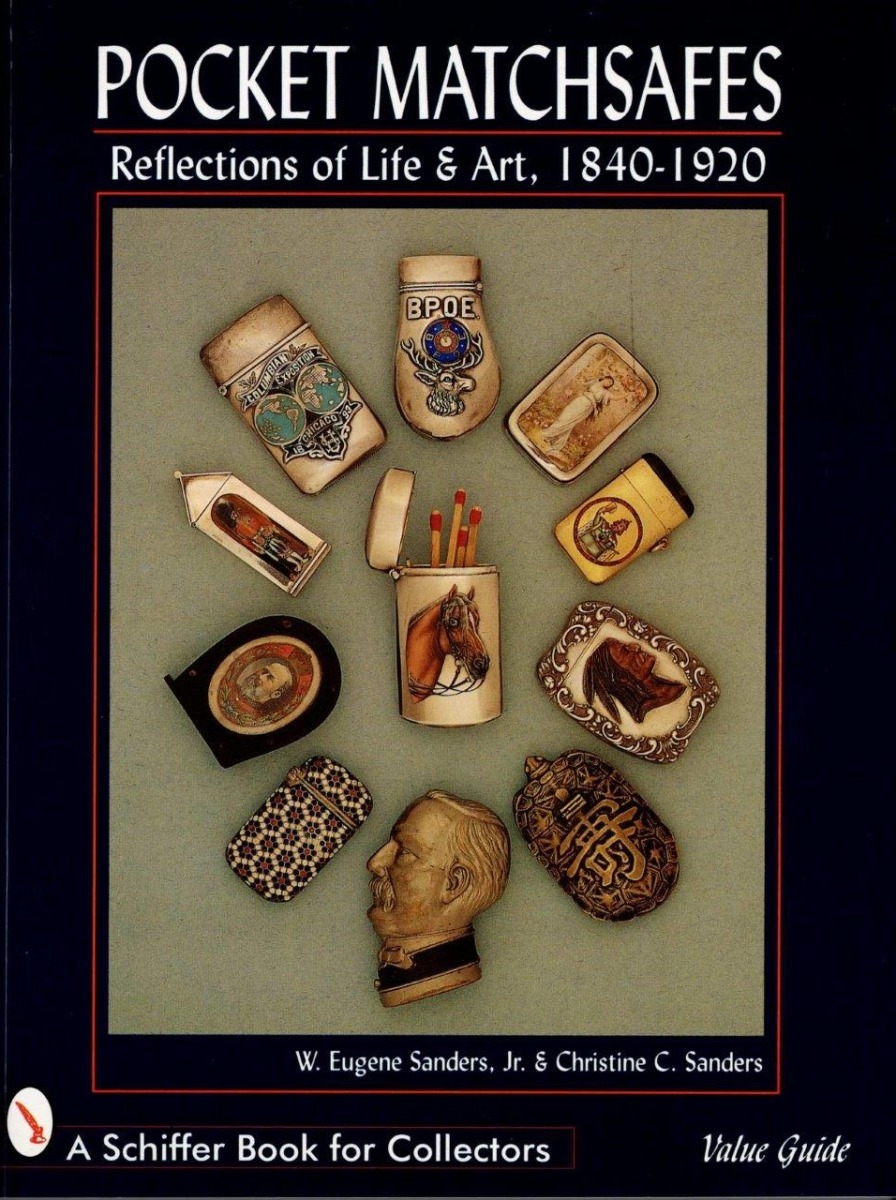 Pocket Matchsafes – Reflections of Life & Art 1840-1920, W. Eugene Sanders & Christine C Sanders 1997 Printed in China ISBN 0-7643-0324-4

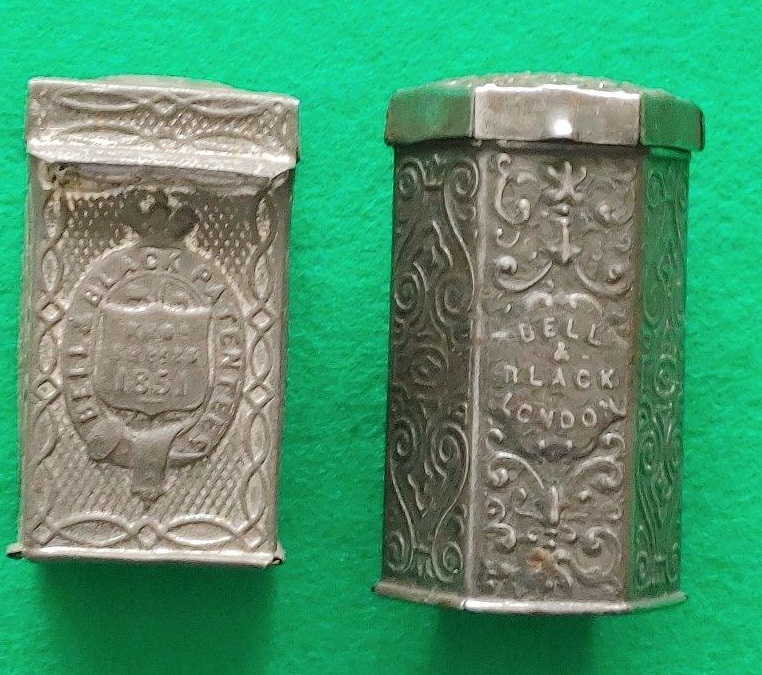
Bonus exhibit : Bell and Black Hardware
Match hardware from Bell & Black, London is probably only second in terms of variety behind Bryant & May. They come in all shapes and sizes from the very tiny to the quite large.
Samuel Alexander Bell, one of the pioneers of the English match industry, established himself in 1839 however he did not appear in the London Directory until the 1848 issue when the business was styled Samuel Alexander Bell & Company and was trading at 15 Bow Lane, Cheapside, London and also at Stratford.
During the following year, Bell took John Black into partnership with him under the name of Bell & Black. This association of names was to last until 1885, however Black, still a partner in 1859, had left by 1861 when Bell was the sole partner. The works were situated on the south side of High Street Stratford, near Bow Bridge.
In 1852 they employed 300 hands, half of them inside the factory, the others being “out workers” who collected materials from the factory and took them home, returning the finished articles when ready, on a piece-work basis, a custom of the time.
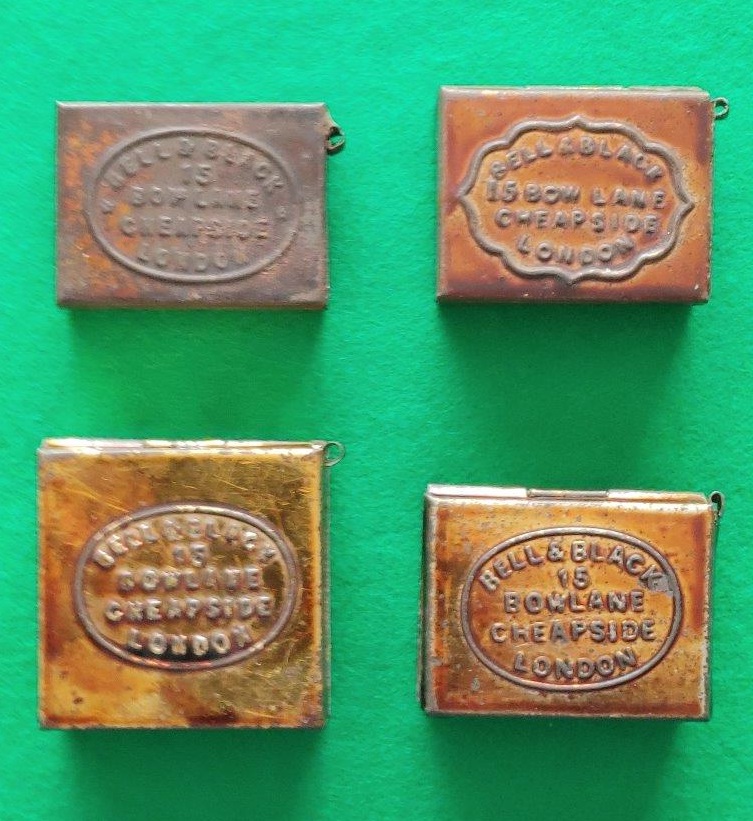
In 1868, letters patent were granted to Samuel Alexander Bell. Sometime between 1868 and 1876, Bell also leaves the business as in this latter year, a joint stock company Bell & Black Limited (No. 10582) was floated to take over the business. The managing Director was William Bridges Adams, an engineer well known in connection with local enterprises.
Difficult times were approaching. Nearly fifty years earlier the chemists had abandoned the hazardous manufacture of matches in favour of the new factories from which they were able to buy matches cheaper than they themselves could make them. Now it was the factories who were facing a crisis. A factory equipped with the latest machinery could increase its output and reduce costs. Fewer factories would be needed, though new capital would have to be sunk into those still operating.
Such conditions demanded a pooling of interests by those wishing to survive, the scrapping of buildings not suitable for conversion to the new order and the unstinted use of new capital in purchasing the best machinery the market could provide.
In 1881, the businesses of John Hynam and The London Match Company were absorbed as a preliminary to a major grouping carried out in the same year by the merging of four large concerns.
- Dixson Son & Evans of Manchester
- John Jex Long of Glasgow
- Bell & Black Limited of London, and
- John Bellerby & Son Ltd of York.
The new company created for this purpose was called The Bell & Black Match Company Limited (No. 15588). The registered office was at High Street, Stratford until 1882, when it was removed to 147 Cannon Street, London.
In 1884 the Stratford Works was still in use, as also were addresses at 79 High Street, Stratford and Marshgate Lane, Stratford. In March 1885, the registered office was moved to 101 Leadenhall Street, London. A month later the company was absorbed by Bryant & May Limited.
Click on an image below to enlarge it and see the Bell and Black item.
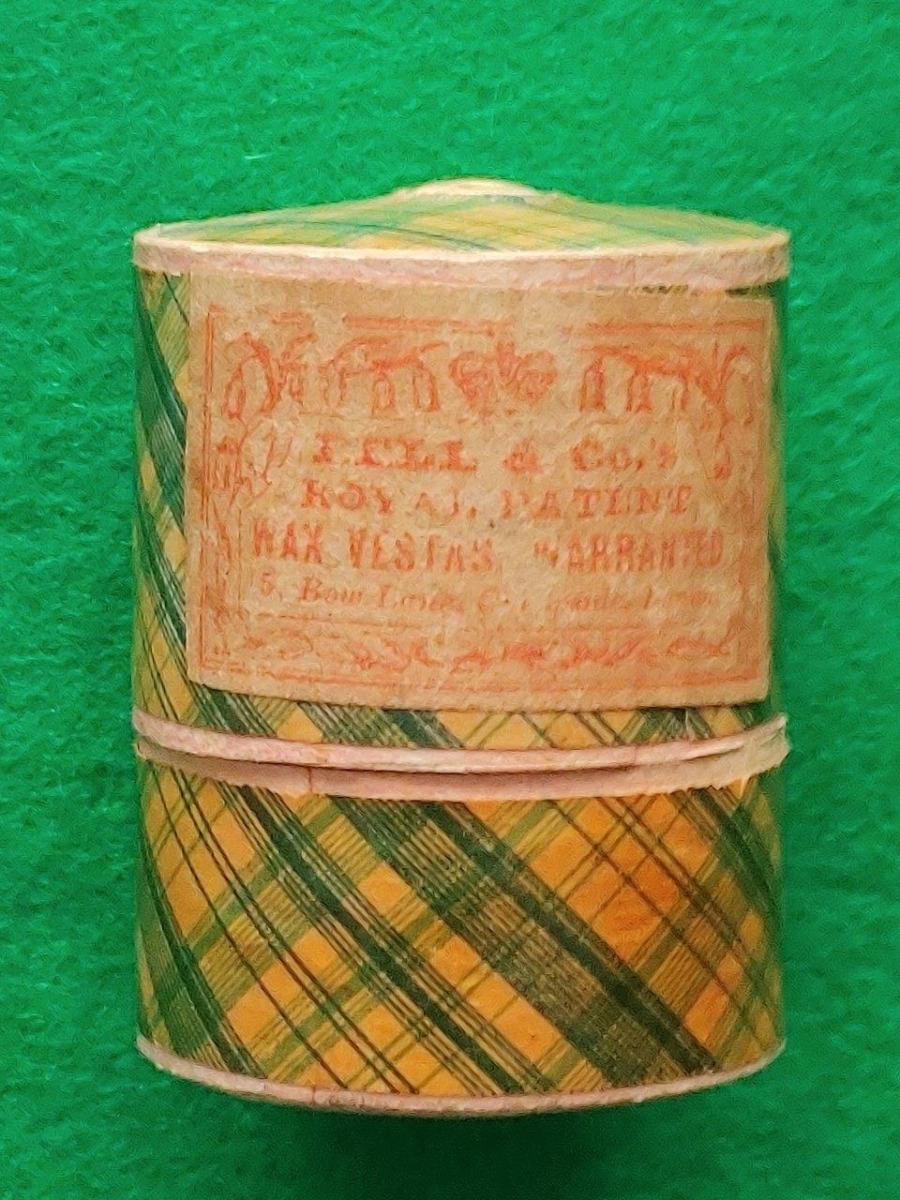 Very early Samuel Alexander Bell pillbox mid 1840s, 42x33mm
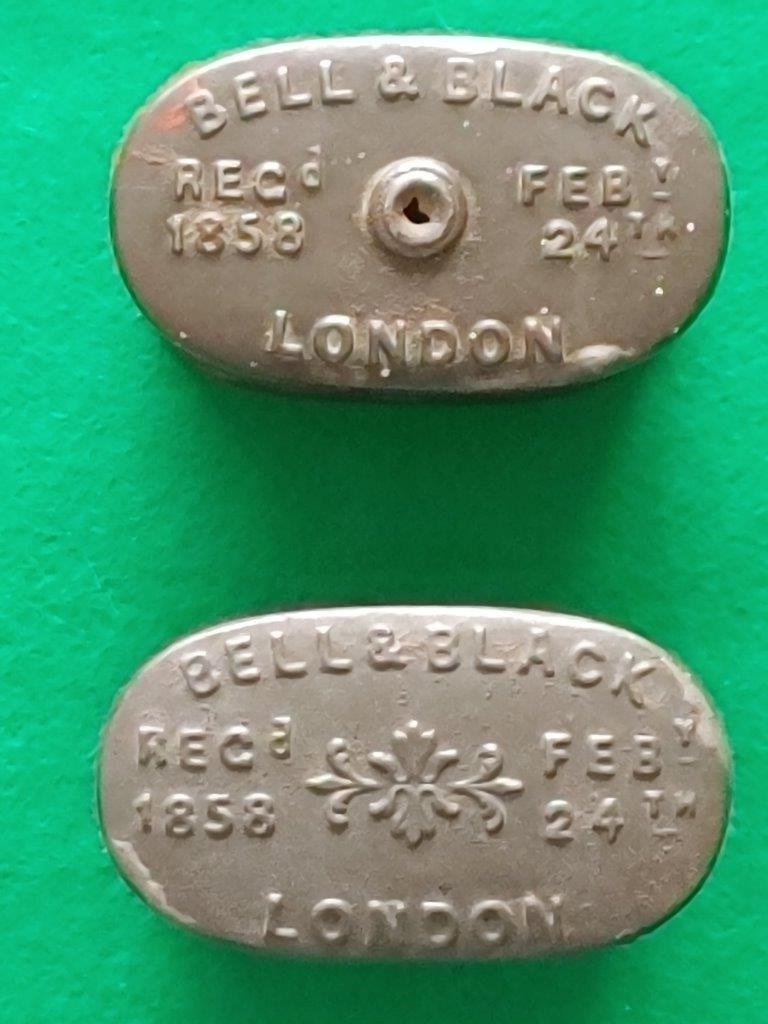 Patent Wax Vestas and Patent Gas Congreves both Reg’d Feb 24th 1858, 48x27x43mm & 48x27x51mm
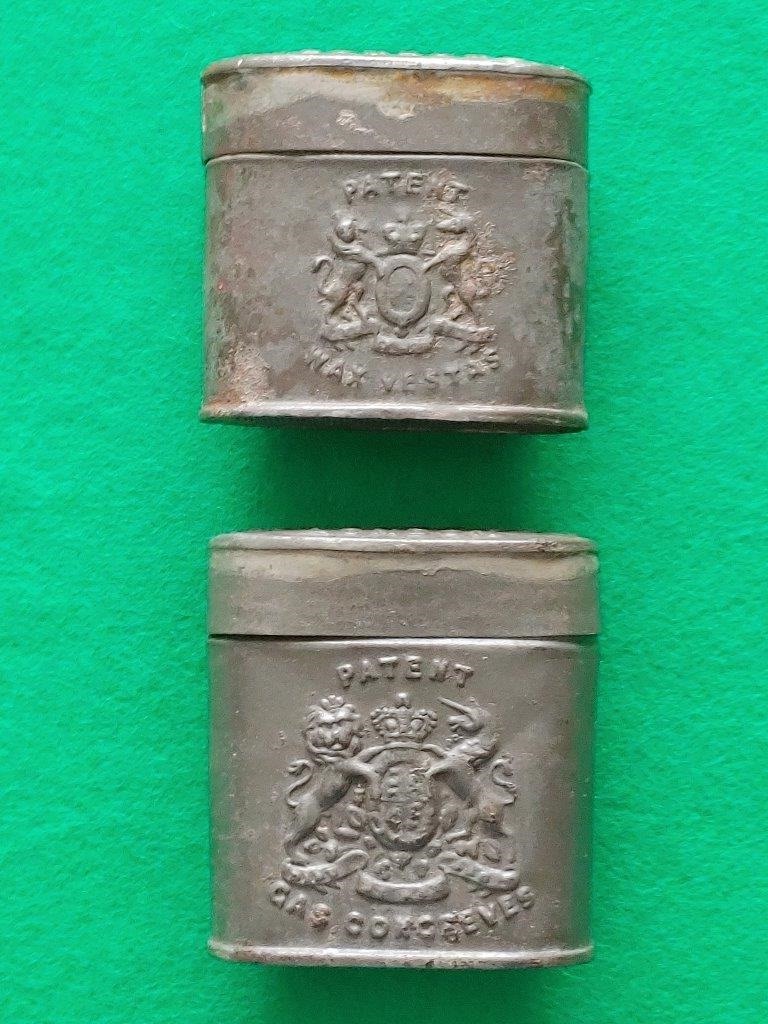 Side view of the two 1858 tins shown to left
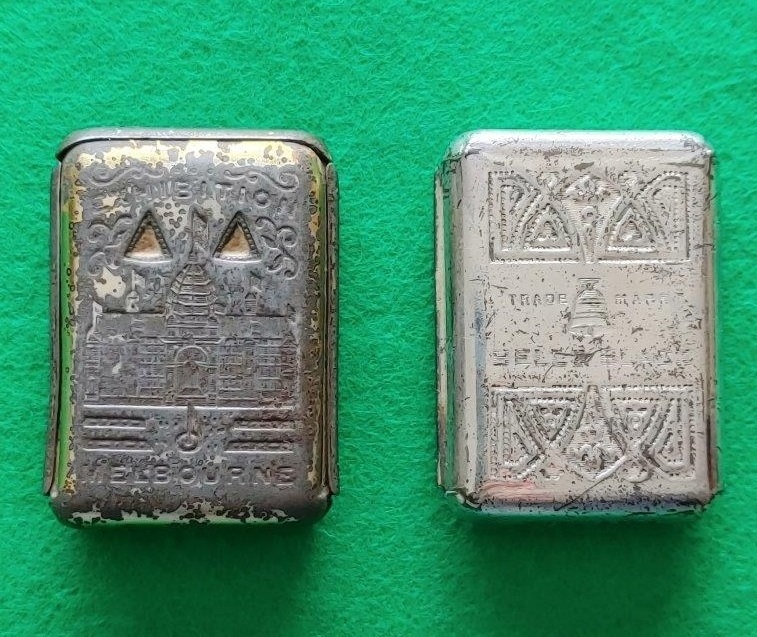 Two small 1880s tins with sliding lids, one for 1880 Melbourne International Exhibition, 32x43x12mm
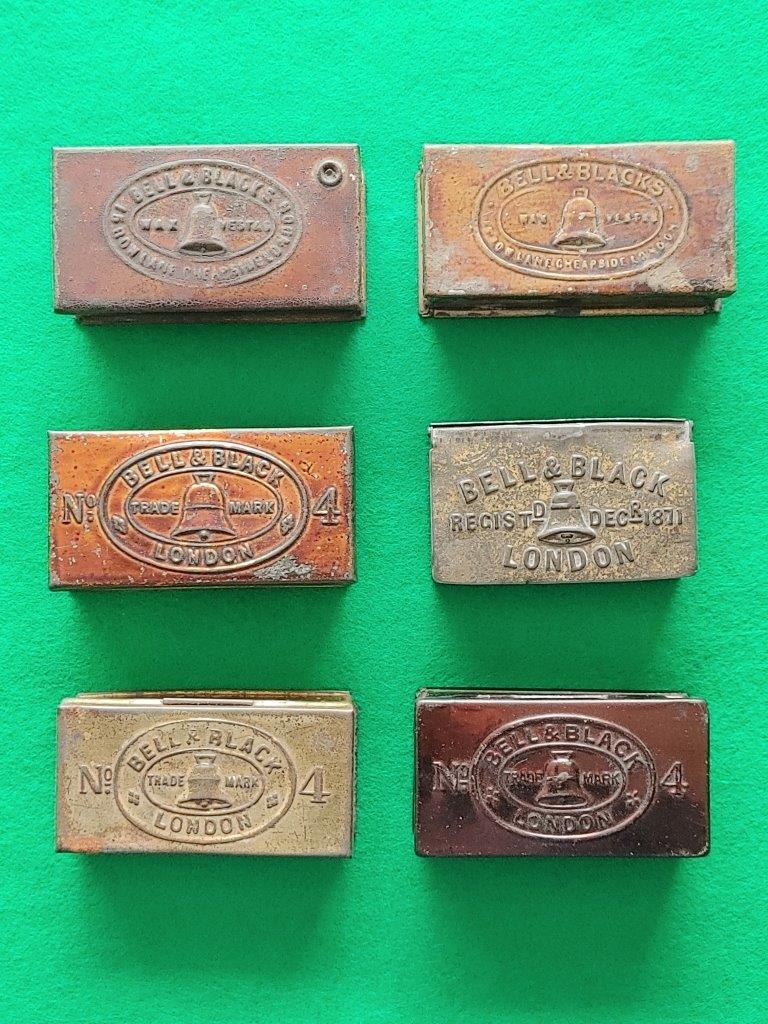 No.4 size tins with variations. One has a “go to bed”, one Reg’d Dec 1871. Bottom two have “150 Vestas” on front edge
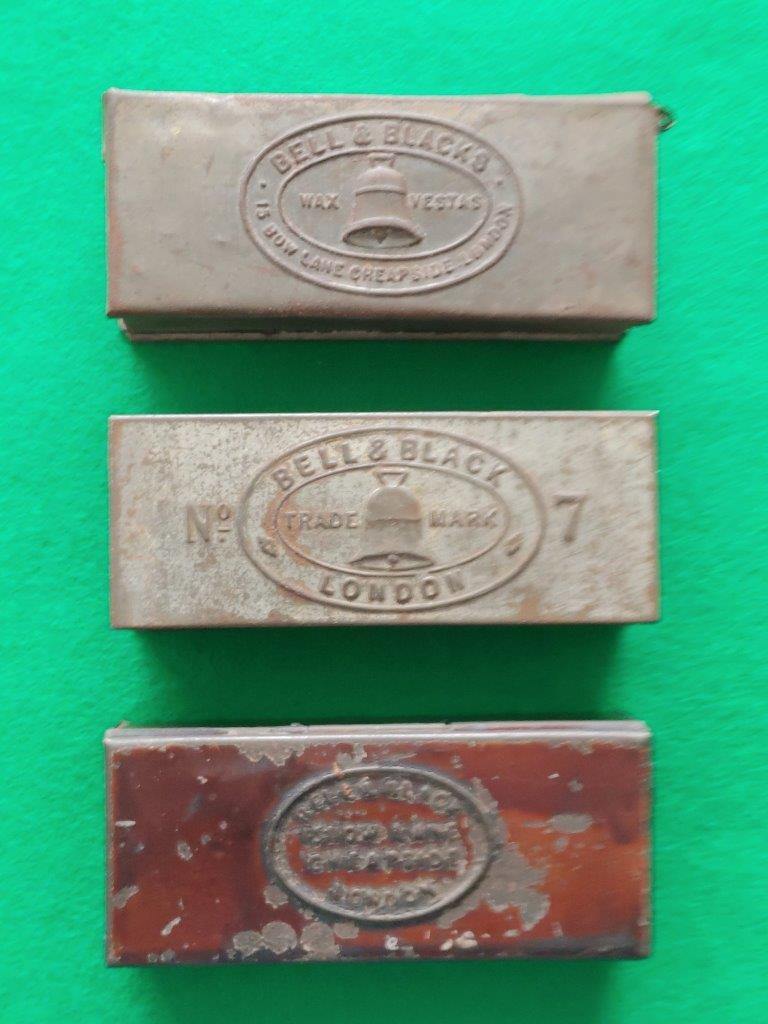 No.7 size tins (Contents 500) with variations to address plus with and without number
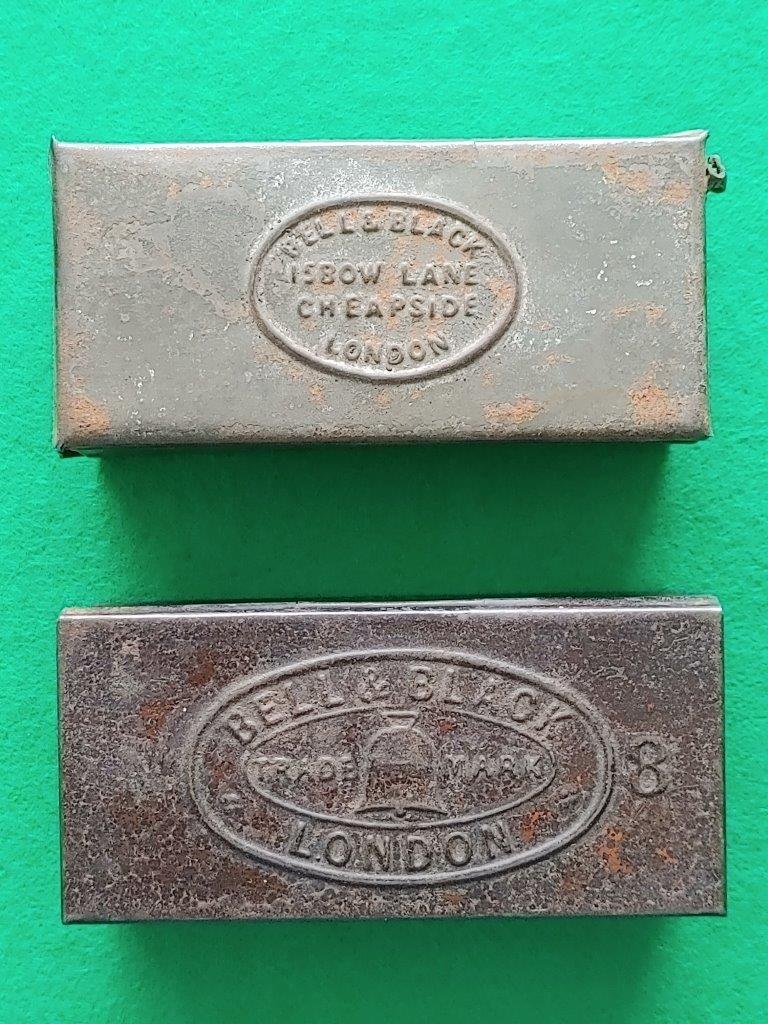 Two unusual No.8 tins, with and without number. Contents thought to be 750
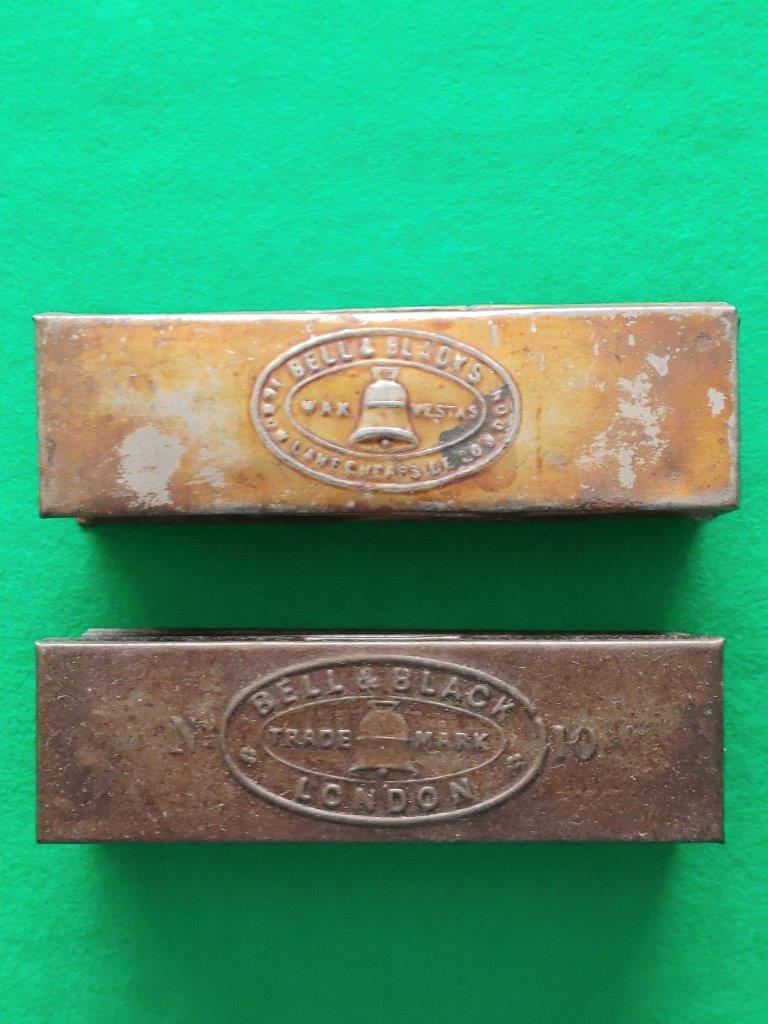 Two size 10 tins (Contents 1,000), 130x40x40mm, 127x38x38mm
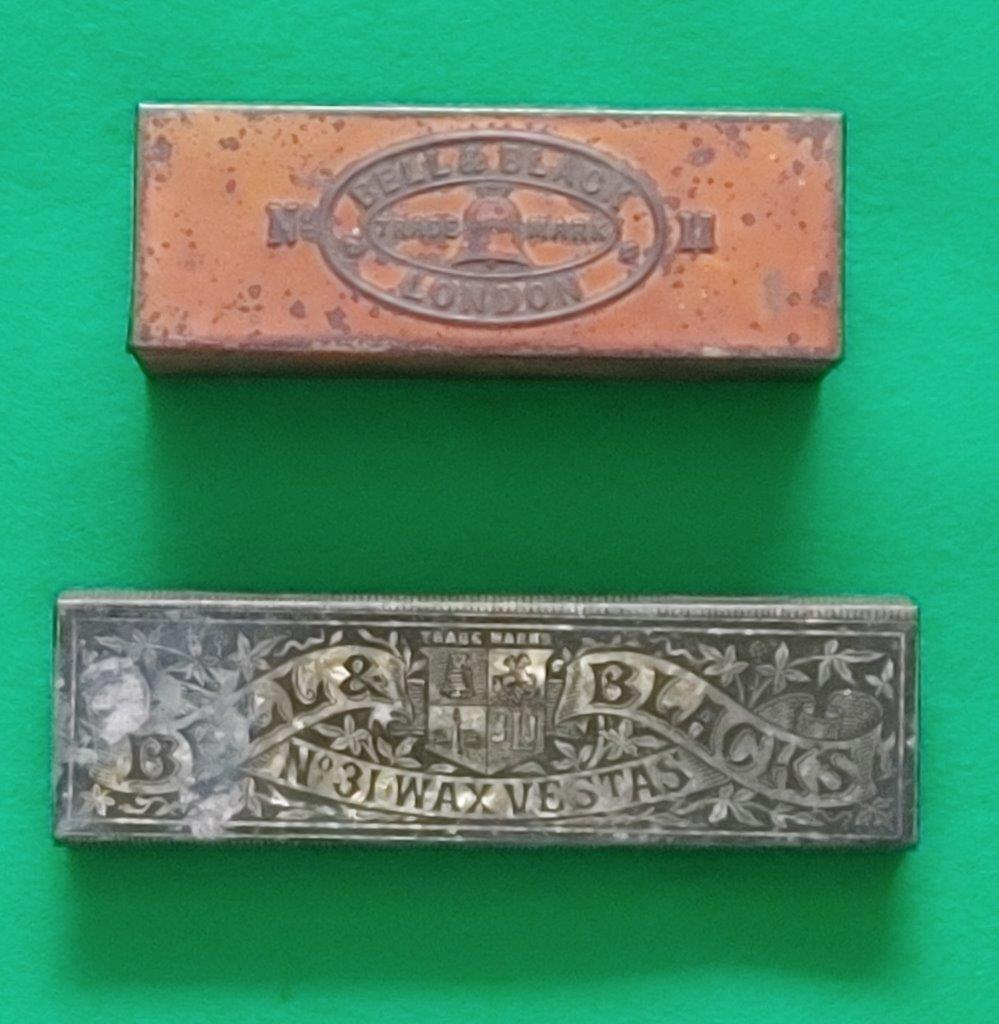 Another uncommon No.11 tin (128x45x41mm) plus a size 31 tin (160x45x20mm)
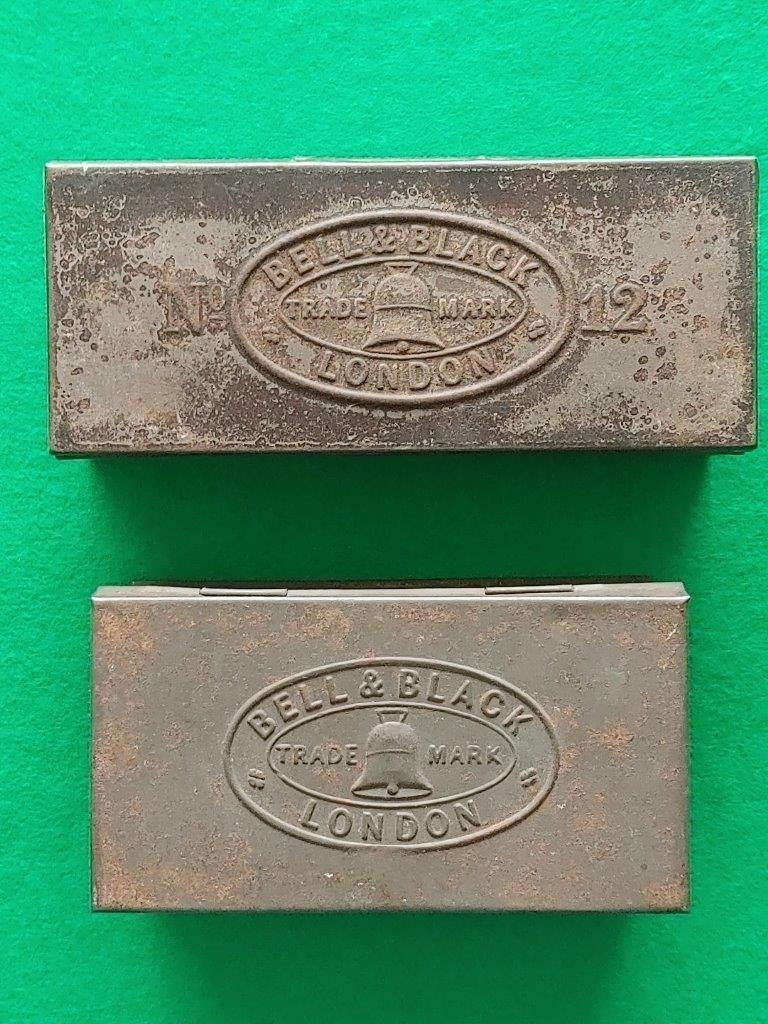 Another unusual No.12 tin (128x52x41mm) plus a size 20 tin (106x56x47mm)
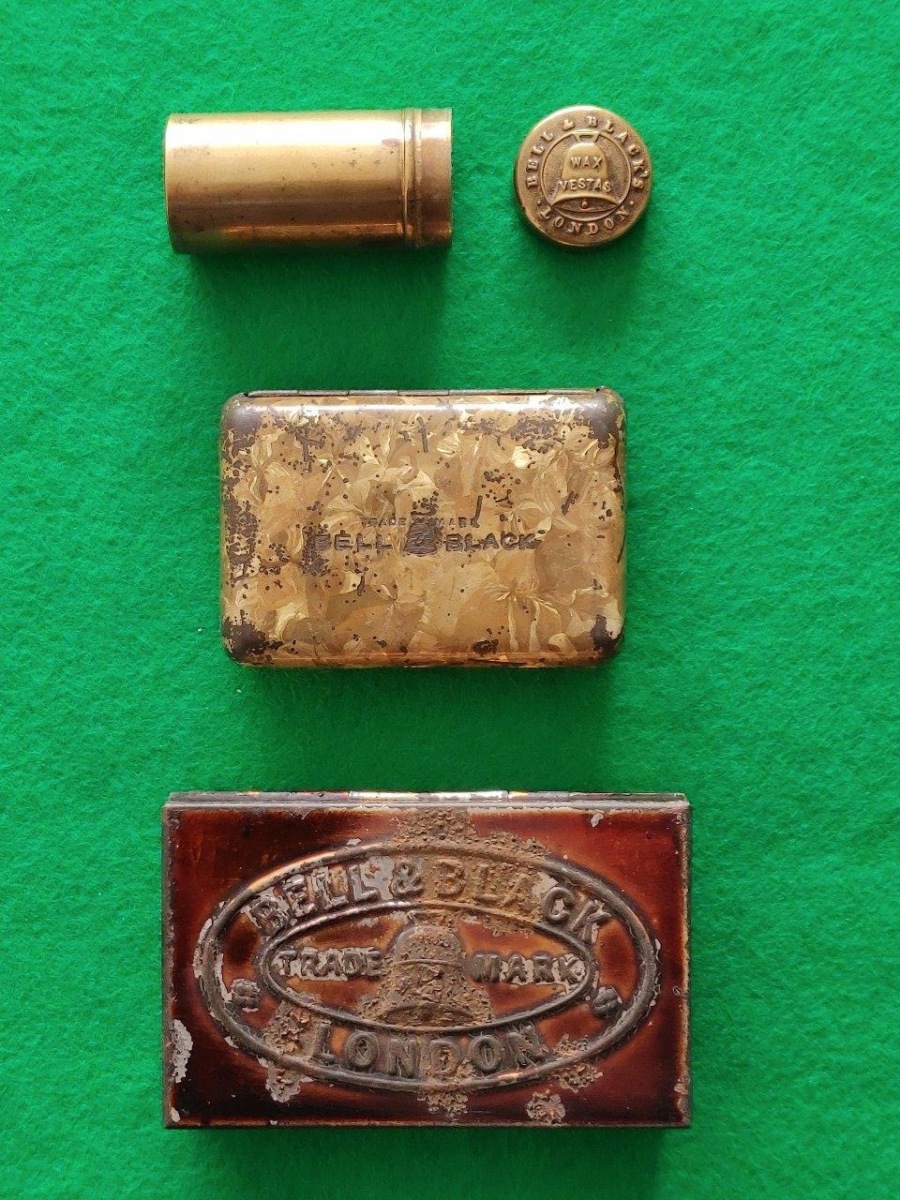 Small brass cylinder (20x41mm), waistcoat box (58x40x16mm) and a presumed No.6 size (72x44x25mm)
Click here to return to the Exhibition Catalogue.