
Australian match industry
Exhibitor : David Figg
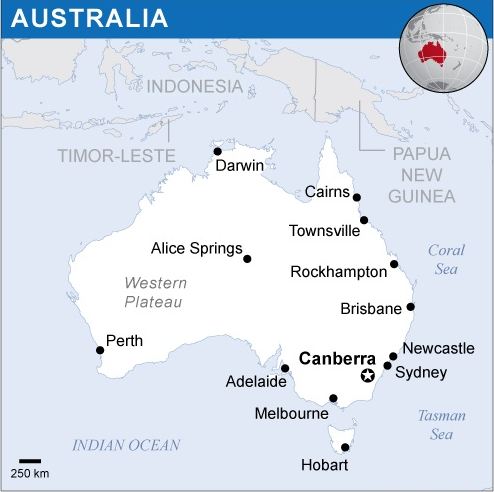
Like most countries, Australia was home to numerous match factories with four of the mainland states laying claim to at least one factory. The State of Victoria had the most factories and was the seat of our first Federal Parliament in 1901 until it moved to Canberra in 1927.
This exhibit takes a very brief look at each of the major manufacturers and their subsidiaries which existed in Australia mainly in the first half of the 20th Century. It includes name changes and mergers showing a selection of their brands. Matchbox labels, pillbox tops, bookmatches and skillets were all produced at some stage in Australia.
Unfortunately, today there are no match factories in Australia but our iconic Miss Redheads, born in 1946, still lives on but in Sweden.
19th century industry
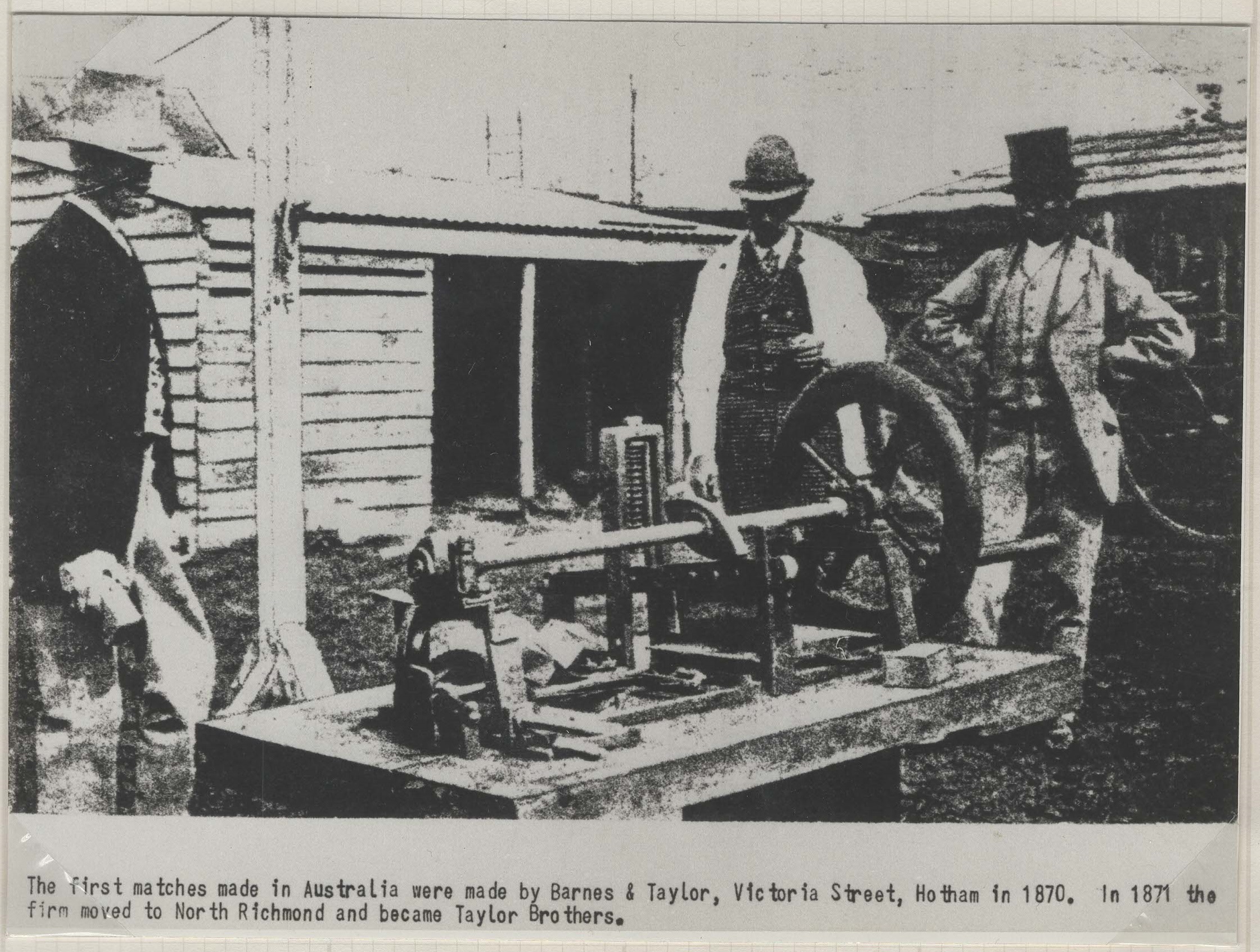
A handful of early pioneer match concerns existed in the 19th Century, the earliest known dating back to 1843. The most famous was Barnes and Taylor of Victoria Street, Hotham, a suburb of Melbourne, who commenced production of their Colonial Block matches in 1870 with the slogan “warranted damp proof and to ignite in all climates”.
The firm changed its name to Taylor Brothers in 1871 and moved to North Richmond. It closed the following year.
They incorrectly claimed to be the “first match manufactory in the colonies”. In fact no fewer than four other names appear before Barnes and Taylor. The only known items in existence from this factory are to be found in the Science and Technology Museum in Melbourne.
R Bell & Co
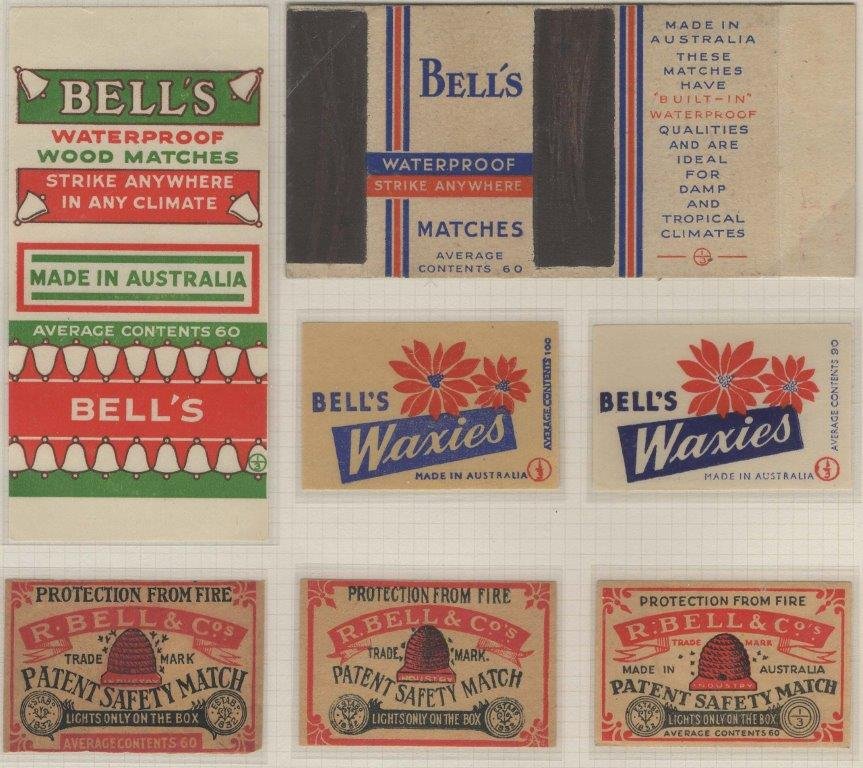
In 1895 R Bell & Co. commenced making wax vestas at Richmond, Victoria. These were marketed in tins imported from England. In 1909 the firm joined forces with Bryant & May forming the name of Bryant & May, Bell & Co. Pty. Ltd. In 1922 the name Bell was dropped from the firm’s name. Bryant & May continued to market all wax vestas under the name of Bell’s, and in the case of vestas, in tins as R Bell & Co. As Bryant & May held all registrations for Bell’s labels and manufactured the matches, skillets or vestas the Excise number 1/3 appeared on such labels. R Bell & Co. only marketed one safety match brand, the “Beehive” design.
Bryant & May, Bell & Co Pty Ltd
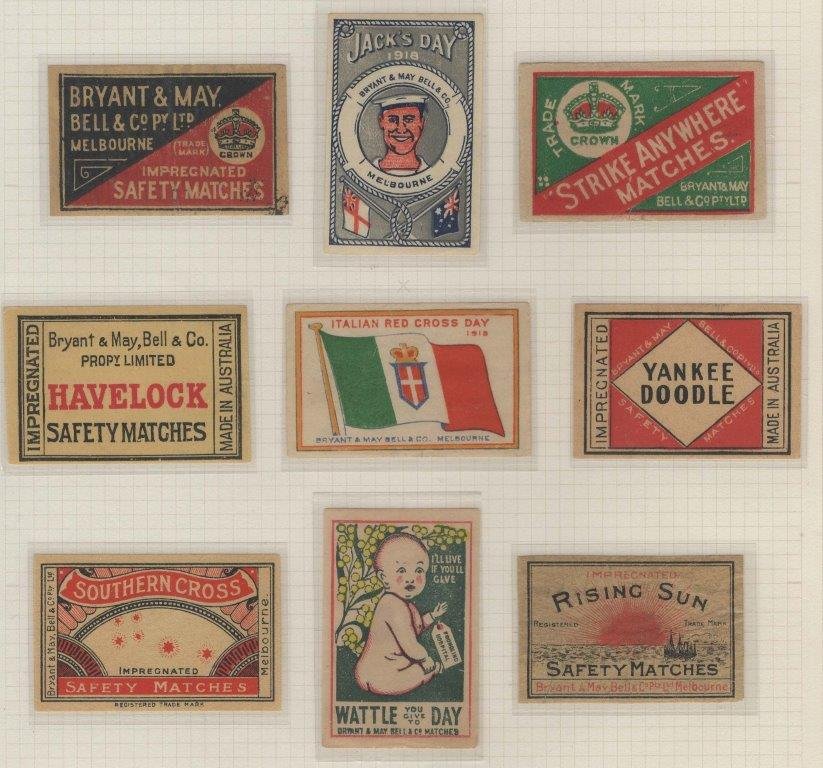
Bryant & May opened their factory in Melbourne, Victoria on 15/12/1909, after amalgamating with the firm of R Bell & Co. who were already operating there. R Bell & Co. then ceased to exist as a separate factory. The firm of Bryant & May, Bell & Co. produced as their first labels the Rising Sun and the Southern Cross, which were printed in Great Britain. These were followed by the Yankee Doodle, Havelock, Crown (red and black), Strike Anywhere (red and green “crown”), Jack’s Day 1918, Wattle Day 1918 and Italian Red Cross Day 1918. “Bell” was dropped from the firm during 1922.
E L Bell & Co
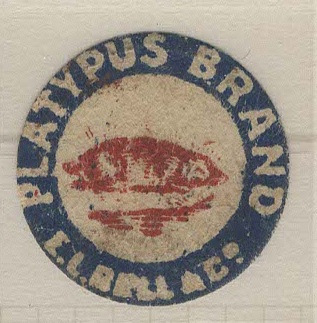
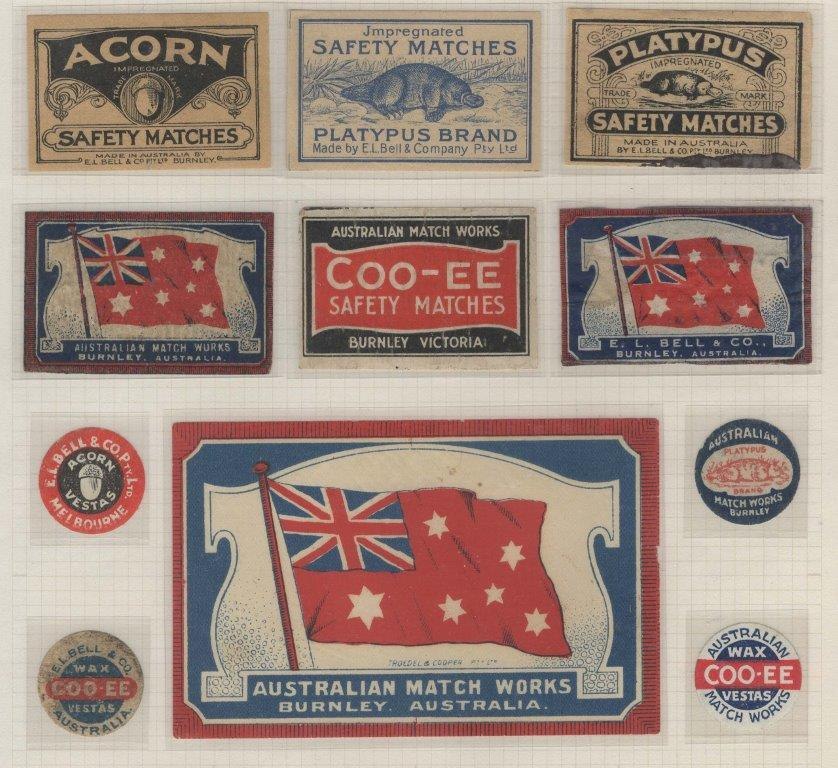
Following a business disagreement Mr E L Bell separated from the business of Bryant & May, Bell & Co. and commenced his own business in 1910. He started under both his own name and the Australian Match Works in Swan Street, Burnley, Victoria near the railway station but later moved to Stawell Street, Burnley. This factory ceased production in 1928 with Bryant & May purchasing the factory. The E L Bell factory was used by Bryant & May’s as a printing works for many years. Their first matches were “Wax Vestas” in the pill type boxes. Box labels which followed were : Platypus, Acme, Coo-ee, Goodlight. Another label depicted the Australian flag.
 R Bell & Co
 Bryant & May, Bell & Co
 E L Bell & Co
Federal Match Co
The factory was started in Sydney, NSW by Mr C G Sundstrom with the backing of local merchants in 1913 with Mr Sundstrom being installed as manager. All label issues until the later 1920s were ARTB (all round the box) types. When Excise duty became applicable Federal were allocated the number 1/4. This factory at Alexandria near Sydney ceased operations on 27/2/1978. Among the early brands were Captain Cook, The Civil Service Stores and Federal Brand which depicted the Australian Coat of Arms.
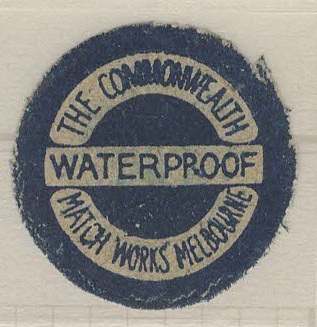
Commonwealth Match Works
This factory operated in Melbourne from 1920 and went into voluntary liquidation in 1942. Their Excise number was 2/3. Early years were spent in the production of WAX matches in pill type boxes. Safety matches in boxes appeared from the mid-thirties onwards. Some early brand names were : All-gold, Ku-Ku, Cobra, A N A, Kinkara Tea, Norco, Grainus, and later, Waxlites, different types of C M W “Woodies”, Gumrice, Radio, Capstan, Kornies, Weeties, Spry’s and Ladd’s. There were also packet labels in all brands of labels.
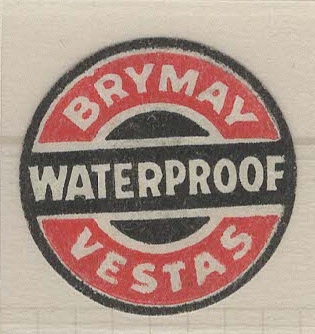
Bryant & May P/L
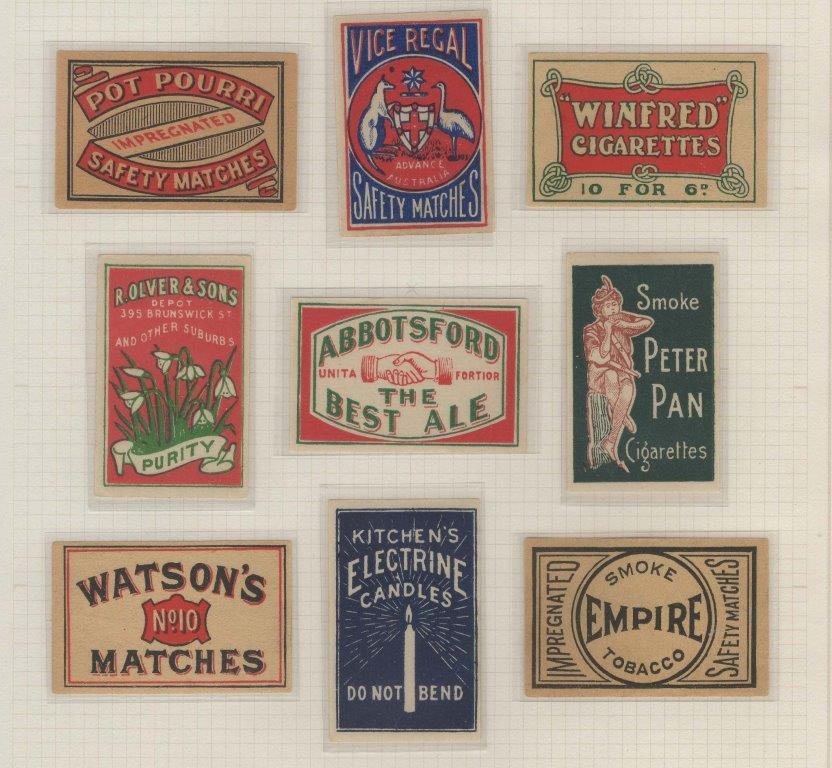
In 1922 this firm came into being with the dropping of the word “Bell” from the parent company name. Most of the early labels produced were for advertising purpose with names such as Sunny South, Watson’s No 10, Abbotsford the best ale, Abbots’ lager, Pot Pourri, Ireland’s Duchess Tea, Nestle’s Food, McIlraith’s Ltd, Rosa brand, Four Crown brand, Smoke Welcome Nugget, Vice Regal, Nectar Tea, R Olver and Sons, Winfred Cigarettes, Smoke Empire Tobacco, Kitchen’s Electrine Candles, Magpie, Yankee Doodle, Keystone, Federal Tobacco Co. and Smoke Peter Pan cigarettes.
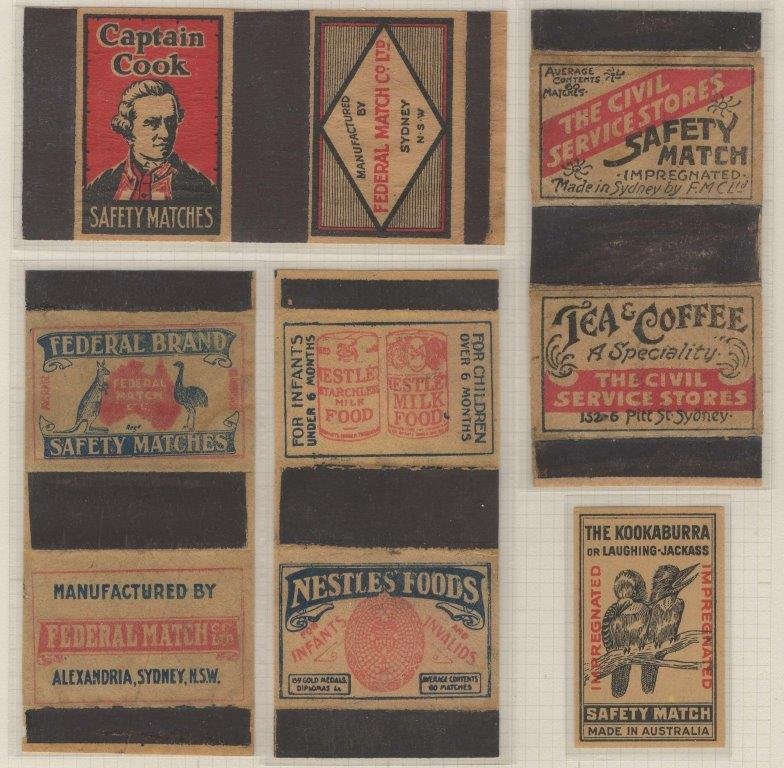 Federal Match Co
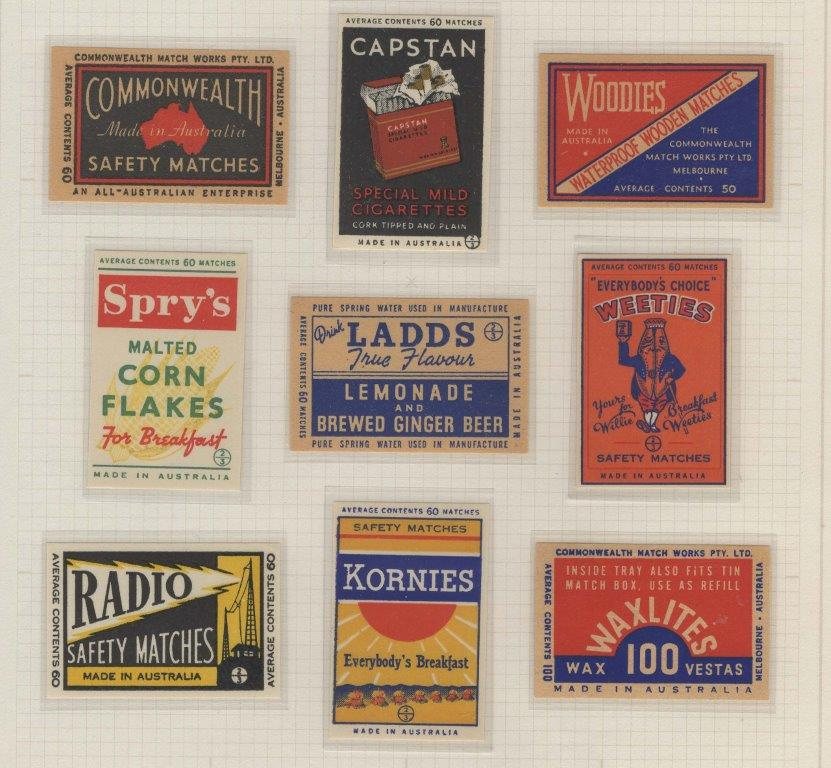 Comonwmealth Match Works
 Bryant & May P/L
Matches (Aust) Limited
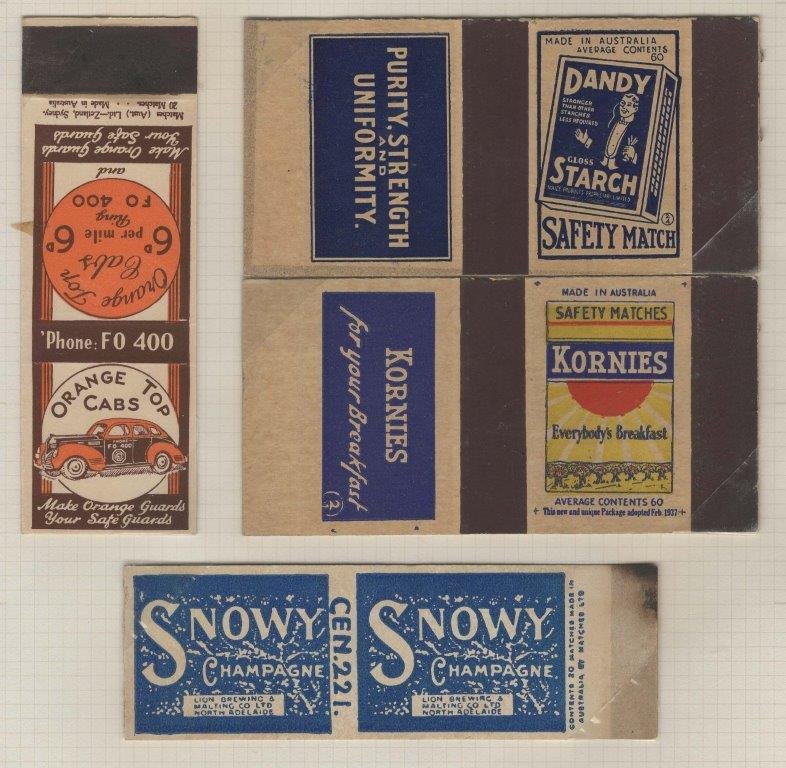
This company operated in NSW from 1927 to 1952 with 100% Australian investment. Amongst their top brands which were mainly skillet types were : Tip-Top, “Household”, Captain Crab, Captain Sardines, Captain Salmon, Test, Pinetree and other advertising brands. The Excise mark for this factory was 2/4. This factory also put out many brands of advertising match booklets, mainly the 20 strike size. This quickly became a cheap advertising medium for hundreds of Australian firms.
Duncan’s
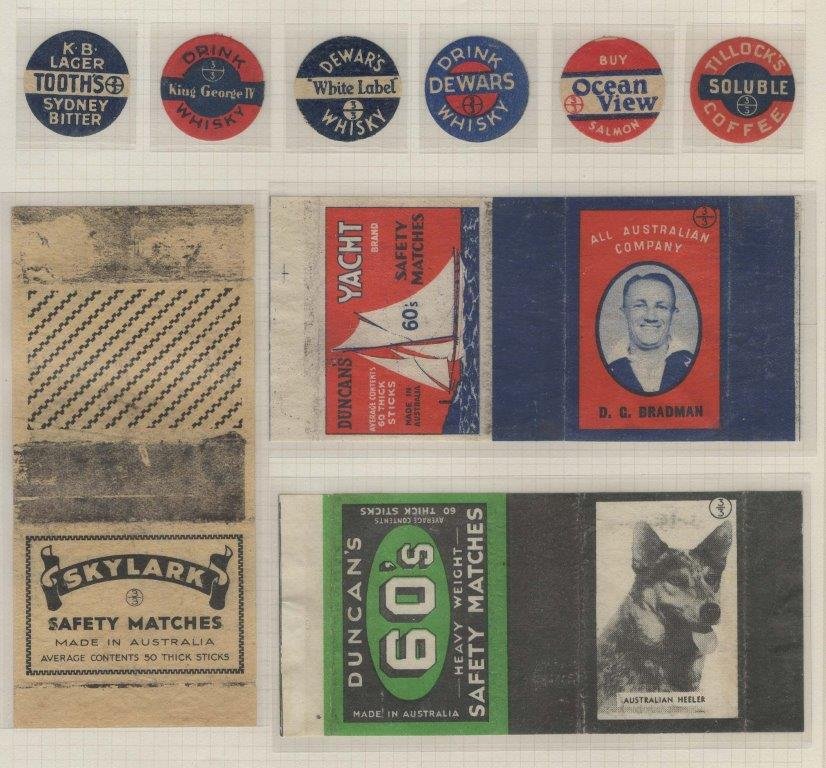
Duncan’s Match Factory at Abbotsford, Victoria, commenced production with wax matches in pill type boxes in 1928, and commenced producing safety matches in 1934. This factory closed down during 1954. Mr Duncan was formerly the manager of the Commonwealth Match Works. The firm’s Excise number was 3/3. All box size labels were ARTB (all round the box) type. Single safety match brands were : Skylark, Carnation and Sportsgirl. There were also sets ranging in size from 6 up to 72 labels depicting the Yacht and 60’s brands.
Safeway Matches Ltd.
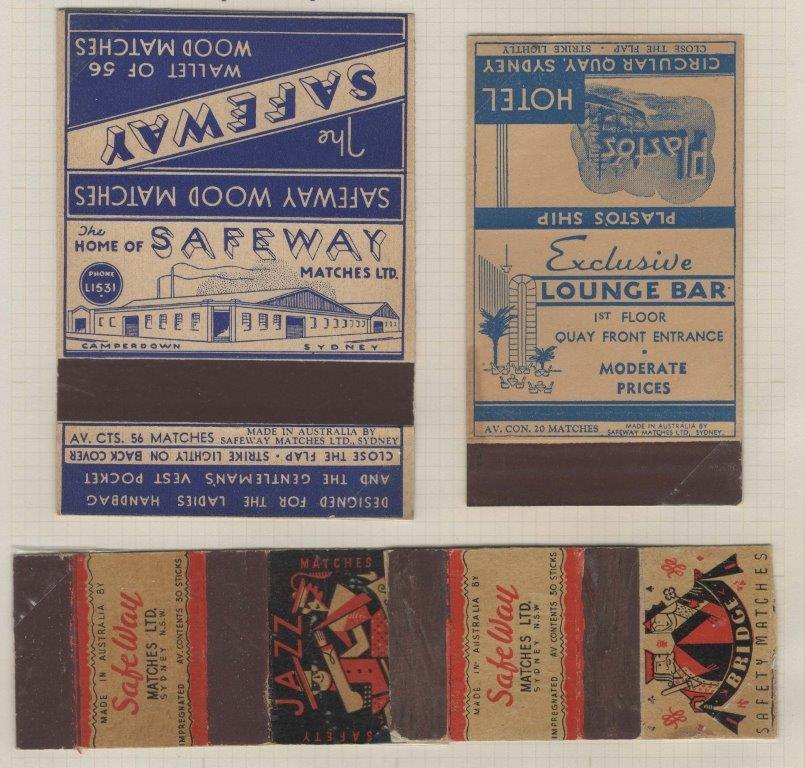
It is reported that this company started business in an upstairs room in Kent Street, Sydney in 1929. At first, they made advertising bookmatches using thin wood for the match sticks and later put out cardboard boxes. As the business was likely to be a serious competitor to “Matches (Aust) Ltd” Mr Buelens, a proprietor of this firm, purchased the “Safeway” business and closed it down. Safeway’s custom Excise number was 3/4. It is not known how many box brands were issued as they were very scarce with only four brands so far known. They are : Sport, Max Factor, Jazz and Bridge.
 Matches (Aust) Ltd
 Duncan's
 Safeway Matches Ltd
West Australian Match Company
In 1931 Bryant & May opened a factory in Perth, Western Australia, bearing the name West Australian Match Co and began marketing matches in June 1932. This company was given the Excise number 15/1. Formerly the Federal Match Co of NSW had controlled the West Australian market but they vacated the scene entirely. From the late 1950s until the mid 1970s most sets of labels issued by Bryant & May in Melbourne were also issued by the W A Match Co. The factory ceased production in February 1986.
Plyfiber Pty Ltd
The Plyfiber Match Company of Arncliffe in Sydney, NSW is recorded as having commenced in 1952, the same year that Matches (Aust) ceased production at Zetland, a fact that may not be coincidental. They only lasted about ten years, closing their doors in 1962. They produced booklets exclusively and mainly in the 20 strike format, although the larger 30 and 40 strike were also manufactured. Many hundreds of firms had booklets made to advertise their products.
Hanna Match Australia P/L
Hanna Match (Australia) Pty Ltd was established by Charles Hanna in 1969 with a factory on Bells Line of Road at North Richmond an outer Sydney suburb. Advertising matches in both the slimline skillet box and the 20/30/40 strike booklets were produced. This factory exists to this day as Australia’s sole survivor of its once flourishing match industry but in name only. Although still importing matches, to survive Hanna has diversified into other advertising products such as pens, coasters, balloons etc.
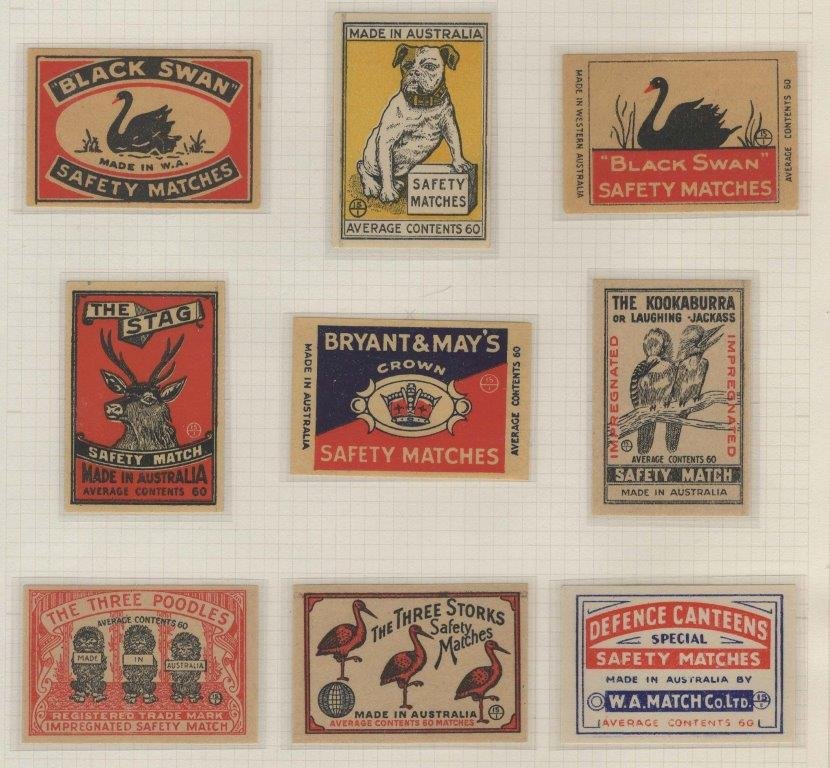 W. A. Match Co.
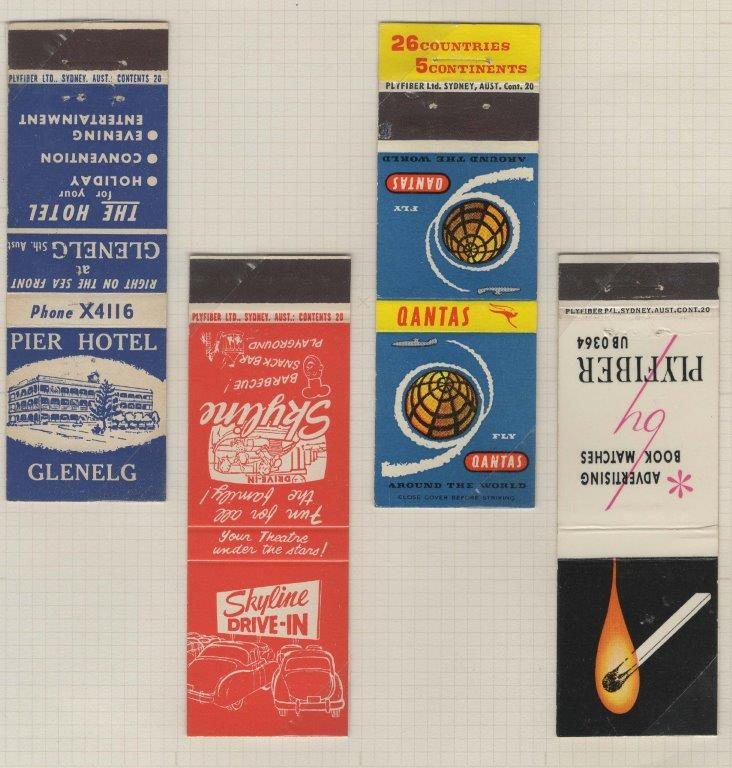 Plyfiber Pty Ltd
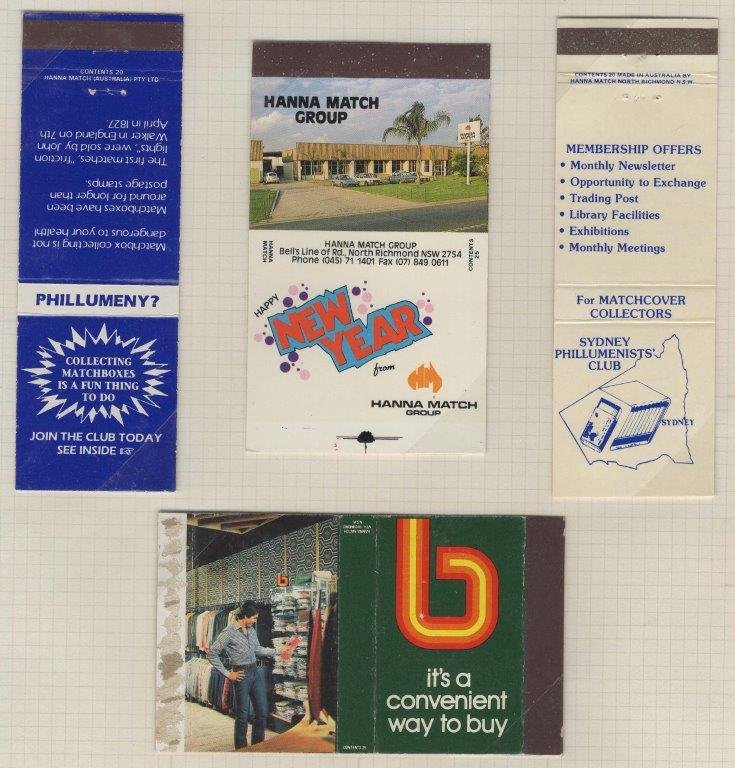 Hanna Match
Australian Match Manufacturing Co
The Australian Match Manufacturing Co Pty Ltd was an Australian owned partnership between Christensen and Thompson Pty Ltd and the Kobe Match Manufacturing Co Pty Ltd of Japan. The factory at Strathpine, Queensland had the Excise mark 10/5 and used Queensland timber (Hoop Pine) for its matches. Operations commenced 21/9/1969 with skillet boxes. The first pilot box issued showed an Aboriginal dancing around a totem pole and was produced in Japan. The basic design for the first set of 48 boxes displayed the map of Australia and an Australian Aboriginal with examples of Australian Aboriginals at their crafts. This factory closed down on 26/3/1976.
Melanesian Match factory
Melanesian Matches is a subsidiary of Bryant & May Pty Ltd of Victoria. This company in Lae, New Guinea, commenced in August 1973 using local timber for the match while labels and wrappers were printed in Melbourne. The boxes are wooden with cardboard trays and matches are the conventional type, not waterproof. The “National” label with the heading of “Brymay, P N G” were produced and marketed to test the market prior to commencement of production in P N G. Thereafter, the name “Brymay” disappeared from the scene.
Farewell, Australian Match Industry
On 28 October 1988 Bryant & May, Melbourne closed its factory at 560 Church Street, Richmond thus putting the last significant nail in the coffin of the Australian Match Industry. Wilkinson Sword had owned them since 1973 and were themselves taken over by Swedish Match in 1987. Swedish Match was in the process of rationalising their worldwide match production and decided to close down the Australian operations. However, they continue to supply the Australian market with “Redheads” matches from Swedish and other European factories.
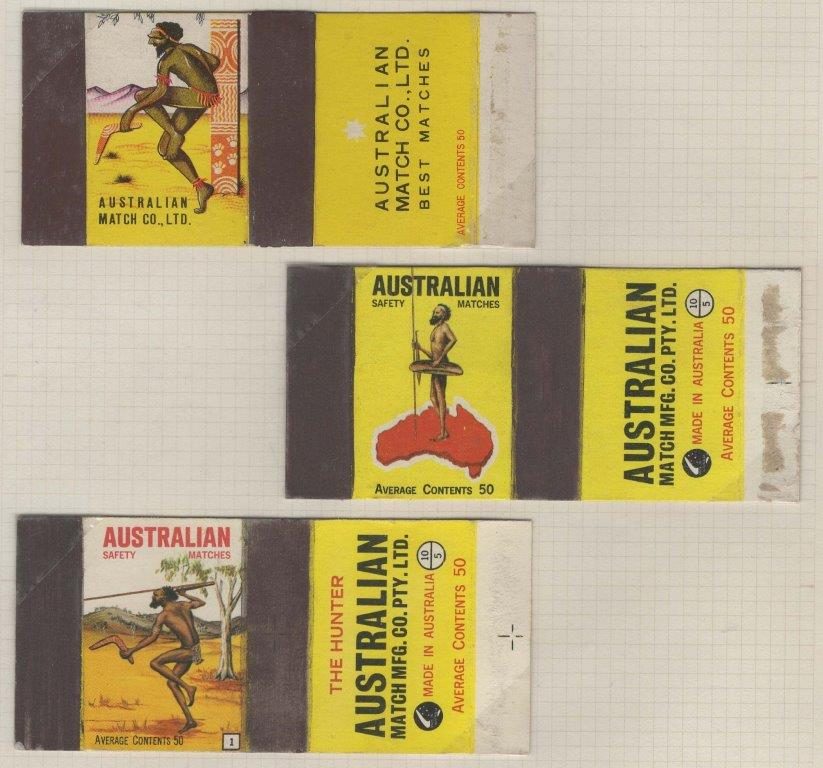 Australian Match Manufacturing Co.
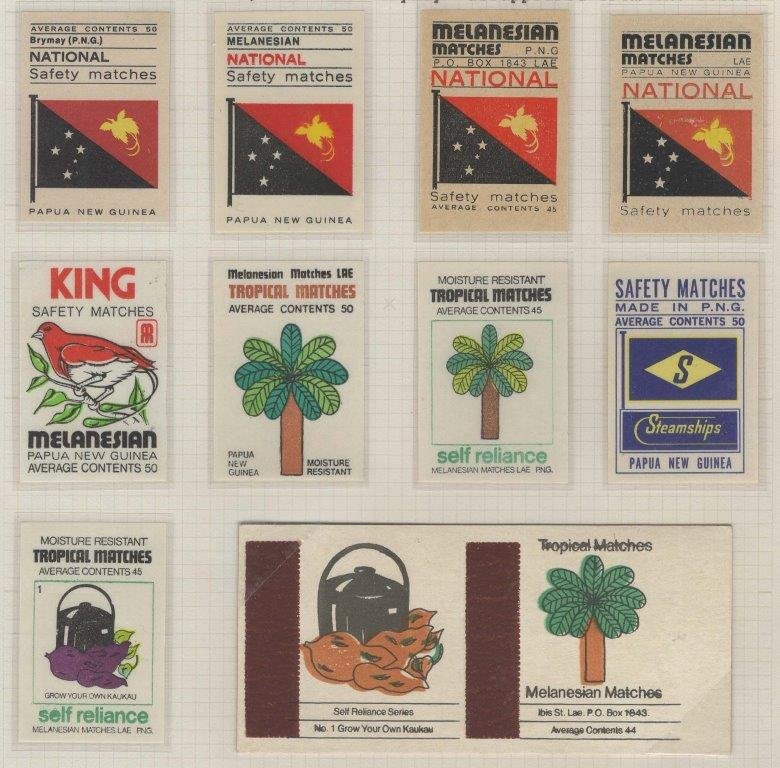 Melanesian Match Factory
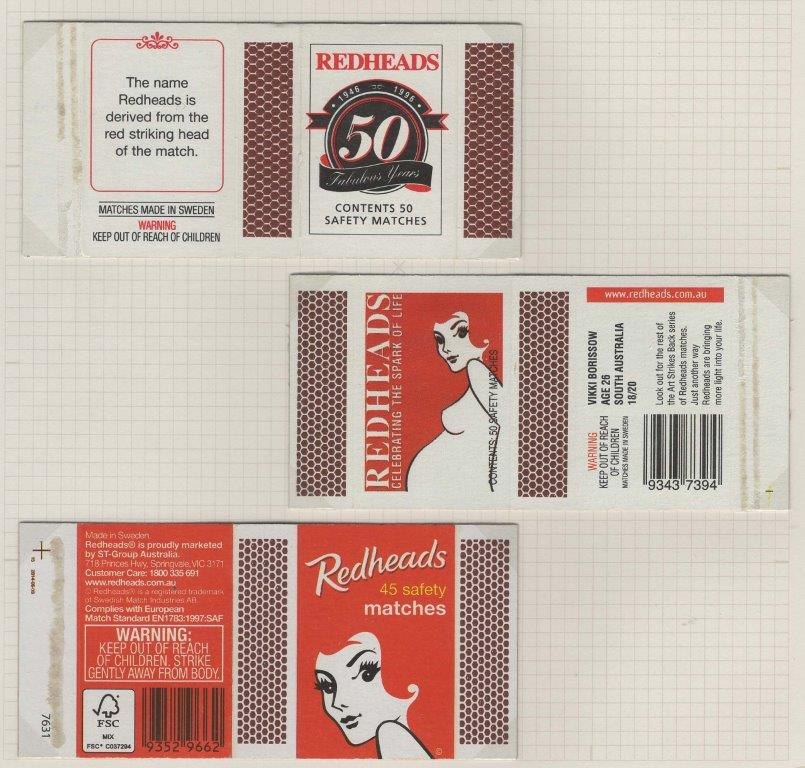 Farewell

Bonus exhibit : Pillbox tops found on the Australian market
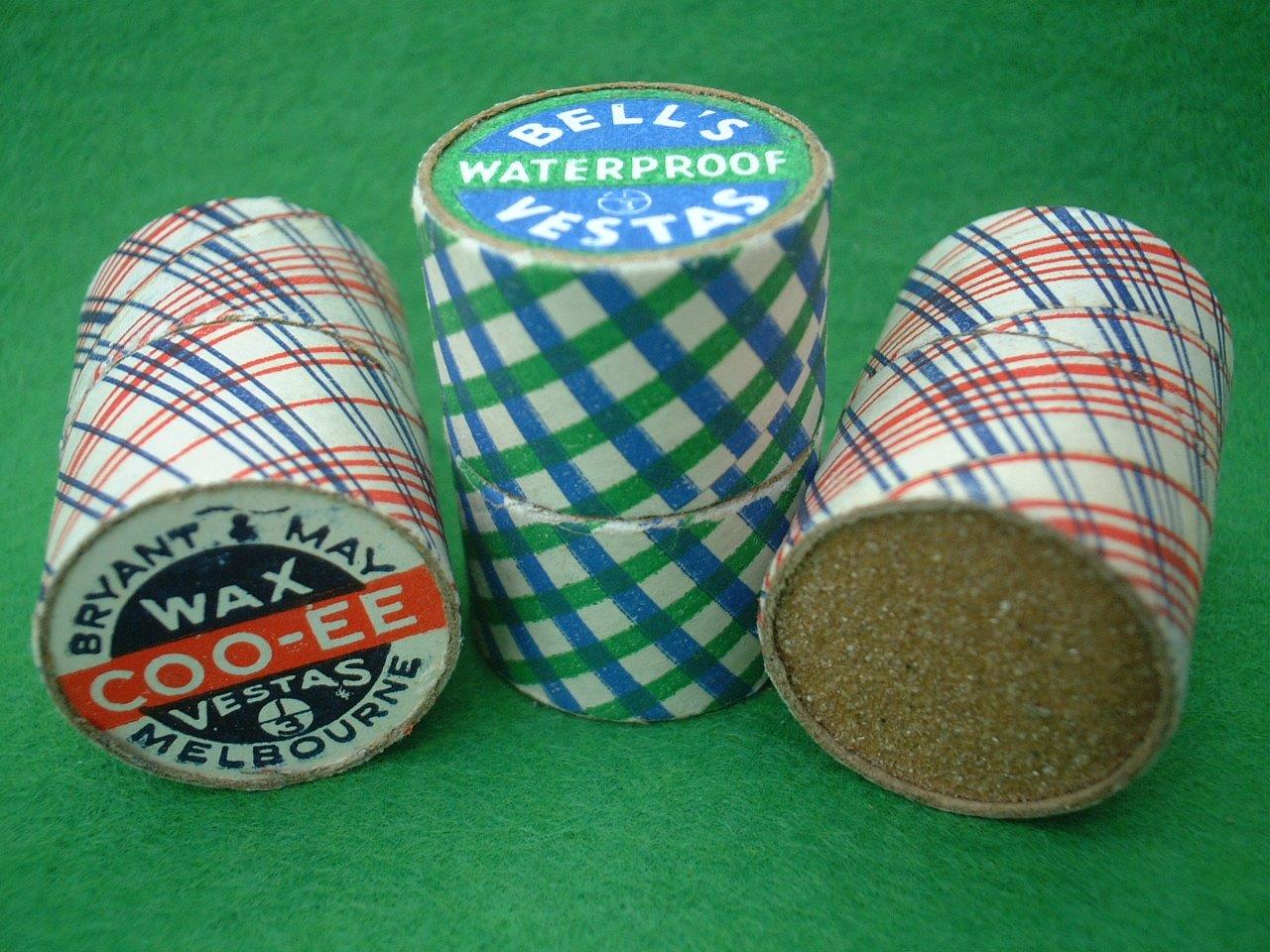
Little circular labels affixed to the top of round plaid cylinders that housed wax vesta matches (and usually had a sandpaper coated bottom striking surface), became known as Pillboxes.
Wax vesta matches also came in tins plus some matchboxes but this exhibit deals exclusively with the pillbox labels.
Manufacture of wax vestas in pillbox containers were produced by a number of companies in the United Kingdom, France, Belgium and Italy as well as a number of factories in Victoria, Australia plus two others in New Zealand.
Interestingly, they were predominantly destined for the Australian market and to a much lesser extent the New Zealand market. Wax vesta matches were at the time in high demand compared to wooden safety matches.
Empty pillbox containers have been found containing small seashells and coins. It is reputed that the wealthy kept gold sovereigns in them and miners, their small gold nuggets.
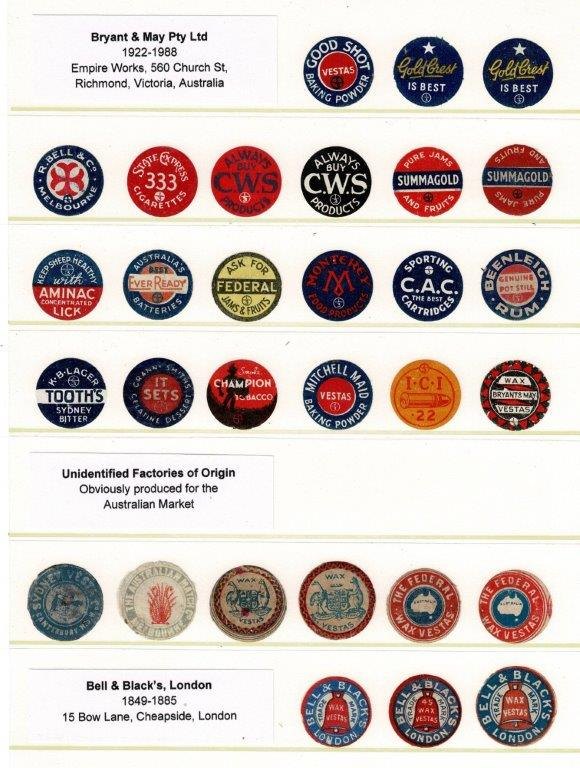 Pillbox Tops page 1
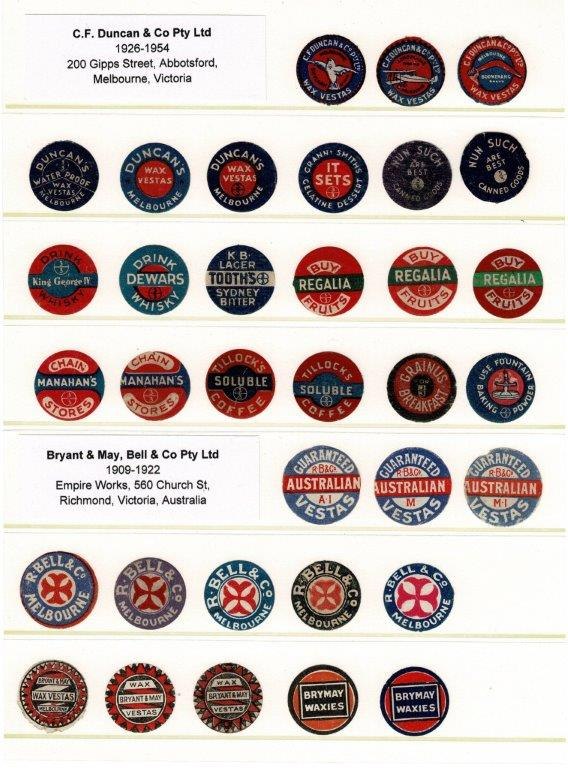 Pillbox Tops page 2
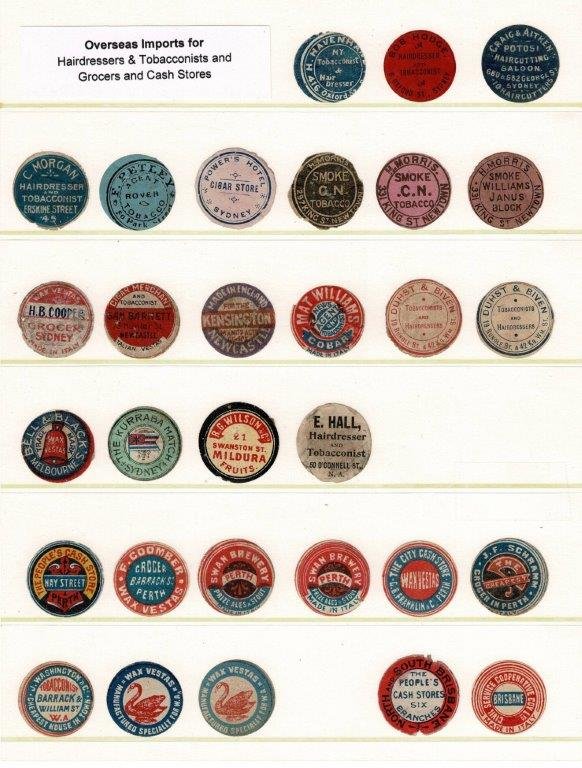 Pillbox Tops page 3
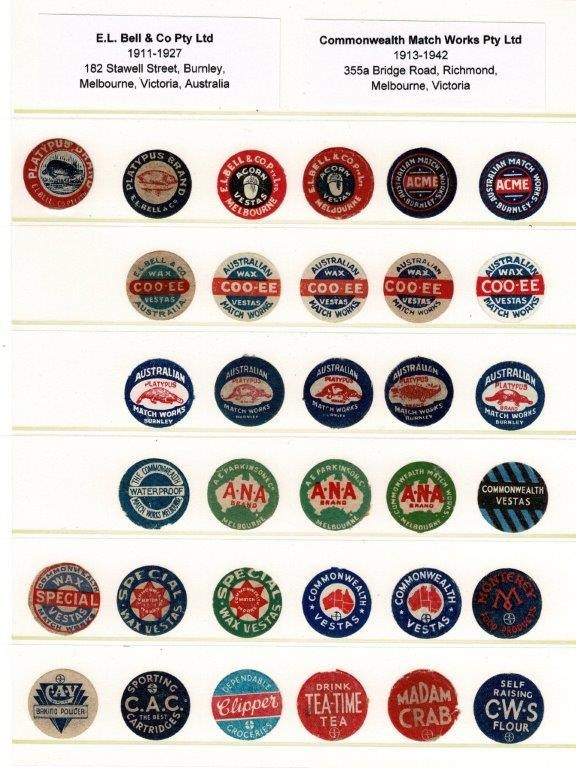 Pillbox Tops page 4
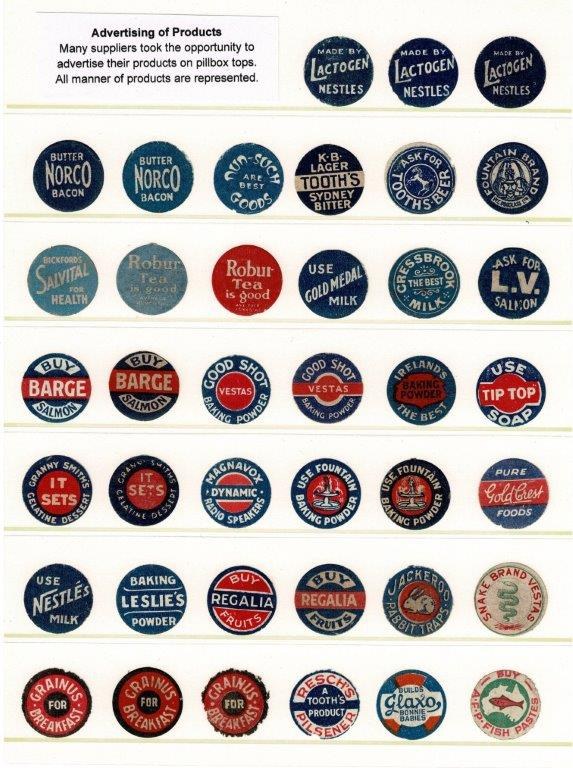 Pillbox Tops page 5
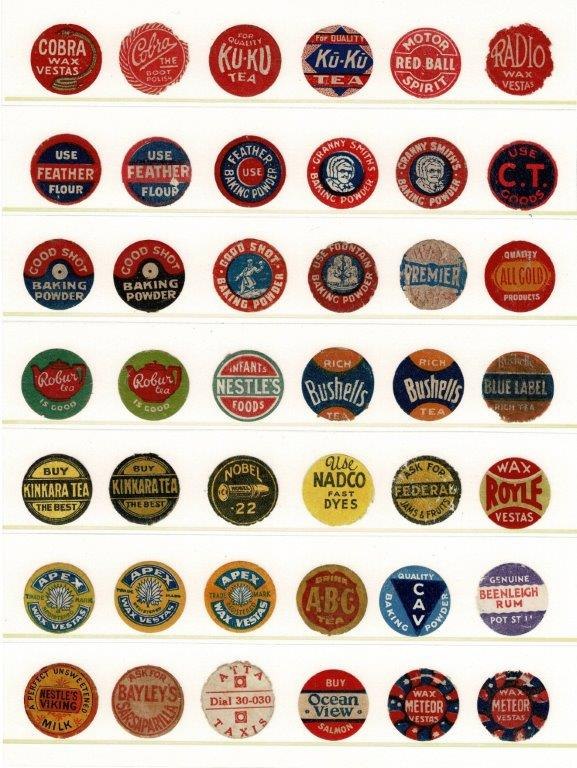 Pillbox Tops page 6
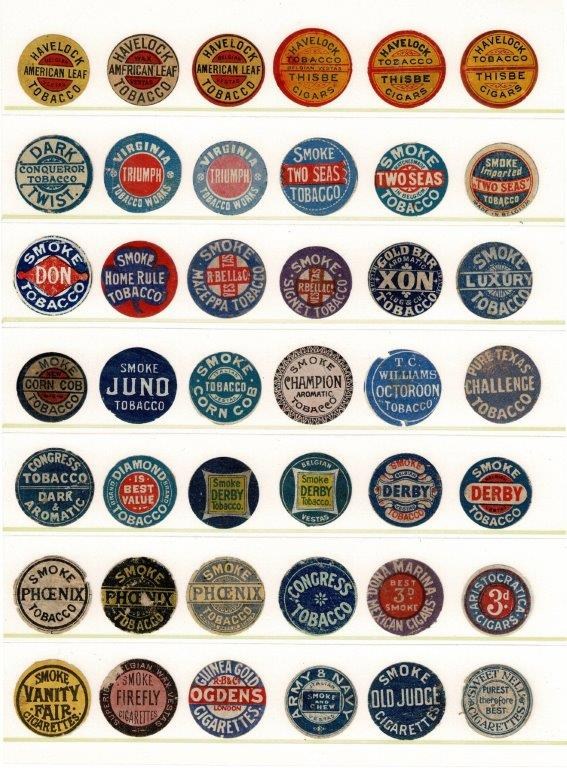 Pillbox Tops page 7
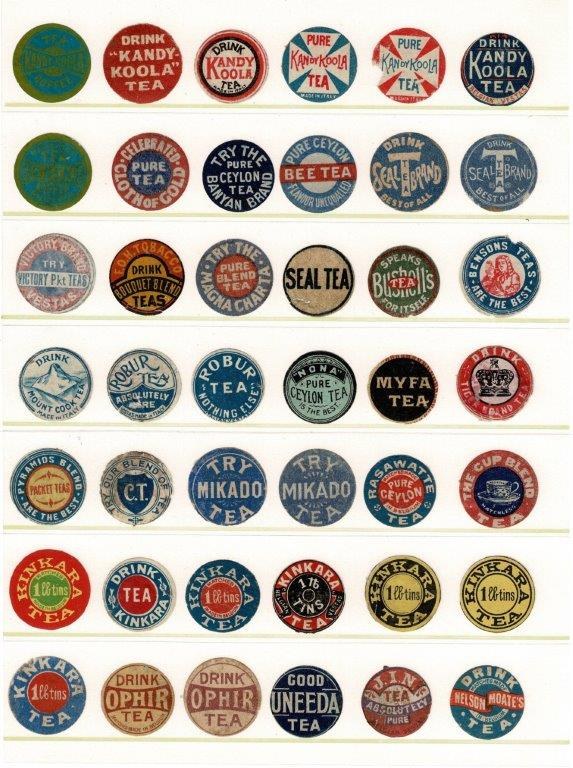 Pillbox Tops page 8
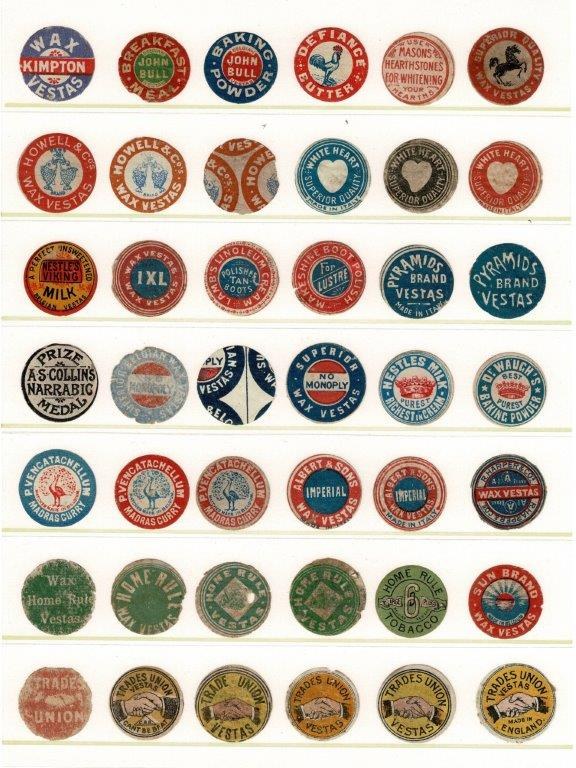 Pillbox Tops page 9