Costa Rica match industry

Exhibitor : Fernán Pacheco
Central America consists of seven countries: Belize, Costa Rica, El Salvador, Guatemala, Honduras, Nicaragua and Panama. But, here we will concentrate on Costa Rica. San José is the capital and largest city of Costa Rica. It is situated near the centre of the country and I will also explain that the City of Heredia is situated 10 kilometres to the north.
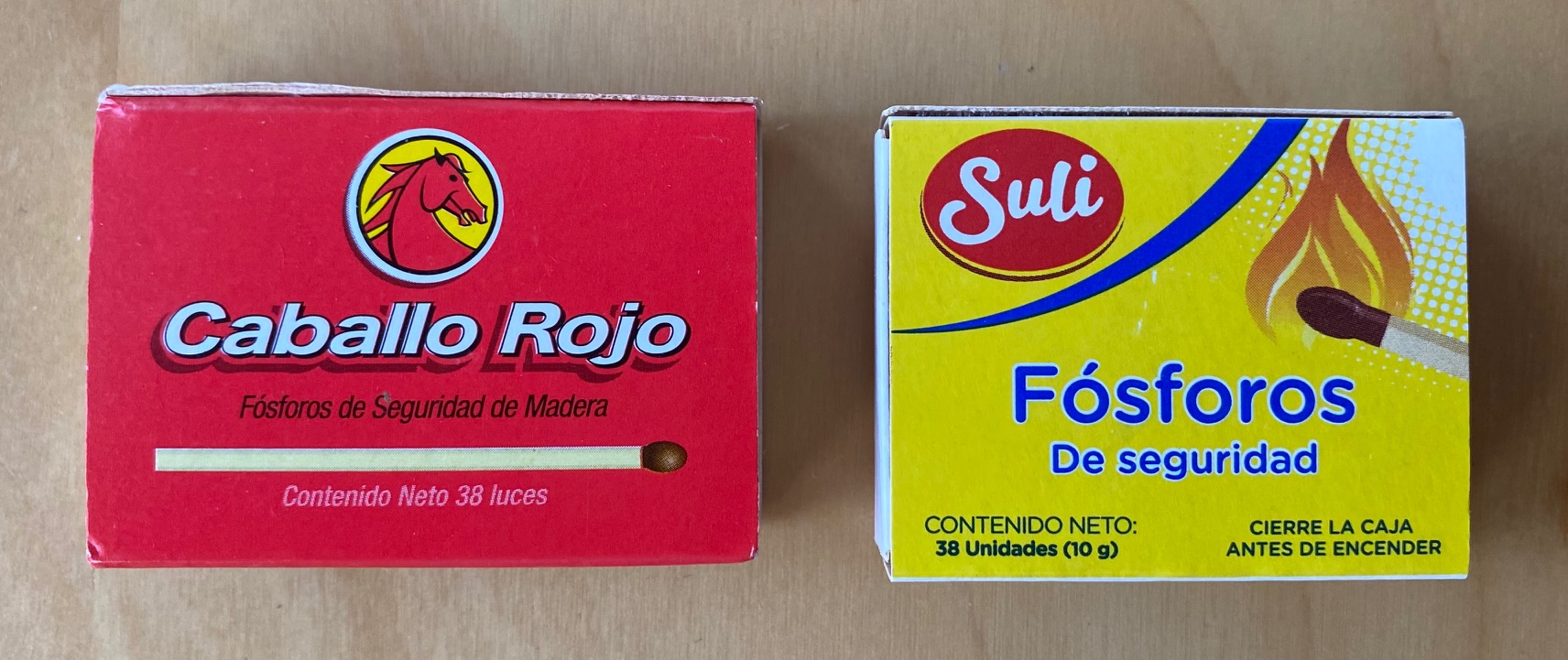
I estimate that it may be 30 years since matches were last manufactured in Costa Rica. Currently they are imported from Guatemala (Fosforera Centroamericana, S.A.), from India, Brazil…
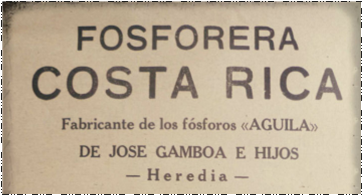
There is very little information on the manufacture of matches in Costa Rica, but without a doubt it was dominated by Fosforera Costa Rica.
I am quite sure that I am the only person that collects matchboxes and their labels in Costa Rica and finding items from my own country has been extremely difficult. Most that I have I bought in Argentina. What I do have very complete are the match tax stamps of Costa Rica, but not one on a box. Older people tell me that they used to collect them when they were young, but everything ended in the trash.
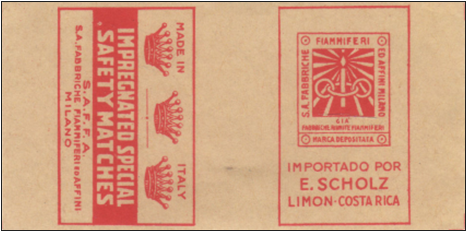
Before 1940
Before 1940, Costa Rica imported matches from Europe, probably, like the rest of Central America, from Sweden. It is easy to find many of these imported old labels for El Salvador and Guatemala markets, but from Costa Rica I have only been able to find one which is from Italy (SAFFA Milano).
The first match factory in Costa Rica, 1935
An early report can be found in the newspaper El Diario de Costa Rica of May 9, 1935, page 7, where it was announced: “MATCH FACTORY WAS OPENED. The factory opened on the 6th of this month by the industrialists Jaime Sweilbelmann and Oscar Campos. We were invited by said gentlemen and we found countless young ladies working. It is a Costa Rican company and it is expected that it will result in manageable results due to the quality of the article.”
What is incredible is that the article does not mention the name of the factory or the brand, but certainly this preceded any of the ones that we know and very likely the first factory that operated in Costa Rica.
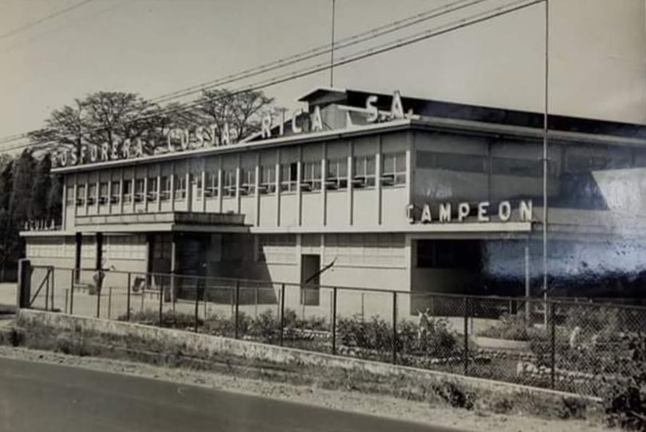
Fosforera Costa Rica, 1940
In 1939 when the world war conflict caused a shortage of matches in Costa Rica (which were imported from northern Europe), Don José founded a small chip box factory in Heredia, which, thanks to its inventiveness and mechanical skill, shortly afterwards converted into a match factory, after many ingenious chemical experiments. Thus was born in 1940 the ‘Aguila Matches Factory’ which in the following years, in partnership with Mr. Manuel de Mendiola, became ‘Fosforera Costa Rica‘.
In a forestry study related to the wood for the production of matches it tells us, that match production began in 1941 when Carlos Collado imported the equipment. For unknown reasons he abandoned his machinery and projects. Later, José Gamboa, thanks to his knowledge in mechanics, started a small industry in his house, using old vehicle parts. The wood (Mastate, Jaul) he brought from the mountains of Heredia, about 3 kilometres away from his factory and from San Isidro de Coronado, in San José. The newly created company was called Gamboa y Cía. One year later he began to see his effort bear fruit and in 1942 purchased the equipment imported by Mr. Collado. Production was at this time of 15,000 boxes per day and the consumption of 25,000 per day. A new law for protection of national industry helped to the strengthening of this industry.
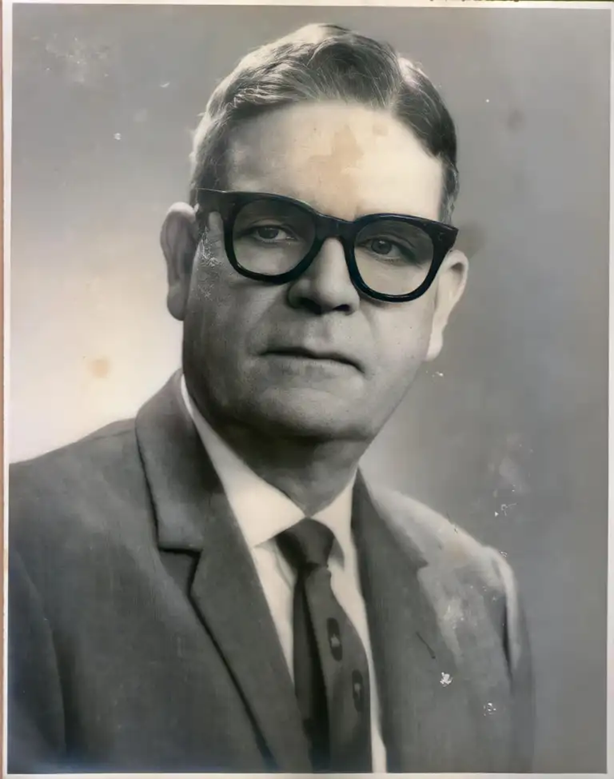
The following information was obtained from the Internet regarding the founder of Fosforera Costa Rica:
- The dream of a man who little by little came true, his match factory was an emblem of the incipient modernization of Costa Rica from the first half of the 20th century. José “Chepe” Gamboa Alvarado, farmer, miner, chemist, mechanic, merchant, industrialist, radio amateur, philanthropist, builder, turner, engineer, designer and many other things. Chepe was a working man who gave work to all of Heredia, an entrepreneur like no other. Through his own effort and ingenuity, he managed to make his dream a reality. His “workshop” (factory) produced purely Costa Rican matches in the times when almost everything was imported. His great project managed to industrialize the province of Heredia; before him, the old industry in Heredia was mostly made up of cigar, sugar and coffee production. His factory made 90% of the matches that were sold in Costa Rica.
More factories, 1949
The newspaper La Tribunal 9th December 1946 indicates that by that year the annual production was 225,000 “paquetones” (big packets) of which 200,000 corresponded to Fosforera Costa Rica. Fosforera Continental was the second in production output.
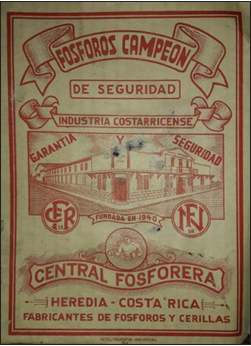
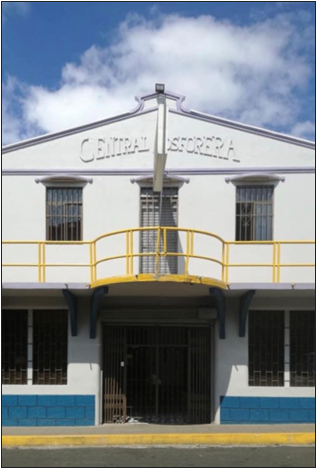
By 1949 four factories existed: Central Fosforera, then called Fosforera Costa Rica, Fosforera Continental, Fosforera Trebol and Caribbean Match Co. Fosforera Costa Rica always dominated the market which seems to have been the determining factor for the poor stability of the other factories.
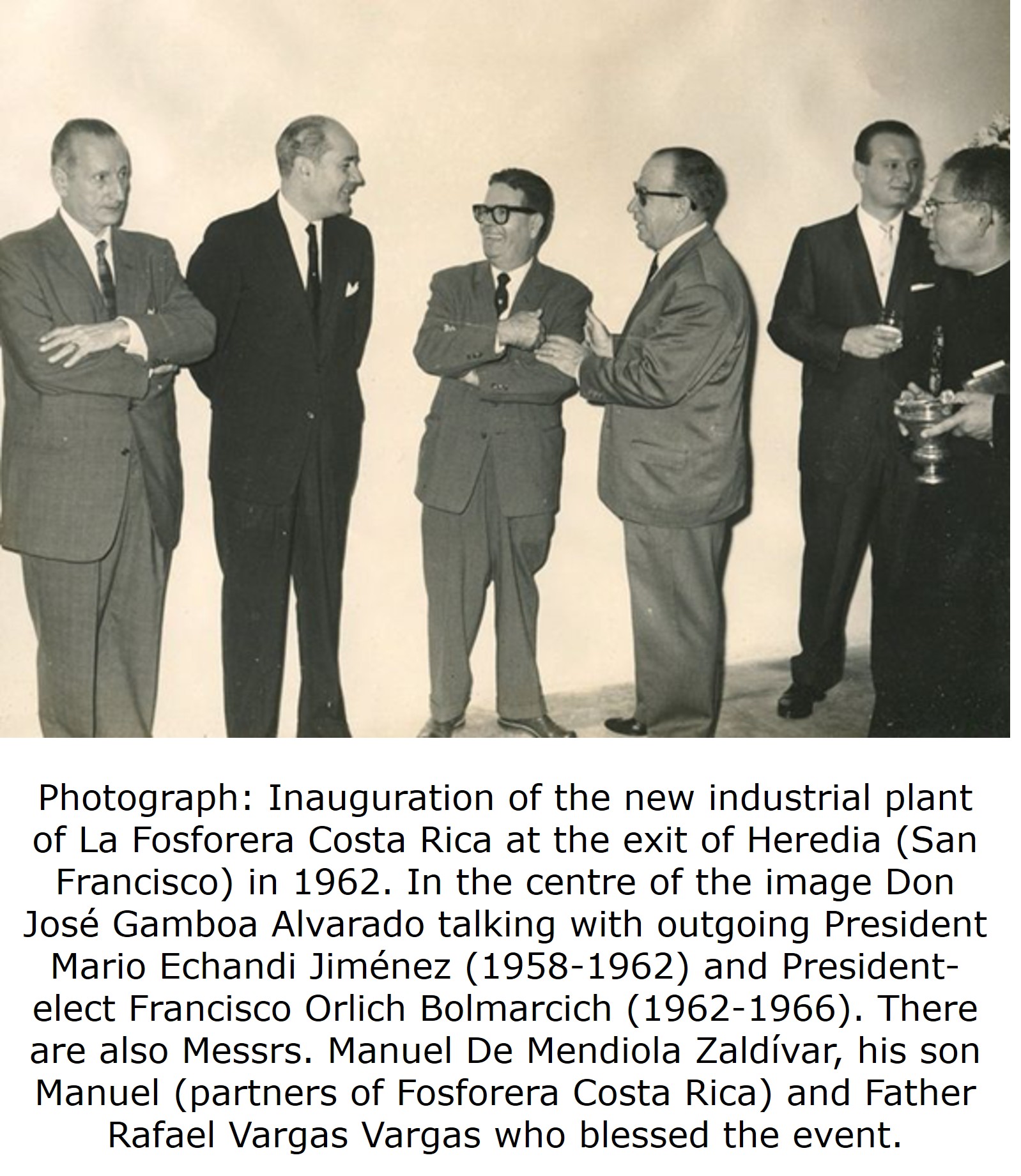
During the second half of the 20th century matches were 100% “Ticos”. To explain, Costa Ricans are proud of calling themselves Ticos and Ticas. The female Costa Ricans are Ticas. The males are Ticos. The general population is Tico.
During that time, Costa Rica began for the first time in its history to be self-sufficient in some goods; many things that were already manufactured in the country were stopped being imported; Costa Rican workforce became known worldwide for its quality. The Gamboa matches largely financed, thanks to tax on matches, the Carrillos de Poas Electric Plant, with which the electrification of Heredia was modernized and allowed the industrialization of the province. From that moment there would be electric power 110 volt constant, and 220 volt three phase. The Carrillos de Poas Power Plant was the forge of many engineers such as Jorge Manuel Dengo and Carlos Cadet who, in their construction work, “put their nails down” and then based on that experience, they constituted the government’s electric supplying company (a monopoly) “Instituto Costarricense de Electricidad” (ICE).
End of the national industry
But everything ended, the 21st century with globalization took it away. For the new theories of globalization and the macro economy of the universities, the clear vision of these great forgers became obsolete; it left more money to import than to produce. The manufacture of matches went to Honduras, where there was cheaper labour and many people were left without work, we went back buying imported products. Today the last building of the “Fosforera Costa Rica” disappears brick by brick at the exit of Heredia (San Francisco), but the memory of the industrial Costa Rica and men like José “Chepe” Gamboa will endure in the contemporary history of the country.
A selection of Costa Rican matchbox labels
The gallery below shows labels from four factories : Fosforera Costa Rica/Central Fosforera, Fosforera Continental, Fosforera Trebol and Juan Navarro.
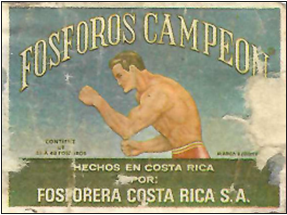
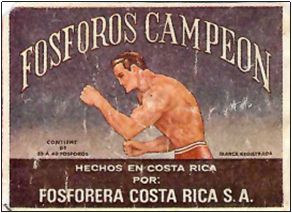
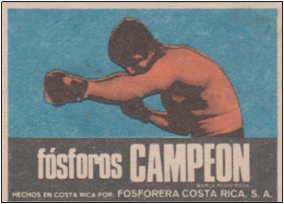
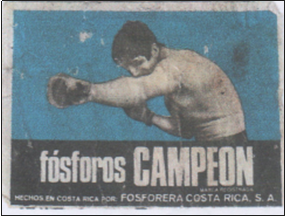
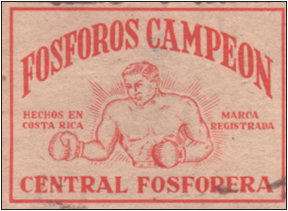
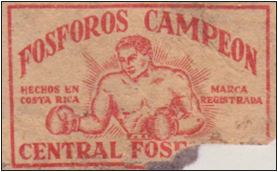
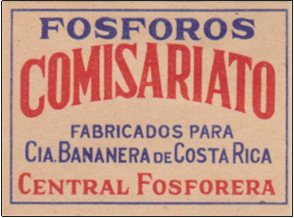
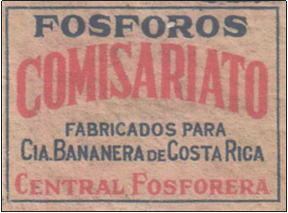
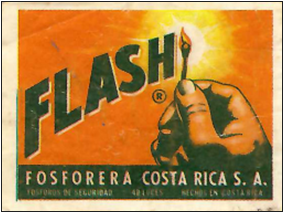
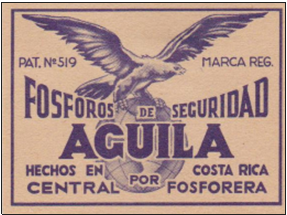
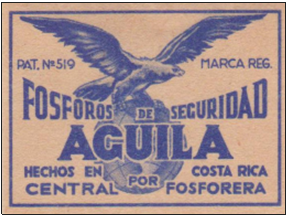
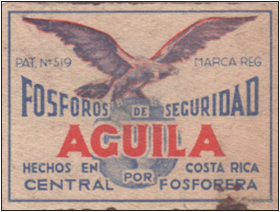
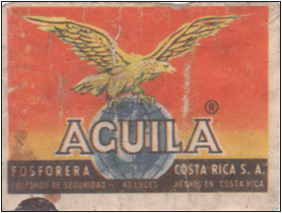
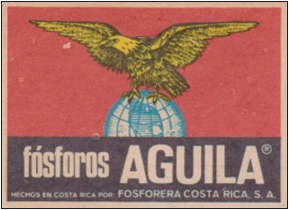
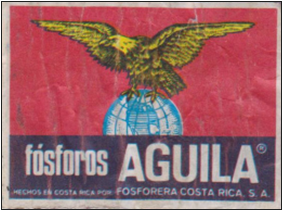
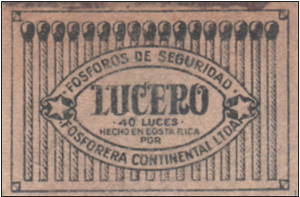
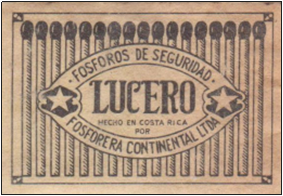
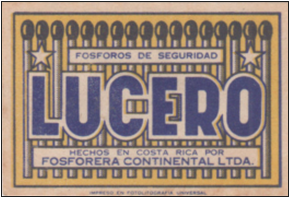
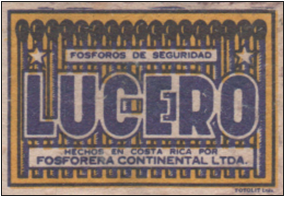
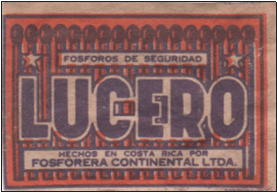
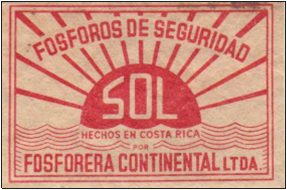
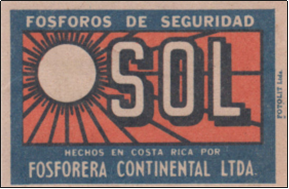
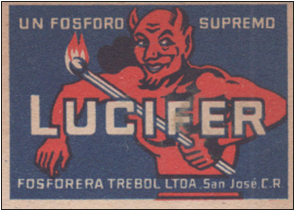
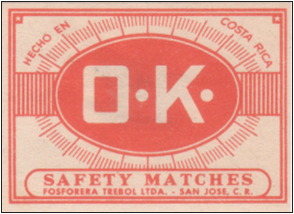
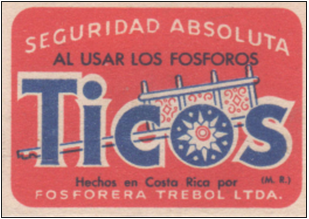
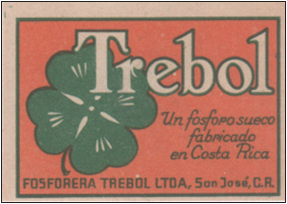
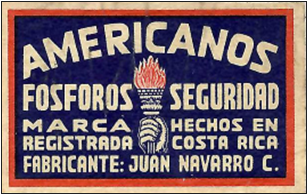
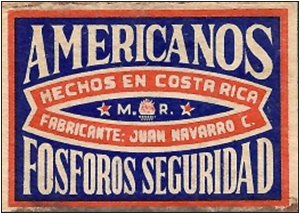
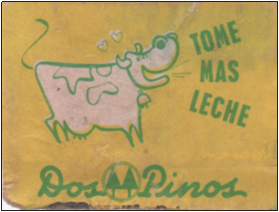
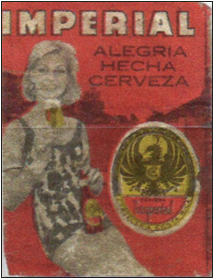
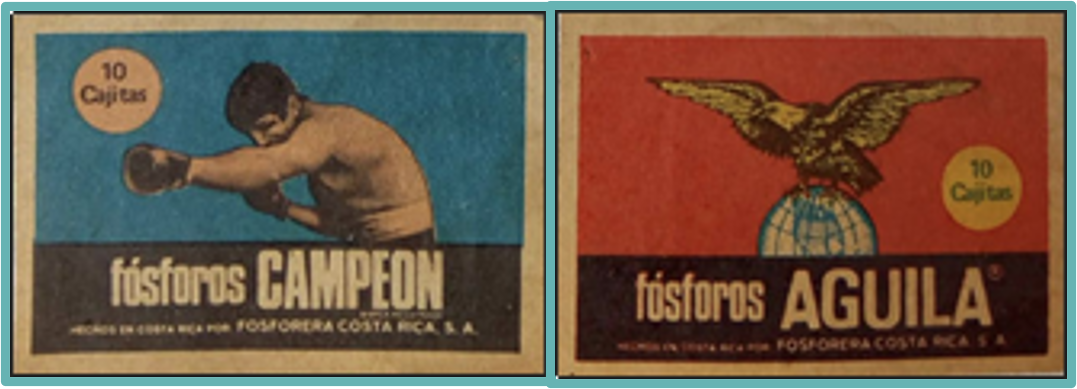
No Costa Rican packet labels have been discovered in the collections examined. However images of the two labels shown on the right displaying ’10 Cajitas’ in a circle have been seen on the internet. I think they are legitimate labels for packages of 10 boxes. The size of these labels is not known.
Swedish matches in Costa Rica
Swedish match factory records show that before 1940 Swedish matches were supplied into Costa Rica via an agent in Guatemala, they do not appear to have ever been directly imported into Costa Rica. However, none of these imported matchbox labels stated Costa Rica on them.
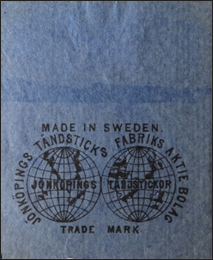
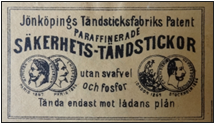
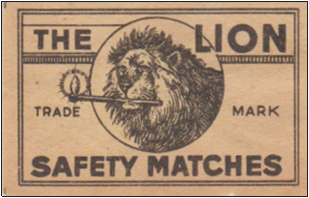
The Swedish labels include the Jönköping original (various order numbers from 1906-1946), ‘Three Stars’ (in 1920 and 1935), ‘The Comet’ (1921), ‘The Lion’ (in 1921), ‘The Vulcan Assurance Safety Match’ (1923), ‘Three Towers’ (1924), “Maya” (1931) and “Guatemala girl” (1931) among others. These factory records include order numbers, dates and a copy of each label.
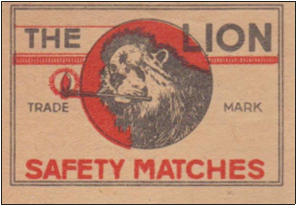
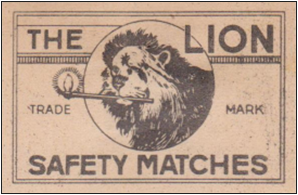
The ‘Lion’ labels shown below are not the same label design as included in these factory records, which shows a lion in red, in the standing position. In fact, I have not been able to establish for certain that the ‘The Lion’ labels as shown below were circulated in Costa Rica. The only evidence found is that one was included in the Costa Rica section of the ‘Matchbox Label Collectors Encyclopaedia’ published in 1984 by J H Luker on page 380. Other collectors believe they were circulated in Honduras.
Article first published in Match Label News, December 2020
Click here to return to the Exhibition Catalogue