Japanese match industry

Exhibitor : Takeshi Yokomizo
In 1826, when John Walker invented the match in England, Japan was under the rule of the Edo
Shogunate and was still under a policy of national isolation that cut off contact with the outside
world. Japan’s unique culture flourished, but towards the end of the Edo Period, foreign ships
began to arrive, and pressure from Europe and the US increased. The arrival of an American
warship led to the country opening up in 1854 (Kaei 7).
The opening of Japan to diplomacy and trade led to rapid changes in politics, society, economy
and many other areas, and subsequently to the collapse of the feudal domain system and the Meiji
Restoration, which was a series of political and social changes that took place during the second half of the 19th century, when the Edo shogunate and feudal domain system collapsed and a modern unified nation was formed, along with the Meiji government that supported it.
When the Meiji Government replaced the Edo Shogunate, it prompted modernisation policies and rapidly Westernised lifestyles and social systems.
 “Locomotive” registered in 1905 (Meiji 38) by Kichiemon Kobayashi
 “Gas lamp” registered in 1906 (Meiji 39) by Chobei Takai, Koshinsha
 “Bicycle” registered in 1906 (Meiji 39) by Ryosuisha
Compared to the traditional flintlock method, matches were far more convenient and quickly became popular despite the high import cost. The import figure of matches ballooned 900 times from the initial amount in 1869 within 7 years.
The domestic production of matches began when Makoto Shimizu, who was studying in France on a government scholarship, was told that domestic match production is necessary to help correct Japan’s trade imbalance. He quickly learned manufacturing techniques at a government run match factory and returned to Japan. In 1875 (Meiji 8), he founded a full-scale match factory in Tokyo called “Shinsuisha”.
Five years after the establishment, the company managed to meet domestic demand and exports were also going well, mainly to Shanghai. This was due to the fact that the products were not only of excellent quality, but also at half the price of imported products.
At the same time as founding Shinsuisha, Shizmizu disclosed his manufacturing techniques widely and encouraged samurai who lost their jobs following the collapse of the Edo Shogunate to manufacture matches. He also discouraged the introduction of machinery and employed women and children of samurai-class. This was a samurai-vocational program that received a large amount of financial support from the Meiji government. Match manufacturing was encouraged as a business in line with national policies such as preventing imports, promoting domestic production, and providing relief to the poor.
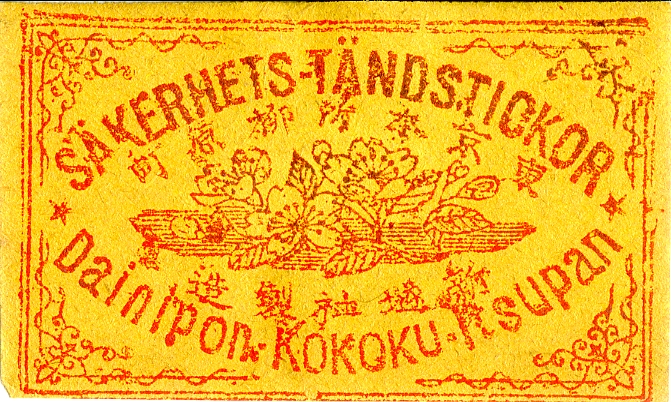
“Cherry Blossom Branch” circa 1877 (Meiji 10) by Shinsuisha, which is the first match produced in Japan. The design featured Japan’s national flower and was modelled on existing Swedish matches. “Säkerhets-Tändstickor” is Swedish for “safety match”, the lower text is the address and company name and it means “Great Japan homeland, General” which might indicate its domestic use.
Although the production took the form of factories, it was possible to adopt a handicraft-style division of labour, from making splints to packing and labelling. As a result, most match production was carried out by small businesses that relied heavily on child labour and homework by women of poor families. By the end of Meiji-era, the match industry had become a major export industry, second only to raw silk, cotton thread and tea. Japanese match was exported to many parts of the world, primarily to China, Korea and India. The industry consisted of many small businesses that received capital from Chinese merchants based in Kobe.
However, in 1879 (Meiji 12), Yoshimoto Honda founded “Meijisha” in Kobe, and the following year Sadajiro Inoue and Benzo Takigawa founded “Koekisha” and “Seisuisha” respectively. All of them became leading match manufacturers in Japan with their own capital.
According to statistics from 1892 (Meiji 25), exports accounted for 70 – 90% of match production in Japan, and 76% of that was controlled by Chinese merchants. In the late Meiji period, Japan surpassed Sweden to dominate the Asian market, and became one of the three powerhouses of the match industry, along with Sweden and the US.
Match exports and trademarks
At the time of the establishment, match boxes manufactured by Shinsuisha featured cherry blossoms, a symbol of Japan. It is believed that the printing was done using a woodblock set in a letterpress machine and print in one colour of oil-based ink. It required the skill to carve the same design onto a single wooden block at full size, for example, for 20 match boxes. This sophisticated carving technique must have been easy for woodcarvers of the time, said to have descended from Ukiyo-e artists.
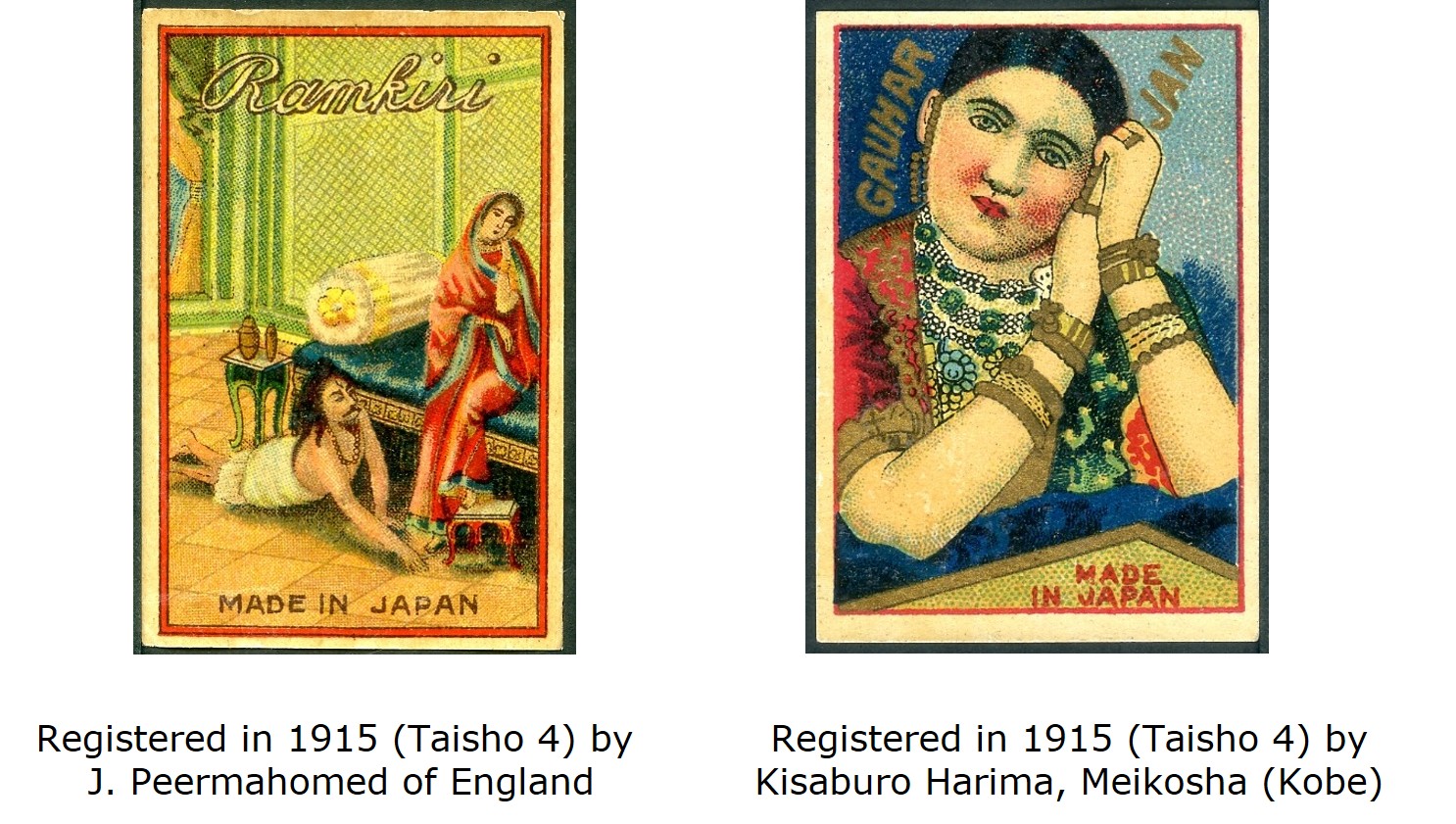
As exports became more popular, traders began to demand designs that suited the culture of the export destinations. Such as auspicious designs for Hong Kong and China, and designs featuring sacred elephants and Indian mythology for India. Japanese artists skilfully responded to these demands, and a huge number of designs were circulated as trademarks.
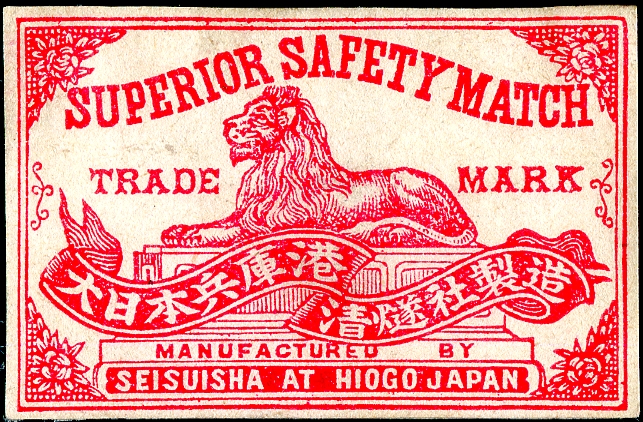
“Sleeping Lion” is the first registered trademark, by Benzo Takigawa of Seisuisha (Kobe) was the first label in Japan to be registered on the 20th June 1885 (Meiji 18). The design has a precedent in Sweden.
The quality of matches was distinguished by trademarks and highly rated trademarks saw increased sales but imitations quickly became rampant. Meanwhile, a trademark registration system was put in effect in 1884 (Meiji 17) and by 1905 (Meiji 38), 1,925 labels had been registered. And by 1914 (Taisho 3), which is considered the golden age of exports, 4.500 match labels had been registered.
Electroplate
As export grew, there was a demand for rapid and large-volume printing of labels, and printing companies specialising in labels were established. Printing technology also changed from woodblock printing to the invention of “electroplate”, which reproduces many identical copper relief plates from a single master plate using electro-printing. It made possible to print multiple colours with high precision, which supported the export of matches.
 Registered in 1890 (Meiji 23) by Benzo Takigawa, Seisuisha (Kobe). Export to Southeast Asian countries and Hong Kong
 Registered in 1893 (Meiji 26) by Benzo Takigawa, Seisuisha (Kobe). Export to Southeast Asian countries and Hong Kong
The appearance of the trademark was especially important for export matches. The company faced competition mainly from Sweden’s Match-trust in its export markets. The situation escalated for exports to India. By 1884-1885 (Meiji 17-18), lithographic printing which allowed for the expression of shades of light and dark became popular, and luxurious labels using multi-coloured lithographs (chromolithographs) could be seen.
Later, match factories were also established in China and India, and exports which peaked around 1919 (Taisho 8) gradually declined thereafter. Offset printing became the mainstream for label printing, and around 1955 (Showa 30), boxes also changed from wooden to cardboard and trademarks began to be printed directly on the boxes.
Lithography utilises the repulsive properties of water and oil, allowing ink to adhere only to areas of a lithographic stone (Limestone) that have been painted with oil-based ink, and then transferred to paper. This makes it possible to overlay multiple colours for precise colour printing.
Advertisement matches and Tobacco matches
Within Japan’s domestic market, in addition to trademark that became household staples, match labels were sometimes used as propaganda tool depicting the times and social conditions such as Meiji Restoration, the Sino-Japanese War (1894 – 1895), Russo-Japanese War (1904 – 1905), and the Pacific War (1941 – 1945) for example.
Meanwhile, matches for advertisement flourished from the end of the Taisho era through the Shōwa era. They were widely used as an inexpensive advertising medium by all kinds of businesses, not only by large and long-established companies but also by private shops and public institutions. Before the Second World War, advertising matches accounted for 20% of domestic consumption but by 1965 (Showa 40), this had reached 50%.
Most of advertisement matches were for cigarettes and were flat with half the thickness of the usual match box. They were easy to carry and expected to increase chances to be picked up by many people.
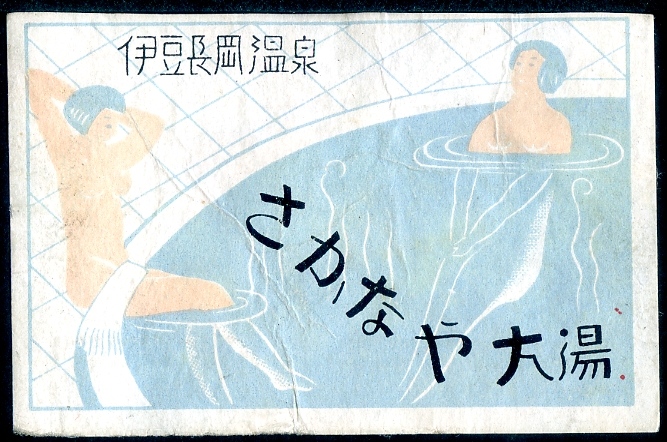 Hot spring (Izu Nagaoka Onsen)
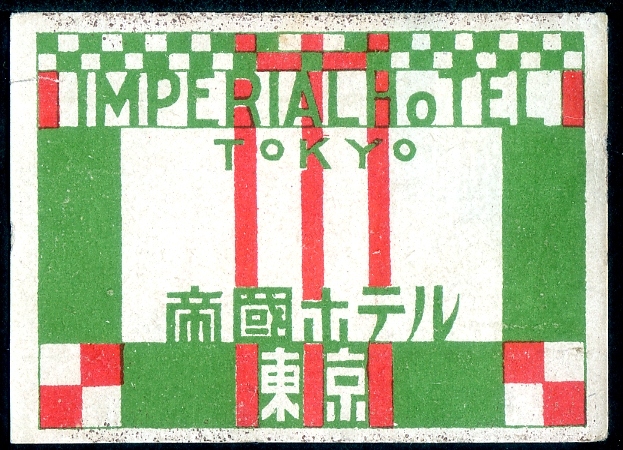 Hotel (Imperial Hotel)
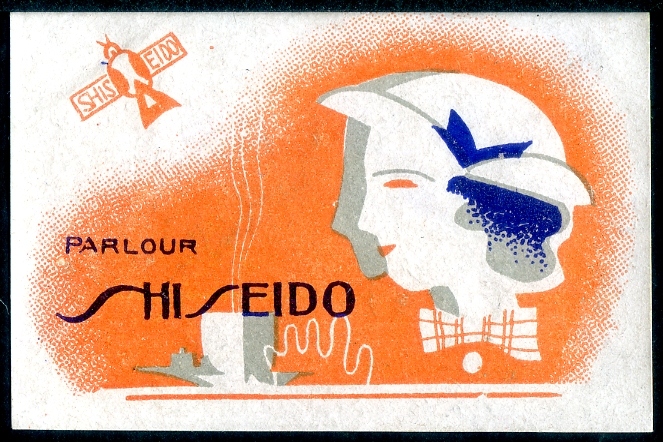 Cafe (Shiseido Parlour)
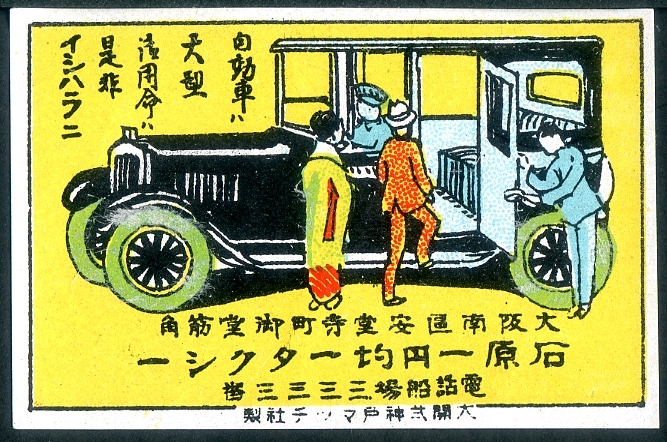 Taxi (Ishihara Ichi-en Taxi)
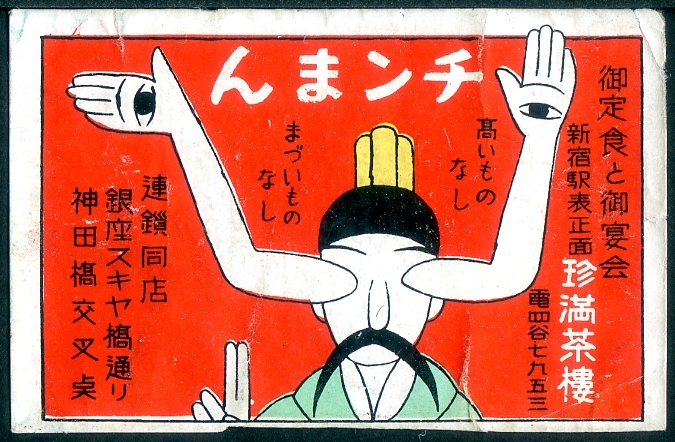 Restaurant (Chinman Charlou)
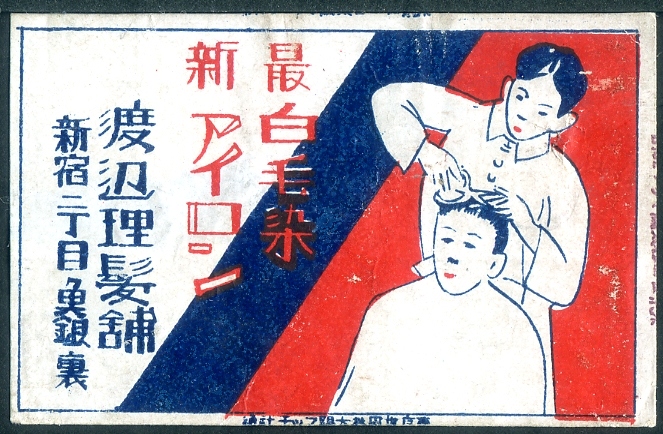 Barber (Watanabe Rihatsuten)
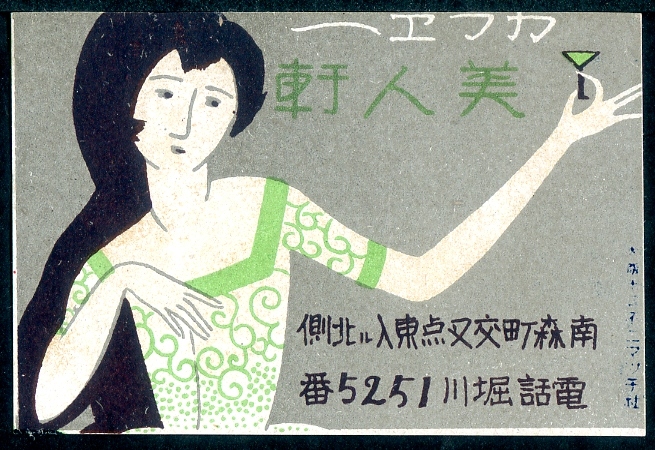 Nightclub (Bijin-ken)
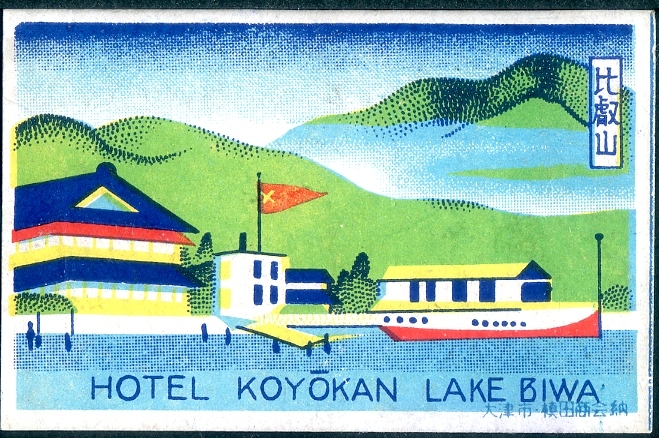 Hotel (Kōyokan Lake Biwa)
Hiroshige’s Ukiyo-e prints and the Tokaido series were popular designs but after the Second World War, more Americanised/Westernised designs began to appear and matches eventually disappeared from tobacco shop shelves and were replaced by disposal lighters. Match production then peaked in 1973 (Showa 48) and then in rapid decline since.
Advertisement matches were distributed free of charge by various businesses, for example to advertise their stores and shops. Individual shops often produced their matches by selecting from ready-made design samples provided by match companies.
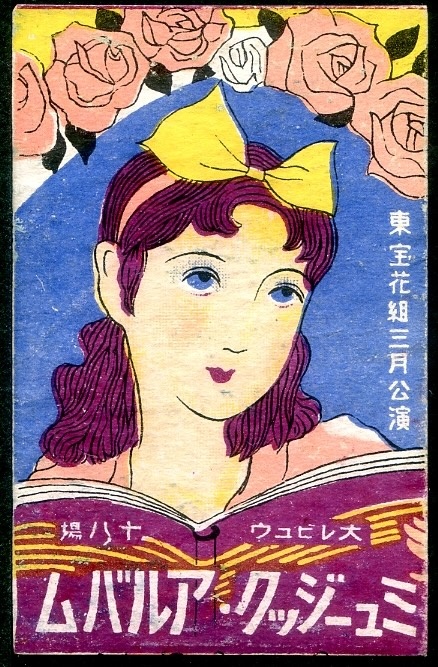 Advertisement matches : Musical Theatre (Toho Hana-gumi)
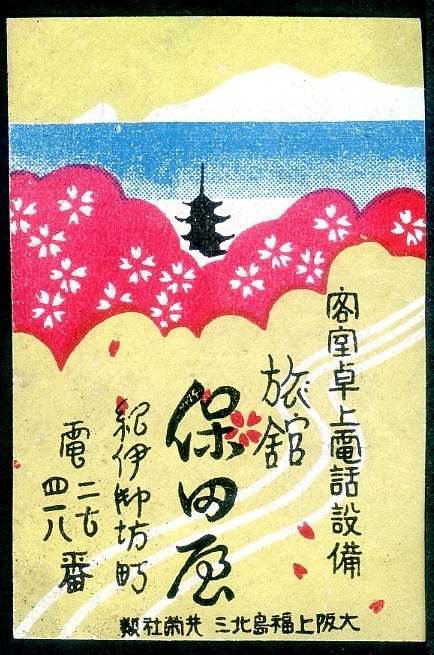 Advertisement matches : Inn (Ryokan Hotaya)
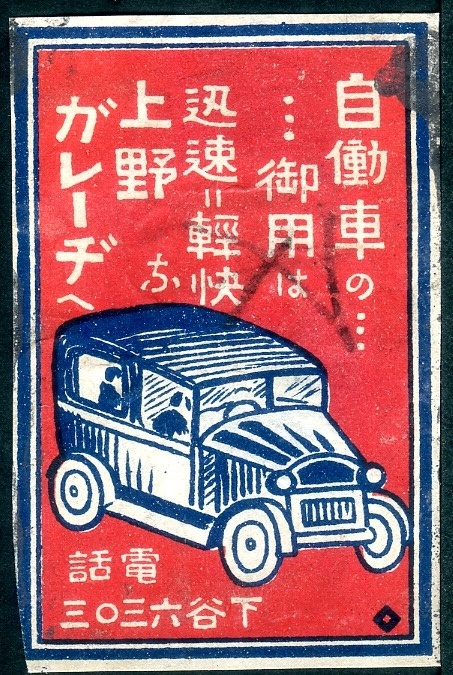 Advertisement matches : Taxi (Ueno garage)
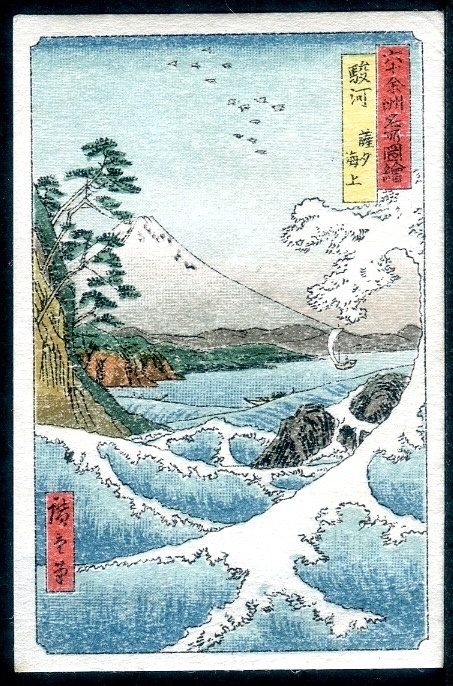 Tobacco matches : Hiroshige Utagawa's series of ukiyo-e (53 Stations of the Tokaido) was popular and often used on labels
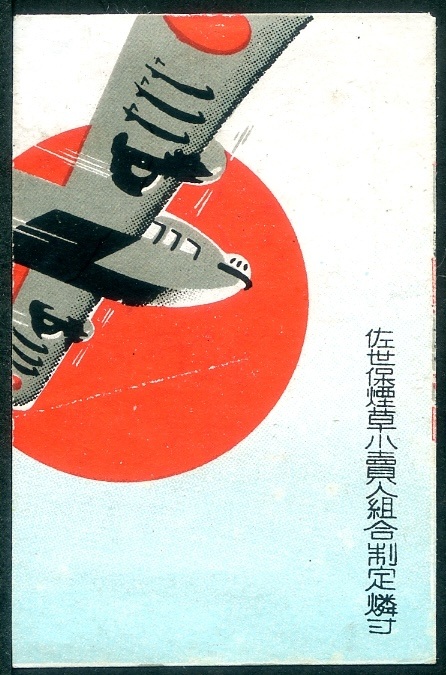 Propaganda Tobacco matches: These were placed in tobacco shops across the country and used to boost national morale
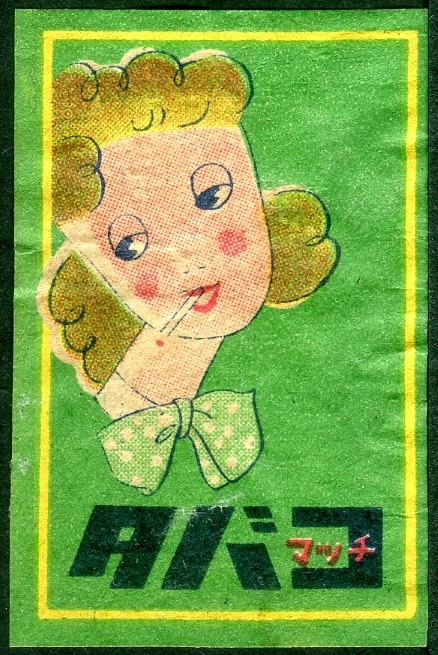 Post war Tobacco matches: A simple offset printing that shows the state of poverty immediately after the war

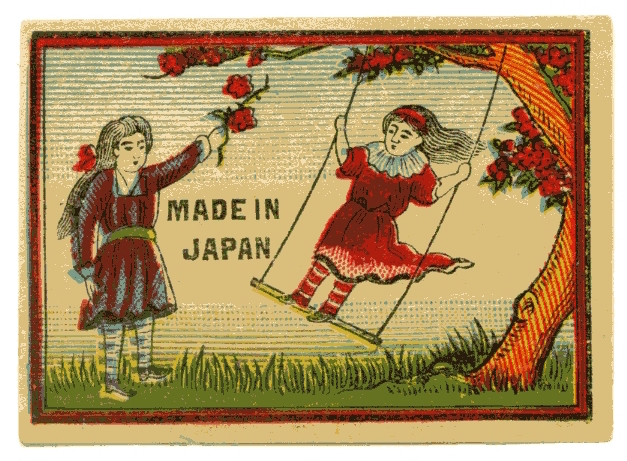
Bonus exhibit : Children playing games
The Japanese match industry was one of the main industries underpinning the economic development of Japan after the country established itself as a modern nation in Meiji era (1868 – 1912). The match industry peaked its activities in the early 20th century. During the peak-time (1907 – 1919), 80% of its production was for export and shipped mainly to China, Hong Kong and India. 5% of its export volume was also shipped to Western countries such as the US and Australia.
- The label designs for the biggest importer – China – featured auspicious motifs such as dragons, kilins (Chinese unicorns), deer, monkeys, bats, peaches and peonies, as well as children and elders often depicting old fables.
- Elephants and Hindu gods were popular designs for India. The label designs for export matches were diverse and playful as it was common to tailor the design to the tastes and likes of each destination.
The trade was carried out by Qing (Chinese) merchants who were based in the Japanese exit port of Kobe. Most Japanese manufacturers were small businesses who received financing from Qing merchants so we can speculate that they instructed Japanese manufacturers to make specific designs suitable for their clients. At that time, manufacturers were able to meet elaborate design orders as they had skilled wood engravers who previously produced detailed news-sheets and Ukiyo-e (woodblock prints) but had lost jobs due to the emergence of letterpress printing.
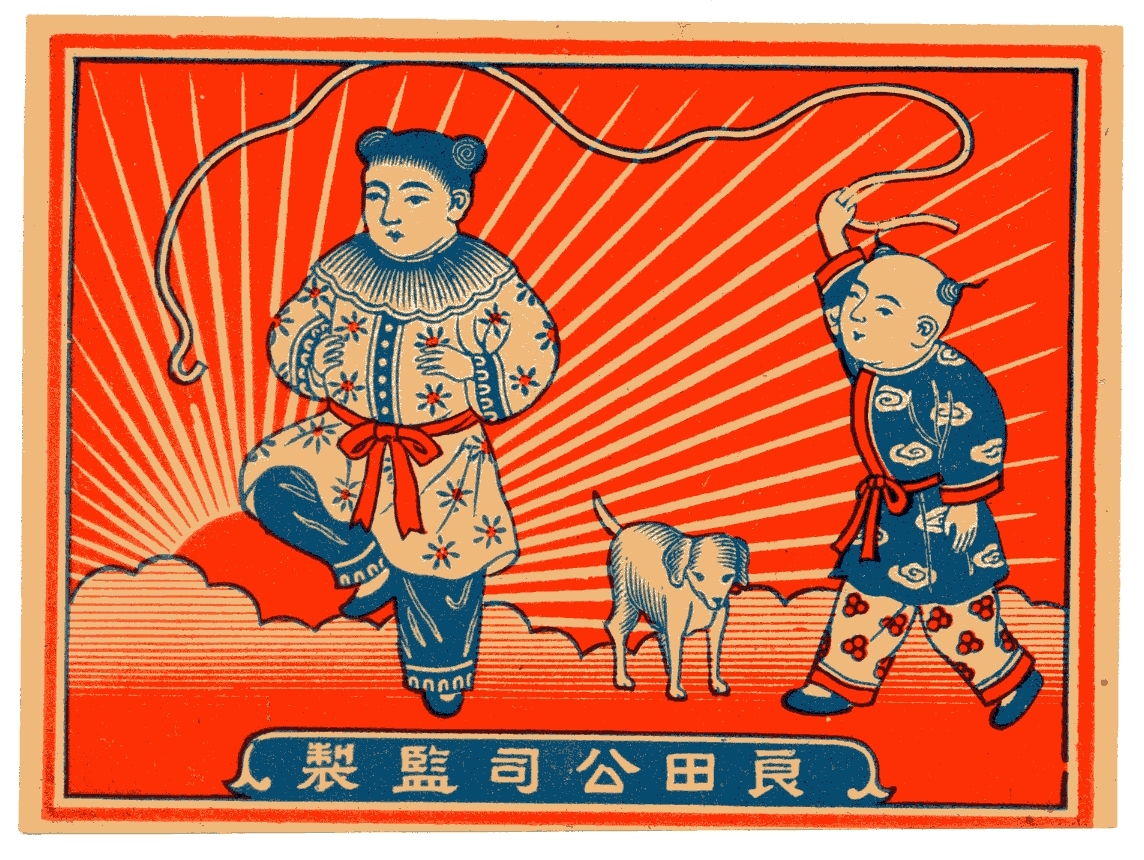
Labels depicting children playing games
The images here are labels featuring children playing games made during the peak-time of export (1907 – 1919). By the look of the clothing, some of them were possibly aimed at exporting to Western countries, and others were to China and India. Regardless of its origins and prevalence, many children’s games were similar beyond cultures and regions, as we find games and play depicted that is common across the world.
These labels might have drawn a smile from an adult while striking a match and remembering his/her childhood. I would like to think of these designs as a kind of modern version of auspicious motifs bringing people some good omen.
Click on an image below to enlarge it and see the matchbox label.
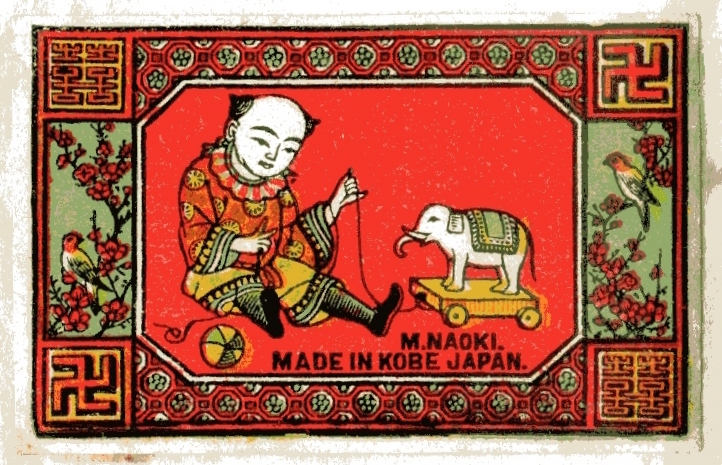 Playing with toys. Trademark registration of this label filed to Japan Patent Office by Mr. Masanosuke Naoki based in Kobe (1894), 56 x 36 mm
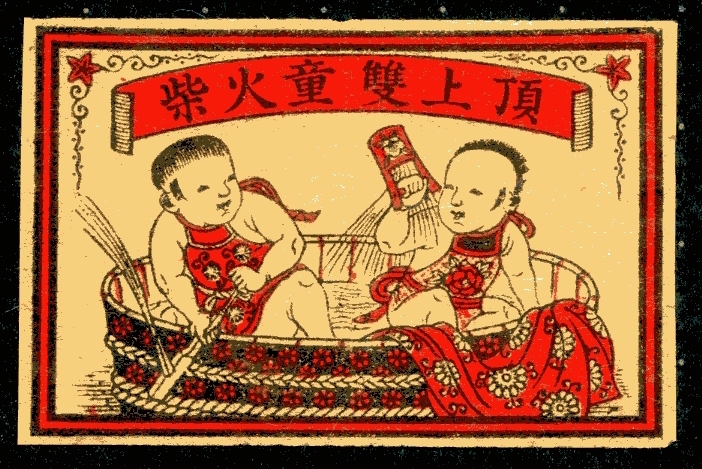 Paddling pool. Trademark registration of this label filed to Japan Patent Office by Nippon Match Seizo Co. based in Kobe (1911), 56 x 36 mm
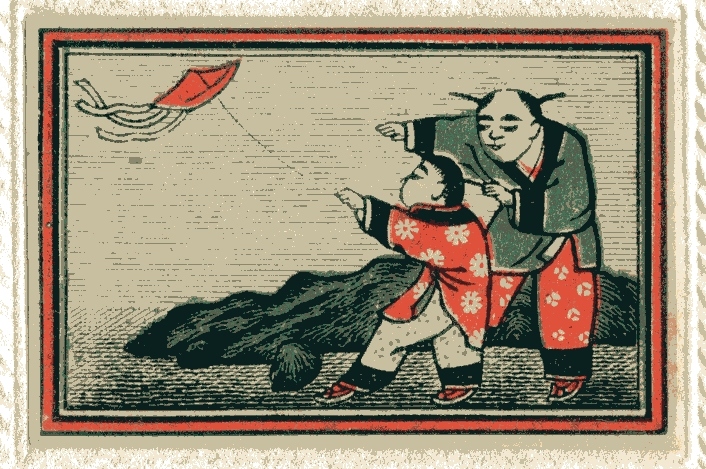 Kite. Trademark registration of this label filed to Japan Patent Office by Mr. Ikunosuke Kondo based in Osaka (1889), 56 x 36 mm
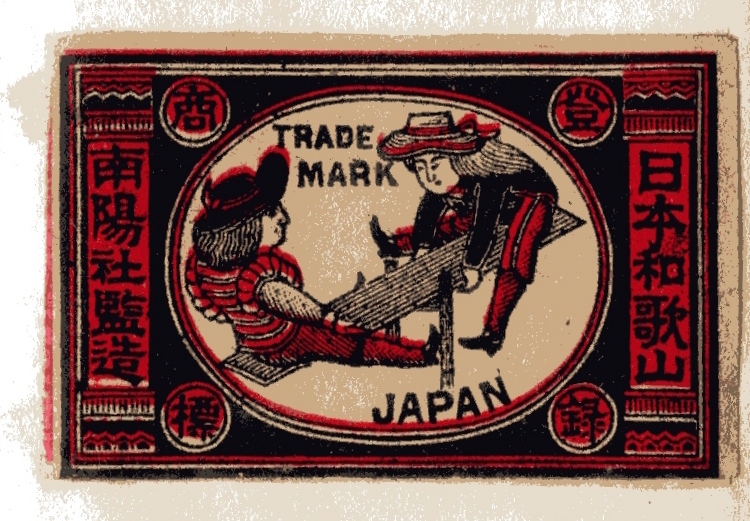 Seesaw. Trademark registration of this label filed to Japan Patent Office by Mr. Torakusu Fukushima based in Wakayama (1897), 56 x 36 mm
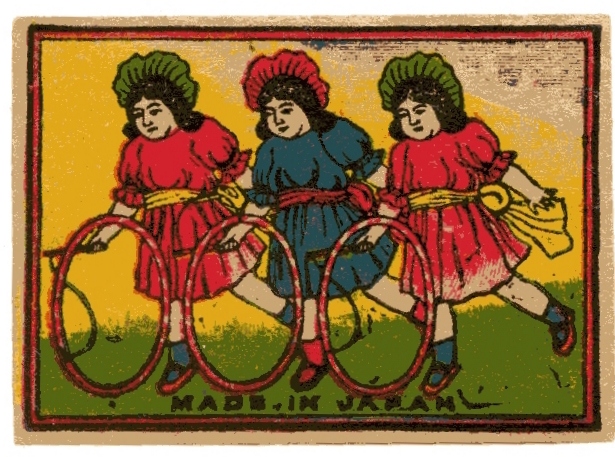 Hoop rolling. Trademark registration of this label filed to Japan Patent Office by Aboshi Match Co. based in Hyogo (1915), 49 x 36 mm
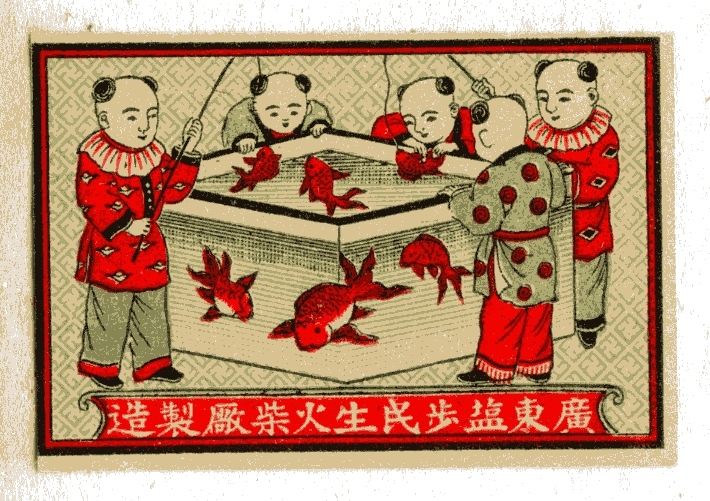 Goldfish fishing. Trademark registration of this label filed to Japan Patent Office by Mr. Matsuzou Fujisawa based in Kobe (1918), 90 x 70 mm
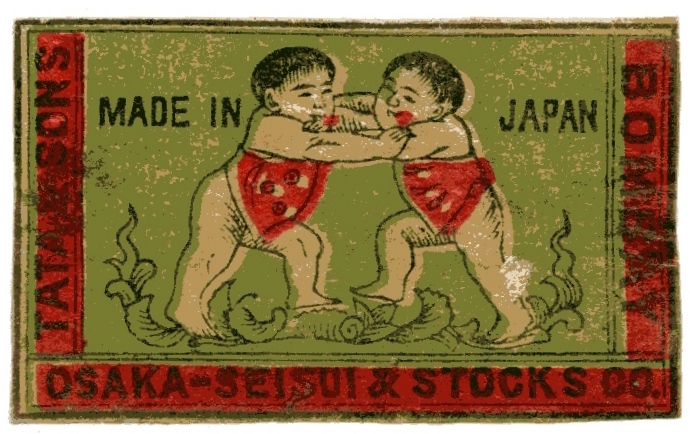 Sumo. Manufactured by Seisui-sha based in Osaka (Meiji era. Other details unknown), 56 x 36 mm
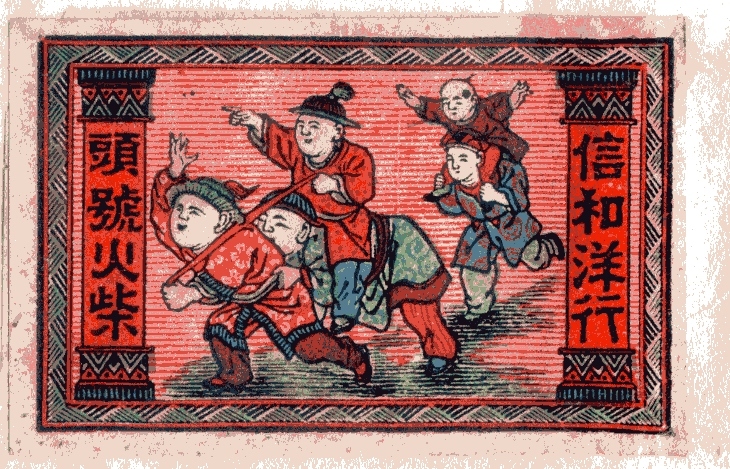 Buck back. Export trading company: Shinwa-Yoko. Other details unknown, 56 x 36 mm
- Hoop Rolling : Japanese hoop rolling was said to have started from rolling a hoop taken out from a wooden basin. From Meiji era onwards, bicycle rims were commonly used.
- Paddling pool : during Meiji era (1868 – 1912) and Taishō era (1912 – 1926), it was a common custom in summer for people to place a large flat basin in the garden and cool-off by splashing water using a pail. It was also a great summer fun for children.
- Goldfish fishing originated in China and became a popular game often seen in festival stalls in summer. Nowadays, a player uses a paper scooper to catch a goldfish until the scooper breaks.
- Flying kites became popular during Edo era (1603 – 1867) and have been enjoyed ever since.
- Sumo is a Japanese national sport. Two wrestlers fight with bare hands in a circular ring and try to push his opponent out from the ring or topple him to the ground. The printed text “TATA & SONS/BOMBAY” was probably for the commemoration of the regular shipping lane between Japan and Mumbai opened jointly by Japanese NYK Line and Indian Tata Group in 1893. It made exporting large quantity of matches to India possible.
Click here to return to the Exhibition Catalogue.