Novelties
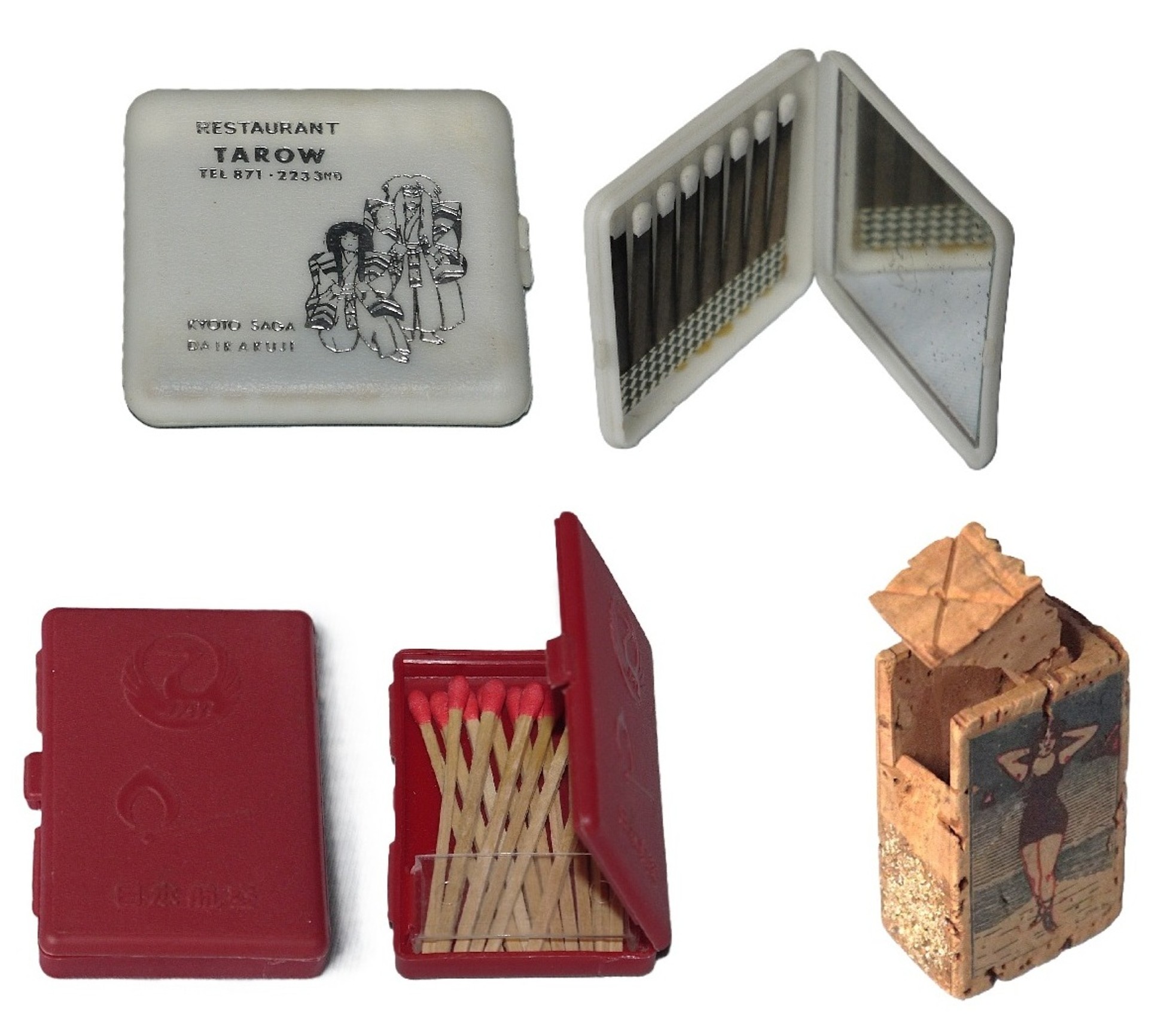
Exhibitor : Phil Stringer
Once matches became a common item in most people’s homes the marketing people really got to work to design new, innovative, attractive products which people would be unable to resist buying.
Why stick with a boring old stick of wood with a match head on one end ? Why not have double-ended matches, glass matches, sweet matches, matchboxes that contained books, alcohol or something else.
Matchboxes don’t just come in wood or cardboard, they come in all manner of materials and designs, which are commonly known as “Novelties”. Here is a selection of some of my favourite Novelties in my own collection.
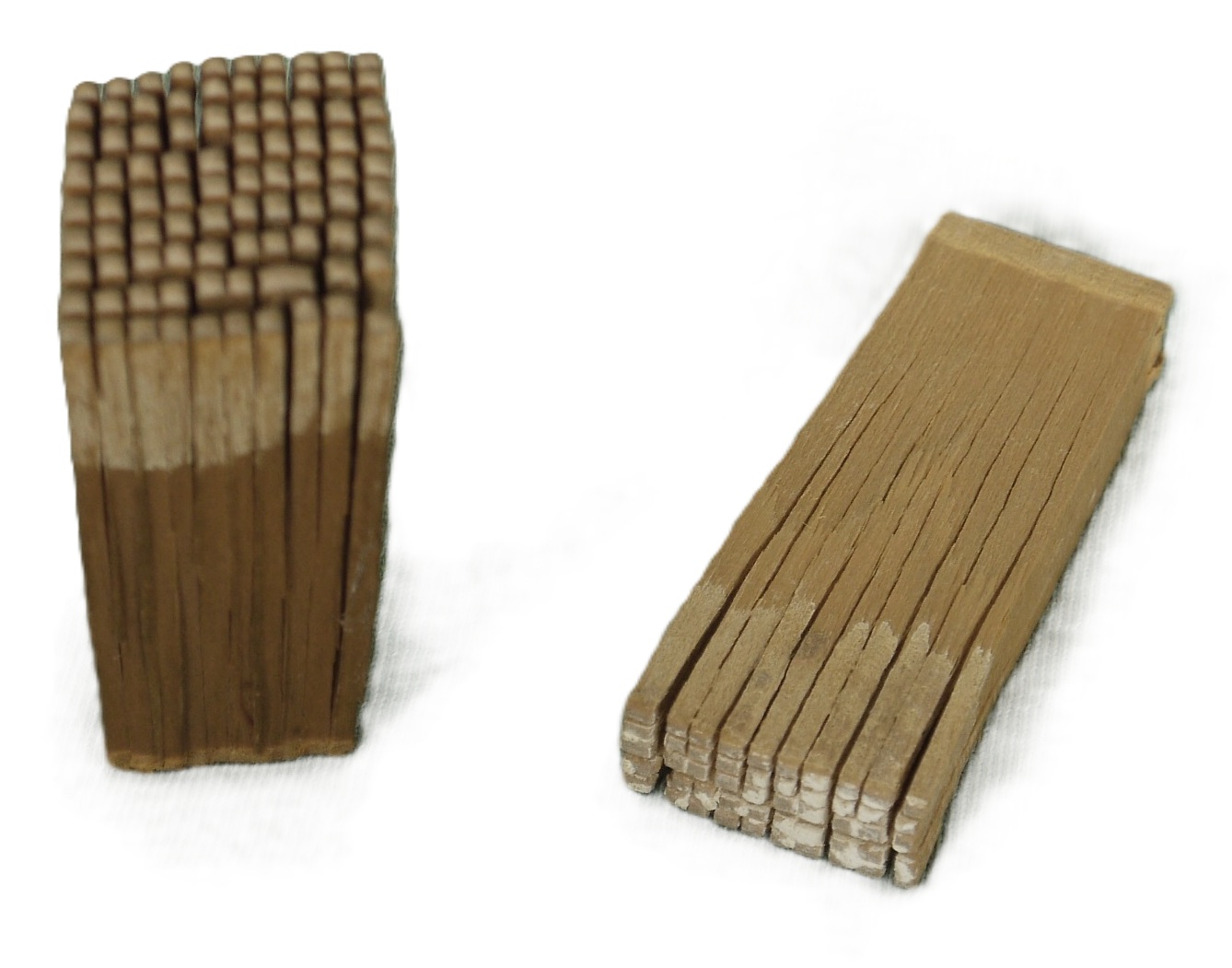
Block matches – ca. 1860’s these were typically produced in America and were often referred to as percussion matches. Made from a solid block of wood which was cut through leaving a thin connected portion at the base from which the individual matches could be snapped off.
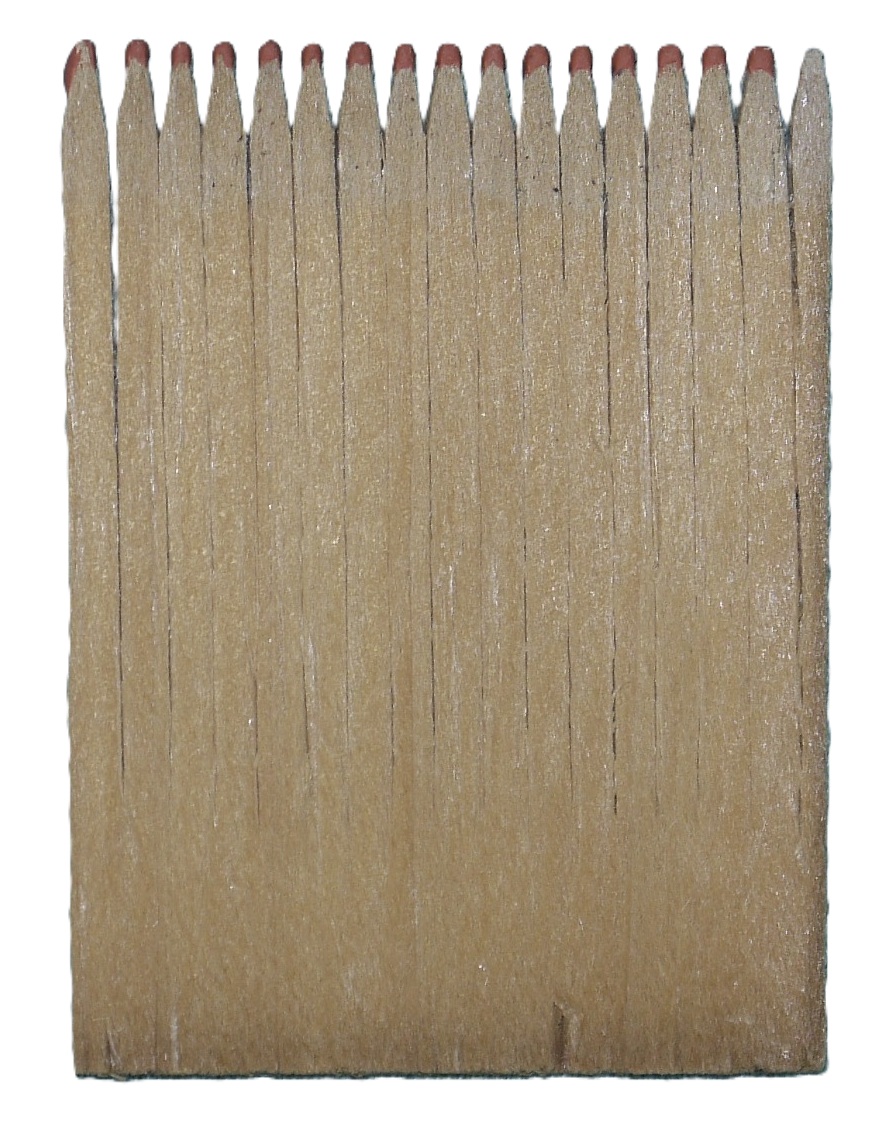
Comb matches – these were produced and used during the American civil war (1861 – 1865) and onwards, probably made by the Portland Match Company, latterly absorbed by Diamond Match Co.
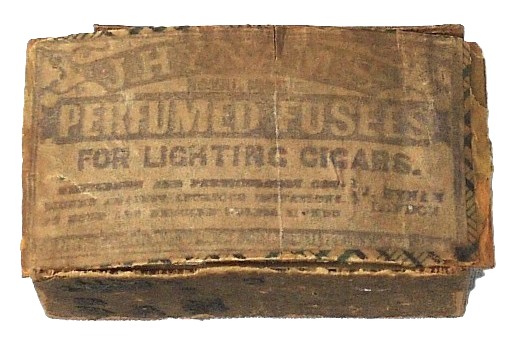
Perfumed fusees box – Fusees were made from cardboard steeped in potassium nitrate. They were intended for outdoor use and would smoulder rather than burn with a flame. Noted for their unfavourable odour, this Hynams box presents a solution.
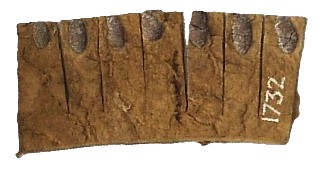
Amadou fusees as an alternative to cardboard this specimen was made from a natural fungus Fomes Fomentarius a spongy material that was often employed as tinder, prized for its slow burning properties.
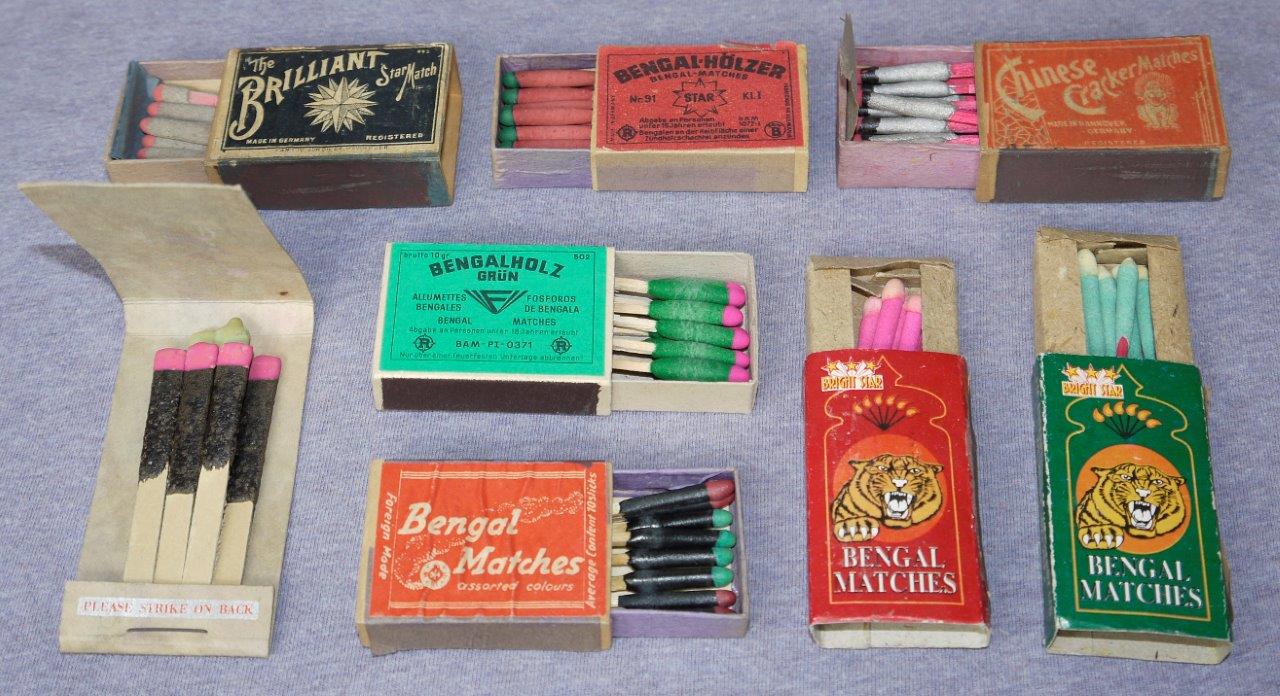
Bengal matches would burn for a sustained time with a coloured flame. Several examples are shown here some which would burn with a green flame and some with a red one. The Brilliant and the Chinese Cracker Matches, top left and top right, are another type that would burn like a sparkler firework. A province in the Indian state of Bengal served as a source for Potassium Nitrate which was used in fireworks known as Bengal Lights. In 1880 the first coloured matches appeared taking on the Bengal name.
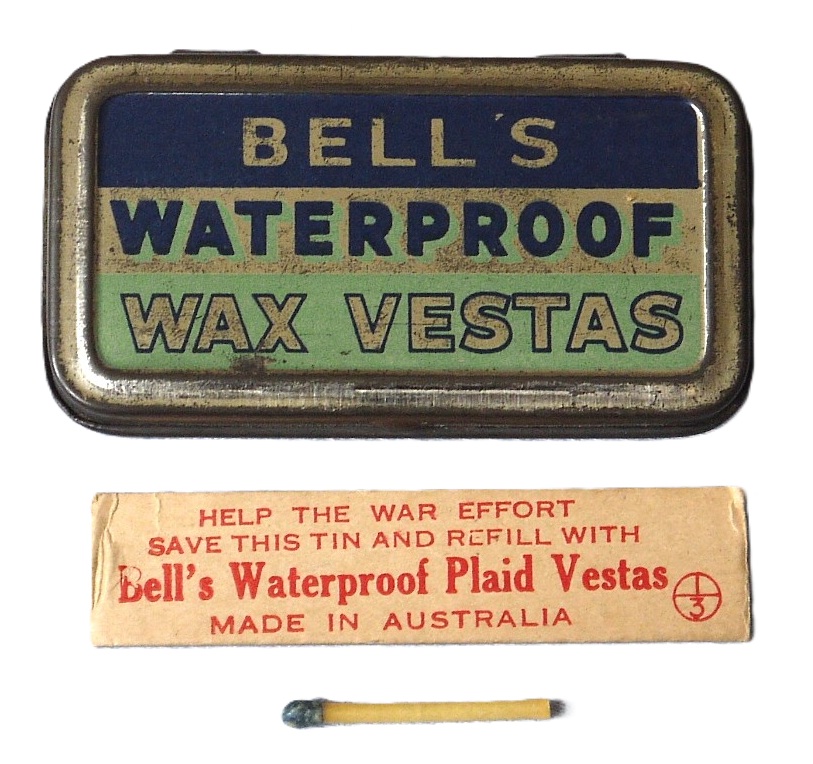
Wax vestas had stems made from cotton strands coated with wax negating the need for an intermediary agent.
These waterproof versions from Bell and Co also had their heads externally coated with wax to prevent the ingress of moisture, popular in Australia.
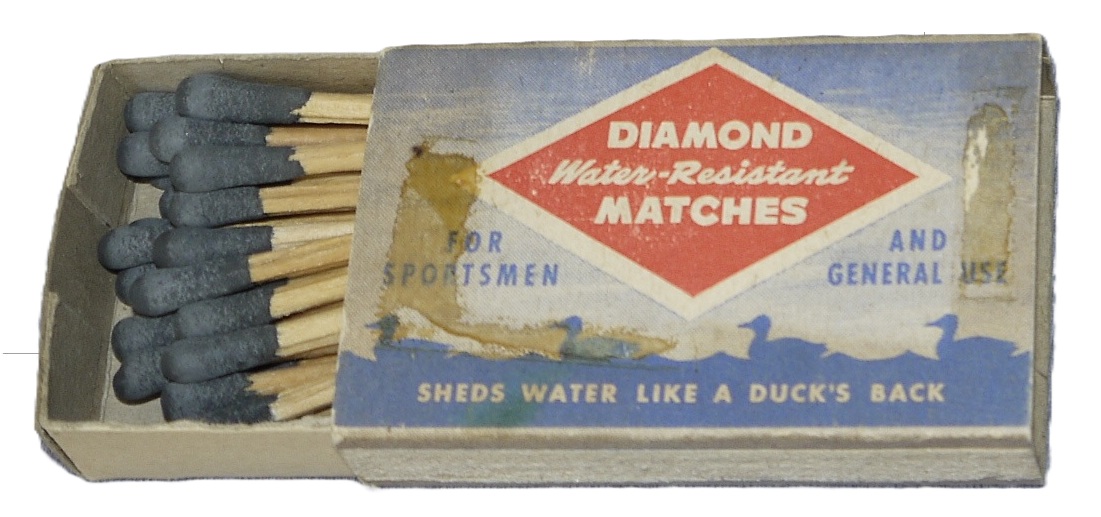
Water resistant matches – made by the American Diamond Match Company these waterproof matches employ the slogan “sheds water like a ducks back” suggesting the hunting/outdoor environment they were usually employed in. Today this type are often referred to as survival matches and used by campers.
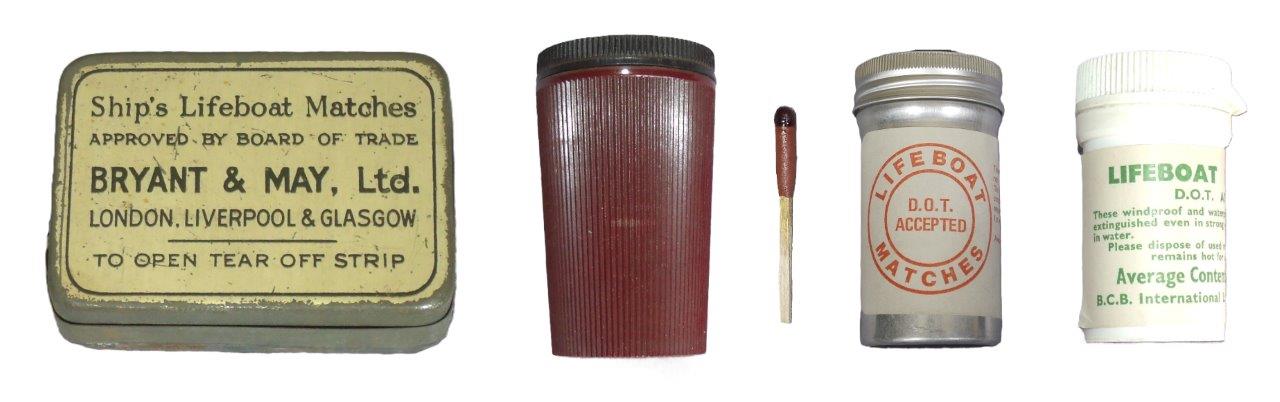
Ships lifeboat matches – held in a waterproof container this type of match with a long head is generically known as a windproof/waterproof match. The first designs contained a standard box of Cigar Lights each match being wrapped in greaseproof paper, this was held in a tin sealed with a removable strip around the side edge. These tins, one of which is shown on the left were probably in use between 1910 – 1930. The second container, made from Bakelite, can be found with several different varieties that spanned a period from the 1930’s to the 1970’s. The aluminium containers probably date from the 1980’s and the plastic type from the 1990’s onwards.
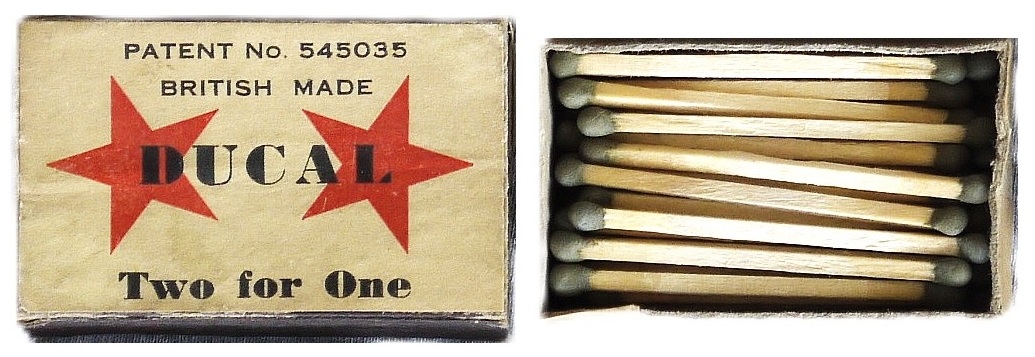
Double headed matches – Made by the Ducal Light Company Ltd 1941 -1949. With materials hard to come by during WW2 these were intended to save on wood.
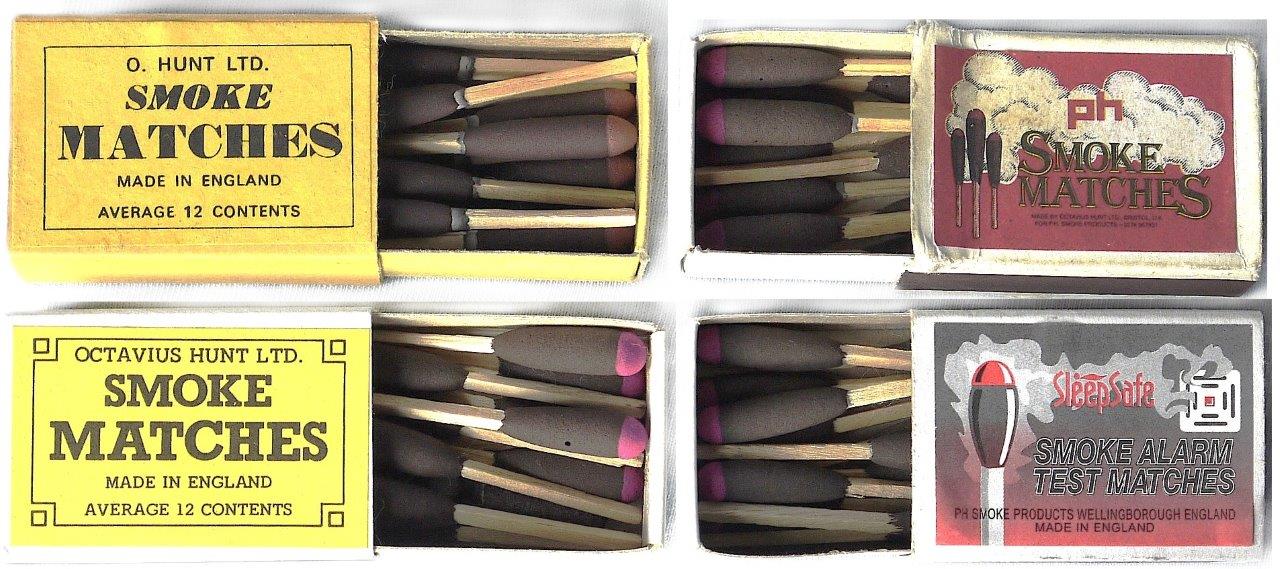
Smoke matches – A modern match type that contains a smoking agent designed to produce 2 to 3 cubic metres of smoke for 20 to 30 seconds. They can be used by professional people like plumbers or heating engineers to test the air flow in flues or the effectiveness of smoke alarms.
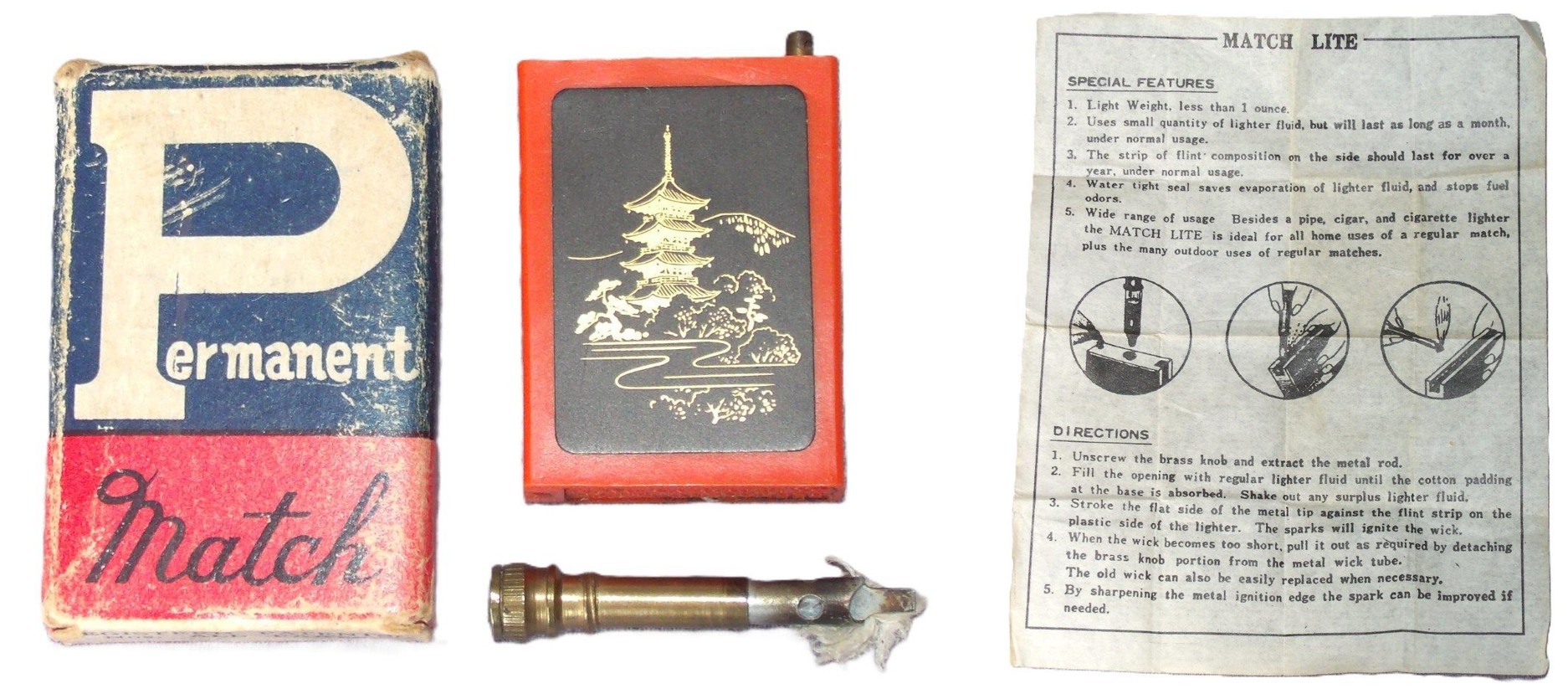
The Permanent Match, in the manner of its function, sits between the Friction Match and the petrol lighter. A cotton wool filled receptacle absorbs lighter fuel from the case, it has a steel tip which when drawn across the pyrite striker causes sparks to ignite the fuel. This example dates from the 1960’s.
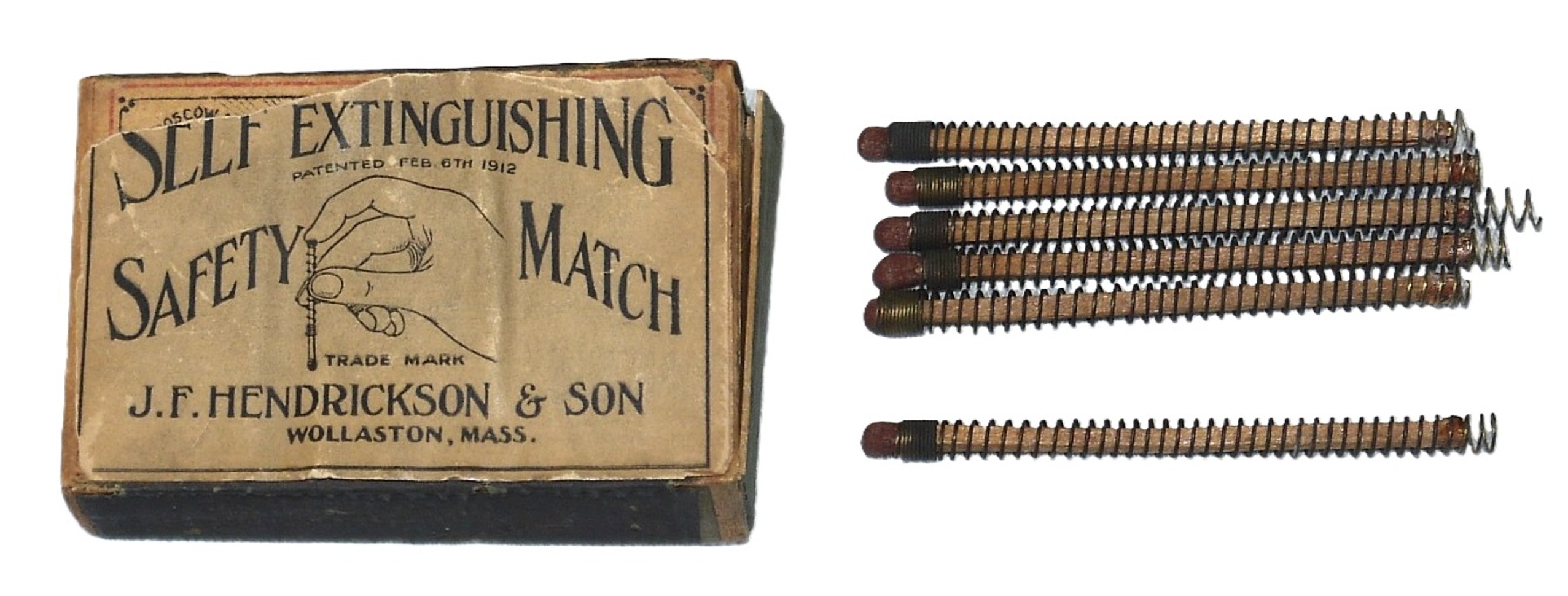
Self Extinguishing match – a safety feature to make sure that a match will not continue to burn is to infuse the stem with a chemical flame retardant. In 1912 Hendrick and Son patented a mechanical solution, the image shows a spring drawn back to light the match, releasing it put the flame out.
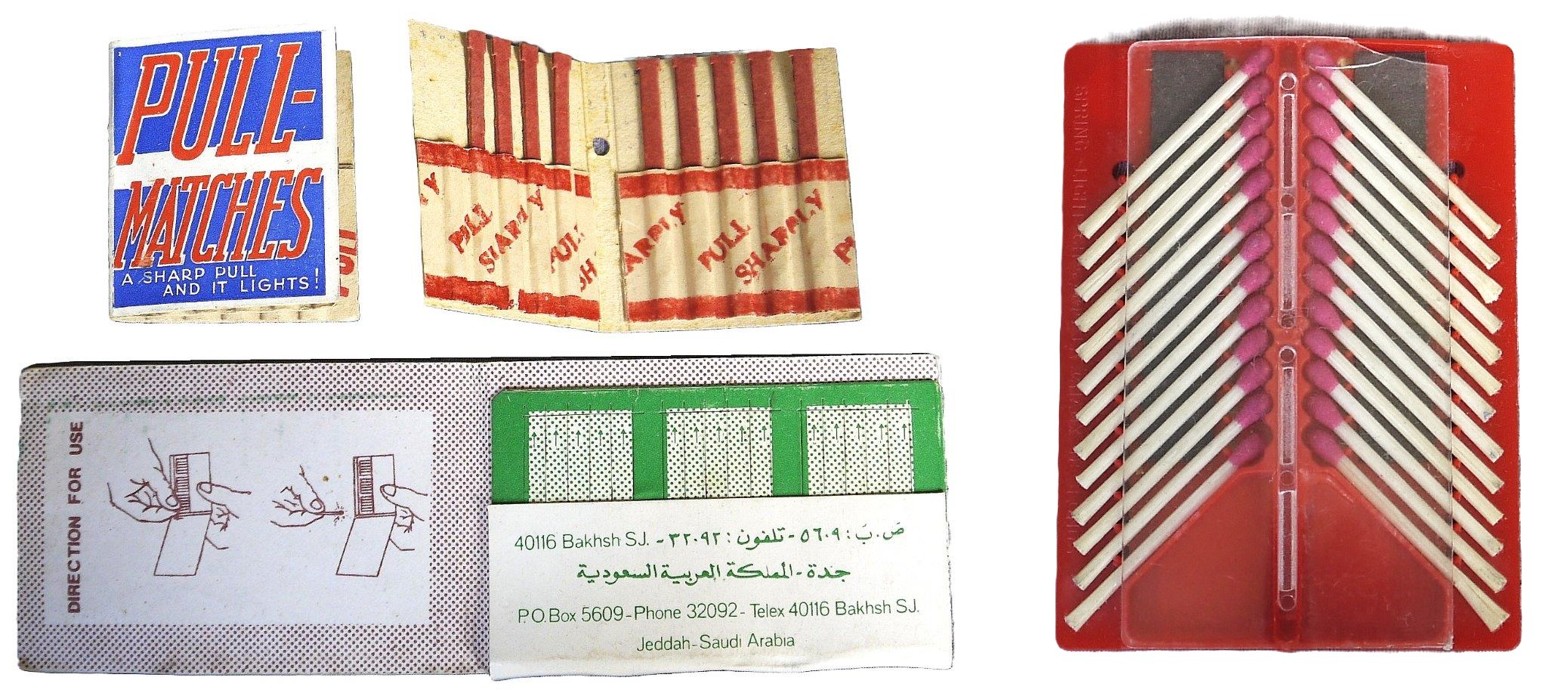
Pullmatch – (top left) this invention involved a match where the head was enclosed within the striking material, when withdrawn it would automatically ignite. This idea can be traced as far back as 1836, almost a century later in 1934 the British Pullmatch Co. started production of this brand. (bottom left) A more recent version from Saudi Arabia. (right) A version from the 1980’s made from plastic, it has a self adhesive surface on the back, designed to be fixed to a cigarette packet for convenience.
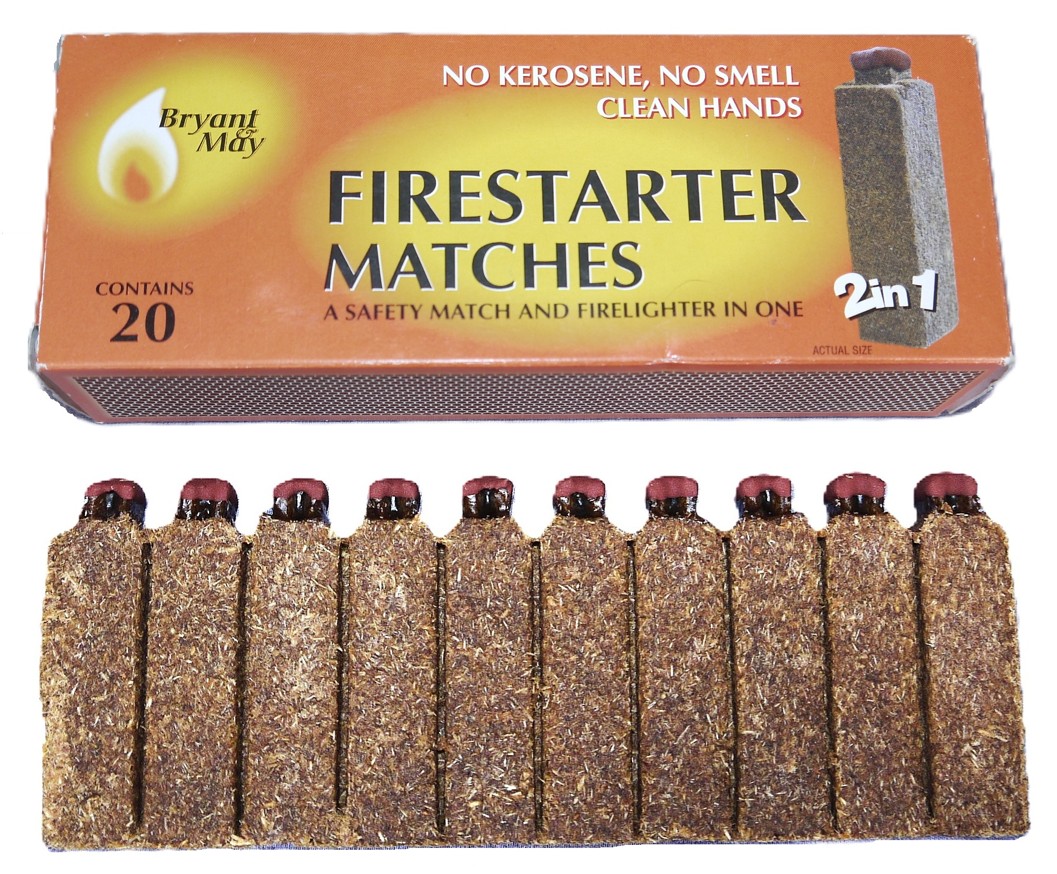
Firestarter matches – a more modern invention where firestarters have their own striking composition negating the need for a separate box of matches.
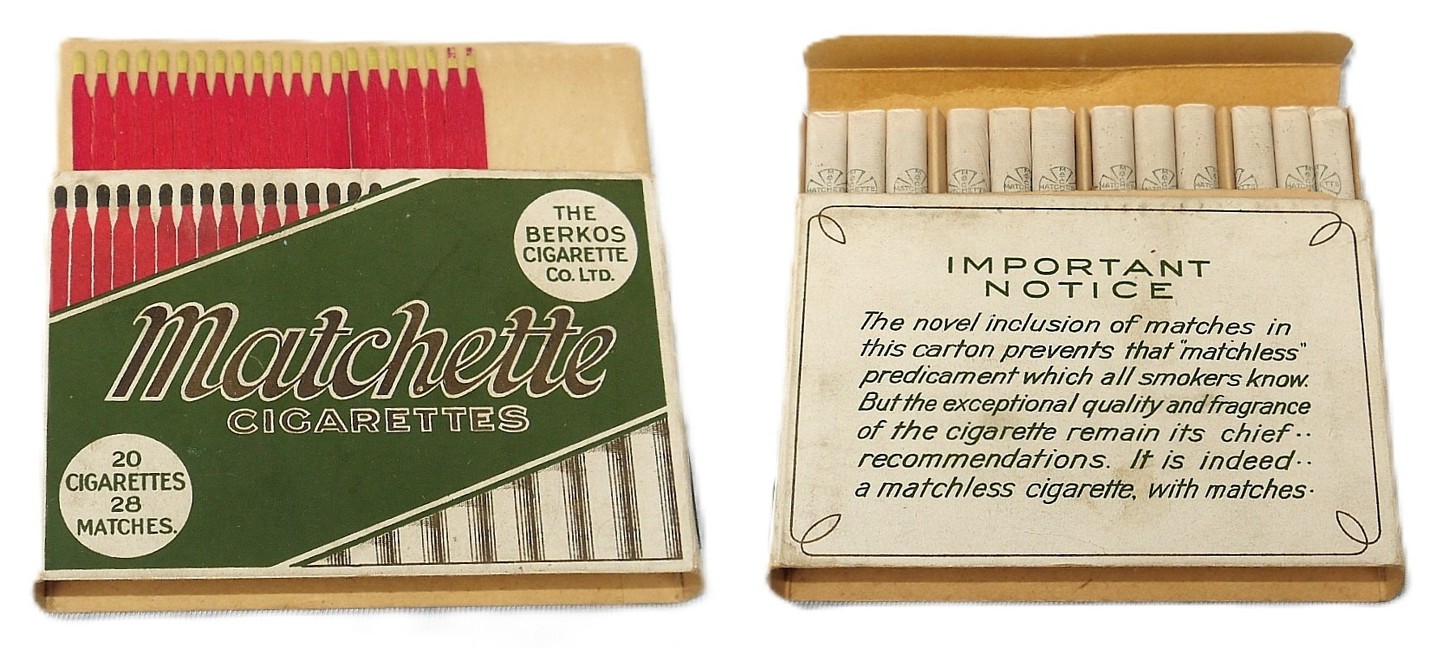
Cigarette packet with matches – produced by the Berkos Cigarette Co Ltd which was registered in 1923. Machette Cigarettes were produced in 1926, with a wooden match comb on the reverse of the inner sleeve and a striker on the outside of the carton. Their slogan was “A matchless cigarette with matches”.
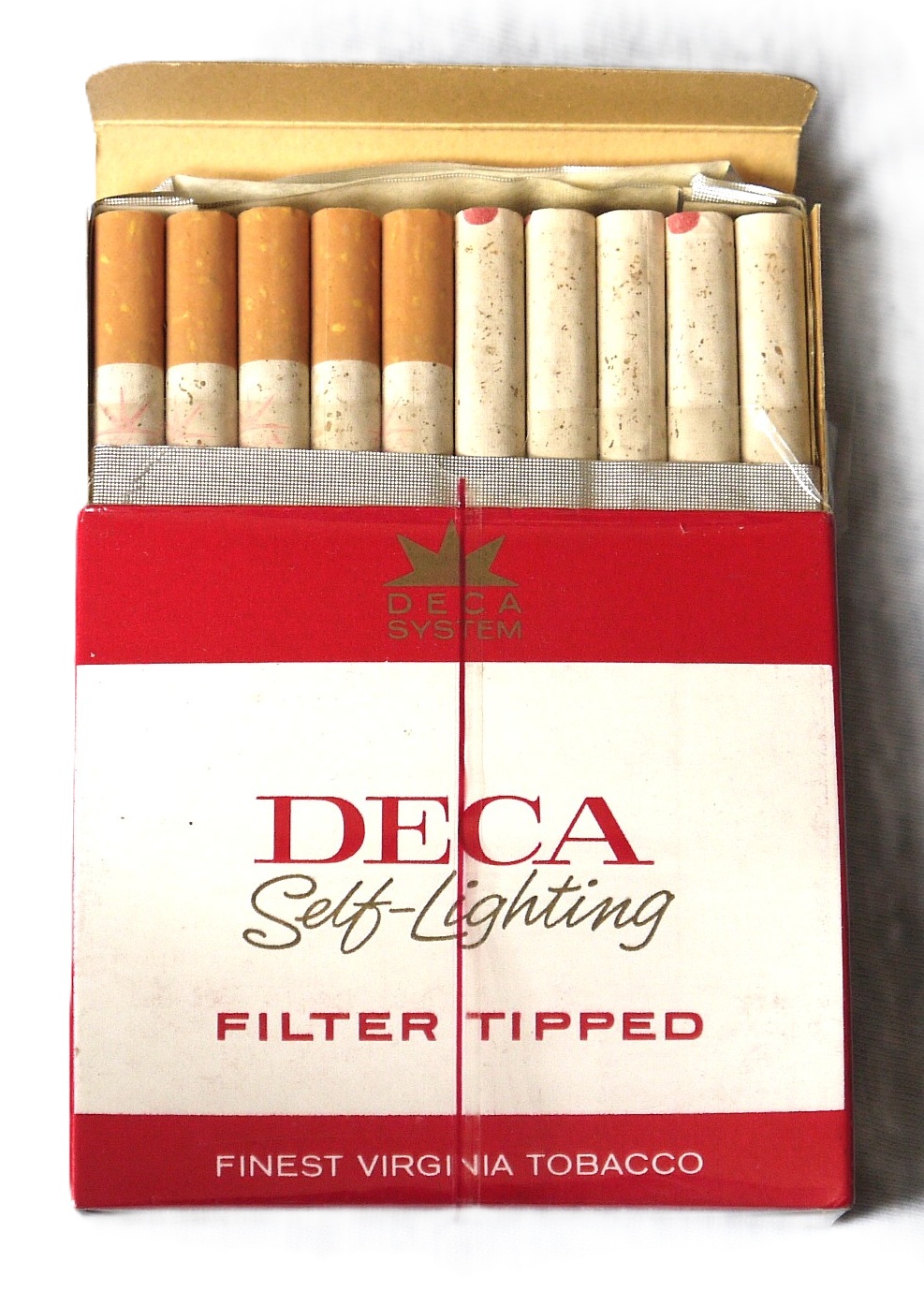
Self-Lighting cigarettes – this idea has been presented several times over the years, Noakes Brothers Tobacco Company issued a self-lighting cigarette as far back as 1908. The Deca brand was released in 1962, the red patch was rubbed against a striking surface on the box to ignite it. Their slogan was “there is no match for Deca”.
In 1964 the Commissioners of Customs and Excise asserted that it should be liable to match tax as well as tobacco tax. A high court ruling said the tax was not payable because they were not matches as they didn’t actually produce a flame.
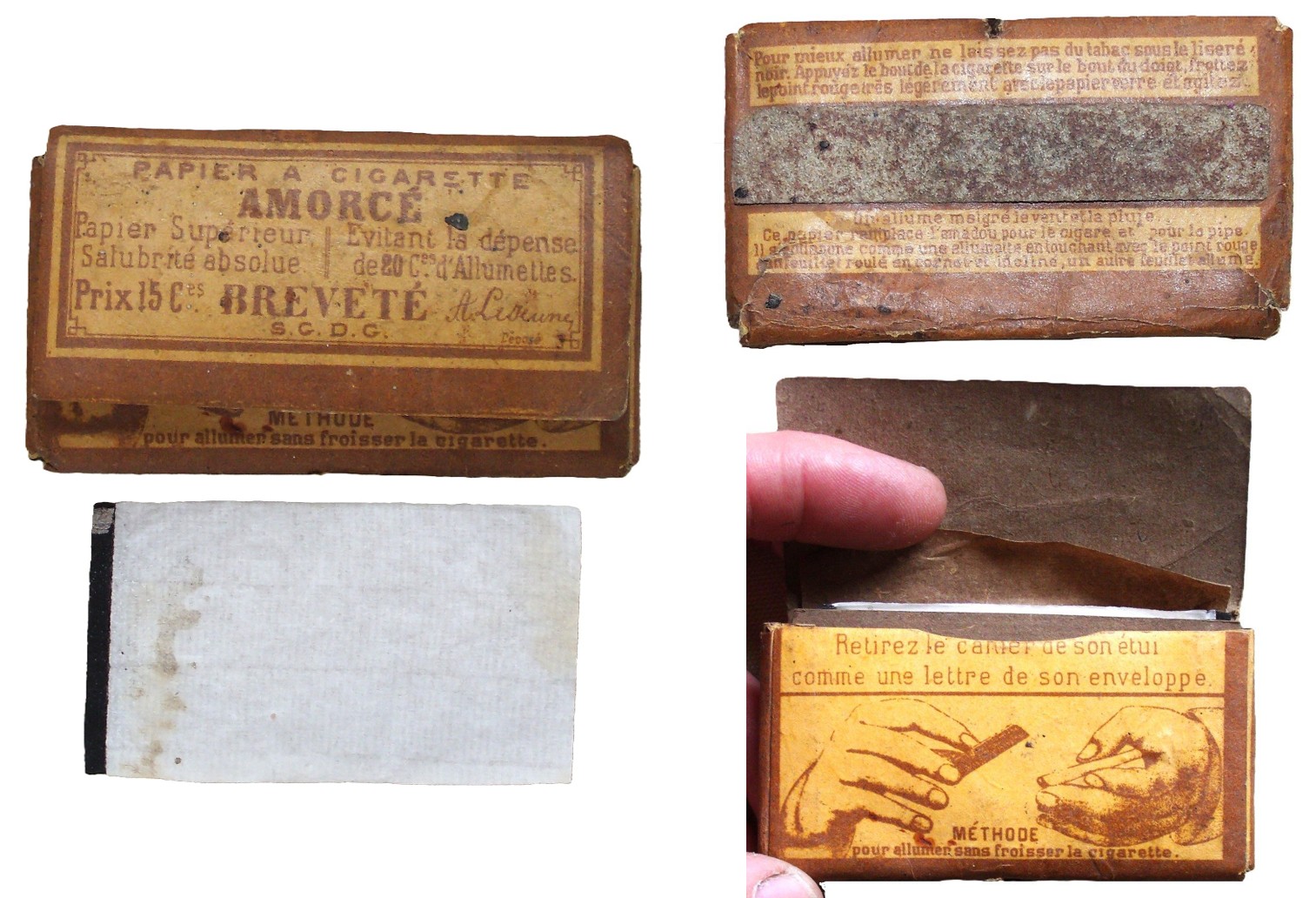
Self-Lighting cigarette papers – Taking the self-lighting cigarette one step further French manufacturer A Lejeune produced self-igniting cigarette papers.
Instructions on the packet show how to use it and state how much was saved by not having to buy matches.
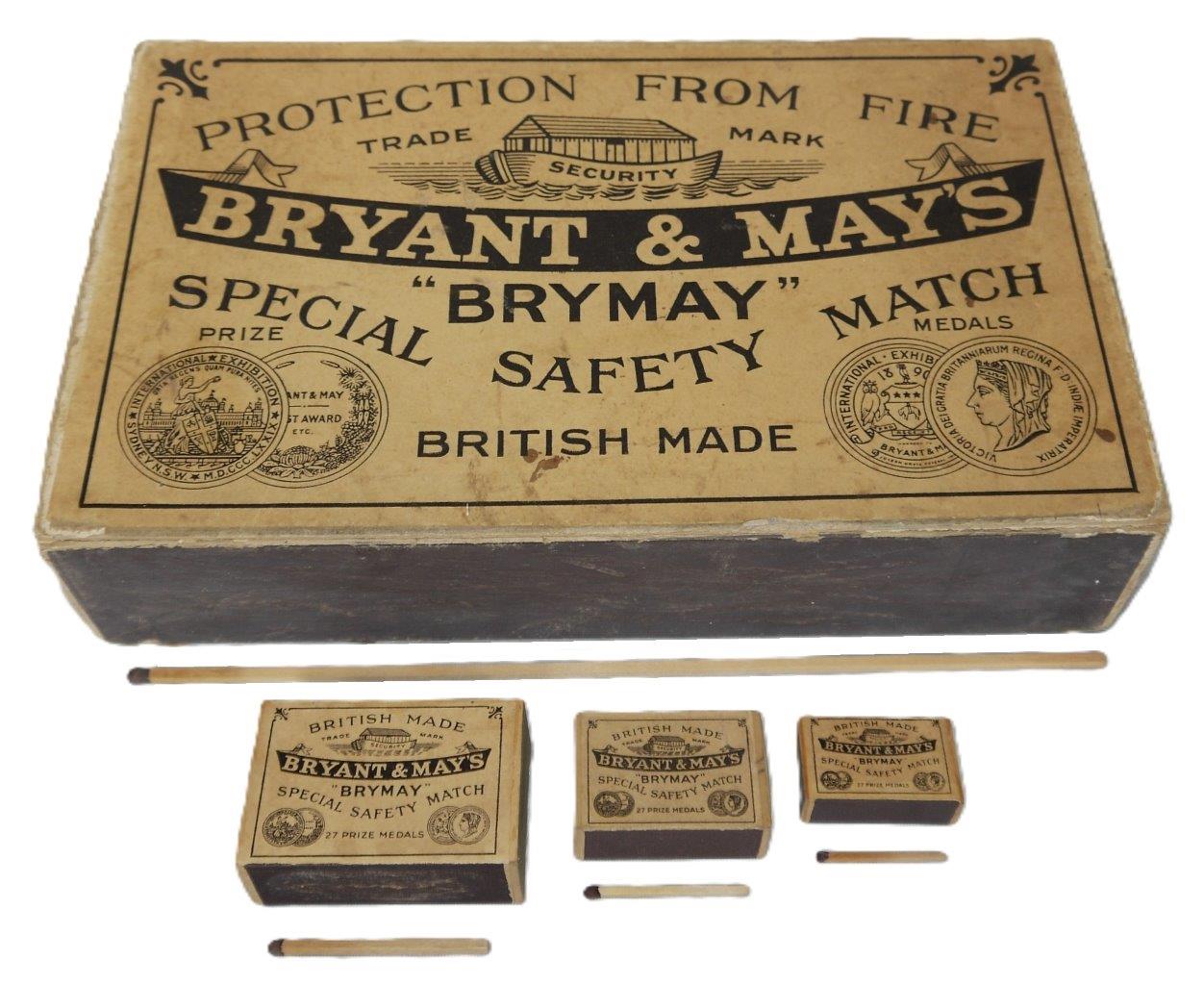
Four Bryant and May Ark brand matchboxes from the 1930’s the largest one at the top has matches that measure 292mm long, often referred to as barbecue matches. The large Ark lower left has matches that are 57mm long. The one in the middle is of the regular size with matches measuring 44mm in length. The smallest box on the right has matches that are 35mm long.
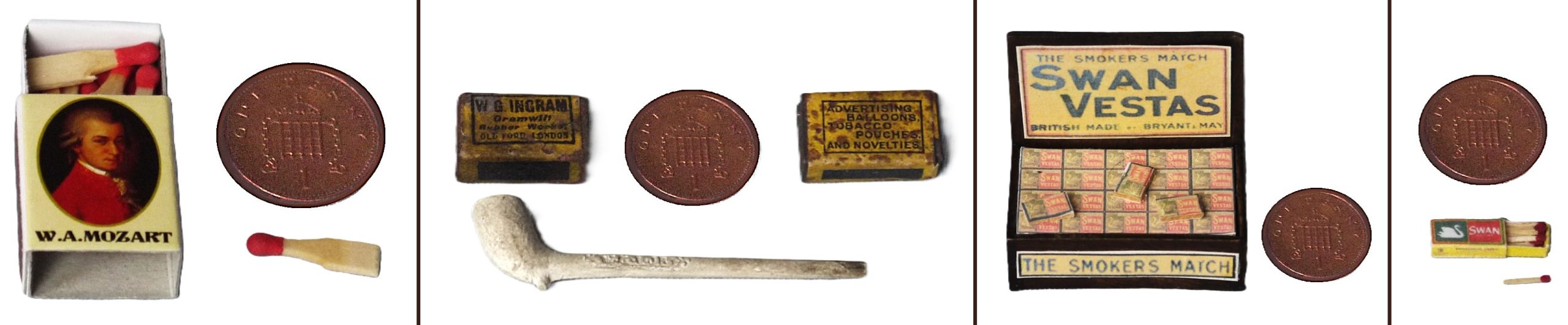
Below left probably the tiniest box of functional matches which can actually be ignited, measuring just 23mm in length. Next two miniature boxes each measuring 21mm long with associated clay pipe used for advertising W G Ingram Gramwell rubber products. The next piece has been made for a dolls house or diorama display and measures 42mm wide. Finally a tiny individual box of Swan Vesta matches measuring 12mm in length with a sliding drawer and individual matches that can be removed (not functional).
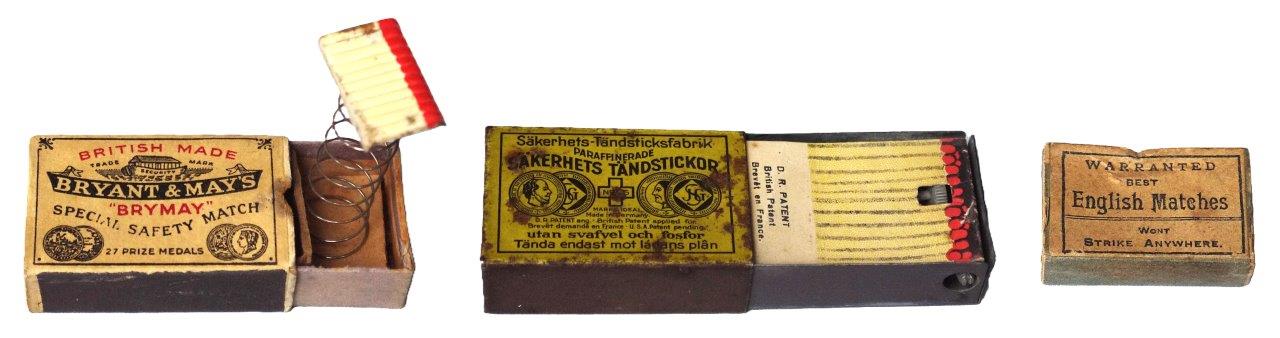
Many types of joke matches were produced, some using genuine recognisable brands like the Bryant & May example where a fake sheet of matches spring up when the box is opened. Some employed convincing designs like the box in the middle. This is completely made from metal with a clockwork mechanism that sends a spark from a lighter flint shooting up when opened. The box on the right declares its joke on the label where it states that the matches “Won’t Strike Anywhere”.
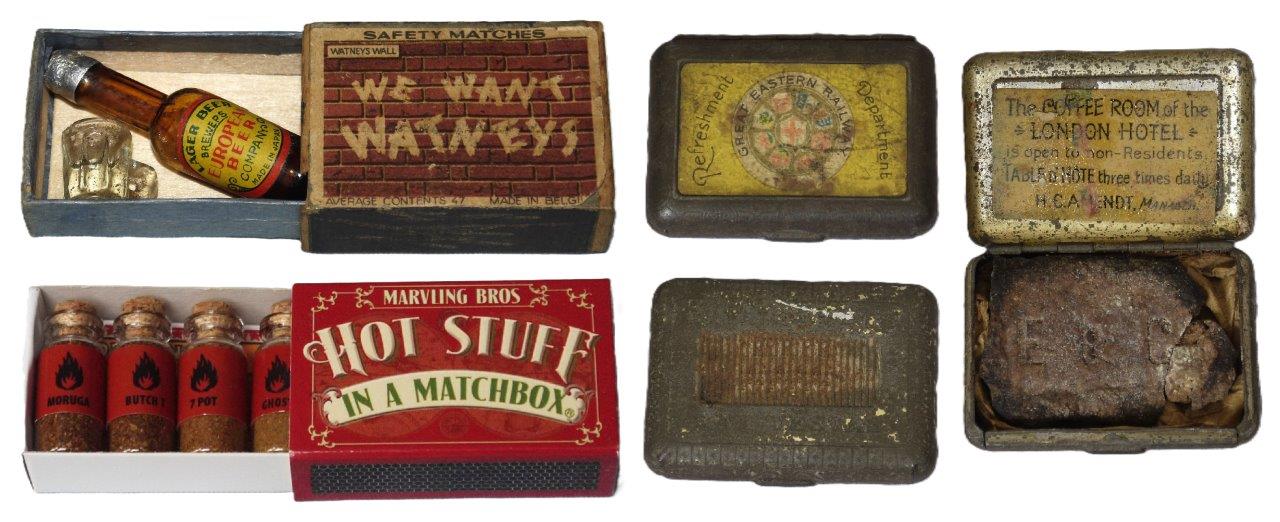
Consumables in match boxes – Top left a tiny bottle containing drinkable beer with a miniature glass. Below – four samples of chilli powder produced by Marvling Bros the name derived from “Marvellous Thing” they produce a wide range of products to fit in their matchboxes. Right – tinplate vesta case. Many of these were produced with a sample product such as tobacco or cocoa powder. When consumed a tin with a striking surface was left that could be used to hold matches. This example from the Great Eastern Railway came with a biscuit which still remains in place.
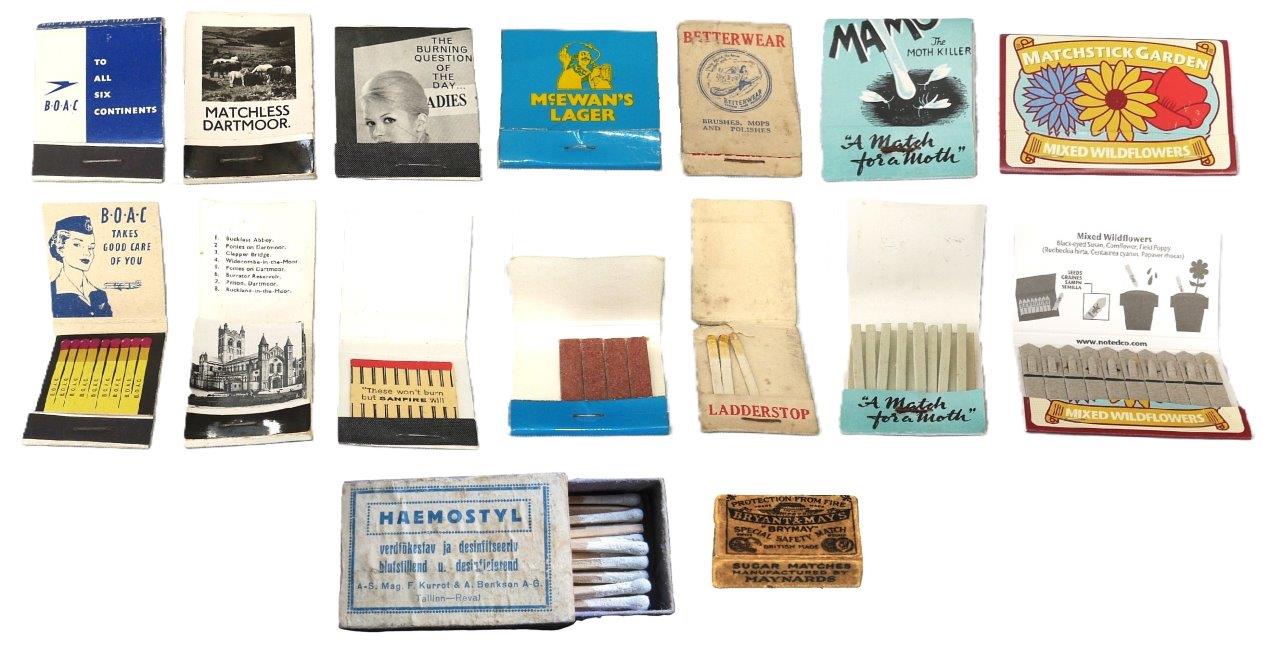
Look like matches? – Top left and below – BOAC, a cover with printed matches concealing a fold out advertising what they have to offer. Next – Matchless Dartmoor as it says no matches but a selection of photographic views. Next – Advertising product for Sanfire with printed match effect. Next – A Bryant and May produced bookmatch like cover advertising McEwan’s lager with nail filing boards inside. Next – Betterwear advertising item in the shape of a bookmatch cover with match like strips designed to glue the ends of a ladder in a stocking to stop it lengthening. Next – Mamo the moth killer that is “a match for a moth” the strips to be torn off and placed in the pockets of clothes. Far right Matchstick Garden each stick holding a seed to be planted. Bottom left Haemostyl an Estonian product containing sticks coated in a substance designed to staunch the blood from a shaving cut. Below right a Bryant and May box produced for Maynards for match-like sweets not for matches.
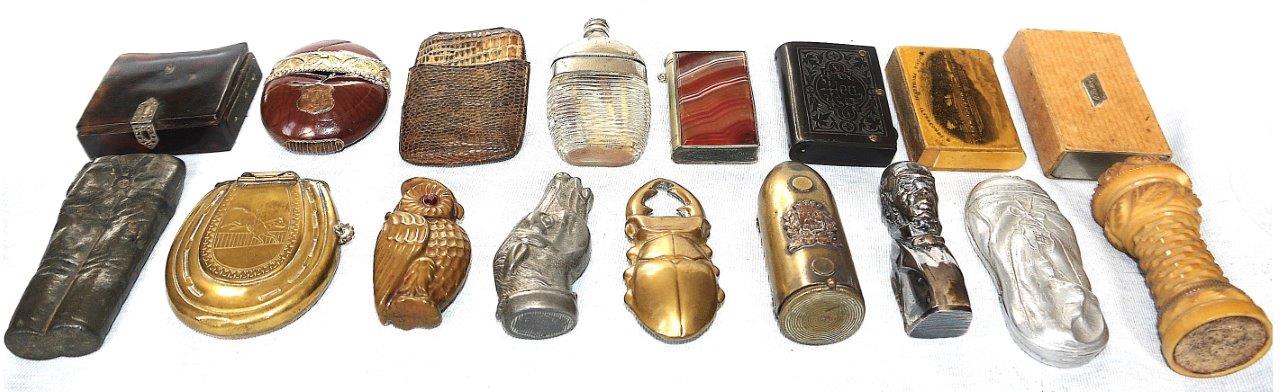
Vesta cases were made from all sorts of materials and featured all sorts of subjects. Top from left to right Tortoise shell, palm nut, lizard skin, metal and glass, agate, Vulcanite, wood, cardboard and below far right vegetable ivory. Bottom row left to right a pair of breeches, horse shoe, owl, horses head, stag beetle, bomb, Gladstone, shoe.
Click here to return to the Exhibition Catalogue.