

Portuguese match industry

Exhibitor : Joel Viana de Lemos
Most of the small match producers of the XIX century manufactured wooden matches with sulphur head. These matches were wrapped in small pieces of brown paper and were sold at fairs or distributed to the small grocery stores.
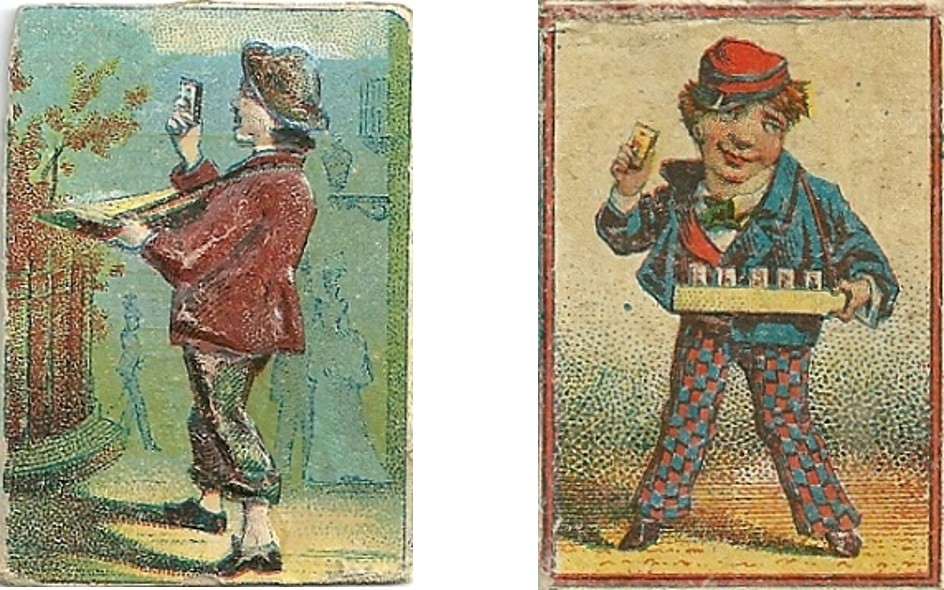
Public sale was assured by some hawkers who carried a tray hanging on a shoulder belt where the different matchboxes were displayed.
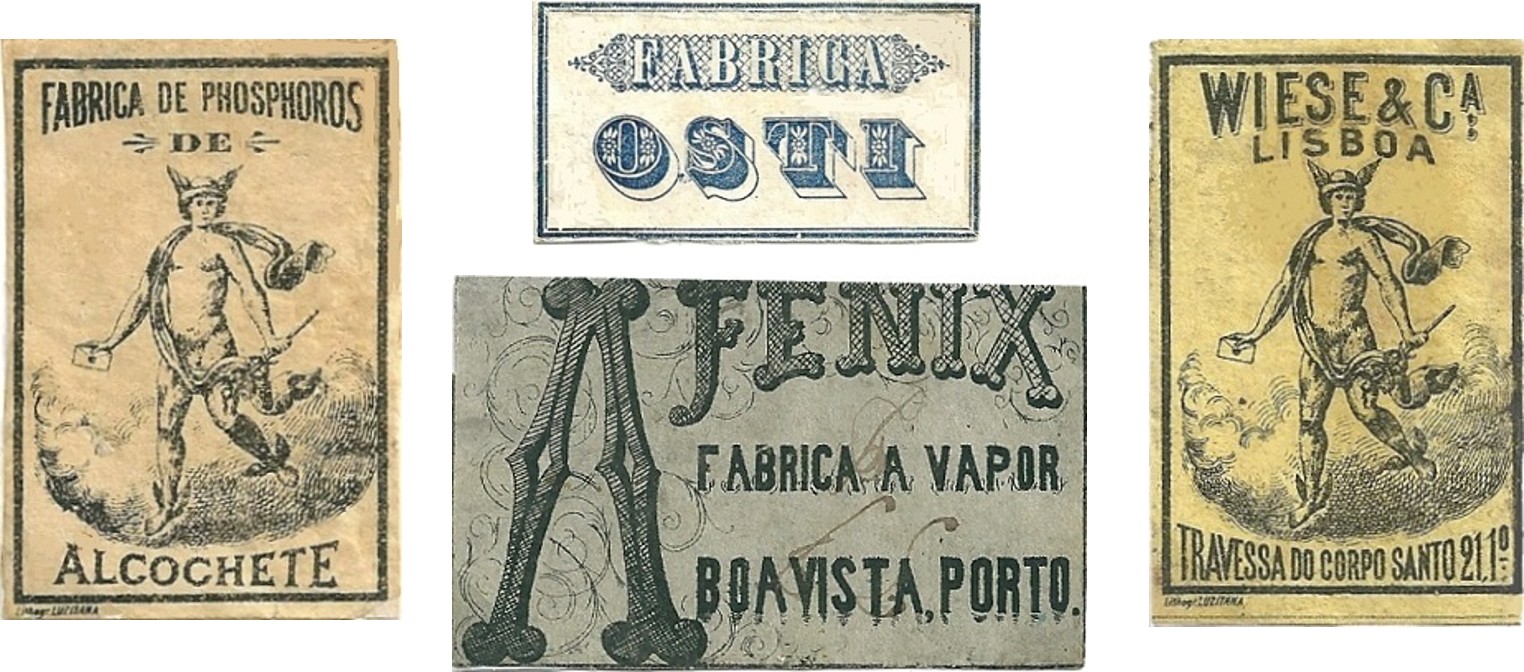
From August 6th 1892 onwards it was made compulsory to label all products showing the name or the brand of the producer. By that time many producers who only had illegible labels which were marked with rough rubber stamps cut with a small knife, lost their authorizations to manufacture matches.
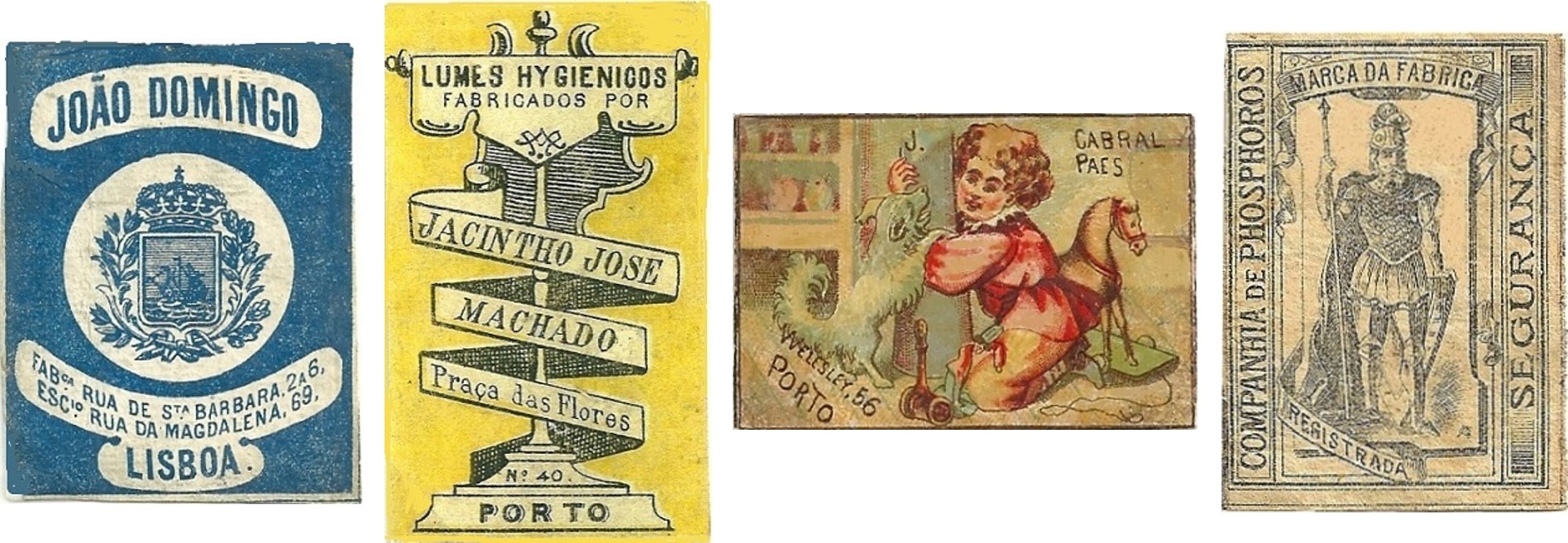
These difficulties led some of the smaller producers to illegal manufacture and selling. However most of these small manufactures decided to keep on producing and selling the matches to the biggest factories.
The main factories were:
| António Maria Mattos | Porto | 1880/83 | Maria Margarida | Porto | 1882/94 |
| Boa-Fé | Porto | 1887/93 | Mattos & C.ia | Porto | 1877/80 |
| Phosphoros Chimicos | Oeiras | 1893/95 | Manoel Ucha | V. Castelo | |
| A Fenix (A Phenix) | Porto | Nacional | Lisboa | 1886/95 | |
| Geral | Porto | 1887/95 | Osti | Lisboa | 1864/80 |
| João Domingo | Lisboa | Fósf. Portuguezes | Lisboa | 1890/95 | |
| Jacintho Machado | Porto | 1877/91 | Progresso | Lisboa | 1875/95 |
| Cabral Paes | Porto | 1881/87 | Portuense | Porto | 1887/89 |
| Lisbonense | Lisboa | Segurança | Porto | 1889/95 | |
| Mattos Cabral | Porto | 1880 /81 | Melchor Solá | Porto | 1868/80 |
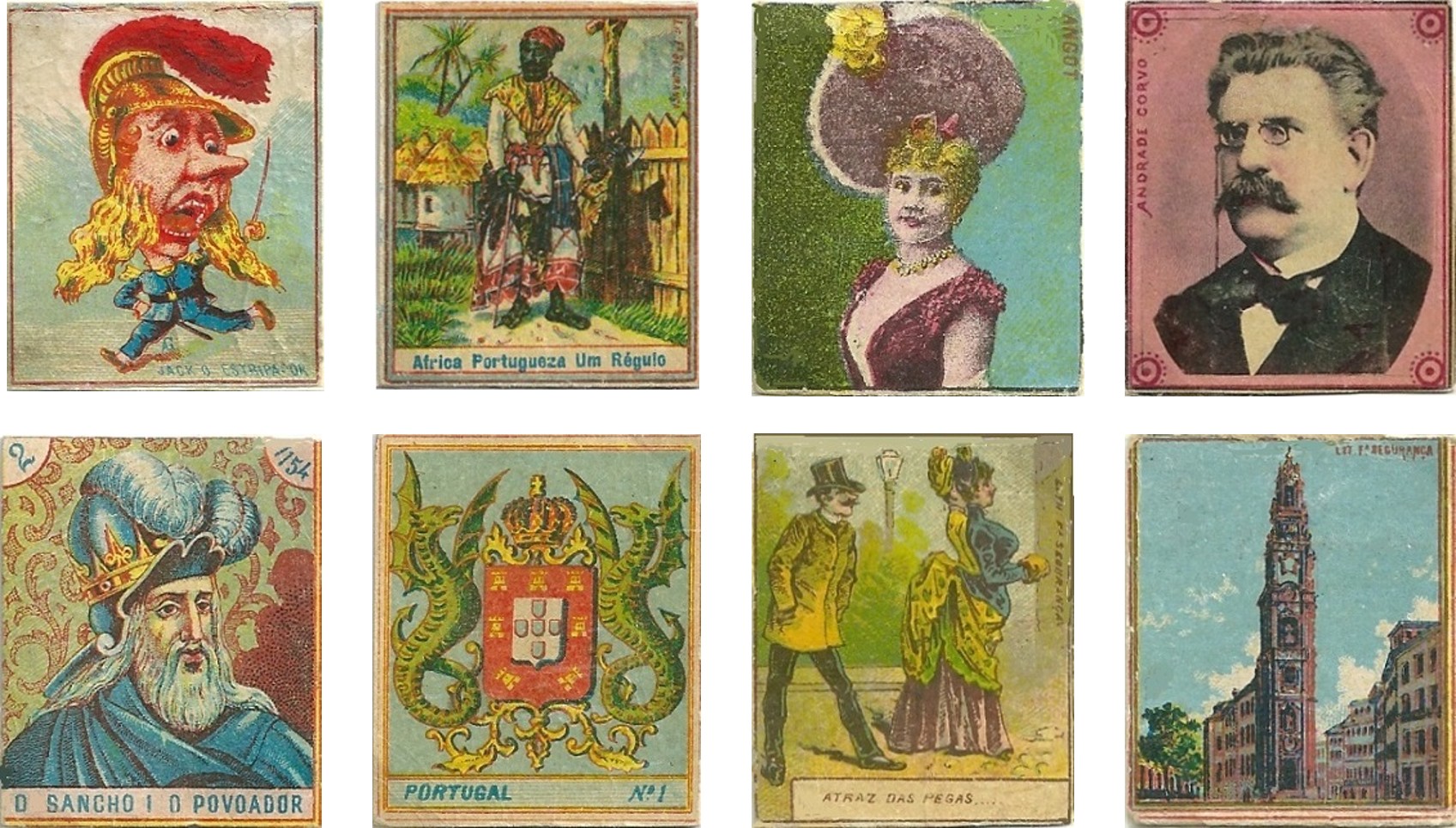
(This list only presents the years of work that the consulted documentation confirmed)
Some producers besides manufacturing the common sulphur matches also produced wick wax matches which were seen as a luxury product and were packed in spring flap type matchboxes.
Some of those factories imported from the Italian lithographic printers, Armanino and Doyan, the material needed to assemble those cardboard matchboxes.
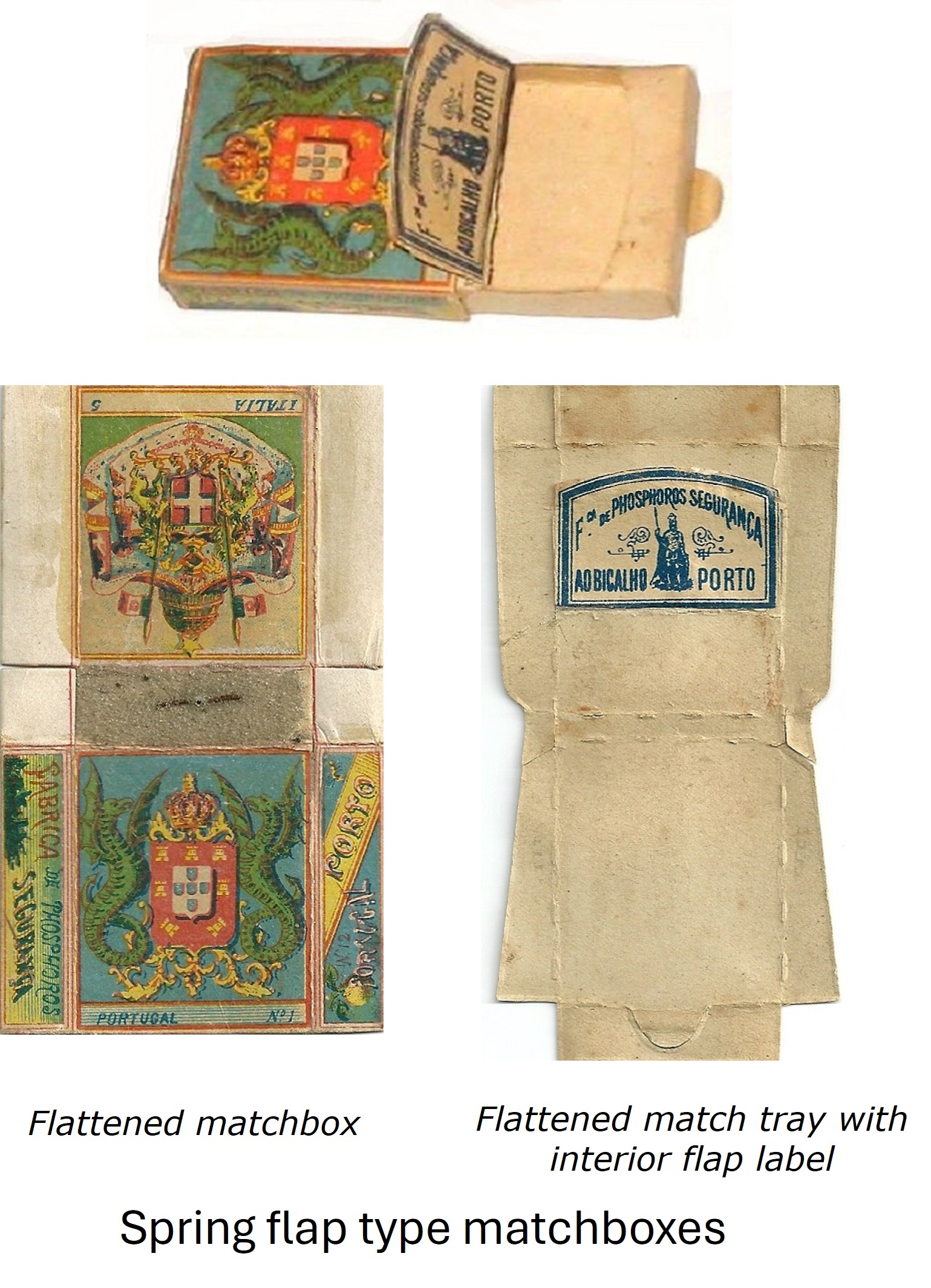
I point out that the Portuguese factory “Comp.ª de Phosphoros Segurança” established a partnership with the Italian factory “Abbona & Romagna” from Moncalieri – Torino at the beginning of its activity (1889).
Some of the matchboxes of the Portuguese company are equal to the ones of the Italian Factory.
There are also labels from Portuguese factories identical to labels from factories in Spain.
During the period until 1895 importing matchboxes was permitted, mainly from Italy and Spain. Spring flap matchboxes from the following Italian factories are known:
| Ambrogio Dellacha | Moncalieri -Torino | Faustino de Medici | Milano |
| Abbona & Romagna | Moncalieri -Torino | Giacomo de Medici | Milano |
| Benvenuti & Salsiccioni | Livorno (Toscana) | L. Baschiera & C.ª | Venezia |
| Francisco Lavaggi e F.º | Trofarello –Torino | Luigi de Medici | Torino |
Identified lithographic printers on Portuguese matchbox labels or on spring flap matchboxes are:
| Lit. Armanino | Genova – Italy | Lith. Luzitana | Lisboa |
| Lit. Boronat | Madrid – Spain | Litografia Esperança | |
| Costa Carregal | Lyth. Moderna | Porto | |
| Cayer & C.o | Marseille – France | Lit. A Nacional | Porto |
| Commércio do Porto | Porto | Lith. Peninsular | Porto |
| Lith. Carlos Maigne | Lisboa | Lith. Progresso | Lisboa |
| Lit. Doyen | Torino – Italy | Lith. Portuense | Porto |
| Lith. Emilio Biel & C.ia | Porto | Lith. Portugeza | Porto |
| Litografia Eduardo | Real Lith. Luzitana | Porto | |
| Lith. Guedes | Lisboa | Lith. Segurança | Porto |
The match monopoly 1895-1925
In 1895 the monopoly of match manufacture is created according to the following chronology:
- 1895 May – By order of the “Presidente do Conselho de Ministros da Fazenda”, it is ceased all work in the existing match factories in the country except “Companhia de Fósforos Segurança” and “Companhia Geral de Phosphoros” in Oporto.
- All factories are compelled to stop production at once and to deliver until 26/05 all existing matches. In Oporto this deposit takes place at Lordelo do Ouro for all factories except “Segurança” and “Geral”.
- Matchboxes which are not properly sealed are not allowed to leave the premises at Lordelo do Ouro.
- As the factory at Lordelo do Ouro in Oporto is the only factory authorized to keep operating it had to admit all workers who demonstrated that they had been working in factories which were prevented from operating by this law, namely workers from “Boa-Fé”, “Segurança” and “Portuense” factories.
- 1895 August – By order of 3/8 it is determined that all the labels of the concessionaire must be the same in all factories and types of matches. Provisional labels are defined to cover all expropriated production.
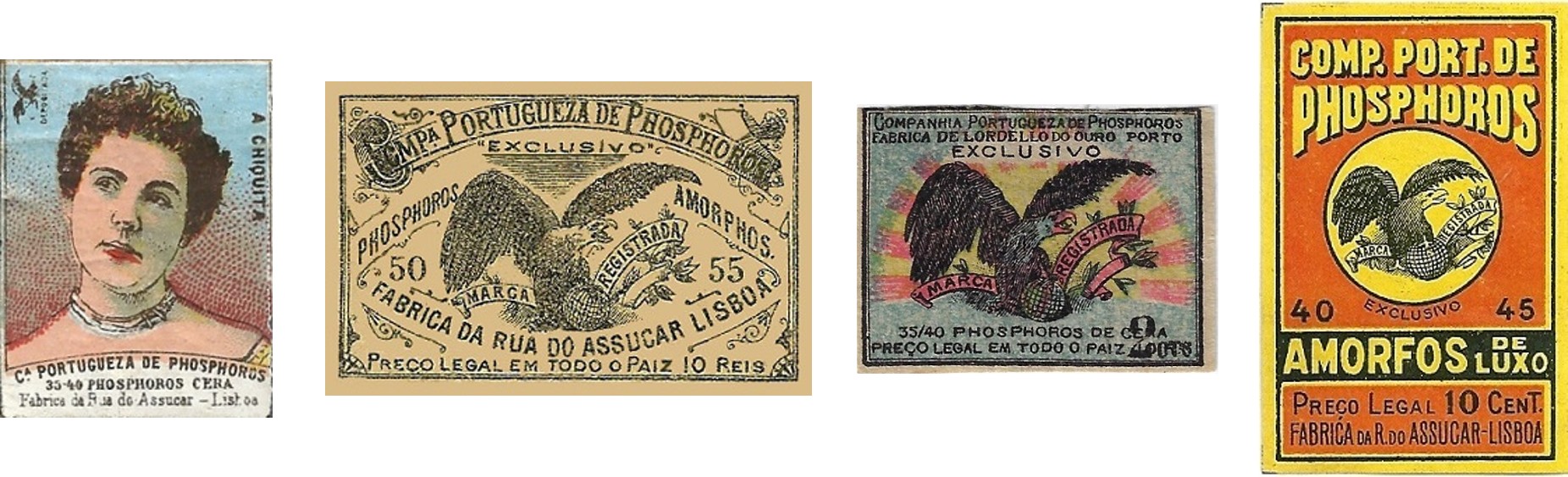
The granting of exclusive manufacturing for 30 years (1895/1925) was hired by “Companhia Portugueza de Phosphoros”.
The Comp.ª Portugueza de Phosphoros had facilities in: Rua Direita do Assucar (ao Beato) – Lisboa (factory), Lordello do Ouro – Porto (factory) e Rua de S. Julião, 139 – Lisboa (main office).
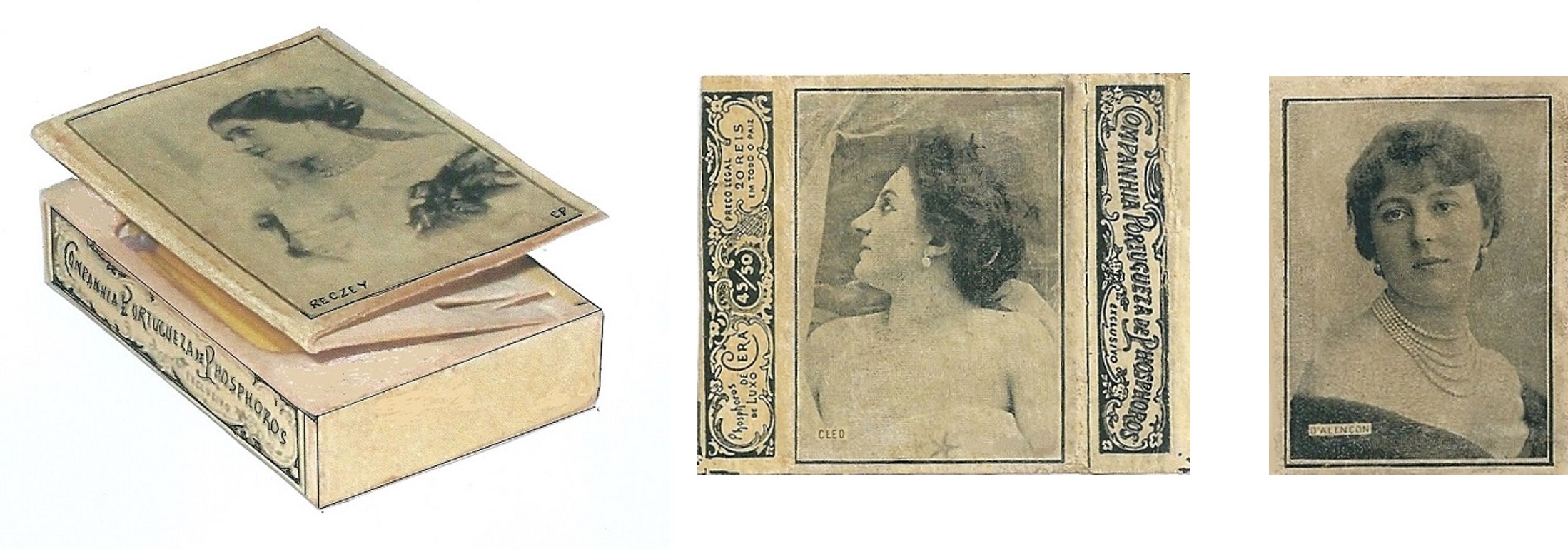
This factory produced spring flap matchboxes, with their respective labels known as “black and white”. More than five thousand labels are catalogued, distributed across seventeen series printed on seven different lithographic printers.
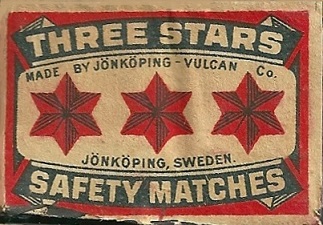
In 1921 the Portuguese Government, to solve the lack of matches in the country, authorized matches to be imported from abroad. One of the countries that applied was Sweden with the label 3 star of the “Jönköping”.
The match industry after 1926, but with government control of the market. Importing matches was not allowed.
In 1926, the following factories were established:
- March 20 – Sociedade Nacional de Fósforos – a company that succeeded the “Companhia Portugueza de Phosphoros,” which previously held the monopoly. It maintained its two factories – one in Porto and the other in Lisbon
- May 18 – Companhia Continental de Fósforos – Porto
- December 21 – Fosforeira Portuguesa – Espinho
- December 22 – Companhia Lusitana de Fósforos – Porto
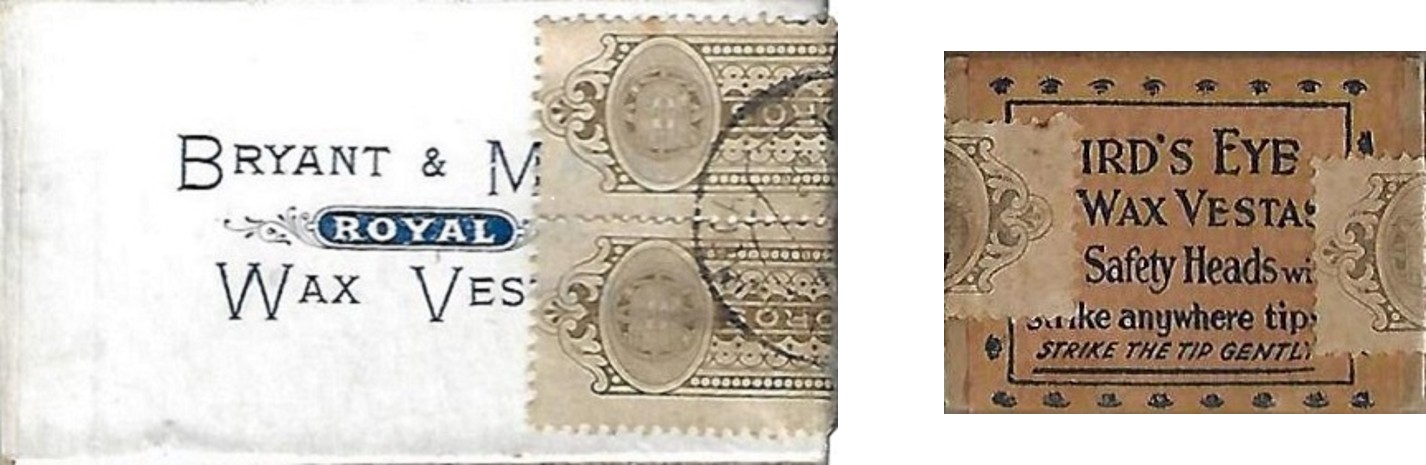
At that time, foreign match factories must have made contacts to export to Portugal. Matchboxes with matches would have to pay a tax to enter Portugal. This must have been the case with these Bryant & May matchboxes.
These matchboxes, which some collectors own, are all in unused condition, so we think they were never actually on the market. A batch must have come to Portugal as “samples”.
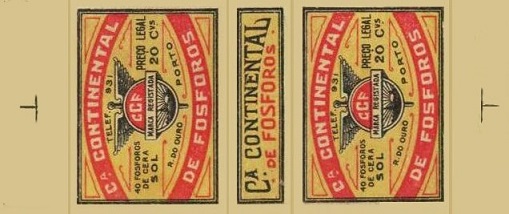
A – Companhia Continental de Fósforos – Porto (1926-1933)
This factory only produced cardboard matchboxes (skillets)
B – Companhia Lusitana de Fósforos – Porto (1926-1967)
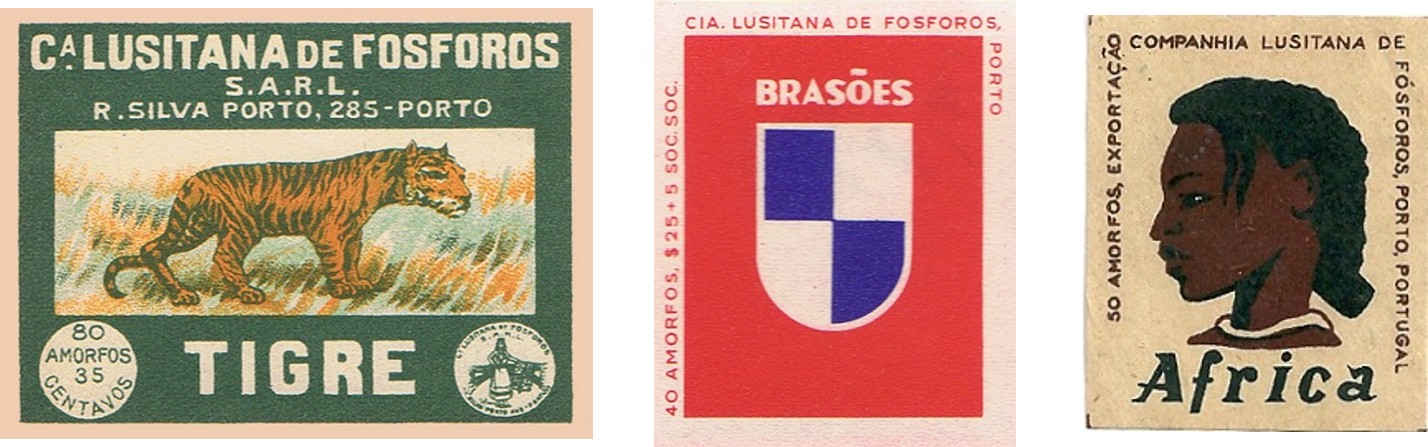
This factory produced wooden matchboxes with label for the domestic market and for export (to the Portuguese colonies).
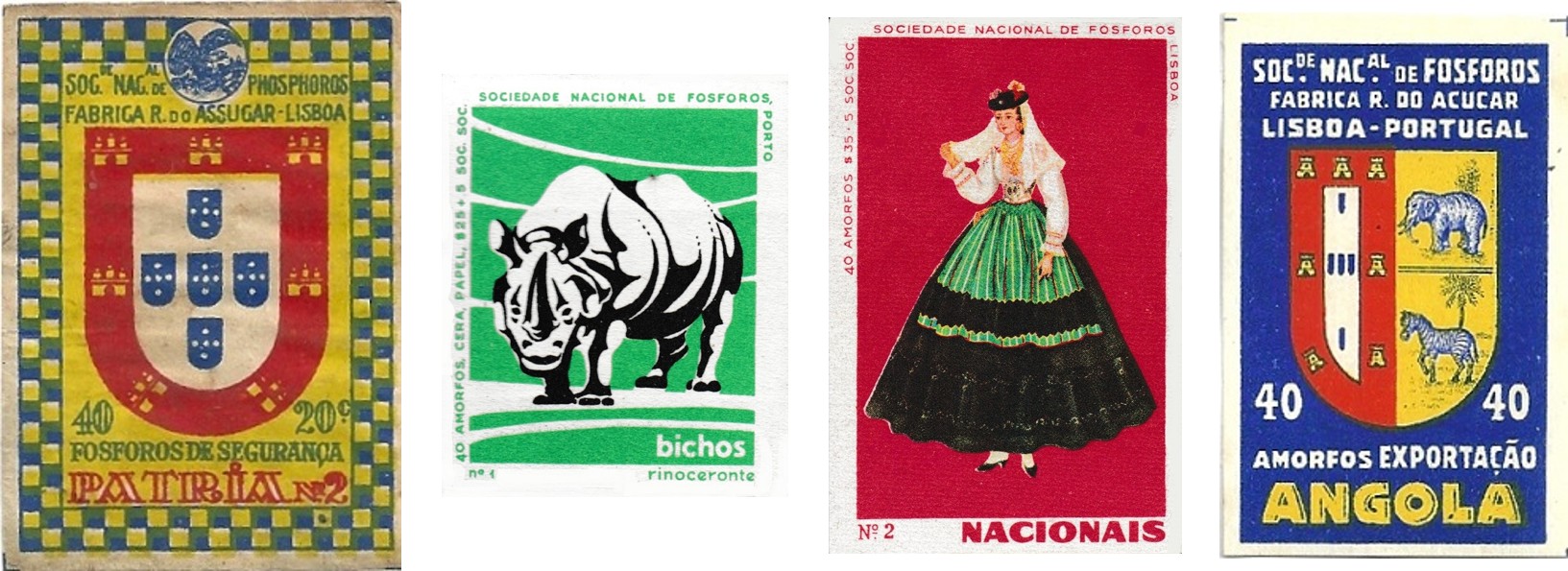
C – Sociedade Nacional de Fósforos – Porto and Lisboa (1926-1994)
The Lisbon factory closed in 1969. The factory in Porto remained in operation until 1994.
Initially this factory produced wooden matchboxes with label for the domestic market and for export (to the Portuguese colonies)
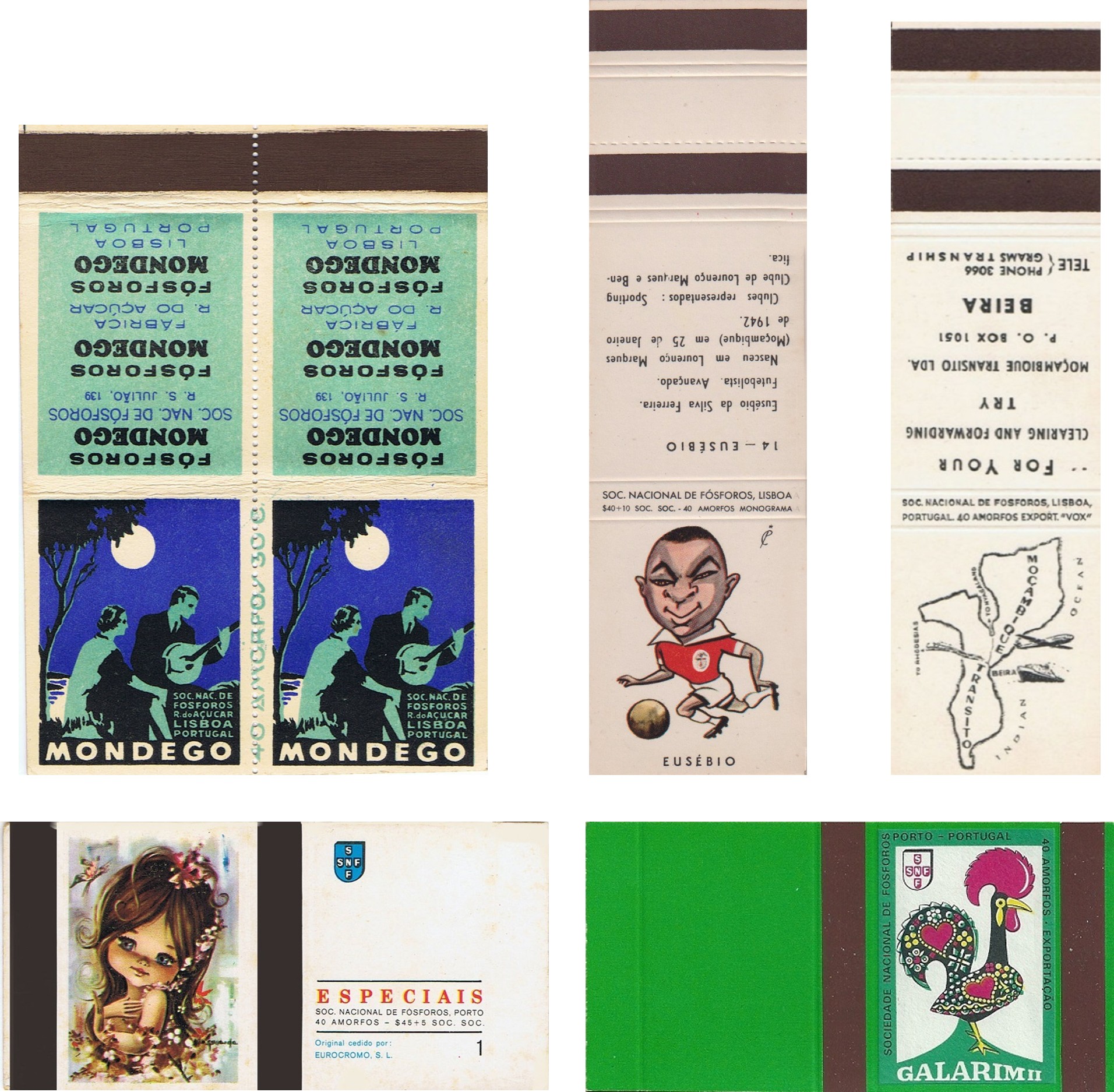
In 1930, the production of matchbooks began, and in 1960, cardboard matchboxes (skillets), both for the domestic market and for export.
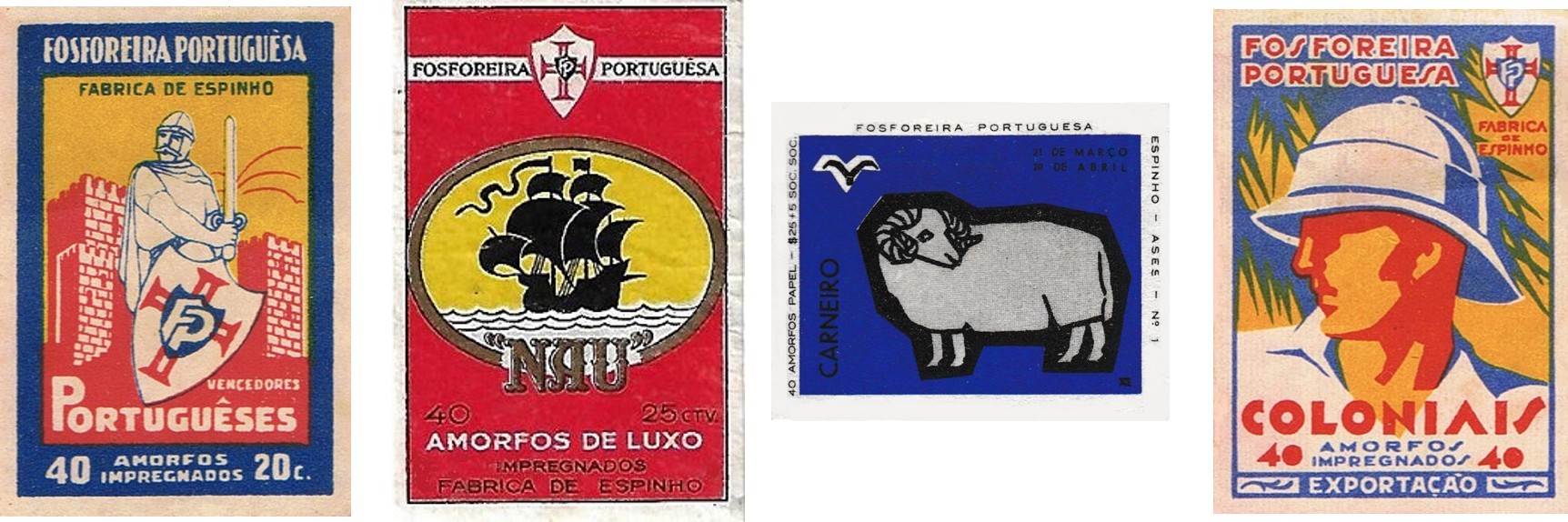
D – Fosforeira Portuguesa – Espinho (1926-2006)
Initially this factory produced wooden matchboxes with label for the domestic market and for export (to the Portuguese colonies)
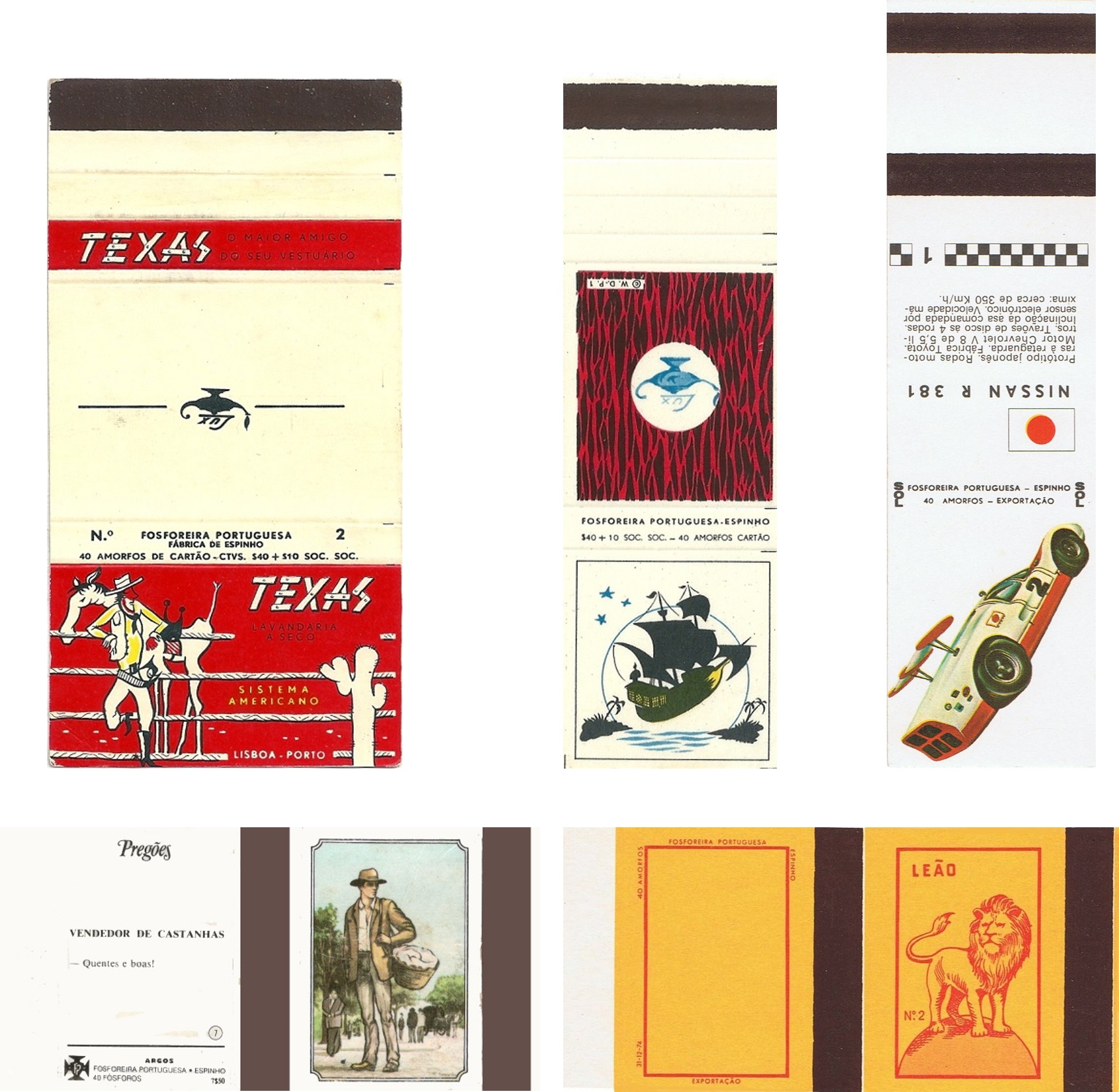
In 1956, the production of matchbooks began, and in 1968, cardboard matchboxes (skillets), both for the domestic market and for export.
Free market, 1970s
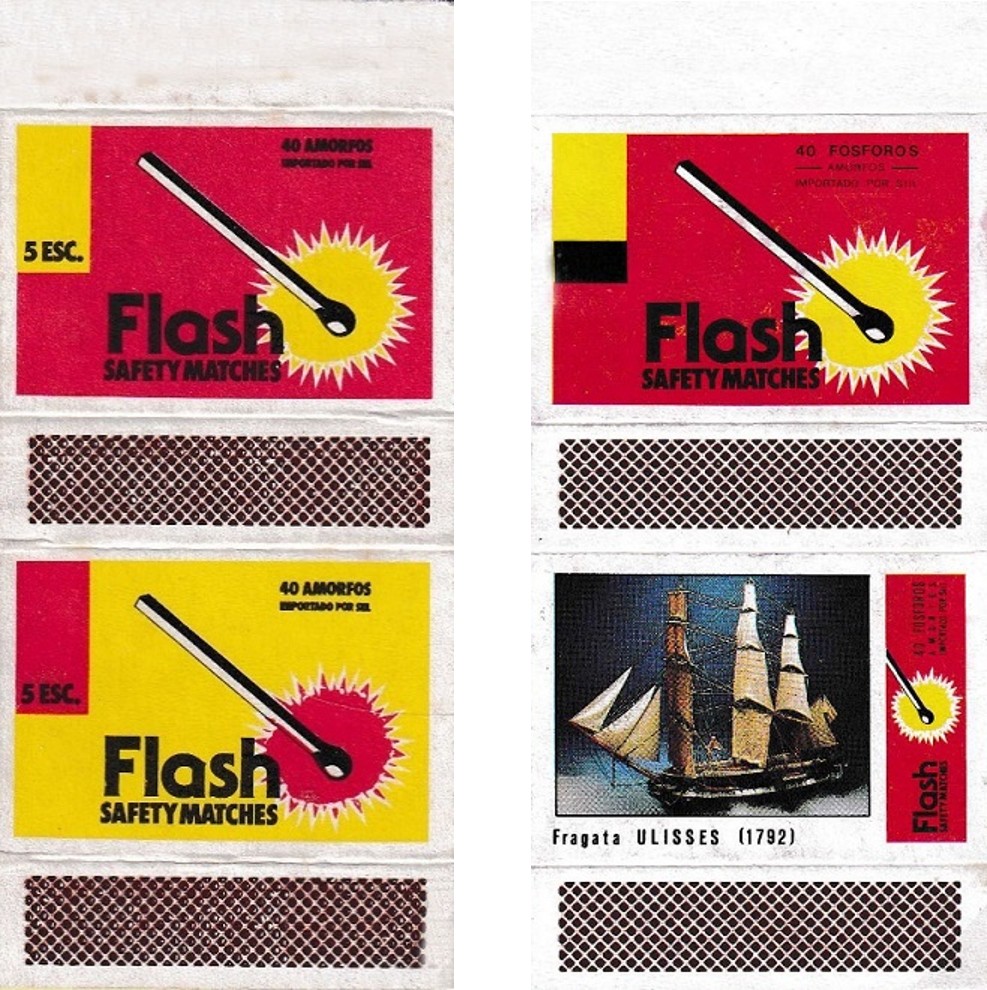
In the late 1970s, the match market was liberalized, with matchboxes with no set price. Many importing companies were created, with matchboxes being imported from all over the world. We indicate some of the most relevant ones, whose matchboxes distributed in Portugal, are catalogued.
Flash – cardboard matchboxes (skillets) imported by the company SIIL – Sociedade de Importações Internacional, Lda., manufactured in Türkiye and sold in Portugal, between 1988 and 1992.
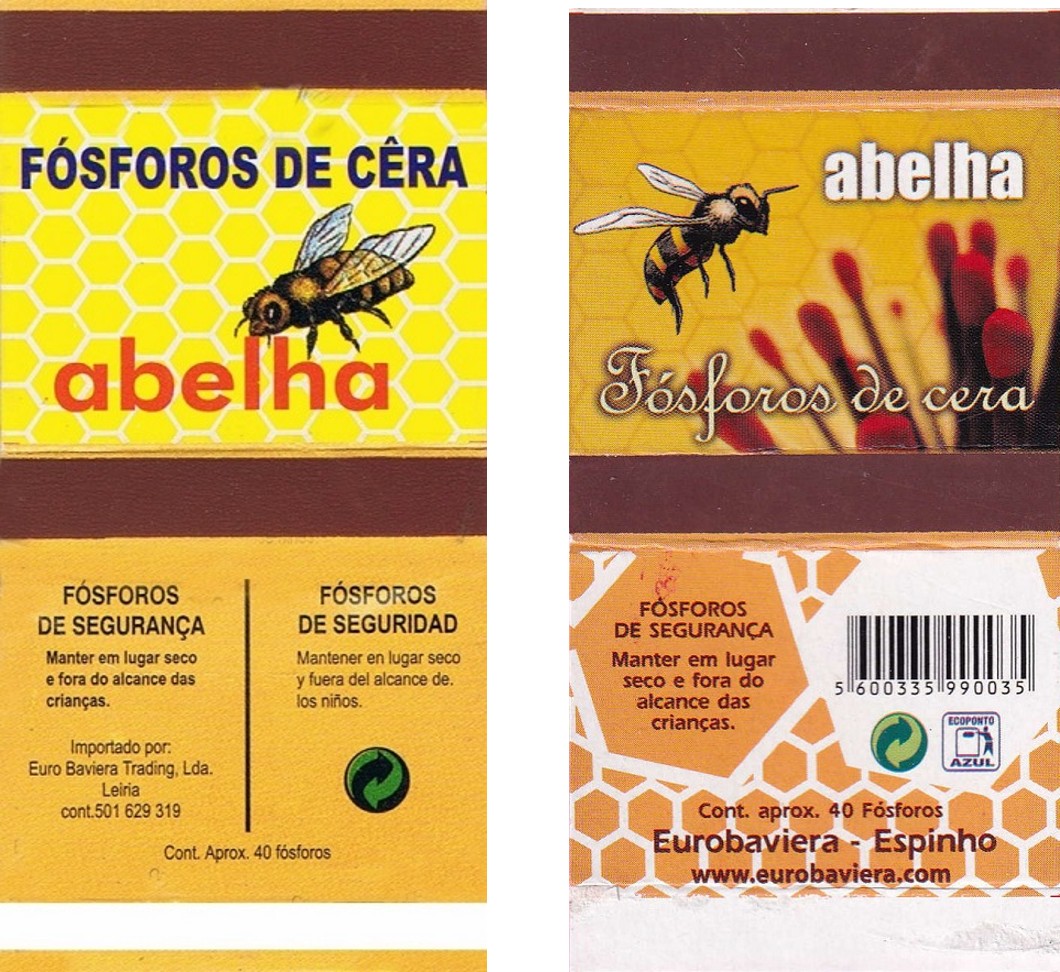
Eurobaviera – The company EuroBaviera – Trading, Lda. started its activity in Leiria, in the year 1985. In 2007, former employees of Fosforeira Portuguesa acquired Eurobaviera and moved its headquarters to Espinho. This company imported its own cardboard matchboxes (skillets) from India and Poland with designs and brands exclusively created which they prepared and supplied to the manufacturers.
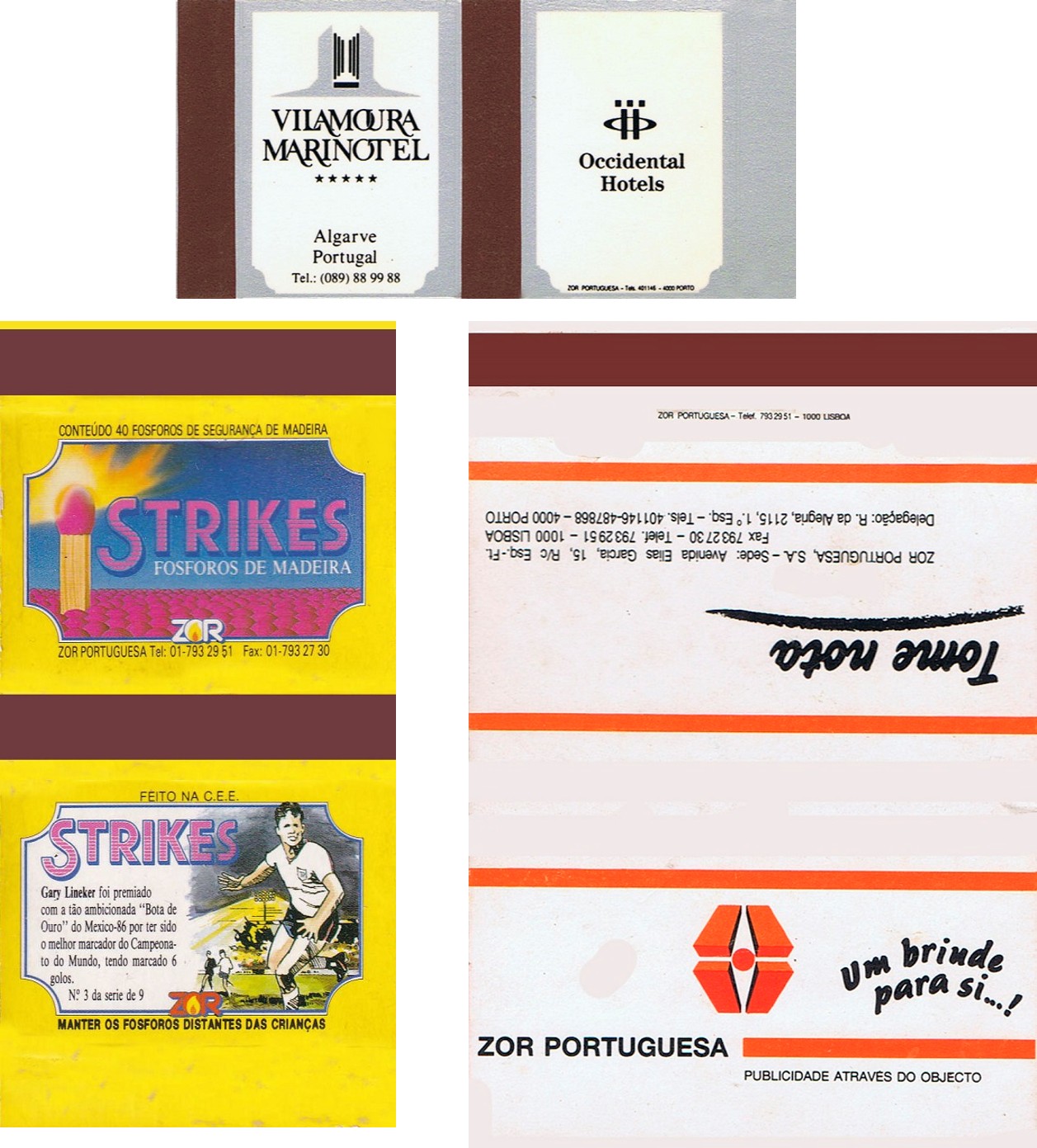
ZOR – The company Zor Portuguesa,SA appears in Portugal in 1989, associated to Fosforeira Portuguesa, both being a part of the “Fosforera Española” Group. It distributed cardboard matchboxes (skillets) and matchbooks made in Spain by Fosforera Española.
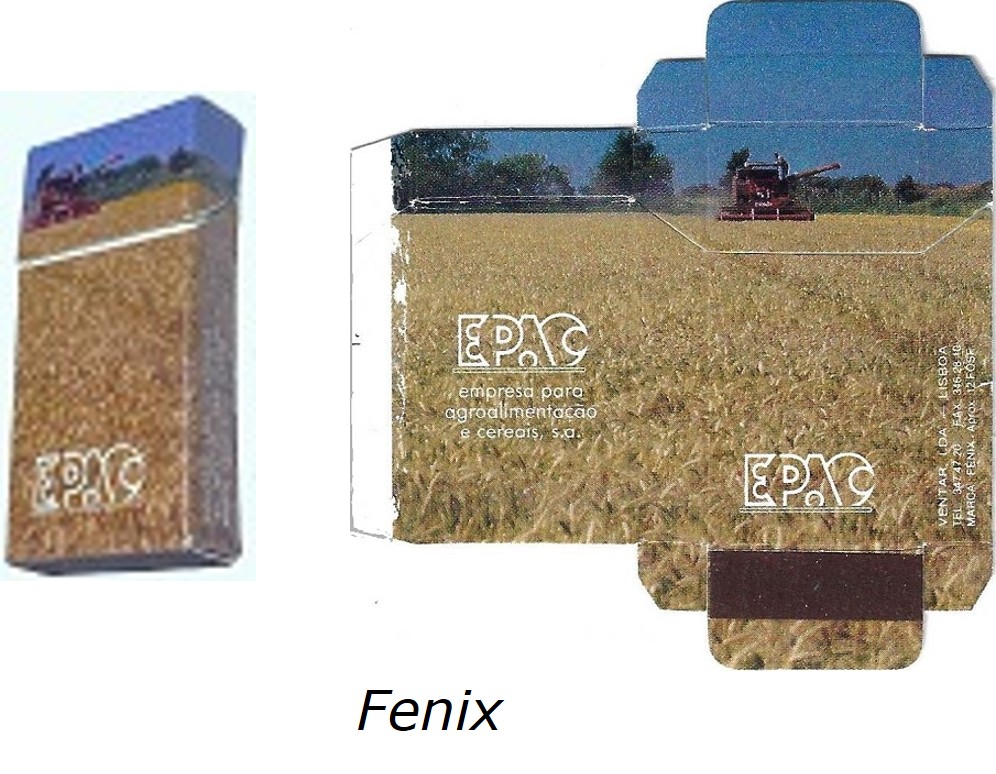
Ventar / Fenix / Luminar – bookmatches and matchboxes (cigarettes packet type) manufactured by VENTAR / LUMINAR.
Between 1983 and 1993 Fosforeira Portuguesa supplied bookmatches bases and matches, with Ventar then post-printable texts and images on the bookmatches and skillets.
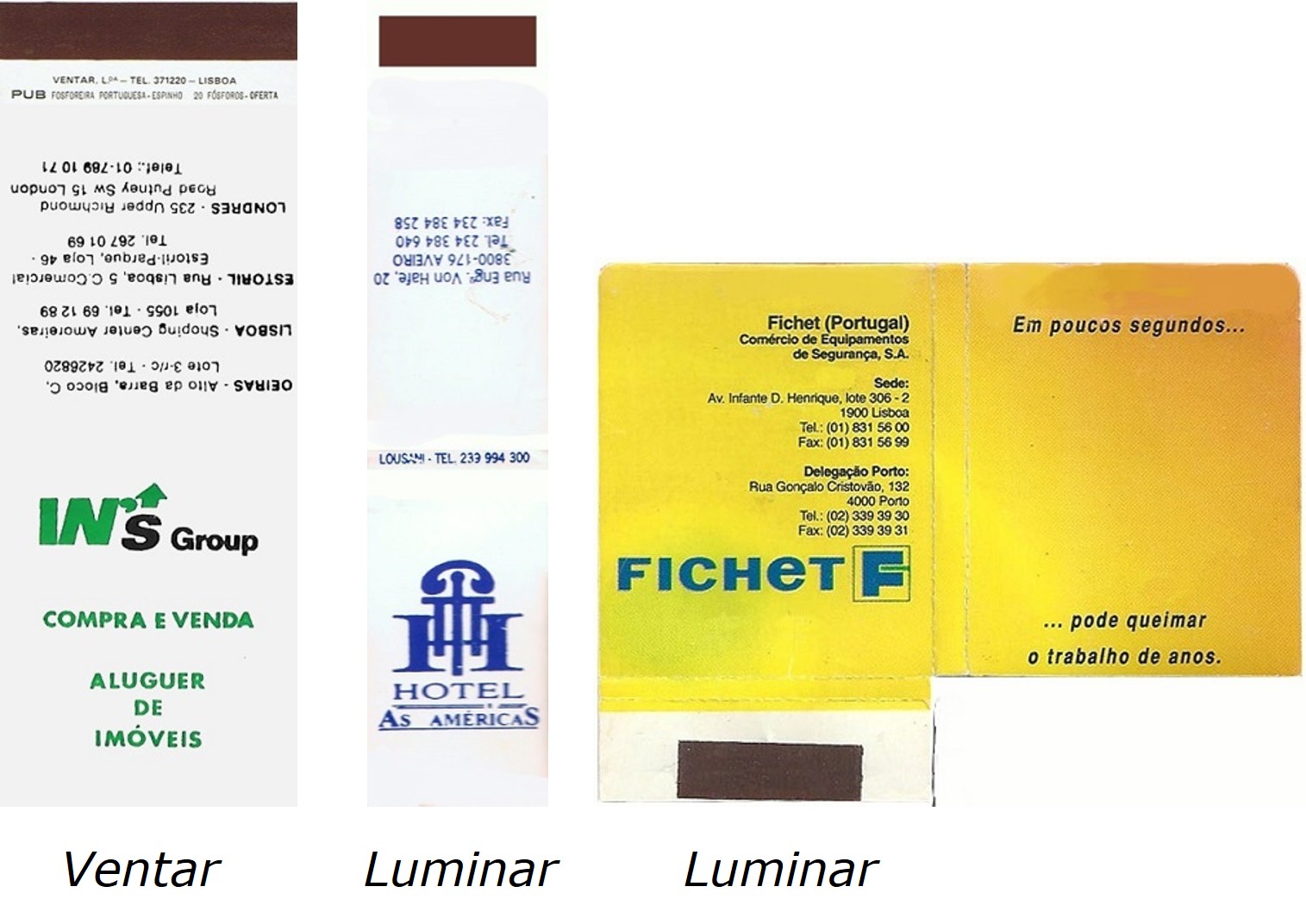
The Fenix brand was created by Ventar in the early 1990s. Ventar was later sold and renamed Luminar. In 1997, they created a new type of bookmatches which we call Luminar.
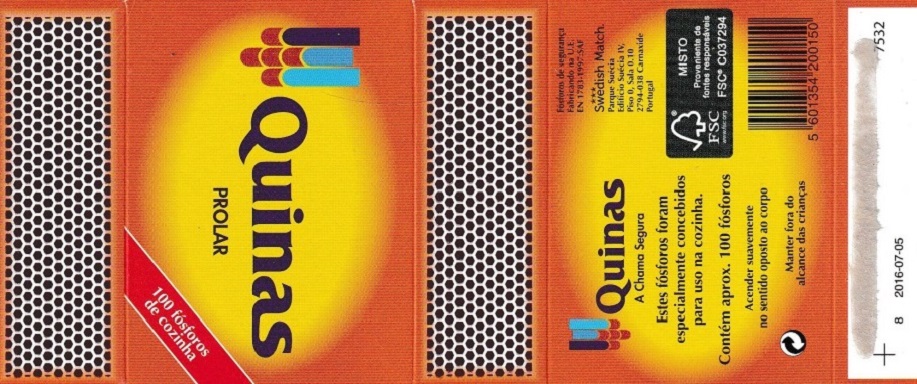
Swedish Match – In 1994, the production of the Sociedade Nacional de Fósforos came to an end, after the closing of the only factory it had in the city of Porto. Meanwhile, an import, storage and marketing company (matches, “Cricket” lighters and tobacco) named Sociedade Nacional de Fósforos was maintained in Portugal.
In 1998 the designation Sociedade Nacional de Fósforos disappeared from the matchboxes. The former name was replaced by the name Swedish Match Portugal, also known as Swedish Match Fósforos Portugal, SA, until the beginning of 2002. In 2002, this designation was replaced by Swedish Match. In 2015 a matchbox with the name of the distributor Scandinavian Tobacco Group, appeared on the market. The following year the strikable fire starter appeared on the market, its distributor was STG Portugal. The matchboxes that came later bear the Swedish Match brand, which remains to this day.
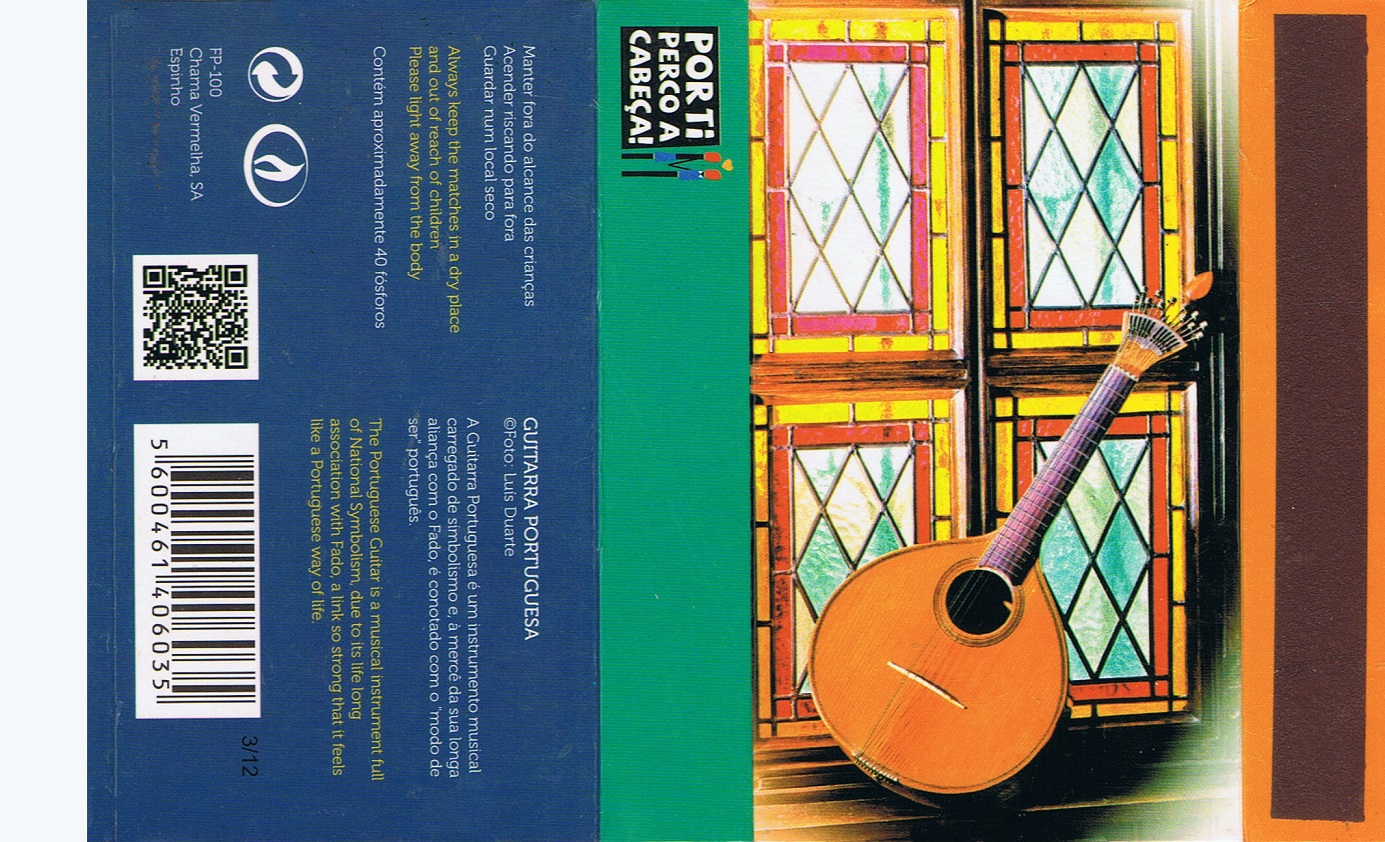
Chama Vermelha – Espinho (2006-2014)
Chama Vermelha, S.A. begun its activity at the end of 2006, after the closure of Fosforeira Portuguesa and in the same premises in Espinho. About a year later Chama Vermelha moved its facilities to Serzedo – Vila Nova de Gaia. This factory produced cardboard matchboxes (skillets) and same bookmatches. It was the last match factory producing matches in Portugal.
The match industry in Portuguese Colonies
The Portuguese colonies, considered at the time as overseas provinces, imported matches from various sources, notably from Portugal and Macau.
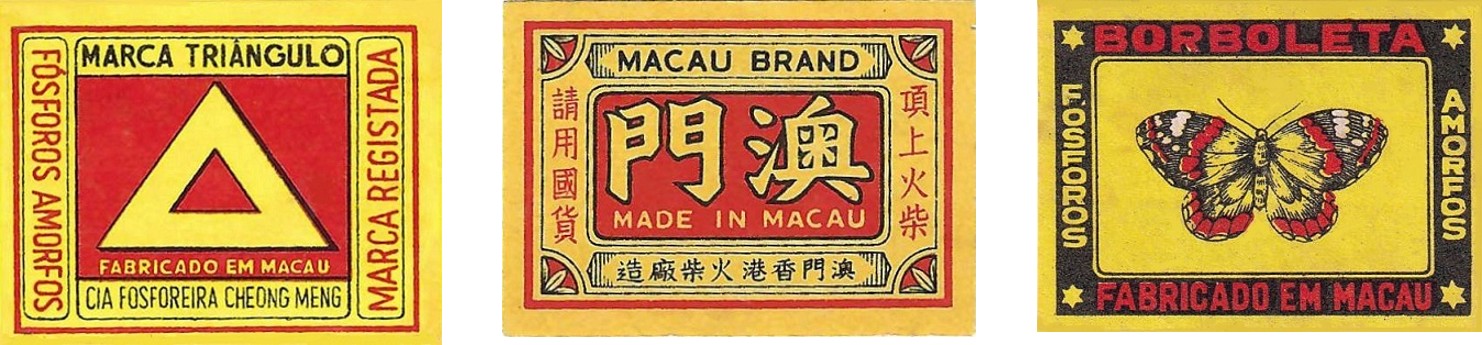
Of particular note is Macau, which between the 1920s and 1950s had a highly active match industry, one of its main sectors. Several factories were established in the city and exported to Asian and African countries. The main factories were:
| Cheong Ming | Hong Kong of Macau | Tai Kwong |
| Guang Hua | Man Koc | Tung Hing |
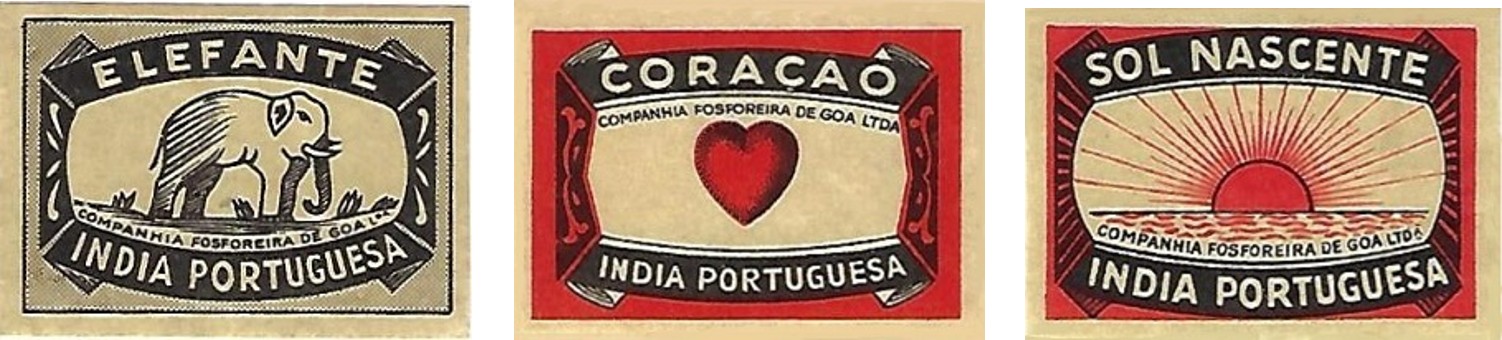
Goa, in India, also had important match factories, notably the Companhia Fosforeira de Goa, Lda.
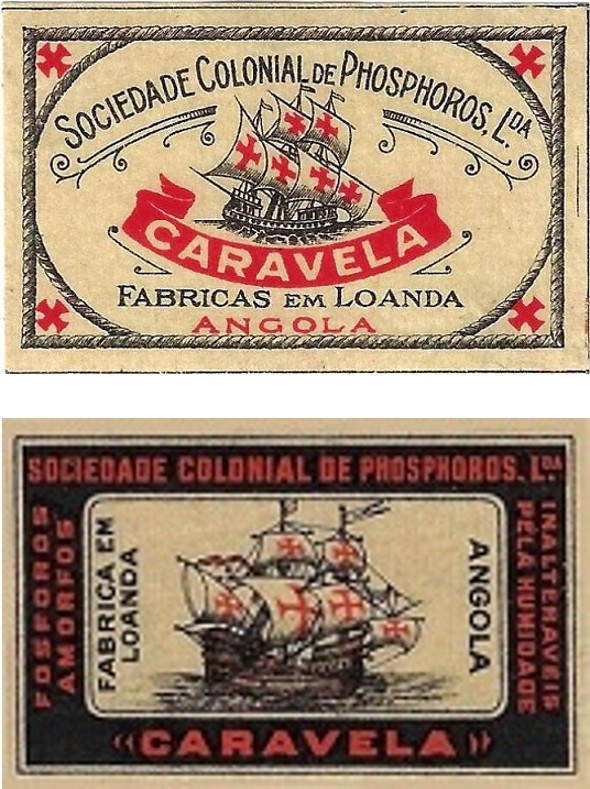
In Angola, until the 1930s, matches were imported mainly from Sweden but also from Portugal, Belgium, Finland, Japan and Germany. There followed a period with almost exclusive imports from Portugal, with manufacturing in Angola from 1926 to 1932 by Sociedade Colonial de Phosphoros, L.da.
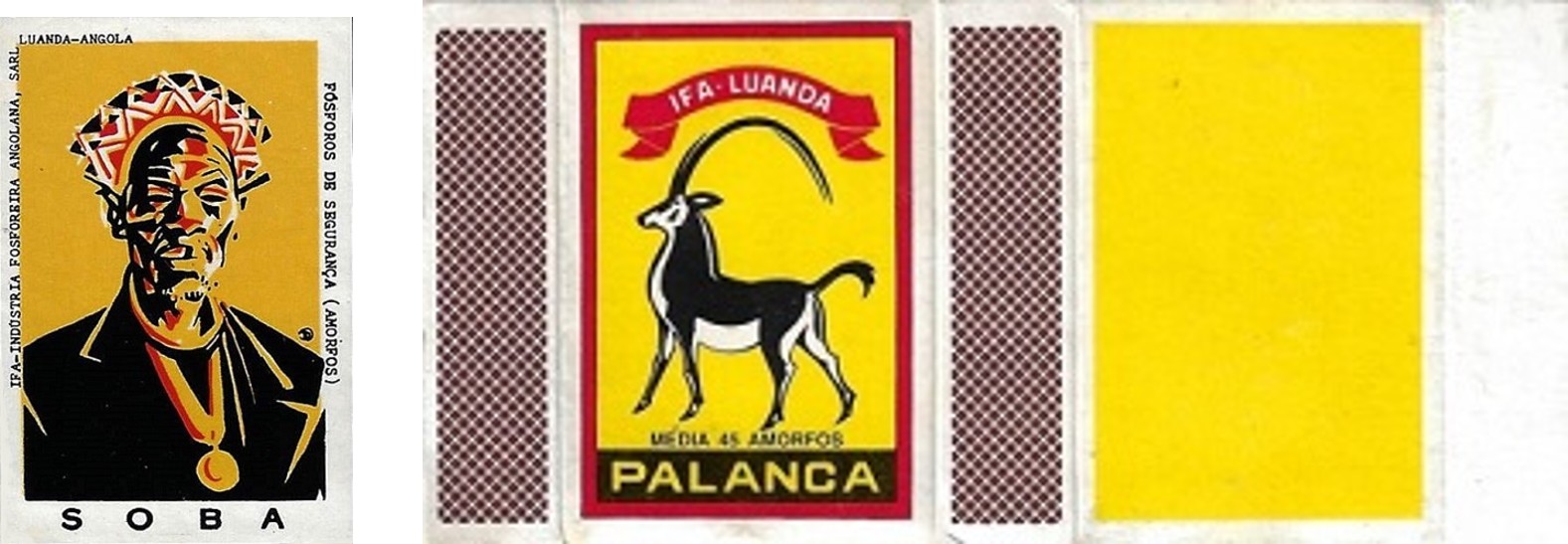
In 1969, manufacturing began by Indústria Fosforeira Angolana (IFA) which was active for several decades but is no longer in operation.
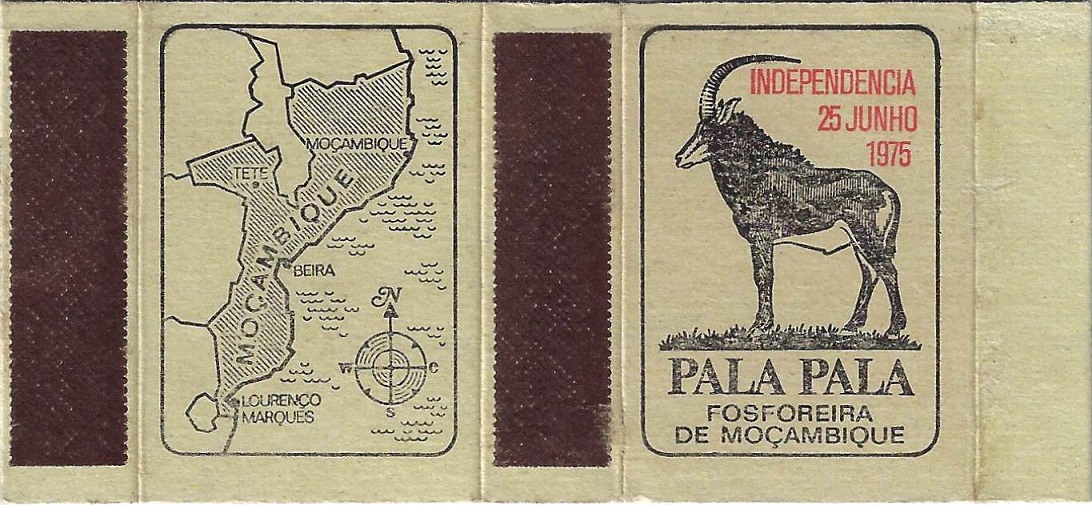
In Mozambique, the distribution of matches was identical to that of Angola, although with a strong importation of matchboxes from Macau. In 1973, the Fosforeira de Moçambique began operations, which was active for several decades but is no longer manufacturing its own product.

Bonus exhibit : Italian Imports into Portugal in the 19th Century
Before the creation of the monopoly in the manufacture of matches in 1895, Portugal imported spring flap type matchboxes from eight Italian factories:
- Ambrogio Dellacha; Abbona & Romagna; Benvenuti & Salsiccioni; Francesco Lavaggi e F.º ; Faustino de Medici; Giacomo de Medici; L. Baschiera e C.; Luigi de Medici
The number of boxes imported between 1882 and 1895 was very significant.
The following are matchboxes imported from each of these factories and below all panels of the respective series are shown.


These factories used the following Lithographic Printers:
- Armanino – Genova; Doyen – Torino; Dello Stabilimento – Torino; Fratelli Tensi – Milano; Amusso – Biela; Giordana & Salussolia
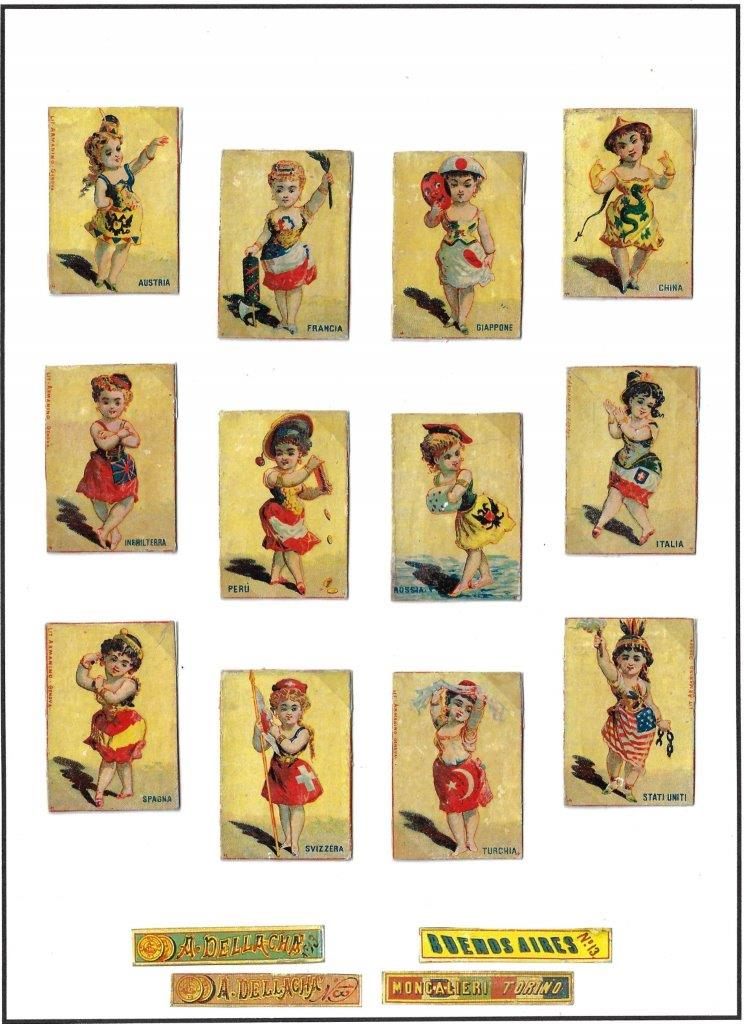 Ambrogio Dellacha, Moncalieri press Torino
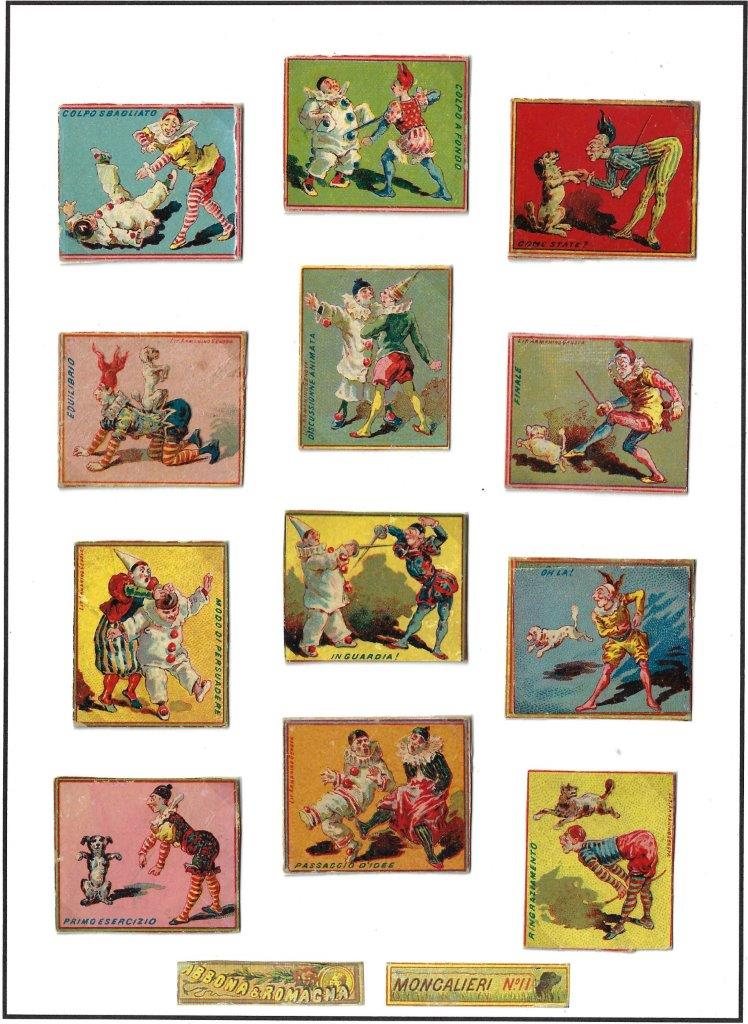 Abbona & Romagna, Moncalieri - Torino
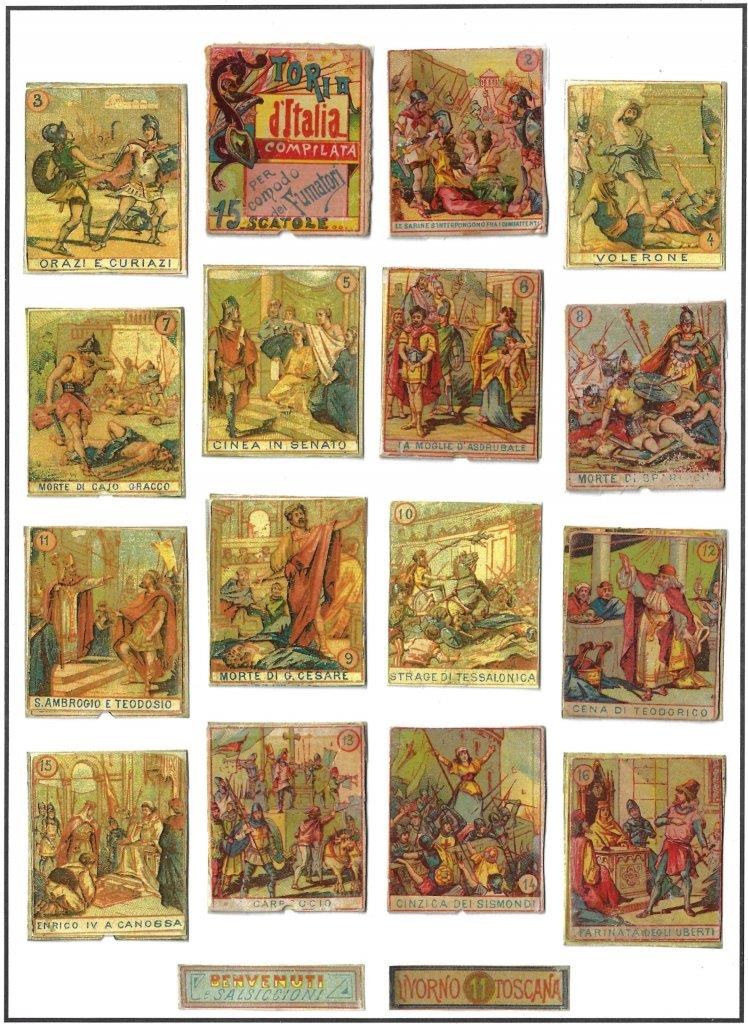 Benvenuti & Salsiccioni, Livorno - Toscana
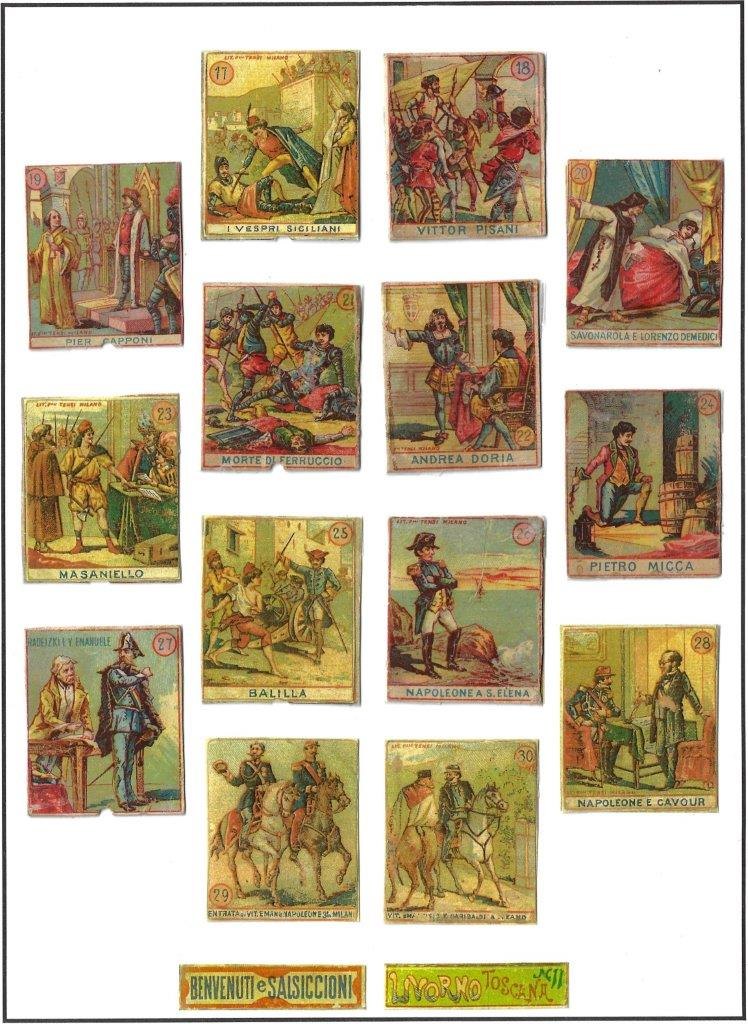 Benvenuti & Salsiccioni, Livorno - Toscana
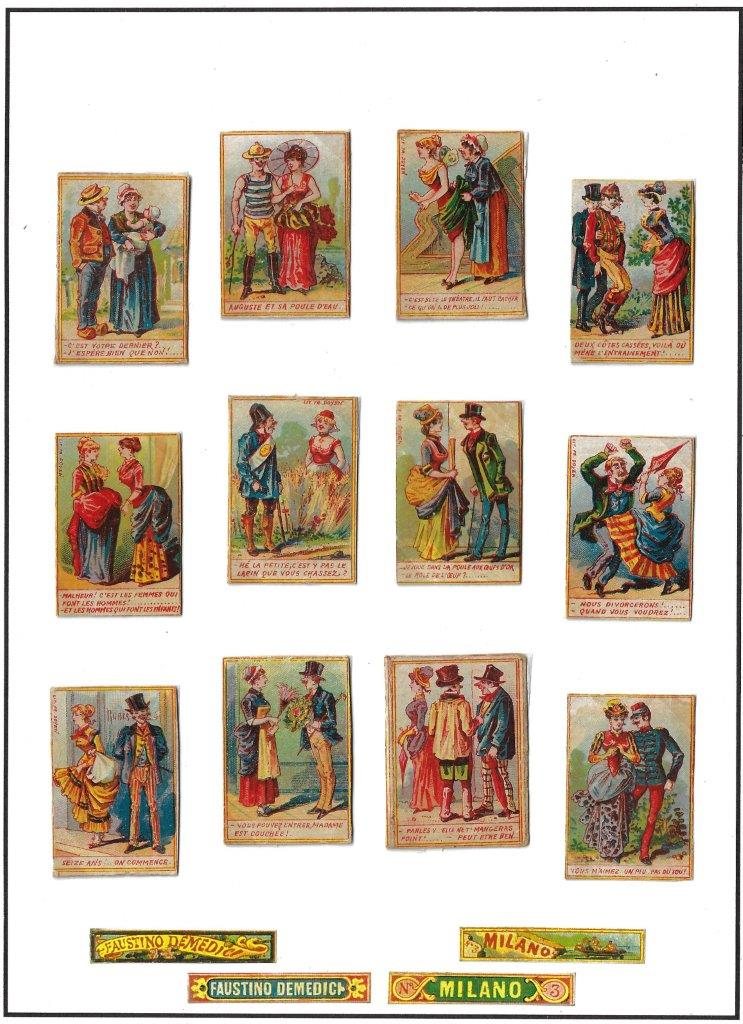 Faustino de Medici, Milano
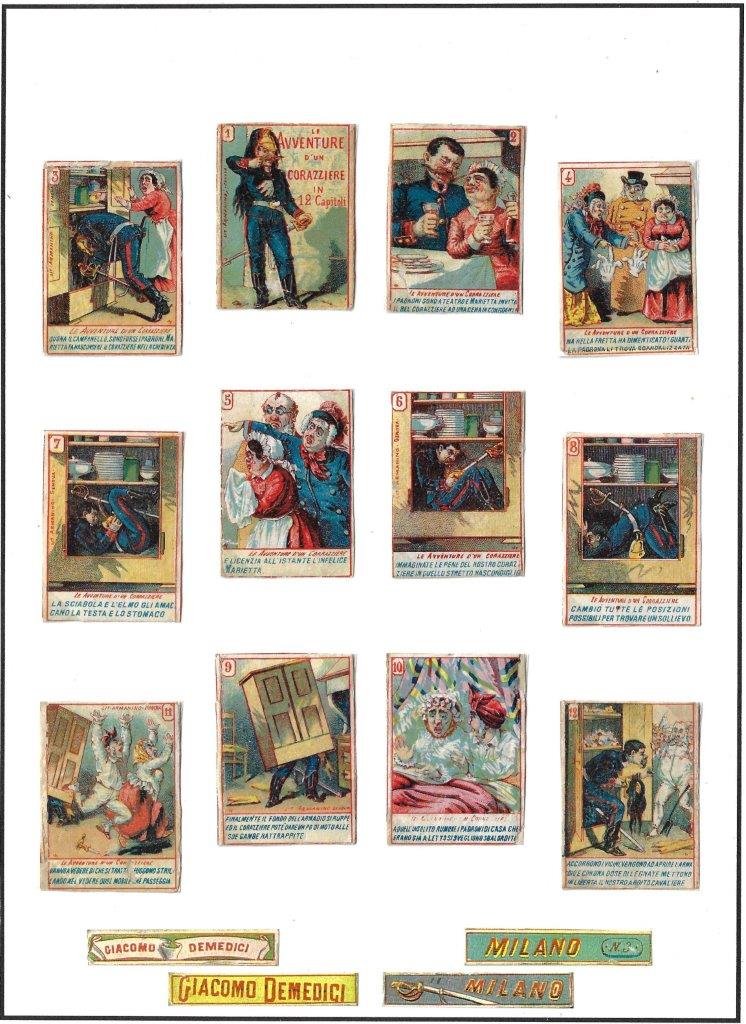 Giacomo de Medici, Milano
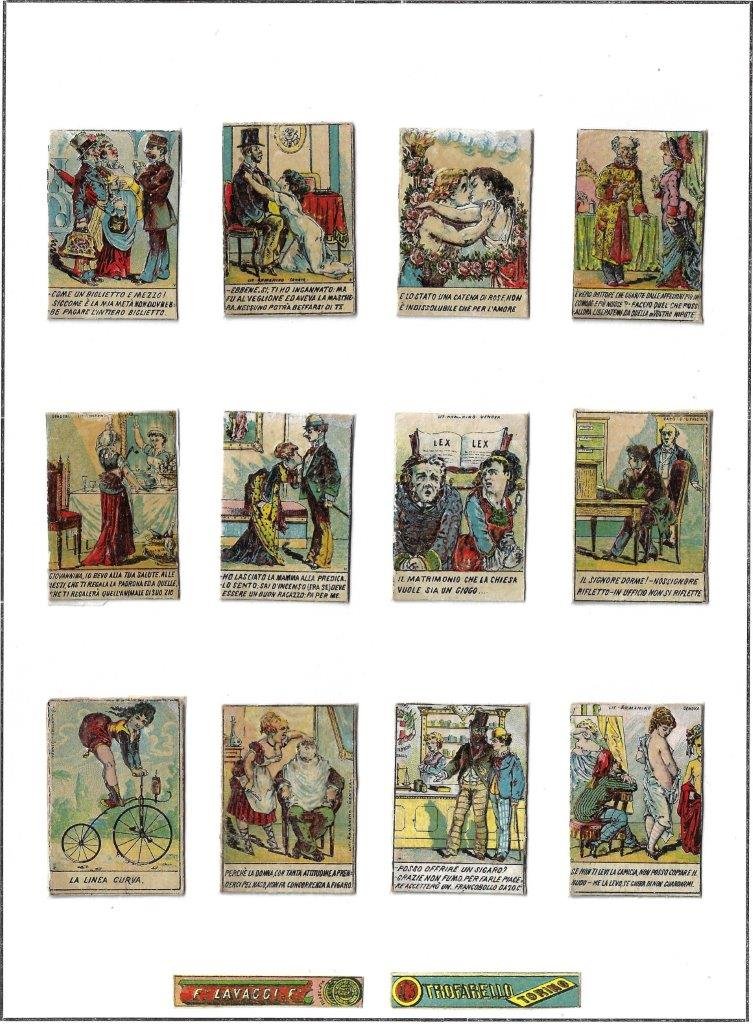 Francesco Lavaggi e F.º, Trofarello - Torino
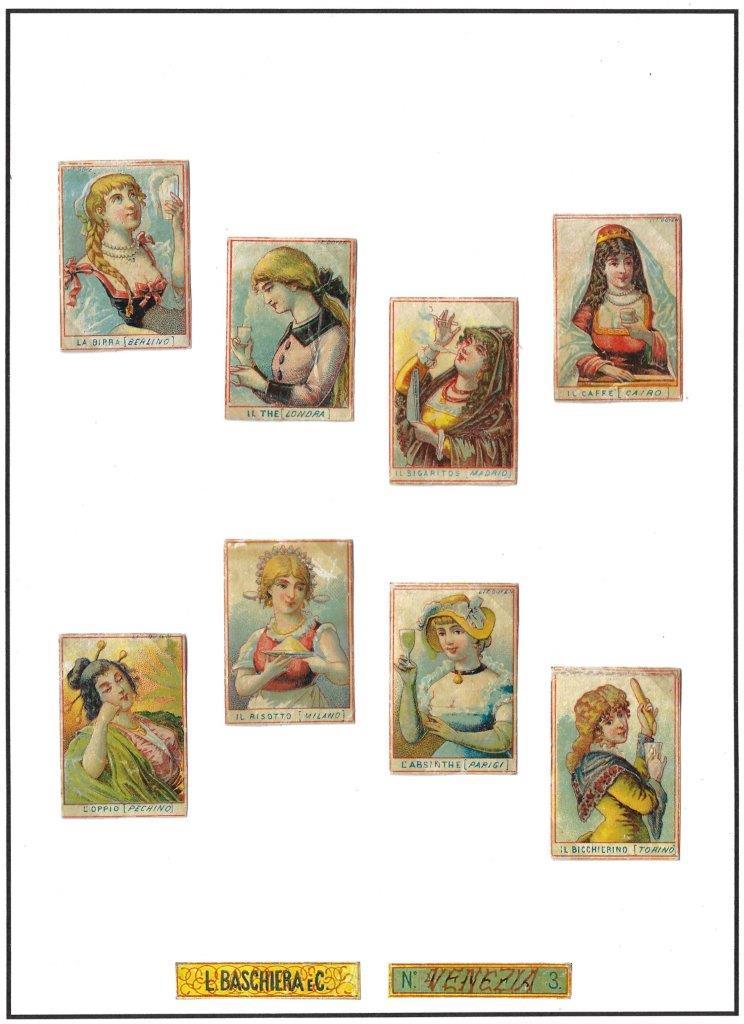 L. Baschiera e C., Venezia
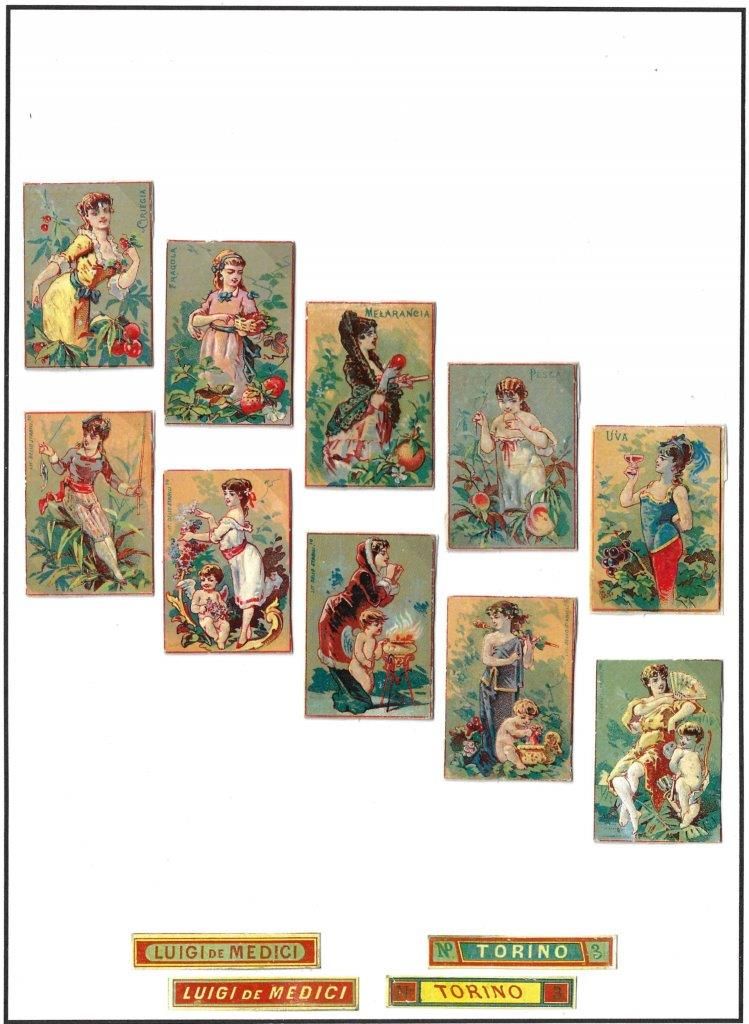 Luigi de Medici, Torino