Swedish match industry

Exhibitor : Peter Pålsson
The Swedish Match Industry is one of the oldest in the world, beginning in 1836. In the late 19th and early 20th centuries it was the biggest producer of matches and matchboxes in the world, with over 50 factories working at its height. Like many industries it went through a period of consolidation in the 20th century, but Swedish Match is still the world’s premier manufacturer.
1830 – 1845. The foundations of the Swedish match industry lie in chemistry rather than commerce. Gustaf Erik Pasch’s work on the safety match principle created the technological conditions for later success, even though his own ventures remained experimental. Early chemical workshops in Stockholm and other cities demonstrated the feasibility of domestic production, but lacked capital, organisation and distribution networks.
A central actor during this period was J.S. Bagge & Co, a chemical factory in Stockholm which, from as early as 1836, produced chemical goods including early forms of phosphorus matches. The company was founded by Jonas Samuel Bagge, a chemist and entrepreneur, and is regarded as the first most durable industrial environment in Sweden in which match-related production took place in an organised form. Although J.S. Bagge & Co did not yet represent a fully developed match industry, its operations served as an important link between laboratory experimentation and later factory-based production.
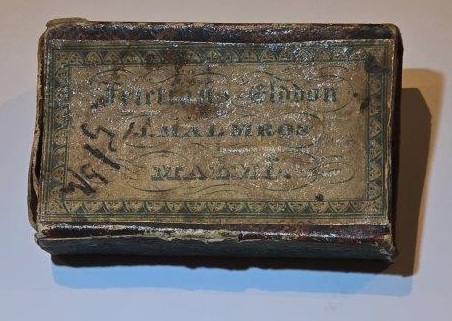
1845 – 1860. With Johan Edvard and Carl Frans Lundström, match production entered an industrial phase. Their Jönköping factory successfully commercialised the safety match, combining chemical knowledge with marketing, branding and mechanisation. Short-lived competitors such as the Malmros factory illustrate how quickly competition intensified once profitability became apparent.
1860 – 1880. From Jönköping, technical expertise spread nationwide. Former managers and technicians founded factories in Växjö, Kalmar, Tidaholm and beyond. Railways and coastal shipping enabled regional factories to serve wider markets. Some, such as Vulcan in Tidaholm, invested early in advanced machinery and would later survive consolidation. Others remained small and vulnerable.
1880 – 1900. By the late nineteenth century, Sweden hosted an unusually dense network of match factories. Many were established with local capital and great optimism, but falling prices, technical lag and overcapacity led to frequent closures. This period produced both industrial growth and severe social costs, including dangerous working conditions and phosphorus-related illness.
Labour, Technology and Social Consequences. Match factories relied heavily on female labour. While providing wages and a degree of independence, factory work exposed workers to health hazards and economic insecurity. Mechanisation gradually reduced risks and costs, but also eliminated many small-scale producers.
Individuals and Industrial Networks. The industry was shaped by recurring figures: inventors, industrialists, engineers and financiers. Johan Edvard Lundström, Alexander Lagerman, Charles E. Bratt and others formed dense personal networks that spread technology and capital. The culmination of these networks was Ivar Kreuger, whose financial strategies transformed a national industry into a global monopoly.
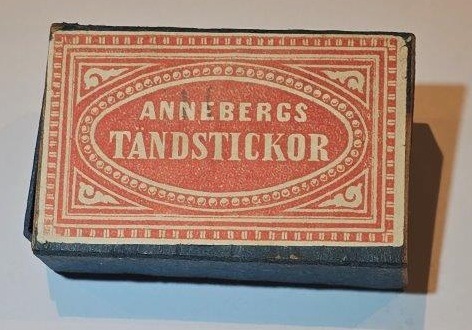 Annebergs Tandstickor box, made at Anneberg factory
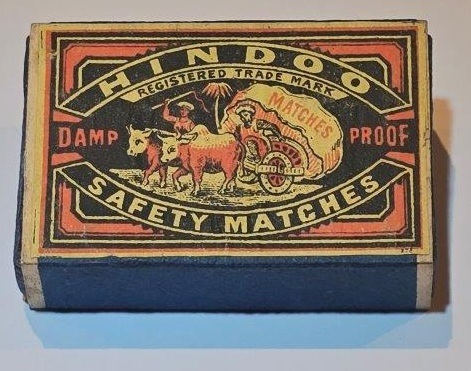 Hindoo manufactured at Wenersborg's match factory
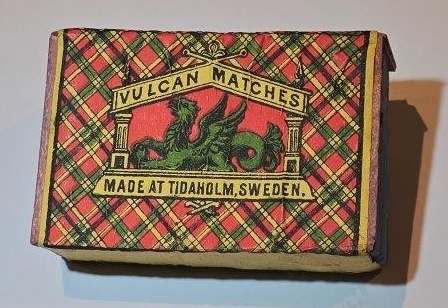 Dragon made at Vulcan match factory
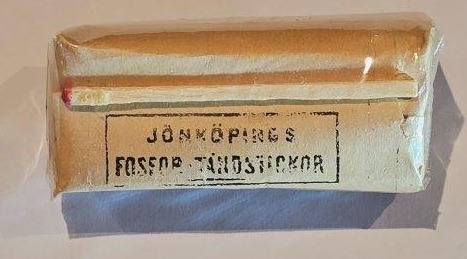 Match Capsule, manufactured at Jönköping's match factory in 1860
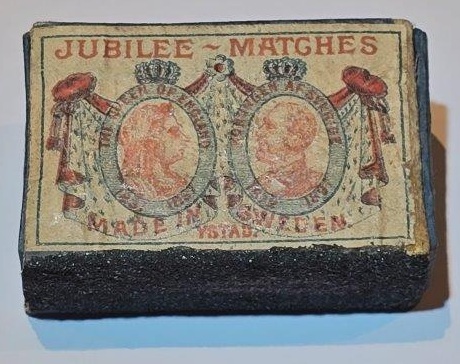 Jubilee Matches manufactured at Ystad's match factory
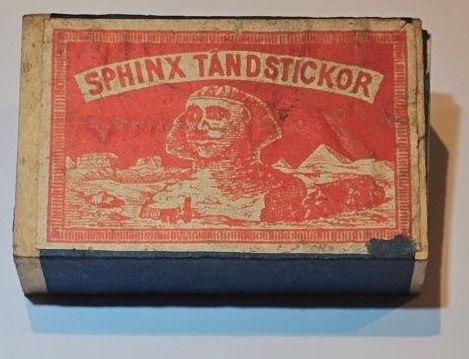 Sphinx box from Ellbo match factory in Lilla Edet
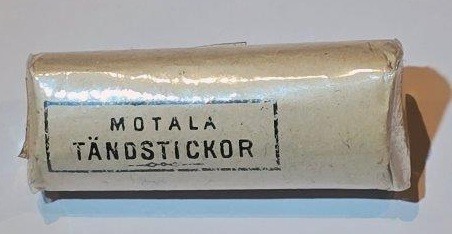 Motala Matches (capsule). Made at Motala match factory 1874
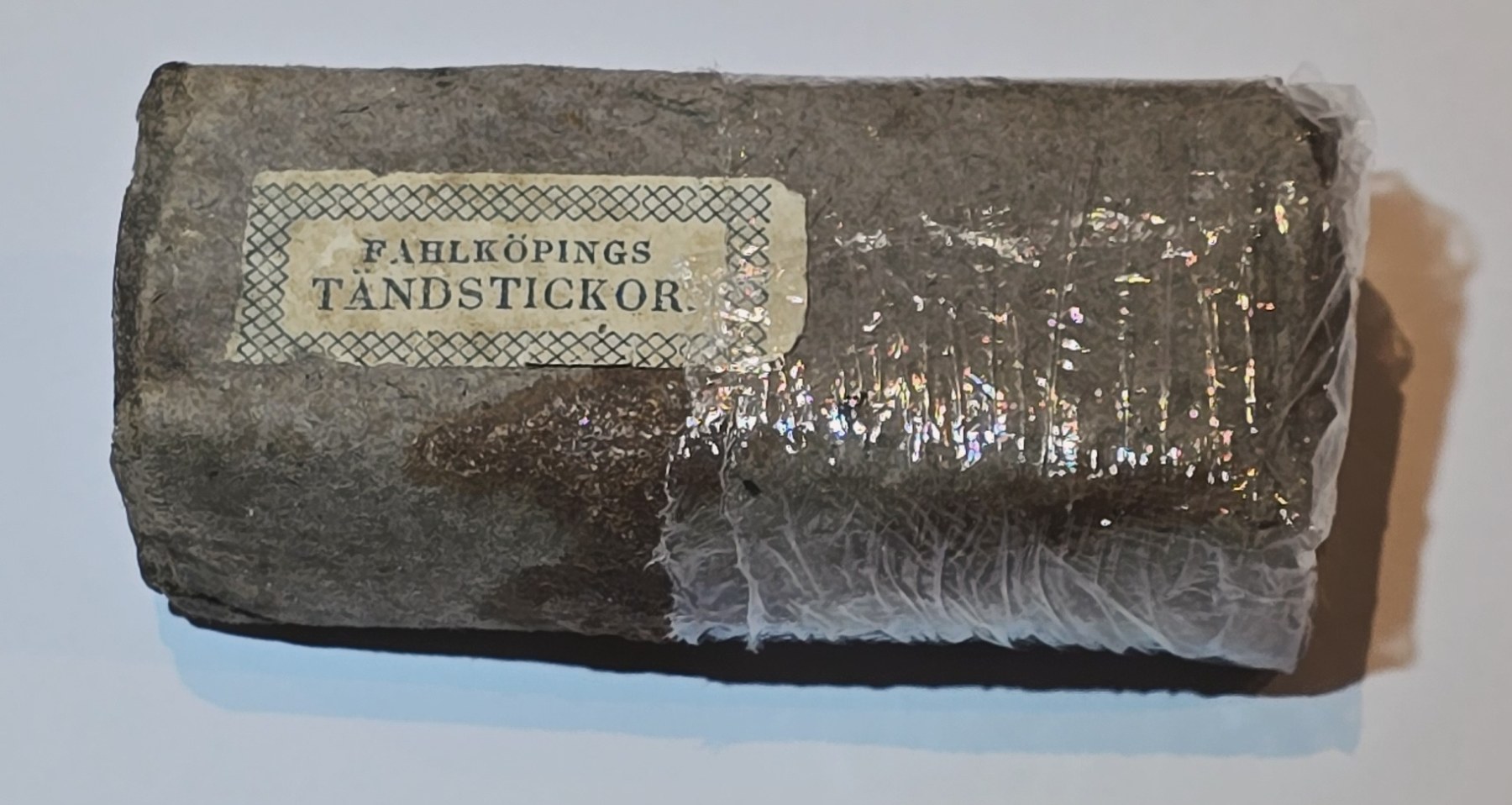 Match capsule, made at Fahlköpings match factory in 1847

1912 – 1917. Through systematic acquisitions, the fragmented Swedish industry was unified under Svenska Tändsticks AB (STAB). Many factories were closed or downgraded; a select few were modernised and expanded. This process marked the end of the classic Swedish match factory era.
1917 onwards. Factories in Jönköping, Tidaholm (Vulcan), Vetlanda and the Kalmar–Mönsterås complex survived due to superior technology, logistics and strategic value. Most others were phased out. The social impact was profound: entire communities lost their primary employer, while production became more stable but geographically concentrated.

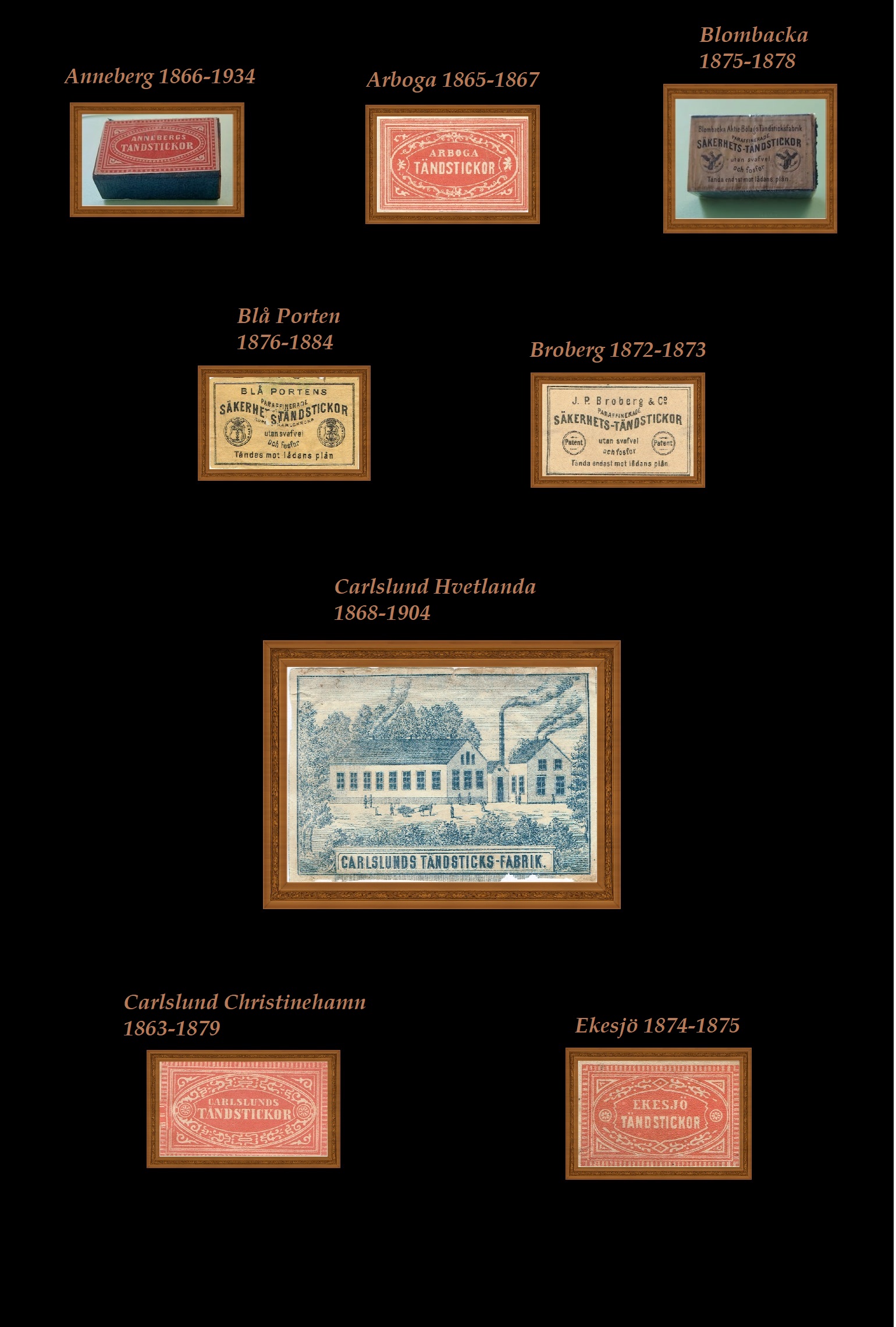
Bonus exhibit : Treasure Hunting from A to Z
For almost 40 years I have collected older Swedish matchboxes and labels and one of the best things I know is to be able to add a new factory to my collection, so my theme will therefore be to show labels and boxes from all the different Swedish factories in my collection starting from the letter “A”.
Lidköping is a city that a large part of my family comes from and in Croydon in 1995 I was able to pick up lots of the labels that I have today in my favourite factory, Lidköping’s match factory. Another city that also means a lot to me is Hudiksvall as my wife comes from there and the joy of being able to buy a sheet from there a few years ago was total as I believe that this sheet is the only one of its kind in the world.
Click on an image in the gallery below to see more factories and the unique sheet from Hudiksvall.
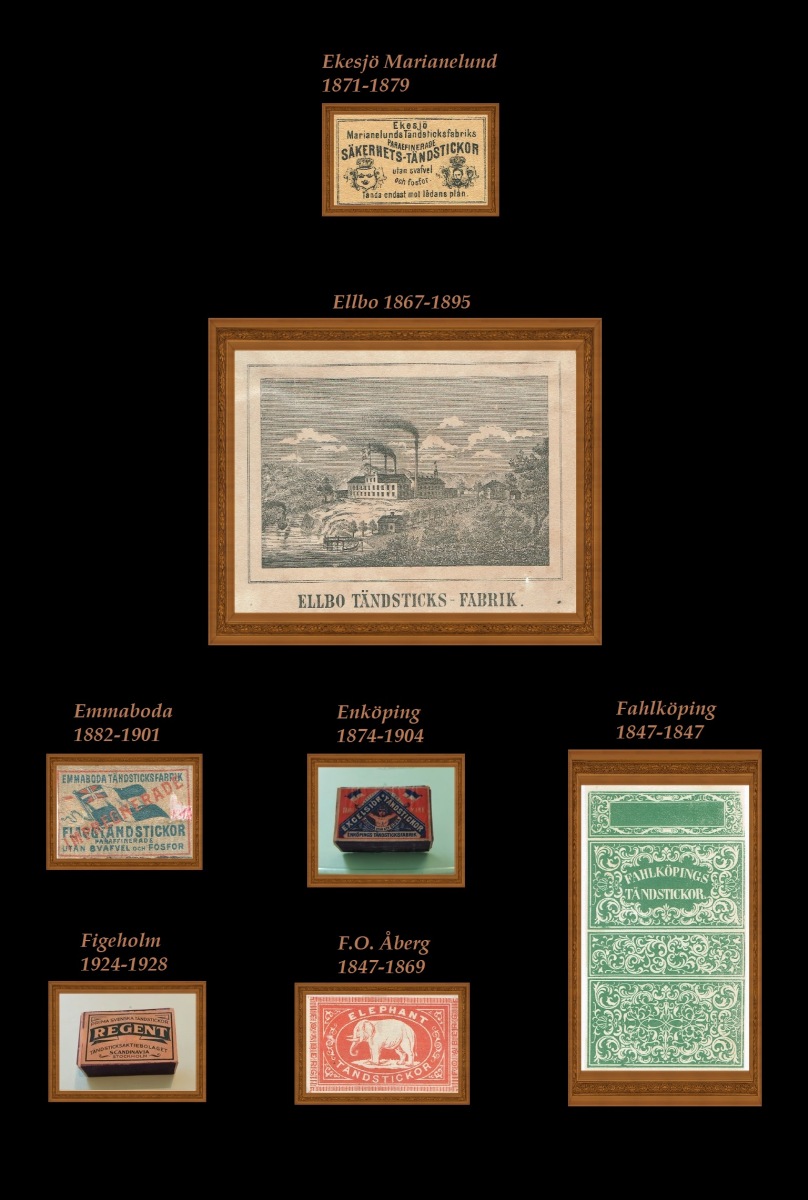 Swedish match factories E to F
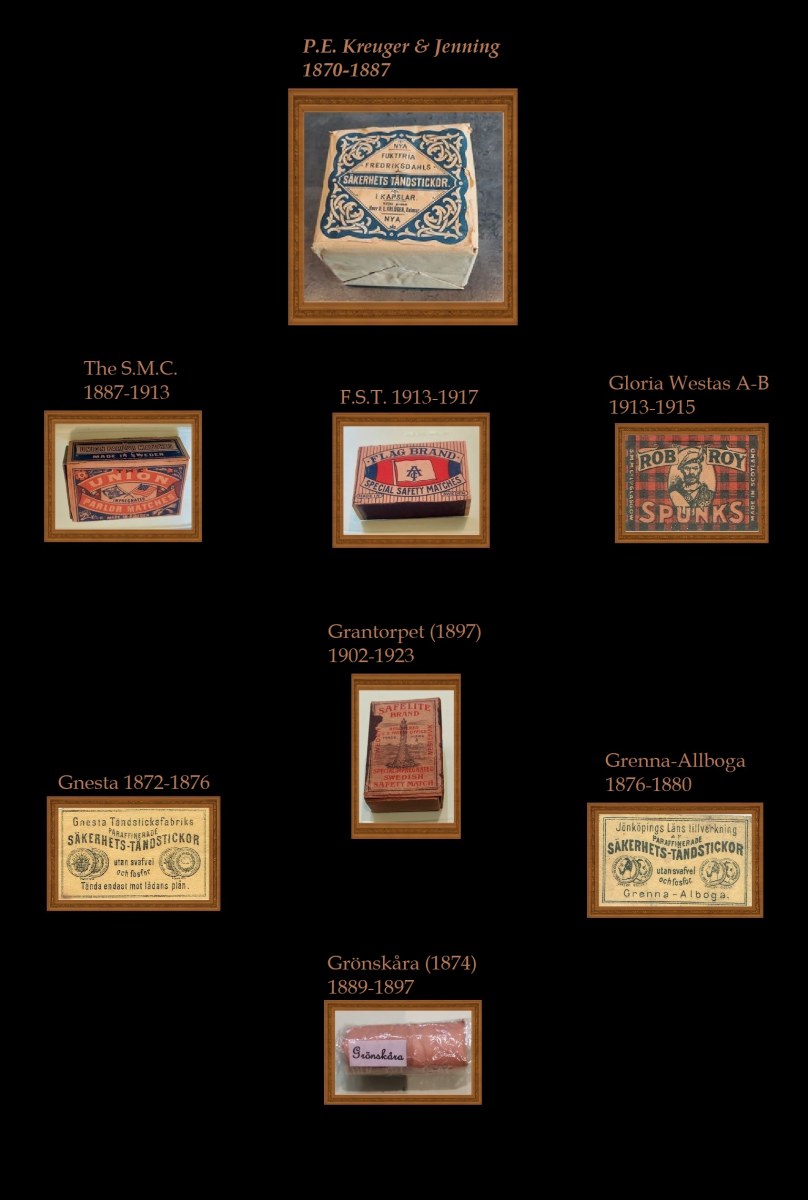 Swedish match factories F to G
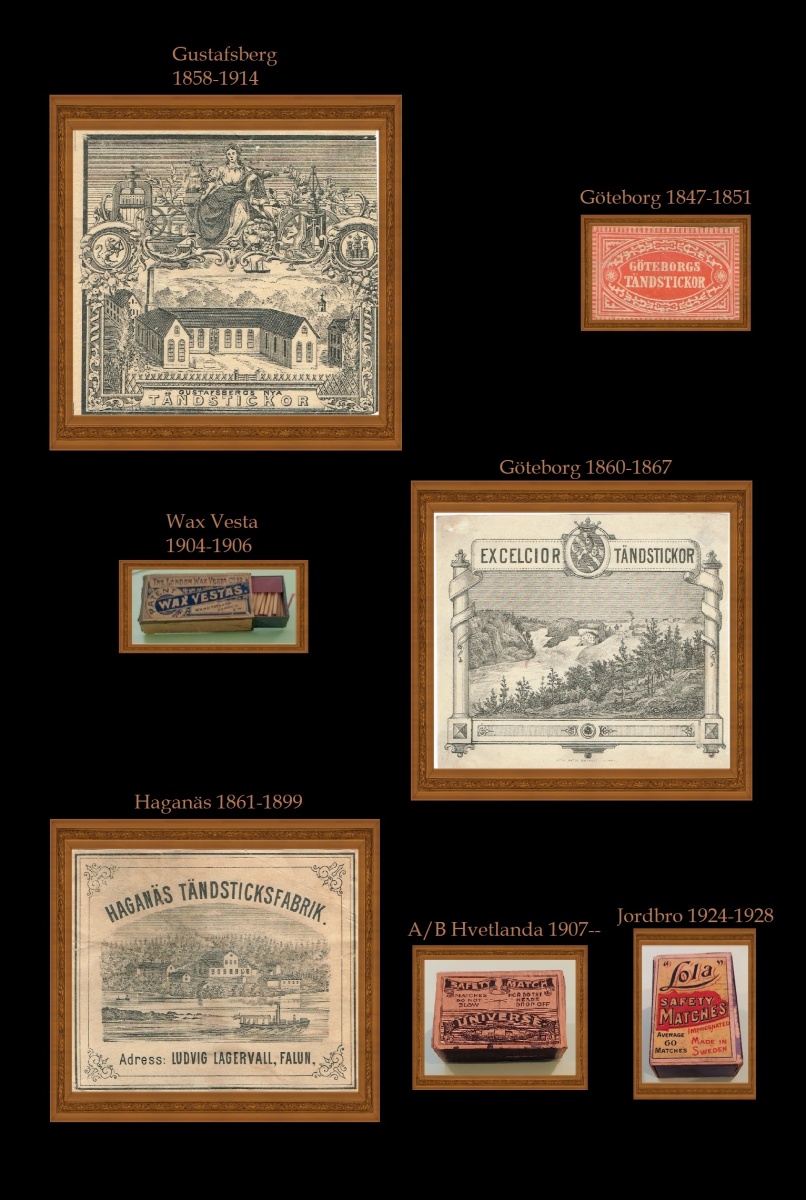 Swedish match factories G to J
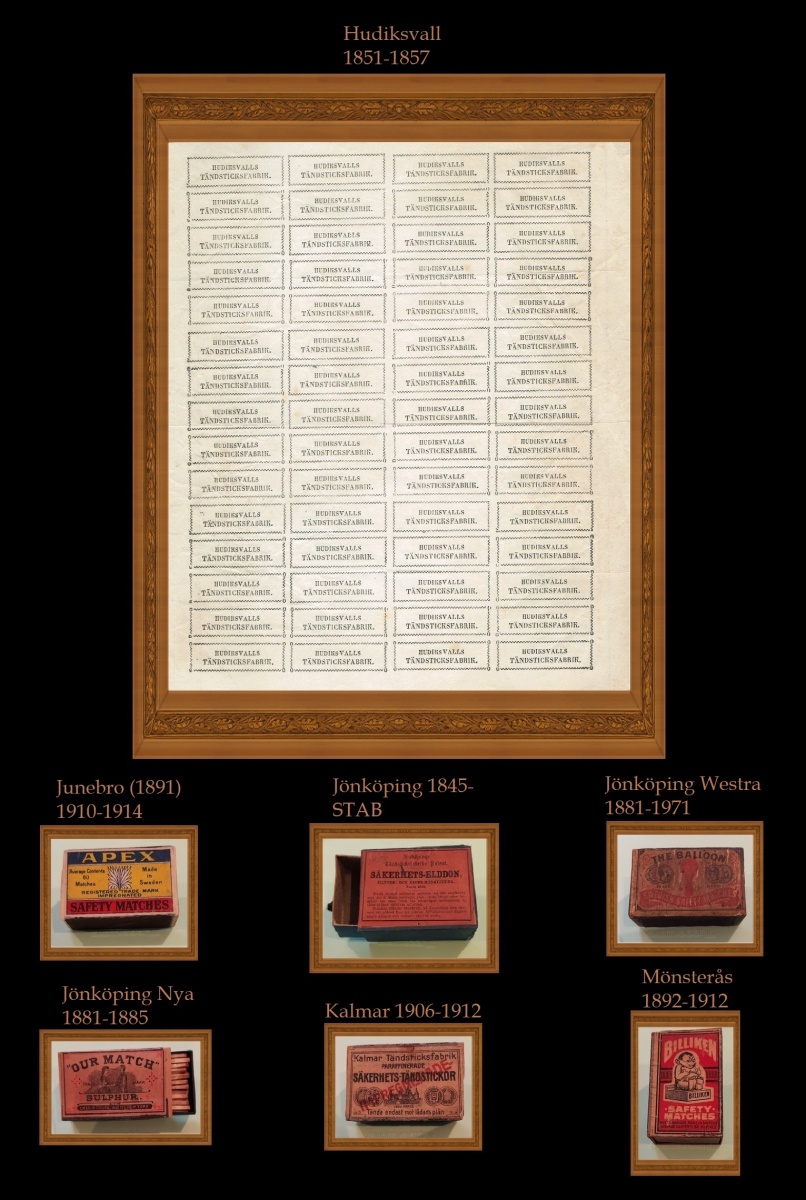 Swedish match factories H to M
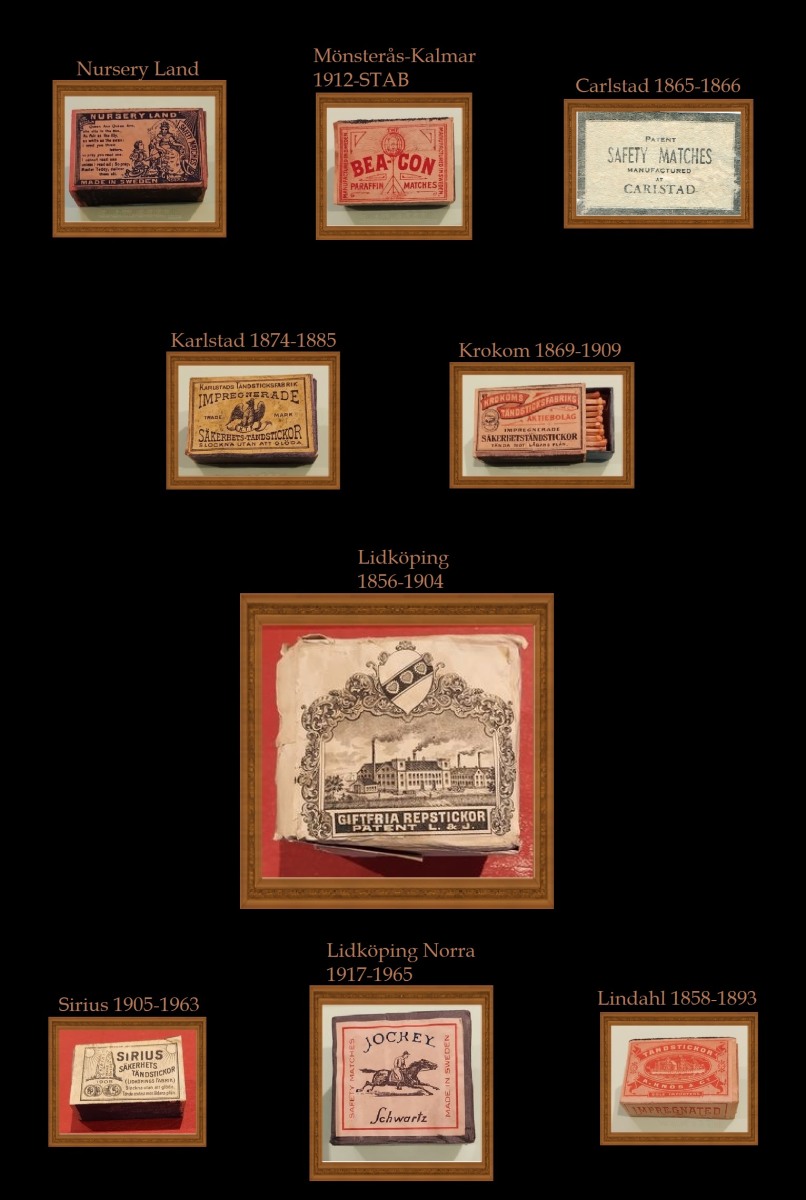 Swedish match factories L to K
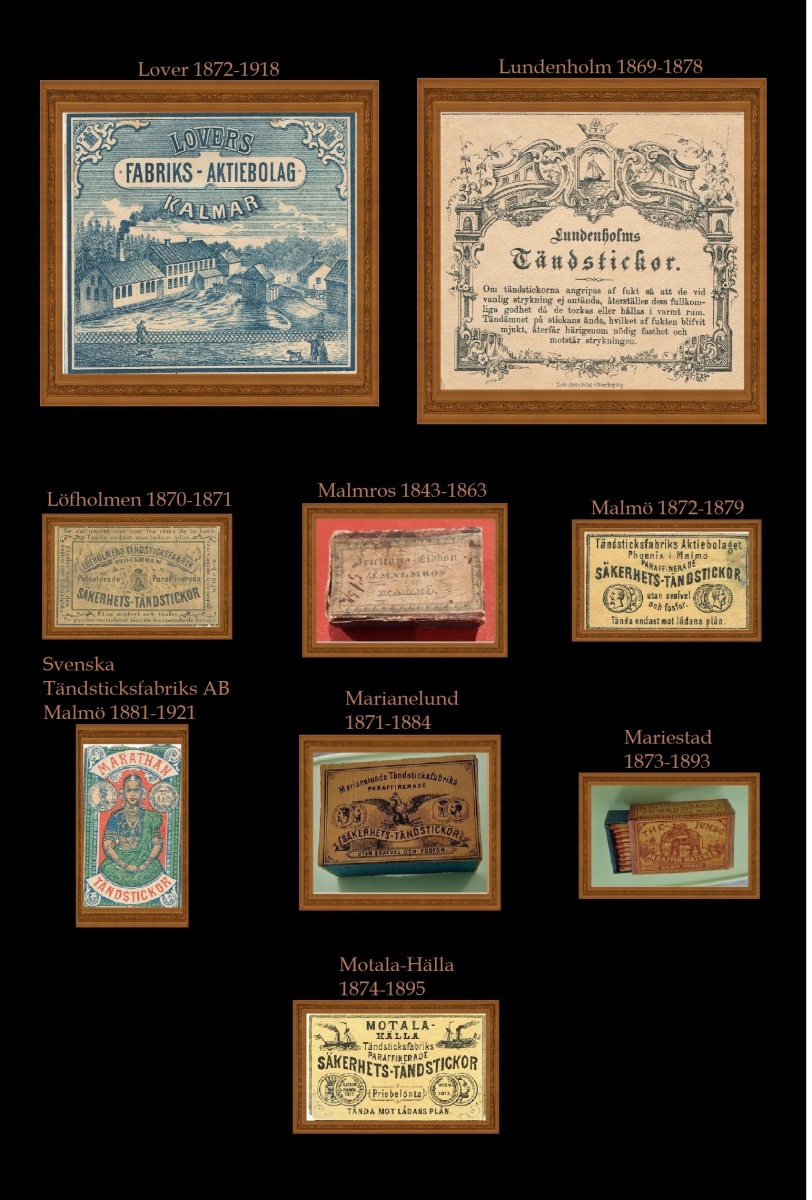 Swedish match factories L to K
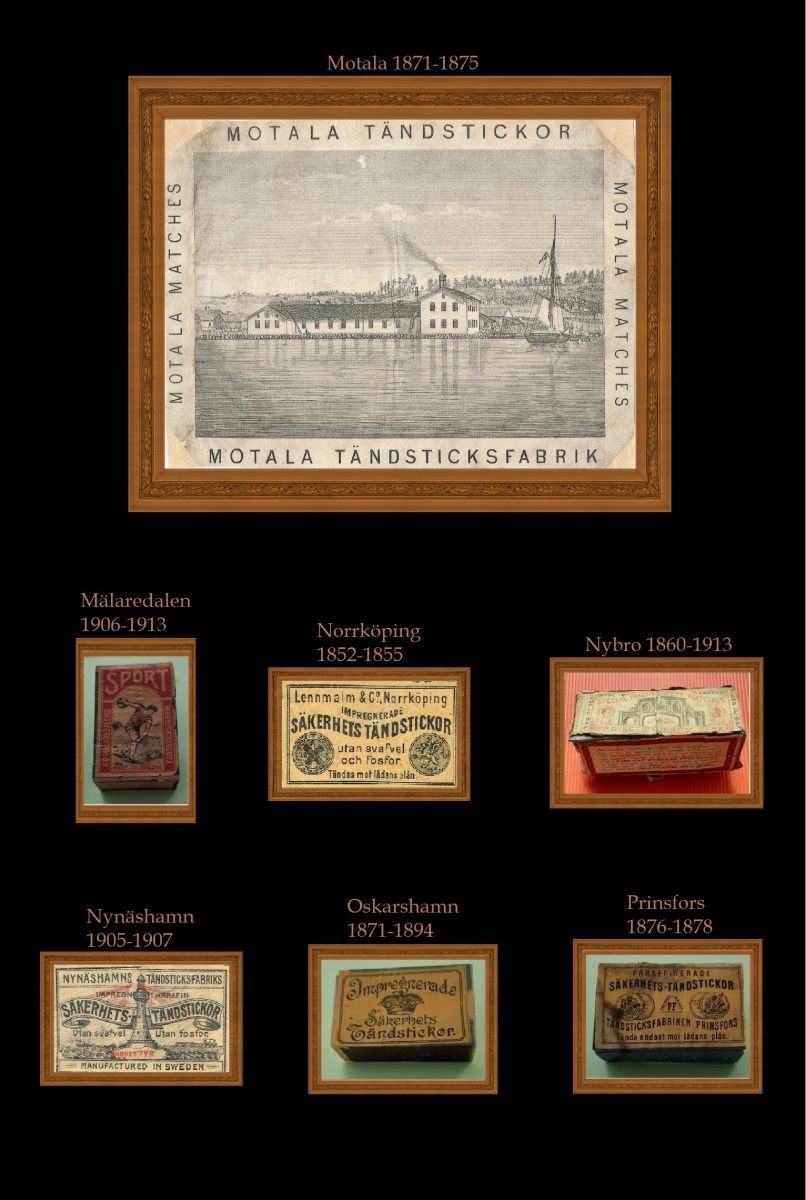 Swedish match factories M to F
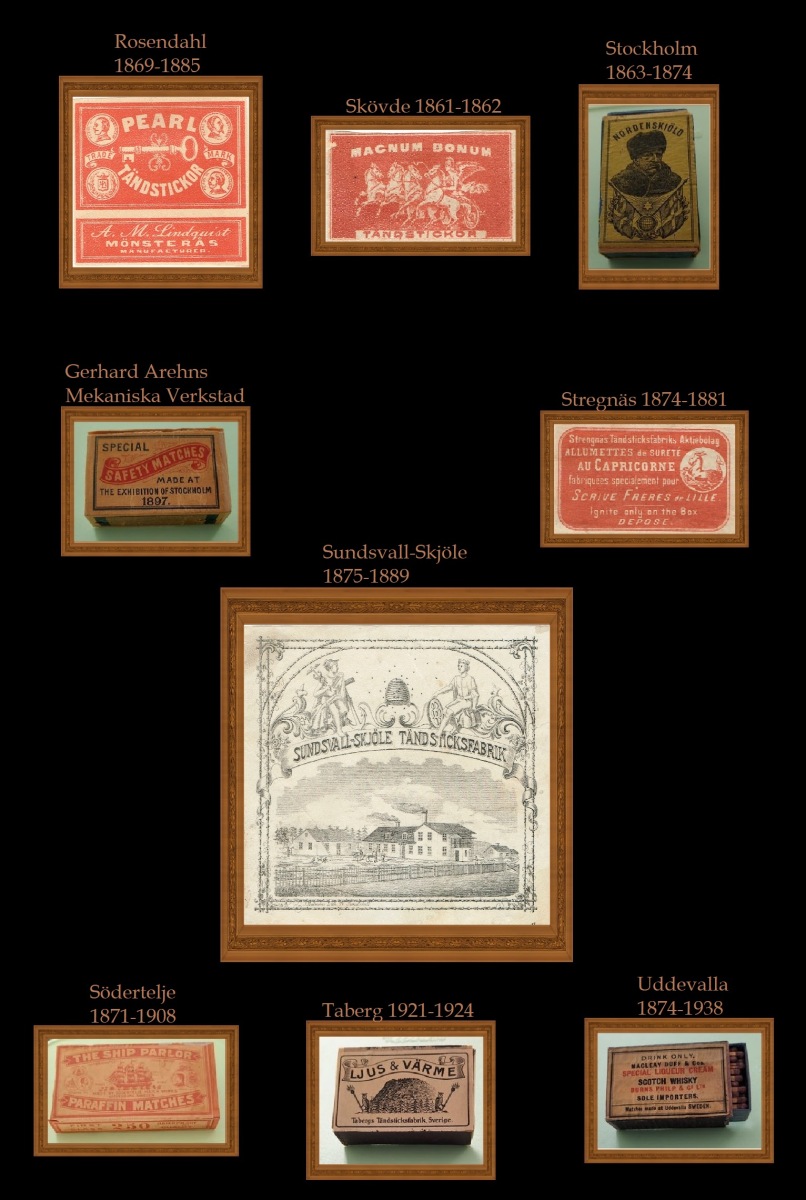 Swedish match factories R to U
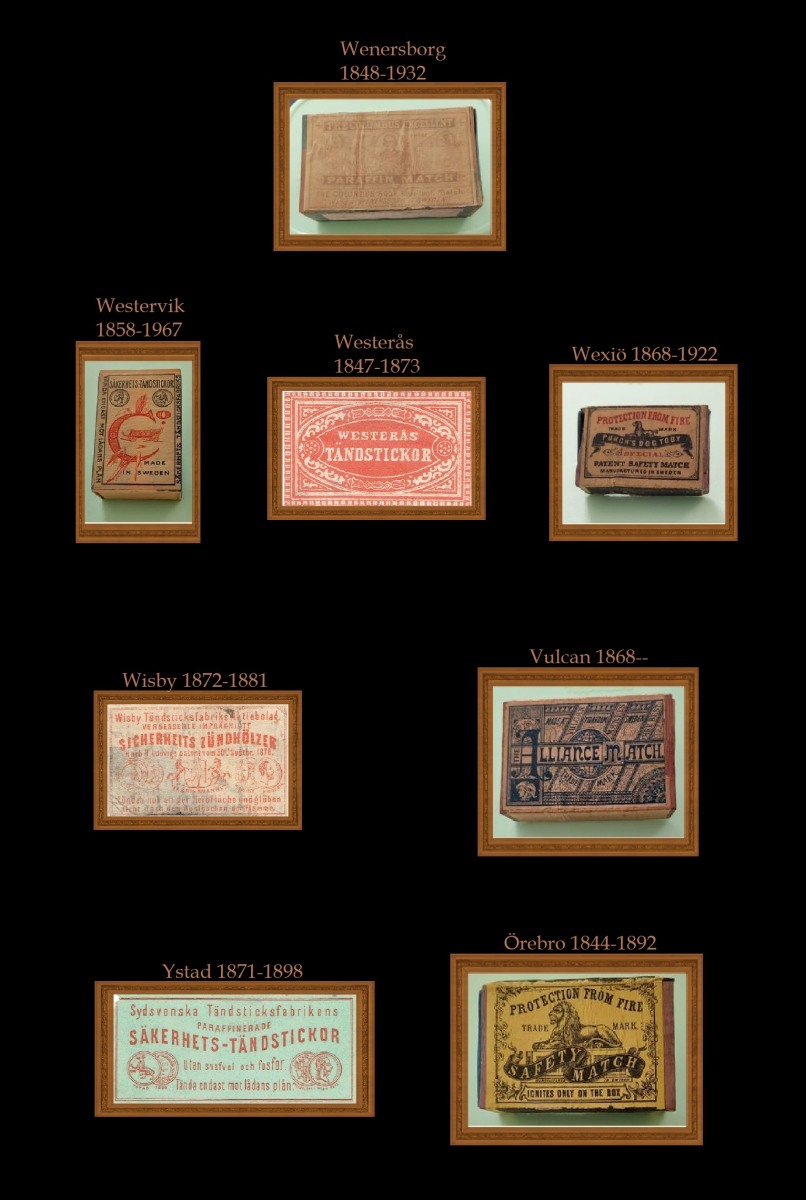 Swedish match factories W to Y
Click here to return to the Exhibition Catalogue.