Swiss match industry

Exhibitor : Stefan Joset
It was a great relief to everyday life when “chemical” matches came onto the market in the 1830s; the tedious handling of flint and tinder came to an end. One of the pioneers was Jakob Friedrich Kammerer, a German refugee who established the first factory for “phosphorus matches” in Switzerland in Zurich in 1839.
The production of matches from yellow phosphorus brought work to the impoverished Frutigland region in the second half of the 19th century. A match industry developed that was characterized by child labour and hazardous working conditions.
Matches sold well, and their production spread rapidly. It was an industry that required little manual skill; however, handling toxic substances was risky and endangered health. Match factories therefore sprang up primarily in poor rural areas, where other employment opportunities were scarce and where the unemployed poor were willing to take on any work, even dangerous. The area around Frutigen became the centre of match production; poverty was widespread there.
The success of the first match factory in Frutigen inspired imitators; by 1881, no fewer than 22 new factories had been founded in the valley. Within a few years, the Frutigen factories were supplying around half of Switzerland’s total match demand.
In the 1920s, the Swedish match giant “Svenska Tändsticks AB” took over most of the surviving companies and shut them down. By the mid-1930s, only two large match manufacturers remained in Frutigen. Around 1970, these also closed; the demand for matches had declined.
Match factories existed in other Swiss cantons as well, but nowhere near as many as in Frutigen. There was another large factory in Fleurier, in the canton of Neuchâtel, and the last large match factory was Diamond SA in Nyon, in the canton of Vaud. This factory, like almost every factory in Switzerland, was bought by Kreuger and became Swedish property. Diamond SA closed in 1982, becoming the last match factory in Switzerland to do so.
The table below summarises the key dates in the history of the Swiss Match Industry.
| 1838 | The first match factory in Switzerland was owned by Friedrich Kammerer in Zurich-Riedbach |
| 1845 | Match production began in the canton of Bern. Most of Switzerland’s match factories were founded in this canton. |
| 1850 – 1972 | The area around Frutigen was the centre of the Swiss match industry from 1850 to 1972. Half of Switzerland’s total match production came from here |
| 1862 | The government issues the first regulations for the construction and operation of match factories |
| 1878 | Children under 15 years of age were no longer allowed to work in the match factories |
| 1879 | Swiss federal law prohibits the use of yellow phosphorus. This law is repealed in 1882 |
| 1882 | From this year onwards, every match manufacturer in Switzerland must mark their products with their trademark |
| 1890 | Meanwhile, around 600 people work in 42 match factories in Switzerland |
| 1900 | The use of yellow phosphorus is now permanently banned |
| ca. 1920 | The Swedish Match Trust is gradually taking over match factories, and there are now only a few independent factories left |
| 1992 | Closure of the last match factory, Diamond SA, in Nyon |
| today | There is only one factory left in Switzerland that produces Bengal matches. This is the company PyroWillen in Frutigen |
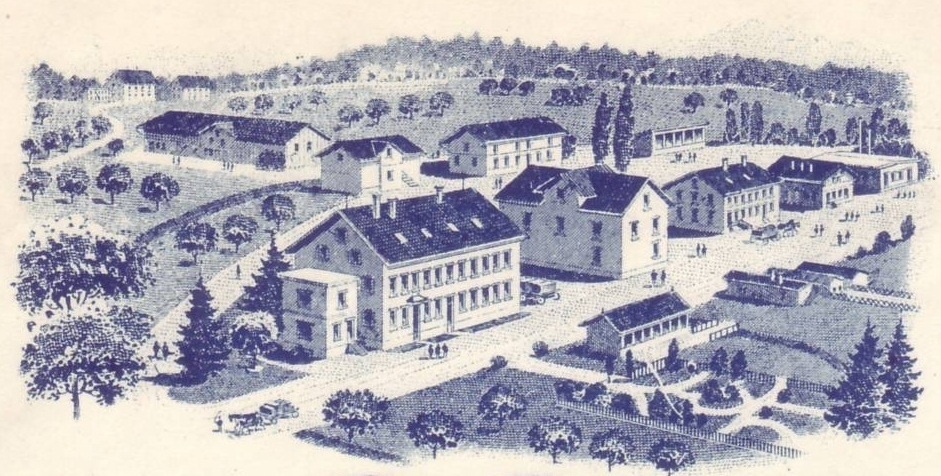 G. Fischer match factory in Fehraltorf around 1938
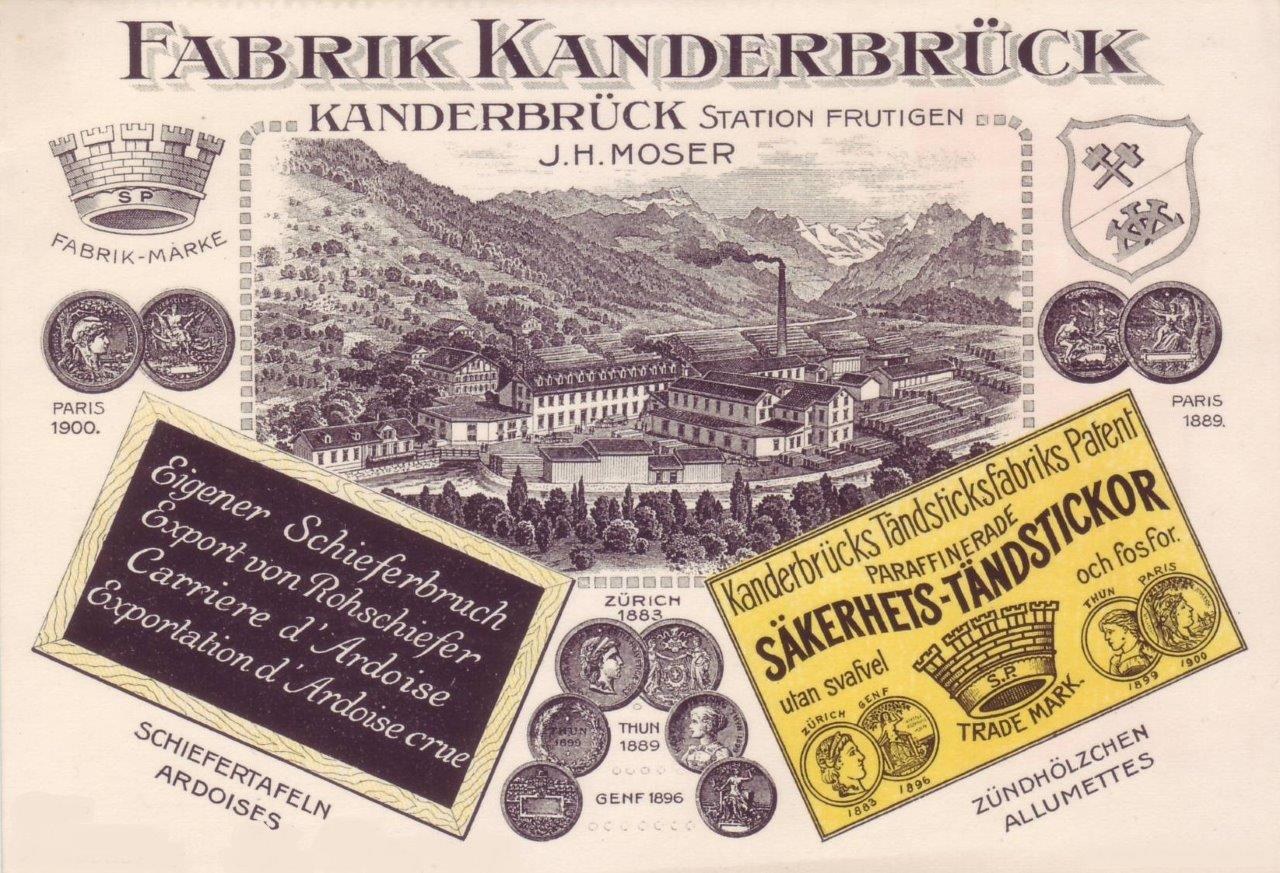 Advertising card, Kanderbrück match factory
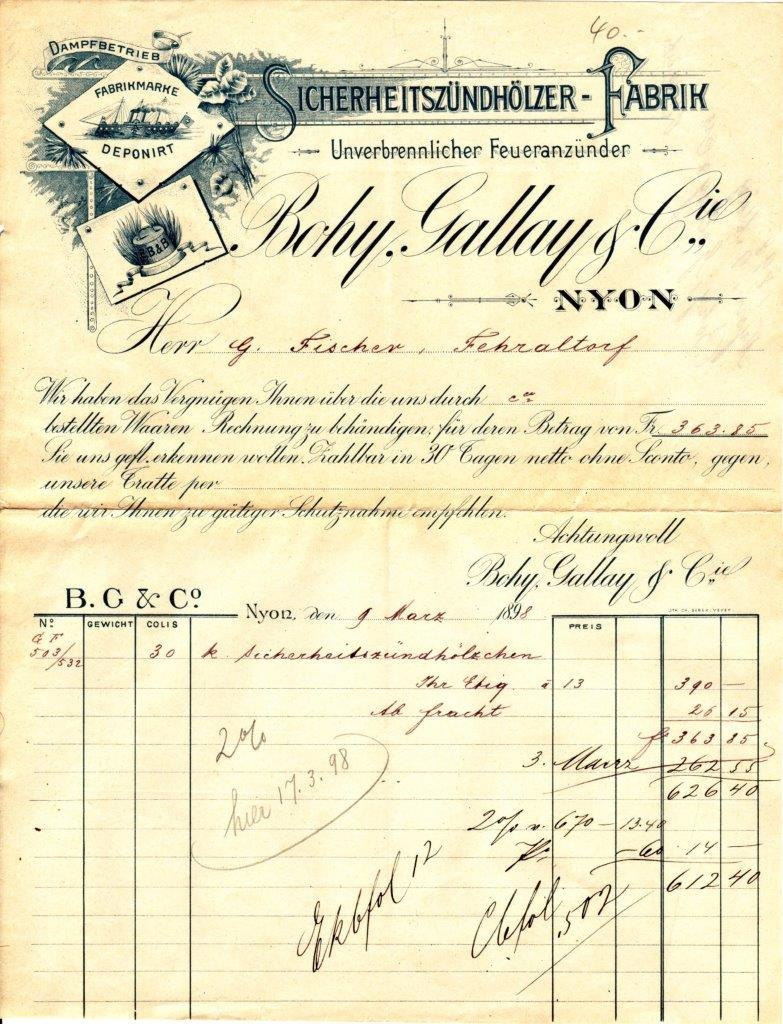 Safety Match factory Bohy Gallay & Cie., Nyon 1898
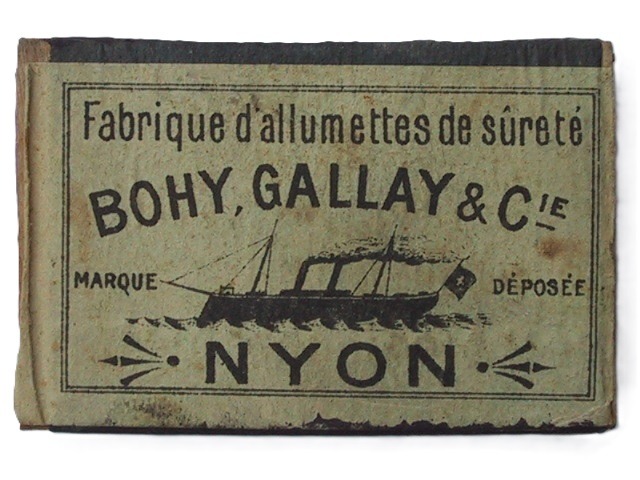 Old matchbox Bohy, Gallay & Cie. in Nyon (predecessor of Diamond SA)
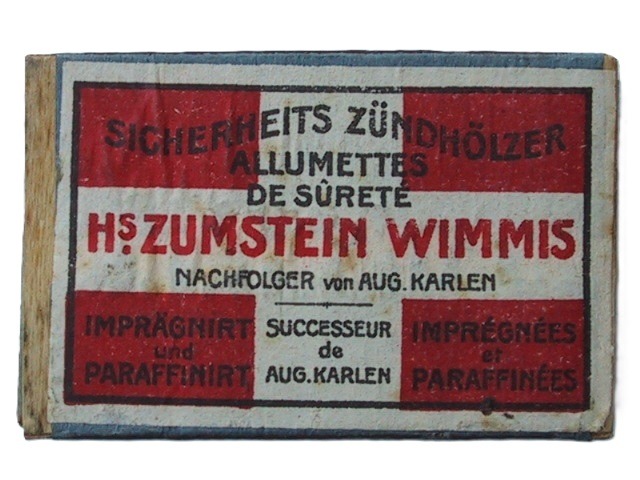 Old matchbox from the Hans Zumstein factory in Wimmis
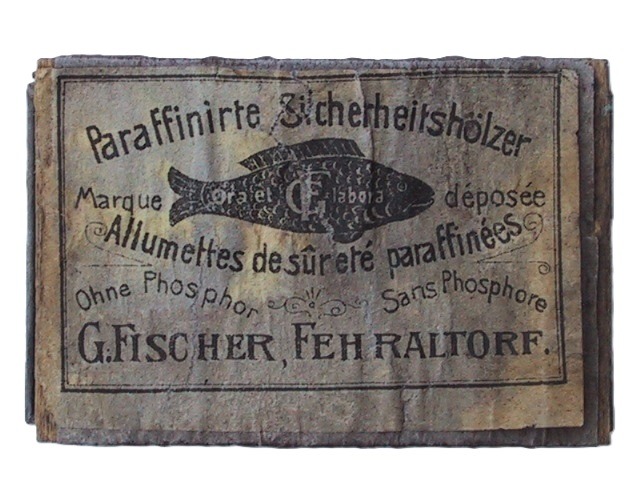 Old matchbox from the company G. Fischer in Fehraltorf
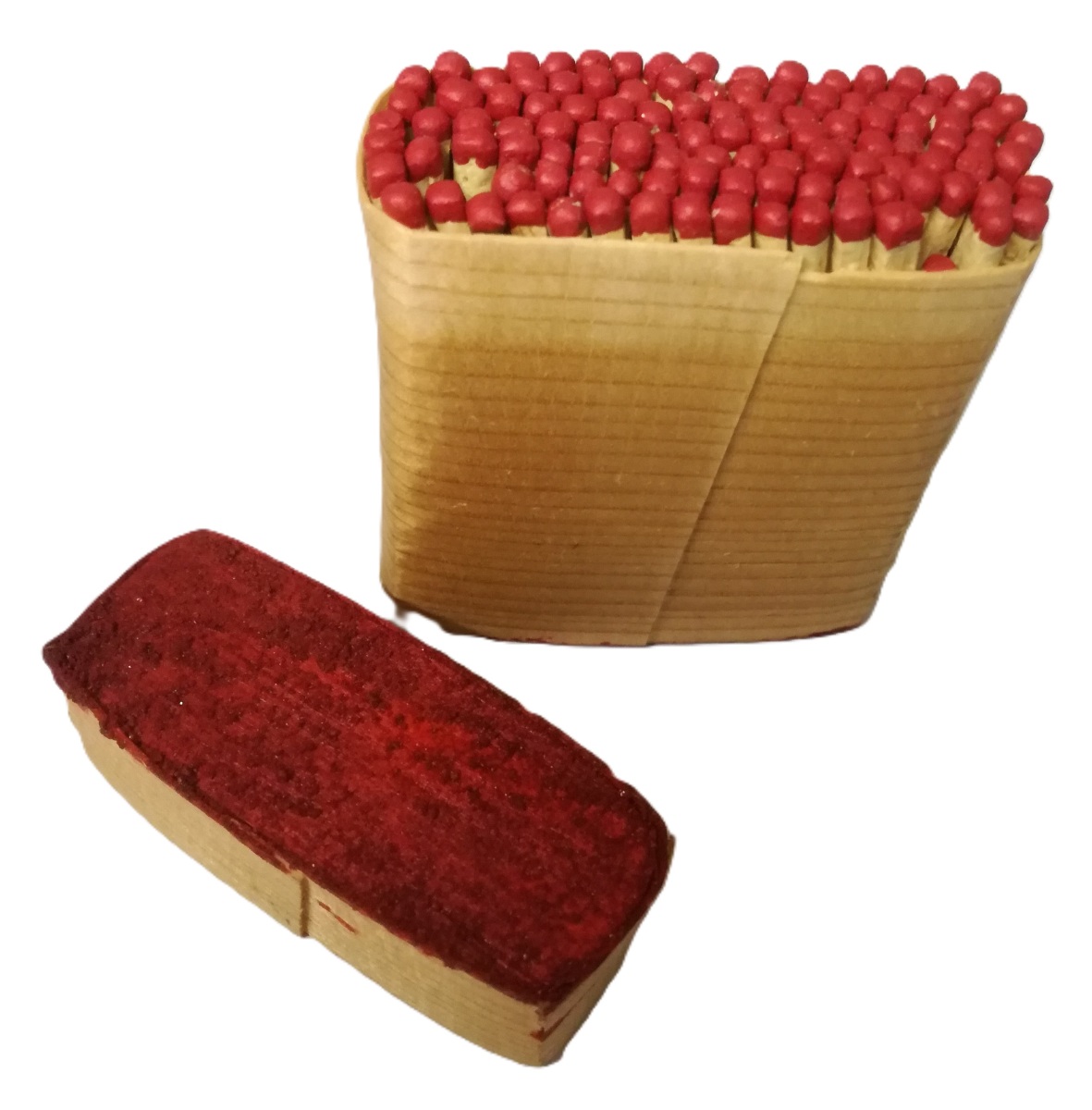 Wooden matchboxes instead of paper wrappings
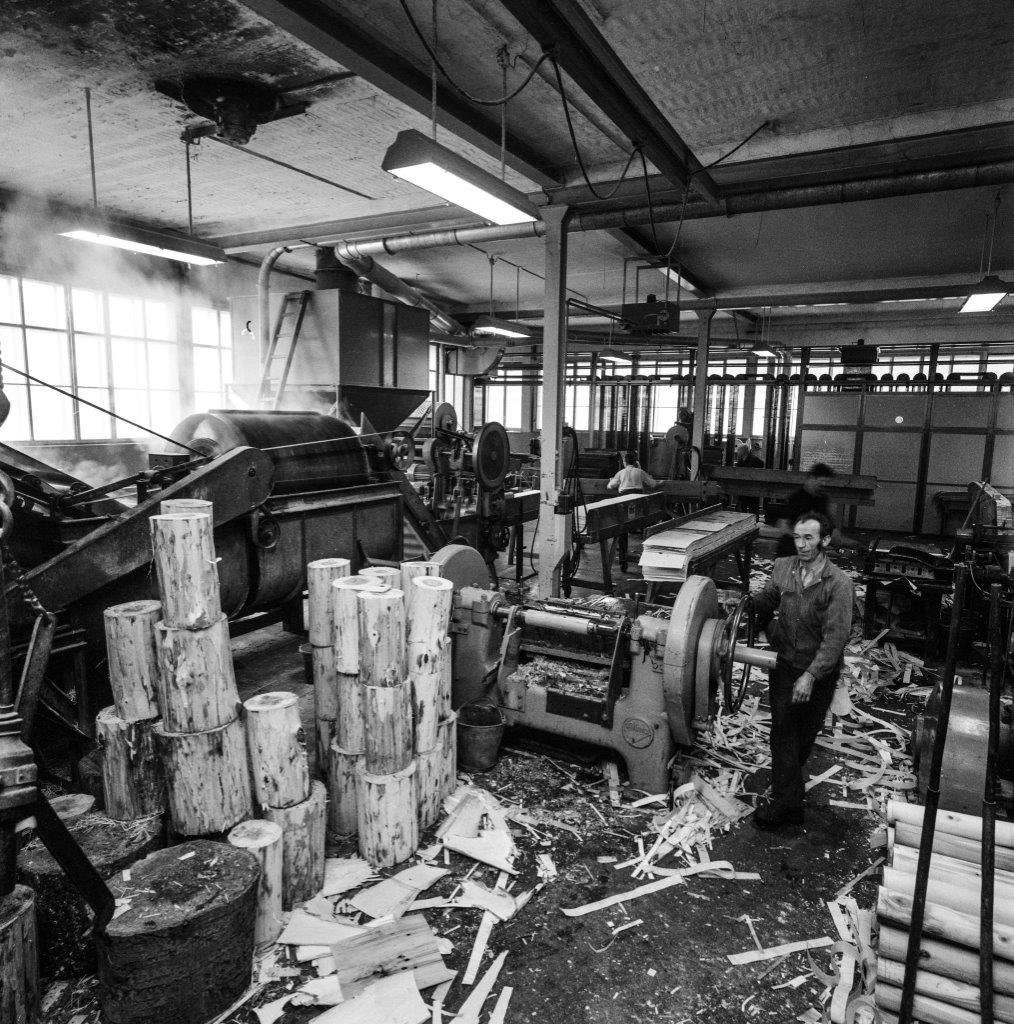 Production of veneer, Terza Match factory 1974
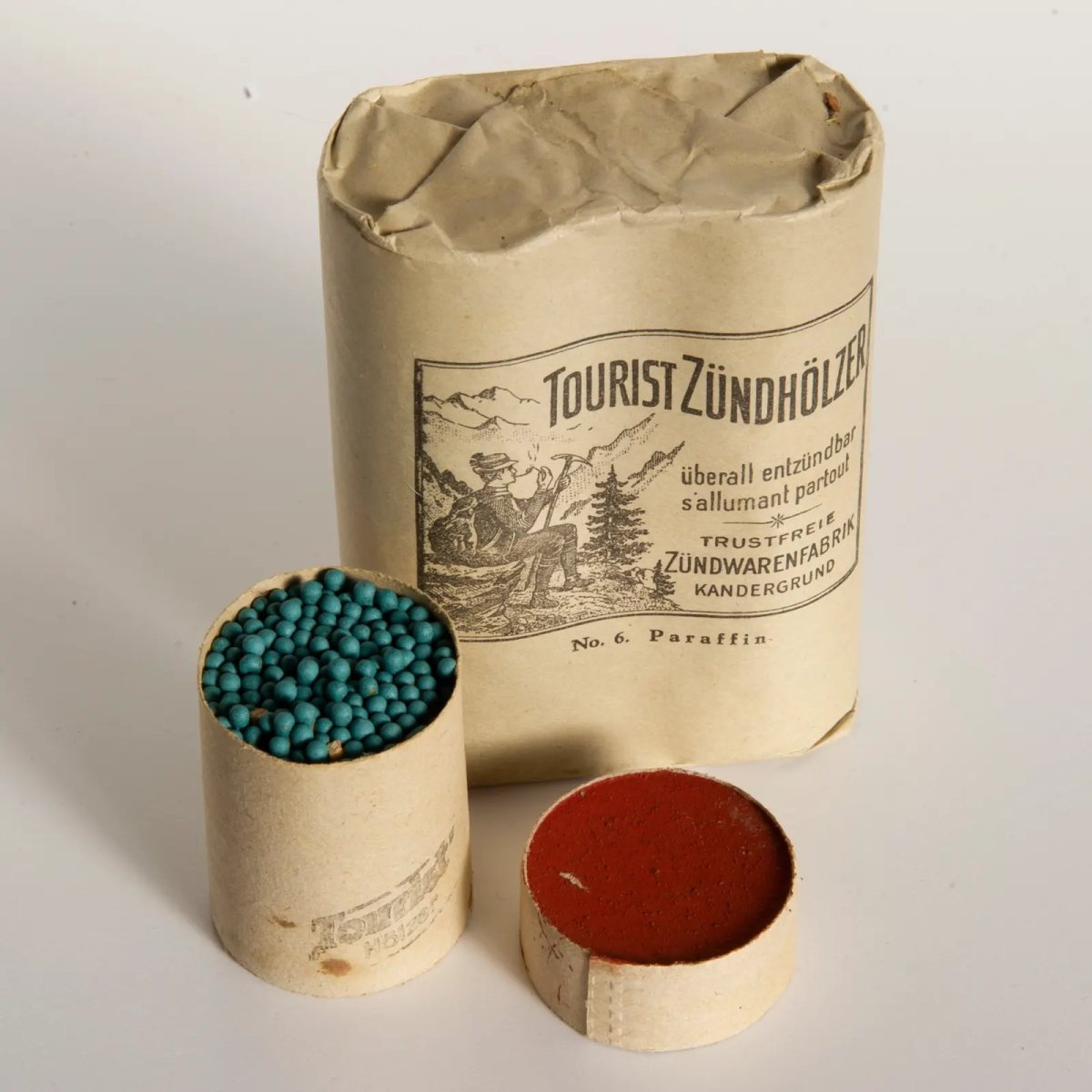 Tourist matches from the Kandergrund match factory


Bonus exhibit : The Swiss Chamois
The chamois is the trademark of the match company Diamond SA in Nyon (Switzerland). Later this sign was also adopted by the company Etincelle SA. They were sold under the name “Gemsen-Hölzer (chamois-matches)” between 1938 and 1982.
There are countless different bookmatches with and without advertising which I would like to exhibit here. I hope that you like this splendour of colours and variety and I would like to thank the organizers for the invitation to participate in this wonderful exhibition.
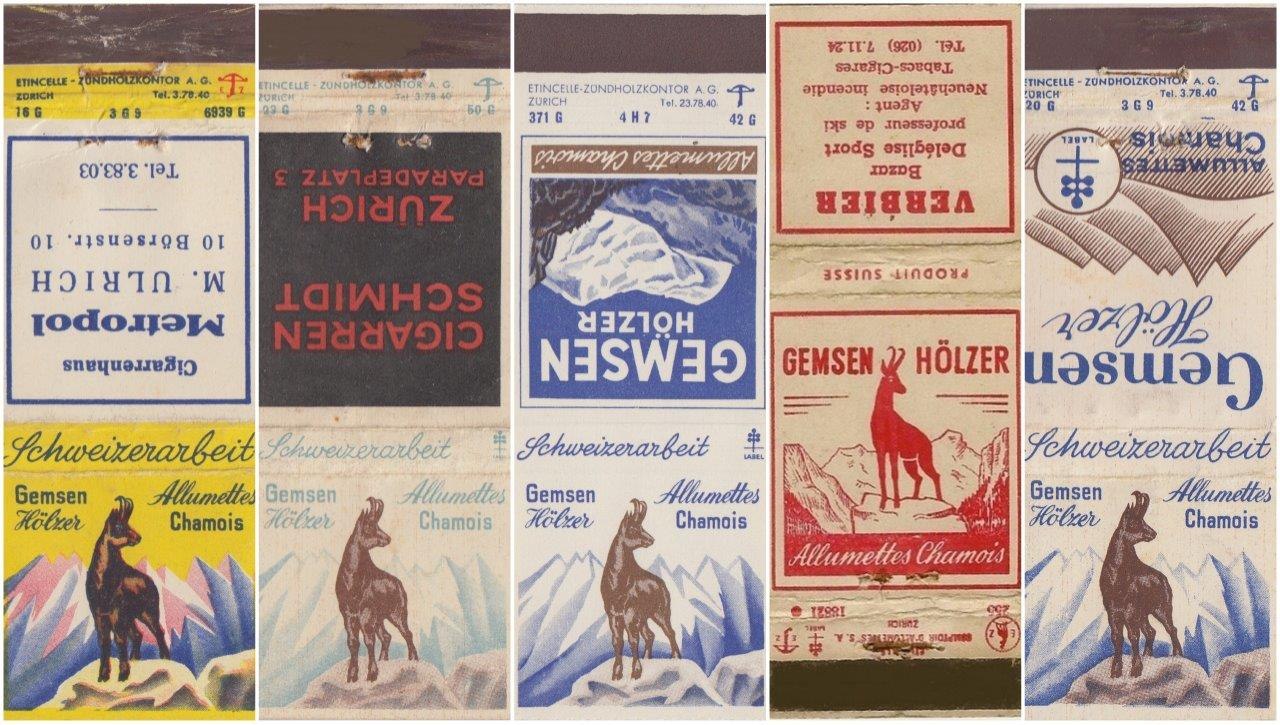 Bookmatches up to 1940
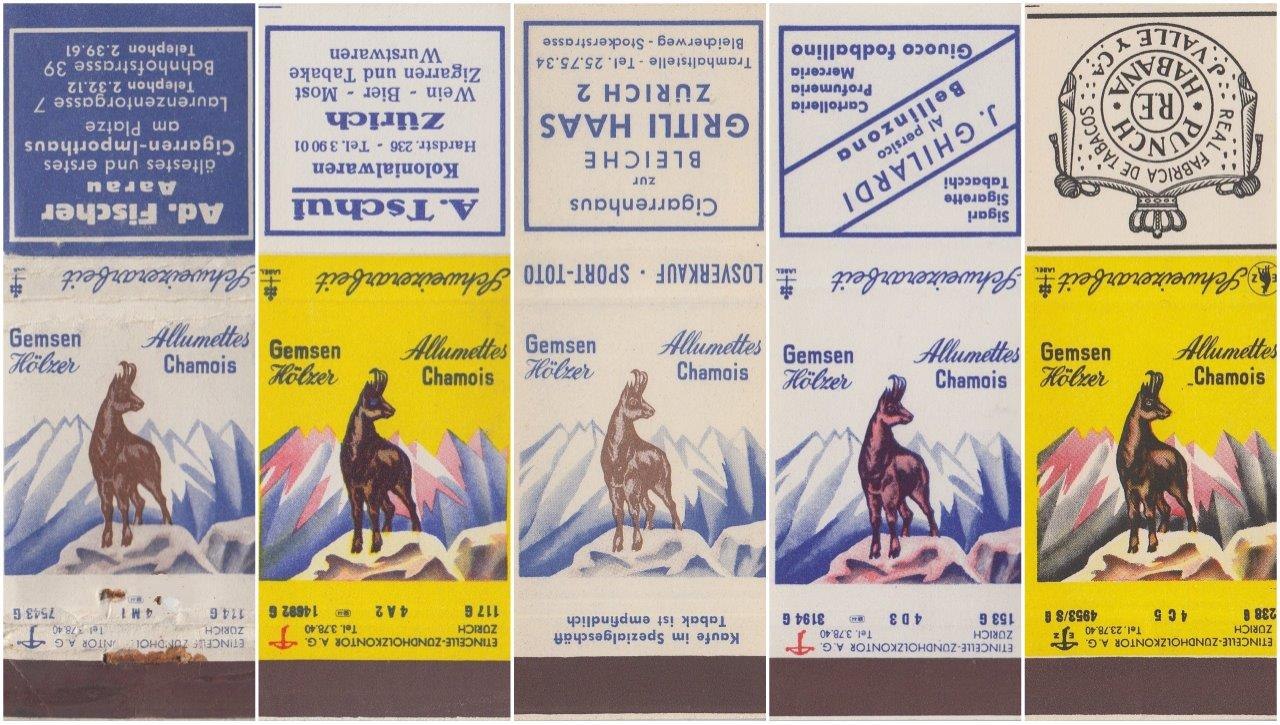 Bookmatches from 1940 – 1950
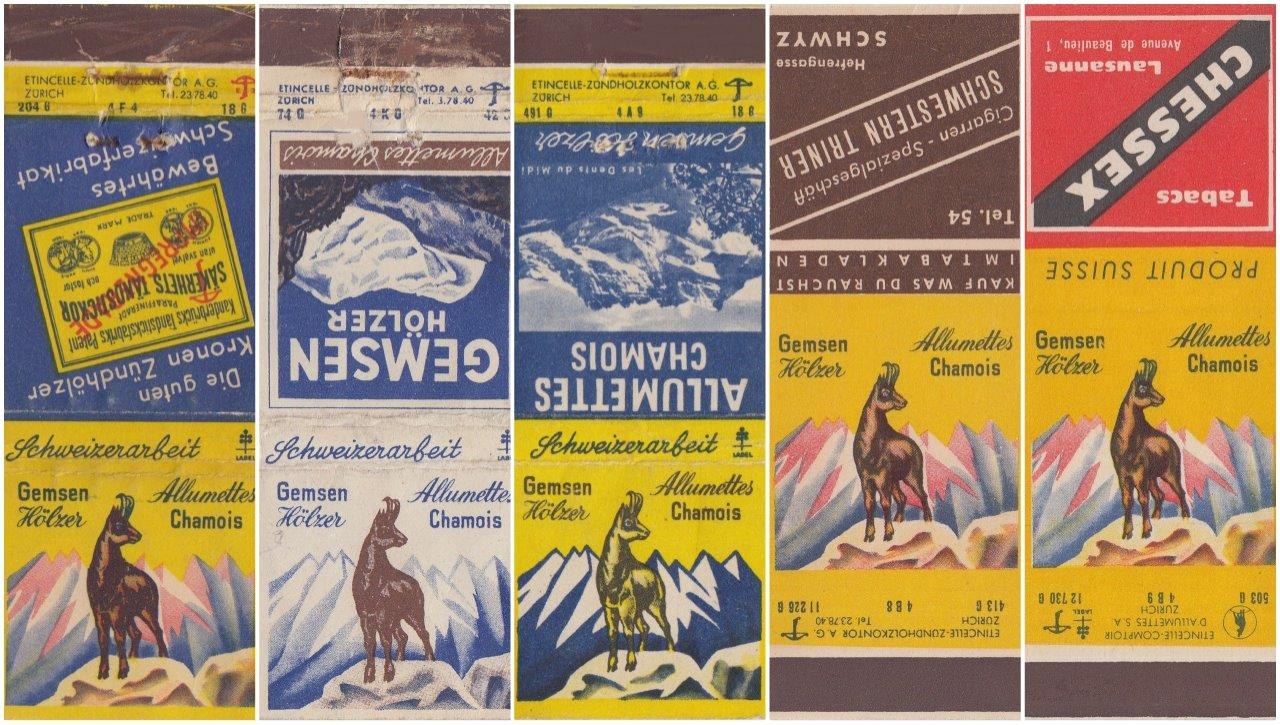 Bookmatches from 1940 – 1950
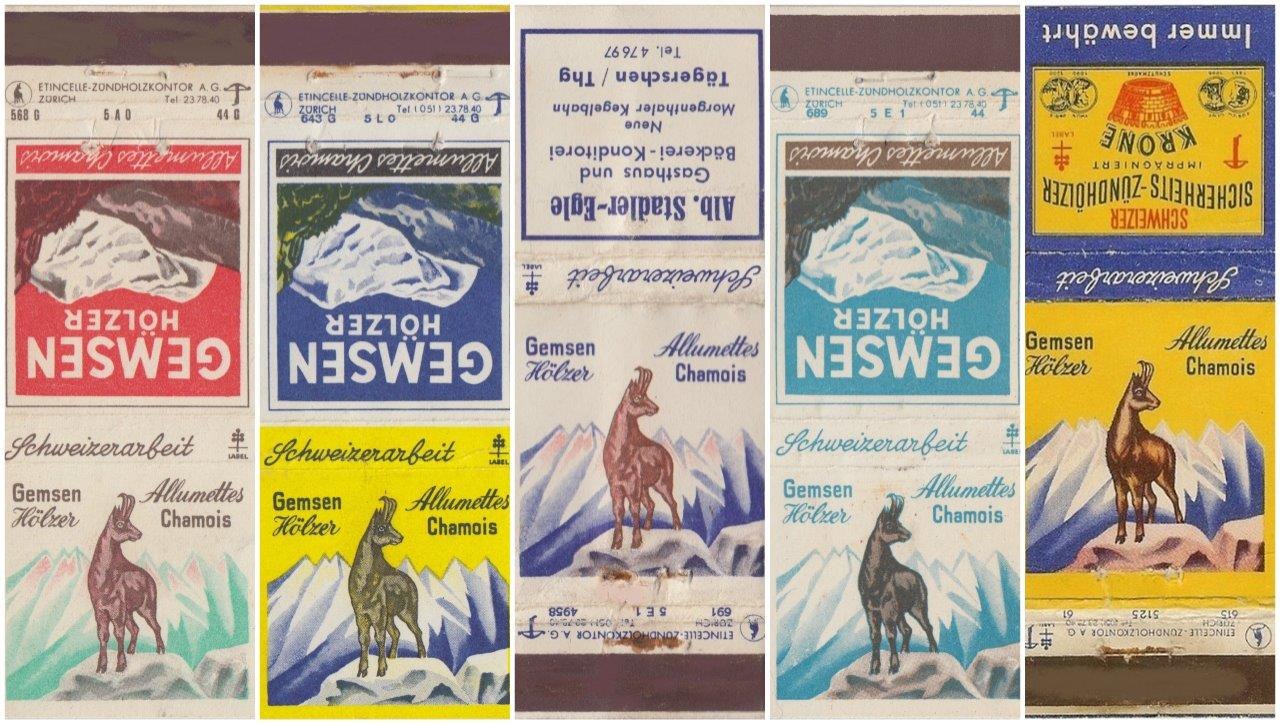 Bookmatches from 1950 - 1960
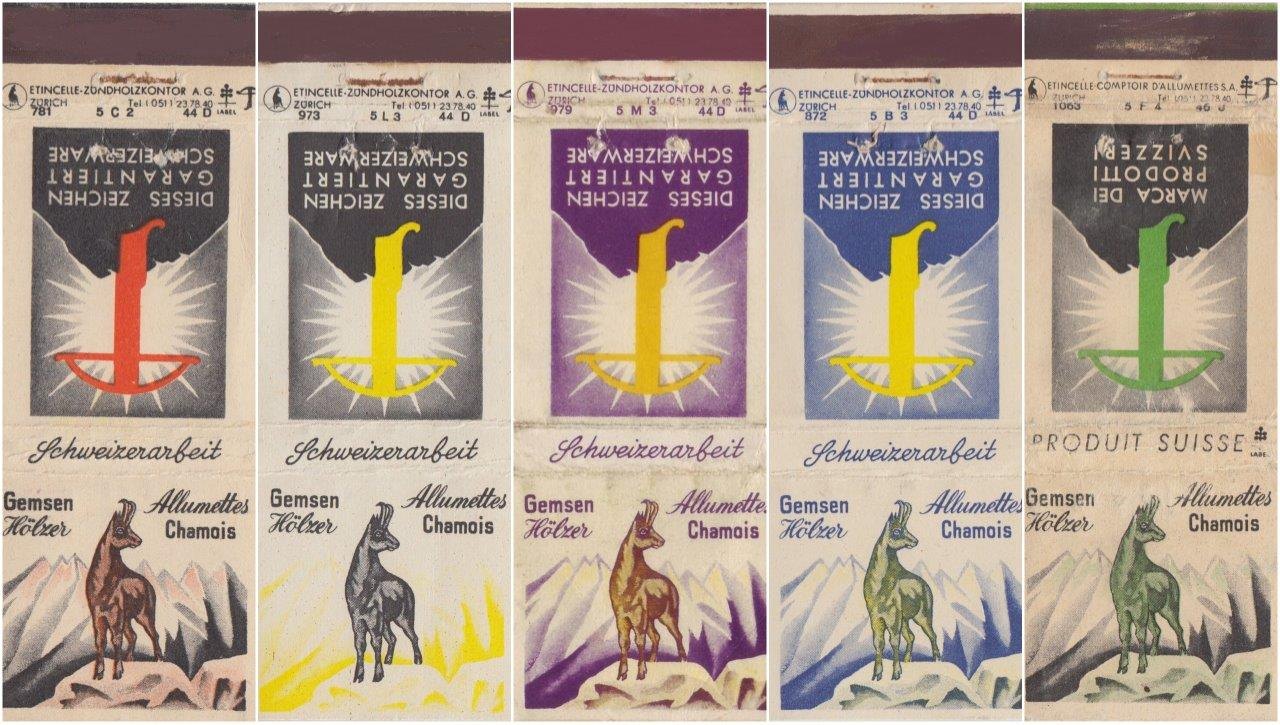 Bookmatches from 1950 - 1960
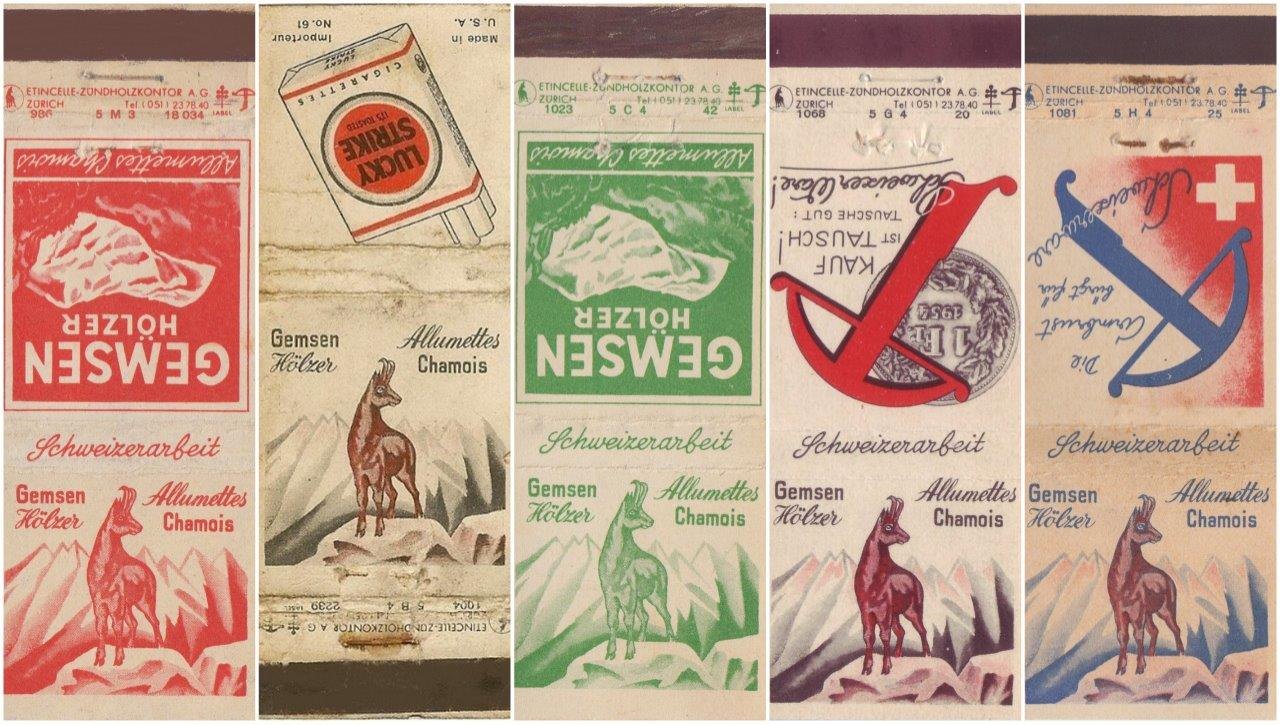 Bookmatches from 1950 - 1960
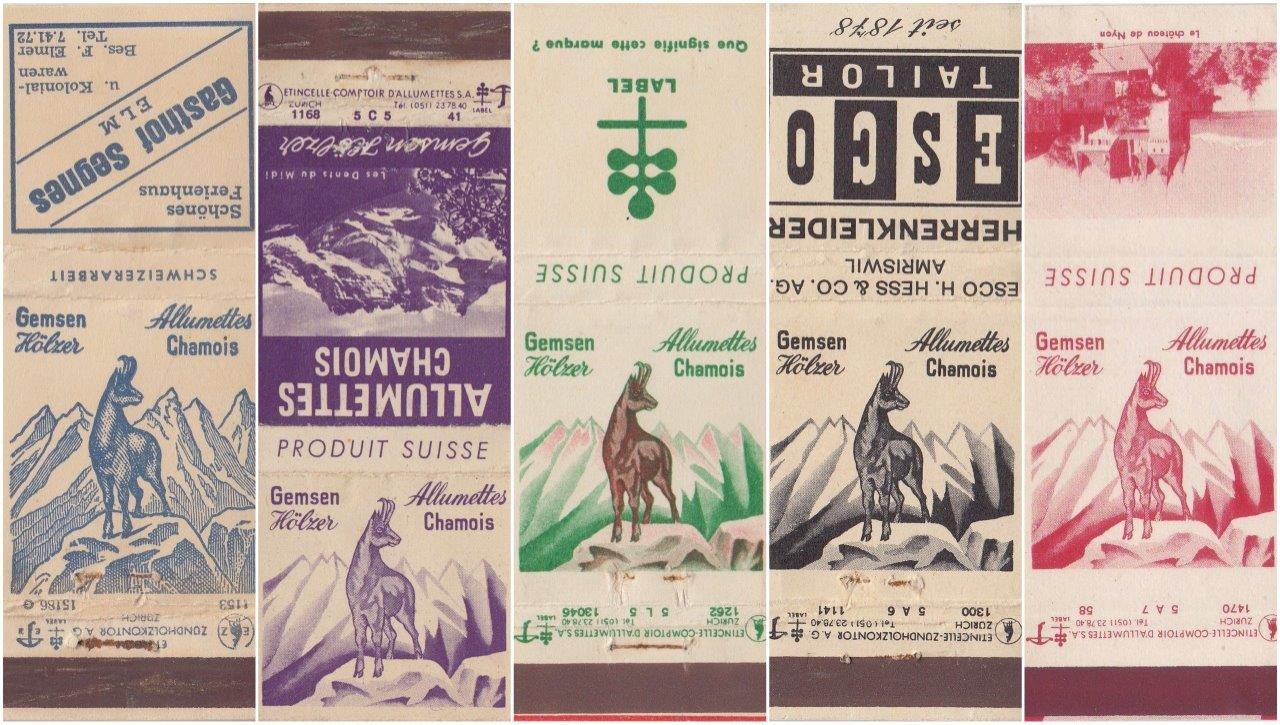 Bookmatches from 1950 - 1960
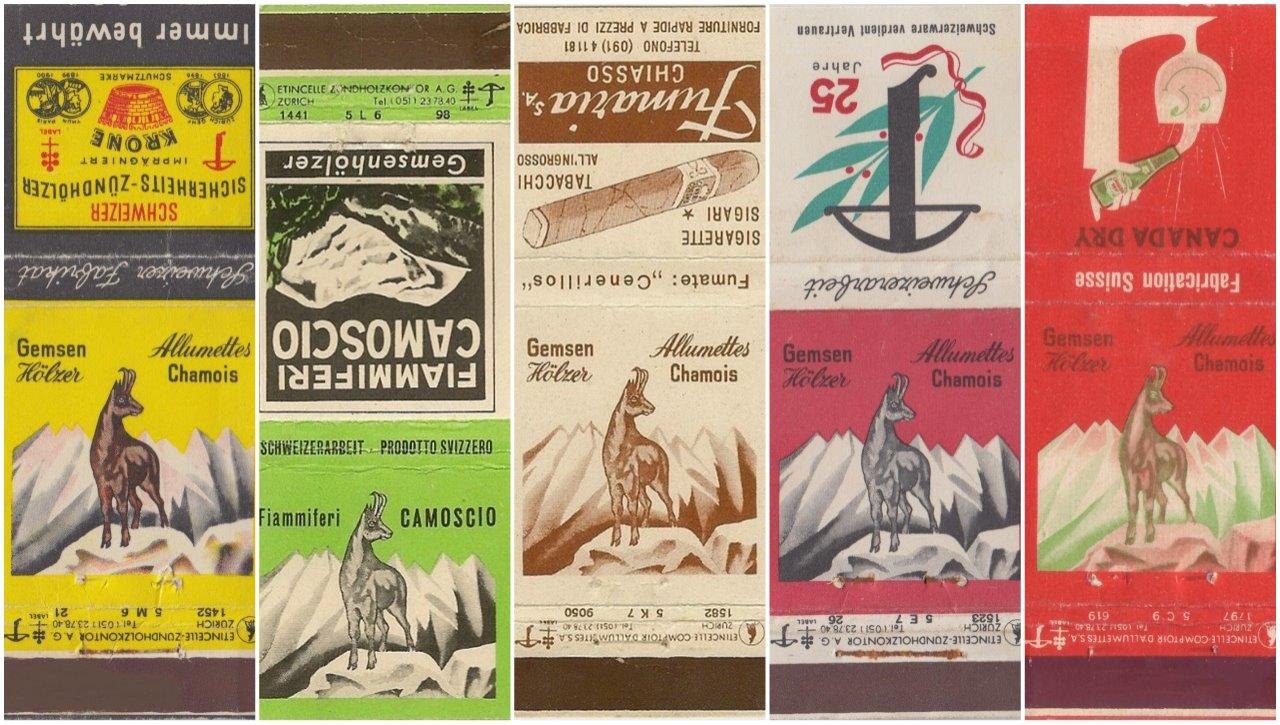 Bookmatches from 1950 - 1960
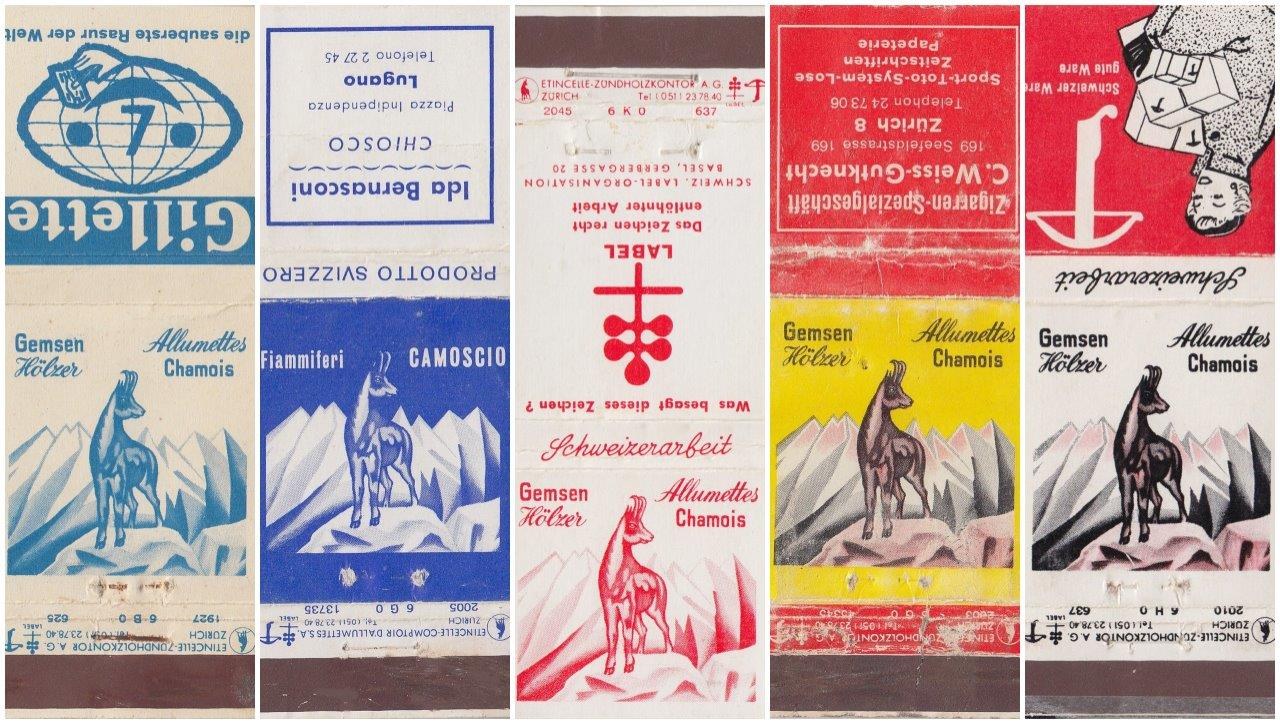 Bookmatches from 1960 – 1970
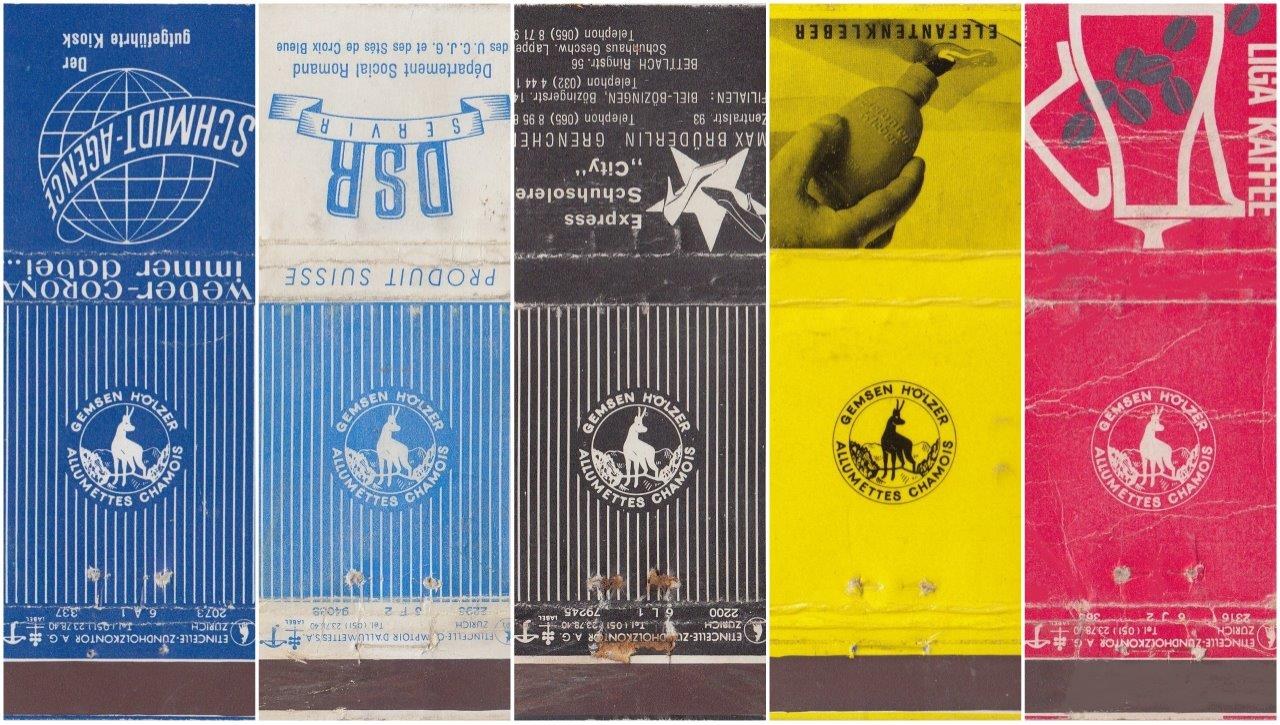 Bookmatches from 1961 onwards
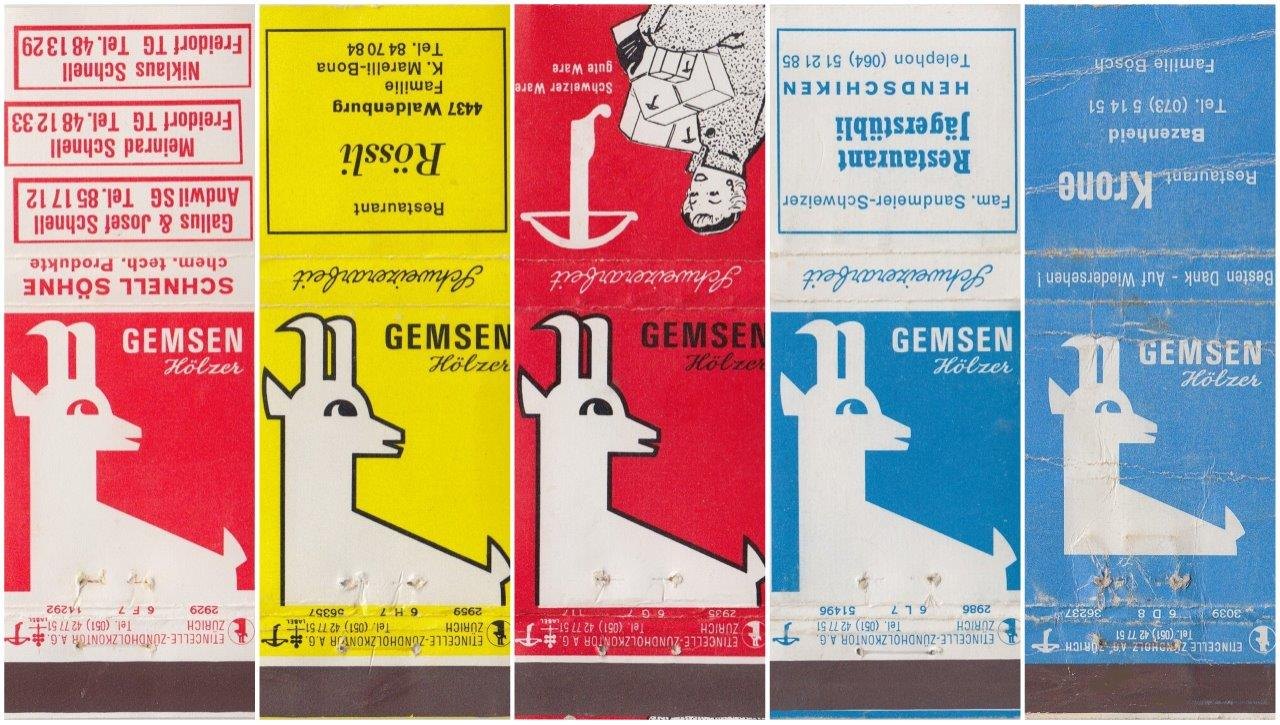 Bookmatches from 1967 - 1982
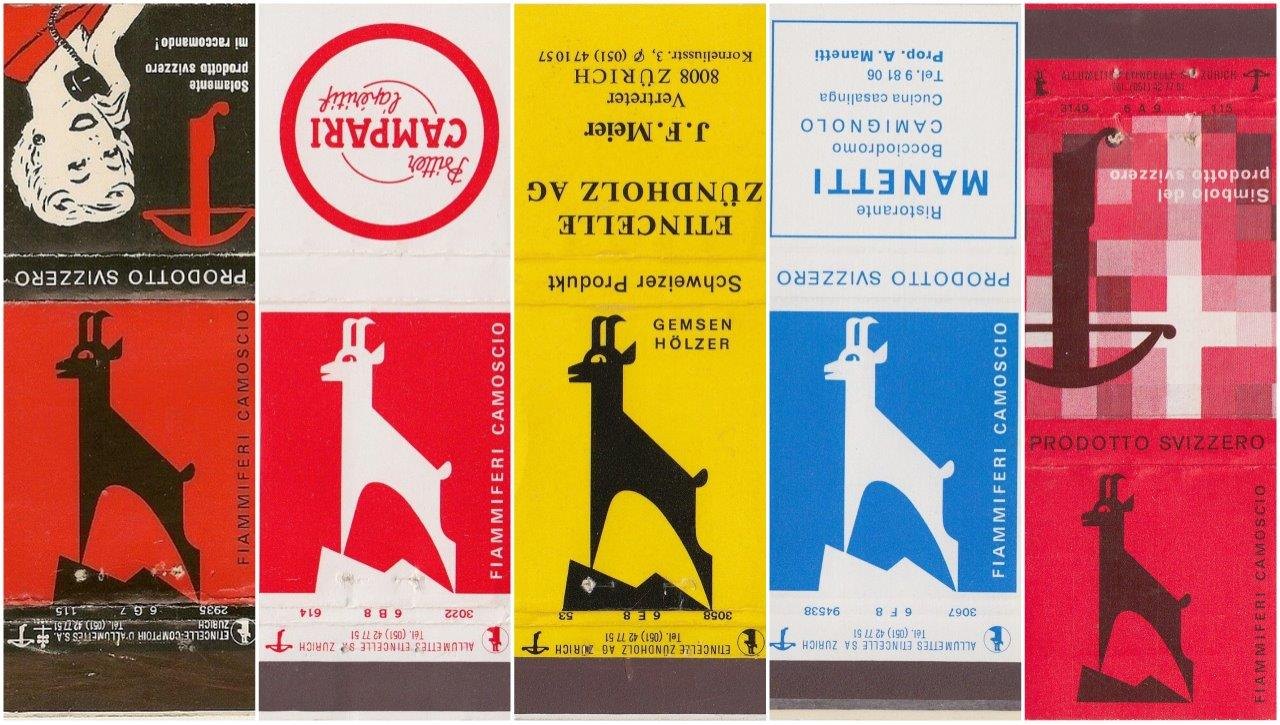 Bookmatches from 1967 - 1982
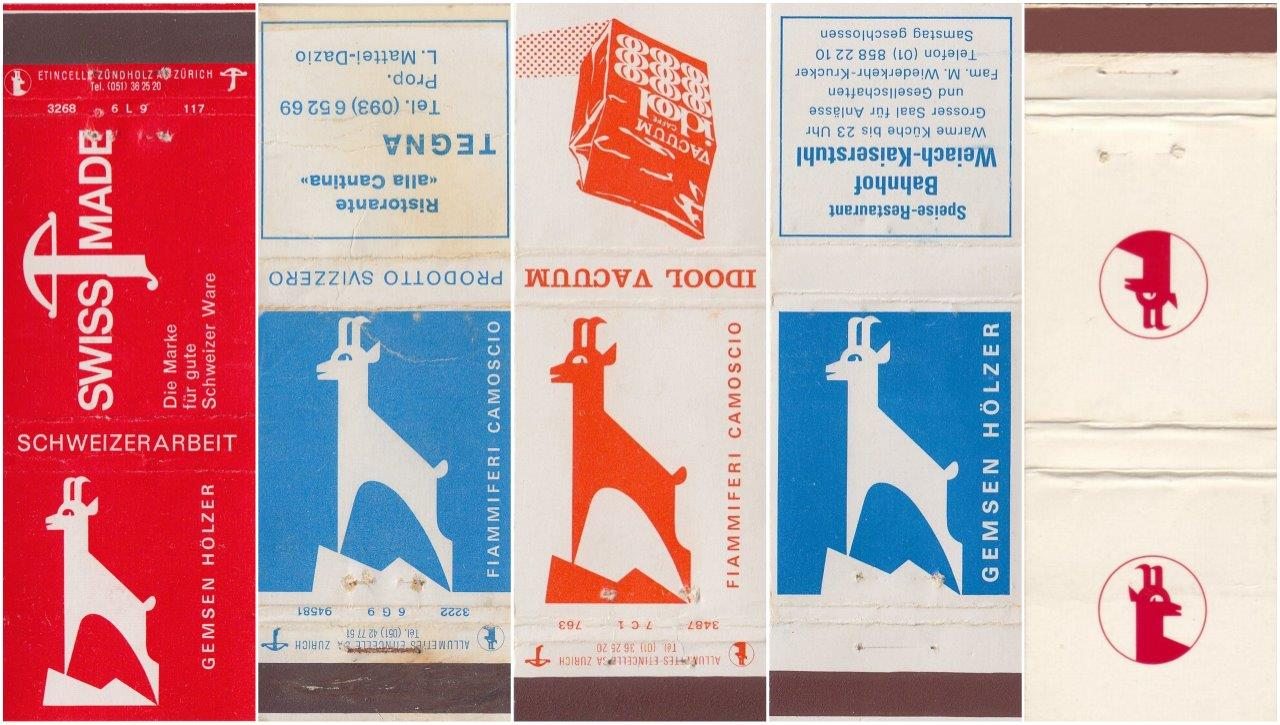 Bookmatches from 1967 - 1982
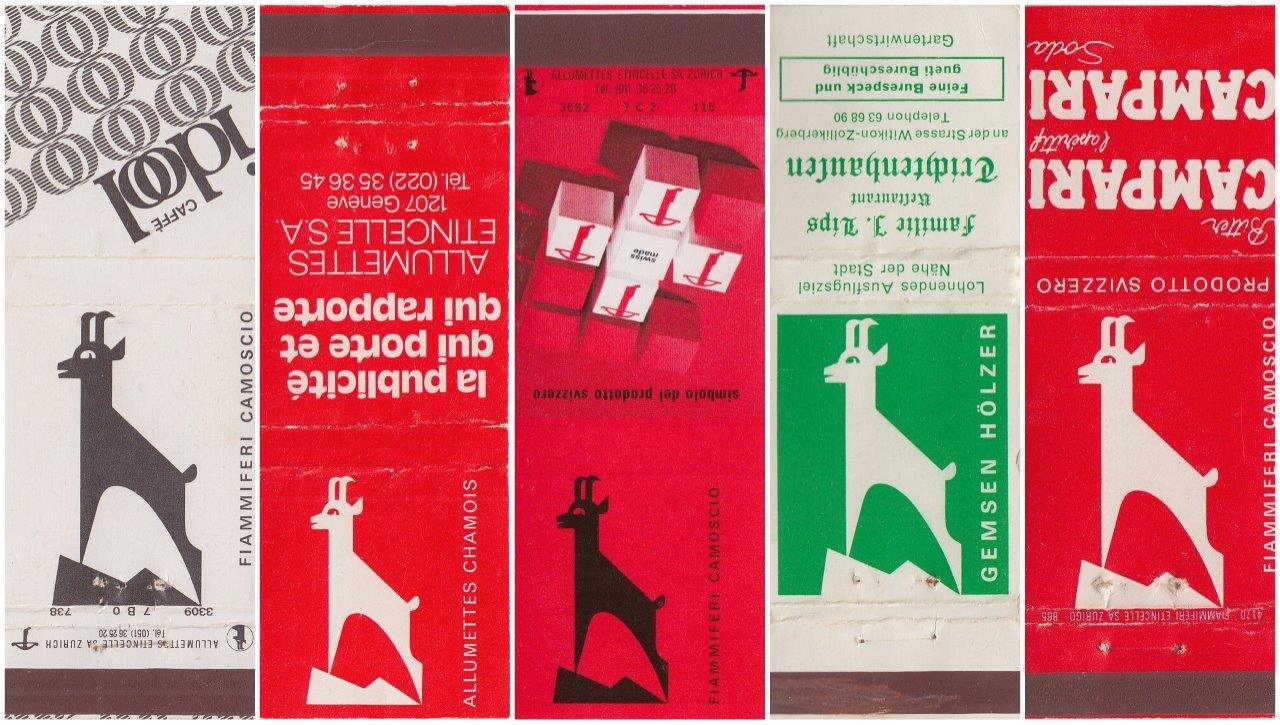 Bookmatches from 1967 - 1982
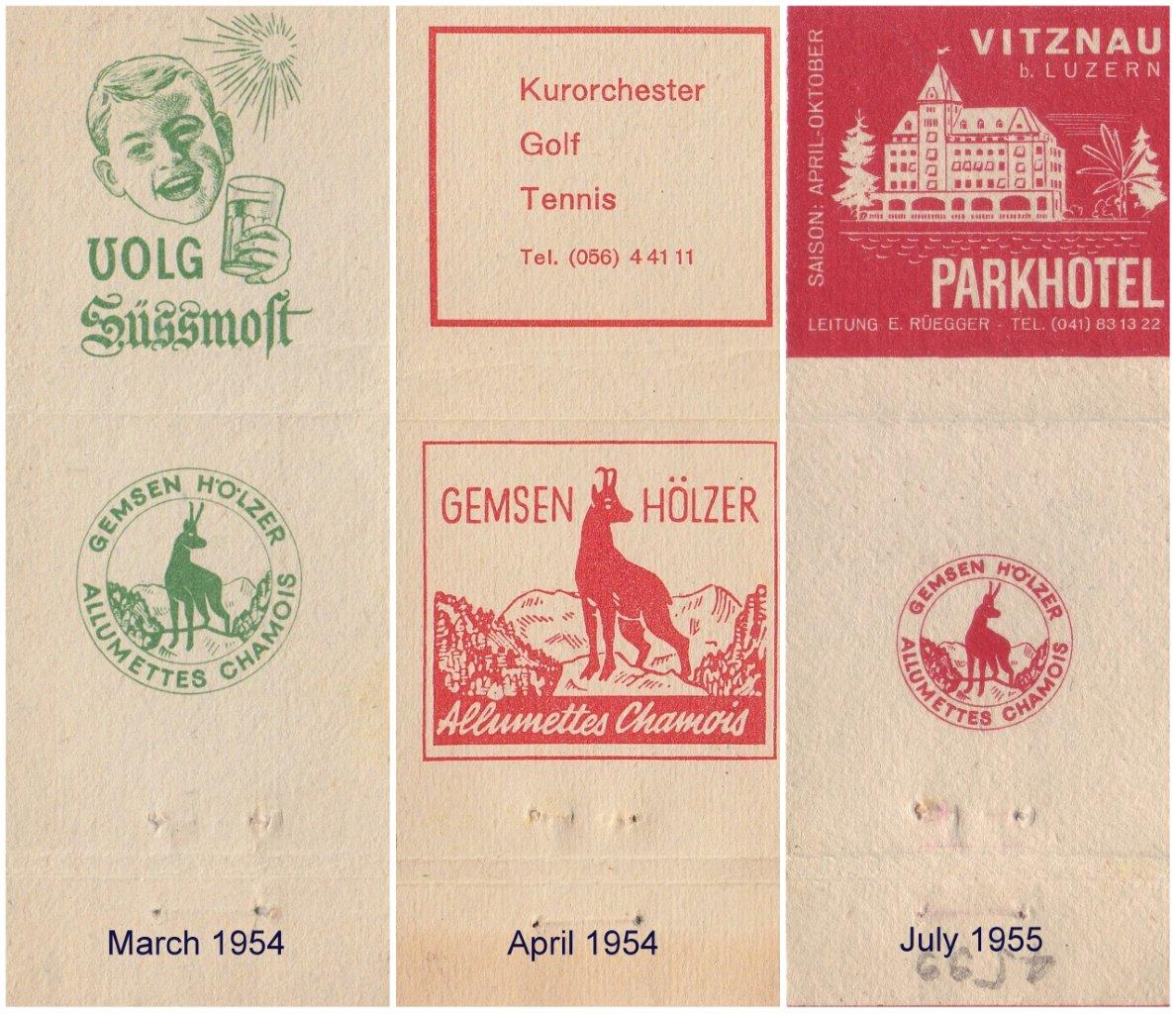
In those years, the logo with the chamois could hardly be found on the outside of book matches.
However, to supplement the self-advertising the chamois was printed on the inside of the bookmatches, below are some examples from my collection.
From 1971, Etincelle only advertised itself on the inside of the bookmatches. In 1982 Etincelle SA ceased production of bookmatches.
 1941 inside image
 1948 inside image
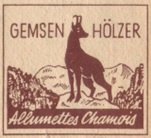 1949 inside image
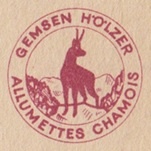 1950 inside image
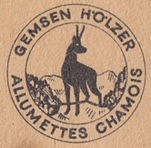 1953 inside image
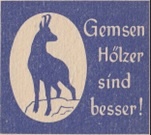 1943 inside image
 1954 inside image
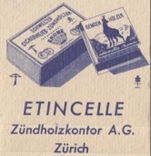 1955 inside image
 1957 inside image
 1960 inside image
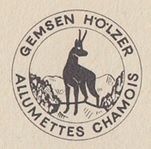 1963 inside image
 1967 inside image
 1968 inside image
 1968 inside image
 1969 inside image
 1971 inside image
 1975 inside image