
Teesside match industry 1826-1985
Exhibitor : Alan Middleton
As a Smoggie Teessider, I am now the only phillumenist left on Teesside and have extensively researched the Teesside Match Industry over the years. Please prepare to be surprised about our ‘secret’ history as many people don’t know our area’s match heritage extends beyond John Walker!
First a question: Why was there ever a match industry on Teesside?
My answer is: It started due to the easy access from what was then called the German Ocean up to WWI, and now called the North Sea. Ships carried cargo from around the world into inland towns along the River Tees where their cargo could be safely discharged away from pirates and smugglers. There was law and order, the ship captains got paid for their cargo and there was a ready market for their goods.
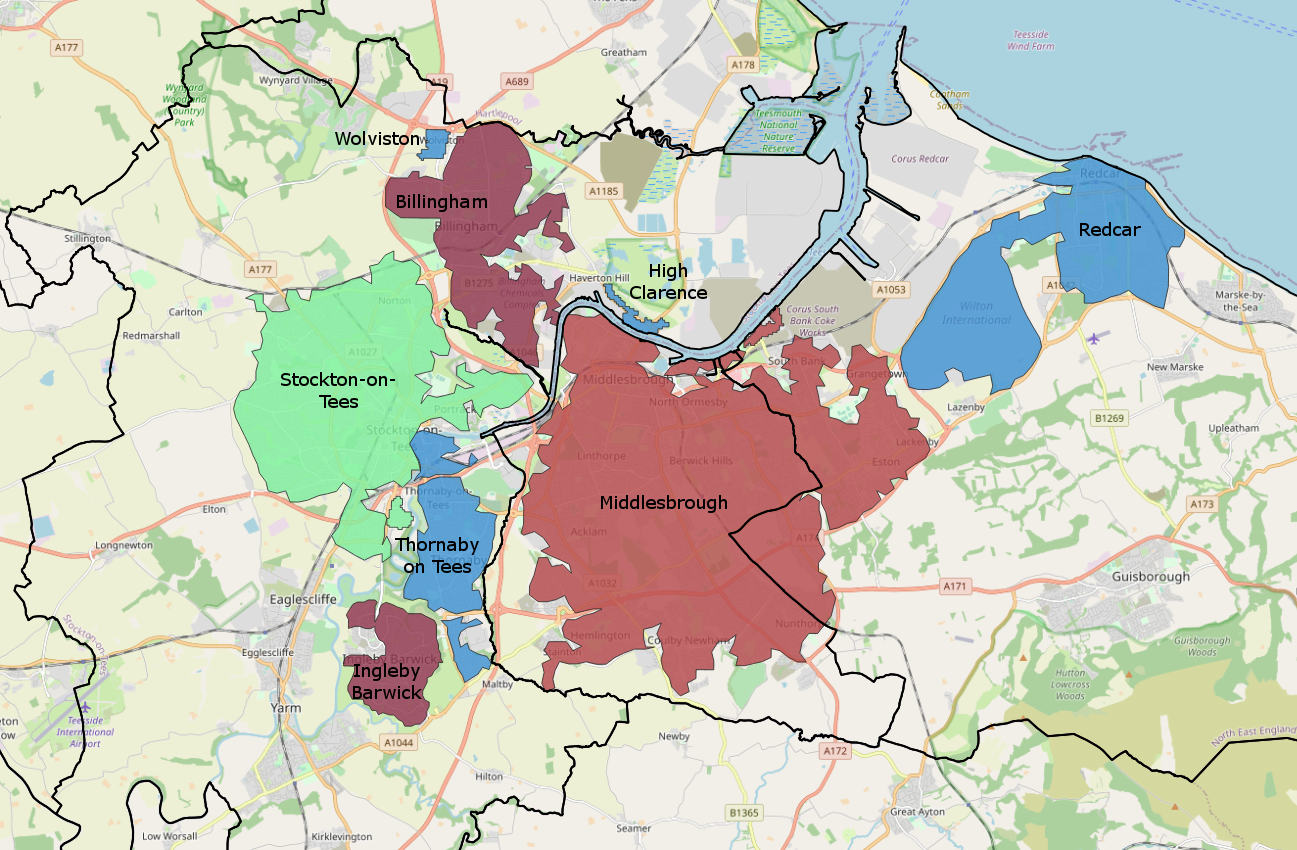
There were actually five Teesside companies offering matches to the public in the period 1826-1985:
- John Walker (Stockton)
- S J Endean-Rowe/Nectar Match Co. (Middlesbrough)
- Cleveland Match Co. (Middlesbrough & Stockton)
- North of England Match Co. (West Hartlepool)
- Cleveland Match Co. (Middlesbrough)
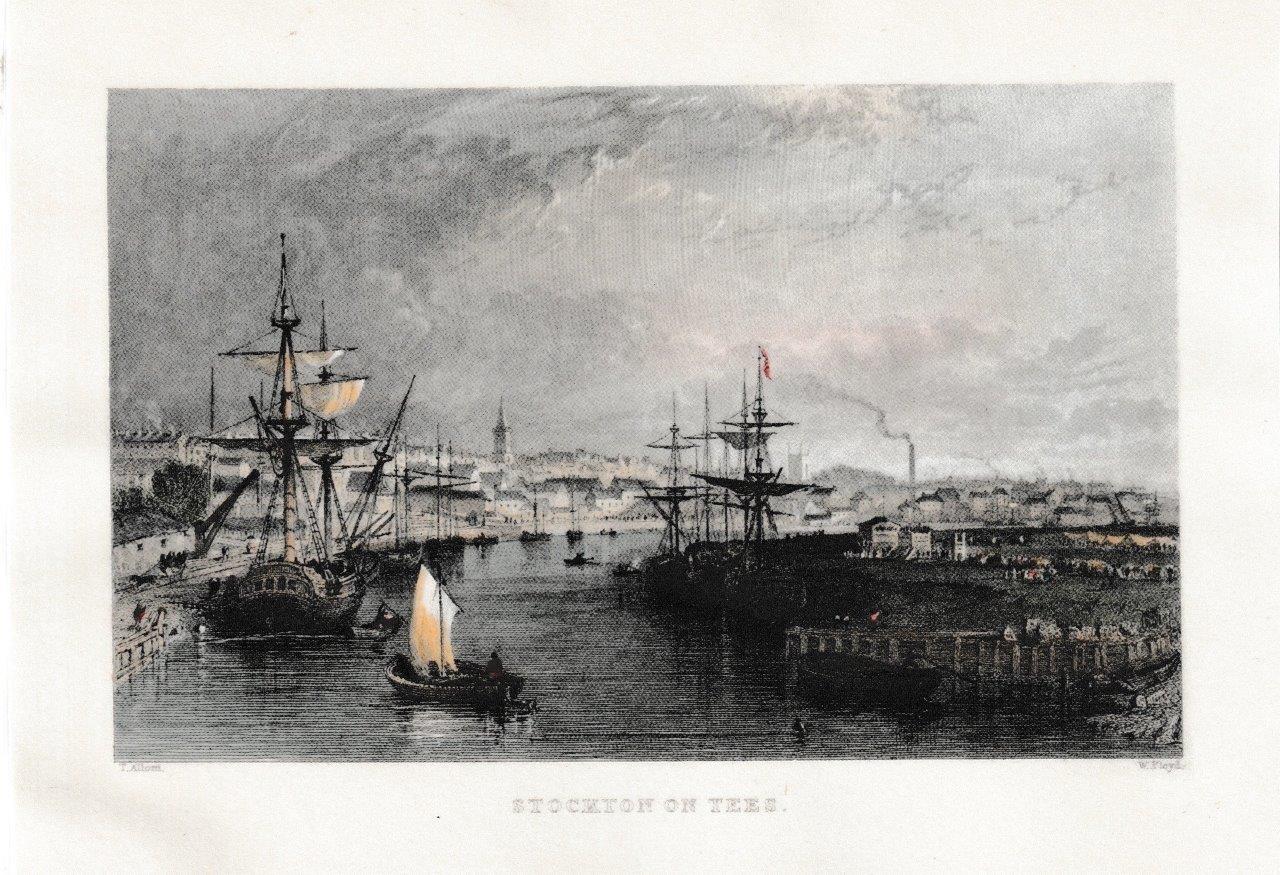
The River Tees was critical to this trade as it was navigable at high tide to Stockton, making it a regional centre of commerce. However by the beginning of the 19th Century, the river had become badly silted up and a major dredging program was put in place. Ships and barges were taking up to seven days to reach Stockton from the river mouth due to the meanders of the river. The drastic solution to the conundrum was two massive civil engineering projects undertaken by Stockton engineers finished in 1810 and 1831, to straighten out the River Tees loops with the ‘Mandale and Portrack Cuts’. The shorter journey time now made good commercial sense for the ship Captains to sail up the Tees to Stockton and Port Darlington (now Middlesbrough) with their cargoes and the future looked promising.
The shipping trade carrying goods for import and export became an important industry to Stockton in the early 19th Century. The opening of the world’s first commercial railway in 1825 carrying coal from the nearby Durham Coalfield initially via Stockton to be shipped to London and the Continent (and a few years later down river from Port Darlington), gave a boost to the local economy. Further rail lines were constructed for exporting the Durham coal from the Port of Hartlepool and to carry the timber imported for the mining industry.
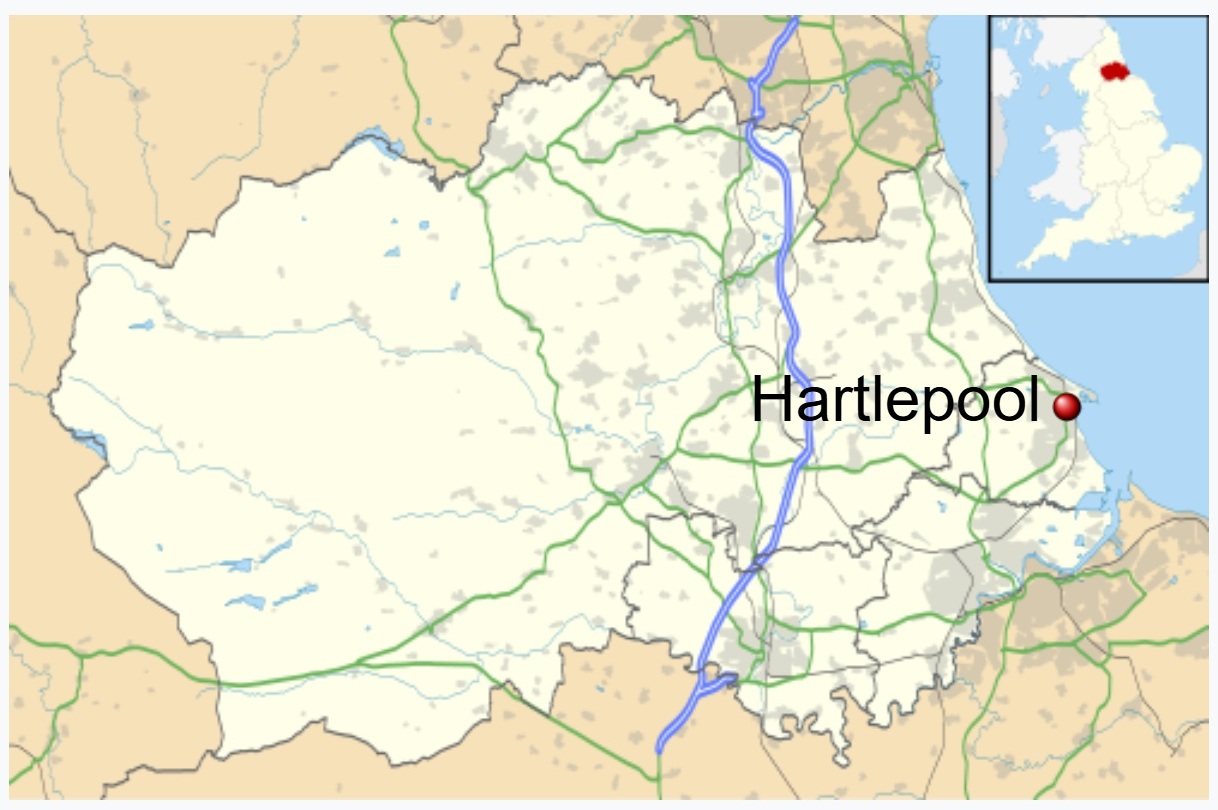
Further Docks with new warehouses were built at Hartlepool in the 1850’s, and a new purpose built rail link at Port Darlington Dock with coal staiths was built in 1842. When iron ore was discovered in 1850 in the nearby Eston Hills near Middlesbrough, there was an industrial boom and Stockton trade was marginalised. It’s not a coincidence in WW1, that the River Tees was home to a submarine base to protect the busy river shipping traffic. Many of the famous British ironmasters, foundries and ship builders were located on the banks of the Tees, as far inland as Stockton, as Teesside supplied ships, iron and steel to the world. Ship building was also a major industry in Hartlepool, and ironically the ship built there for Germany before WW1 was captured by the British Navy and became the submarine supply ship ‘Lucia’ based in South Bank on the Tees which my Grandfather served on in 1917/18.
I have taken an interactive approach to this article by taking the reader on a voyage of discovery. For those people just plain curious and for the more interested aficionados, have referenced further research for them to read for each Company. There is a book available from most local libraries for those prepared to be amazed at an independent match factory based in a Warehouse on the East side of Swainson Dock in West Hartlepool. Enjoy this 160
year history ride through the Teesside Match Industry!
1. John Walker (1826-30/31) Stockton-on-Tees
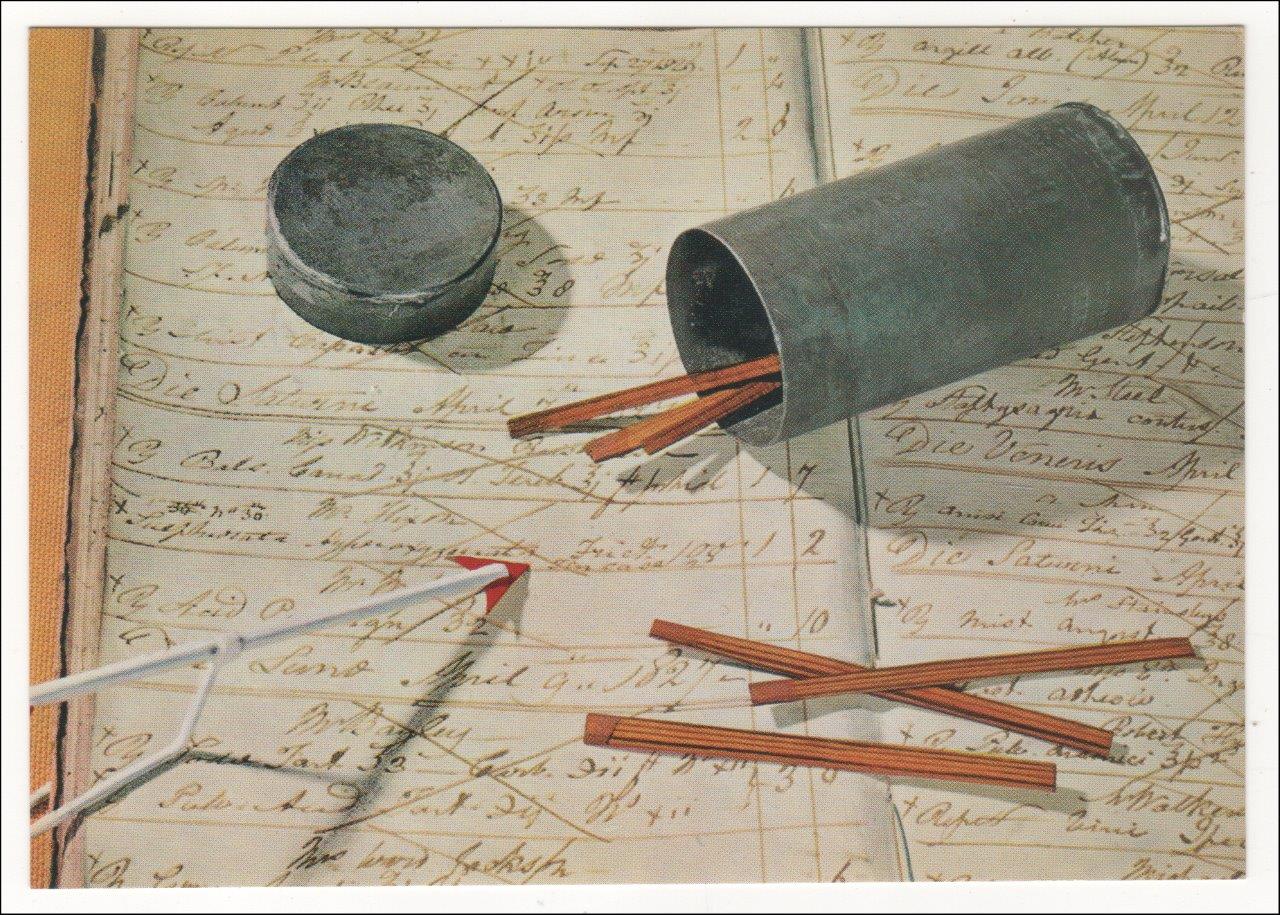
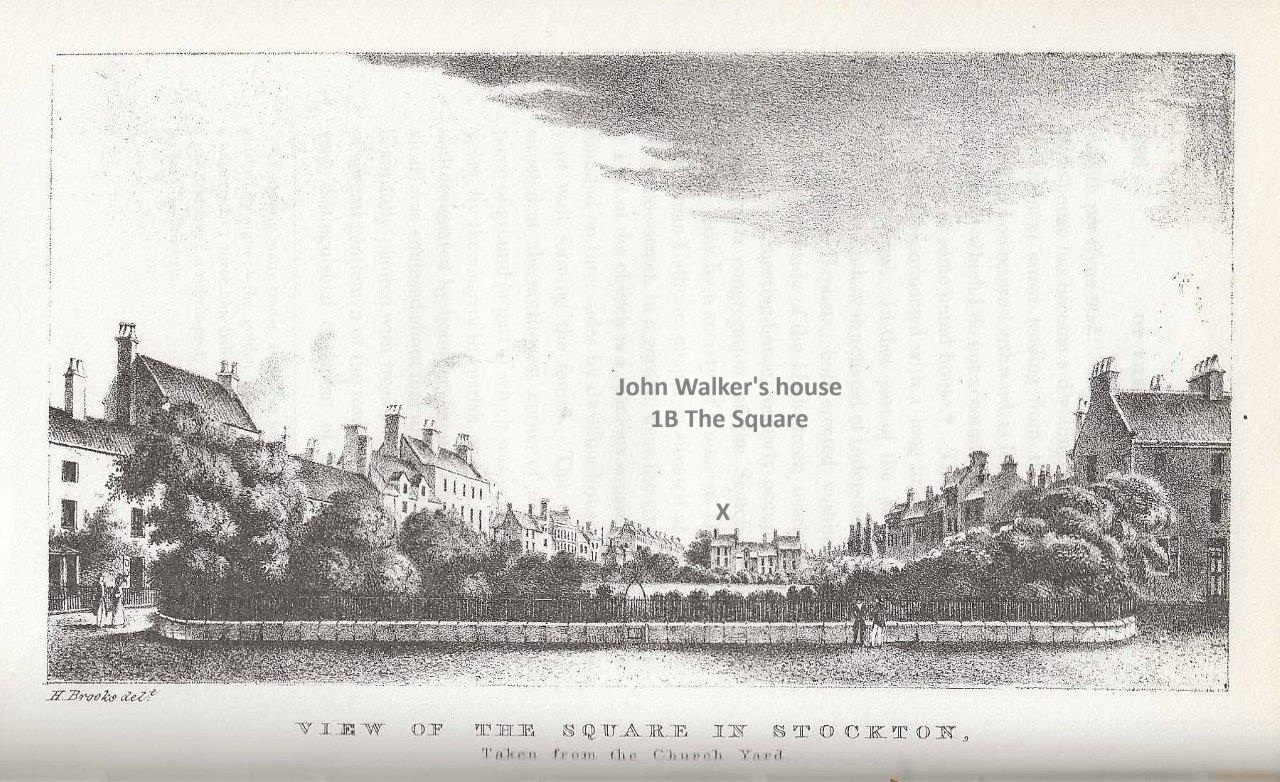
John Walker was an ‘experimental’ chemist interested in percussion caps and explosive mixtures for his customers firearms. This hobby led to him inventing the world’s first friction lit match sometime in 1826. He manufactured his ‘friction lights’ in his chemist shop at 59 High St. Stockton (this was his name he used in his Day Book ledger sales for his matches).
Remarkably, John experimented with various formulations of chemicals for his percussion and explosive mixtures in his family home in Cleveland Row in the Quayside, where he lived with his elderly mother, two sisters and his young niece! Sometime in 1826, he discovered by striking on the hearth in his home one of these experimental agglomerated mixtures, (probably adhered on the end of a wooden mixing stick), it spontaneously ignited by the action of the heat produced by friction, a simple observation but critical to producing a controlled instantaneous flame. Some historians said this was an accidental discovery but a genius experimental chemist like John Walker would have carefully worked his way to this stage recording each batch mixture in a notebook. Unfortunately these notebooks have been lost but the saving grace for posterity was he recorded each ‘friction lights’ sales in his chemist shop Day Book ledger and we are able to extrapolate back his ‘direction of travel’ as fortunately for us his first entries of sales in the Day Book began in 1825.
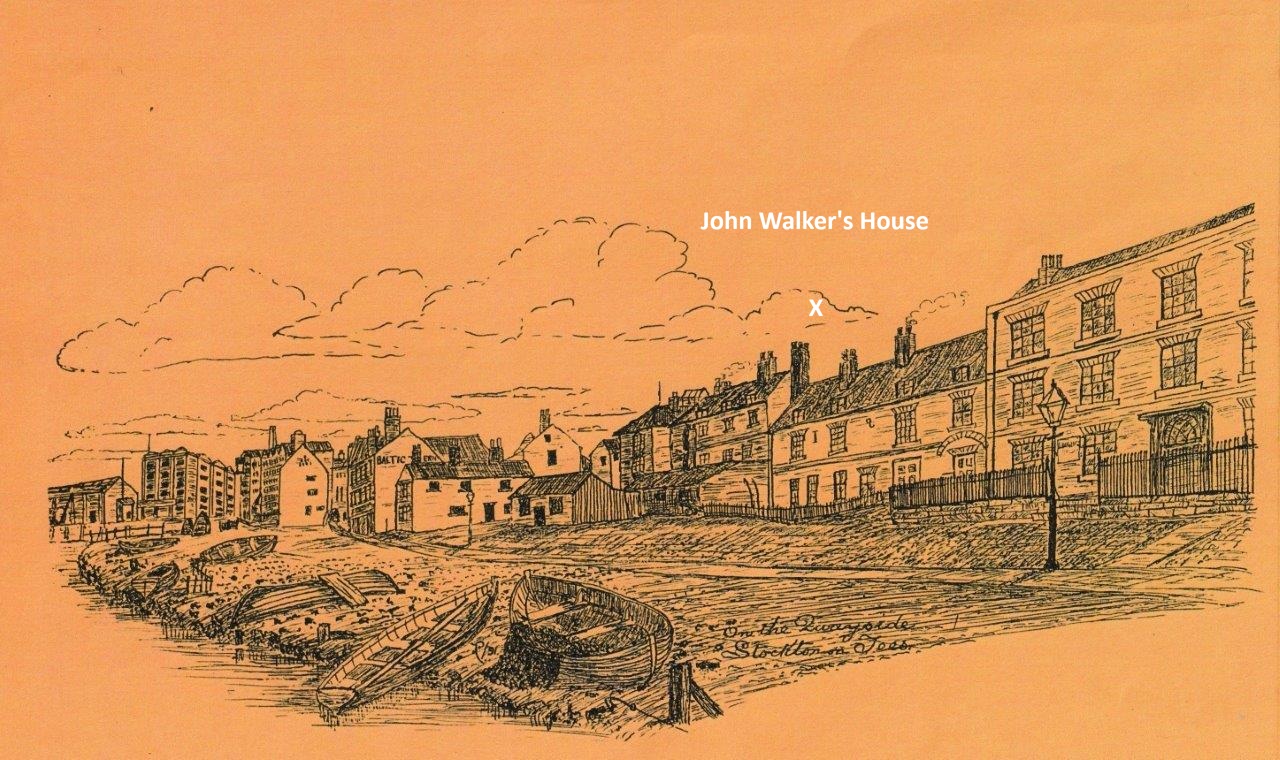
John’s first match sale was no. 30 (it is uncertain if this meant experimental batch 30) to John Hixon, a Stockton Solicitor on April 7th 1827. It is reasonable to assume match production had begun a few weeks before this date and most likely was carried out during working hours in his shop to spare his family anymore ‘heart in the mouth moments’ of chemicals flaring up in Cleveland Row! He would have needed to buy extra supplies of the chemicals he needed for the match head of his invention and these would have been ordered from trade suppliers who would have shipped them into Stockton by sea for him. I surmise the relatively small amounts of timber needed to make the match splints would have been sourced locally.
Each match sale was meticulously recorded in his shop ledger Day Book and Doreen Thomas, John Walker’s biographer in her 1981 book, analysed these sales and calculated he sold over 23,000 individual ‘friction lights’ to the public. It’s not many as a factory today in 2026 makes several million per day but from this small beginning, the world changed and a convenient ‘instantaneous light’ became available to all. He sold them in a cylindrical tin with the sandpaper enclosed, and later in a cardboard box with a lid, unlike the matchbox we are all familiar with today.
There is NO John Walker label (if there ever was one) or an example of his cardboard box which has survived with the necessary verifiable provenance. These are the ‘Holy Grail’ items for phillumenists waiting to be discovered. John stopped making his matches in c1830/1831 when Samuel Jones and George Frederick Watts in London brought out their own friction ignited matches they called LUCIFERS with an identical match head composition to Walker’s.
In conclusion, for this author John Walker comes across as a thoroughly likeable principled ‘maverick’ family man who experimented with chemicals at home, but to his credit there is no record of any mishaps or fires. His genius was he recognised the possibilities of his invention and produced the world’s first friction match and this is his abiding legacy.
Reference: British Matchbox Label & Bookmatch Society. Article published in Match Label
News magazine Dec. 2025-April 26 ‘John Walker, a new biography’ Part 1-3 by Alan Middleton.
2. S J Endean-Rowe (1923-26) / Nectar Match Co (1925-26) Middlesbrough
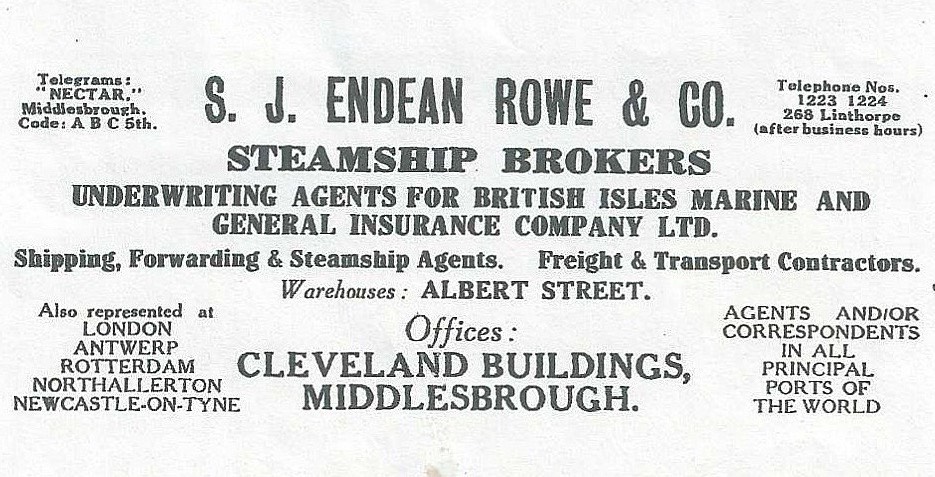
This Company was primarily a Ship & Insurance Broker & Forwarding Agents for shipping in and out of the River Tees with offices close to Middlesbrough L N E R Dock (London & North Eastern Railway) owned by Sydney John Endean-Rowe and his family Directors. They opened after the end of WWI in spacious prestigious offices in Cleveland Buildings, St. Hilda’s district of Middlesbrough near the world famous Transporter Bridge (opened in 1911). From 1841-60, this building housed the first offices of the iconic Middlesbrough Ironmasters partnership Henry Bolckow and John Vaughan, who first developed the iron ore seam found in the nearby Cleveland Hills. This building is still there today.
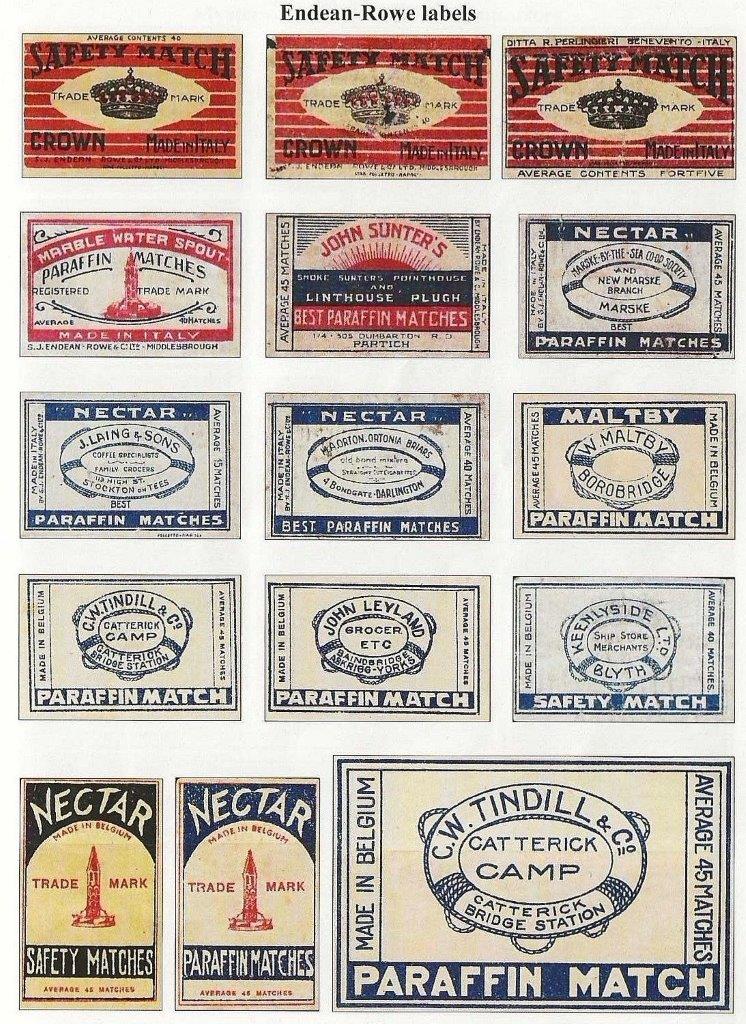
Sydney J Endean Rowe became a Limited Company in Nov.1923. About the same time he began importing and distributing already boxed and labelled matches from Belgium.
He and his company Directors had no experience of importing matches but the potential and ease to import them through Middlesbrough Dock probably attracted them and the Customs Office located there would have probably briefed him on the match tax import duty payable to run such a business.
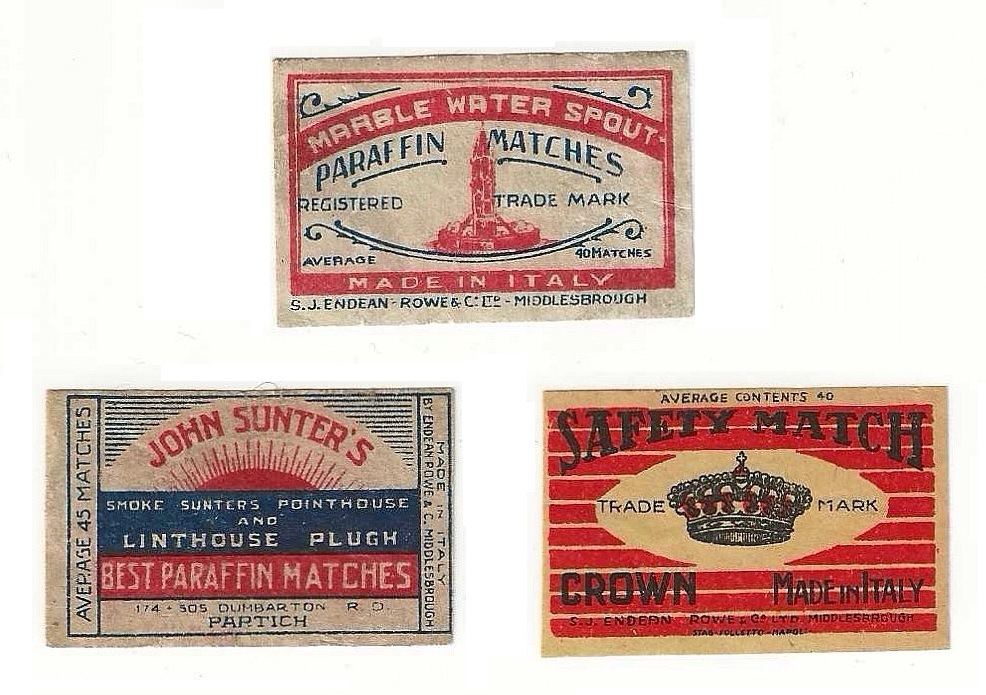
By 1924/25 boxed matches were being imported from Italy from the Stab Folletto, Napoli (translated the Goblin Factory, Naples) and Perlingieri Factory, Benevento, by then run by the unionised fascists led by Bonito Mussolini.
Sydney began to use a Middlesbrough printer Roberts of 61 Albert Road to create the artwork for local customer advertising labels and to print the labels to go on the Italian matchboxes.
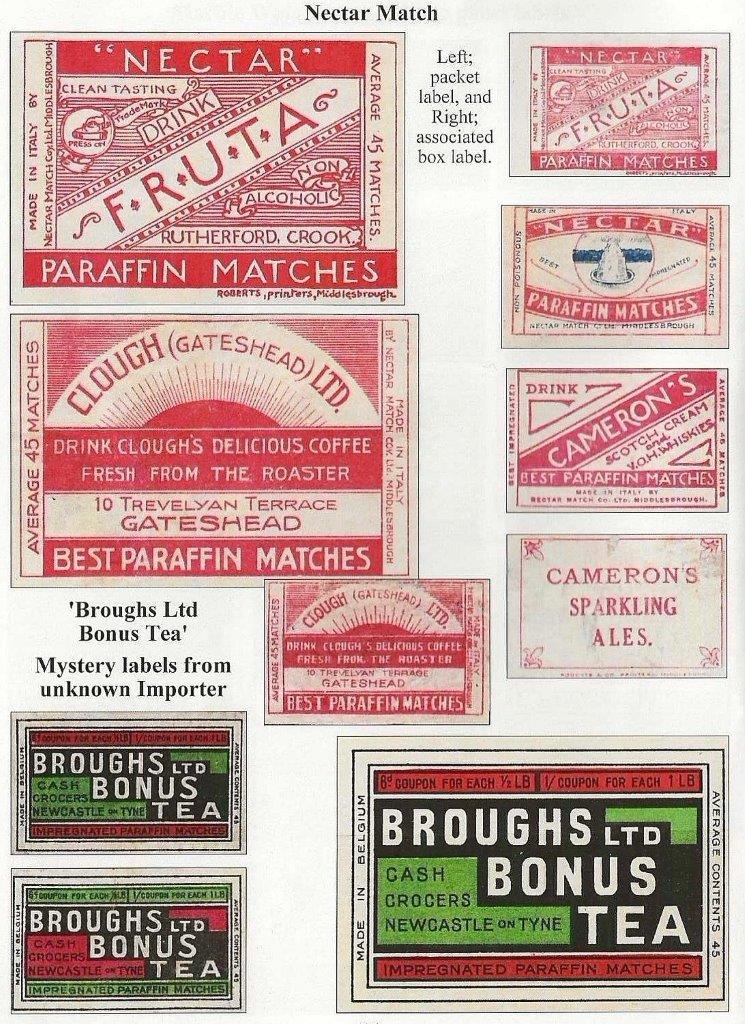
In 1925 it was proposed by Sydney Endean-Rowe to ‘erect’ a new match factory in Middlesbrough ‘Nectar Match Co. Ltd’. He persuaded a retired Poor Law Official William Somerville to invest £400 into the new proposed company and he would put in £800. By the Spring of 1926 there was a falling out and on 31st March 1926, Sydney was arrested on 13 counts of obtaining money by false pretences and larceny! The Middlesbrough North-Eastern Daily Gazette reported the Court Hearing in great detail (and conveniently for my research) named several of the local advertising Italian made match brands such as Marske Co-op, Clough, Rutherford and Camerons (brewery) and that the Police had searched a ship (in the Docks) for matches but found none.
It was a sensational development but only a minor charge, and after a hearing of eight days, Sydney was committed to trial at York Assizes on a charge of obtaining £300 by false representation. Interestingly and good news for Sydney 12 of the original 13 charges were dismissed! On the 7th July 1926, it was reported in the Hartlepool Daily Mail that a Teesside Shipbroker was found Not Guilty and discharged.
Sydney stopped his match importing businesses in 1926 after his brush with the Law but continued his ship brokerage in Middlesbrough until 1932/33 before moving the business to Hull. He died in 1954.
A match factory was never built in Middlesbrough but the idea was not abandoned and the dream of a new British match manufacturing company was realised in Teesside in nearby West Hartlepool in 1933.
The comprehensive articles on Sydney Endean-Rowe’s two match companies with photos and pictures of his match labels can be seen in the Reference below.
Reference: British Matchbox Label & Bookmatch Society. Articles published in the Match Label News magazine June and August 2019 ‘S J Endean-Rowe Ltd. & Nectar Match Co. 1923-26’ by Alan Middleton.
3. Cleveland Match Company 1925 – 1935
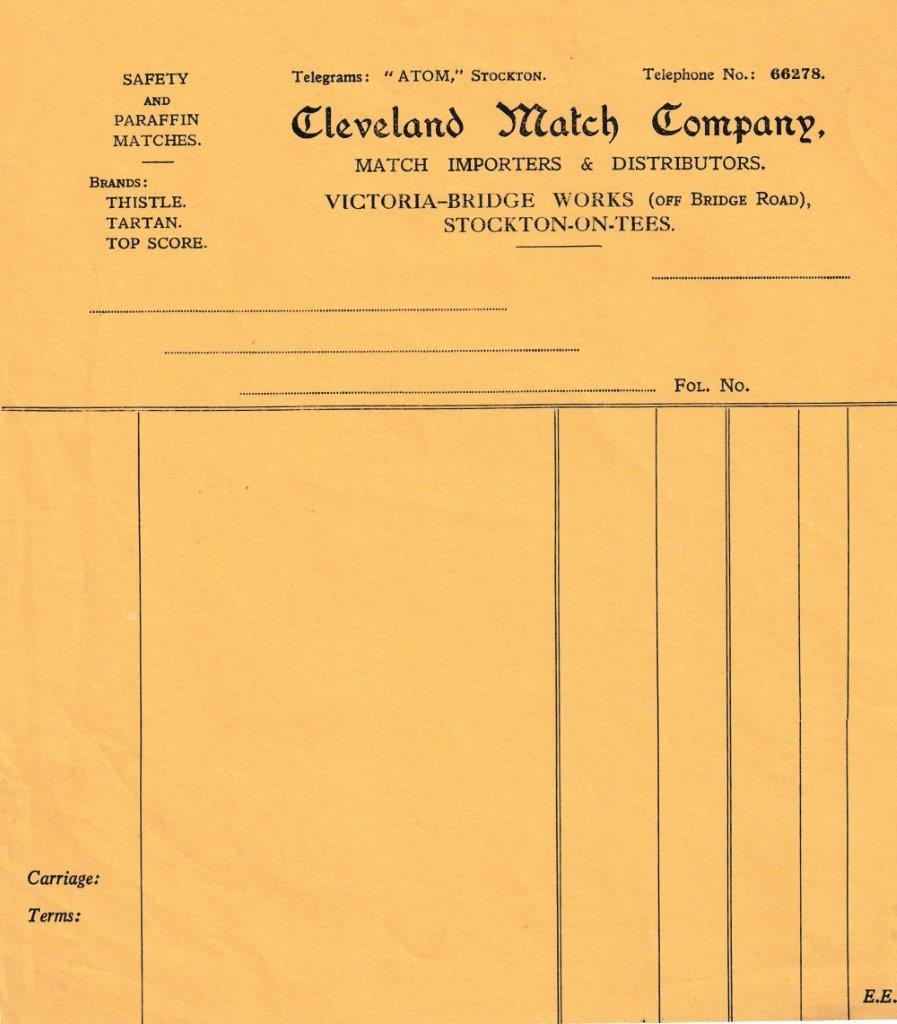
The Cleveland Match Company operated as match importers and wholesalers from 1925 to 1935, initially in 29 Marton Road Middlesbrough and then in Boathouse Lane in Stockton-on-Tees. This Exhibit tells the story of the growth and subsequent decline of their business and the three match brands that they imported during their ten years of operation.
The beginning, Thistle brand
Alfred Tomlinson had started a small iron and coal business in Middlesbrough in 1919. He was joined in 1921 by Frank Hall and the business expanded into concrete and scrap metals. Then in 1925 they ventured into match importation and formed a subsidiary called The Cleveland Match Company.
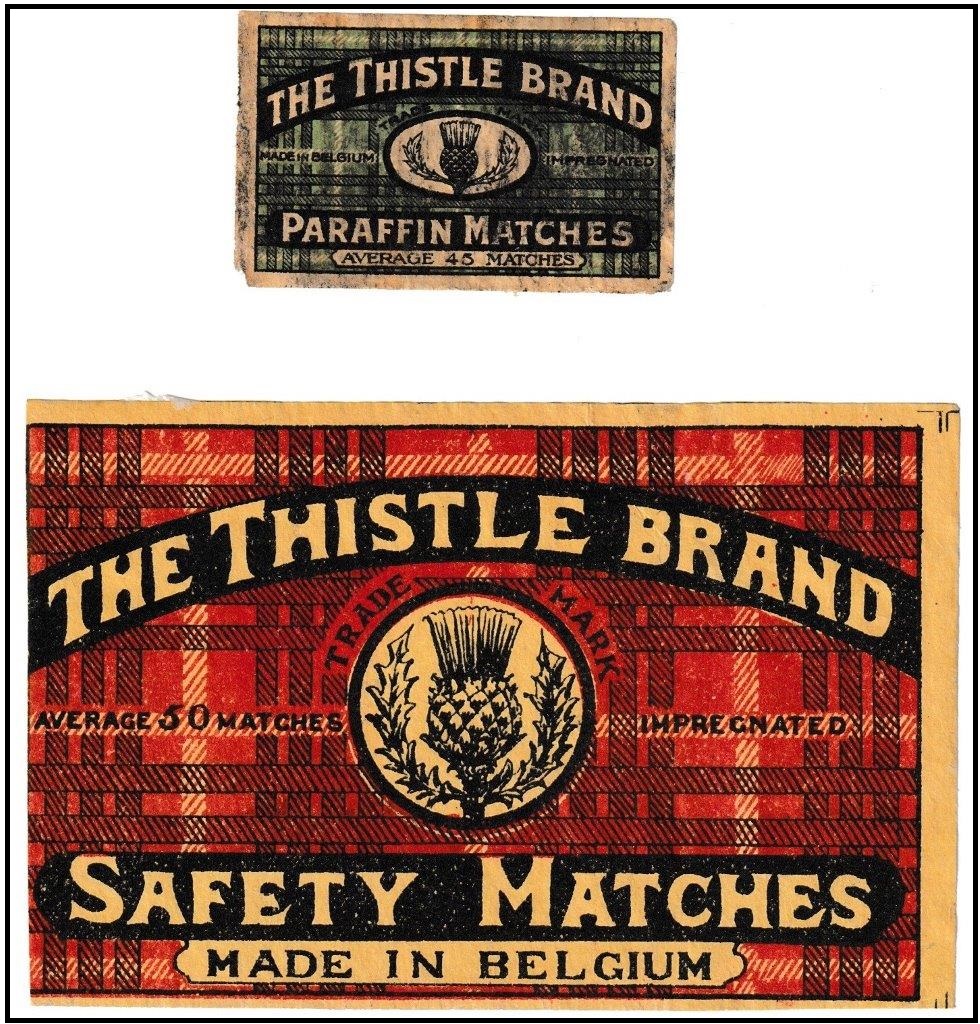
The first brand they imported was “The Thistle” which came boxed and labelled directly from the Belgian suppliers.
The matches were stored in bonded warehouses, ready for distribution to the retailers by a network of representatives.
These men were paid a commission on the volume of sales made.
Russian matches, Top Score brand
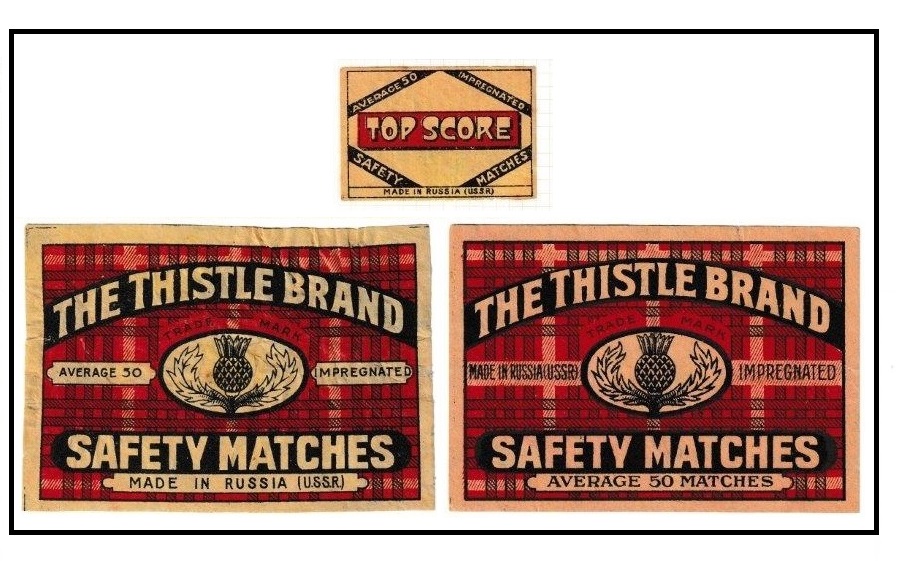
During 1927 the company introduced the “Top Score” brand from Russia and applied for the Trade Mark which was granted in 1928. Russian matches were very competitively priced compared to British-made matches, and this led to Cleveland Match switching Thistle to Russian suppliers.
The threat from Russian imports by Cleveland and other match companies was so serious that it prompted a question in Parliament on 5th July 1928. Concerns were expressed that the public were being deceived about the origin of matches, and Thistle was explicitly mentioned as an example of a product that used a British emblem. H M Customs immediately insisted on more explicit labelling on imported matchbox labels, which can be seen on the labels here.
In the early 1930s the words “Foreign Made” started being used, to conceal the Russian origin. and to overcome the adverse public reaction to Russian goods. Problem solved for the British smoker who didn’t know what he was buying but hard lines on the commercial viability of the British match manufacturers at the time!
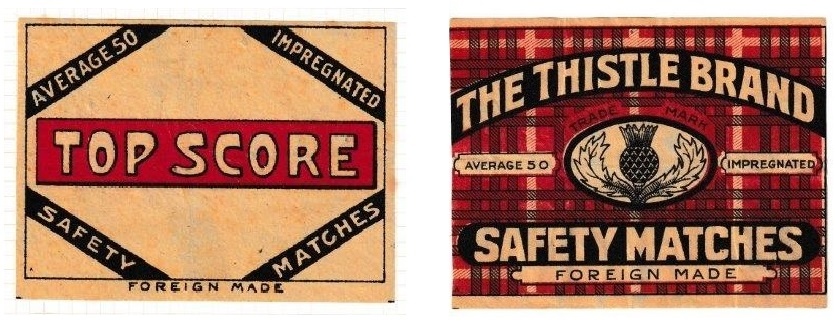 Foreign Made packet labels (84 x 63 and 87 x 62 mm)
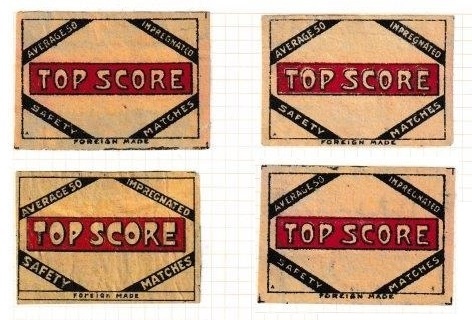 Foreign Made box labels (46 x 32 mm)
In 1928 the “Tartan” brand started being imported from Belgium and carried the company’s name (as C M C), The Belgians also supplied a very attractive “Top Score” label which also carried the company name and the Middlesbrough address. But in 1929 the company moved to bigger and better premises in nearby Stockton-on-Tees which meant that the Middlesbrough labels were no longer usable.
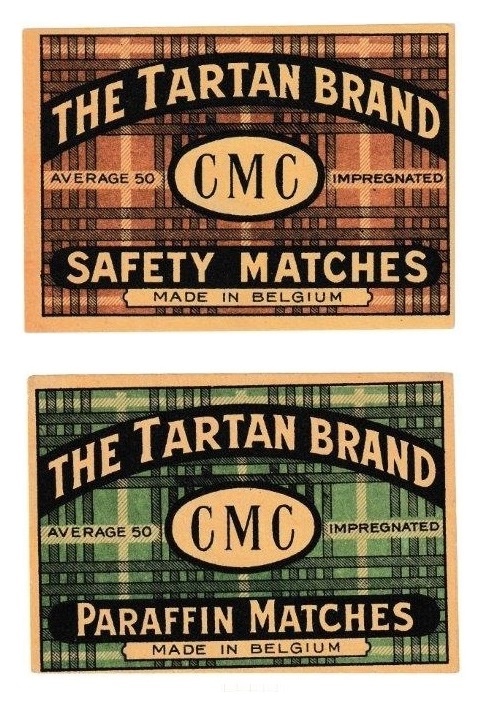 Tartan brand packet labels, Belgium (94 x 65 mm)
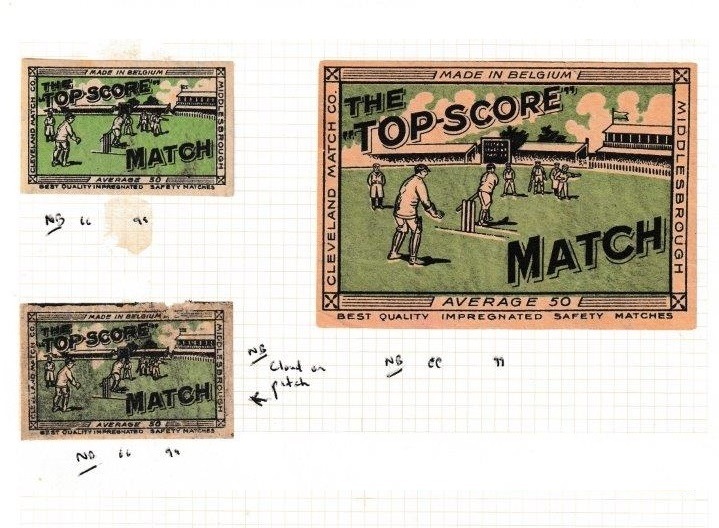 Top Score brand, Belgium (51 x 30 and 94 x 63 mm)
Cleveland Match never issued ‘own-brand’ advertising labels, unlike their competitors such as the Middlesbrough-based importers S J Endean Rowe/Nectar Match Co. The early 1930’s were very hard times, and the Depression was at its height. The British Match Corporation had been formed in 1927 and this made it very difficult for independent match merchants to survive. Finally, after experiencing supply problems with Russia and the cut-throat competition the partners reluctantly decided to run down the match business and concentrate on the fast-developing light engineering side of their business.
Here are a few company letterheads and business documents which serve to illustrate the history of this short-lived much-loved British company.
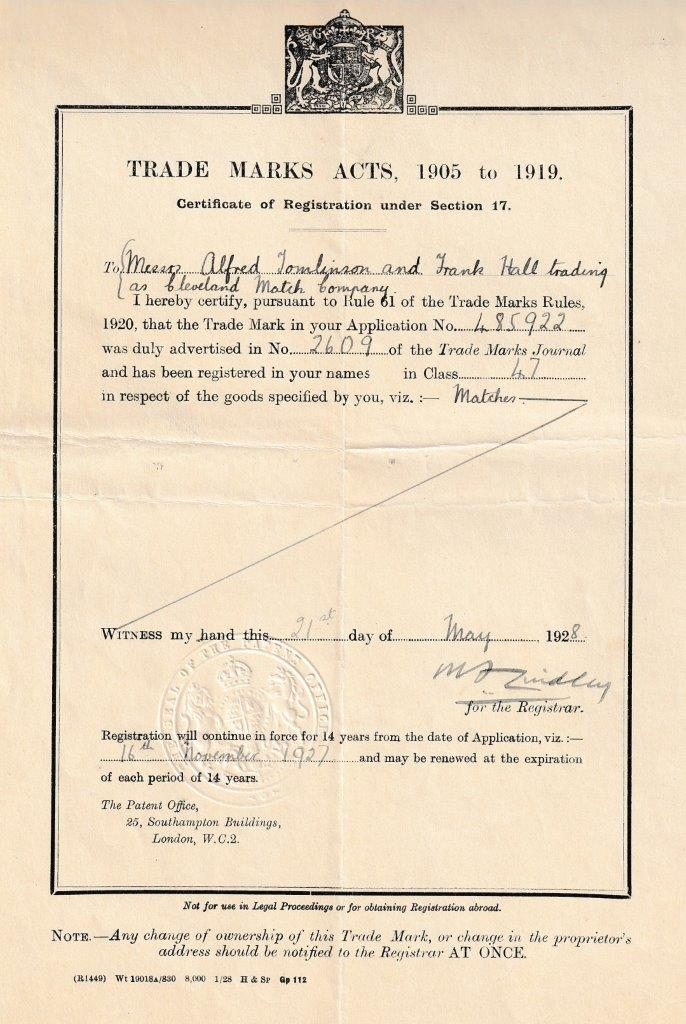 1928 Trade Mark Certificate
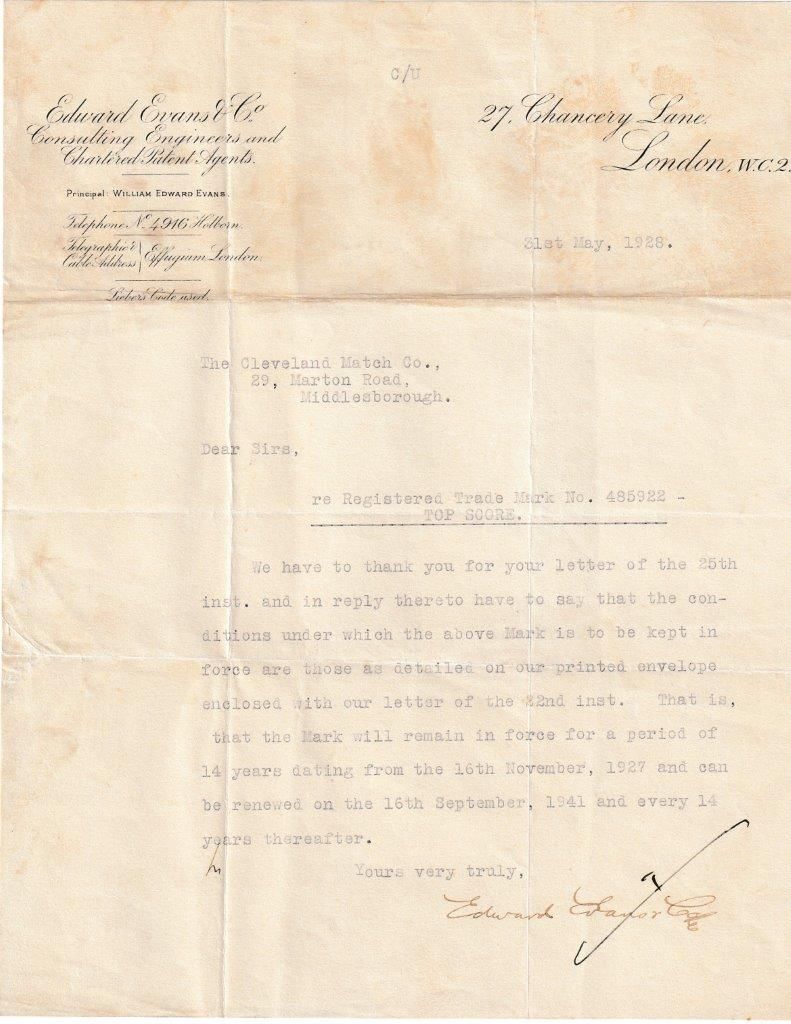 1928 letter about the Trade Mark
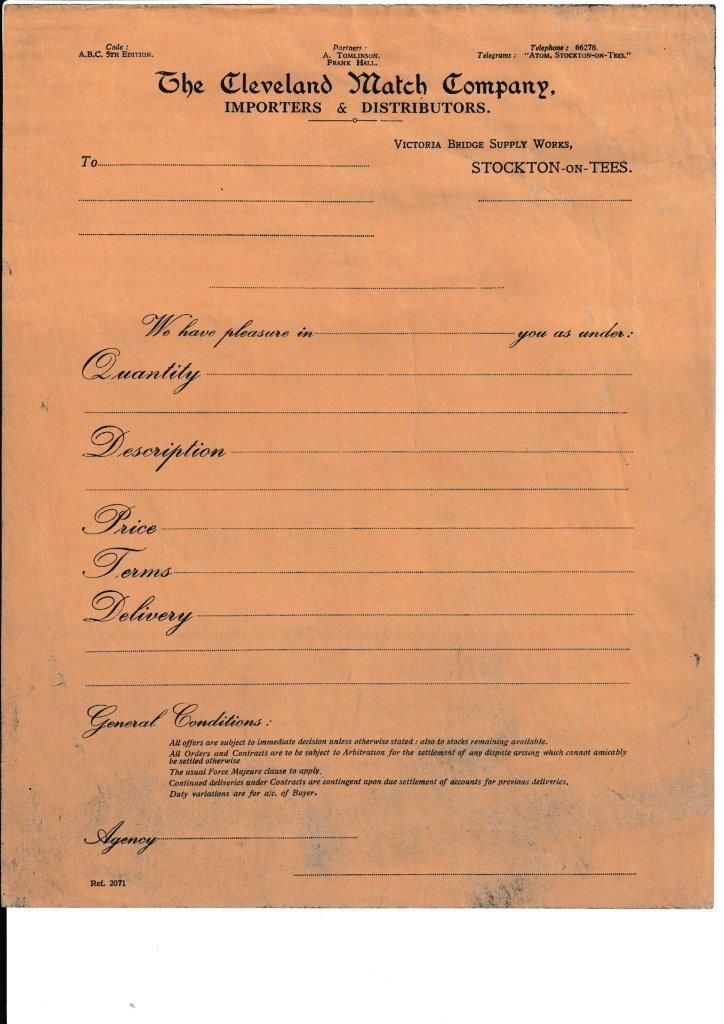 1930s supply note
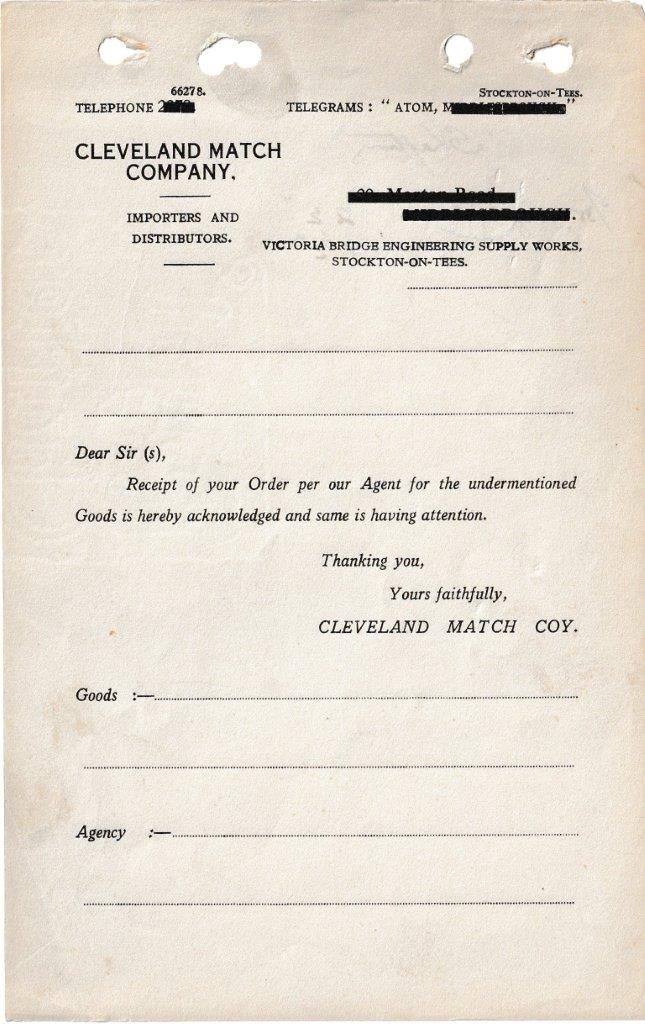 1930s receipt
Reference: British Matchbox Label & Bookmatch Society. Articles published in the Society Newsletter June 1980 and 2023 on-line exhibition by Alan Middleton.
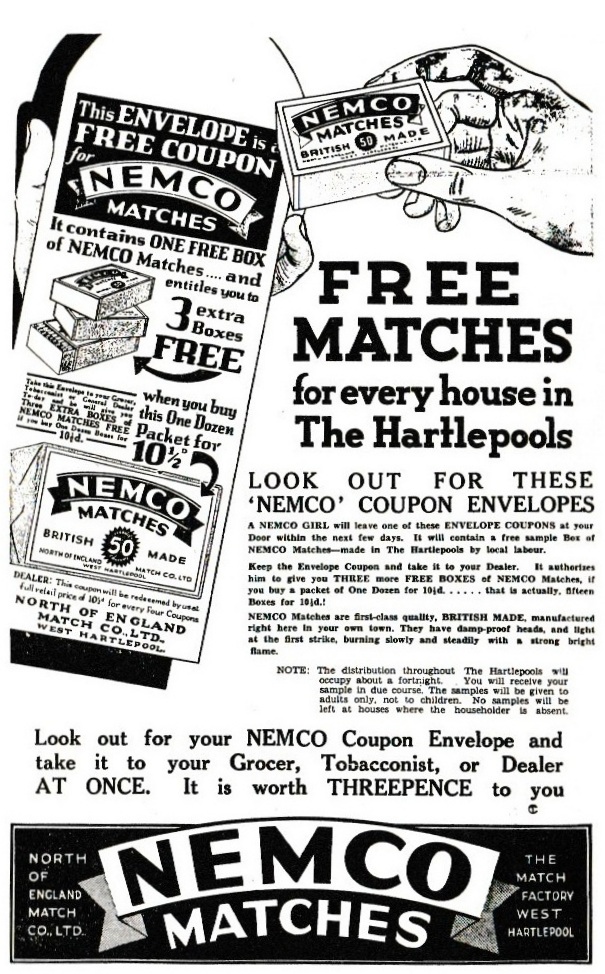
4. North of England Match Co, Ltd. 1932-54 West Hartlepool
The main reason why match manufacturing began in West Hartlepool was due to the port importing timber for the nearby Durham Coalfield and the North East building industry. The aspen logs for the match splints was a natural extension of this trade. Unemployment was high in the Hartlepools (Old Hartlepool & West Hartlepool) in the 1930’s when the Recession was at its height and light industries in the town were desperately needed to alleviate the situation.
In 1932, a syndicate of nine local Hartlepool businessmen, including a timber importer, acquired a large wooden building No.4 Warehouse (124 metres long by 30 metres wide) in Swainson Dock, West Hartlepool converting it into a match factory using match-making machinery from Sweden. It had easy access by road, rail and sea and the adjoining quay was perfect for storing the aspen logs needed to make the matches imported from Estonia, Latvia, Finland and Russia. The chemicals for the match heads were purchased from George Boor & Co. a British supplier. The factory production line produced matches in neat labelled boxes packed in gross cartons for easy distribution. The machinery took up two-thirds of the ground floor whilst one-third of the first floor was taken up by the Customs and Excise (there is a tax on matches). In Nov.1933, the importance of the new factory to the Hartlepools can be gauged when a Councillor paid tribute “to the brave financial policy of our youthful citizens in bringing the factory into being”.
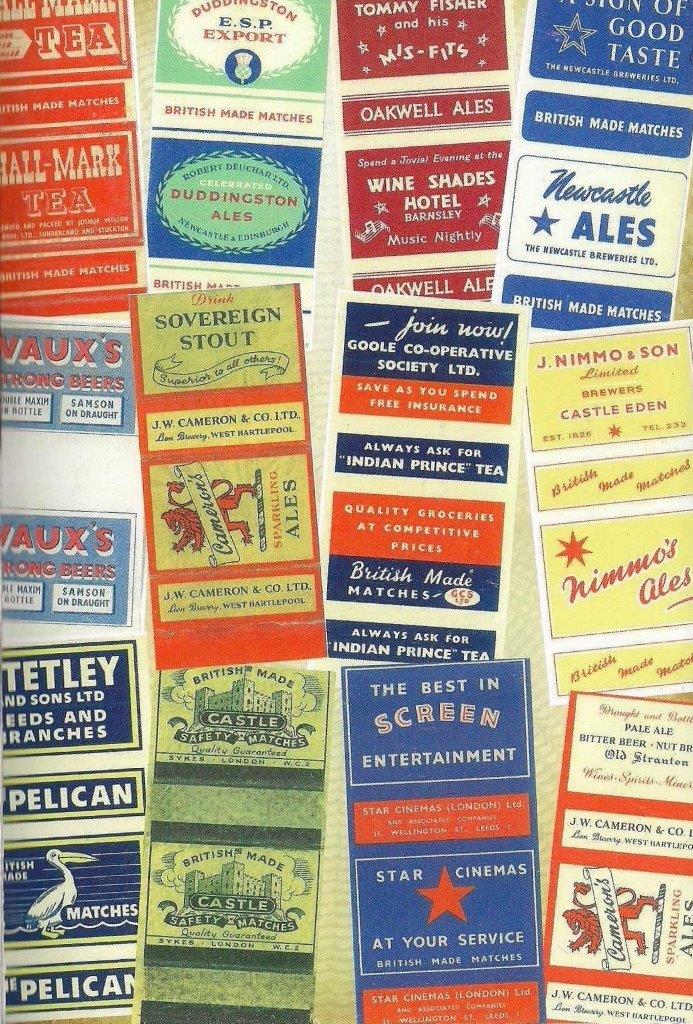
Production of the new Independent Match Factory ‘The North of England Match Co. Ltd. (which was not part of the British Match Corporation combine) began on 18th Nov.1933 employing about 200 men and women.
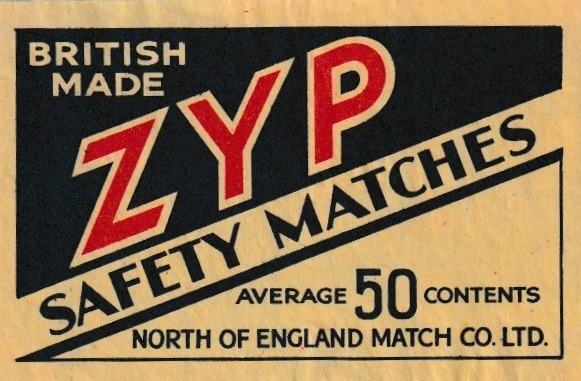
They started with their own proprietary trade mark brands ZYP followed by NEMCO, ROCKET and COMMONWEALTH, accompanied by a vigorous local sales campaign to establish a foothold in the Company’s home territory in the North East of England, particularly for the strike-anywhere matches which were more popular than the imported safety. The Company quickly grew its market share.
Before WW2, they also began to make ‘own brand’ labelled matches in small quantities for customers from pubs, hotels & restaurants. These were from a standard block design from Ord Printer in Hartlepool whilst the Company’s own proprietary brand labels and other advertising customer labels including Co-operative Societies were printed by the lithographic method by Robinson of Newcastle.
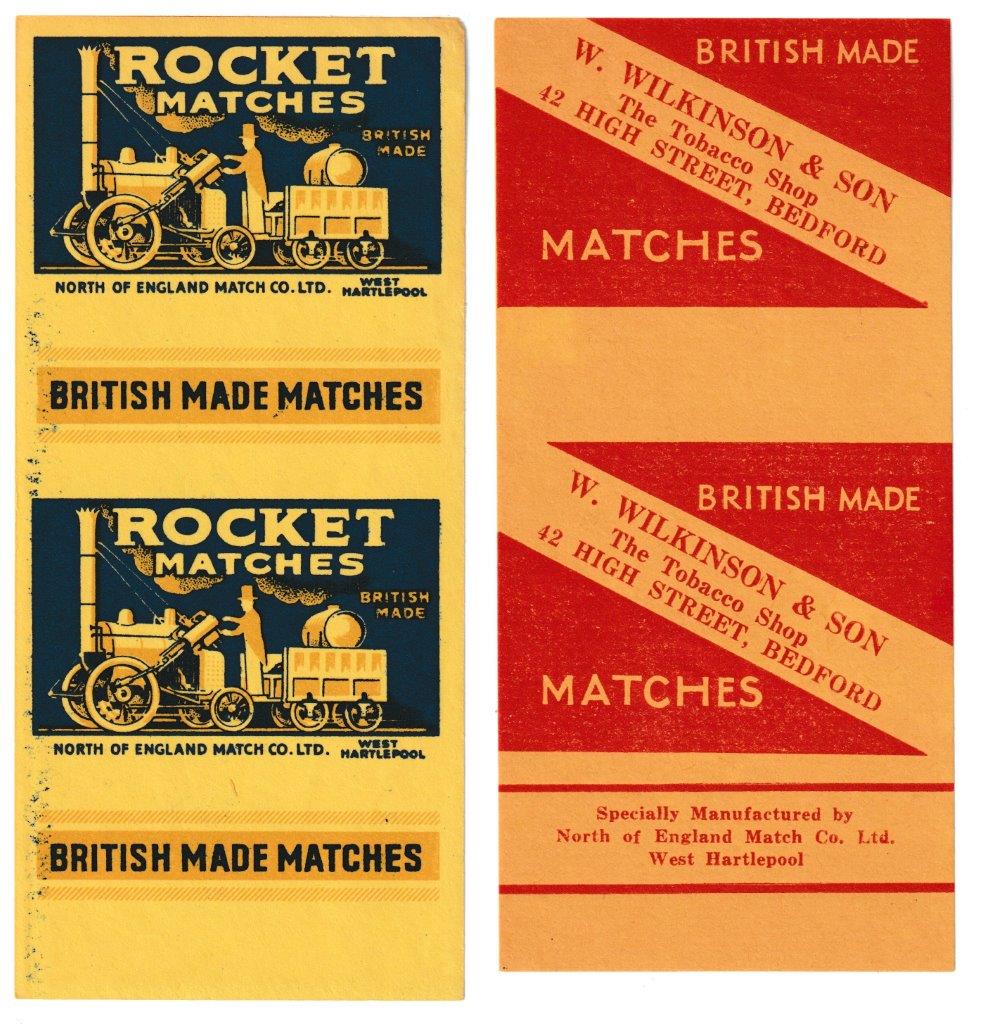
During the War, production of matches continued at a reduced level due to shortage of materials and staff. Many of their maintenance men were called up and the crisis was only averted when their main competitor Bryant & May kindly loaned them two of their tradesmen employees to keep the machines going. Matches Control (based in Bryant & May) who controlled the distribution of matches during the War helped them with timber and chemical supplies and to help the War Effort, Matches Control requested economy on the use of matches. Alan Muhr NEMCO’s Company Managing Director devised a slogan ‘Don’t Waste British Matches, Do Economise’ which appeared on all their proprietary brands except on ZYP for an unknown reason.
After the War, NEMCO got back on its feet as supplies got back to normal and large match contracts were obtained in 1952 for breweries and Co-ops. The Company was successful but disaster struck at 4.15 pm on the 30th August 1954 when a series of events occurred which were catastrophic for the factory. A match filling machine broke down in the production line and by the time it was repaired, some match splints which had been dipped but were still travelling around the dipping machine at the time of the breakdown ignited spontaneously or by jamming, it is not known. The flames quickly spread to the head composition tank below, then to the adjacent paraffin wax tank and from there to the inner woodwork of the building. All employees were quickly evacuated from the factory and no casualties were reported but the factory cat Mary Lou was never seen again. R.I.P. The fire soon reached the bonded match store and a large part of the roof fell in. The fire raged for many hours and the firemen were still damping down the next day.
Twenty-eight ships of the Royal Navy Reserve Fleet were in Hartlepool harbour at the time of the fire (known as the ‘Mothball Fleet’) and desperate efforts were made to stop the flames spreading to their plastic cocoon casings. Plans were made to move sixteen of the ships moored closest to the factory but in the event was not needed but some fire damage was done to the plastic casings by flying embers. It was the biggest fire in Hartlepool for many years and many Poolies viewed the spectacular blaze from the nearby Hartlepool Rail Station.
The factory was completely destroyed and the decision was made by the Company Directors on the 13th Sept,1954 regretting the discontinuation of the business. The Winding up Proceedings began on 22nd July 1955 and were completed on 8th Dec.1956. I was fortunate to interview Alan Muhr the Company Managing Director many times in 1978 and he generously gave up his time to allow me to obtain the information published in two books in 1979 and an updated version in 2020.
References: North of England Match Co. West Hartlepool 1932-1954 ISBN: 978-I-5272-5485-8 book published in Jan 2020 by Alan Middleton.
5. Cleveland Match Company 1983-85, Middlesbrough
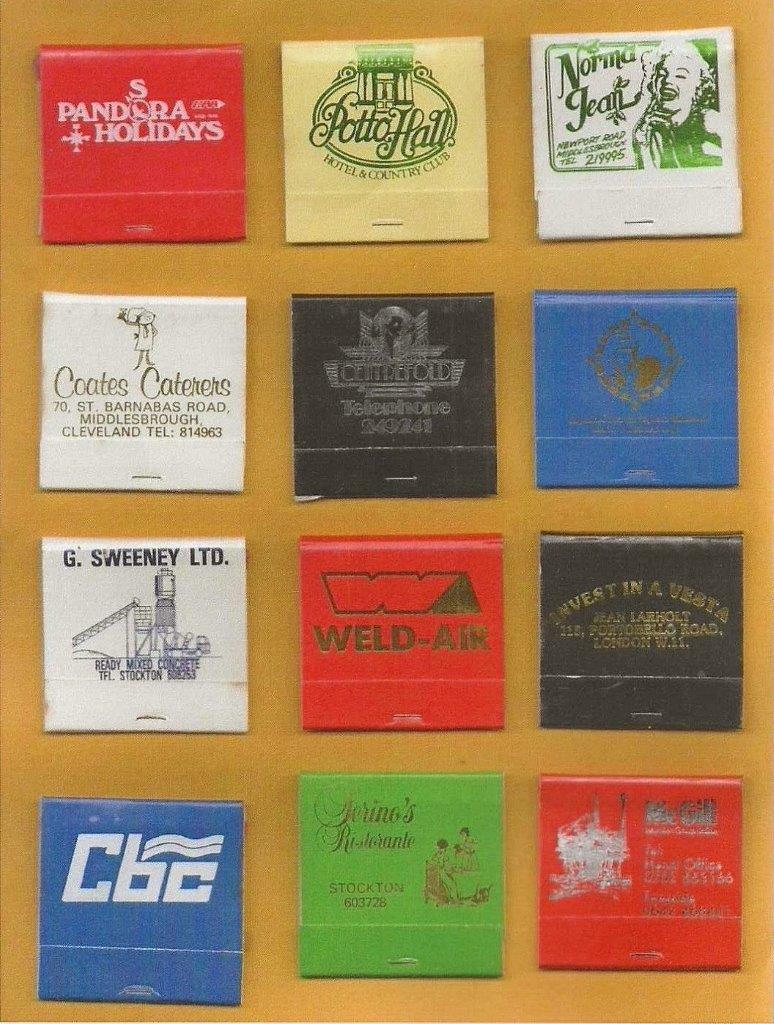
This small mainly hot foil printing bookmatch business was established in 1983 by myself on return to England after working for a year in a lead and copper processing plant in Kabwe, Zambia. As a Mineral Technology engineer by training, I quit my job in Africa and fulfilled my dream to run my own match company in Middlesbrough using my £8,000 redundancy payment from British Steel Pellet Plant at Redcar when it shut down in 1982. I was given no training to run my own Company other than the cautionary advice that the lump sum would probably be insufficient to build up the business and pay the household bills. How right this was!
Undeterred by this advice and fancying myself as a future match tycoon, I named my business ‘Cleveland Match Co’. (no connection to the previous Company between the Wars in Middlesbrough and Stockton) and started hot-foil printing blank bookmatches purchased by the 10’s of 1,000’s from Matchmakers International in nearby Sunderland. I was granted rent free Unit 16 at the Enterprise Centre in St.Hilda’s, Middlesbrough (near S J Endean-Rowe 1923 offices in Cleveland Buildings) where I employed two 16 year-old boys in their first job whose wages were paid courtesy of a Government youth employment scheme. I was the one man band salesman, printer and manager who went out in all hours to get the customer orders of 50 to 5,000 bookmatches for local weddings, restaurants and nightclubs. To say the least it was tiring work with little return and I barely covered my costs. It was a daily grind and the profit was just enough to pay my bills.
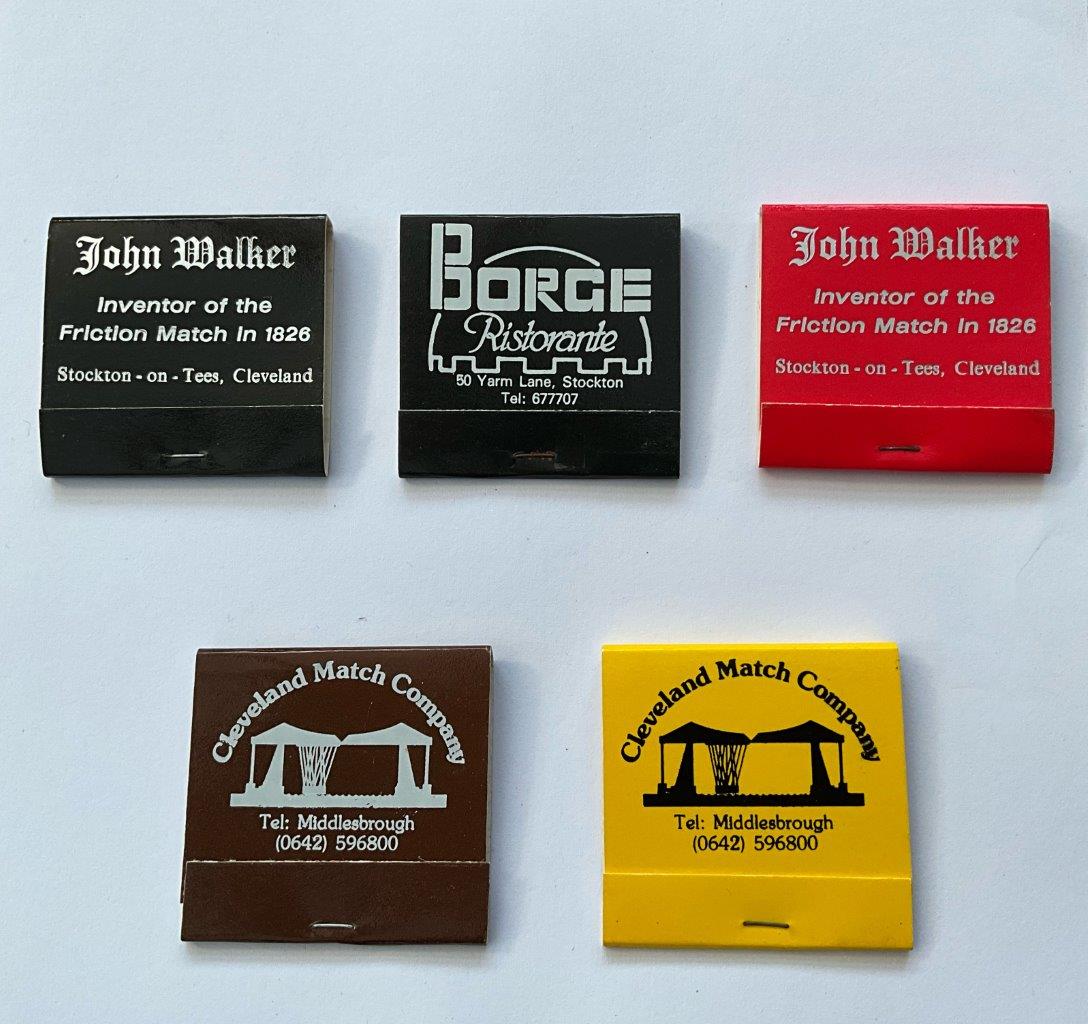
After six months, the Enterprise Centre Manager wanted me to leave and take out a long-term lease on a larger Unit paying for it myself (which unknown to him would have been financial suicide for me at the time as I had began to struggle financially to keep my head above water). However I was determined to keep my Company going and decided to trade from home and sacked my two employees as their wages were about to be stopped on the Government Scheme, and I couldn’t afford to pay their wages from my meagre income.
I now did everything from home, from getting the orders, printing the bookmatches, delivering them to the customers and all the necessary paperwork. It was a nightmare, a hard slog and frankly a bit scary at times as at one stage had over 50,000 blank different coloured bookmatches stored in my small garage. I ordered 250,000 at a time to keep the unit cost down and could draw them off from Matchmakers International when needed. Then one day the unfortunate ‘incident’ occurred of the scorching of the family living room sofa when some matches accidentally ignited as I was putting them into boxes for delivery to a customer. I had a vision of the house going up in flames akin to the North of England Match Company in West Hartlepool. However my swift smothering of the flames with a towel gave me a shock and it was the beginning of the end for my bold match venture.
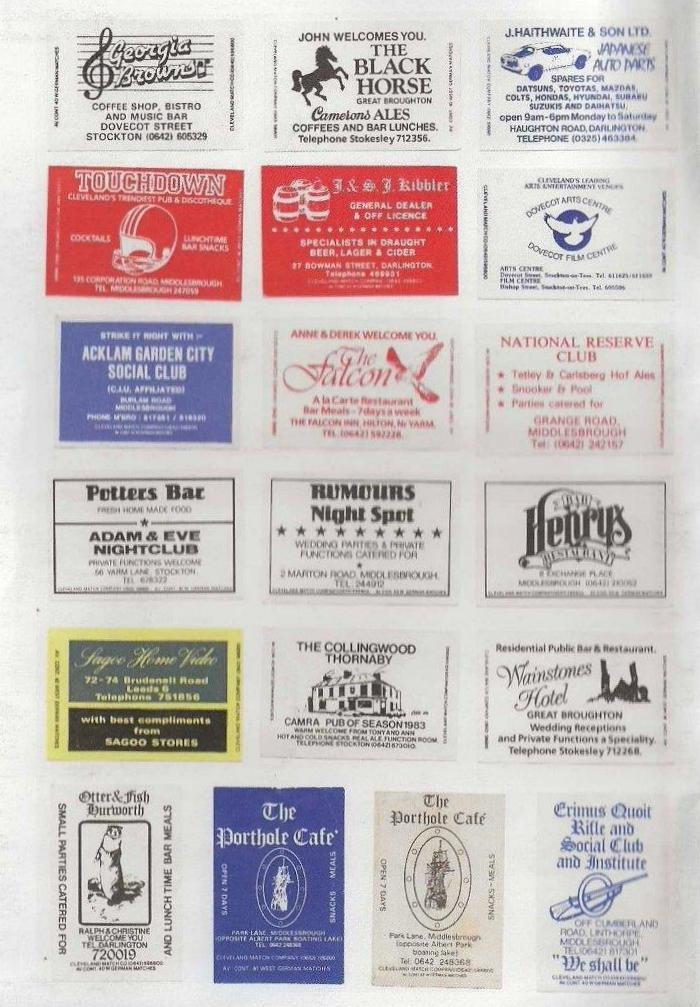
I branched out into box matches buying the blank boxes from Cornish Match and PPP of Leicester and sticking the advertising label on myself but the customers were few and far between. I even tried selling pens and serviettes but I couldn’t get enough orders. The flimsy hot foil printers for the bookmatches were quite tricky to use on my kitchen table and misprints and trial prints meant costs rose as I always strived to give my customers quality printed bookmatches. As an incentive to encourage customers to pay sooner to improve my cash flow, unknown to them I raised my prices by 10% but then offered them a corresponding discount of 10% if they paid within a month! Crazily my scheme actually worked and showed the pricing mentality I should have used earlier with my customers. However it was too late and the orders fizzled out. I gallantly struggled on to the summer of 1985 but realised my match company was doomed to fail. I couldn’t find suitable sales staff nor was it affordable to pay their wages and decided to wind down the Company and look around to resurrect my career in the mining industry.
There were no jobs for me in the UK as my experience was rather niche but I used my Pellet Plant experience in British Steel to get a job in Warri, Nigeria as a Commissioning Plant Manager for an Austrian/German Consortium. It was well paid and my Austrian plant staff spoke English at my insistence, but unfortunately my colleagues spoke German in the Consortium plant meetings and my German was non existent. It was hard to understand what they were saying and was very frustrating. The job only lasted two years and I returned home to Middlesbrough financially secure but with no intention of EVER resurrecting my match company! Once bitten twice shy!
In conclusion my Cleveland Match Company was a glorious failure. I gave it my best shot and was able to trade for two years breaking even. I was able to pay all my Company creditors before leaving to work in Nigeria and very fortunately never had to apply for bankruptcy! It was a lucky escape for me and my family.
References: The Matchbox Vol.7 Numbers 56 & 57, July-Sept. 2024, Tom Gibbard
Click here to return to the Exhibition Catalogue.