Matches between the World Wars
Period covered : 1914 to 1945
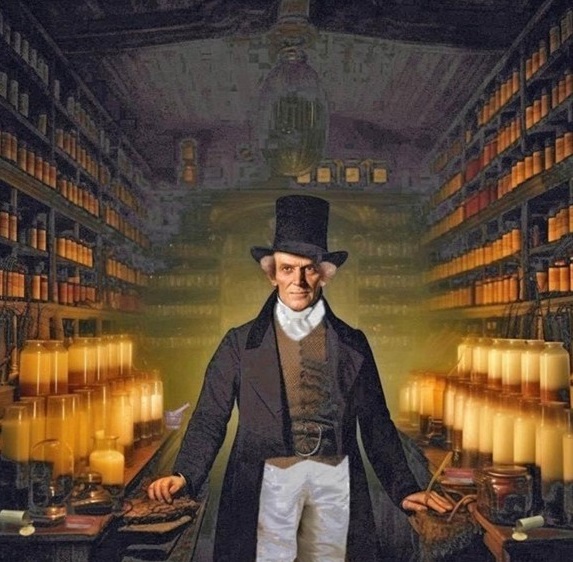
By 1914, matches had become a basic commodity found in homes everywhere and loved by all. John Walker would have been proud, and probably not a little surprised, to see what had grown from his ‘simple’ invention.
The raw materials for making matches, labels, and boxes and the machinery itself was often being sourced internationally, and the global industry was thriving.
Patriotic slogans
Patriotic slogans had appeared on matchbox labels before WWI but were used extensively during the war to inform the public, encourage careful use of scarce resources and to support home industries.
World War I
With the outbreak of war in 1914 the availability of raw materials changed. New regulations were imposed to ensure that any domestic factories that were supporting the war effort had access to all the people and materials that they needed. New import restrictions were also put in place to prevent businesses purchasing materials from enemy industries. The UK match manufacturers had to dramatically and quickly re-think their business models, leading to a simplification and standardisation of their product lines.
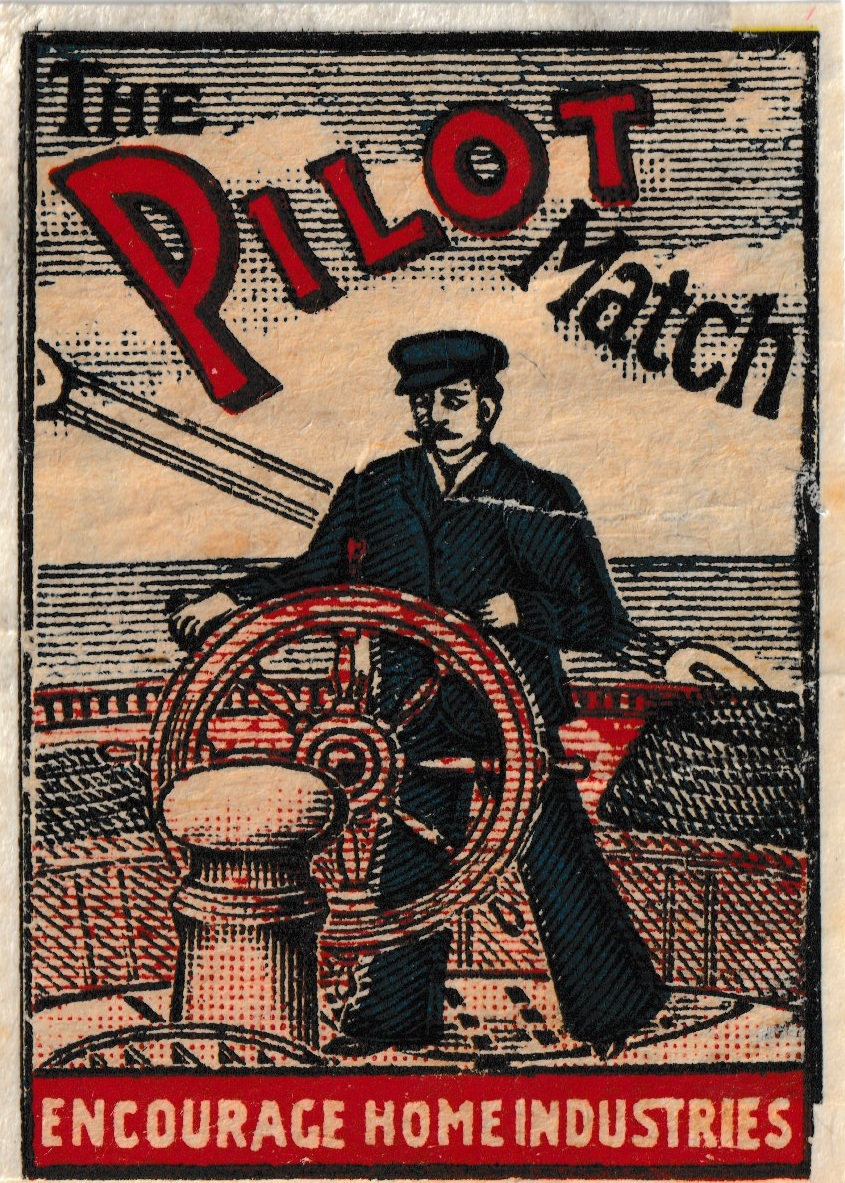
Naturally the public were encouraged to support UK industries. Examples of this can be found on matchbox labels from the time, slogans like “Encourage Home Industries” and “Careless Talk Costs Lives” became popular.

Matches were part of soldiers’ ration packs and often carried patriotic images and messages. Patriotic grips for match boxes were also becoming popular at this time. In the Trenches, soldiers often created metal cases for their matchboxes, known as “Trench Art”.
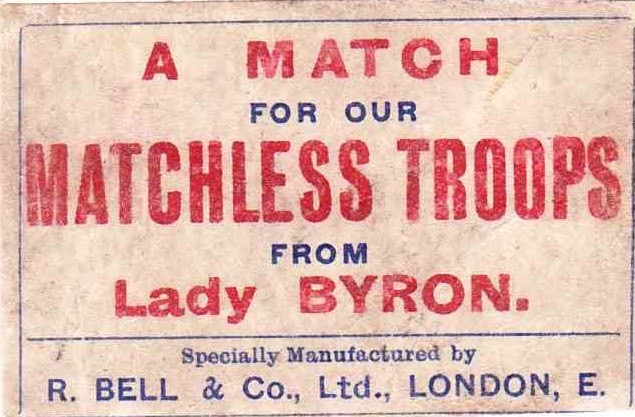
During the First World War Lady Byron (1857 – 1936) strongly personally supported the British war effort. It was quite an achievement by her to persuade the Wartime Government to order the R Bell match company to produce matches for the troops in a Wartime economy where wood and chemicals were heavily rationed and in short supply. In ca. 1915/16 she paid for 100,000 of her uniquely personalised boxes of matches to be sent to the troops in France and Belgium on the Western Front after hearing that soldiers on the Front had cigarettes but no matches.
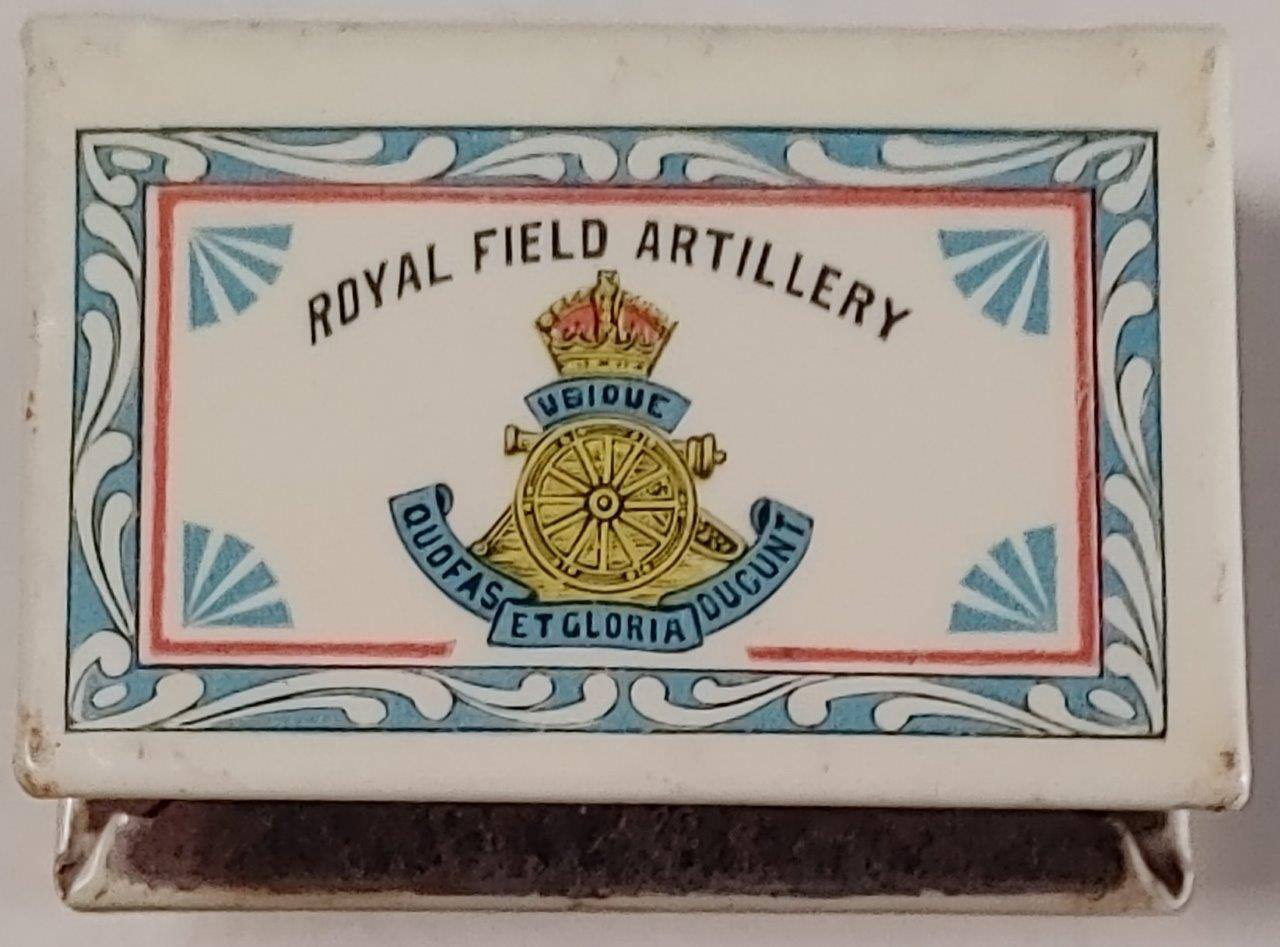 WWI matchbox grip
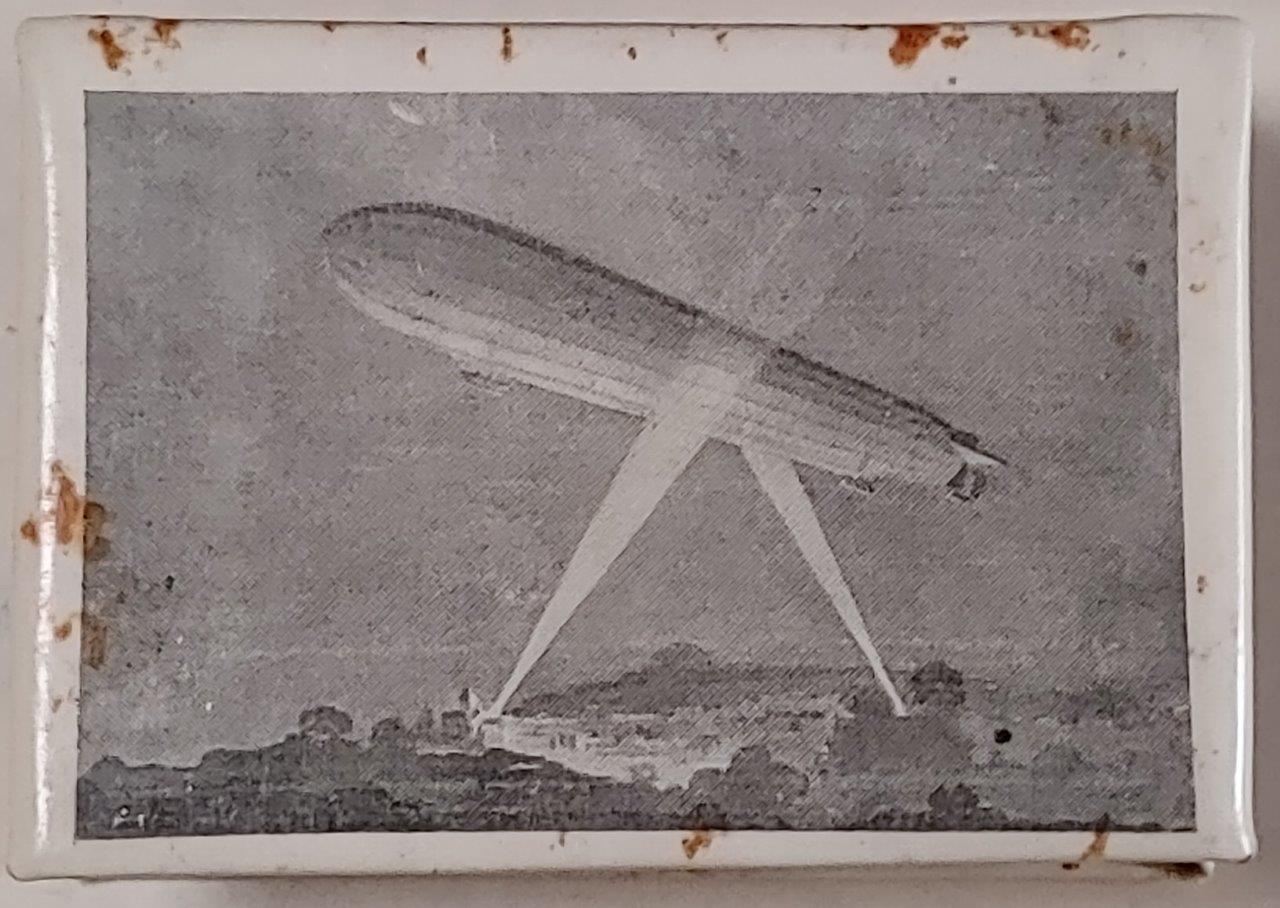 WWI matchbox grip
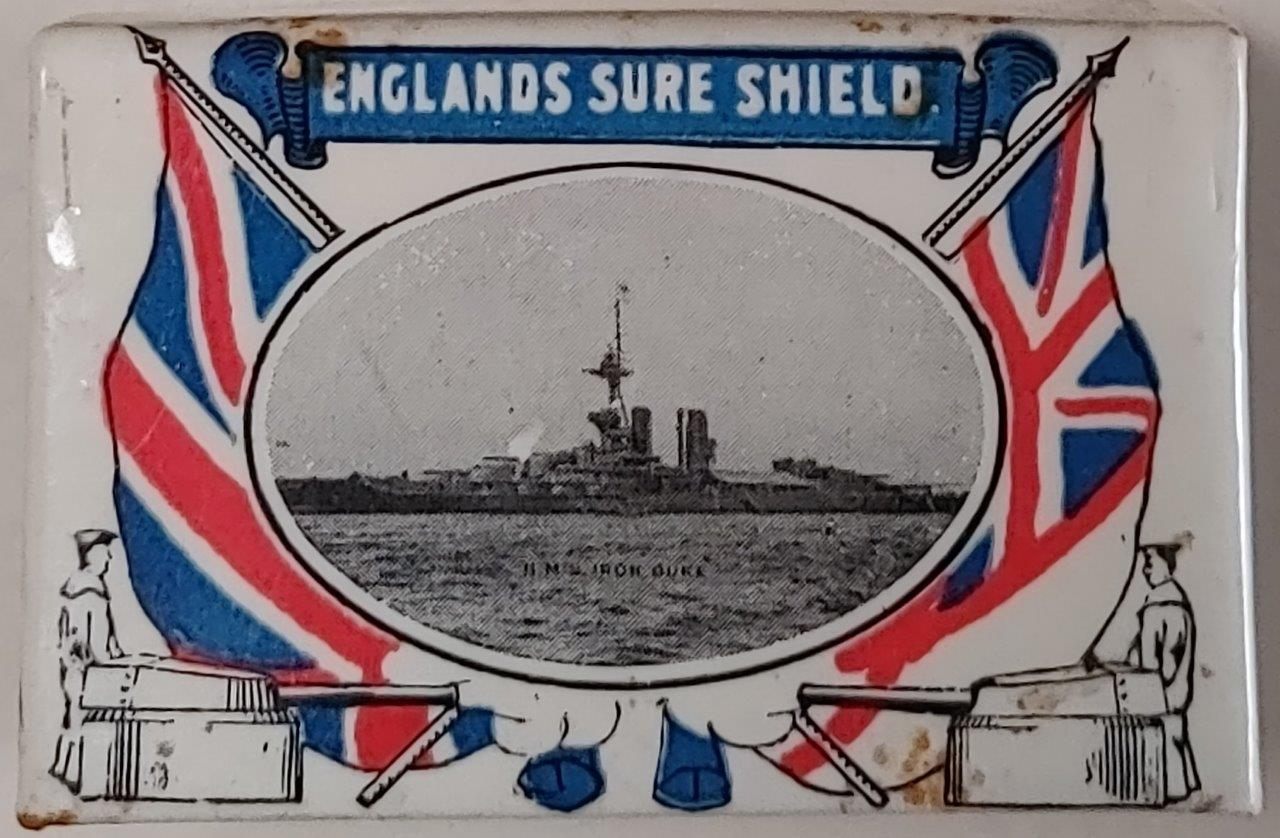 WWI matchbox grip
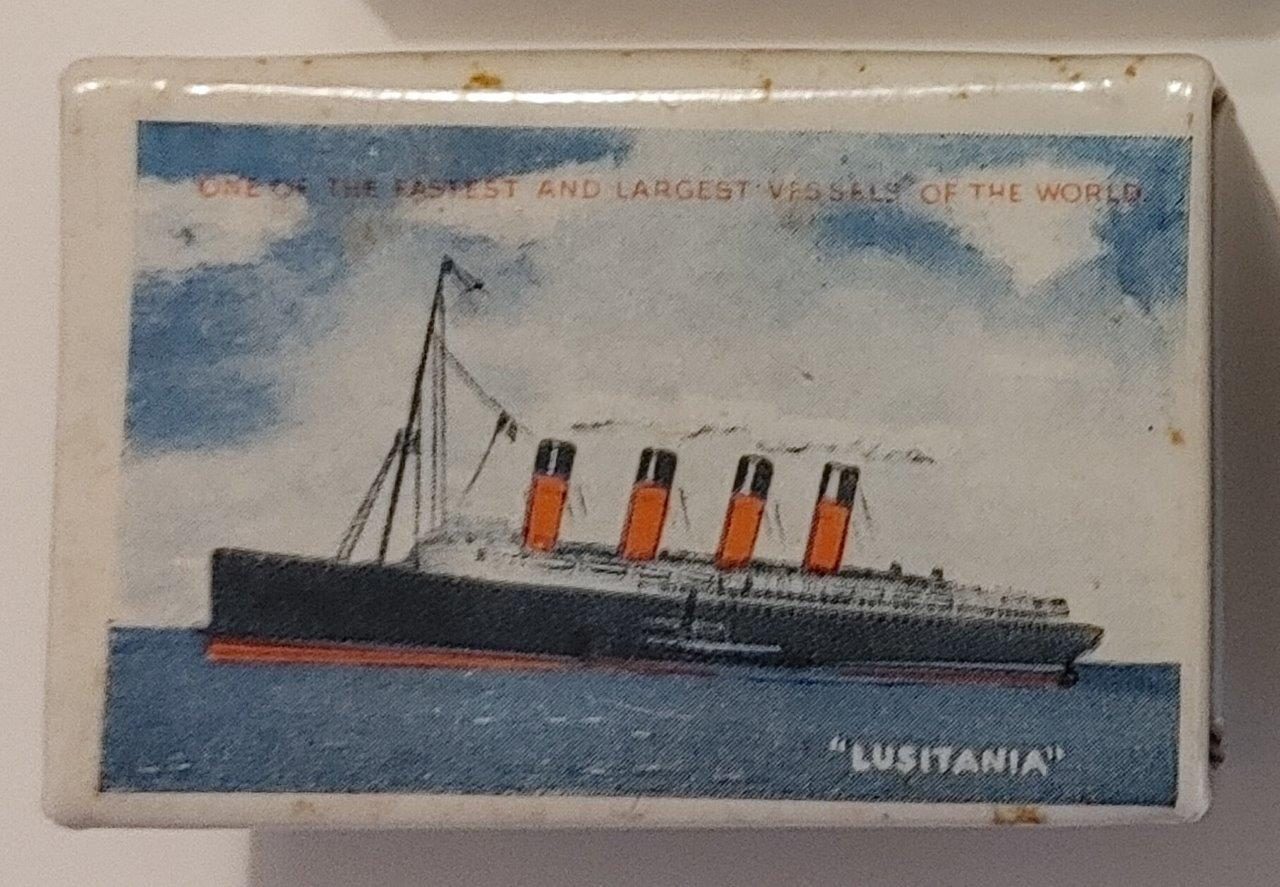 WWI matchbox grip
Reduced supplies of timber and potash
Once war broke out timber was soon in short supply. But chlorate of potash, an essential ingredient in match making, was at that time almost exclusively a German Product. Manufacturers had to look elsewhere for supplies, and the old Scottish and Irish kelp industry which extracted the chemical from seaweed experienced a revival.
Perhaps one anomaly to all of this was Swedish Match. Sweden of course was neutral in the World Wars, as it had been since Napoleonic times. This meant that Swedish Match was able to supply matches to anyone, and their boss Ivar Kreuger ruthlessly exploited this situation to his, and the company’s, advantage.
Match Tax and ban on imports, 1916
With almost no consultation with the match industry 6 the UK Government imposed a four pence duty on one thousand matches in 1916, to raise funds for the war effort. Unfortunately, the Government had not thought through the method of calculating tax, and manufacturers were compelled to suspend the sale of matches until agreement could be reached on a new retail price of two pence for three boxes.
Some manufacturers reduced the number of matches in a box to compensate for increased costs, but the tax was unavoidable.
Also, in 1916 the Government prohibited the import of foreign matches, which led to a great match shortage and the placing of matches under the control of the Tobacco and Matches Board.
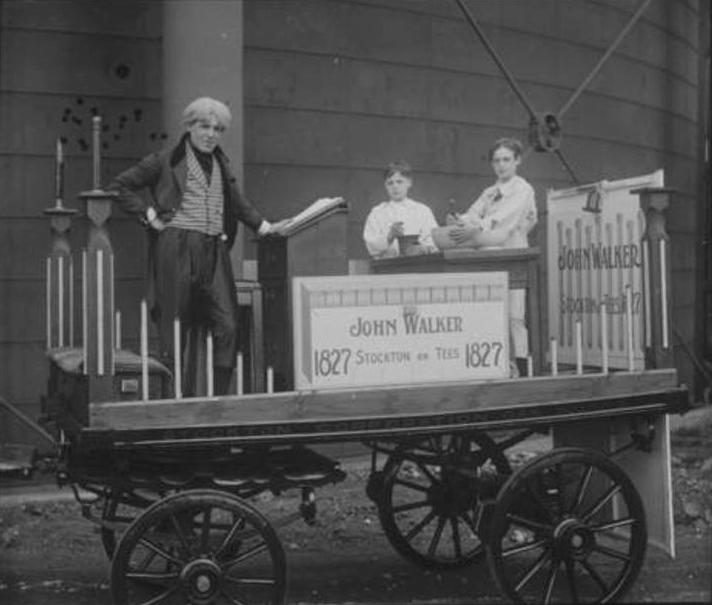
Peace Day Celebrations, 1919
Like many towns and cities Stockton held a Peace Day Celebrations Parade the year after hostilities ended. to mark the end of the Great War. Photos of the Parade were included in Michael Heavisides’ 1920 Stockton Almanack, with the following description:
- “What turned out as a great feature of the day was huge Procession and Horse Parade, which entered Norton Road at 5 ‘clock, headed by the band of Demobilised Soldiers and Sailors, who looked very happy indeed, being full of smiles. The procession was composed of almost every conceivable character, patriotic, humorous, ancient and modern.”
Aftermath of World War I
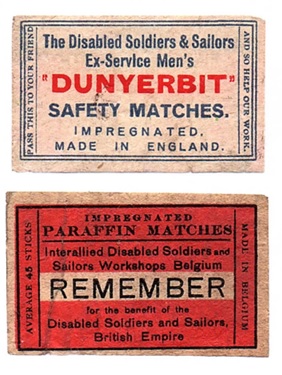
Soldiers and their families faced enormous difficulties in the aftermath of World War I. Small match companies like Dunyerbit were set up which provided employment for veterans selling matches.
In 1919 the ban on imports from Scandinavia was lifted, and over the next five years all bans were removed, which of course resulted in more competition.
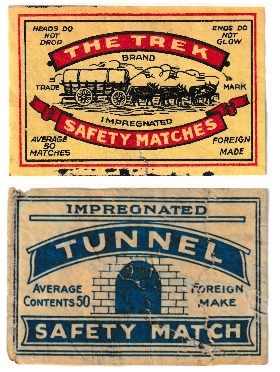
From the early 1920s it became obligatory to state the country of origin on the matchbox, and this is when “Foreign Made” labels started to appear.
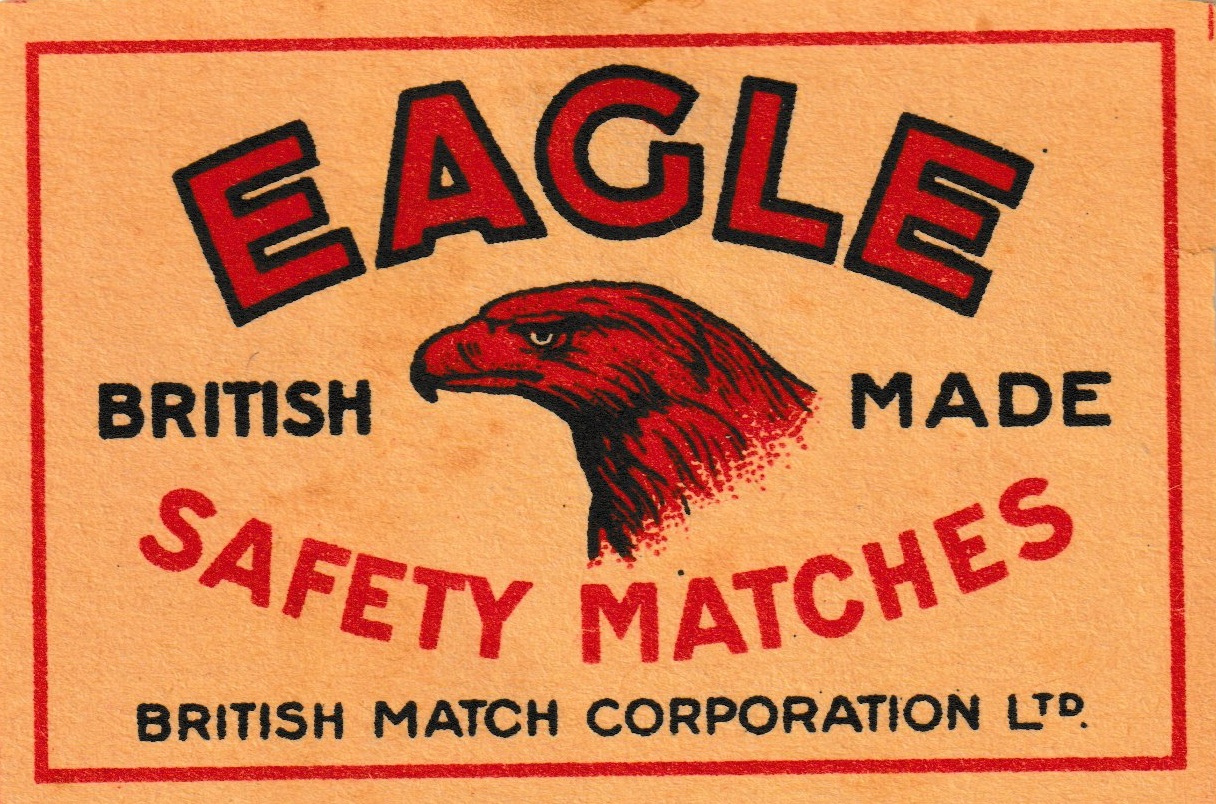
By 1926 imports of matches into the UK were 10.7m gross boxes per annum. The British Match Corporation was formed in 1927, marking a period of rationalisation for existing manufacturers as old markets disappeared and opportunities opened for new entrants.
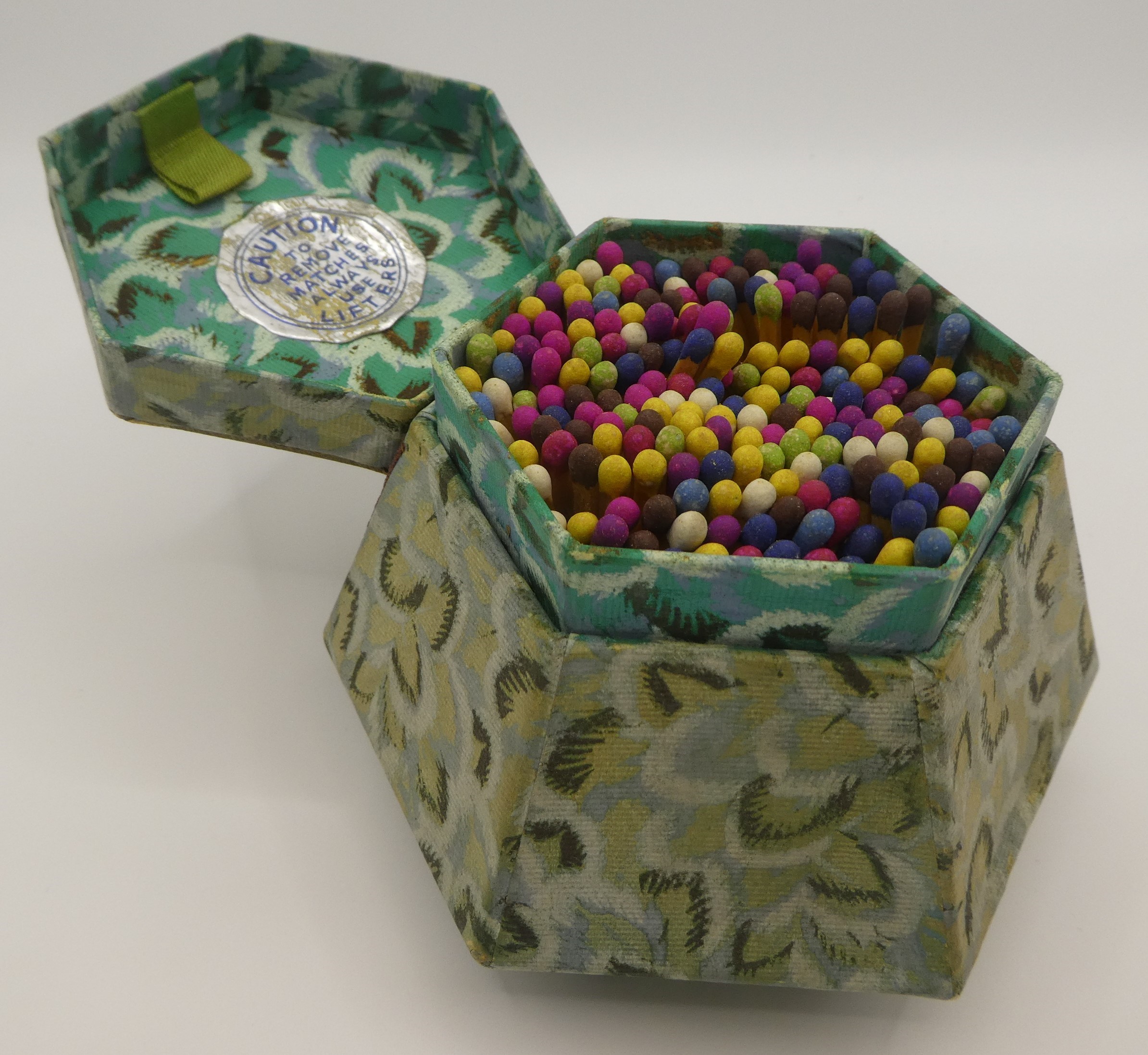
New designs
In the middle of all this post-war turmoil, Bryant & May launched the somewhat eccentric range of “Harlequin” boxes which soon became very popular.
These came in a variety of unusual shapes but always enclosed in pretty multi-coloured paper.
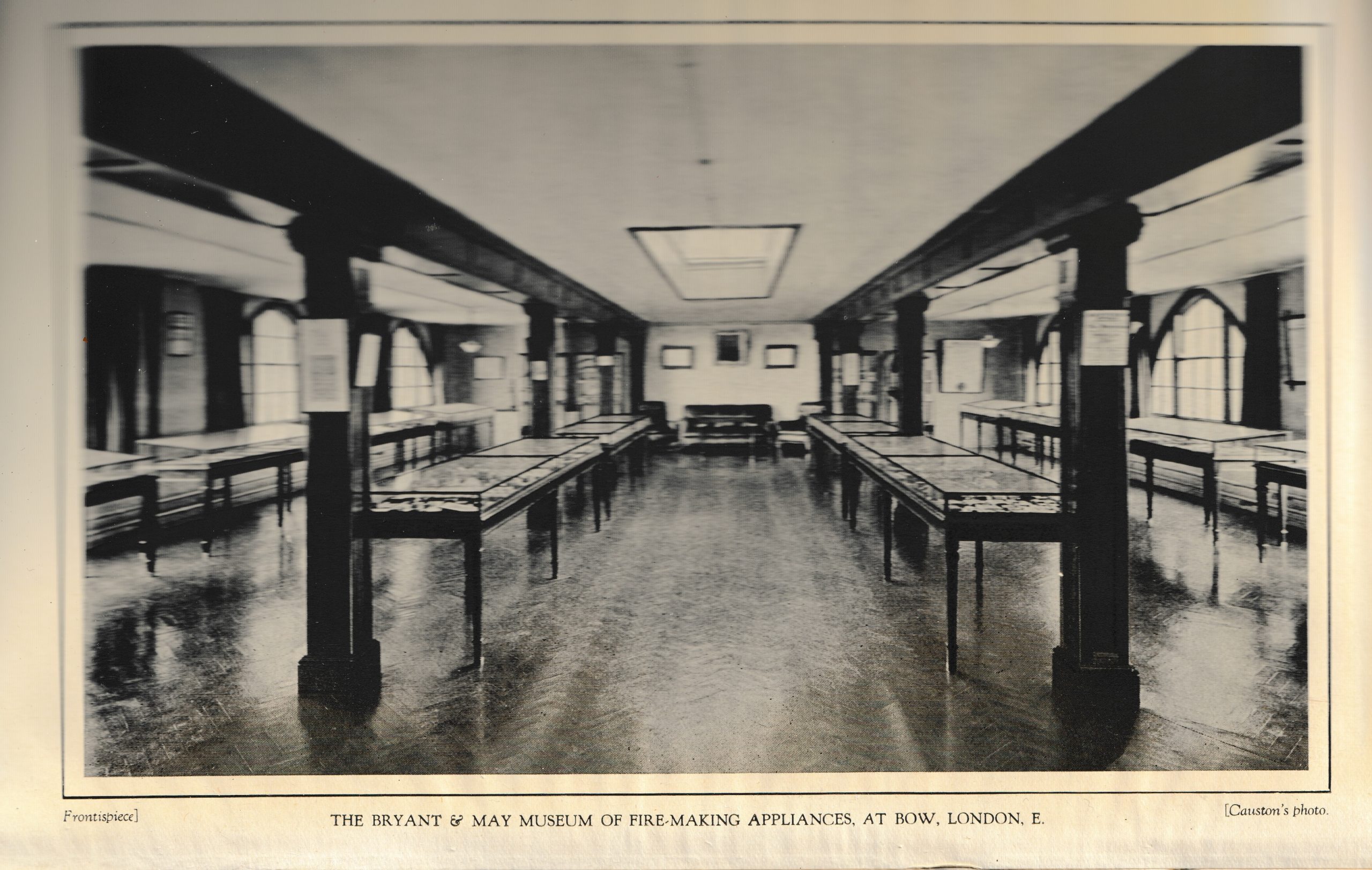
100 years since Walker’s invention
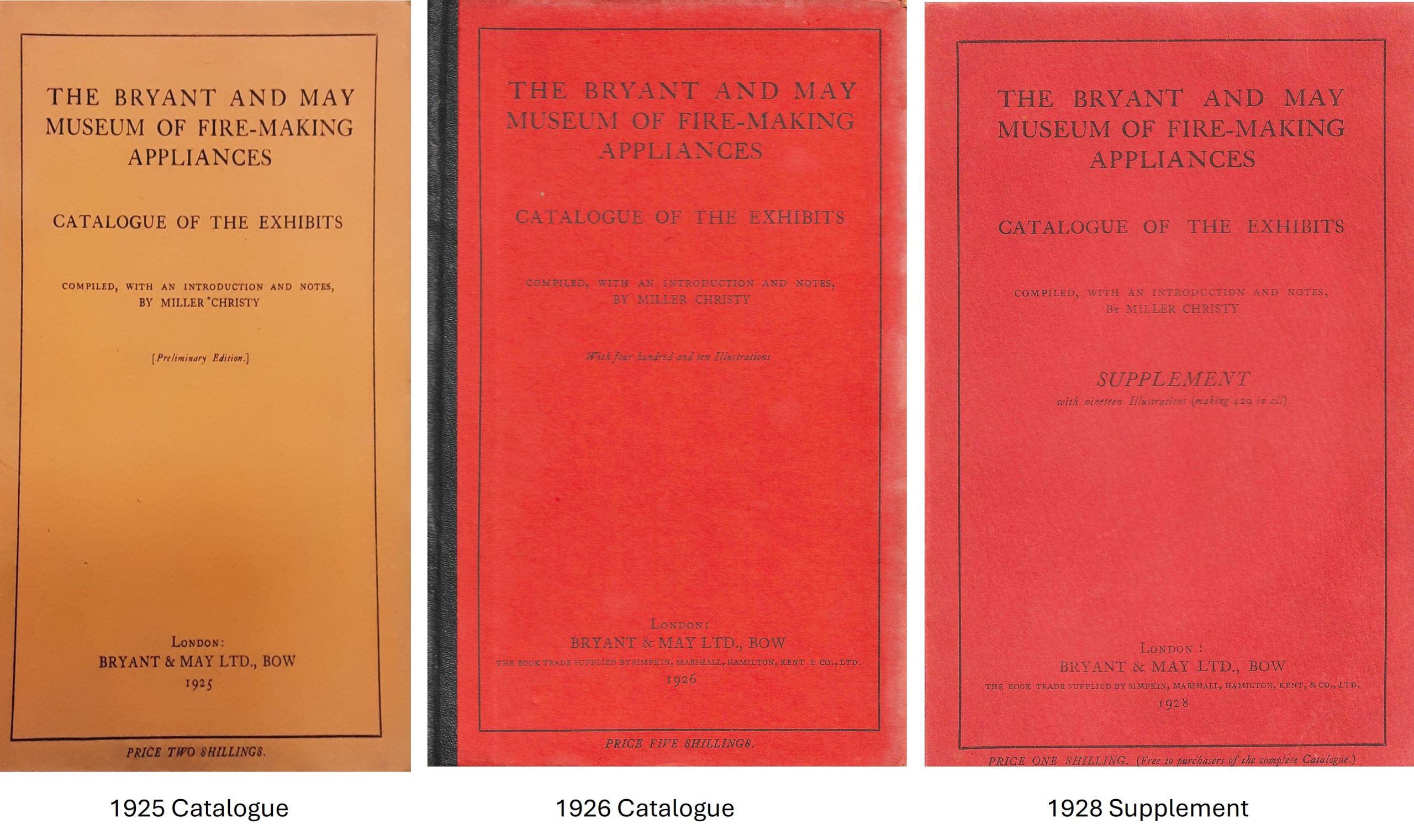
In 1925 Bryant & May commissioned Miller Christy (1869 – 1928) to write a booklet celebrating John Walker’s achievements, and in the same year they set about creating a Museum of Fire Making Appliances in the East End of London which opened to the public the same year. Over three thousand items were on display, which were catalogued by Miller Christy.
The catalogues that Miller Christy produced were landmark publications and are still used extensively today to help understand the way the match industry developed. Three catalogues were produced :
-
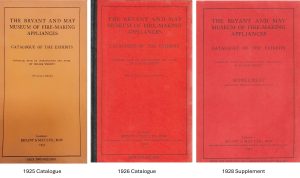
Catalogues of Bryant & May Museum of Firemaking Appliances 1925 catalogue, a preliminary edition describing only items that precede the Friction Match
- 1926 catalogue (listing 3105 items donated by Mr Edward Bidwell, with full descriptions and 410 black and white photographs)
- 1928 supplement (incorporating over 500 items from Mr J H Daniels collection, plus 19 photos)
During the 1930s selected items from Bryant & May’s museum were displayed at the Science Museum and this led to the whole collection being transferred to the Science Museum in 1937.
World War II
Just like in the First World War, there was greatly reduced access to raw materials and a simplification of product lines between 1939 and 1945.
The onset of war also brought an increase in the UK government tax on matches, and a campaign led by the Match Control Board to encourage everyone to “use matches sparingly”.
Many countries produced labels with patriotic and propaganda slogans on them, in support of their own side in the War.
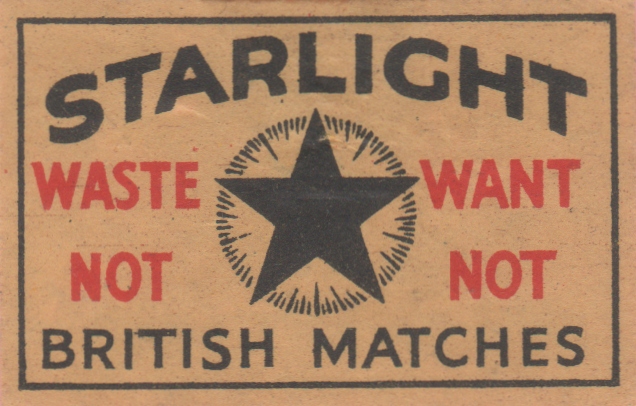 British WWII label
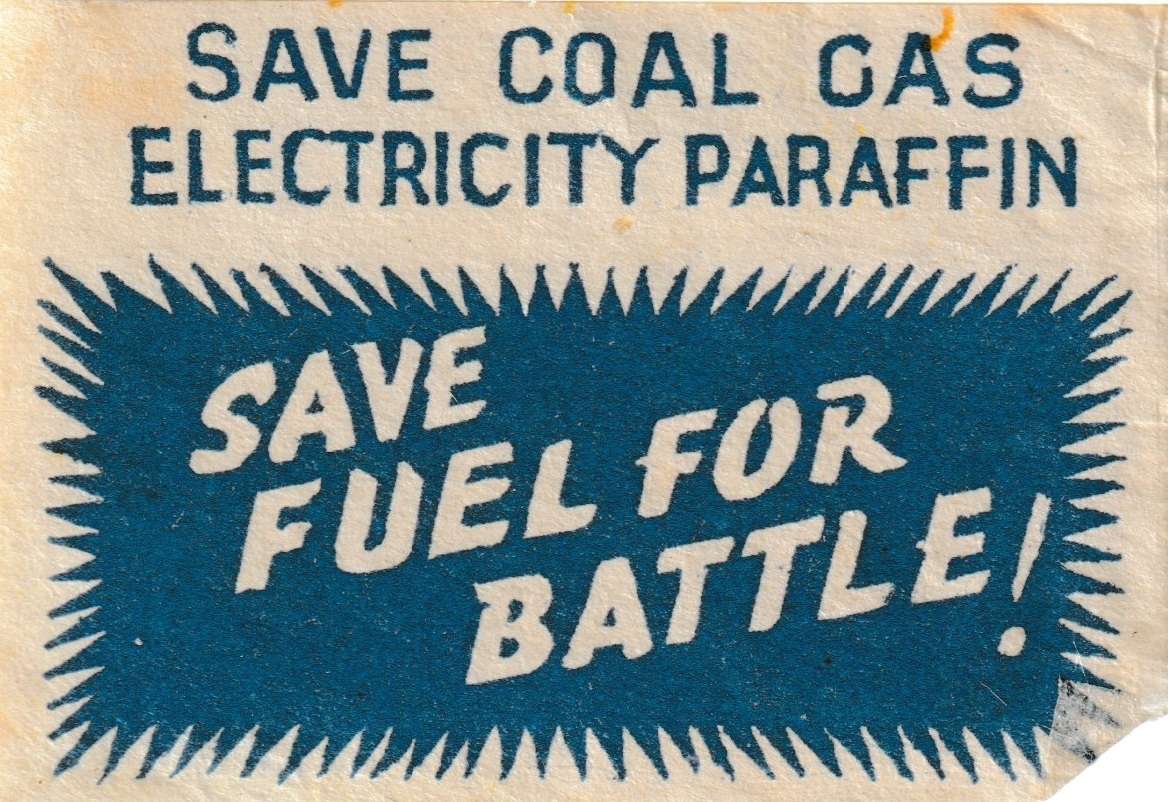 British WWII label
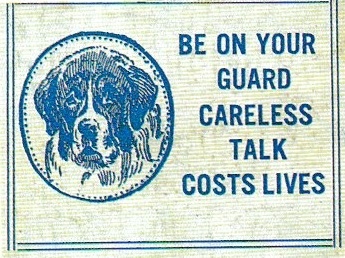 British WWII label
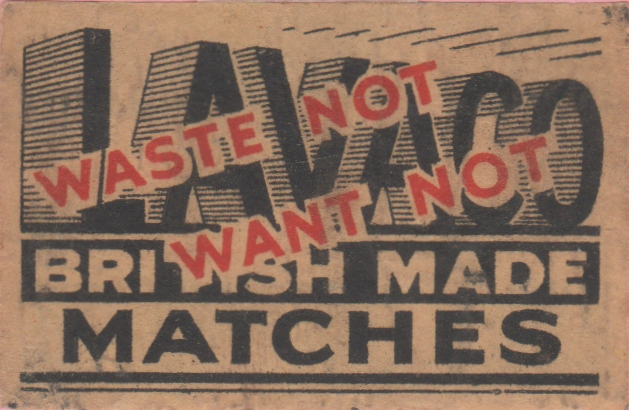 British WWII label
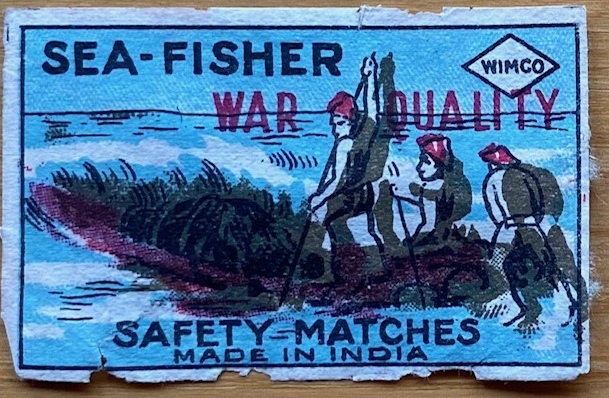 Indian WWII label
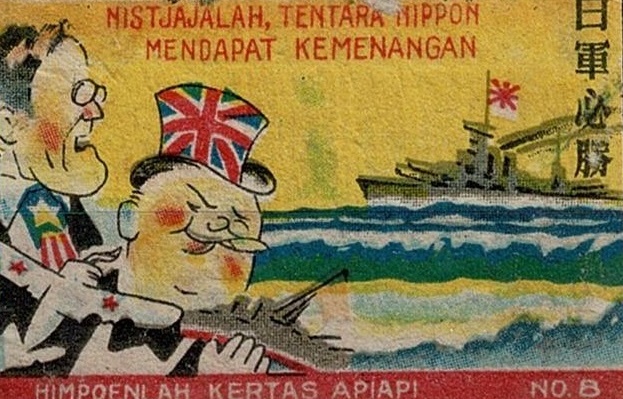 Japanese WWII label
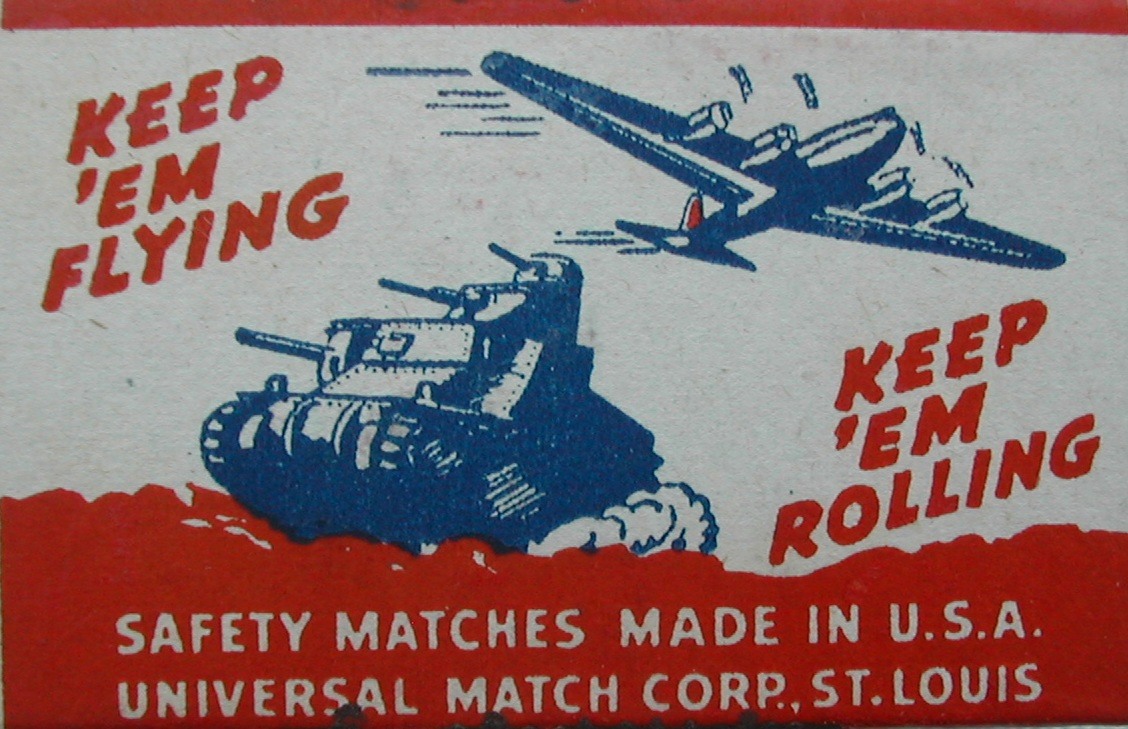 USA WWII label
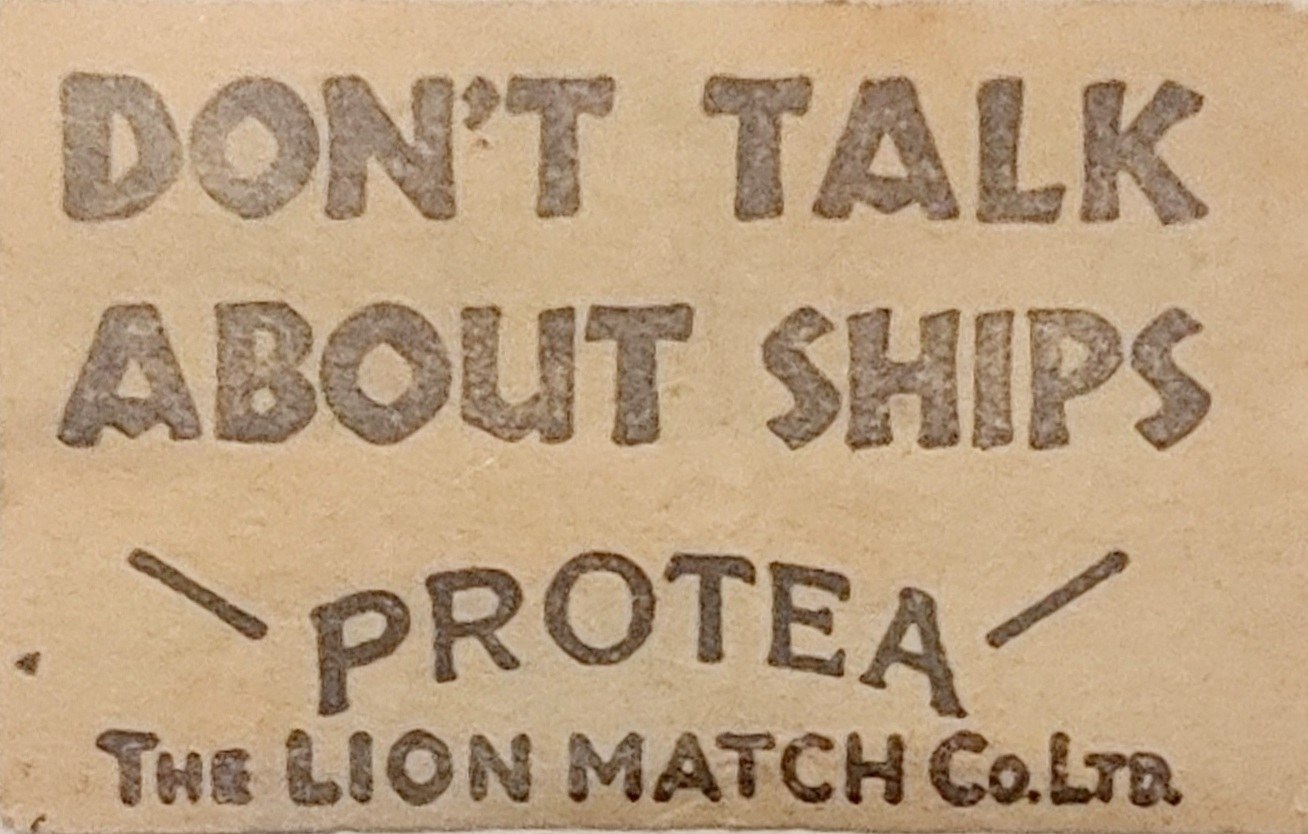 South Africa WWII label
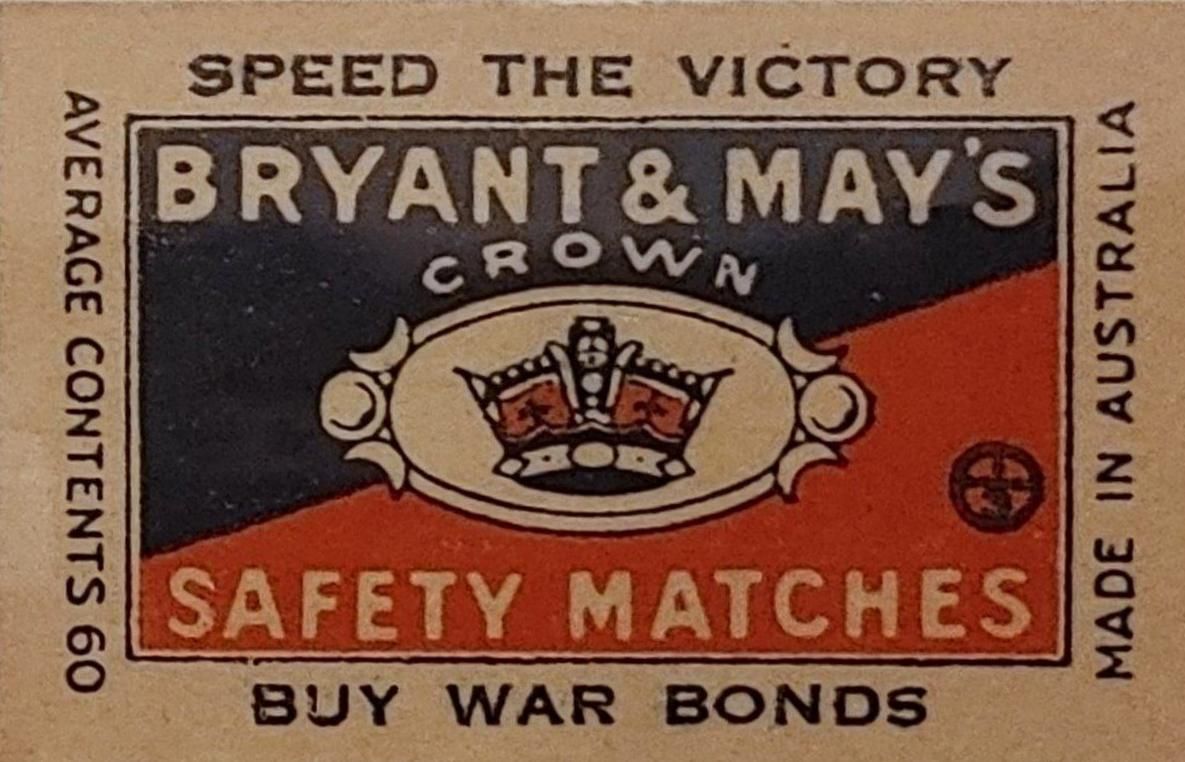 Australian WWII label
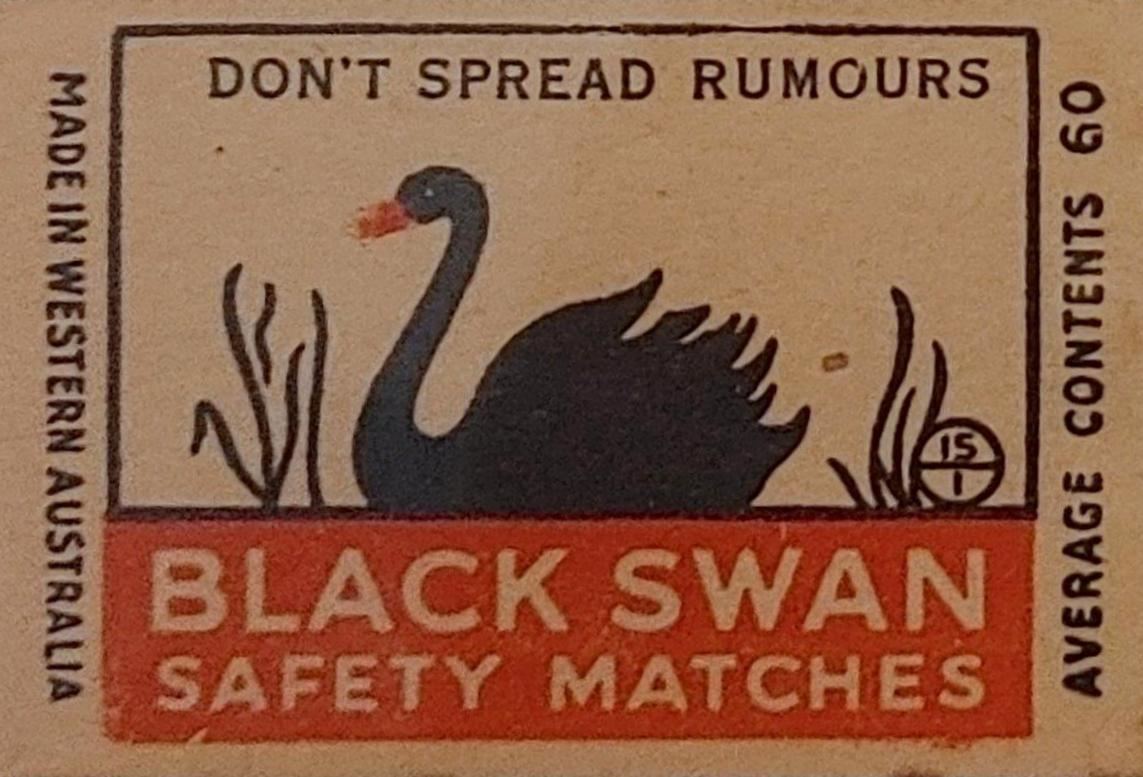 Australian WWII label
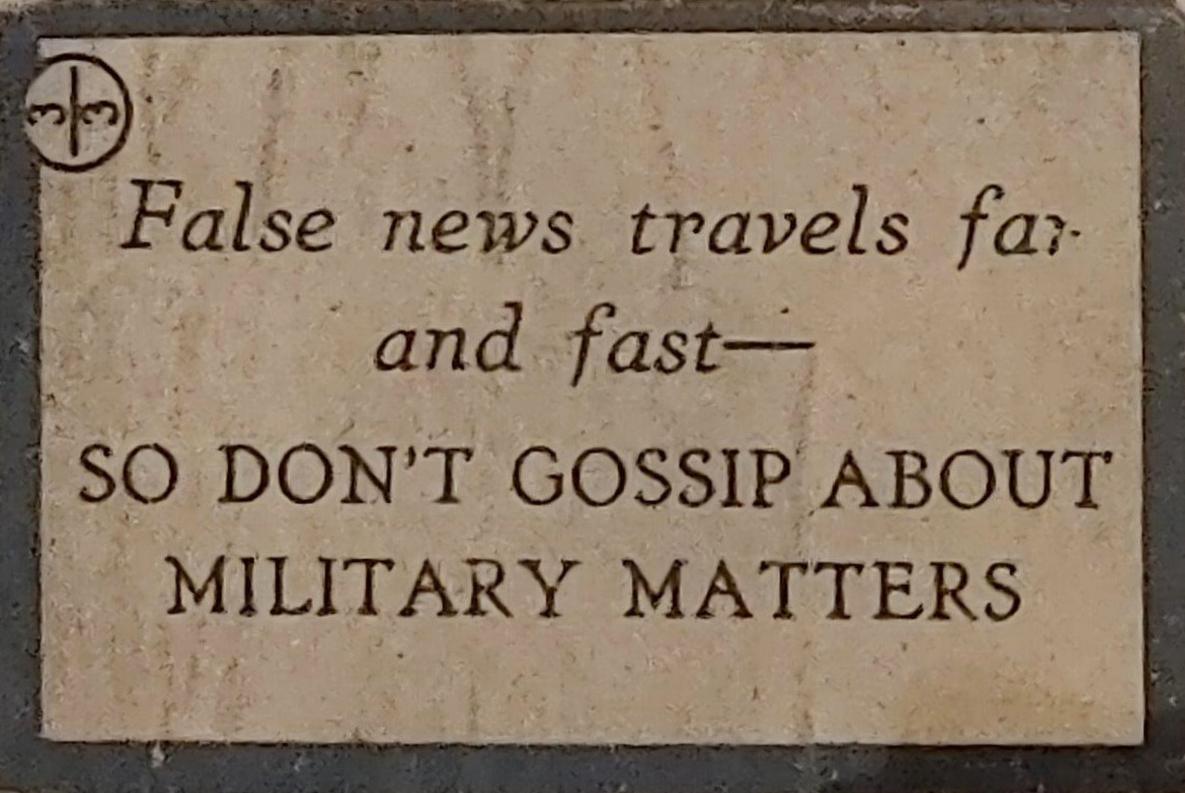 Australian WWII label
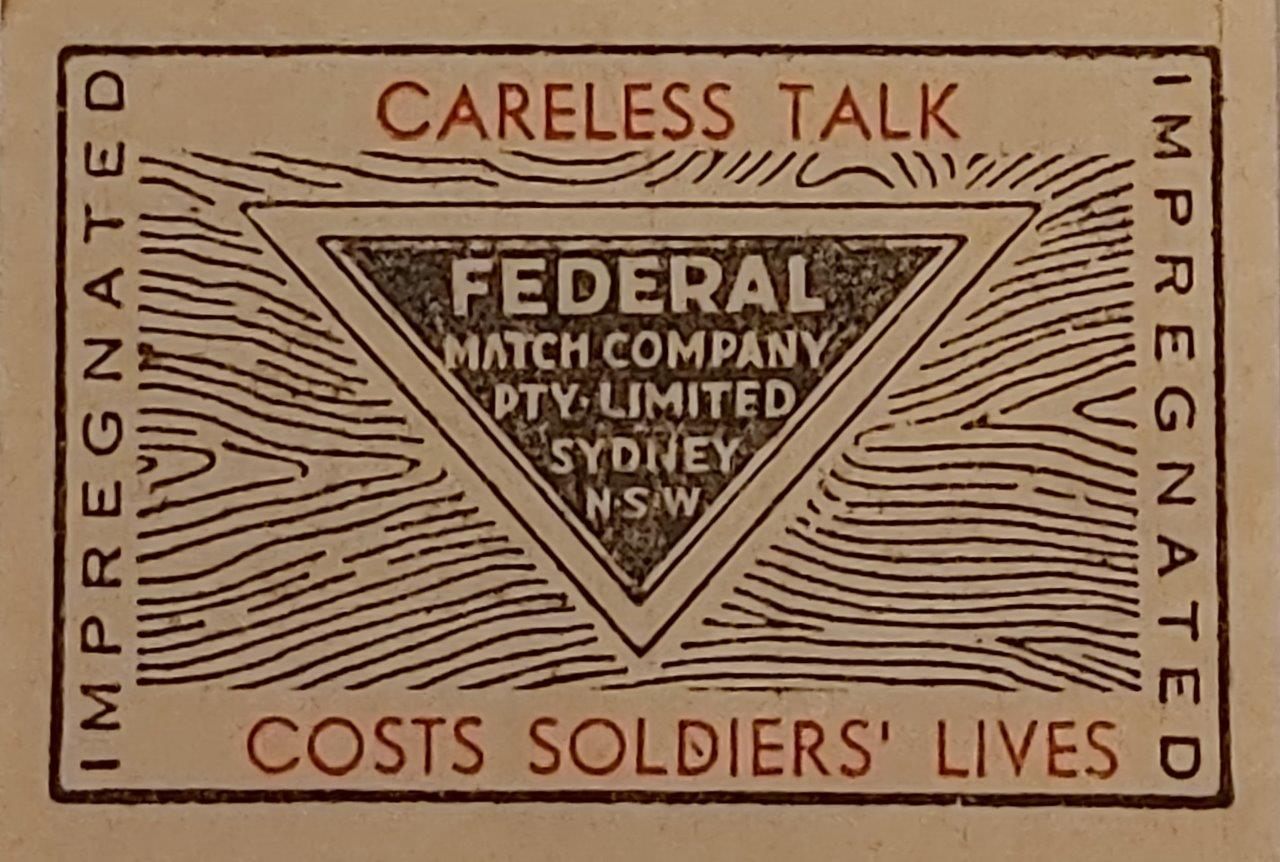 Australian WWII label
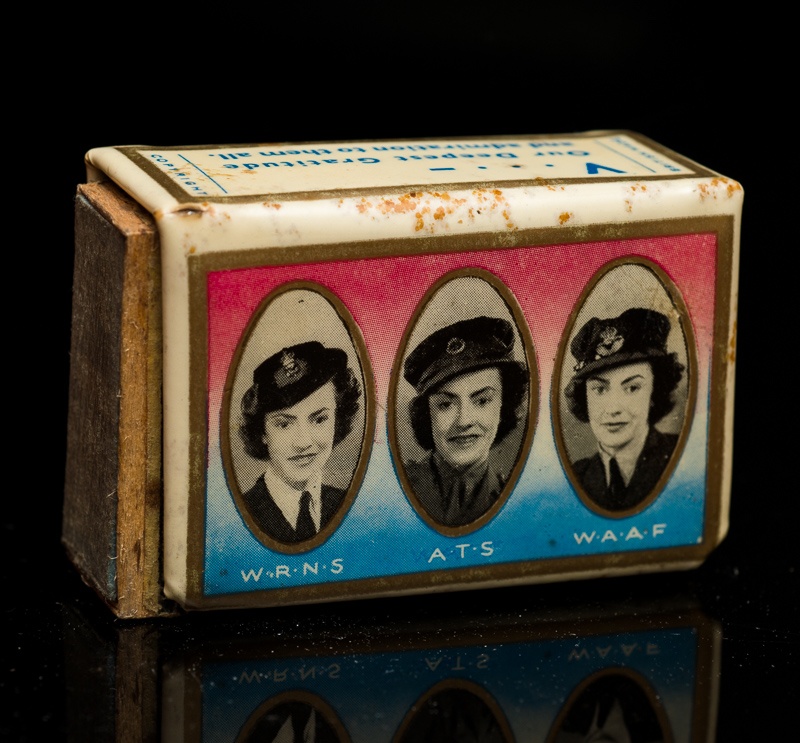 WWII matchbox grip
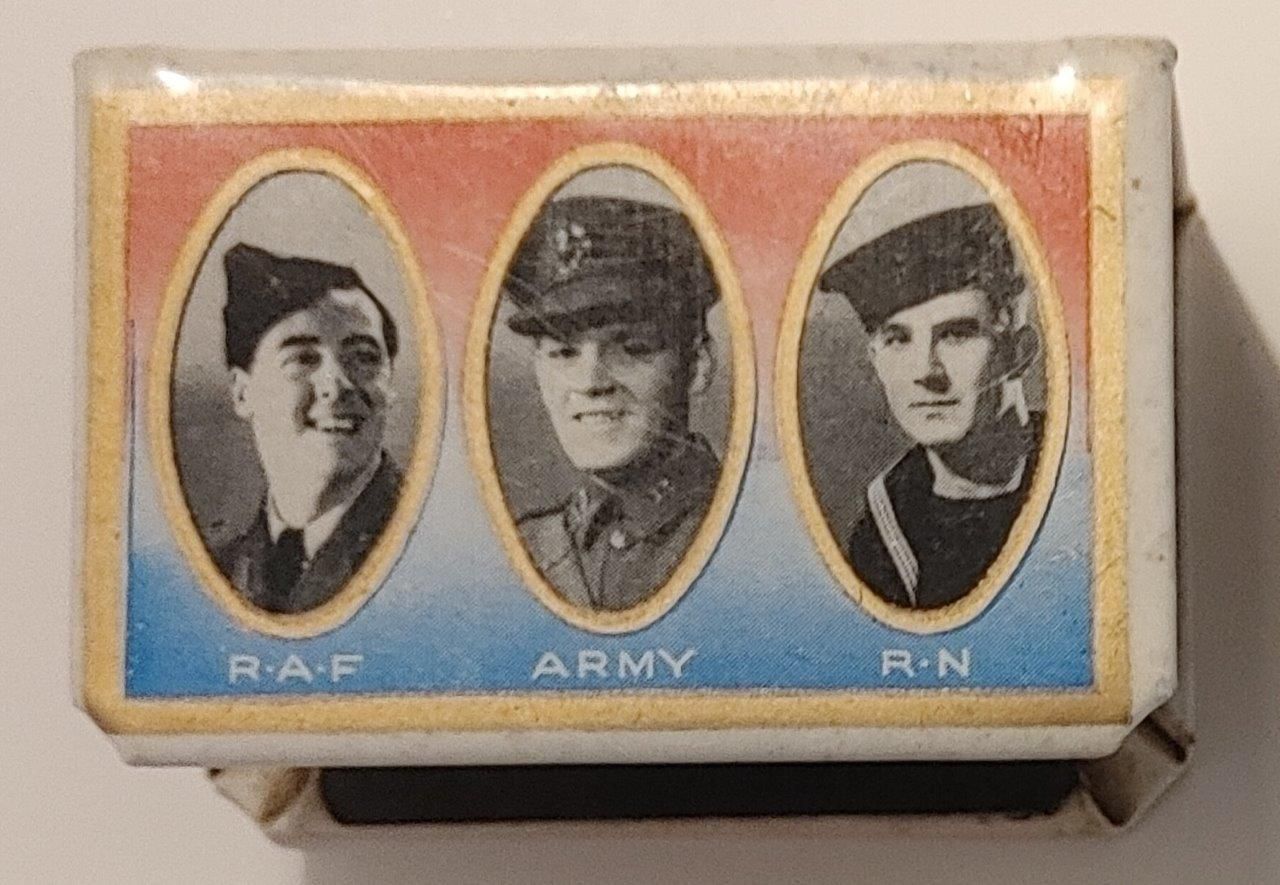 WWII matchbox grip
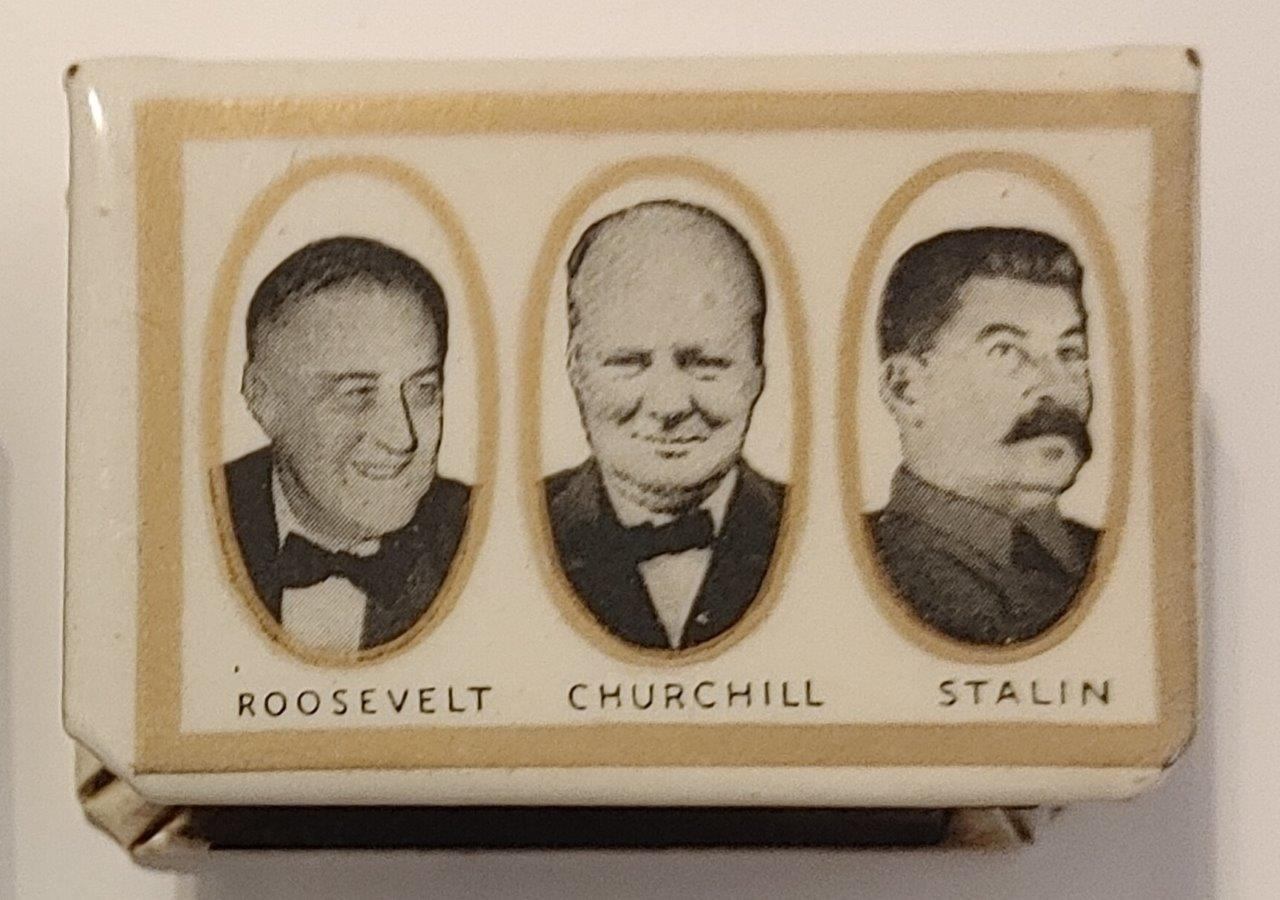 WWII matchbox grip
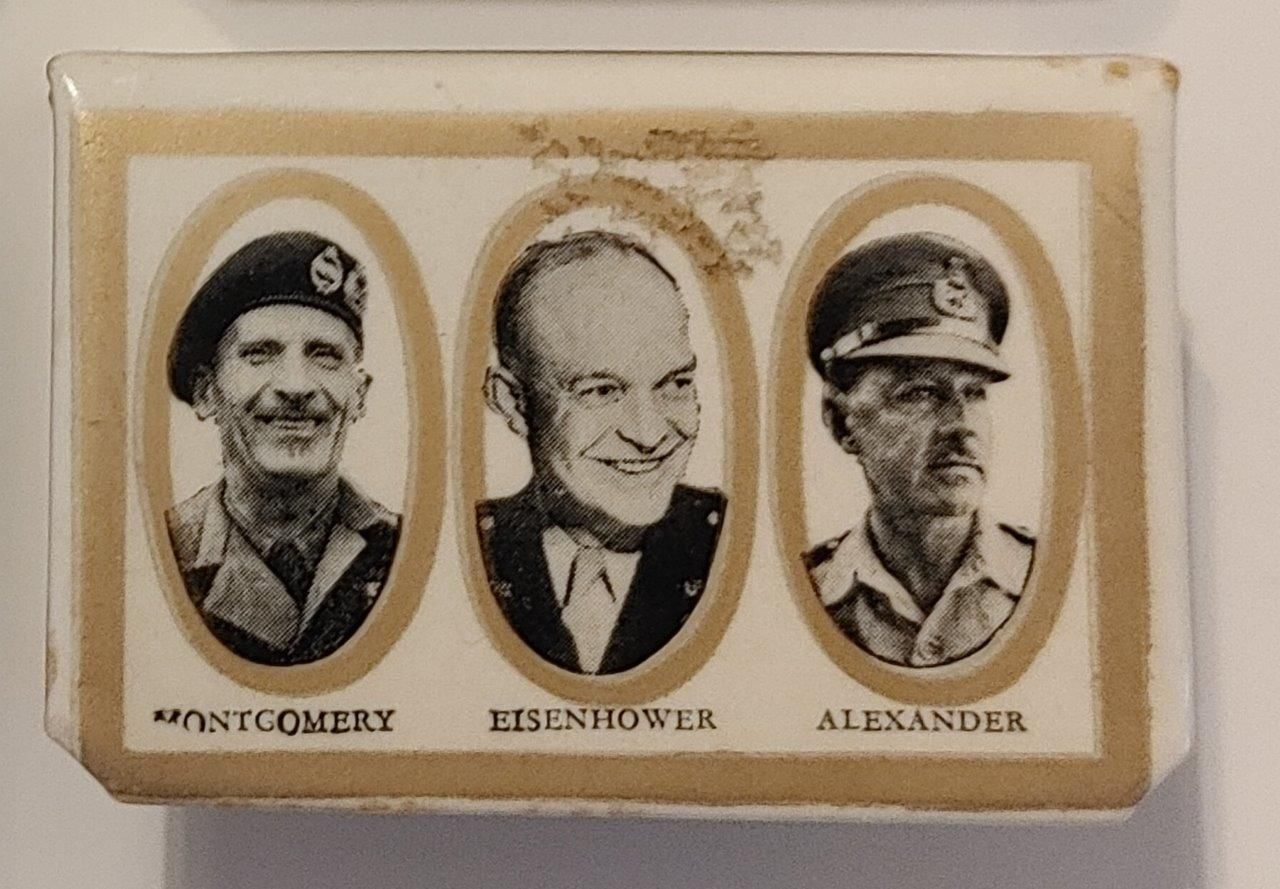 WWII matchbox grip
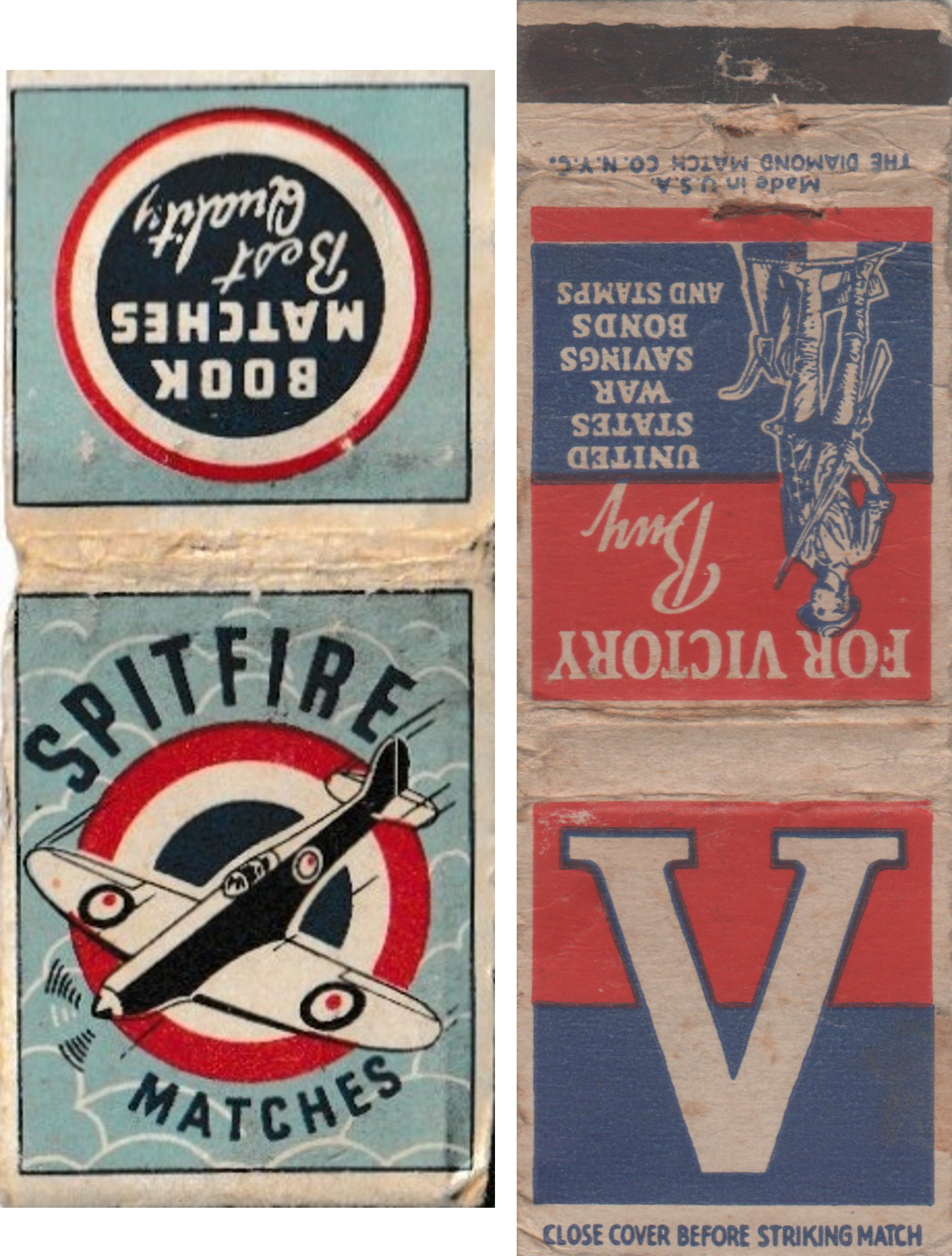
Bookmatches were also very popular, and often used patriotic slogans.
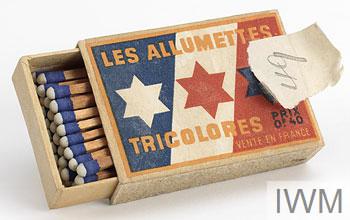
There was an increase in smoking during World War II, and soldiers needed to be supplied with matches and cigarettes. Bryant & May were commissioned by the Special Operations Executive in 1943 to produce matchboxes which would help to ensure the authenticity of an agent’s disguise and cover story by being very precise copies of French matchboxes.
Examples of these counterfeit matchboxes and labels are now held in The Imperial War Museum.
1945
At the end of the War the match manufacturing industries in the UK and in most of Europe had survived, just, but looked very very different to their 1914 versions. There were fewer match companies, many had either merged or gone under, and the range of matches being sold had reduced. The continuing shortage of timber persuaded manufacturers to move from wooden to cardboard boxes.
A fascinating article appeared at the end of WWII written by Lea Marie Molony of the American Specialities Unit of the Bureau of Foreign and Domestic Commerce entitled “World’s Match Business”. It describes the state of the various match in industries in Central and South America at the end of the war, and was summarised in the magazine of the North West Phillumenists’ Club, you can read it here.
However, the task of rebuilding countries after the devastation of war brought with it new opportunities for the match manufacturers to refresh their products and create an industry ready for the modern world.
Click here to return to the Exhibition Catalogue.