
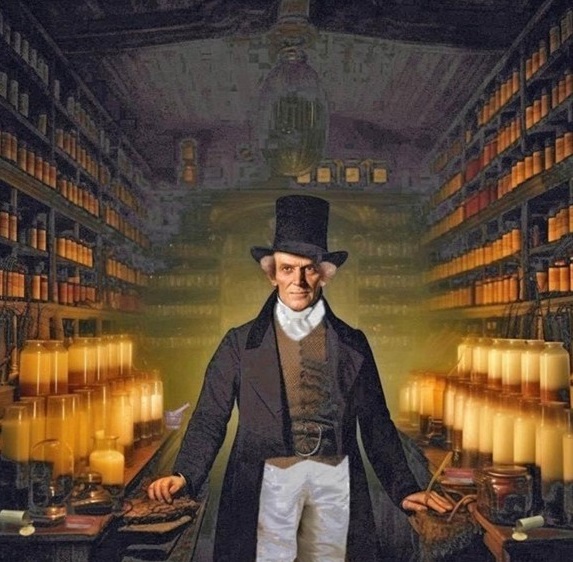
Stockton, 1820s
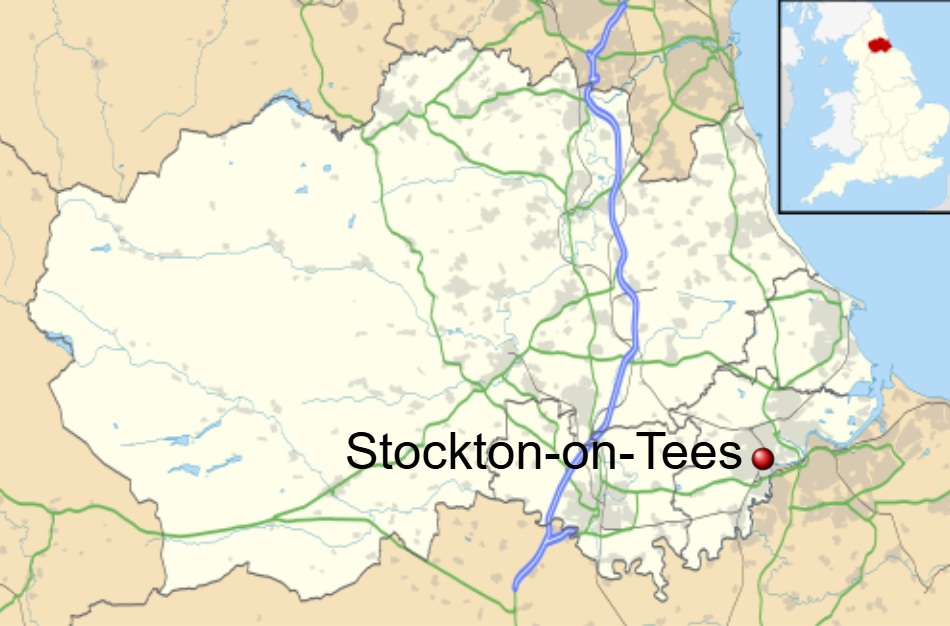
Period covered : 1820s
Stockton-upon-Tees as it was known in the 1820s is a market town in County Durham in the North East of England, which can trace its market history back to 1310 when Bishop Bek of Durham granted a market charter “to our town of Stockton a market upon every Wednesday for ever”.
The town grew into a small but busy port, exporting wool and importing wine, all of which was in great demand by the wealthy upper class.
In 1821 the entire parish of Stockton contained 5,184 inhabitants, growing to 7,991 by the census of 1831.
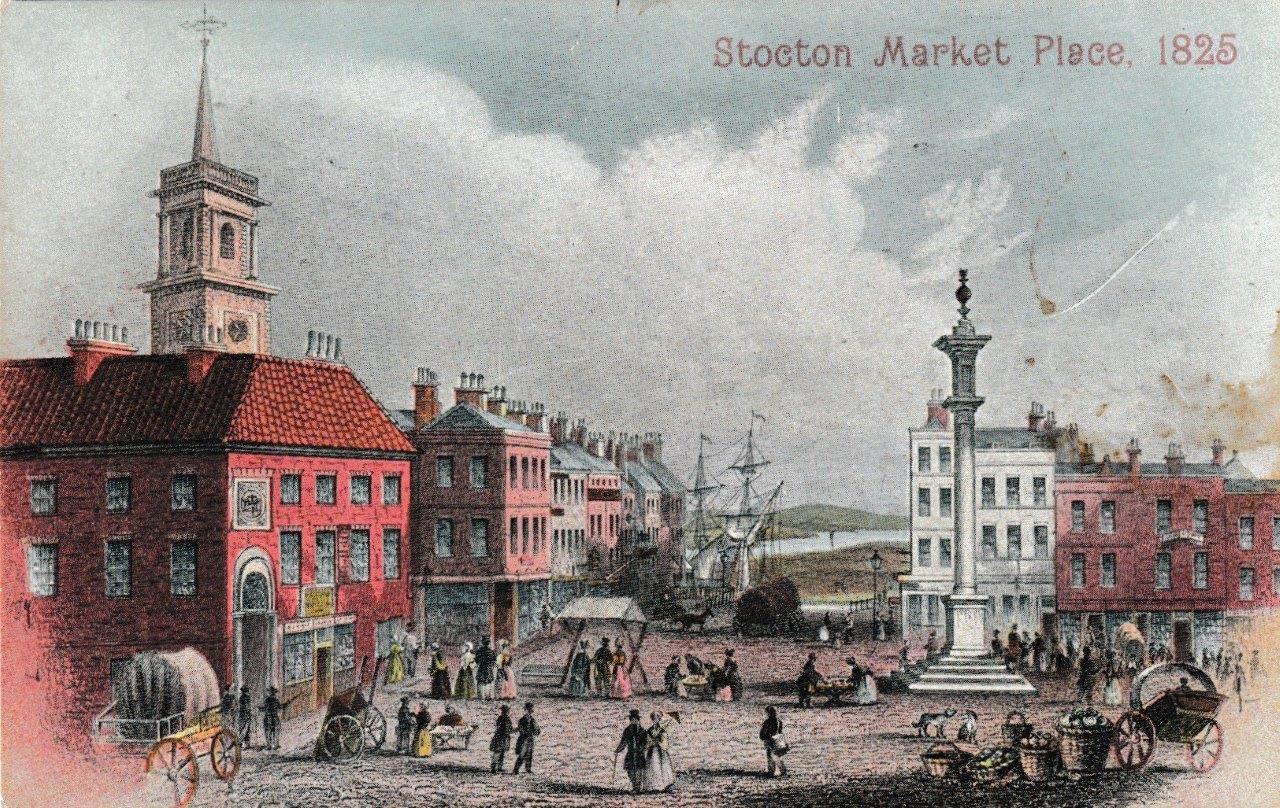
By 1825 Stockton had become the major port for County Durham, the North Riding of Yorkshire and Westmorland, exporting mainly rope, agricultural produce and lead from the Yorkshire Dales.
The main industry in Stockton was shipbuilding, which had started in the 15th century, while iron making and engineering had also become significant during the 18th century.
Arrival of the Railway
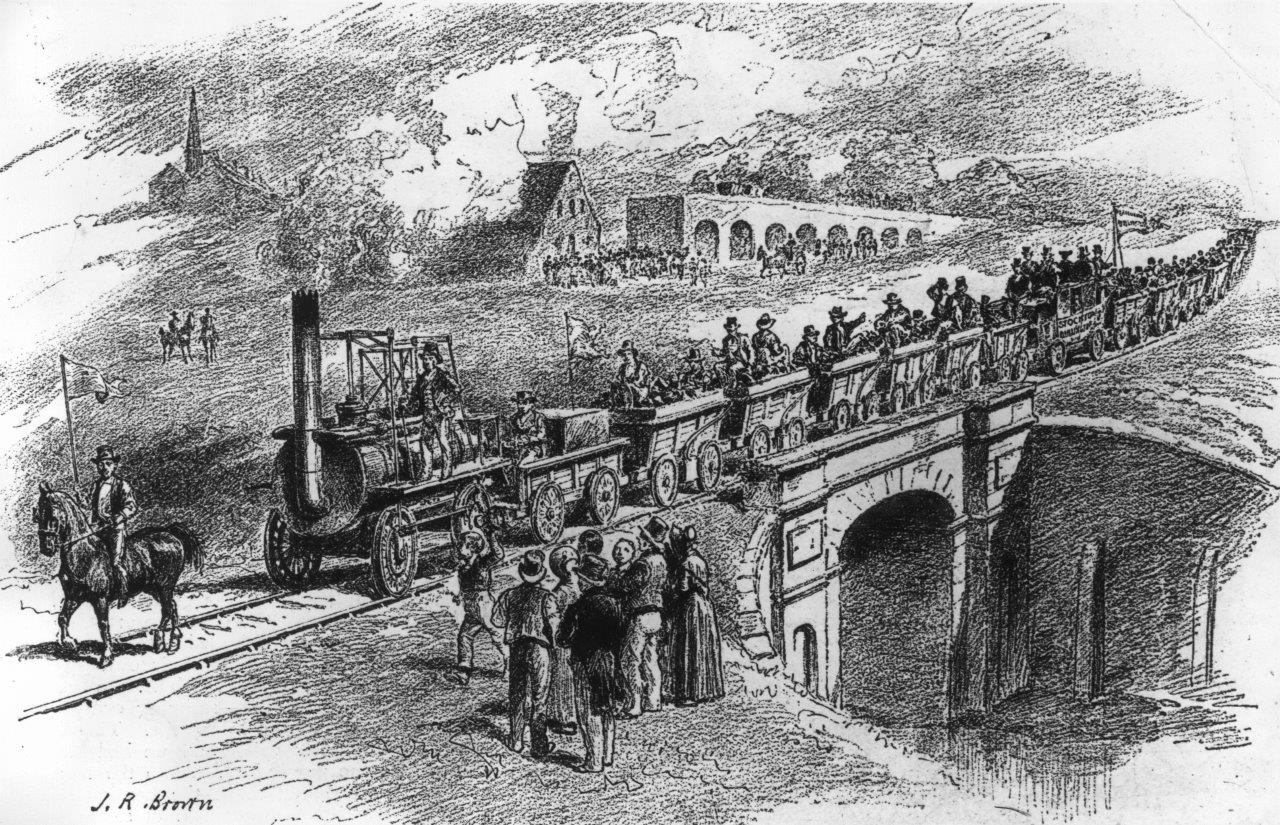
One year before Walker’s invention a momentous event took place locally: The Stockton and Darlington Railway became the world’s first public railway to use steam locomotives. On the 27th September 1825 a train pulled by George and Robert Stephenson’s steam-driven engine Locomotion No. 1 carried coal, flour and six hundred passengers from the Shildon Collieries in County Durham to the Port of Stockton via Darlington, arriving at Quayside at 3.45pm.
The movement of coal to ships by train rapidly became a lucrative business. The railway terminus for coal export was close to John Walker’s Quayside house and John would have been acutely aware of the massive change that had come to his town.
He would have realised that the new railway was the future and he would have been there with thousands of others to see and cheer on the first steam engine to arrive in Stockton carrying many local dignitaries sitting in coal waggons specially fitted with seats.
It will not have escaped his attention that the locomotive had a high-pressure boiler which generated steam to turn the wheels and propel the train forward. The boiler clearly needed to be heated to create the steam, but how did they light the boiler (because matches did not exist in 1825)? Records show that it was lit with the aid of a ‘navvy’s burning (magnifying) glass’, which must have been time consuming and a challenge if there was no sun.
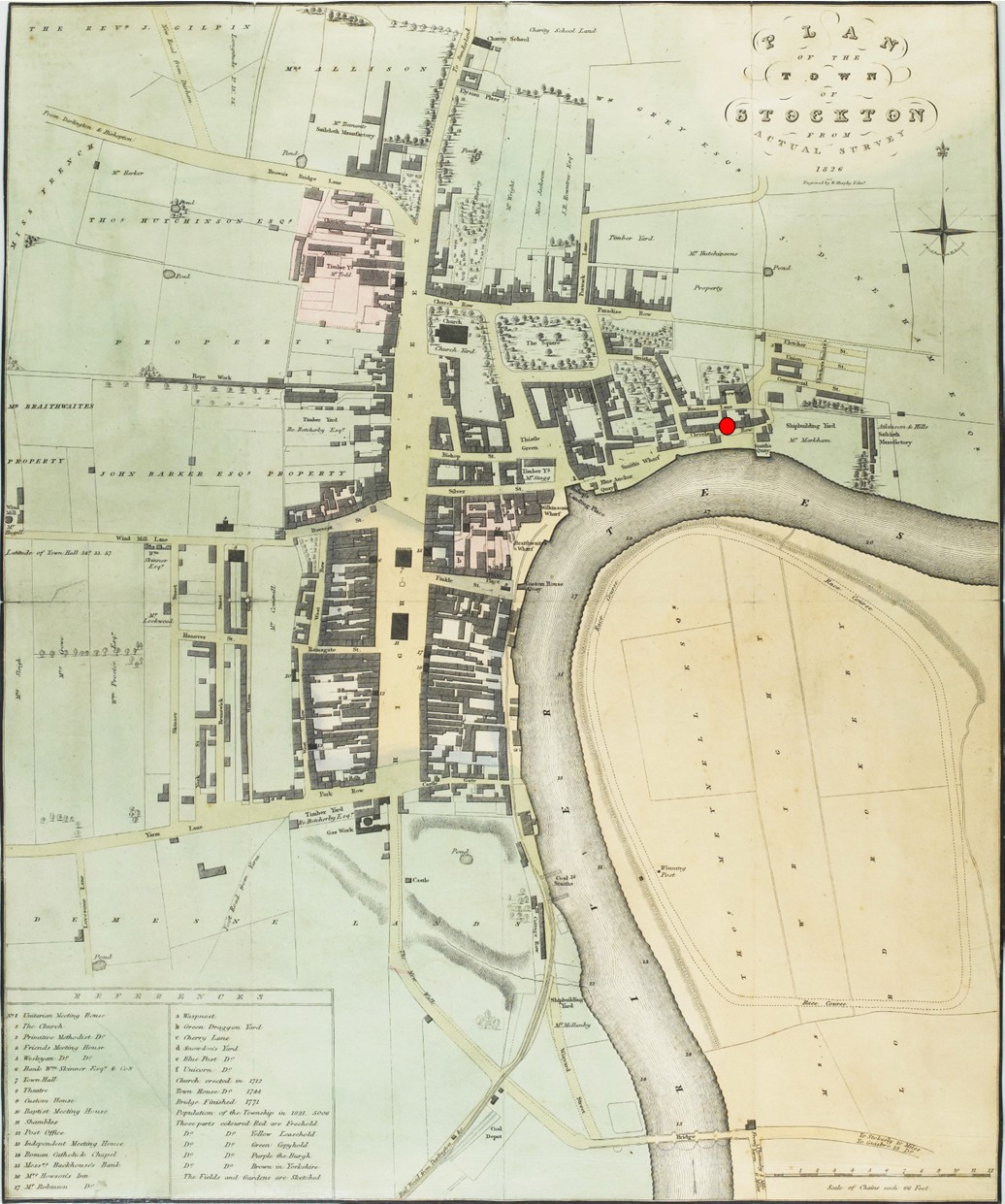
This map of Stockton from 1826 clearly shows the River Tees and the Quayside where all the boats were loading their cargo. John Walker lived in Cleveland Row with his mother, his two sisters Jane and Mary, and Mary’s daughter Ann from 1819 until the 1840s. The house is marked with a red dot and is where he made his discovery in 1826.
The view from the Walker’s window would show the upstream sweep of the river, beyond the south bank where the Stockton Races drew large crowds, to the bridge that led into Thornaby and Yorkshire, and the beautiful Cleveland Hills in the far distance.
Census figures for the population of Stockton town show : 5,184 inhabitants in 1821, 7,991 in 1831, 9,825 in 1841, more than 50,000 in 1901 and 84,800 in 2021.
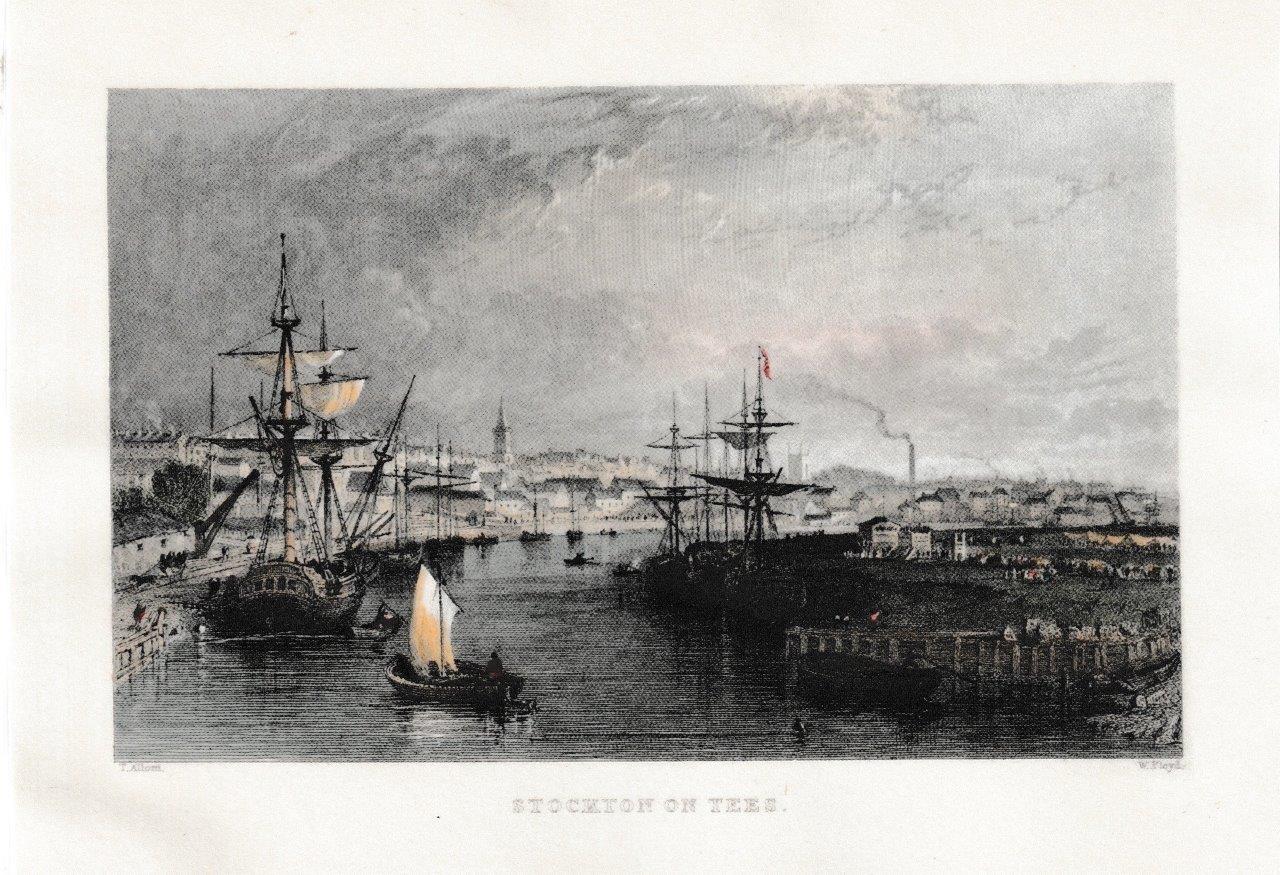
Decline of the Port of Stockton
A few years later more rail lines were constructed to carry coal from the Durham Coalfield bypassing Stockton going directly to Port Darlington (now Middlesborough) as by this time the lower reaches of the Tees were so badly silted up that teams of horses were needed to pull the coal-sailing barges to the mouth of the river.
The lucrative coal trade moved away completely in the 1830/1840s and the Port of Stockton gradually became less important.
In 1850 when iron ore was discovered in the Eston Hills ten miles east of Stockton the Port of Middlesbrough sprang up and expanded exponentially. The Tees was finally dredged and in the next few years numerous iron works sprung up on the banks of the river near the Eston Hills and the coal was brought directly by rail to them also bypassing Stockton.
During John Walker’s lifetime Stockton gradually lost its prominence and importance as a port town and perhaps he was affected by this gradual commercial subservience to Middlesbrough and Hartlepool, as he would have experienced a big change of his customer profile to a more rural base.
Click here to return to the Exhibition Catalogue.