What was the chemical composition of Walker’s match heads which made them combustible ?
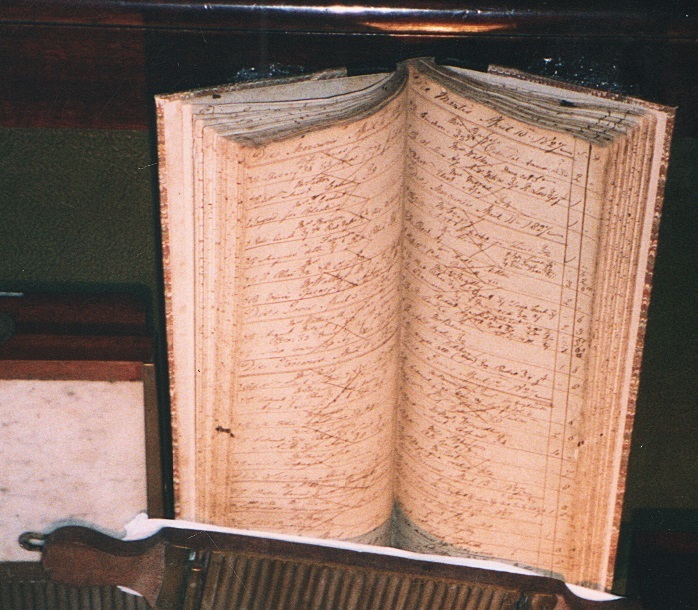
Luckily, we have an answer to that question. There was a very fortunate event in the John Walker story when his Day Book was discovered by Stockton hairdresser, artist and historian Joseph Parrott in the early 1890s. He claims to have found it discarded in a pile of pharmaceutical rubbish thrown out from William Hardcastle’s chemist shop in Finkle Street.
In 1896, Joseph Parrott sent the Day Book to Stocktonian Professor William A Bone of Owens College in Manchester together with eight Friction Lights for chemical analysis.
In his Paper for Nature Magazine in April 1927 written for ‘The Centenary of the Friction Match’, Professor Bone concluded there was strong evidence in the Day Book that John’s experiments in 1825/26 were for the purpose of making sporting percussion powder (for guns) and the Friction Light was a result of one such experiment. Bone thinks the No. 30 on the first recorded sale on the 7th April 1827 was the batch-number of his experimental Friction Lights and he had been making them for some time prior to the first recorded sale which he noted was a credit sale to Mr. Hixon and not a cash transaction.
Professor Bone’s 1896 analysis showed the Friction Lights were thin splints of wood, three inches long, one sixth inch broad and one-twentieth inch thick.
- “tipped with a composition of equal parts of antimony sulphide and potassium chlorate made into a paste with gum and starch. Each tin case was supplied with a piece of glass paper folded in two and a light was produced by pinching the splint of wood by its head between the folds and suddenly withdrawing it”.
The contents of William Hardcastle’s chemist shop were acquired by Beamish Museum in 1962 and now form part of their Edwardian Chemist exhibit.
Click here to return to the Exhibition Catalogue.