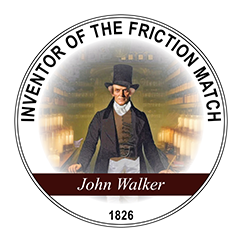
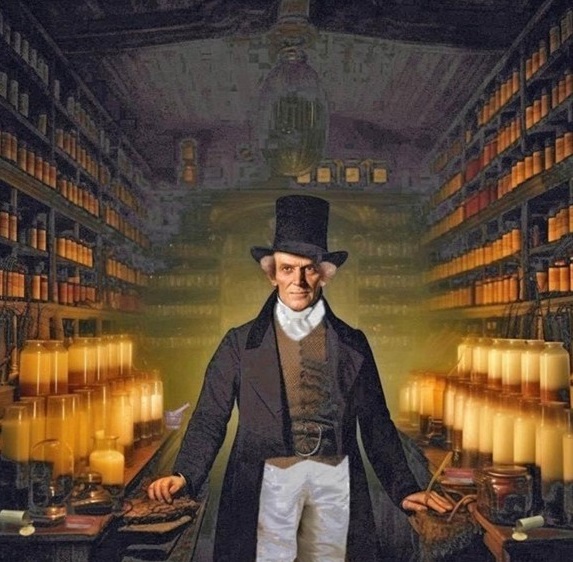
We know that Walker’s Friction Matches were hand-made : he made the match sticks, dipped their heads in his ‘secret’ chemical mixture, dried them, wrapped them in paper or put them in a tin to sell to his customers with a piece of sandpaper to strike them on. Other early manufacturers like Samuel Jones and George Frederick Watts also made their matches by hand, but all of these entrepreneurs were looking for ways to reduce costs and scale-up production to satisfy the ever-increasing demand for their products.
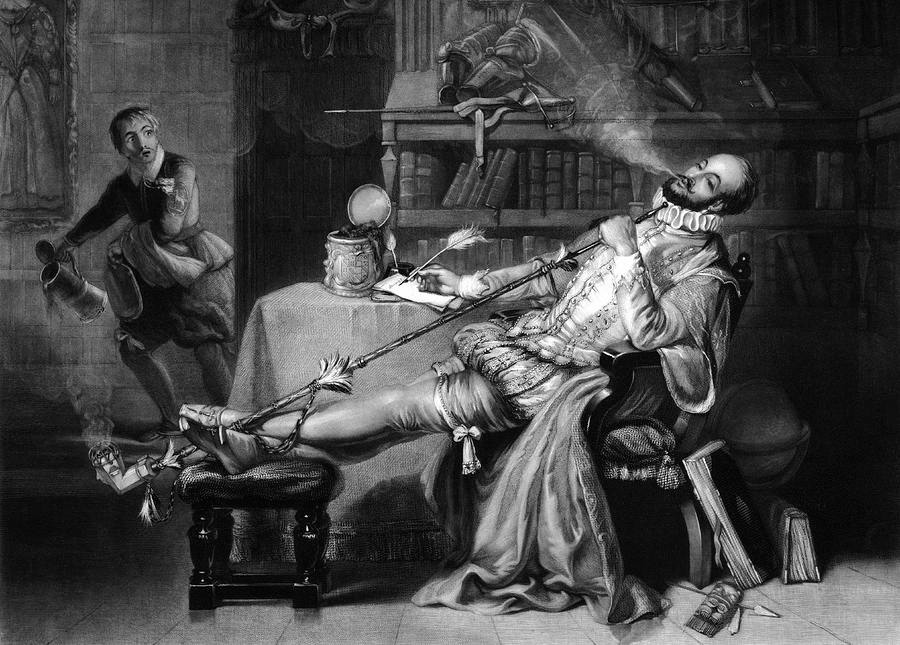
Raleigh’s first pipe in England, Frederick William Fairholt, Public domain, via Wikimedia Commons
A huge increase in demand for matches
As the price of matches became more affordable demand grew exponentially as people saw the benefits of being able to instantly and reliably light their candles, hearths, stoves and of course tobacco. The wealthier classes had been enjoying smoking since Sir Walter Raleigh introduced it to England in 1586 (along with potatoes and maize) and cigars, pipe tobacco and cigarettes were gradually becoming more available and affordable during the 19th century. In 1883 the W D & H O Wills company in Bristol acquired the exclusive British rights to the powerful Bonsack cigarette manufacturing machine which instantly made “very cheap to make” cigarettes in large quantities.
The huge growth in smoking only served to increase the demand for matches throughout the 19th century. There are estimates that in 1860 about 8,000 million boxes of matches were produced in the UK, most using home-sweated labour.
Match industries across the world
A global industry
Demand for matches was growing across the world, and factories sprang up everywhere in many countries in the 1830s to satisfy the demand and build a healthy business. All the manufacturers were faced with similar issues : how to make good, reliable products quickly enough to satisfy the growing demand and make a profit.
Similar to the UK, after an initial period of entrepreneurship with small manufacturers the national industry often consolidated in the late 19th century around a few major manufacturers, such as Roche and Causemille in France, Lavaggi and Dellacha in Italy, and Lizarbe and Lasa in Spain.
Of course, manufacture was not limited to Europe. Factories could be found in Japan, China, India, Pakistan, Thailand, Mexico, Cuba, Mauritius and many more countries, and the opportunities for export/import were enormous.
By the end of the 19th century the global match industry had become as significant as today’s technology giants. Also, by this time many governments across mainland Europe saw an opportunity to raise money by nationalising their match industries.
The manufacturing process, from a tree to a splint to a match
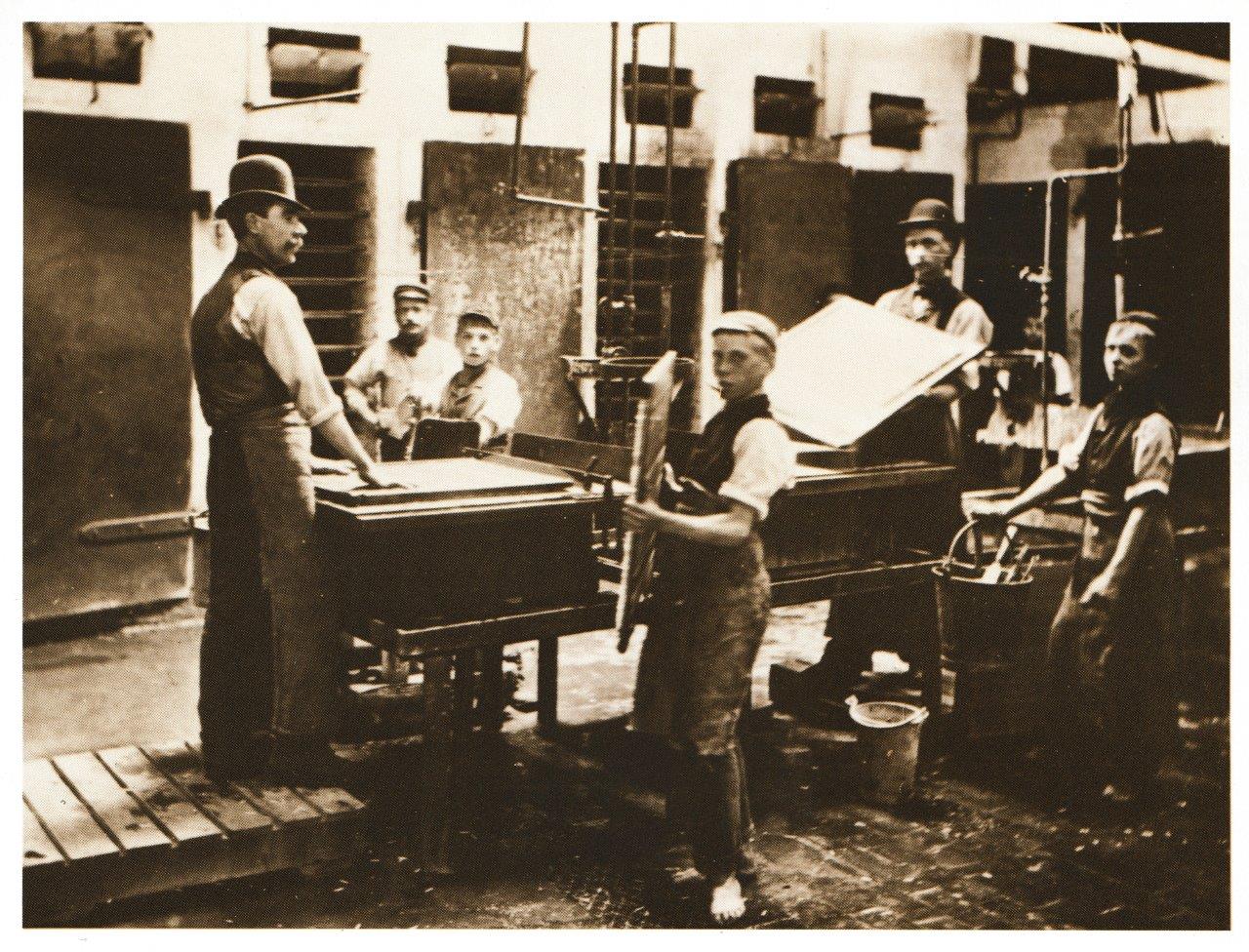
There were many steps of the match manufacturing process which could be refined and improved, including sourcing the wood, sourcing the chemicals, cutting the splints to size, dipping them, drying them, sourcing the packaging, making the boxes, labelling the boxes, packaging up the products, delivering them to the match sellers, collecting the money, etc.
Many steps of this manufacturing process remained manual in the 19th century, essentially until Bryant & May began intense production in the 1860s.
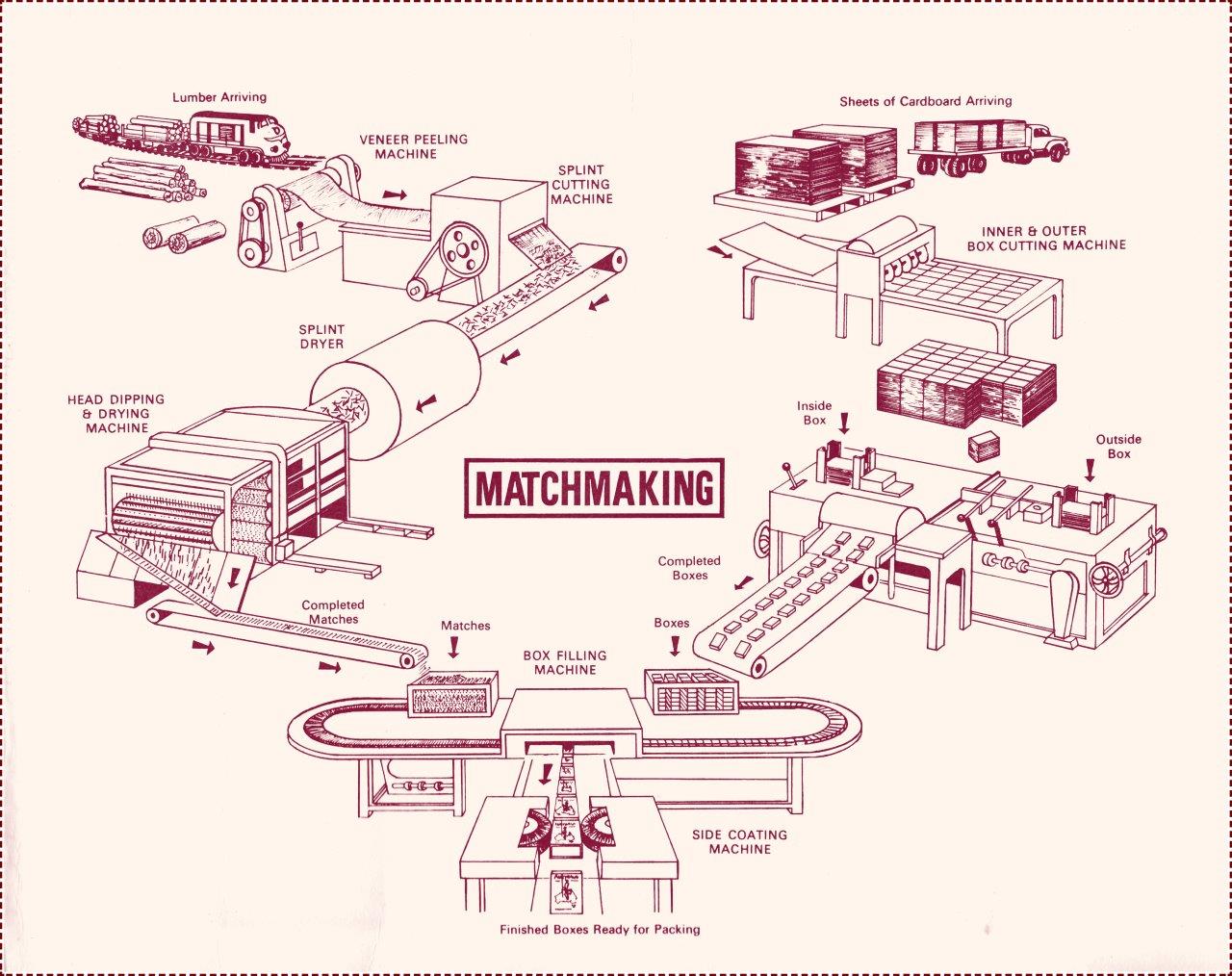
Big, wrought-iron, machines started to become available which automated parts of the production process, and focussed on four aspects (which still form the process today) :
Matchmaking process, Australian collectors’ album 1960
Putting the splints in a frame
Dipping the splints in the chemical compounds
Drying the matches
Boxing up the matches
Machines of course bring standardisation, and from 1860 onwards the variations in sizes of matches and consequently sizes and types of the matchboxes became much less.
The emergence of the Safety Match at the same time also affected the manufacturing process, by introducing a tray into the matchbox (non safety-matches were typically sold in boxes which required the lid to be removed before extracting the matches then replacing the lid before striking the match which might then break and the whole process had to be repeated).
Bryant & May
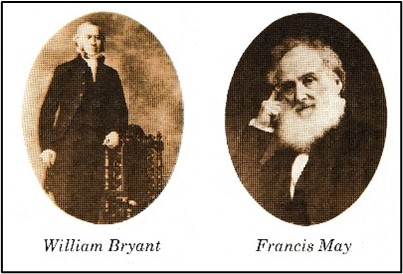
Originally formed in 1843 by two Quakers William Bryant and Francis May as a general trader, the company entered the match market in 1850 by forming a relationship with Johan Lundström to import matches from Sweden.
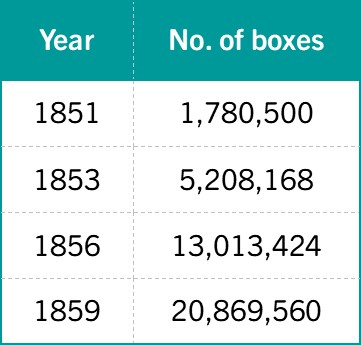
Bryant & May sales of Swedish Imports
The UK timber industry was unable to meet the huge demand for wood and Sweden was the primary source of wood splints.
Bryant & May sales records of Swedish imports clearly show the huge growth in the market.
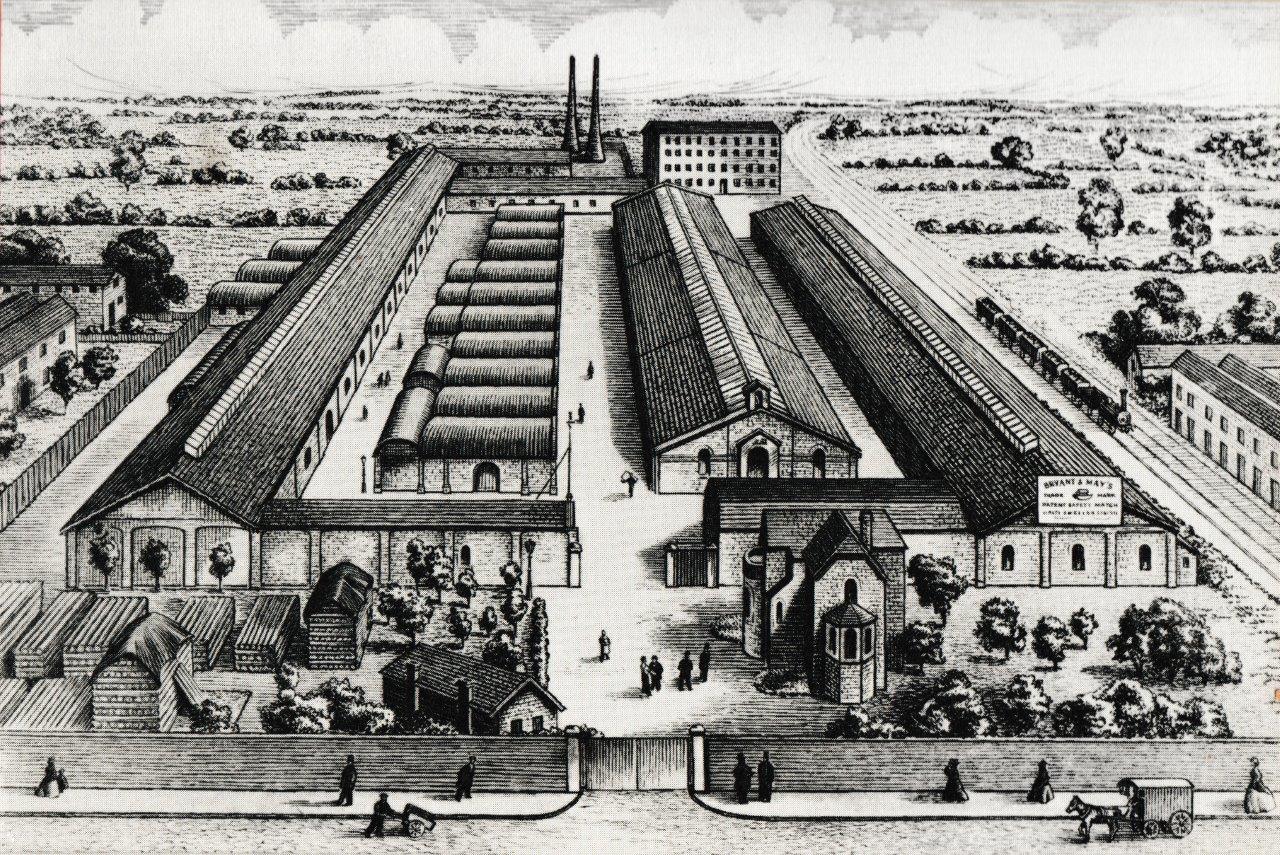
Everything changed in the UK match industry in July 1861 when the company opened their first (model) factory in Bow, East London and brought the end-to-end manufacturing process under one roof for the first time.
This revolutionised the production of matches and led to Bryant & May becoming the dominant force in the UK market.
Industrialisation sometimes comes with its own problems, and Bryant & May was involved in two of the most divisive industrial episodes of the nineteenth century: the wage “fines” that led to the London Matchgirls Strike of 1888 and the scandal of “phossy jaw“.
Alan Downer collection
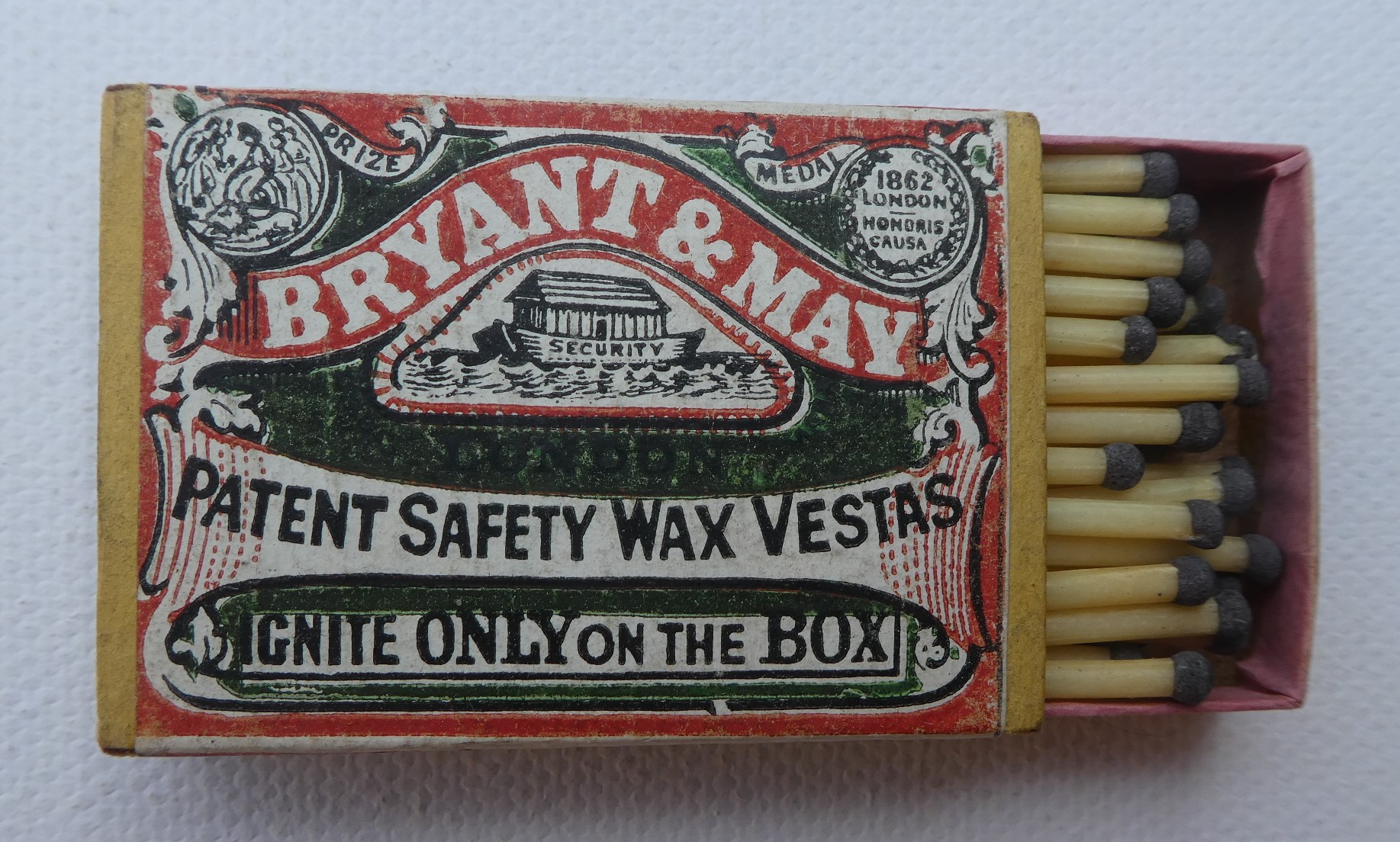
Bryant & May grew by expansion and by acquisition, taking over smaller makers like Bell & Black and Morelands, and consolidated many familiar brands like Swan Vestas, Ruby and Scottish Bluebell under their own name.
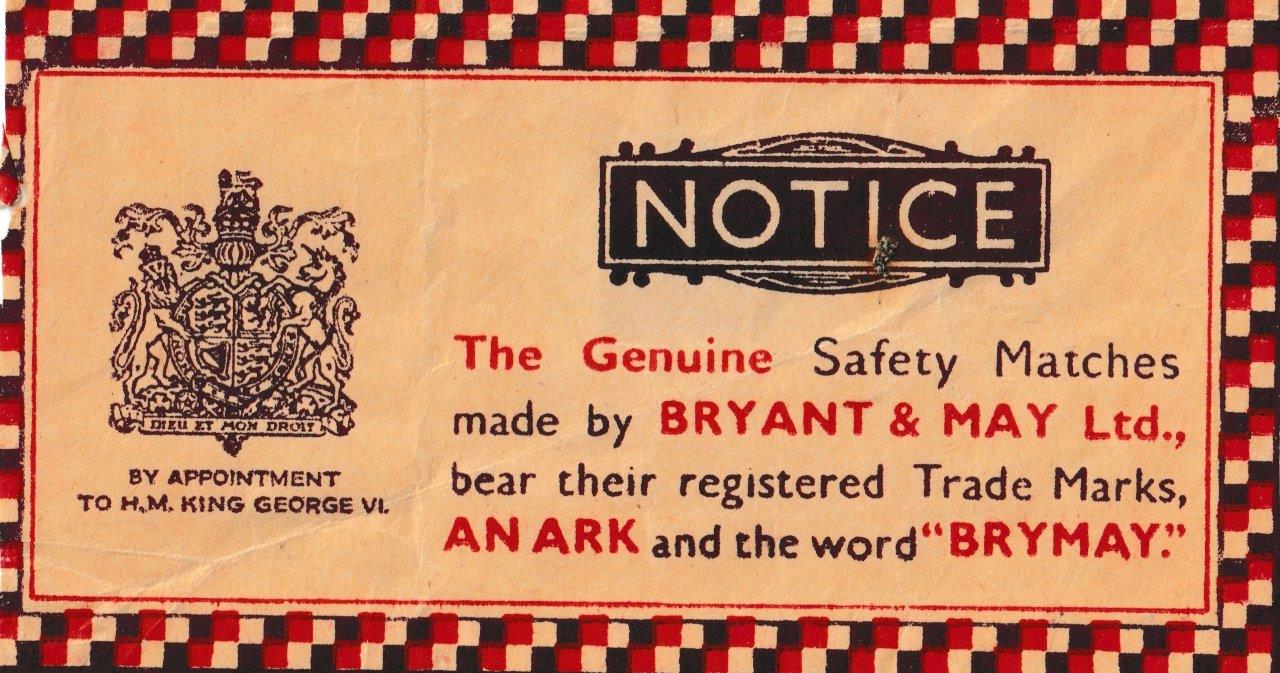
Matchbox label with Royal Warrant, Mike Pryor collection
The company obtained a Royal Warrant for supply of matches to King George V in 1912, although they had been marketing “Royal” boxes since the 1870s.
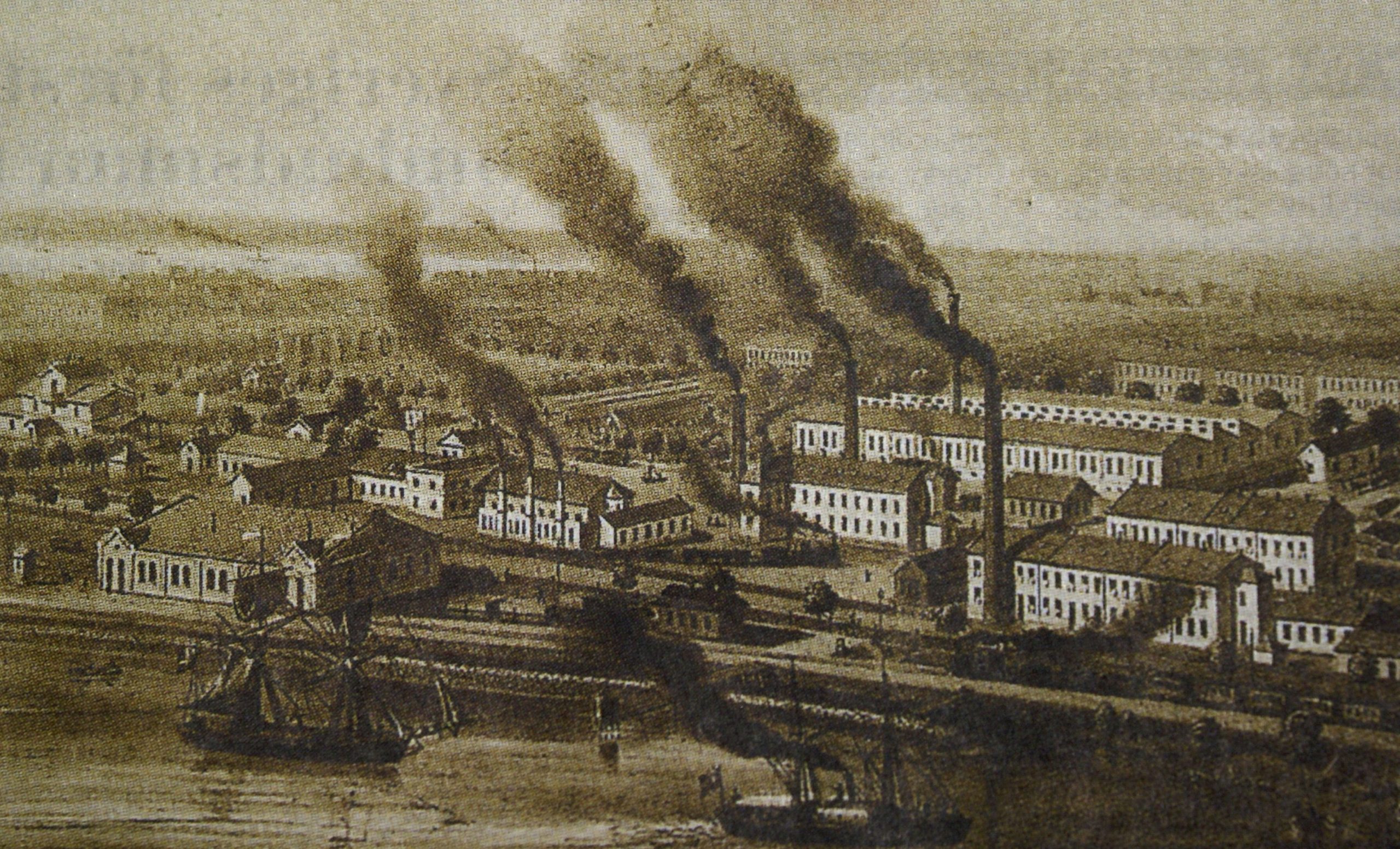
Jönköping Tändsticksfabriks AB, lithography from 1872, Public domain, via Wikimedia Commons
The inexorable rise of Swedish Match
One country came to dominate the global match industry : Sweden. Through a mixture of enormous natural resources, keen business acumen and innovation the Swedish Match Industry grew to overshadow all others.
Although a small match factory started in Stockholm in 1836, the main story began around 1847 when brothers Johan Edvard and Carl Frans Lundström founded a large-scale factory in Jönköping, Sweden. Jönköping is situated on the southern shore of Sweden’s second largest lake, Vättern, in the province of Småland, 320 km southeast of Stockholm.
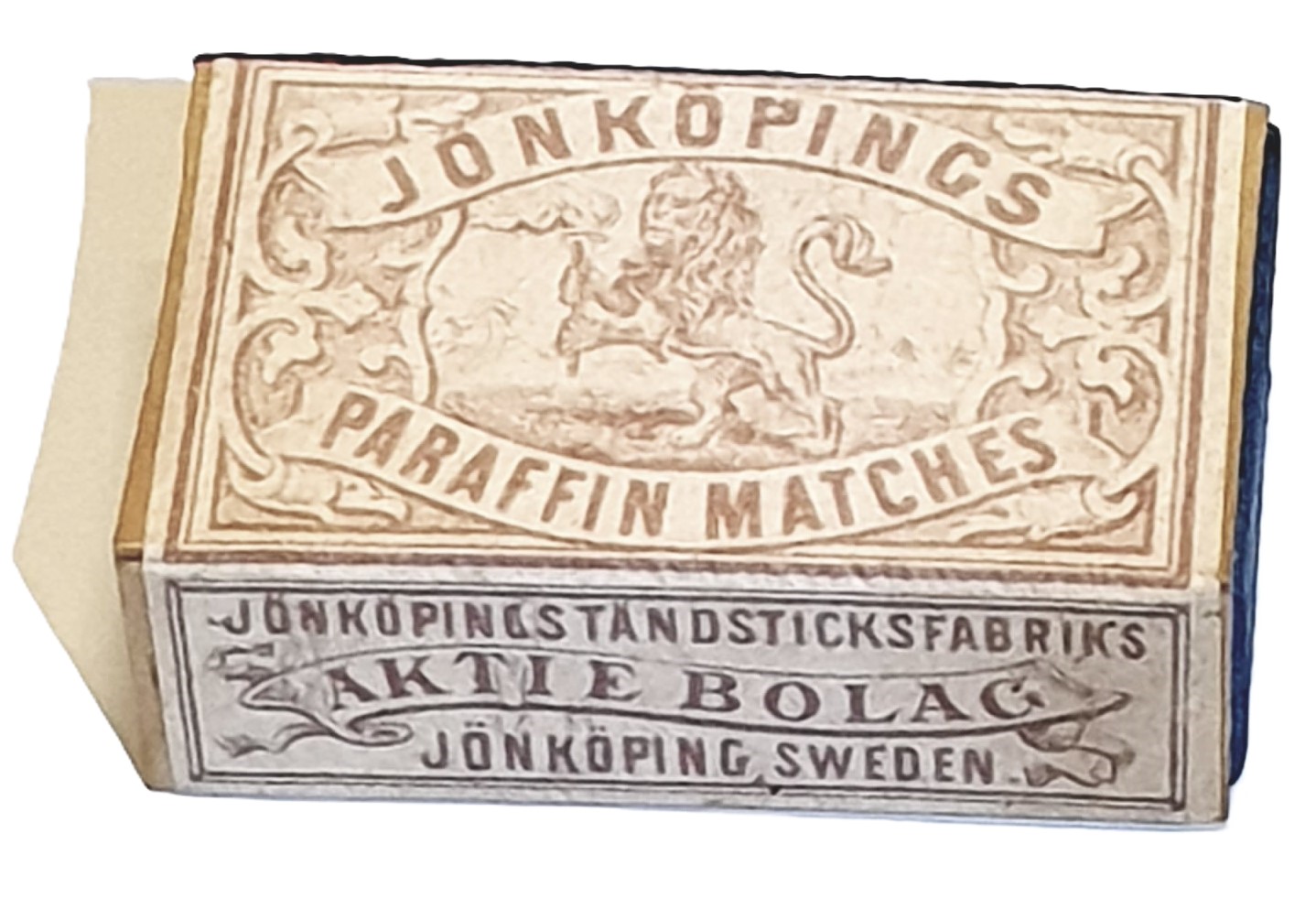
Peter Pålsson collection
The Lundströms initially made non-safety matches, but after obtaining a sample of red phosphorus matches at the Great Exhibition of 1851 from Arthur Albright (a partner in the Birmingham chemical firm of John and Edmund Sturge), they introduced the safety match around 1855. In 1858 their company produced around 12 million matchboxes.
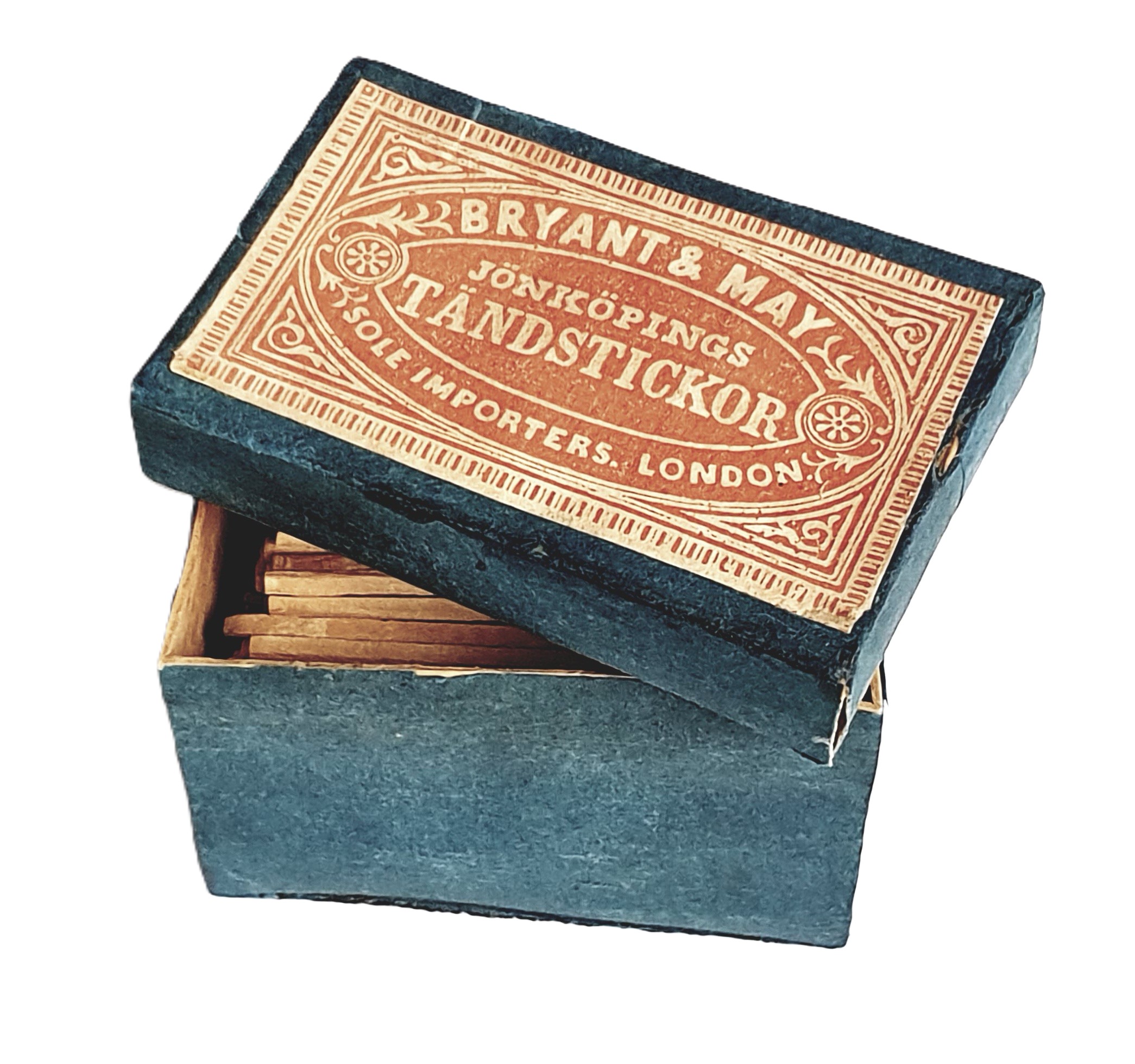
Peter Pålsson collection
In 1862 Bryant & May bought the rights for the British safety match patent from the Lundström brothers.
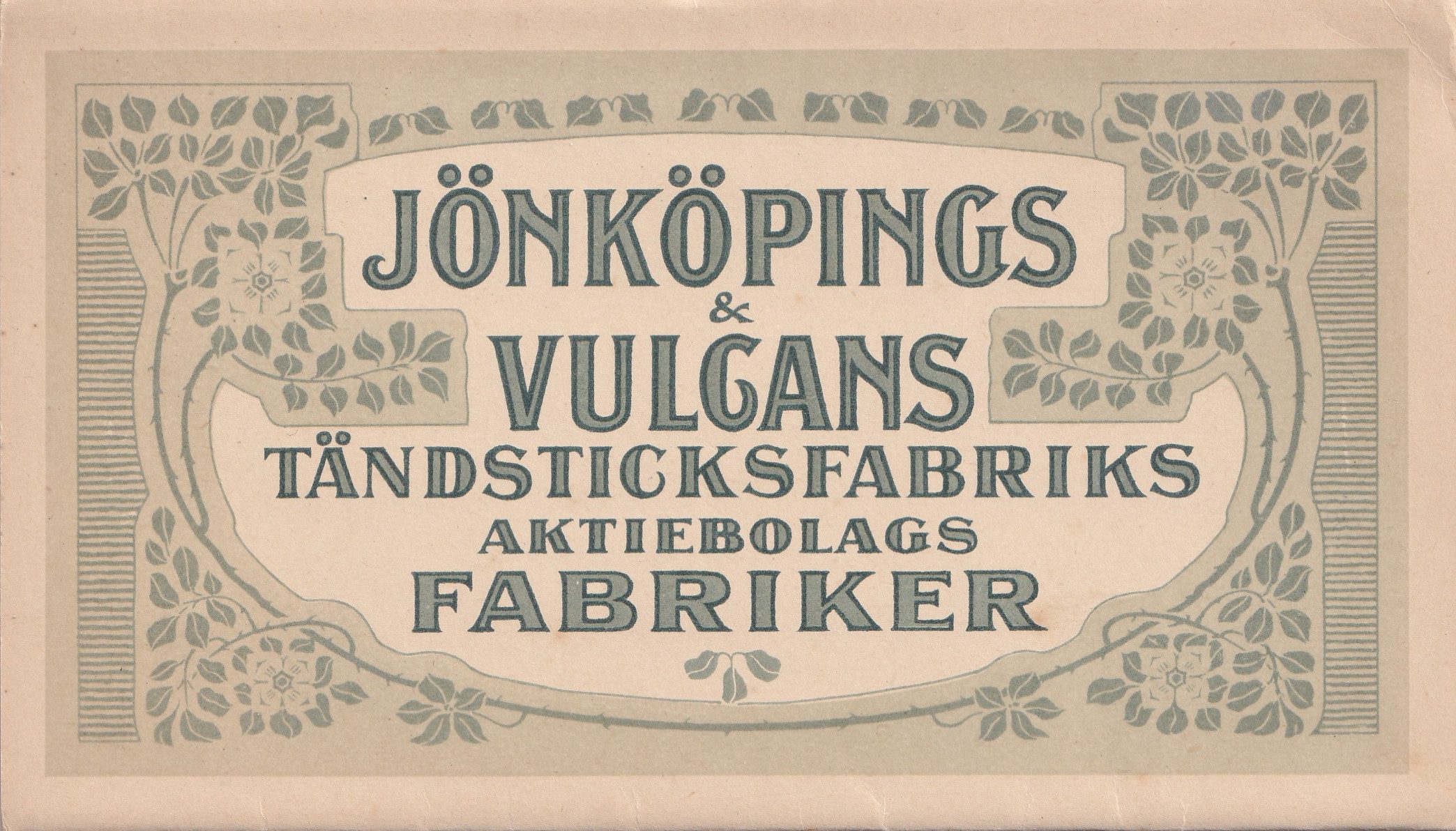
Factory catalogue, Peter Pålsson collection
The Swedes rapidly established a virtual worldwide monopoly on safety matches, and in 1903 the Jönköping factory merged with the Vulcan factory in Tidaholm to form Jönköpings & Vulcans Tändsticksfabriks AB.
Between 1903 and 1917 the company exported 90% or more of its output, and Britain was by far its biggest market.
Ivar Kreuger
Market conditions changed with the onset of the First World War, leading to the decision in 1917 to sell the company to Svenska Tändsticks AB (STAB) which was led by the 37-year old financier Ivar Kreuger. STAB eventually became Swedish Match who are still the biggest manufacturer of matches in the world.
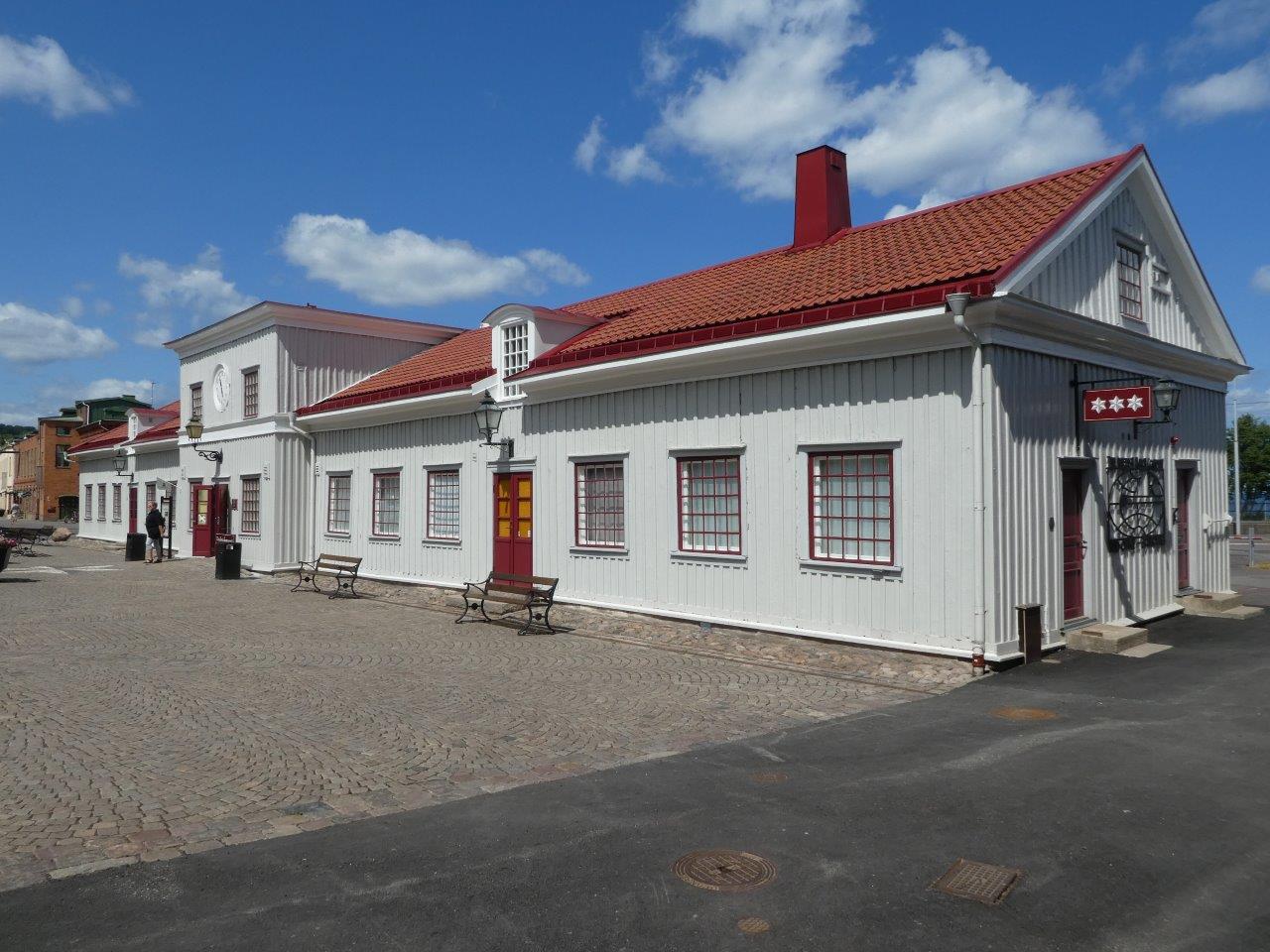
Match Museum, Jönköping, 2018
Swedish Match now owns the registered Bryant & May trade name, alongside those of many formerly independent companies which had become part of the Bryant & May group.
Today, a Match Museum is located in Jönköping’s first match factory.