The Match : from danger to safety
Period covered : 1826 to 1861
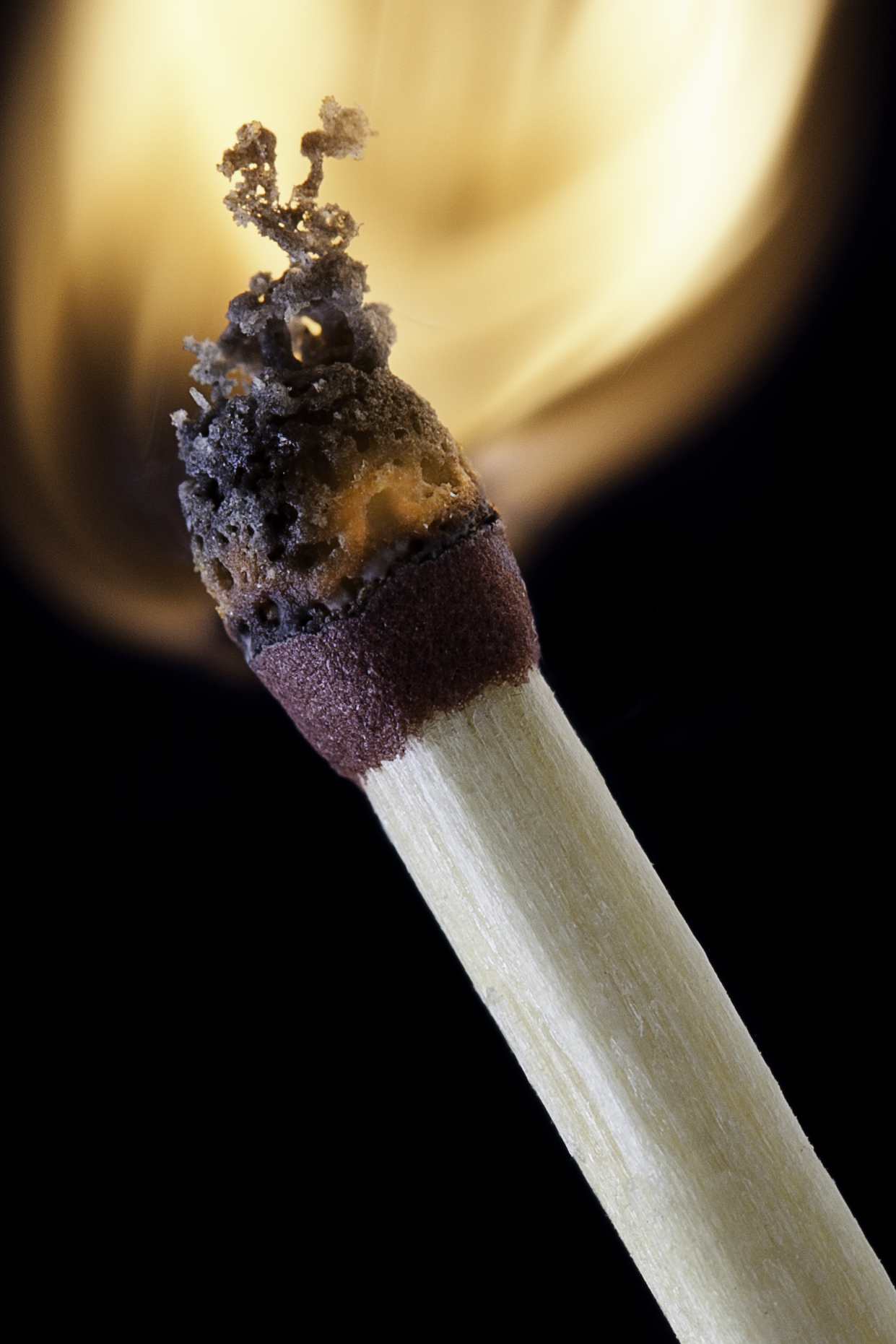
What exactly is a “match” ? Encyclopaedias define a match as “a tool for starting a fire”. Typically, matches are usually a wooden stick, stiff card or wax stem with one or both ends coated in a chemical mixture that can be ignited by striking the match against a suitable surface.
The word match derives from Old French mèche, referring to the wick of a candle. Today, most matches are either made of aspen wood obtained from sustainable forests, or card found in bookmatches.
During the 19th century scientists and industrialists searched for ways to mass produce matches that were cheap to make,
reliable and safe to use. The journey led from dangerous, liquid-based matches to the stable wooden safety matches that we all know today.
Matches before Walker
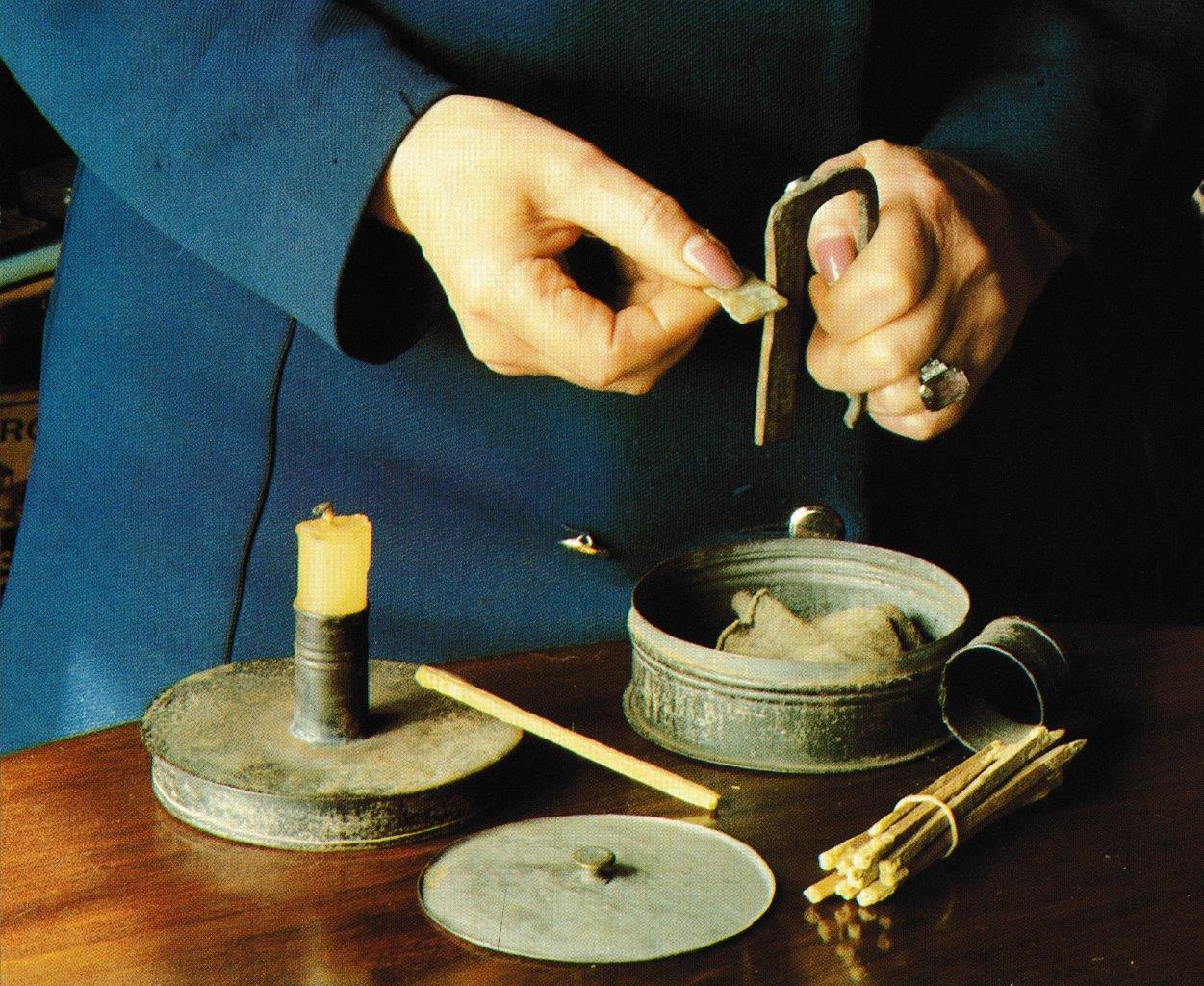
Many attempts to create a way of making fire instantaneously had been made before John Walker’s invention : using a magnifying glass on tinder, striking a flint to make sparks to ignite tinder (Tinder Box), tinder pistols, electropneumatic lamps, specialist lighters like Döbereiner’s lamp, and various chemical matches.
In France in 1805 Jean Chancel invented a self-igniting match which required the wood splint (which was coated in chemicals) to be dipped in sulphuric acid, but these matches were costly to produce and very dangerous to use.
John Walker’s matches – the breakthrough
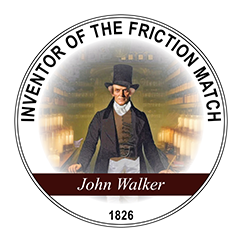
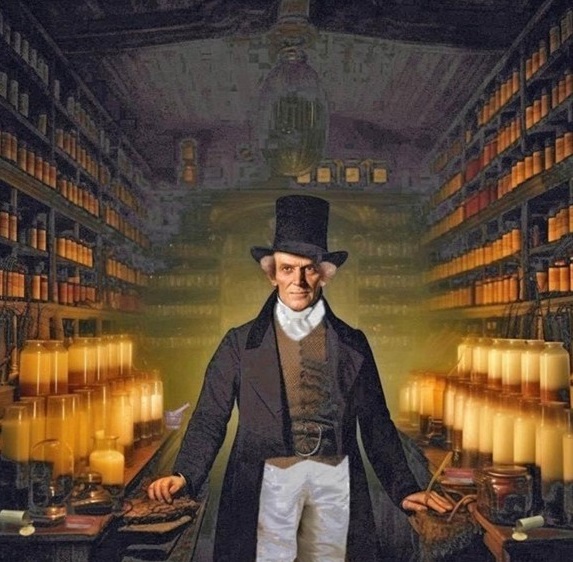
In 1826 John Walker invents the Friction Match using splints tipped with antimony sulphide and potassium chlorate, which were ignited by pulling them through glass paper, and the promise of a simple, safe and affordable way for everyone to make fire was born : freedom from the “terrible tyranny of the Tinder Box” would soon be possible.
Charles Darwin and matches
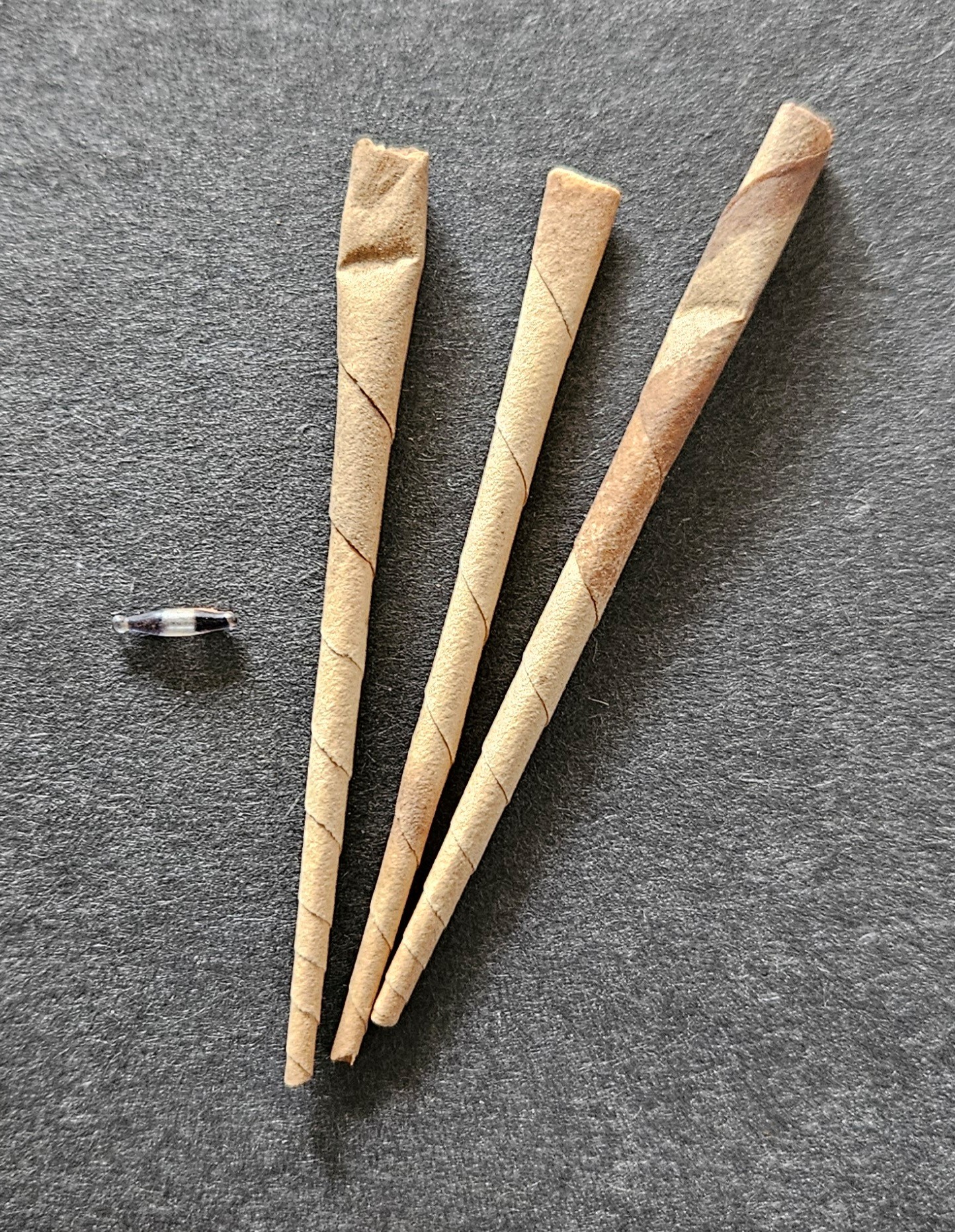
Samuel Jones had patented the “Promethean Match” in 1828 using vials of sulphuric acid. “Vesuvians” similarly had a bulb of sulphuric acid on the end of a splint.

It is interesting to read in Charles Darwin’s 1839 book Voyages of The Beagle how his crew had to bite a match to break the vesicle to light it – proof that they took some Promethean matches with them on their expedition.
The role of Phosphorus in the development of the match industry
We cannot talk about the history of the match without talking about phosphorus. Although John Walker’s matches did not contain any phosphorus it became a fundamental component of the match striking process, and the mass manufacture of stable, safe and affordable matches could not have happened without it.
Phosphorus is a chemical element with the symbol P and the atomic number 15. Elemental phosphorus exists in two major forms, white phosphorus (also known as yellow phosphorus) and red phosphorus, but because it is highly reactive, phosphorus is never found as a free element on Earth.
Phosphorus is essential to all living things. It forms the sugar-phosphate backbone of DNA and RNA. It is important for energy transfer in cells as part of Adenosine Triphosphate (ATP) and is found in many other biologically important molecules.
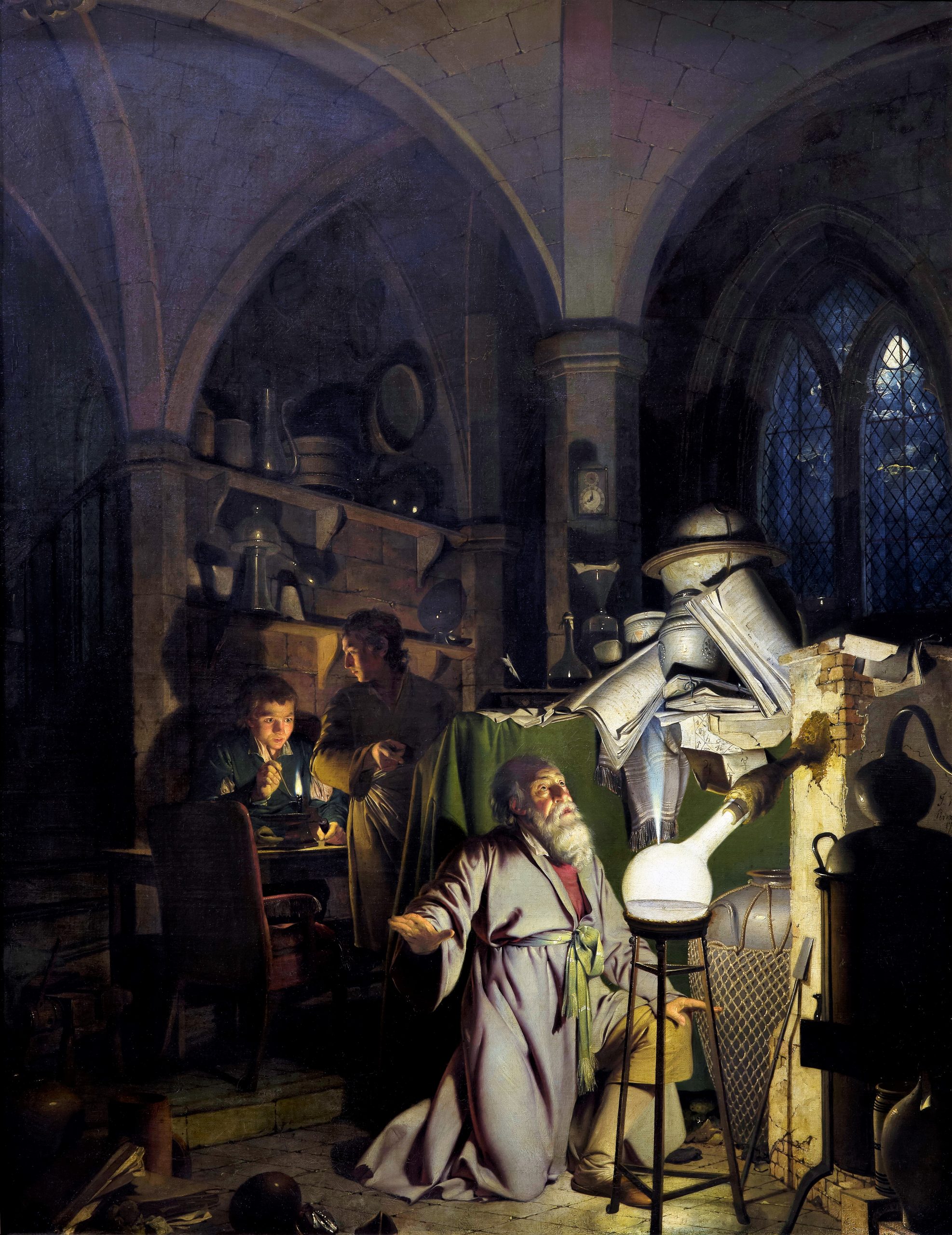
In 1669 Hennig Brand from Hamburg was the first person to isolate phosphorus, which he made by boiling up large quantities of urine. Brand thought he had found the secret of turning silver into gold (Alchemy) but of course he was mistaken.
Brand noticed that the waxy residue in his retorts would ignite with the slightest warmth. His discovery caused great interest in the scientific community, but because of the difficulty and cost of producing it and its flammability the element was not exploited until the discovery of being able to make fire by rubbing chemical compounds together, the Friction Match, created an industrial demand for phosphorus.
White for danger, Red for safety
In 1832 Charles Sauria in France developed matches which used white phosphorus, and this chemical formed the basis of most match manufacture right up until the start of the 20th century. However, white phosphorus is extremely toxic and can cause serious health problems, such as “phossy jaw” which affected many workers in the match industry.
The early matches could ignite if they accidentally rubbed together, and there are many reports of people whose clothes caught fire when a box of matches ‘spontaneously’ ignited in their pocket.
In 1844 Gustaf Pasch patented a Safety Match in Sweden which used red phosphorous not white. The match would only ignite on a special striking surface coated with red phosphorus, and had no phosphorous on the match head. Another key person in the development of Safety Matches was Anton Schrötter.
These days we are all familiar with “Safety Matches”, but what does that actually mean ?
- firstly, removing white phosphorus from the manufacturing process
- secondly, using red amorphous phosphorus on the striking surface instead of on the match head
- this meant that the matches were safe because they could not accidentally ignite by rubbing against each other
At the Great Exhibition of 1851 in London we know that William Albright exhibited red phosphorus, and we know that the Lundström brothers from Sweden came to the exhibition and obtained a sample of it. They had opened a match factory at Jönköping in 1844-45 and on returning home they set to work making matches using red phosphorus instead of white.
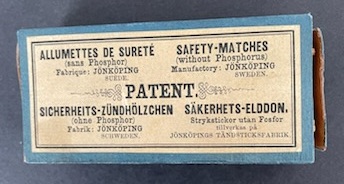
Eleven years later in 1855, the Lundström brothers exhibited their safety matches at the at the 1855 World Expo in Paris, where they won a diploma and a medal. They had also created a new type of matchbox, a sleeve around a retractable inner tray, which became the standard design which we all know today.
However, Safety Matches were expensive to produce and it wasn’t until 1868 that they became known throughout the world. Bryant and May obtained the UK patent for Safety Matches from the Lundström brothers in 1855.
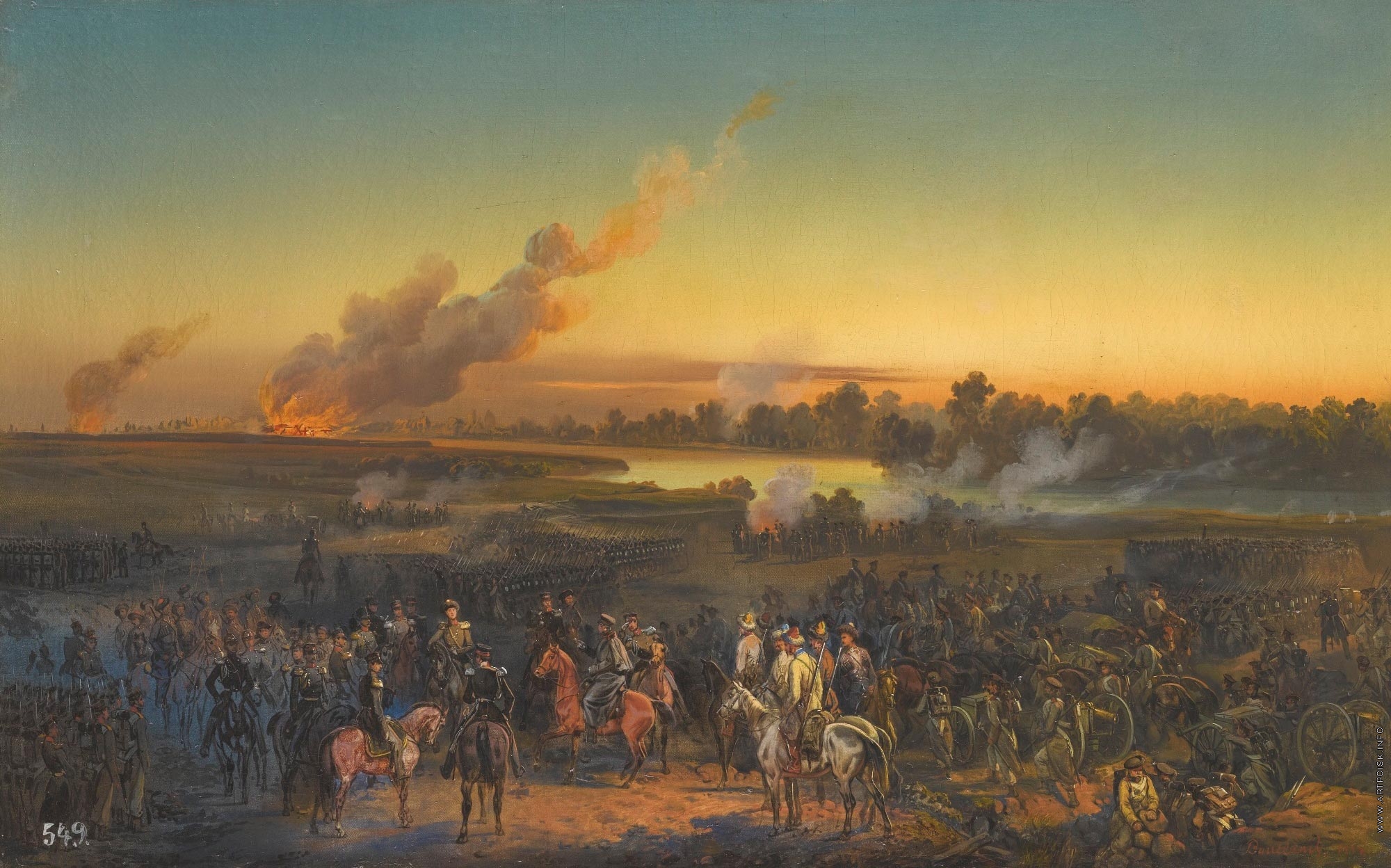
It’s curious to think that all this scientific and industrial innovation was taking place at the same time as the Crimean War was being fought (1853-1856). Did the soldiers have matches in their supplies ?
Other types of match
“Strike Anywhere” matches were also extremely popular, because the match heads contained chemicals that would ignite on any surface and didn’t require a special striking surface. Although it was against the rules, we know that miners would often slip a couple of strike anywhere matches into their lapels so they could have a crafty cigarette down the mine without having to carry a box of safety matches with them, and most pubs of the time would have a brick on the bar or a match striker with strike anywhere matches in the groove on top.
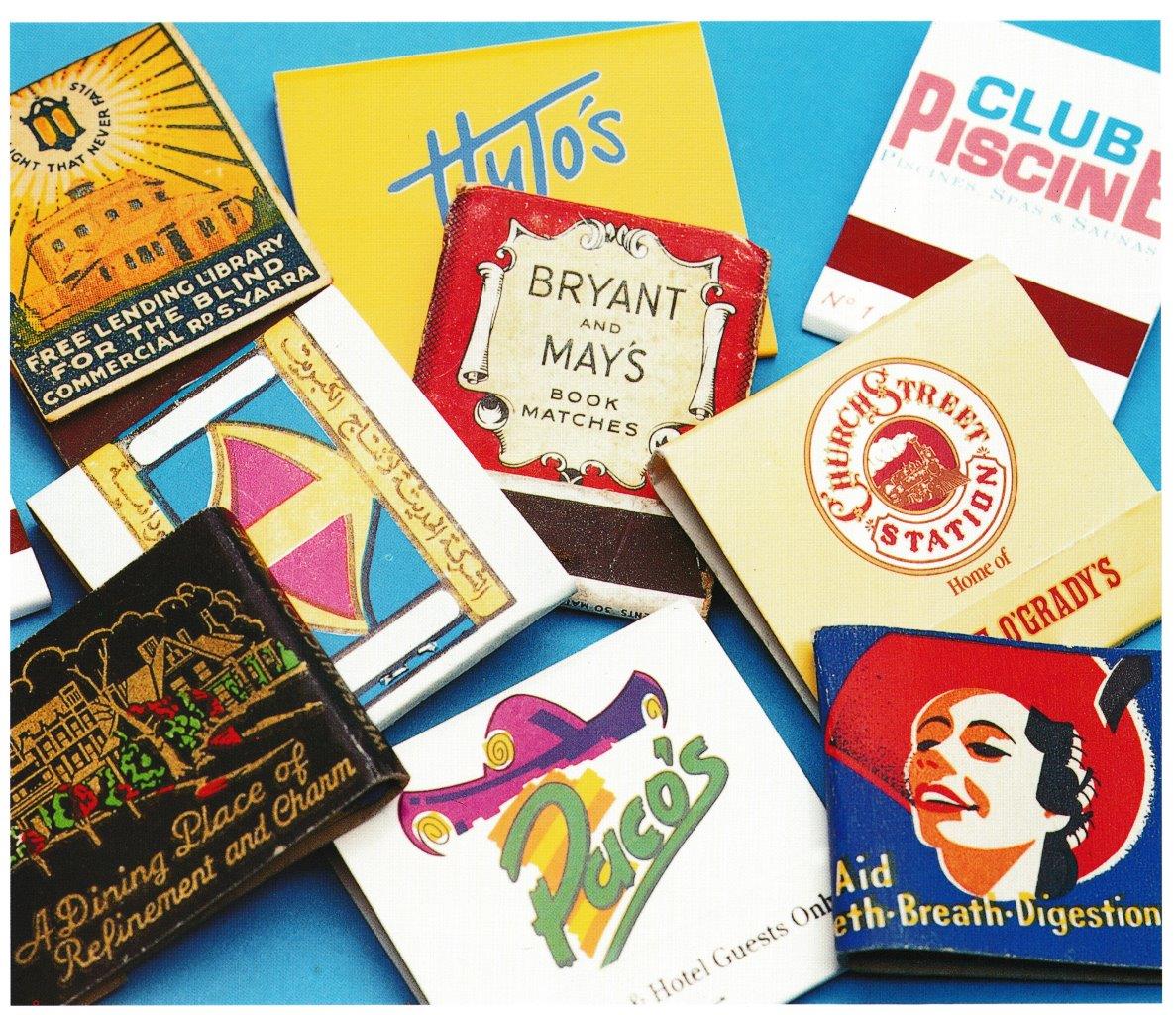
In 1896 an American, Joshua Pusey, took out a patent for a new type of match : bookmatches.
These are safety matches made of cardboard, with a tip dipped in a chemical mixture which will ignite when struck on a striking surface, housed in a small card wallet or matchbook.
This type of match became the dominant style in the USA and can be found across the world.
In 1898 two French Government Chemists, Sevène and Cahen, discovered a satisfactory substitute for noxious white phosphorus known as sesquisulphide of phosphorus. Bryant & May quickly acquired the English patent in this harmless substance and used it from 1900 onwards.
Innovative matches
Some match manufacturers introduced some innovative types of matches, in an attempt to differentiate their products from the mainstream. Examples include double headed matches, glass-stemmed matches and candle matches.
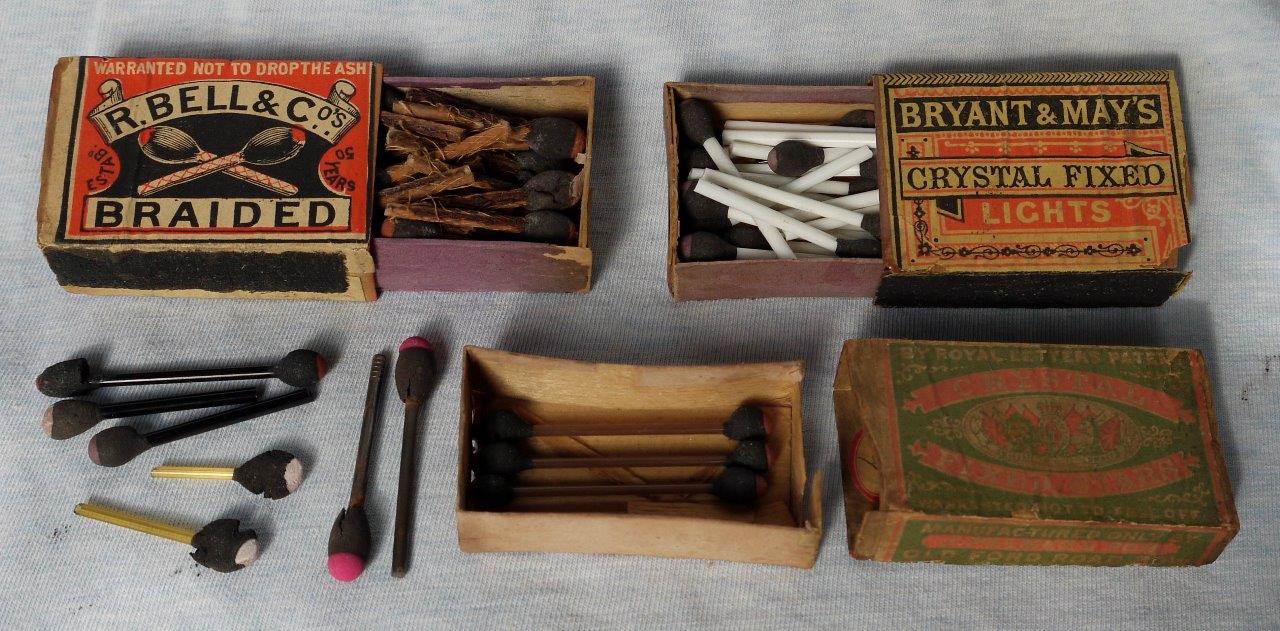
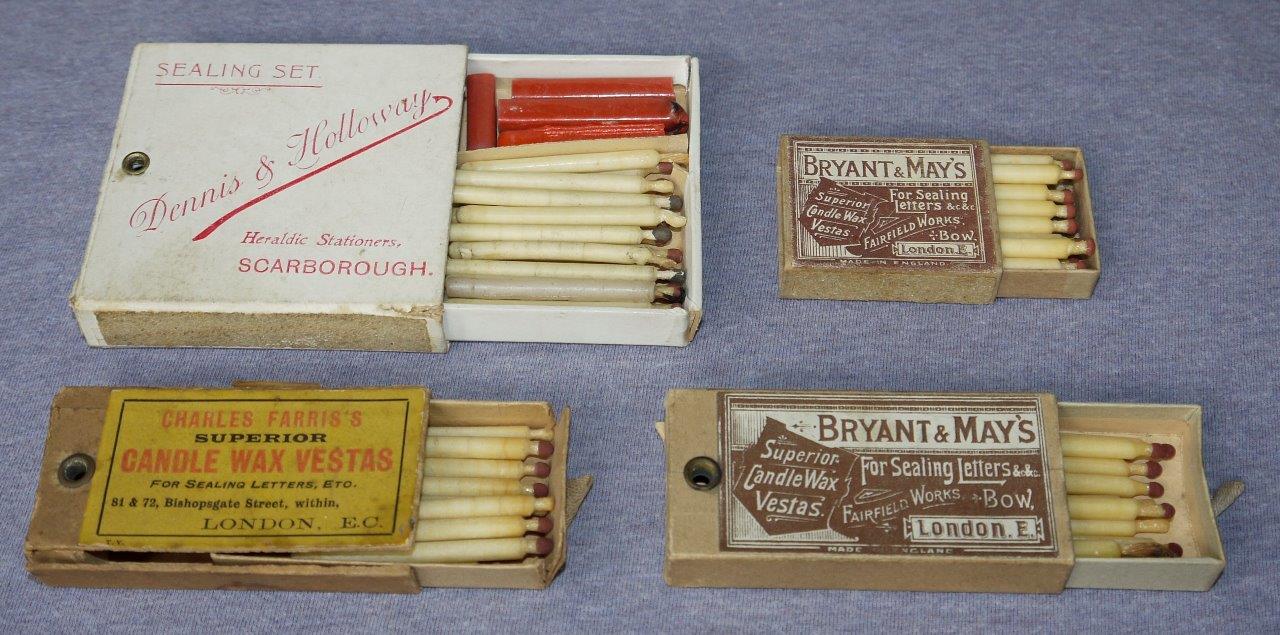
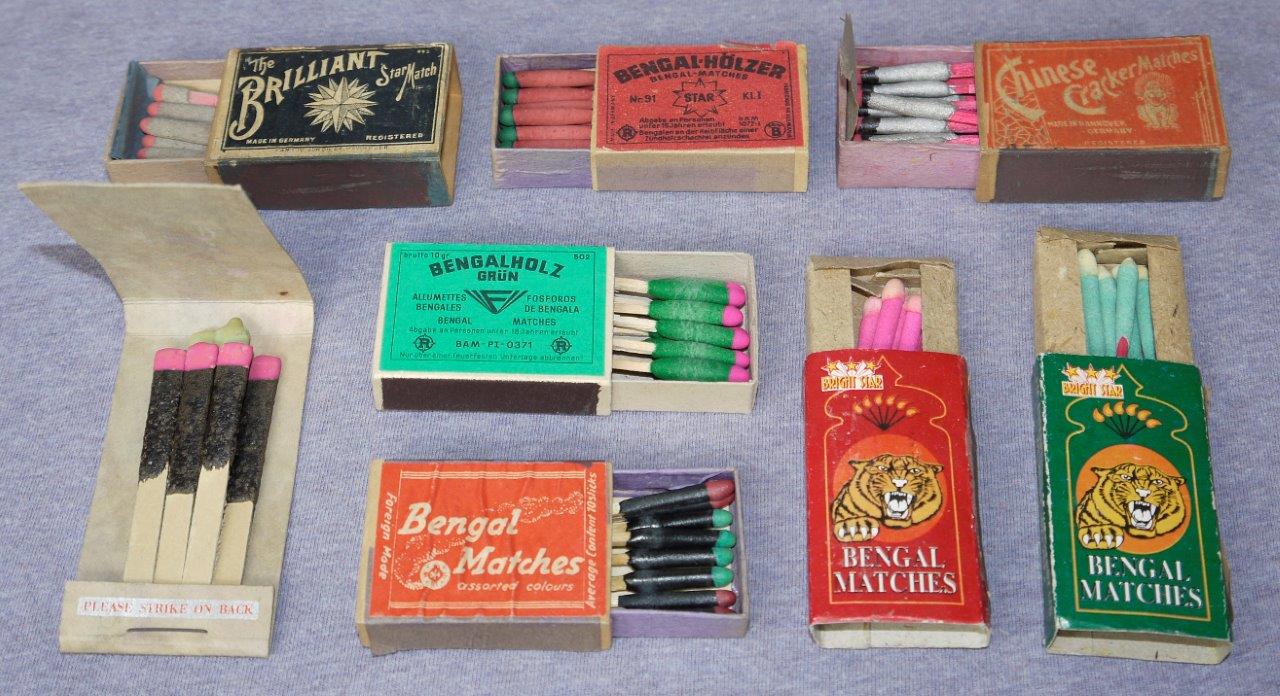
Forward-thinking Firework manufacturers also saw the opportunity to package their products in matchboxes, as Bengal Matches.
Click here to return to the Exhibition Catalogue.