Label Design : marketing and selling matches
Period covered : 1861 to 1914
The Great Exhibition of 1851 acted as a catalyst to the match industry, promoting the still-new products to the general public, and the demand for matches increased dramatically from that point onwards, not just in the UK but globally too. Competition between match manufacturers increased, each trying to make their products more attractive to the consumer than their competitors.
Matches needed a container (the match box) which then needed a strong identity (the matchbox label) to persuade people to buy it, both of which gave opportunities for innovative designs.
Packaging – the boxes
John Walker sold his matches loose, first in tins and later in the cheaper cardboard boxes, though as far as we know he didn’t label his products.
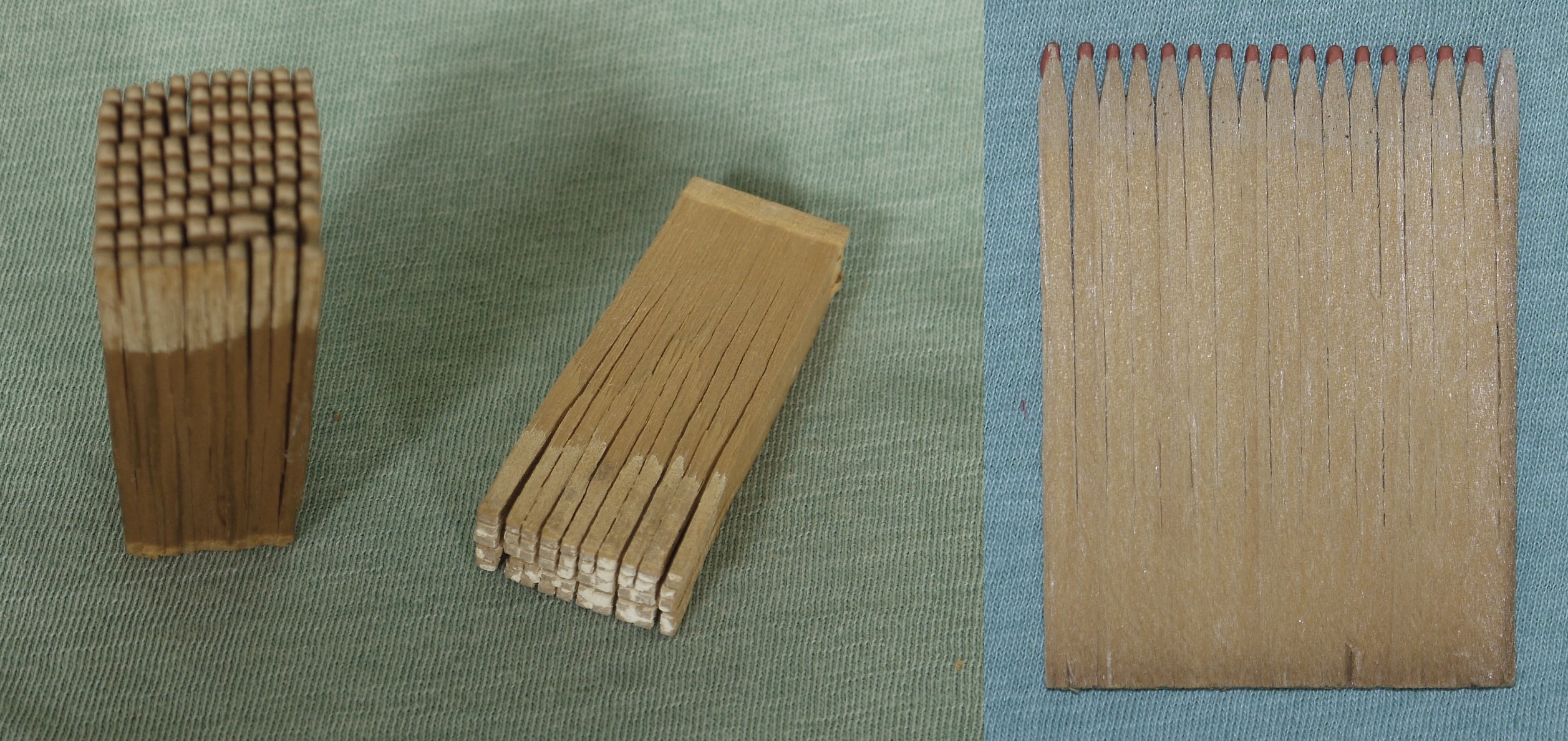
It was impractical for the new manufacturers to sell their matches loose, they needed a robust container, a match box or maybe a fashionable Vesta Case.
Both choices opened up the opportunities for the manufacturers to personalise their products, to brand them, to create attractive packaging that demonstrated the matches uniqueness, their brilliance, their reliability, their safety, their honesty and all the other good qualities that marketing people attribute to inanimate objects to persuade people to buy their products.
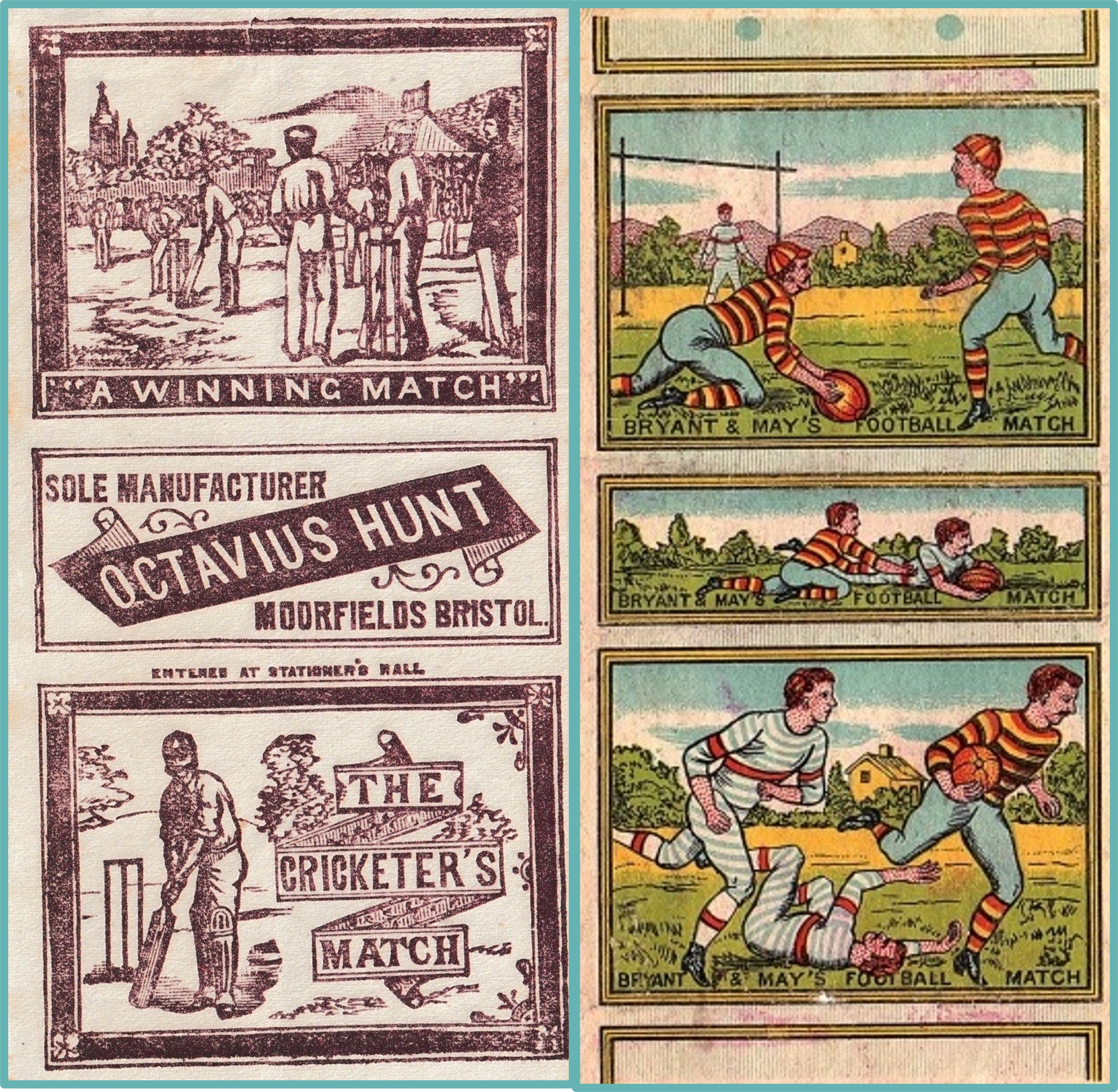
The opportunity to design labels for matchboxes
It was really with the emergence of the Safety Match in the 1850s, sold in (usually wood) boxes with a sliding tray, that the match labelling process could become industrialised too.
And so began the quest to create attractive, distinctive, compelling designs which could be used on the matchboxes and in advertising campaigns. Designs which would tell the public that these matches could change people’s everyday lives for the better and were indispensable.
Of course, there was a fashion dimension to all this design – our seemingly unquenchable need to be seen with the latest, newest, sexiest products.
But there is no getting away from the fundamental truth that the easy availability of reliable and affordable matches to Victorian society changed people’s lives forever.
Labels were carefully designed, printed and then stuck onto the boxes, sometimes just on the top of the box but often in the all-round-the-box style favoured by Bryant & May amongst others.
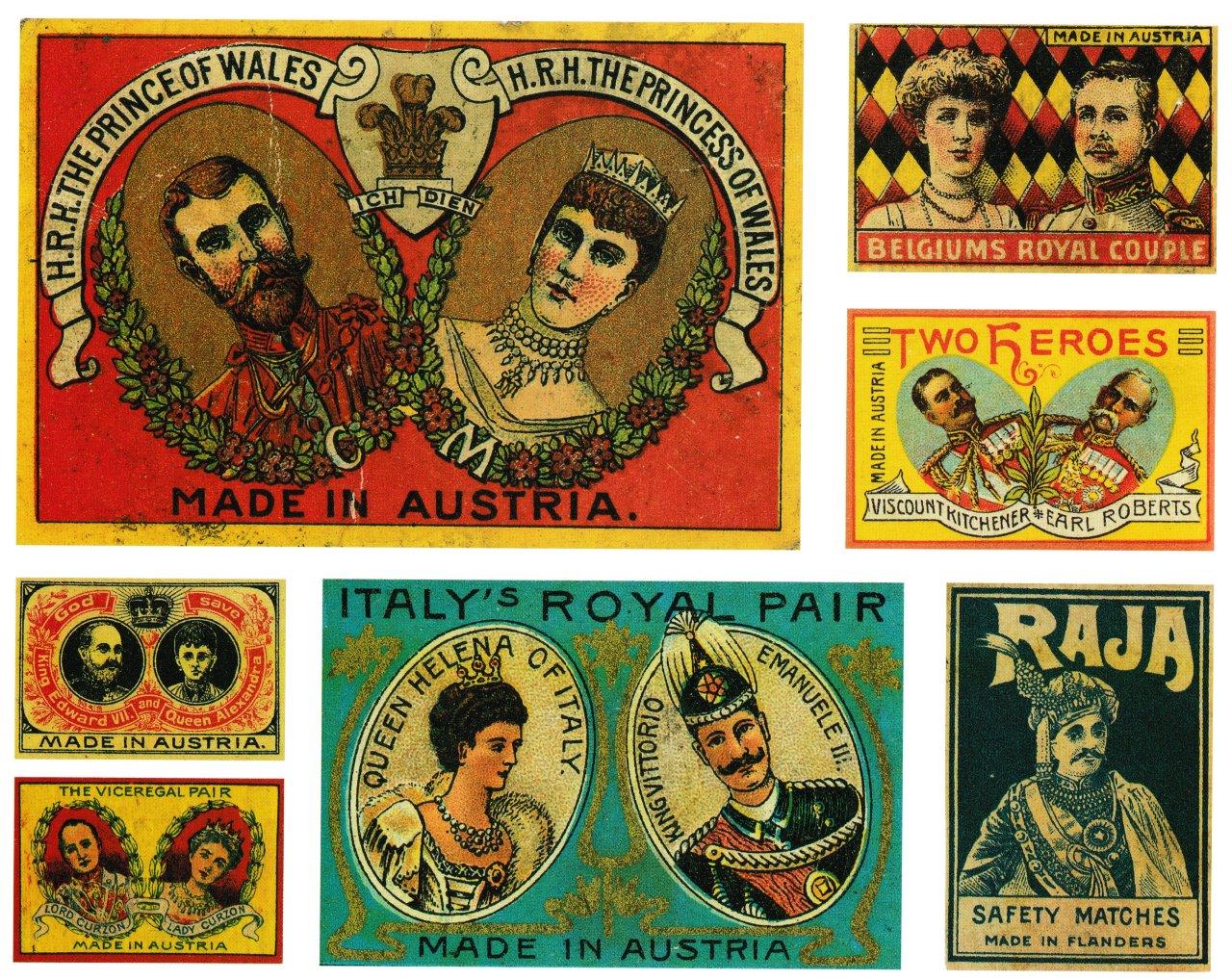
Endless choices for marketing images
Some manufacturers simply put their name on the label, while others created brands with interesting designs and promoted these. Many showed the Medals awarded to the manufacturers at Exhibitions and World Fairs.
Royalty, contemporary figures and events were often harnessed to sell matches – Captain Webb’s swimming the channel in 1875 can been seen on many boxes of the time, similarly General Gordon’s failed campaign at Khartoum in 1885 was used.
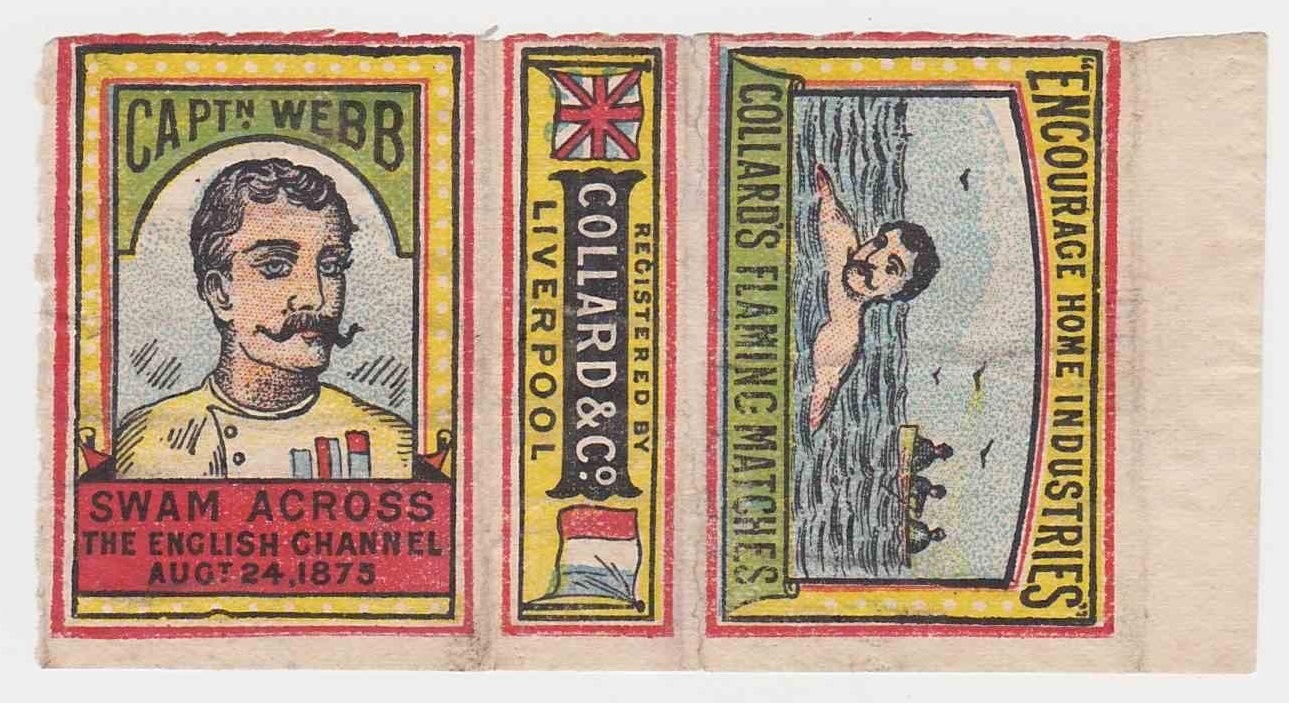 Captain Webb, Collard
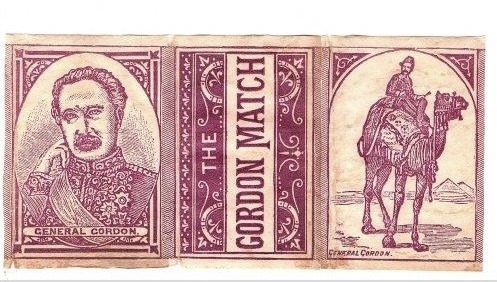 General Gordon
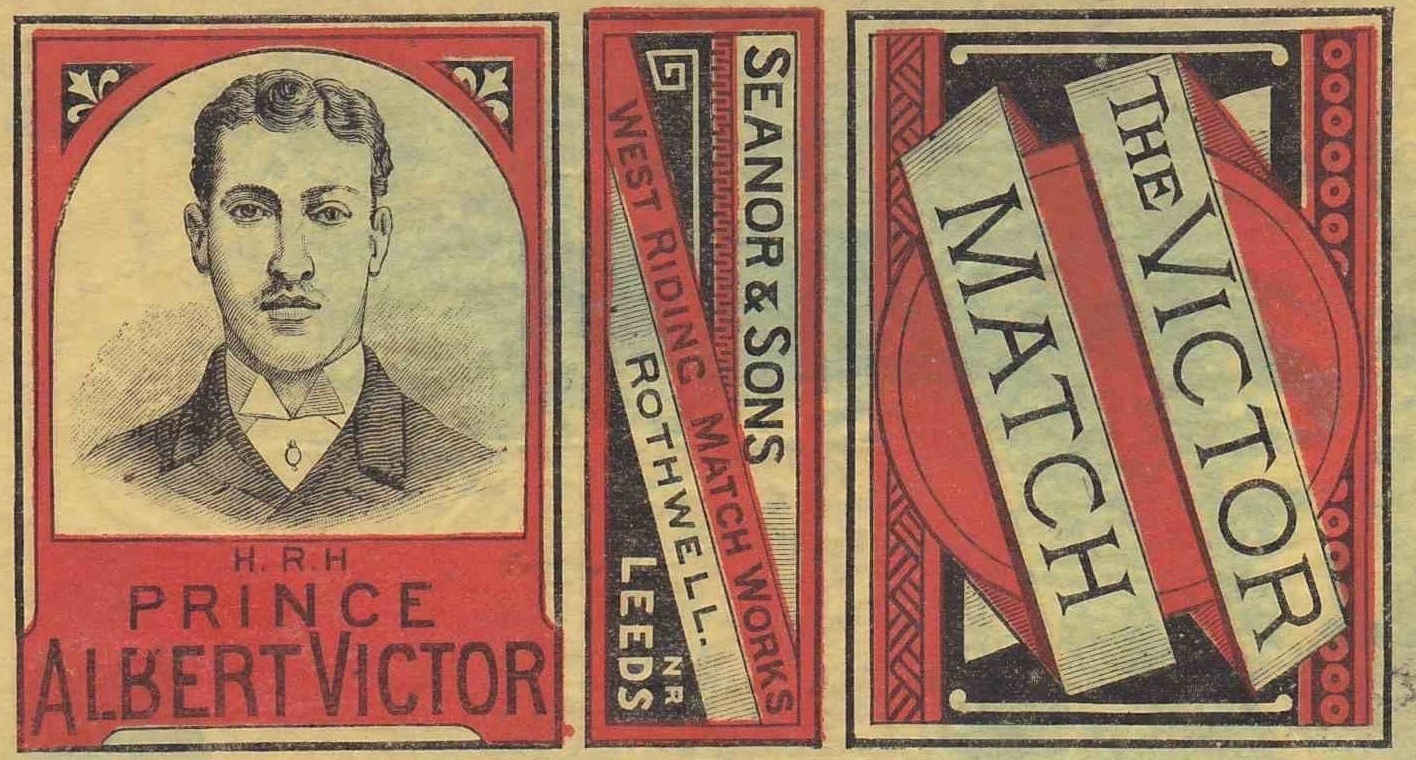 Prince Albert
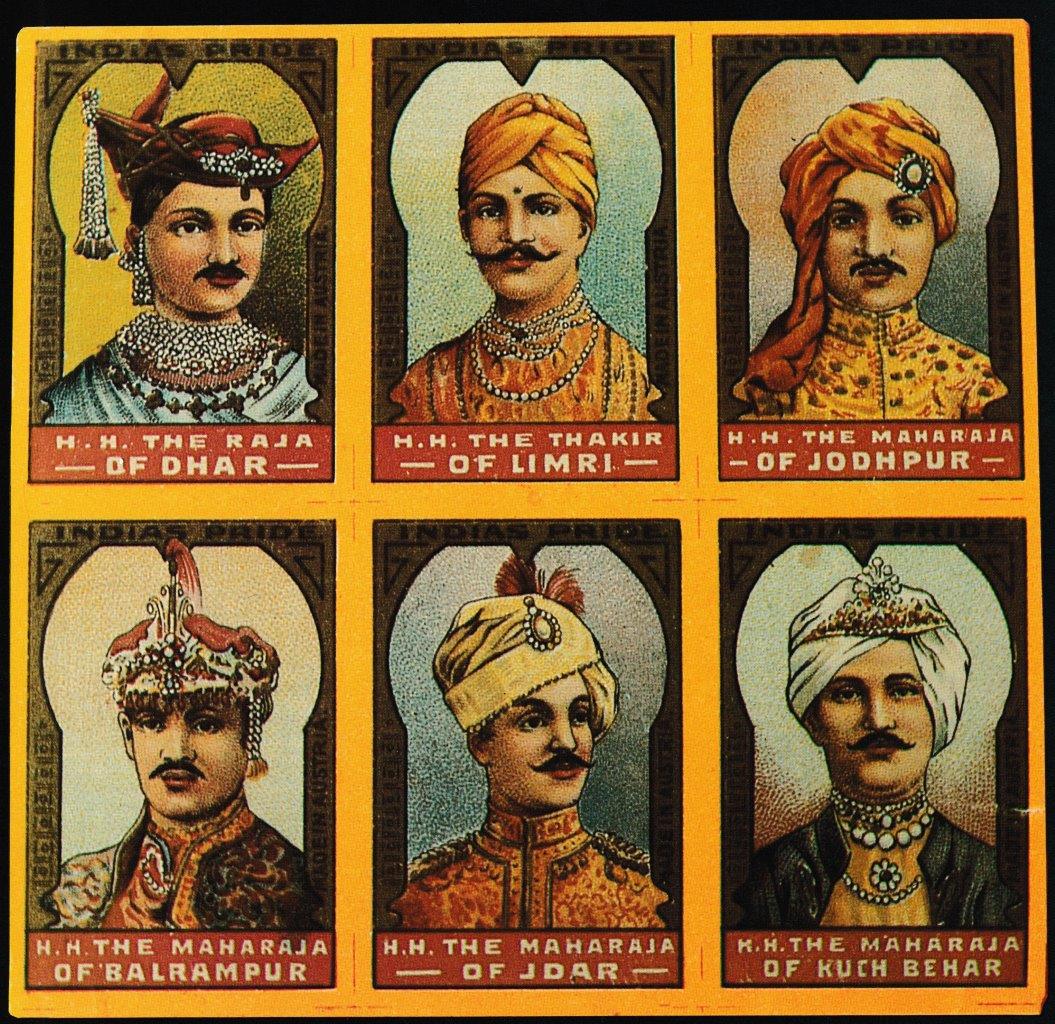
The number of label designs is almost infinite, but some labels are perhaps more beautiful than others. One particularly attractive series is the glazed set of “Maharajahs” from Austria.
These design trends can be seen across many of the European countries, and especially in France, Italy and Spain the graphic design skills employed on the labels were among the most advanced in the world.
Interestingly, the match manufacturers in Spain produced a large number of political labels, often parodying the politicians of the time, and allowing the general public to receive news quickly that was perhaps portrayed in a different manner in the newspapers – early examples of propaganda.
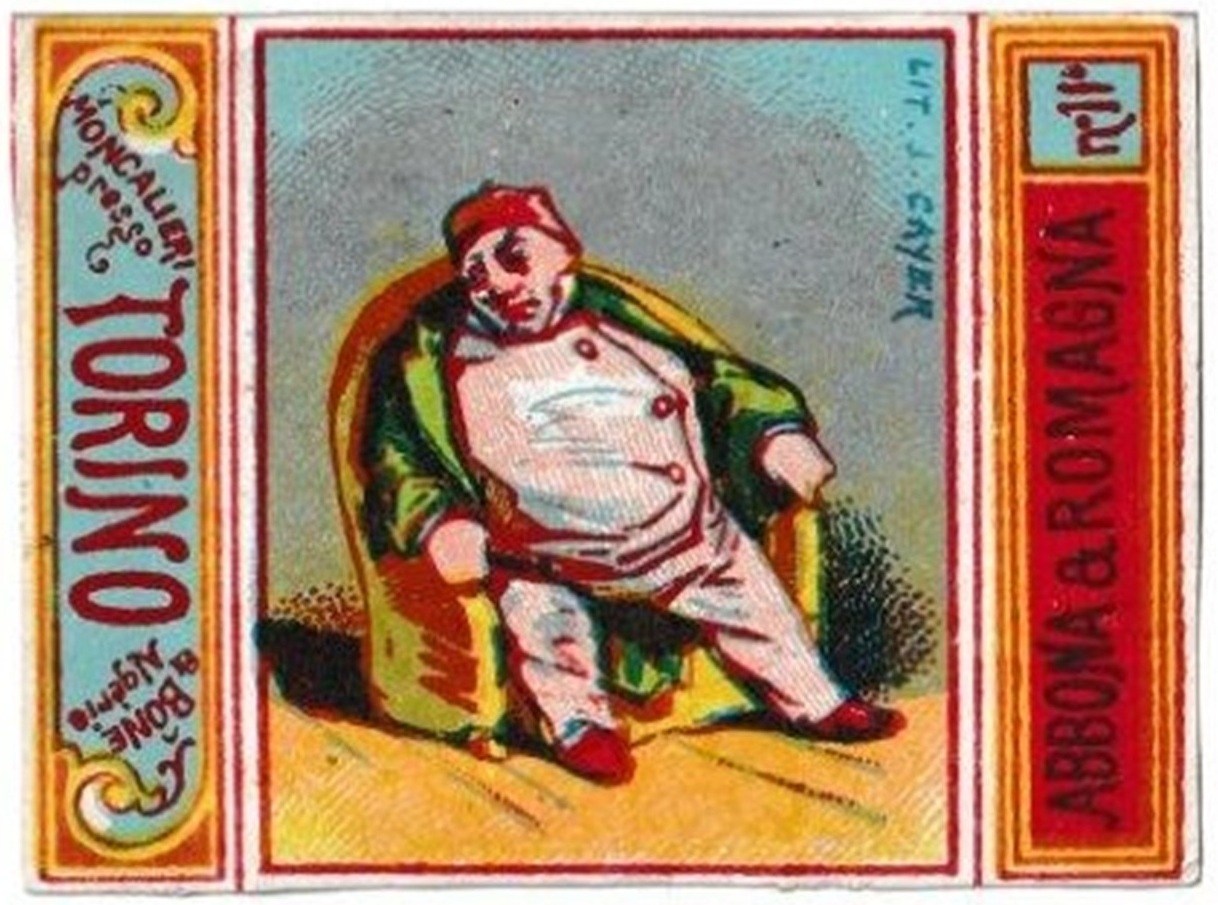 19th century Italian label
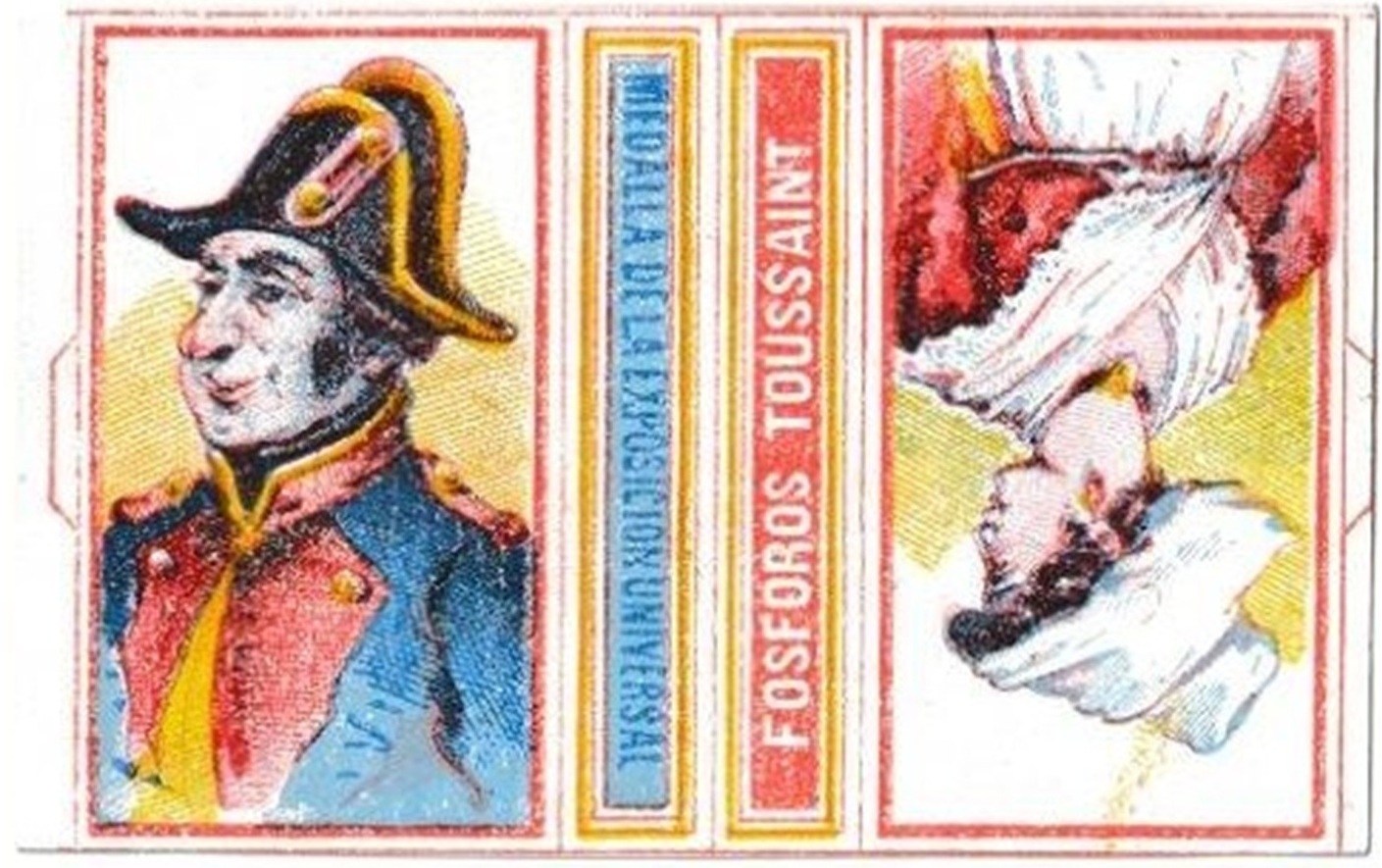 19th century French label
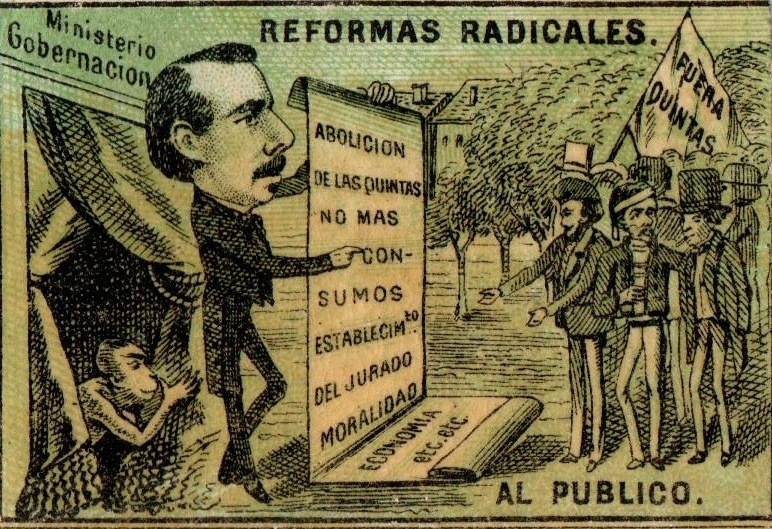 19th century Spanish label
Targeted marketing
Although the corner shops in Victorian Britain were very different to what we know today, the match companies encouraged them to stock their own products, and we can still find enamel advertising signs and many newspaper adverts which depict popular brands of matches.
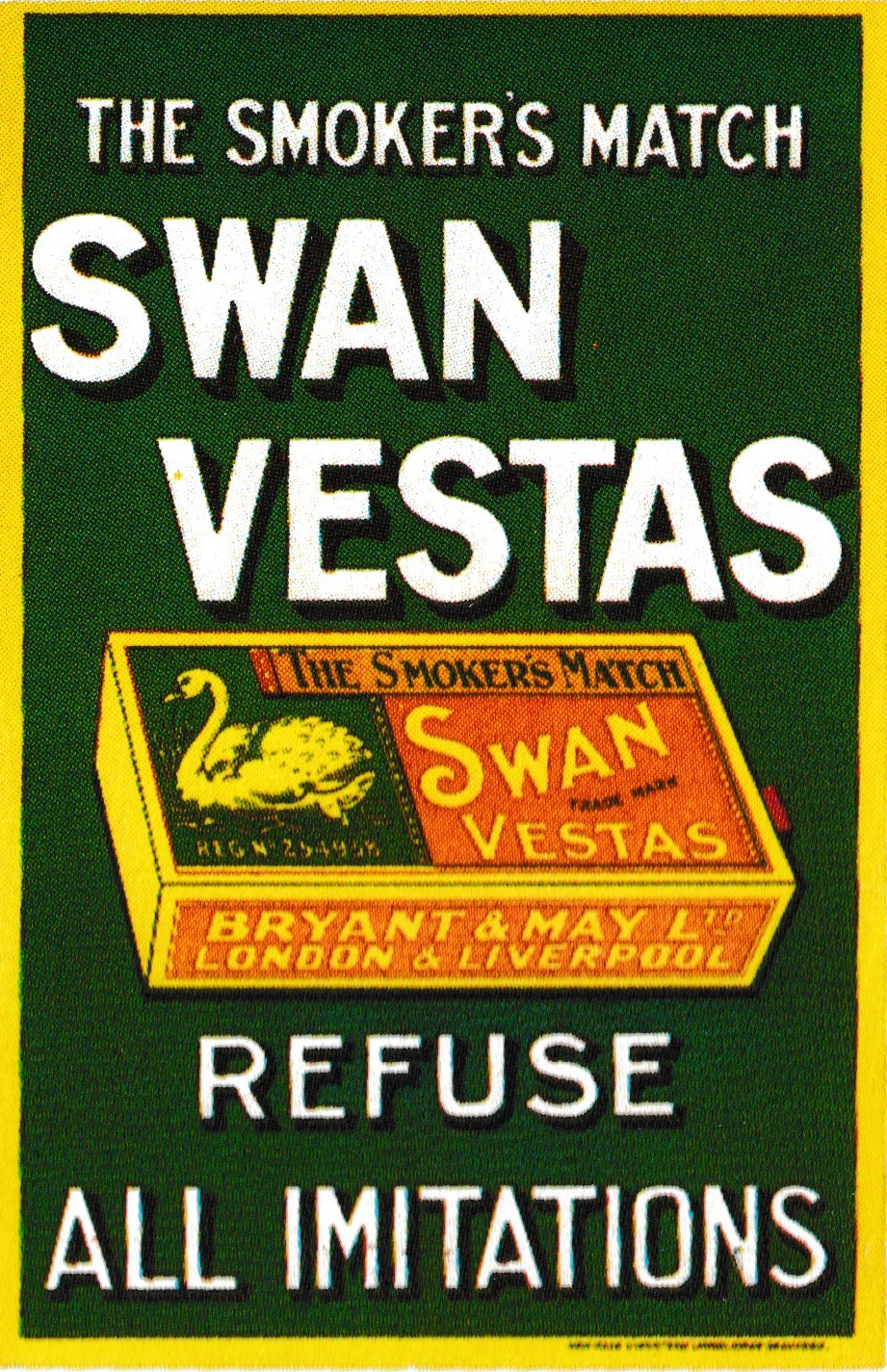
One particular community that the match makers targeted was smokers.
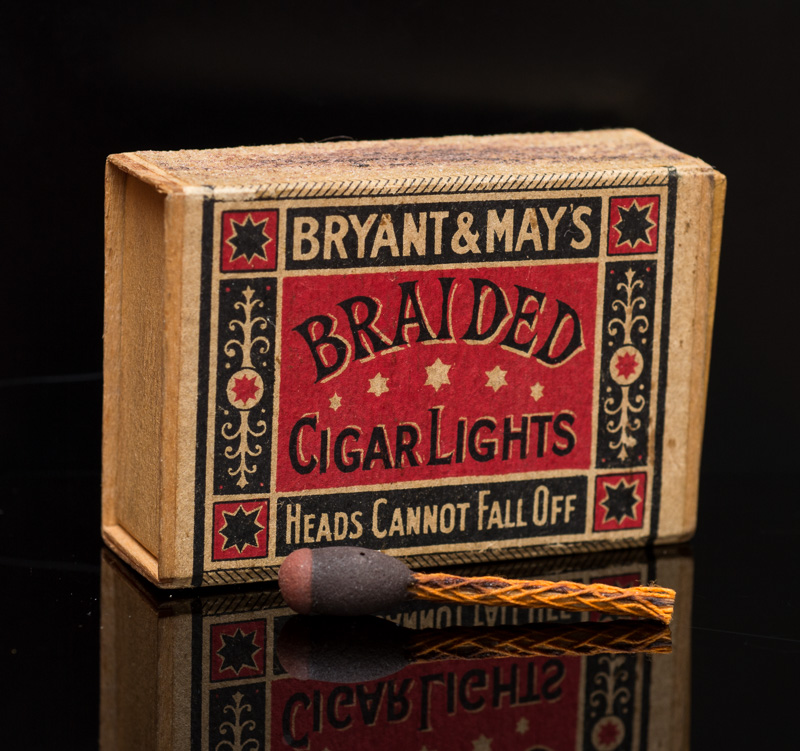
It seemed that everyone in Victorian society smoked, and they clearly needed an easy way to light their cigars and pipes.
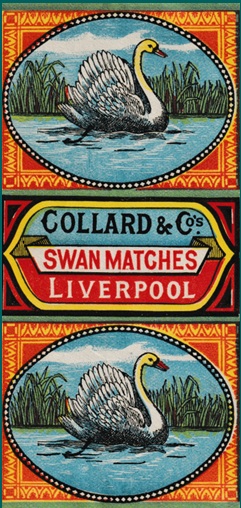
Brands like “Cigar Lights”, “Cigarettes Matches” and “Swan, the Smoker’s match” became very common and successful – another tribute to the power of good design.
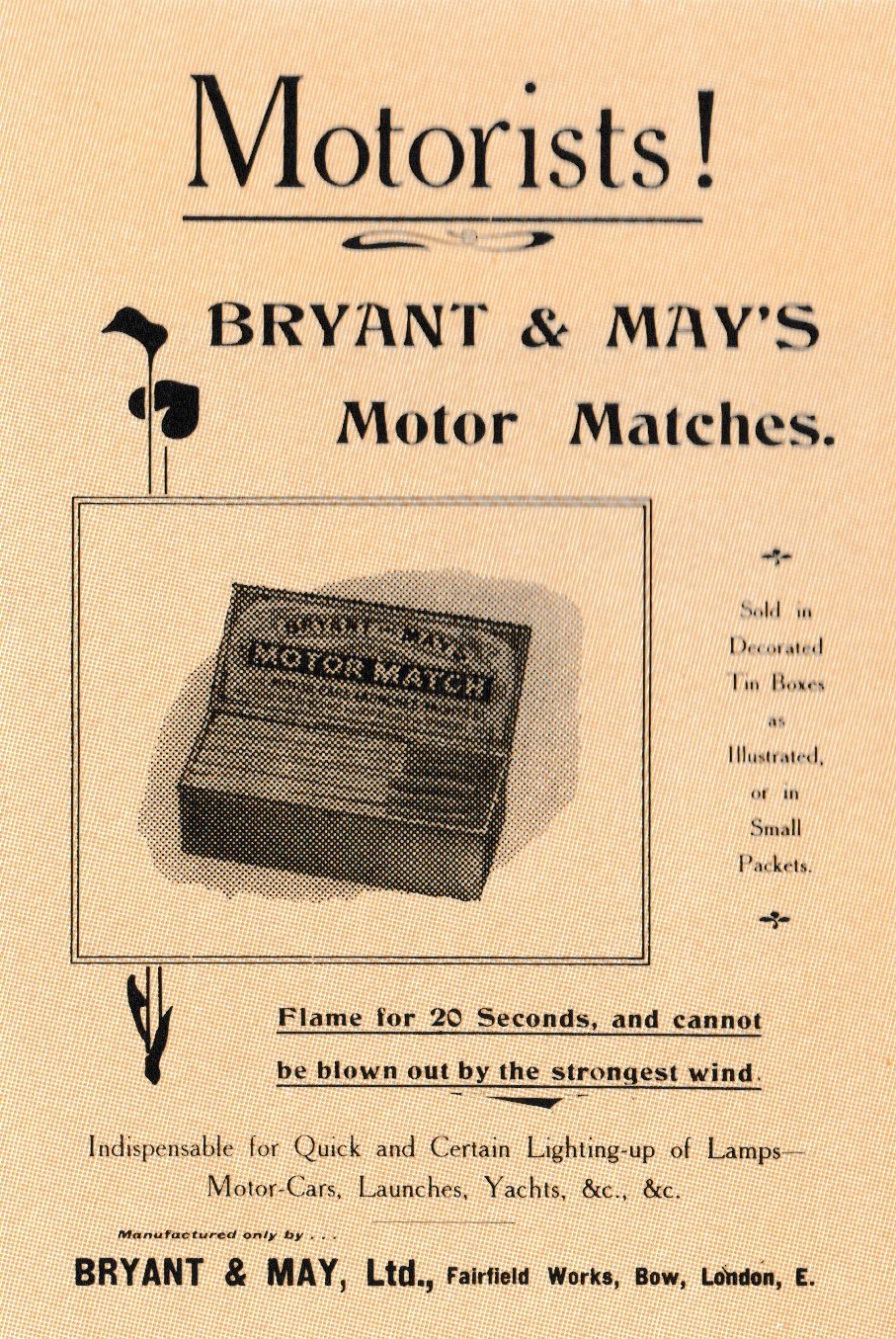
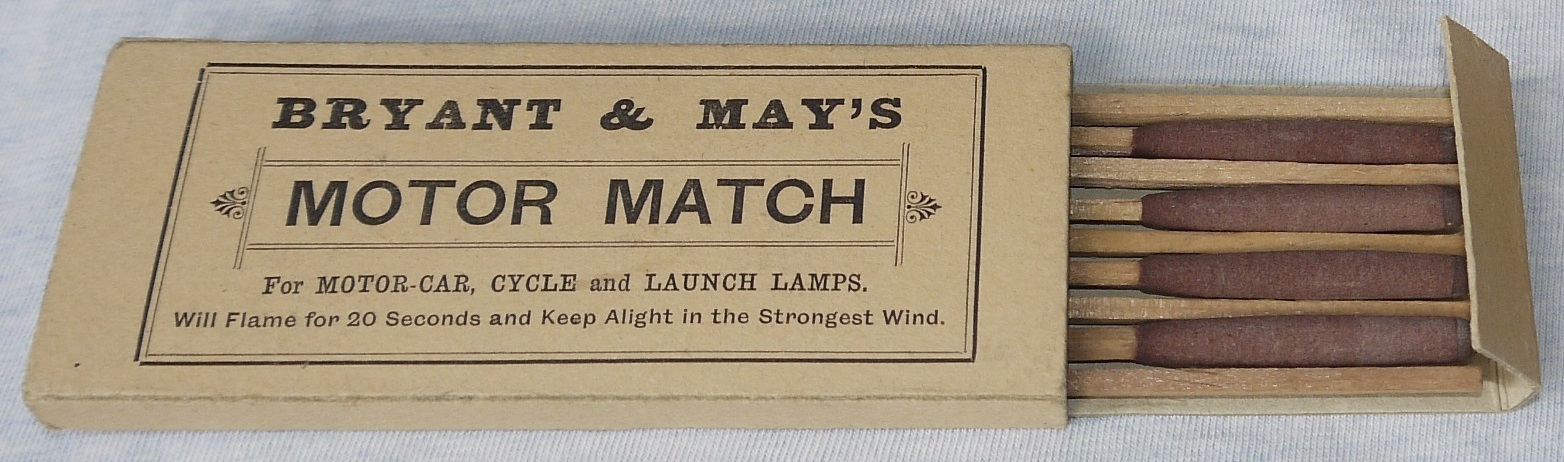
Another community was motorists, Bryant & May developed a special Motor Match for them.
Innovation
There was a wide variation in the sizes of matchboxes in the mid 19th century, but gradually the box sizes became more standardised, especially as mechanisation increased. Which, in turn, brought more standardisation to label sizes, encouraging the manufacturers to be more innovative in their designs.
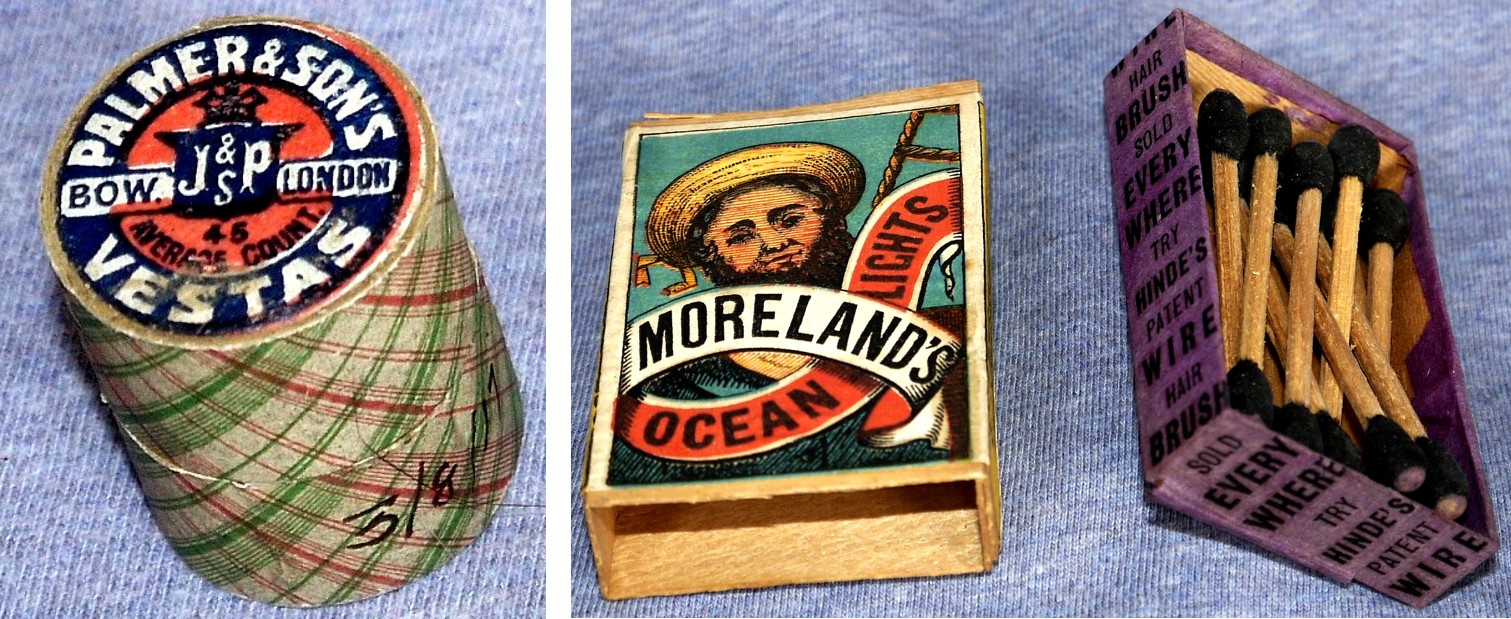
Some companies experimented with unusual designs of the matchboxes and the matches themselves, like this pillbox and the double-headed Ocean Lights from Moreland’s.

Many more innovative match and matchbox designs emerged, click on the button to learn more about some of these.
Match puzzles
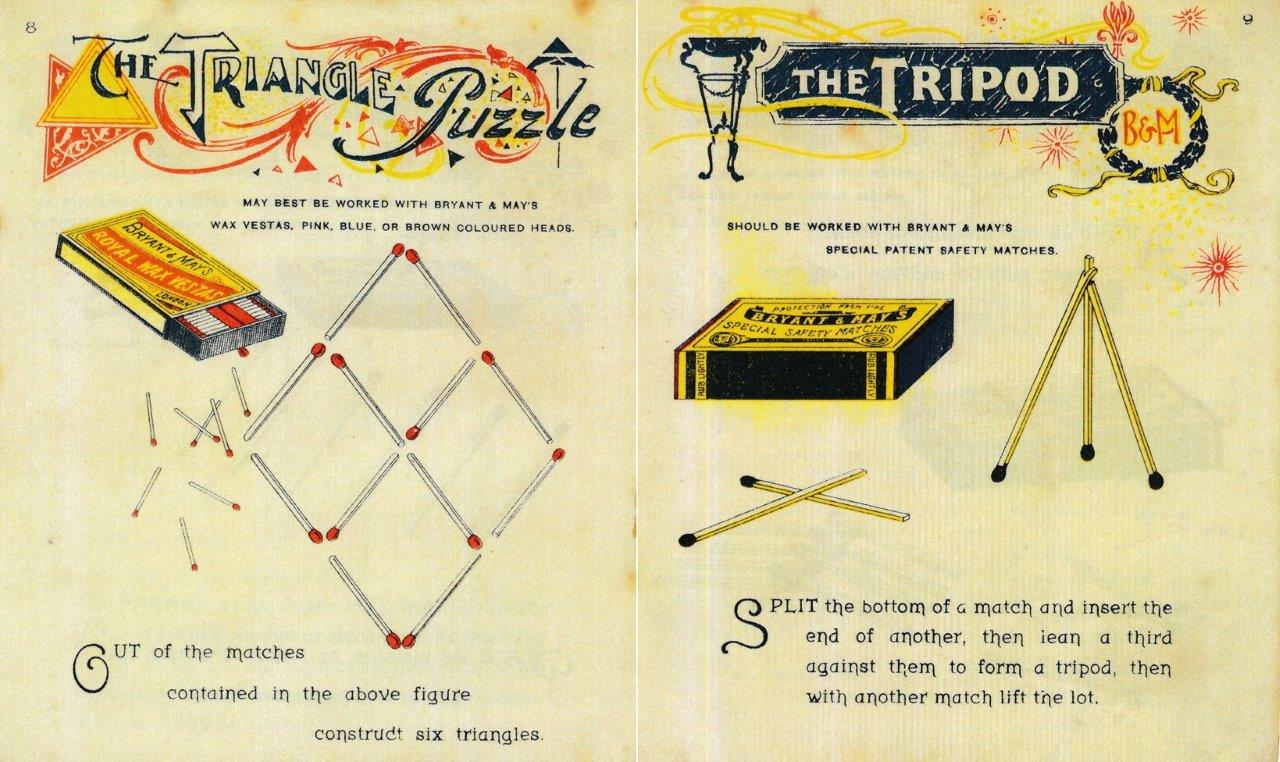
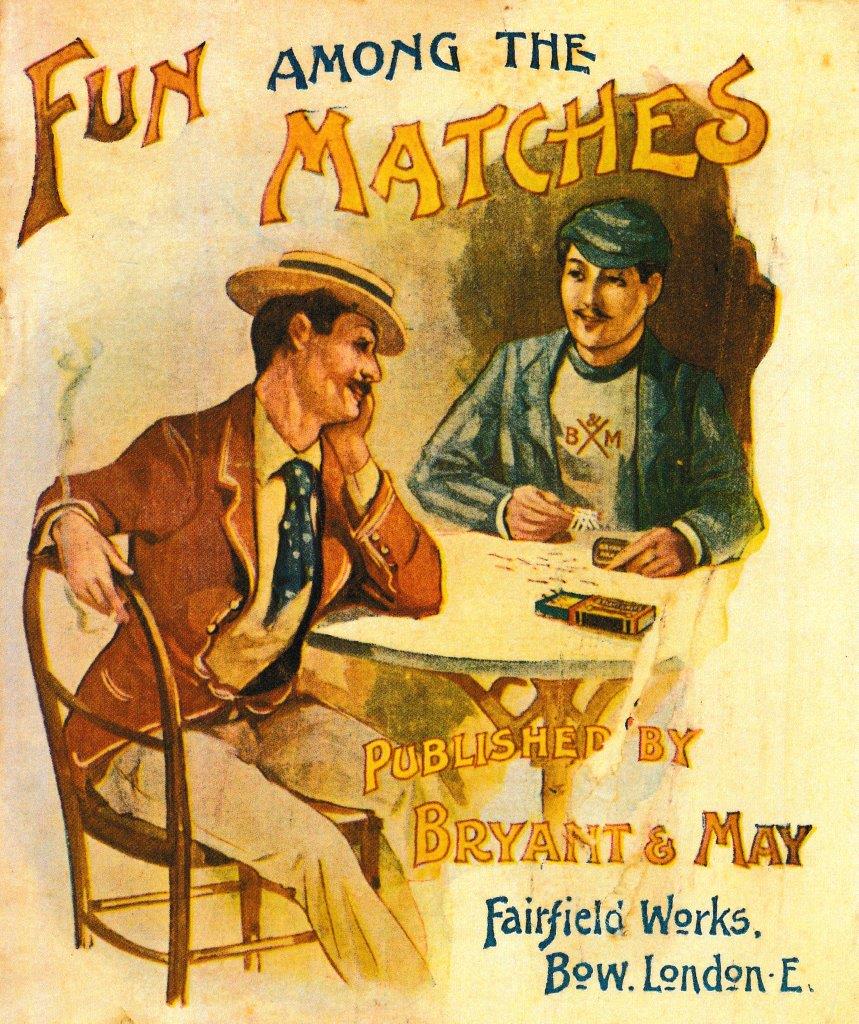
For childrens’ amusement some match companies devised tricks and games to play with matches, in the form of puzzles.
These became very popular with families (and of course, helped to sell more matches).
Bryant & May issued a number of these puzzle books in the early 20th century.
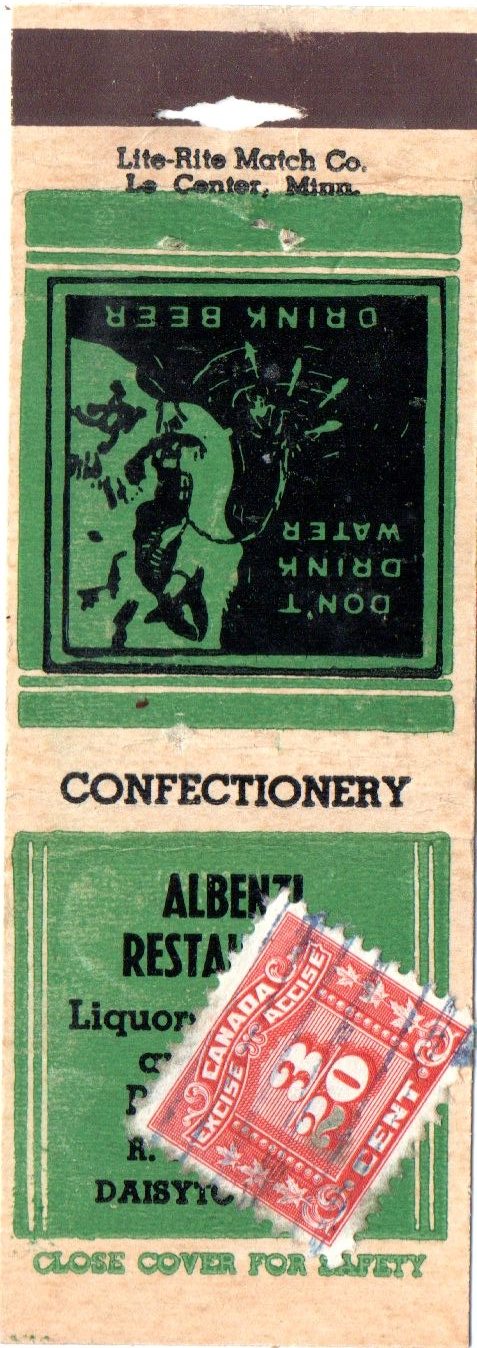
Taxing a booming industry
Governments across the world recognised the significant economic impact of the match industry, and many chose to impose a Tax on matches in the late 19th century, to boost the funds in their Exchequers.
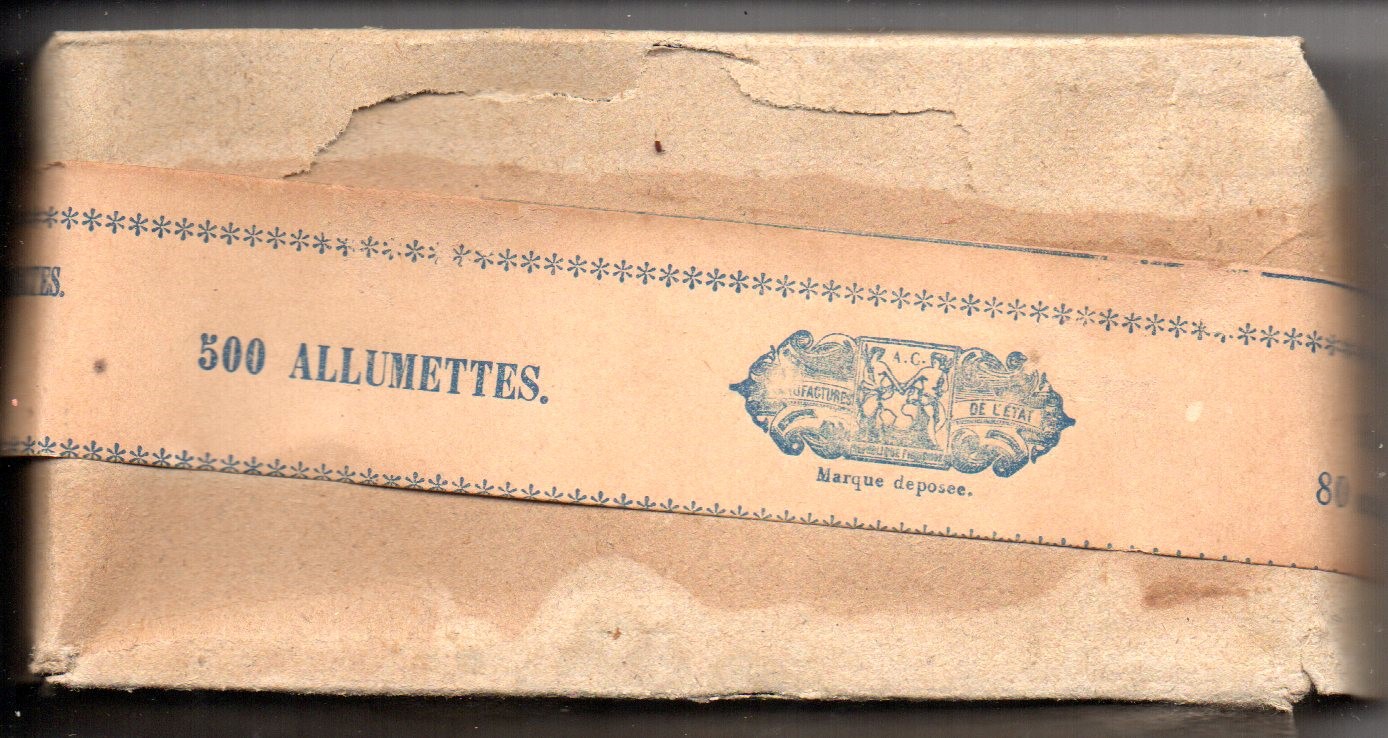
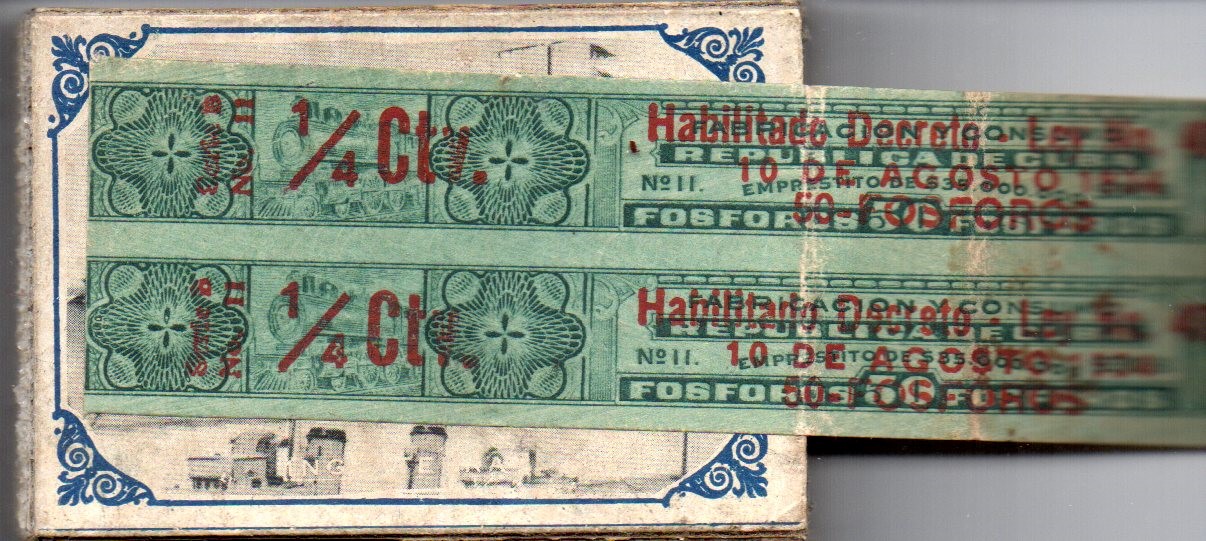
A few countries, like France and Spain, later nationalised the industry. However, after the debacle of the 1871 failed attempt to tax the UK match industry, it would take until 1916 for the UK Government to try again.
Click here to return to the Exhibition Catalogue.